
Not every scary movie needs a creature lurking in the shadows. Some of the most terrifying films ever made get under your skin using nothing but human behavior, paranoia, and psychological dread.
These stories prove that real people can be far more frightening than any fictional beast. If you think you need fangs and claws to feel afraid, these 18 films are about to change your mind.
1. Psycho (1960)
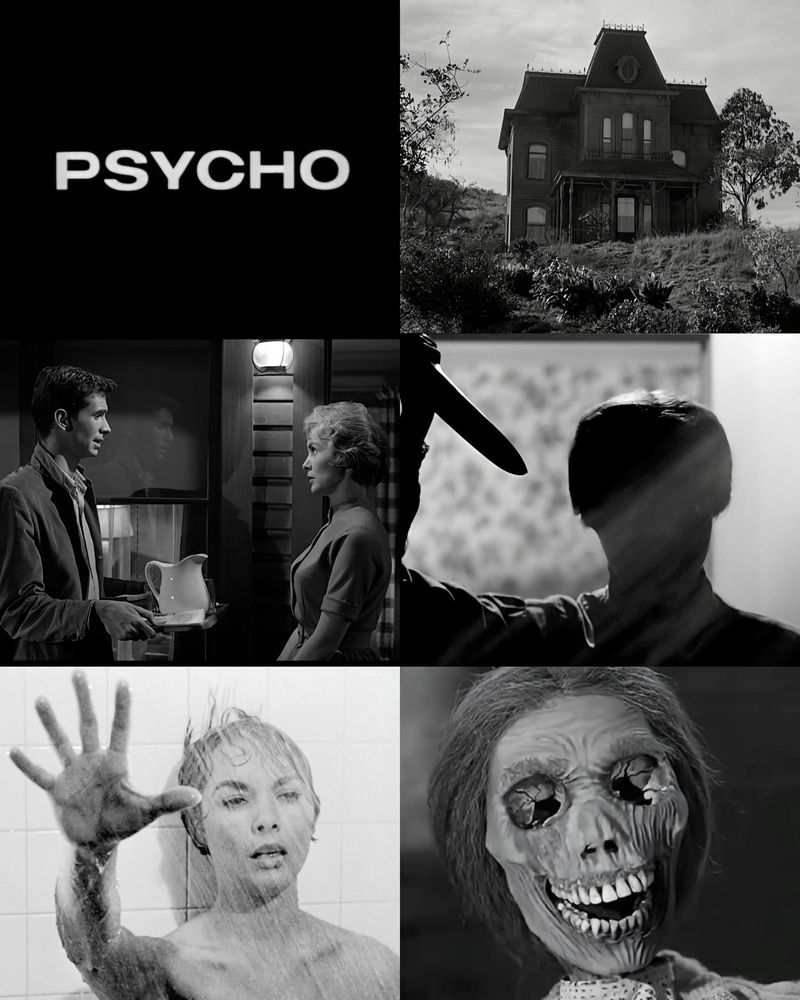
Few films have rattled audiences quite like Alfred Hitchcock’s Psycho. What makes it so chilling is that the horror lives entirely inside a human mind.
Norman Bates seems polite, even shy, but something deeply broken hides beneath that calm surface.
The Bates Motel feels ordinary at first glance, which makes every unsettling moment hit harder. Hitchcock proved that a disturbed person next door is scarier than any supernatural creature.
This film basically invented modern psychological horror.
2. The Birds (1963)
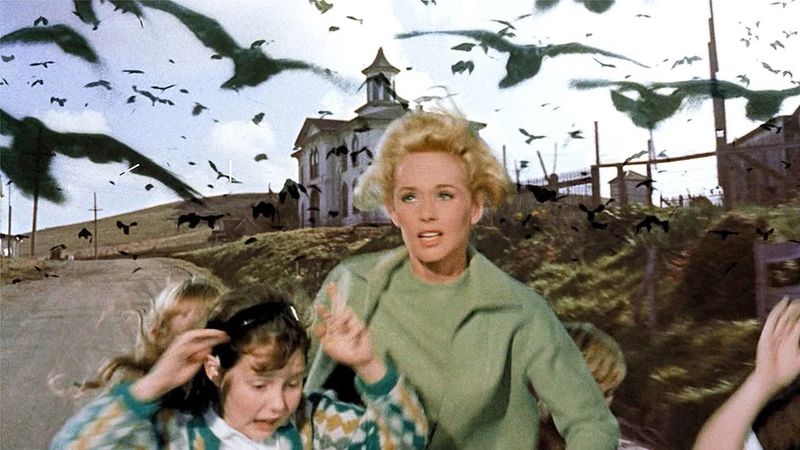
Imagine stepping outside on a sunny afternoon and suddenly thousands of birds attack without warning or reason. That is exactly the nightmare Hitchcock built in The Birds.
No explanation is ever given, which makes the whole thing feel even more unsettling.
Nature itself becomes the villain here. These are not mutant creatures or supernatural beasts, just ordinary birds behaving in extraordinarily terrifying ways.
The randomness of the attacks is what truly gets under your skin and stays there long after the credits roll.
3. The Bad Seed (1956)
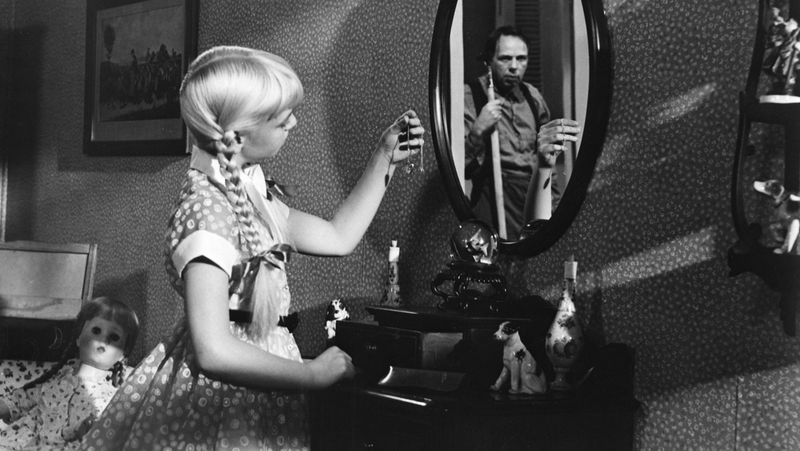
A pigtailed little girl who wins spelling bees and smiles sweetly at adults sounds harmless, right? Wrong.
The Bad Seed flips that expectation completely on its head. Rhoda Penmark is charming on the outside and terrifyingly calculated underneath.
People around her keep dying under suspicious circumstances, yet no one wants to believe the worst. This film was genuinely shocking for 1950s audiences because it dared to suggest that evil is not always ugly or obvious.
Sometimes it skips rope and wears patent leather shoes.
4. Whatever Happened to Baby Jane? (1962)
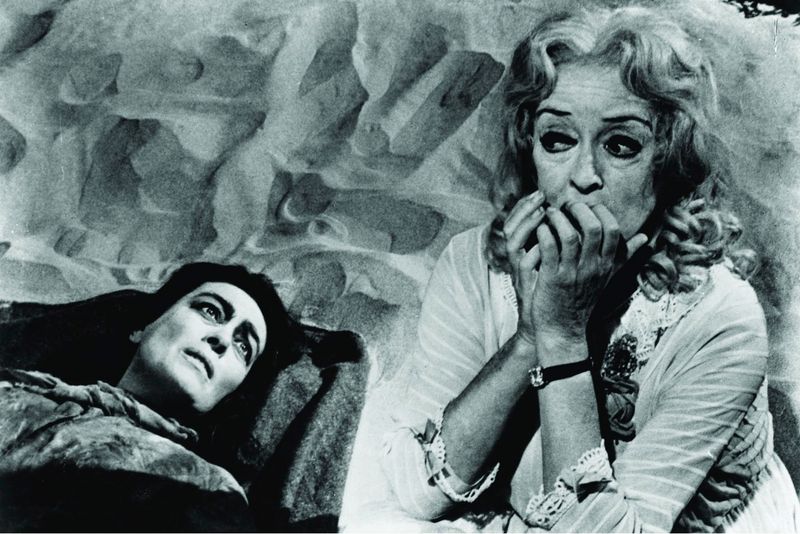
Two legendary actresses, Bette Davis and Joan Crawford, locked together in one crumbling Hollywood mansion. The result is one of cinema’s most disturbing portraits of jealousy and cruelty.
Baby Jane Hudson was once a celebrated child star, but time and bitterness have twisted her completely.
She torments her wheelchair-bound sister Blanche with a cold, gleeful malice that is deeply uncomfortable to watch. There are no ghosts here, just the horror of aging, resentment, and what years of emotional damage can do to a person.
5. Rosemary’s Baby (1968)
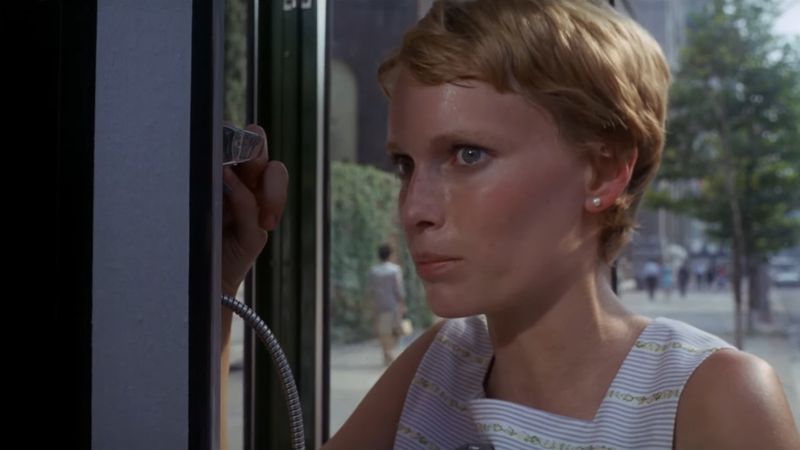
Moving into a beautiful New York apartment with your husband sounds like a dream. For Rosemary Woodhouse, it slowly becomes a waking nightmare.
Roman Polanski builds dread so quietly that you barely notice how tense you have become until it is too late.
The horror here is rooted in a woman who is not believed, surrounded by people who seem to have their own agenda. Whether the supernatural elements are real or imagined almost does not matter.
The feeling of being trapped and gaslit is horrifying enough on its own.
6. The Shining (1980)
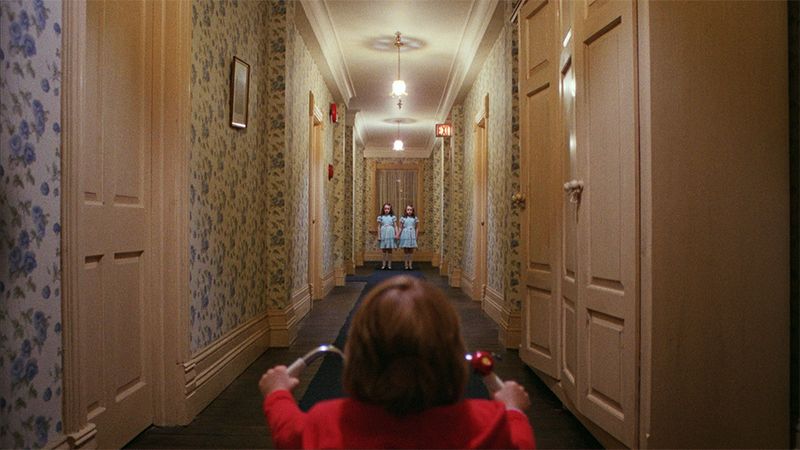
Stanley Kubrick took Stephen King’s haunted hotel story and turned it into something far stranger and more psychological than a typical ghost movie. Jack Torrance does not just encounter supernatural forces at the Overlook Hotel.
He unravels from the inside out.
Watching a father slowly transform into something dangerous is genuinely terrifying. The hotel may or may not be haunted, but Jack’s mental collapse feels devastatingly real.
Kubrick’s cold, precise direction makes every long hallway feel like a trap slowly closing around you.
7. The Silence of the Lambs (1991)
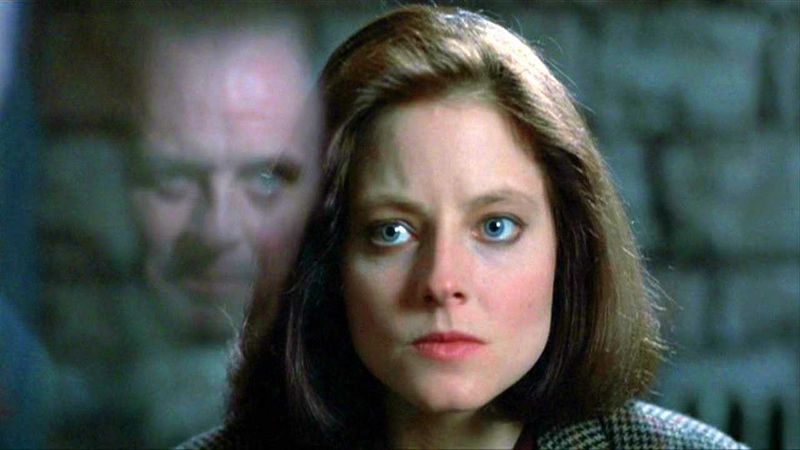
A young FBI trainee sitting across from one of the most brilliant and terrifying minds in cinema history. That tension alone could power an entire film.
The Silence of the Lambs works because Hannibal Lecter is utterly charming, which makes him so much more frightening.
Buffalo Bill, the film’s other villain, adds a layer of grim, relentless dread. Both antagonists are entirely human, which strips away any comfort.
When the monster looks, talks, and thinks like a person, there is nowhere safe to hide your imagination.
8. Misery (1990)
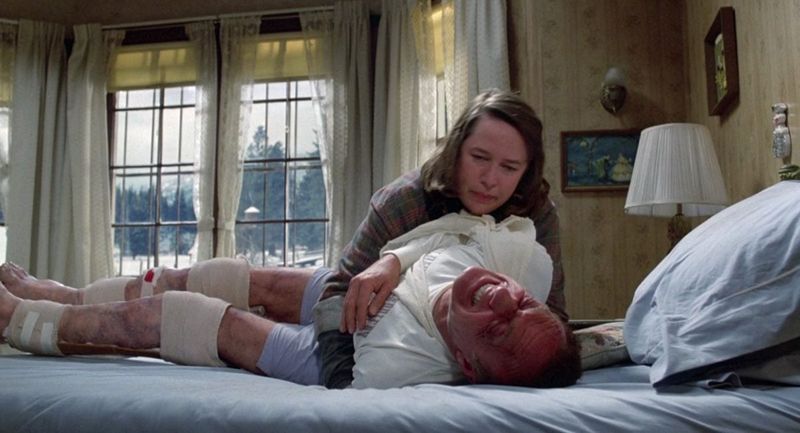
Being rescued from a car crash sounds like good luck. For novelist Paul Sheldon, it turns into the most harrowing experience of his life.
His rescuer, Annie Wilkes, is his number one fan, and that obsession quickly curdles into something genuinely terrifying.
Stephen King’s story works because Annie feels real. She is not a monster or a ghost.
She is a deeply unhinged woman with tremendous physical strength and zero boundaries. Kathy Bates won an Oscar playing her, and every agonizing scene in that isolated cabin earns it completely.
9. Se7en (1995)
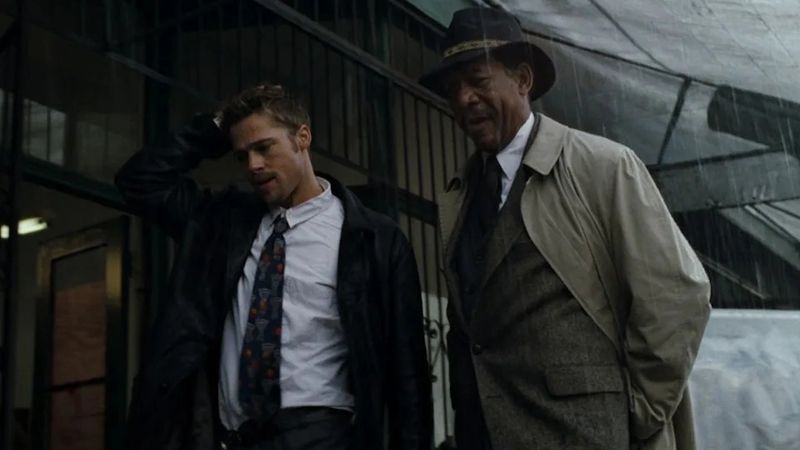
Rain never stops falling in this film’s unnamed city, and that relentless gray misery feels completely intentional. Se7en follows two detectives chasing a killer who stages murders around the seven deadly sins.
The crime scenes are so disturbing that the camera often looks away.
What makes this movie linger is its ending, one of the most gut-punching finales in film history. John Doe is just a man with a warped worldview and a horrifying plan.
Human cruelty, not supernatural evil, is what makes Se7en impossible to forget.
10. The Wicker Man (1973)
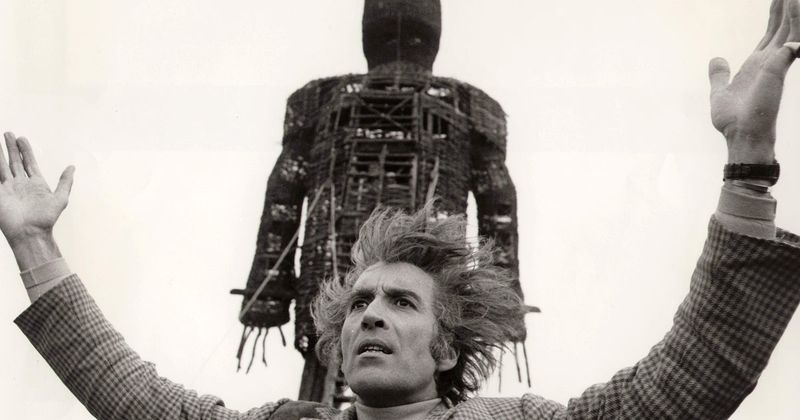
A devoutly religious police sergeant travels to a remote Scottish island to investigate a missing child. What he finds there is a community living by its own ancient rules, cheerfully and completely.
That cheerfulness is exactly what makes The Wicker Man so deeply unsettling.
Nobody here is sneaking around or hiding in the dark. The horror unfolds in broad daylight, sung in folk songs and danced in festivals.
Human belief systems taken to their extreme conclusion can be far more frightening than any creature born from imagination.
11. Don’t Breathe (2016)
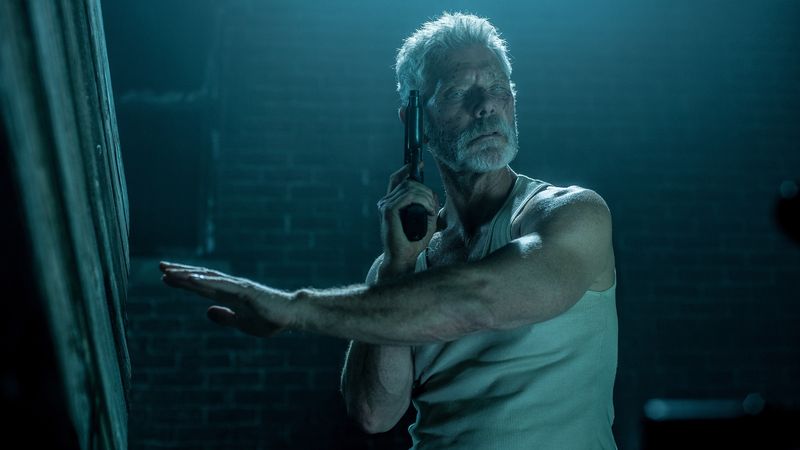
Three young thieves break into the home of a blind, elderly veteran expecting an easy score. They could not have been more wrong.
Don’t Breathe flips the intruder-versus-homeowner formula in a way that keeps you constantly questioning who to root for.
The Blind Man is terrifyingly capable, moving through his dark house with practiced precision while his victims stumble and panic. Every creaking floorboard becomes a potential death sentence.
This film generates unbearable suspense using nothing but a house, a few characters, and masterful control of sound and silence.
12. The Blair Witch Project (1999)
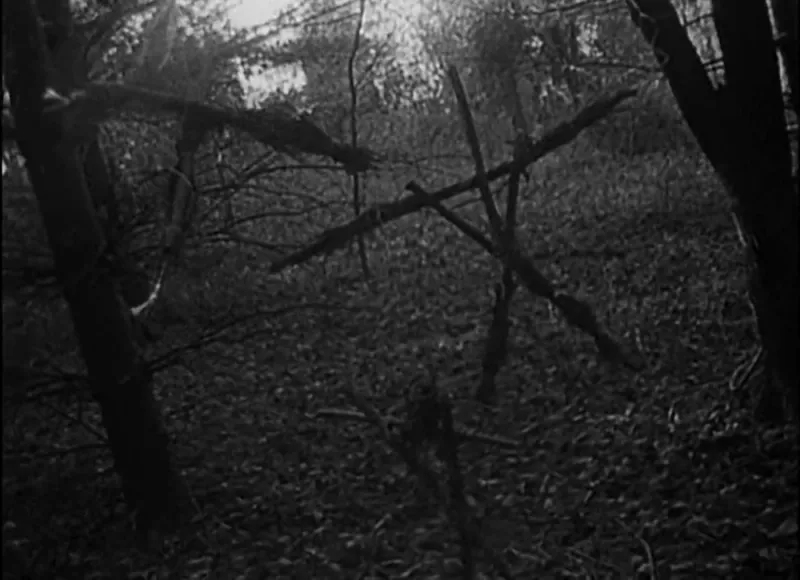
Shot on a tiny budget with a handheld camera, The Blair Witch Project convinced millions of people it was real found footage. That blurring of fiction and reality is a big part of why it worked so spectacularly as a horror film.
You never see the Blair Witch. Not once.
The terror builds entirely through strange sounds, unexplained stick figures, and the slow psychological collapse of three terrified students. Imagination fills in every blank, and your imagination is almost always scarier than anything a film crew could actually show you.
13. It Follows (2014)
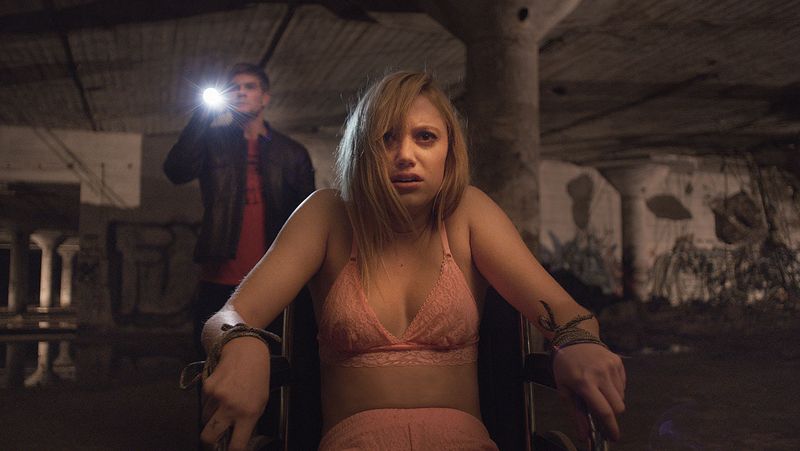
Something is following a teenager named Jay. It walks slowly, always toward her, wearing the face of someone she might know.
It Follows uses this simple, relentless premise to create a dread that never fully releases its grip on you.
The entity looks completely human, which is the whole point. You could be sitting in a crowded room and still not feel safe.
Director David Robert Mitchell layers the film with a dreamlike quality that feels both nostalgic and deeply wrong. Few modern horror films have invented such an effective and original source of fear.
14. Midsommar (2019)
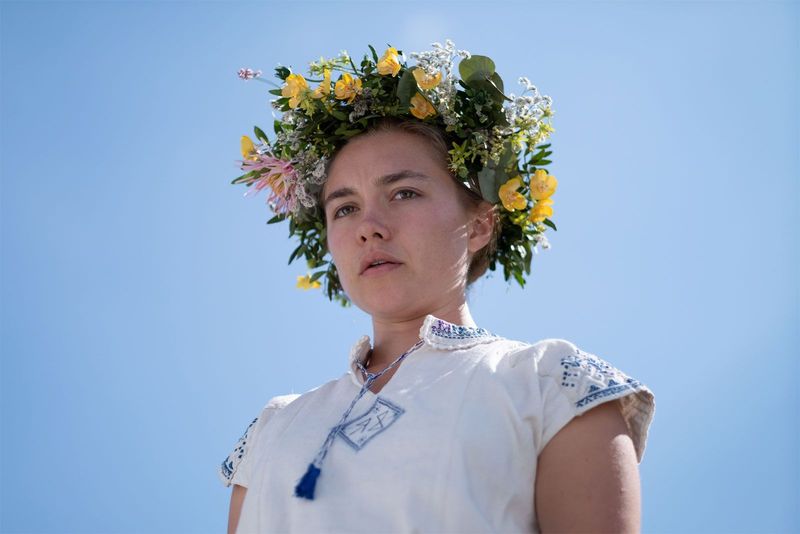
Horror in broad daylight hits differently. Midsommar takes place almost entirely under the endless Scandinavian summer sun, which makes every disturbing ritual feel even more surreal and wrong.
Dani travels to Sweden grieving a devastating personal loss and finds herself surrounded by a smiling commune.
Director Ari Aster uses bright colors and cheerful folk traditions to mask something genuinely barbaric. The horror here is entirely human, rooted in grief, manipulation, and a community’s absolute commitment to its own brutal customs.
Midsommar is beautiful and deeply, deeply unsettling all at once.
15. Hush (2016)
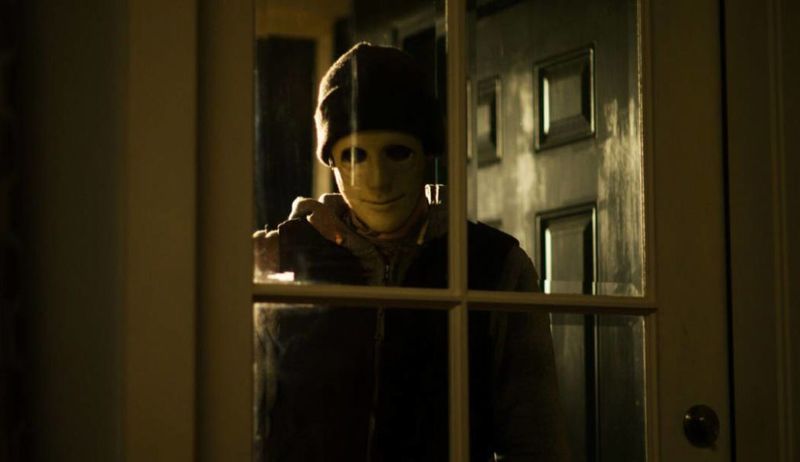
Living alone in the woods as a deaf writer sounds peaceful until a masked man appears at your window with a crossbow. Hush strips horror down to its absolute basics: one vulnerable woman, one ruthless killer, and a house that suddenly feels like a trap.
What makes this film stand out is how smart and resourceful the protagonist Maddie is. She does not just scream and run.
She thinks, adapts, and fights back. Mike Flanagan directs with tight efficiency, delivering genuine edge-of-your-seat tension without a single supernatural element in sight.
16. Saw (2004)
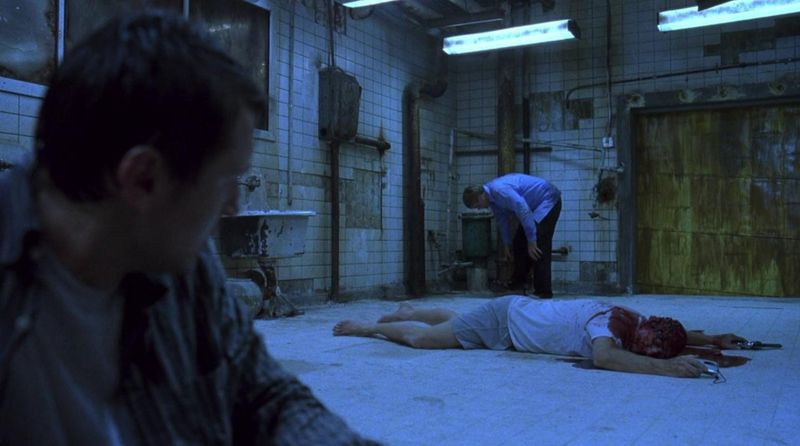
Two strangers wake up chained in a filthy bathroom with no memory of how they got there. A cassette tape gives them the rules of a deadly game.
Saw launched one of horror’s biggest franchises by making its villain a terminally ill man with a twisted moral philosophy.
Jigsaw believes his traps teach people to value their lives. That warped logic makes him genuinely unsettling rather than just violent.
The film’s shocking twist ending became legendary almost overnight. Sometimes the scariest thing is a human being who is completely convinced he is doing the right thing.
17. Jacob’s Ladder (1990)
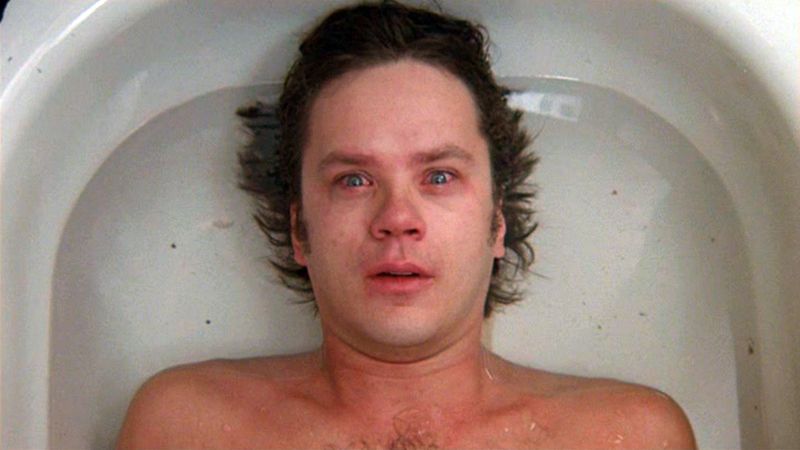
Jacob Singer survived Vietnam, but something followed him home that he cannot name or escape. Jacob’s Ladder is a disorienting, deeply personal nightmare that blurs the line between memory, hallucination, and reality so completely that you stop trusting what you see on screen.
Tim Robbins delivers a raw, anguished performance as a man drowning in trauma and guilt. The horror here is entirely internal, born from psychological wounds that never healed.
This film influenced countless horror movies that followed, and its ideas about death and letting go still resonate powerfully today.
18. Get Out (2017)
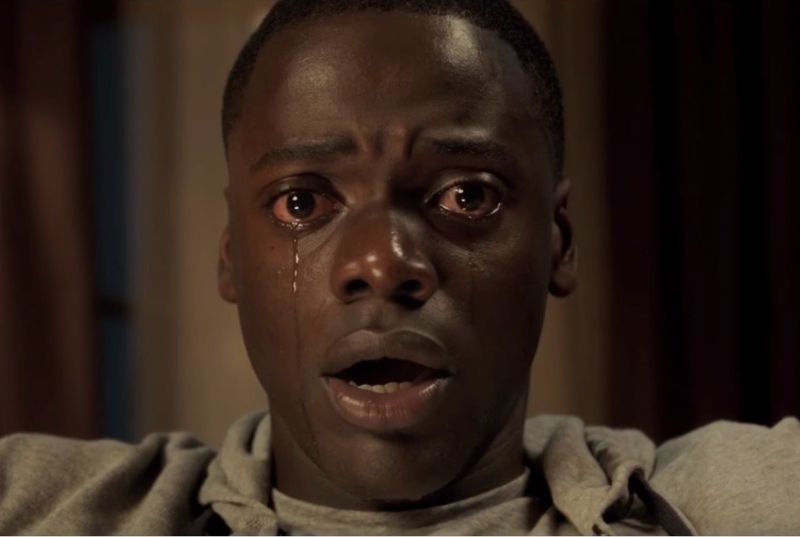
Jordan Peele’s debut horror film does something remarkable. It takes real social anxieties about race in America and wraps them inside a genuinely terrifying thriller.
Chris visits his white girlfriend’s family for the weekend and something feels immediately, undeniably off.
Every smile is too wide. Every compliment lands wrong.
The horror builds through social discomfort before escalating into something far more sinister. Get Out won the Academy Award for Best Original Screenplay, proving that horror rooted in real human behavior and cultural truth can be just as powerful as any monster movie ever made.