
Gaslighting is a sneaky form of emotional manipulation where someone makes you question your own thoughts, feelings, and memories. It happens in friendships, romantic relationships, and even at work.
Recognizing the warning signs early can protect your mental health and help you trust yourself again. Learning these common gaslighting phrases is a powerful first step toward understanding what healthy communication really looks like.
1. “It Was Just a Joke.”

Few phrases sting quite like being told your hurt feelings are just an overreaction to a joke. When someone uses humor as a cover for a cutting remark, they are not being playful – they are being dismissive.
This phrase forces you to question whether your emotional reaction is valid. Healthy humor never leaves someone feeling small.
If a “joke” consistently hurts you, your feelings deserve to be taken seriously, not laughed off.
2. “You’re Just Being Paranoid.”

Your gut instincts exist for a reason, and labeling them as paranoia is a classic manipulation tactic. When someone regularly dismisses your concerns as irrational, they are training you to stop trusting your own judgment.
Over time, you may start ignoring red flags that your intuition was correctly flagging all along. Healthy partners and friends take your concerns seriously.
Feeling heard matters, and anyone who consistently shuts down your worries is waving a serious red flag.
3. “Do You Really Think I’d Make That Up?”

Flipping the script is a favorite move of manipulators, and this phrase does exactly that. Instead of addressing your concern, the gaslighter suddenly becomes the wounded party, making you feel guilty just for asking a question.
The burden of proof gets placed entirely on your shoulders. You end up apologizing when you had every right to speak up.
Genuine people welcome honest questions – they do not weaponize innocence to shut down a fair conversation.
4. “You Hurt Me on Purpose.”

Role reversal is one of the most confusing tricks in a gaslighter’s playbook. Suddenly, the person causing harm becomes the victim, and you are left defending actions you never intended.
This phrase pulls attention away from real harmful behavior and drops the spotlight on you instead. You start apologizing and feeling responsible for pain you did not cause.
Recognizing this switch is crucial – accountability should never be a one-way street where only one person ever carries the blame.
5. “We’ve Already Talked About This – I Can’t Believe You Don’t Remember.”

Memory is powerful, and attacking it is a particularly cruel form of gaslighting. When someone insists a conversation happened that you have no memory of, your confidence in your own mind can start to crumble fast.
Over time, you may begin relying on the gaslighter to tell you what is real. Keeping a journal or written record of important conversations is a smart protective habit.
Your memory is not automatically broken just because someone says so.
6. “Why Do You Always Have to Be Right?”

Standing up for yourself is not the same as needing to be right about everything. This phrase is designed to make assertiveness feel like a personality flaw, shutting down any attempt you make to express your perspective.
It reframes self-defense as arrogance, leaving you feeling embarrassed for speaking up at all. Sharing your viewpoint in a relationship should always be safe and welcome.
Anyone who consistently frames your voice as a problem is discouraging healthy, balanced communication.
7. “Everyone Else Thinks You’re Crazy.”

Creating a false sense of social consensus is a powerful way to make someone feel completely alone. When a gaslighter claims that everyone agrees you are unstable or wrong, it chips away at your confidence in a deeply personal way.
The truth is, these claims are almost never verified or real. No healthy person recruits imaginary crowds to win an argument.
If someone constantly implies the whole world is against you, that relationship deserves a very serious second look.
8. “That Never Happened.”

Flat-out denying reality is gaslighting in its most direct and damaging form. When someone erases an event you clearly experienced, it creates a disorienting gap between what you know and what you are being told to believe.
Repeated exposure to this phrase can genuinely make you question your grip on reality. Documenting events through texts, notes, or trusted friends can help ground you.
Your lived experiences are real, and no one has the right to simply erase them with two words.
9. “You’re Too Sensitive / You’re Overreacting.”

Emotions are information, not weaknesses. Telling someone they are too sensitive or overreacting is a way of invalidating their feelings without ever addressing what caused those feelings in the first place.
After hearing this often enough, you may start apologizing for having emotions at all. Healthy relationships create space for a full range of feelings.
Your emotional responses to hurtful situations are not flaws – they are signals worth paying attention to and treating with respect.
10. “You’re Imagining Things.”

Hearing “you’re imagining things” when you know what you saw or felt is deeply unsettling. This phrase directly attacks your perception, pushing you to doubt the very experiences your senses are reporting to you.
Over time, it erodes your ability to trust your own observations. Gaslighters rely on this confusion to maintain control.
Grounding yourself in facts, writing things down, and leaning on trusted people outside the relationship can help you hold onto your sense of reality.
11. “You’re Overthinking It.”

Critical thinking is a strength, not a problem. When someone tells you that you are overthinking a concern, they are essentially asking you to stop analyzing something that may genuinely deserve your attention.
Curiosity and careful reasoning protect us from being taken advantage of. Repeatedly dismissing your thought process discourages you from trusting your own intellect.
A good partner or friend encourages thoughtful conversations rather than shutting them down with a phrase that makes your mind feel like a burden.
12. “If You Really Cared About Me, You Wouldn’t Even Think That.”

Guilt is a powerful lever, and this phrase pulls it hard. By connecting your natural thoughts or feelings to a supposed lack of love, the gaslighter hijacks your emotional responses and turns caring against you.
You end up suppressing perfectly normal concerns just to prove your loyalty. Real love never requires you to stop thinking or feeling.
Any relationship where your thoughts are treated as evidence of disloyalty is built on control, not genuine connection or mutual respect.
13. “You Always Make Things Up.”

Broad, sweeping accusations like this one are designed to destroy credibility over the long haul. By claiming you “always” fabricate things, the gaslighter plants a seed of doubt that grows every time you try to speak up or share your truth.
Eventually, you may stop speaking up at all – which is exactly the goal. No one has a perfect memory, but that is very different from being a habitual liar.
Your voice and your story deserve to be heard and respected.
14. “You’re the Problem Here, Not Me.”

Accountability is a two-way street, but this phrase turns it into a dead end. Shifting all blame onto you allows the gaslighter to walk away from every conflict feeling completely innocent while you carry all the weight.
Healthy disagreements involve both people reflecting on their own behavior honestly. If one person is always the problem and the other is always the victim, something is seriously off.
Balanced relationships require mutual responsibility, not a permanent scapegoat taking the fall every single time.
15. “It’s All in Your Head.”

Dismissing real physical or mental health concerns with this phrase is both harmful and dangerous. It pushes people to distrust their own bodies and delay seeking help they may genuinely and urgently need.
Mental and physical health struggles are real, and they deserve proper attention and care. Being told your pain is imaginary is not just unkind – it can be medically reckless.
Anyone who consistently minimizes your health concerns is prioritizing their comfort over your very real well-being and safety.
16. “You Need to Get Your Head Straight.”
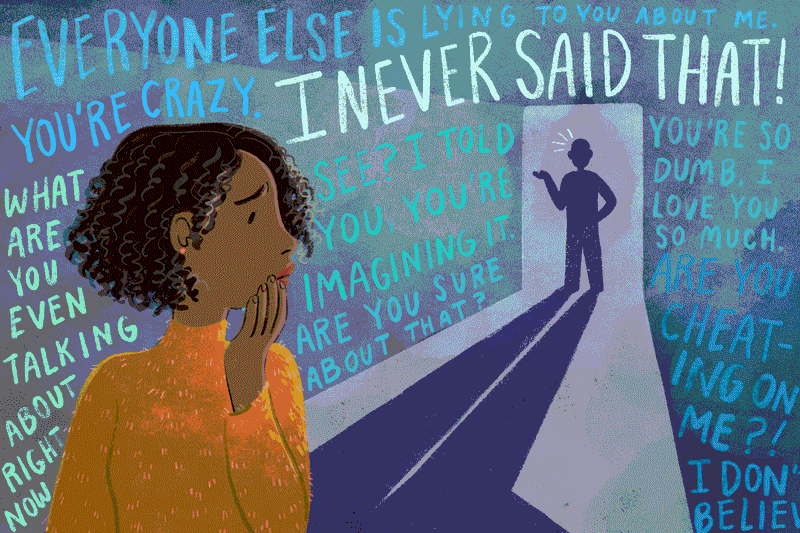
Blunt and cutting, this phrase attacks your mental state directly. Rather than addressing a real concern, the gaslighter redirects the conversation toward your supposed instability, making you feel like your mind is broken rather than your relationship.
Mental health struggles are never an invitation for ridicule or weaponized put-downs. If someone regularly implies you are irrational or mentally unstable as a way to win arguments, that is not a communication style – it is emotional aggression dressed up as concern.
17. “Your Friends Are Toxic – You’re Better Off Without Them.”

Isolation is one of the most telling signs of a controlling relationship. Convincing you that your friends are bad influences removes the very people most likely to notice something is wrong and encourage you to get help.
A partner who genuinely cares about you celebrates your friendships rather than dismantling them one by one. When someone works to cut off your support system, they are not protecting you – they are making themselves the only voice you hear, which benefits no one but them.