
Our planet is full of surprises, and some places seem to play by their own rules entirely. From rocks that move on their own to caves that support life without sunlight, the world holds secrets that once seemed impossible to explain.
Scientists have worked hard to crack many of these mysteries, and the answers are often more fascinating than the legends. Get ready to explore 20 of the strangest places on Earth where nature clearly forgot the rulebook.
1. Sailing Stones of Death Valley, California, USA
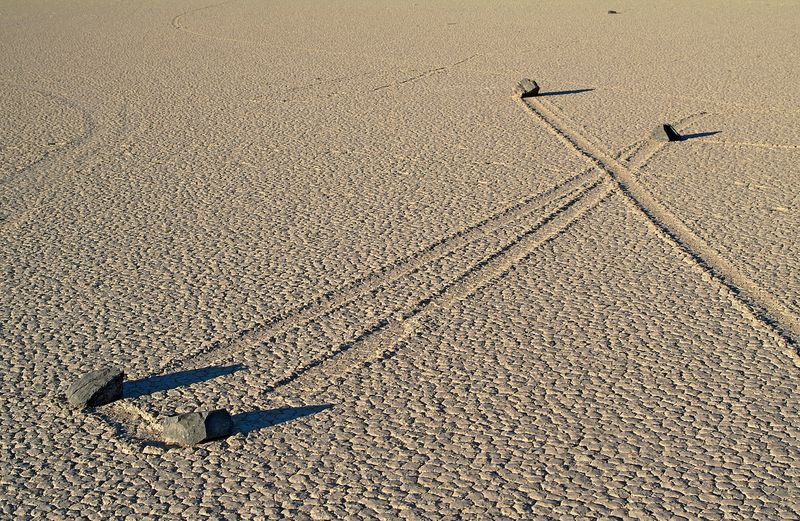
Rocks that move on their own sound like something from a fantasy novel, but at Racetrack Playa in Death Valley, it is very real. Heavy boulders, some weighing hundreds of pounds, slide across the dry lakebed and leave trails stretching up to 1,500 feet.
Scientists finally captured the movement on camera in 2014. Thin sheets of ice formed after rain are pushed by light winds, carrying rocks along as the ice melts.
Mystery solved, but still wildly cool.
2. Movile Cave, Romania
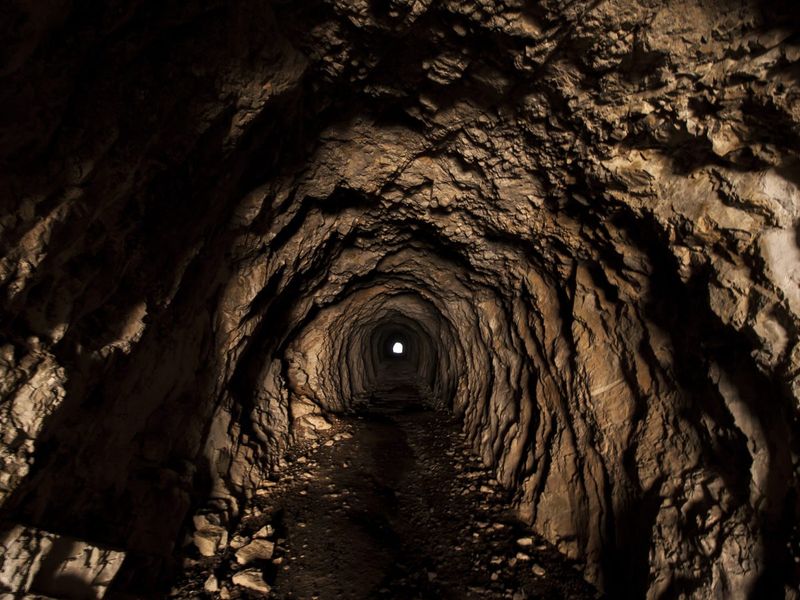
Sealed off from the outside world for roughly 5.5 million years, Movile Cave in Romania is like a planet within a planet. Oxygen levels inside hover between 7 and 16 percent, far below the normal 21 percent found at Earth’s surface.
Without sunlight, life here runs on chemosynthesis, where bacteria break down hydrogen sulfide and methane for energy. Over 50 animal species call this cave home, and 37 of them exist nowhere else on Earth.
3. The Wave, Arizona and Utah Border, USA
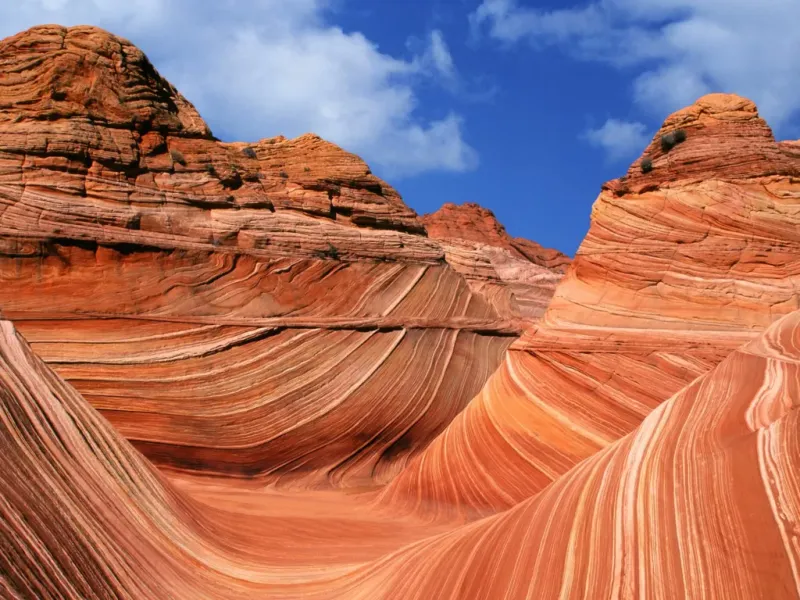
Carved from Jurassic-era Navajo Sandstone roughly 200 million years old, The Wave looks like someone froze a colorful ocean mid-crash. Wind and rain slowly polished its walls over millions of years, depositing minerals like iron oxide, manganese, and calcium to create those stunning swirling colors.
Because the formation is so fragile, only 64 people are allowed to visit per day via a strict permit lottery. Getting a permit feels like winning a golden ticket.
4. Giant’s Causeway, County Antrim, Northern Ireland
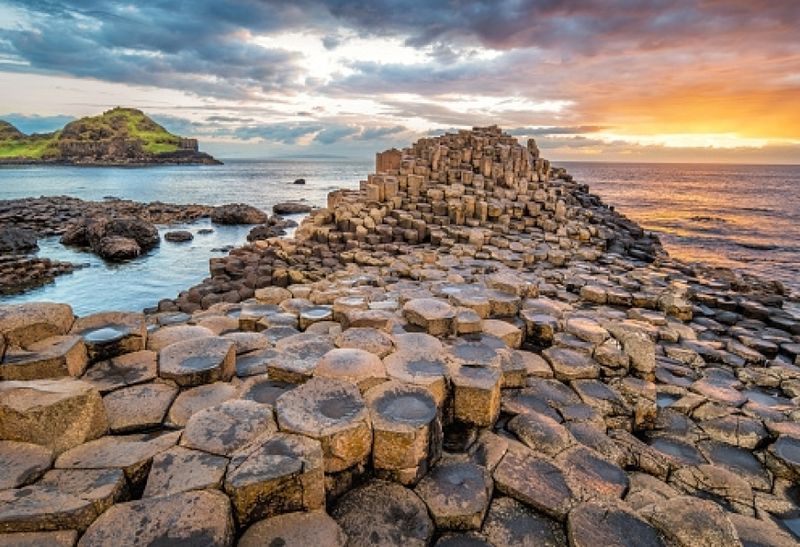
About 40,000 interlocking basalt columns rise from the coastline of Northern Ireland, most of them perfectly hexagonal. Formed around 50 to 60 million years ago, molten lava cooled so slowly and evenly that the rock cracked into these almost mathematical shapes.
Local legend says a giant named Finn McCool built the causeway as a bridge to Scotland. Science has a different explanation, but honestly, the giant story is pretty hard to beat.
It earned UNESCO World Heritage status in 1986.
5. Lake Hillier, Middle Island, Western Australia
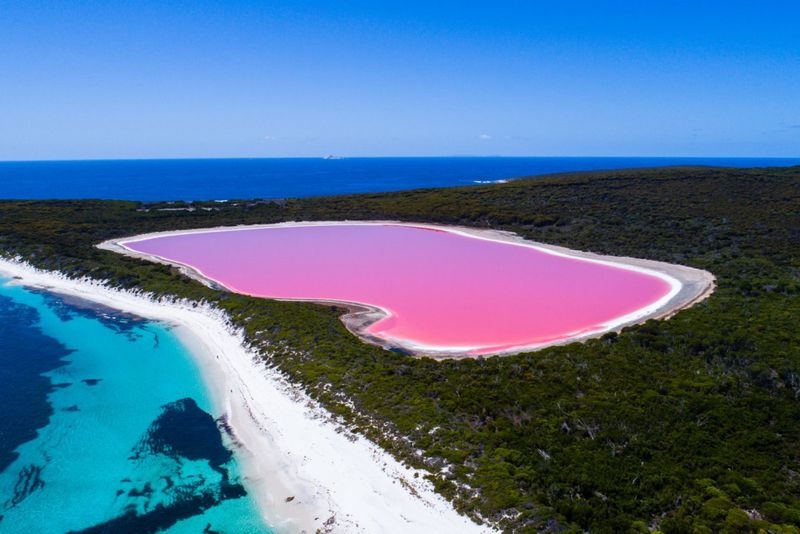
A bubblegum-pink lake sitting right next to the deep blue Southern Ocean sounds like a painting error, but Lake Hillier is completely real. Salt-loving microorganisms, including the algae Dunaliella salina and red halophilic bacteria, produce carotenoid pigments that permanently tint the water that brilliant shade of pink.
Unlike some extreme environments, the lake is non-toxic and generally safe for humans. The pink color does not disappear even when water is collected in a clear glass container.
6. The Petrifying Well of Knaresborough, North Yorkshire, England
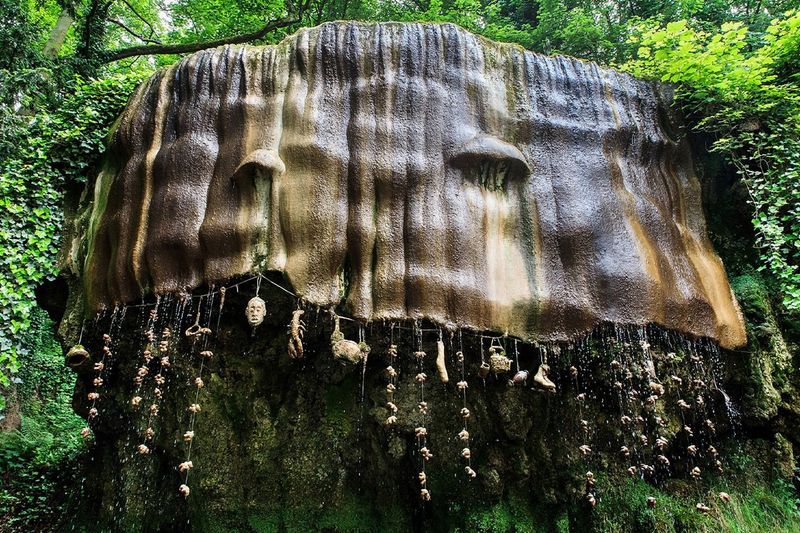
For centuries, people believed this well in North Yorkshire had magical powers because anything left under its dripping water slowly turns to stone. Teddy bears, hats, boots, and even a Victorian top hat have all been petrified here over months.
The real explanation is geology, not magic. The water carries an extremely high concentration of calcium carbonate, which coats objects layer by layer until they look like stone.
Science made it less spooky but somehow even more impressive.
7. Danakil Depression, Ethiopia
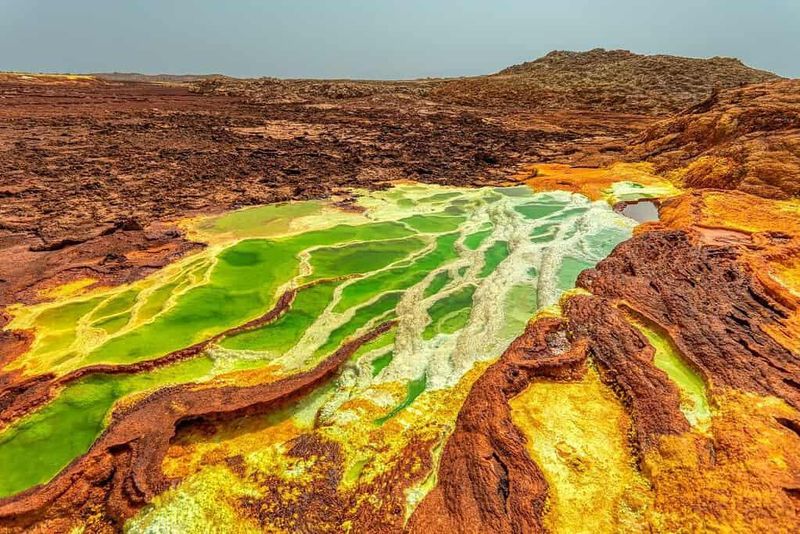
Welcome to one of the hottest and most geologically active places on Earth. The Danakil Depression in Ethiopia sits below sea level and sits at the junction of three tectonic plates slowly pulling apart, creating a landscape that looks like another planet entirely.
Acidic hot springs glow vivid yellow, orange, and green from sulfur and mineral deposits. Boiling mud lakes bubble nearby.
Scientists visit here to study what a new ocean being born actually looks like in real time.
8. Goblin Valley State Park, Utah, USA
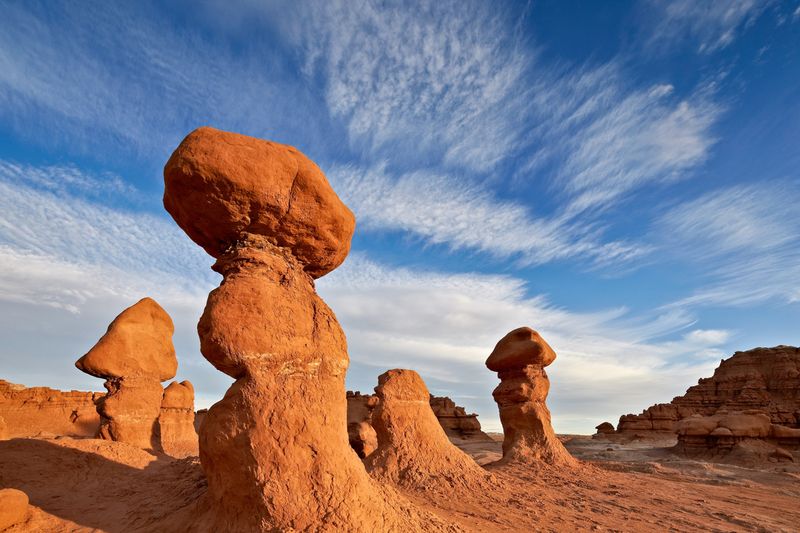
Thousands of mushroom-shaped rock figures cover the valley floor here, and they look like an alien city frozen in time. These formations, called hoodoos or goblins, are made from Entrada sandstone that was deposited roughly 170 million years ago.
Softer layers of rock erode away faster than the harder layers above them, leaving behind these quirky, rounded shapes. Every goblin is slightly different, which makes wandering through the park feel like exploring a crowd of strange stone characters.
9. Area 51, Nevada, USA
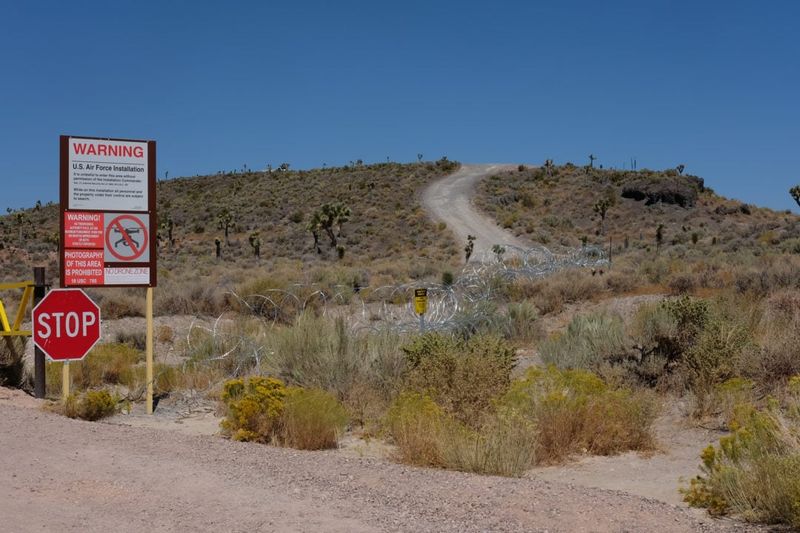
Few places on Earth have sparked more conspiracy theories than this classified Air Force base tucked inside the Nevada desert. Aliens, UFOs, and secret government experiments have all been rumored to take place behind its heavily guarded fences.
Declassified documents reveal the real story: Area 51 was primarily used to develop and test advanced experimental aircraft, including the U-2 spy plane in the 1950s. The extreme secrecy needed to protect those projects accidentally turned the base into a legend.
10. Fly Geyser, Nevada, USA
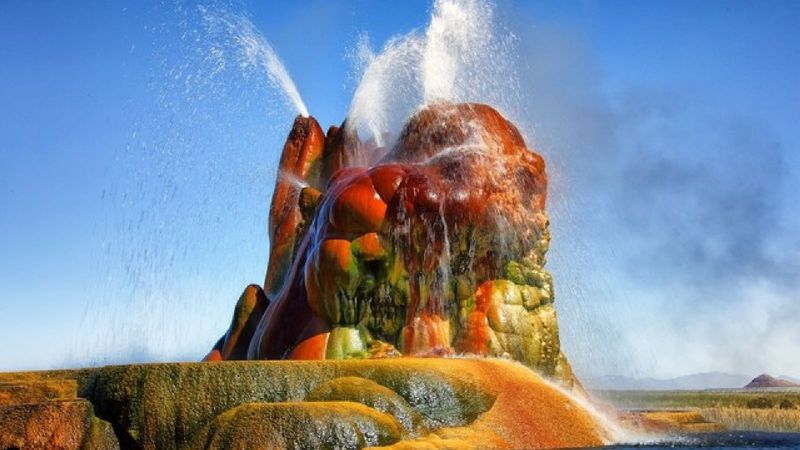
Fly Geyser looks like it belongs on a fantasy movie set, but it is very much real and sits quietly on private land in the Nevada desert. It was accidentally created in 1964 when a geothermal energy company drilled a well and hit a pocket of superheated water.
The water began erupting continuously and deposited calcium carbonate and other minerals over decades, building the colorful terraced mound seen today. Bright green and red thermophilic algae coat the surface, adding to its surreal appearance.
11. Socotra Island, Yemen
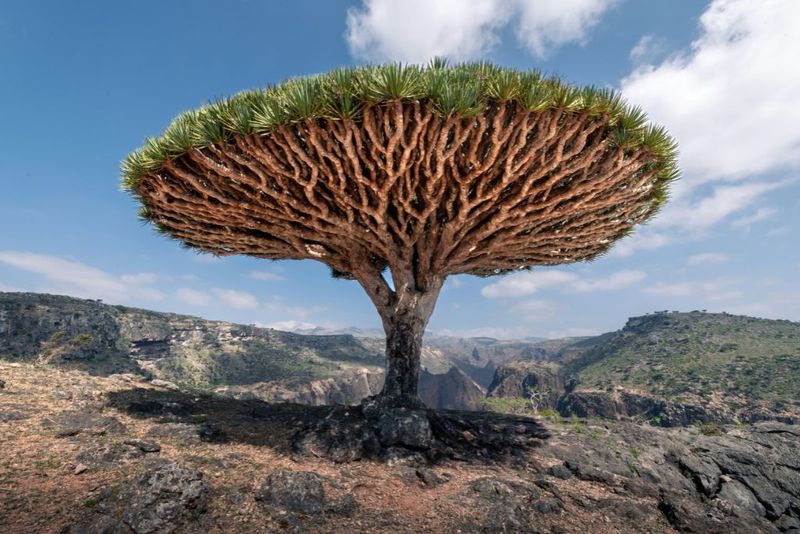
Called the Galapagos of the Indian Ocean, Socotra Island hosts plants and animals found nowhere else on the planet. Its long isolation from mainland Africa and Arabia allowed evolution to take some seriously unusual turns over millions of years.
The most famous resident is the Dragon Blood Tree, which has an umbrella-shaped canopy and bleeds a deep red resin when cut. Around one third of Socotra’s plant life is completely endemic, making every hike across the island feel like stepping into a lost world.
12. Pamukkale Thermal Pools, Turkey
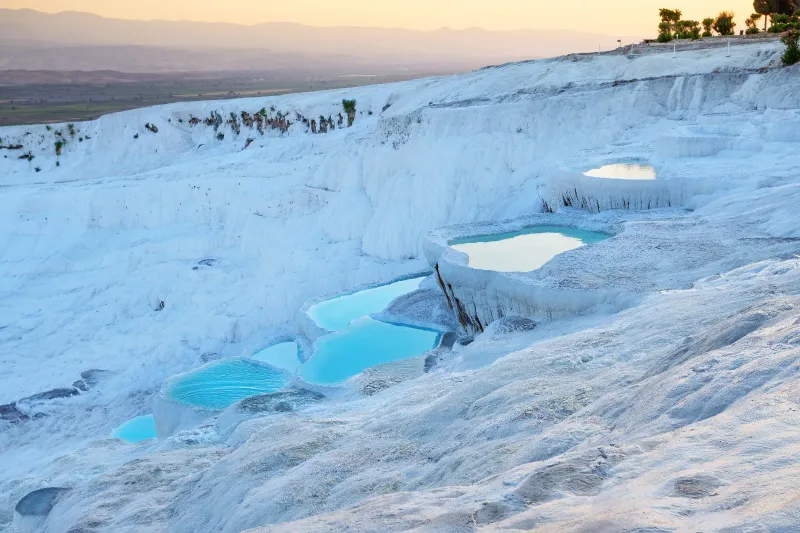
Pamukkale means “cotton castle” in Turkish, and one look at its gleaming white terraces explains why. Hot springs rich in calcium carbonate flow over the hillside and slowly cool, depositing mineral layers that build up into brilliant white travertine shelves over time.
Each terrace forms a natural pool of warm, mineral-rich water. People have been bathing in these pools for thousands of years.
The ancient Greco-Roman city of Hierapolis was built right next to them, and its ruins still sit at the top of the terraces today.
13. Waitomo Glowworm Caves, New Zealand
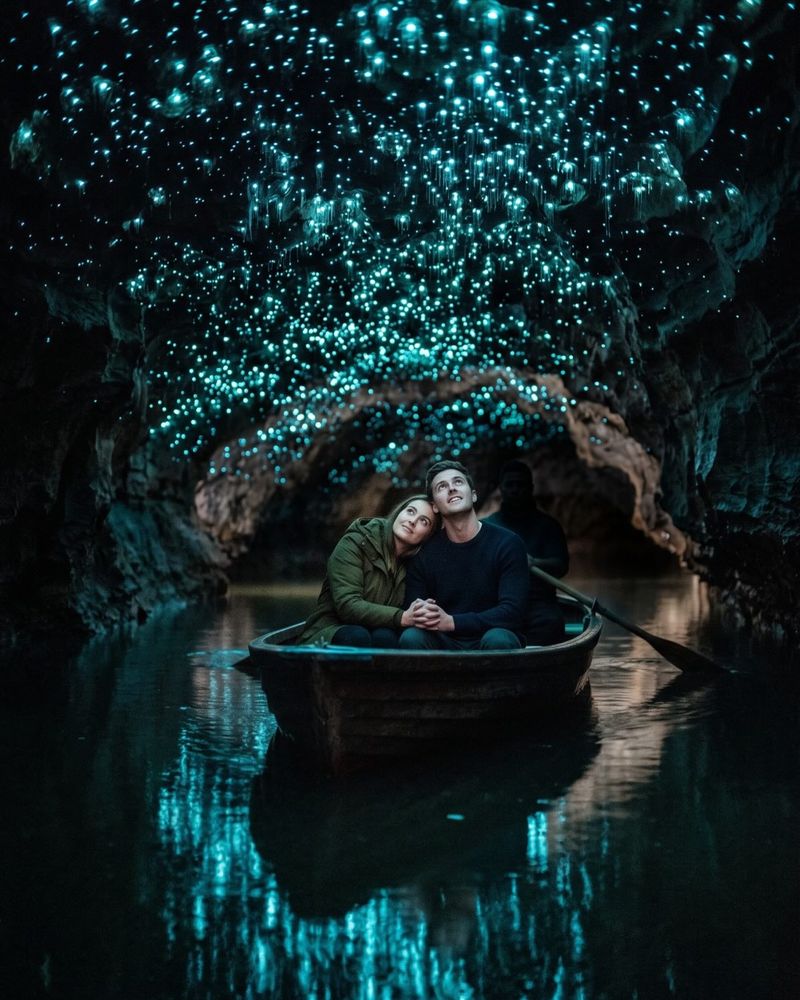
Imagine floating silently through a dark cave while thousands of tiny blue-green lights glow above you like a living galaxy. That is exactly what visitors experience inside the Waitomo Glowworm Caves in New Zealand’s North Island.
The lights come from the larvae of Arachnocampa luminosa, a species of fungus gnat found only in New Zealand. Each larva hangs sticky silk threads to catch insects attracted to its glow.
The cave system has been a tourist attraction since 1889, and it still leaves every visitor speechless.
14. Spotted Lake, British Columbia, Canada
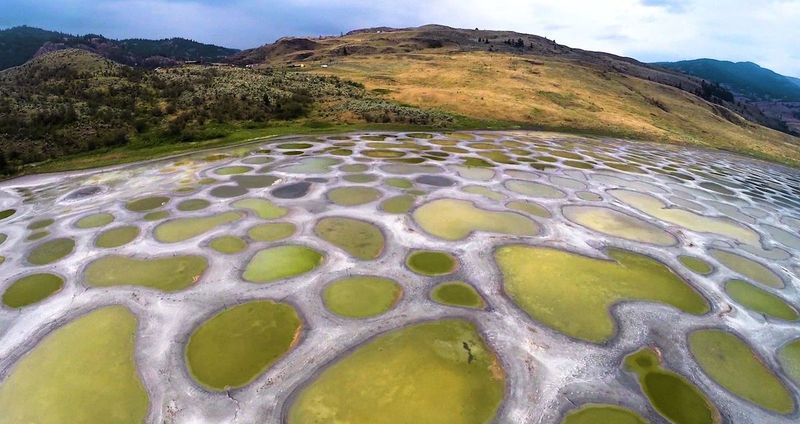
Every summer, as water evaporates from this lake in British Columbia, it reveals hundreds of circular spots in shades of yellow, green, blue, and even white. Each spot is a concentrated pool of different minerals, including magnesium sulfate, calcium, and sodium sulfates.
The First Nations Okanagan people have considered this lake sacred for centuries and used its mineral-rich mud for healing. Today, the land is protected and owned by the Okanagan Nation Alliance, preserving both its cultural significance and its wild, polka-dotted appearance.
15. The Door to Hell, Darvaza Gas Crater, Turkmenistan
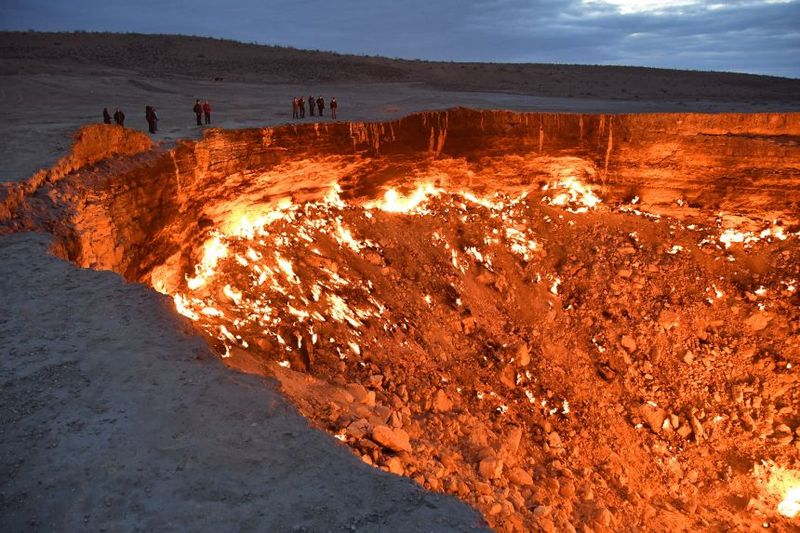
A crater roughly 70 meters wide has been burning continuously in the Karakum Desert of Turkmenistan since 1971, and locals have nicknamed it the Door to Hell. Soviet engineers accidentally created it while drilling for natural gas when the ground collapsed into an underground cavern.
To prevent dangerous methane gas from spreading, they lit the crater on fire, expecting it to burn out in a few weeks. Over 50 years later, it is still going strong.
President Gurbanguly Berdimuhamedow ordered it extinguished in 2022, but it continues to burn.
16. Blood Falls, Antarctica
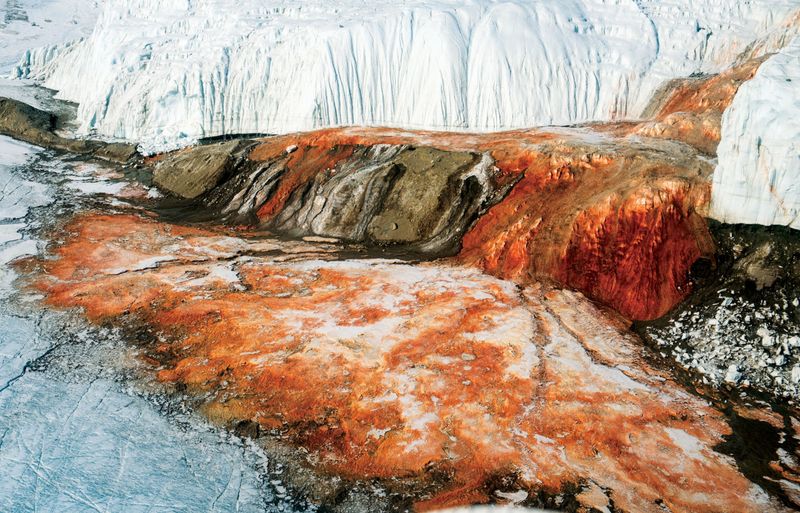
A glacier in Antarctica bleeds. That is the simplest way to describe Blood Falls, where iron-rich, hypersaline water seeps out from beneath the Taylor Glacier and stains the ice a vivid rust-red color.
It looks alarming, but no actual blood is involved.
The water comes from a subglacial lake trapped beneath the glacier for roughly two million years. As it flows out and contacts oxygen in the air, the iron oxidizes and turns red, just like rust forming on metal.
Scientists study it as a possible model for life on Mars.
17. Magnetic Hill, Moncton, New Brunswick, Canada
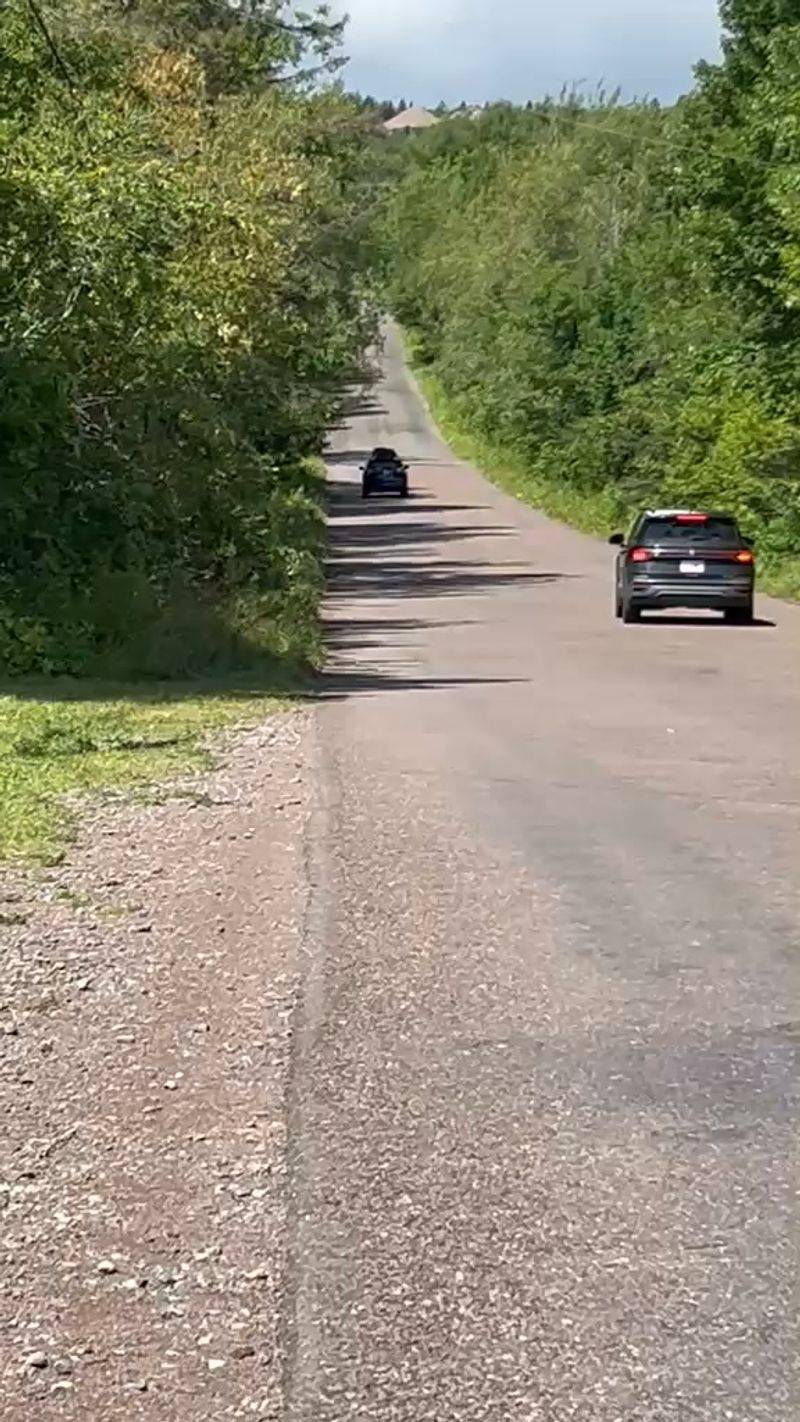
Park your car at the bottom of this hill in Moncton, put it in neutral, and watch it appear to roll uphill on its own. Visitors have been baffled by this spot since the 1930s, and it has become one of Canada’s most popular roadside attractions.
The trick is a classic optical illusion created by the surrounding landscape. The layout of the trees and the slope of the land fool the brain into thinking the road rises when it actually descends.
Your eyes are the ones playing tricks, not gravity.
18. Richat Structure, Mauritania
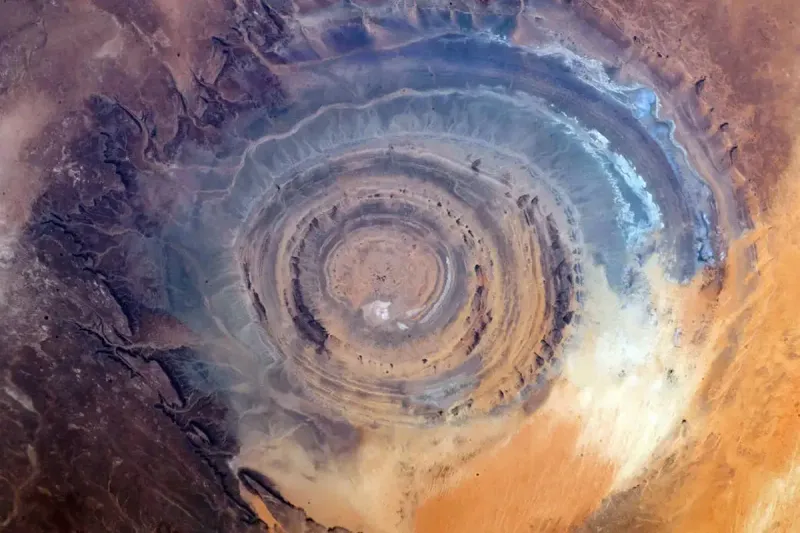
From space, a giant blue eye stares up from the Sahara Desert in Mauritania. The Richat Structure, nicknamed the Eye of the Sahara, stretches roughly 50 kilometers across and looks so perfectly circular that early astronauts used it as a navigation landmark.
Scientists originally thought a meteorite created it, but research now points to a dome of rock that slowly eroded over millions of years, exposing concentric rings of different geological layers. It is one of the most striking natural features visible from orbit.
19. Lake Natron, Tanzania
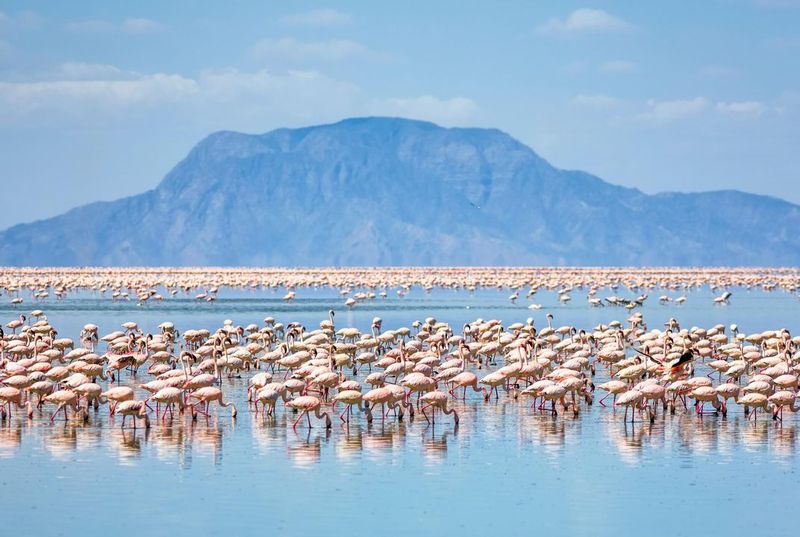
Lake Natron in Tanzania is one of the most hostile environments on Earth for most animals. Its water is extremely alkaline, reaching a pH close to 10.5, and temperatures near hydrothermal springs can hit 60 degrees Celsius.
Animals that fall in are often preserved and calcified almost instantly.
Strangely, about 75 percent of the world’s flamingo population breeds here, because the harsh conditions keep most predators away. The lake’s bright red color comes from salt-loving microorganisms called cyanobacteria, giving it a hauntingly beautiful appearance from above.
20. Zhangye Danxia Landform, China
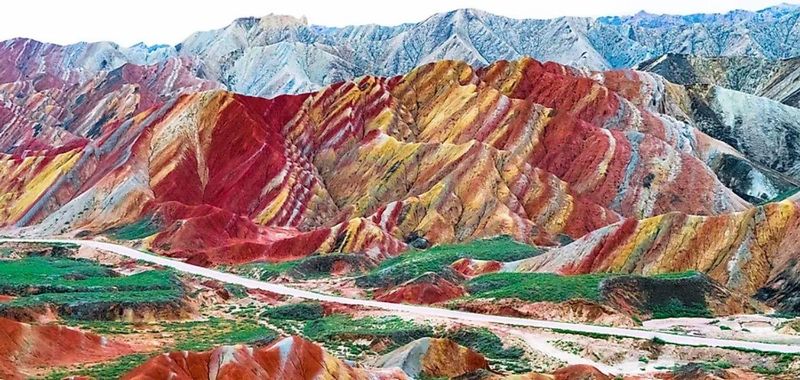
Striped in shades of red, orange, yellow, green, and blue, the Zhangye Danxia Landform in Gansu Province looks like a giant artist took a paintbrush to the mountains. Layers of colored sandstone and minerals were deposited over 24 million years, then tilted and eroded by wind and rain into dramatic ridges and peaks.
The vivid colors are most intense after rainfall, when the minerals in the rock saturate and glow. Listed as a UNESCO World Heritage Site, this landscape regularly leaves first-time visitors wondering if the colors have been digitally enhanced.
They have not.