
Most people assume that spending a lot of time alone is a sign of sadness or shyness, but for highly intelligent people, solitude is often a personal choice they genuinely enjoy. Smart minds tend to work differently, craving quiet spaces where deep thoughts can flow freely.
Science and psychology both back this up, showing that alone time fuels creativity, focus, and emotional balance for high-IQ individuals. Read on to discover the surprising reasons why the smartest people in the room often prefer their own company.
1. Deep Thought Needs Quiet Space

Some minds never really switch off. Highly intelligent people tend to carry complex, layered thoughts that need room to breathe, and a noisy social environment is the worst place for that kind of thinking.
Solitude acts like a blank canvas where ideas can be tested, refined, and connected in ways that group settings simply do not allow. Without constant interruptions, the brain can reach deeper levels of understanding and problem-solving that feel genuinely satisfying.
2. Small Talk Feels Like a Dead End

Chatting about the weather or last night’s TV show can feel exhausting when your brain is wired for bigger conversations. Highly intelligent individuals often crave discussions about ideas, systems, and possibilities rather than surface-level exchanges.
Over time, too many hollow interactions drain their energy without offering anything meaningful in return. Choosing solitude over small talk is not rudeness.
For many smart people, it is simply self-preservation and a way to protect their mental bandwidth for things that genuinely matter.
3. Alone Time Recharges the Brain

Social settings are full of sensory input that the brain has to process constantly, from voices and expressions to unspoken social rules. For highly intelligent people, this processing happens on an even deeper level, which makes socializing mentally expensive.
Stepping away from the crowd is not antisocial behavior. It is a necessary reset.
Quiet time allows the nervous system to calm down, the mind to sort through experiences, and mental energy to rebuild so they can function at their sharpest.
4. Creativity Blooms in Silence

Ask almost any highly creative person where their best ideas come from, and many will say the same thing: silence. When external noise fades away, the imagination has room to wander into unexpected territory.
Highly intelligent people often have rich creative lives that require undisturbed mental space to flourish. Group settings can water down original thinking because social pressure subtly nudges everyone toward agreement.
Solitude removes that pressure entirely, letting truly original ideas surface without competition or judgment from others.
5. Independent Thinking Thrives Without Crowds

Group settings have a sneaky way of flattening individual thinking. Even smart people can unconsciously shift their opinions to match the room, a well-documented phenomenon called groupthink.
Highly intelligent individuals often guard their autonomy fiercely because they know how easily outside pressure can compromise clear reasoning. Spending time alone allows them to form opinions based purely on logic and evidence, not social approval.
That independence of thought is something many of them consider non-negotiable and worth protecting at almost any cost.
6. Their Inner World Is Endlessly Fascinating
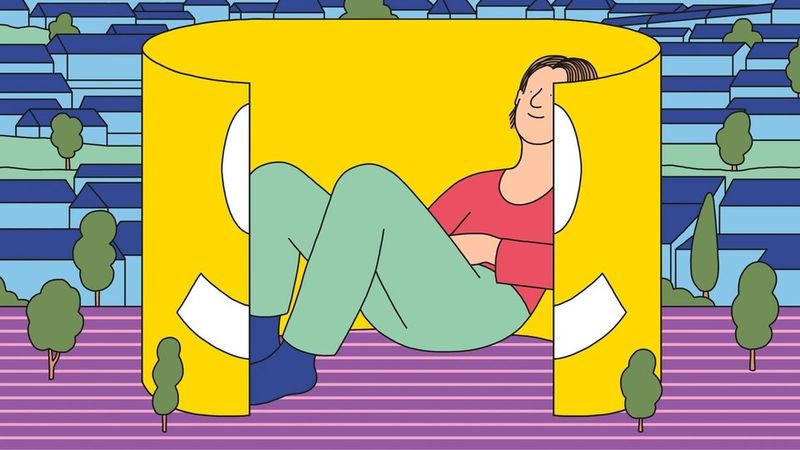
Not everyone needs external entertainment to feel engaged. Highly intelligent people often carry a vivid inner world full of theories, memories, and mental experiments that keep them occupied for hours.
Their internal narrative is rich, layered, and constantly evolving. Managing that inner life alongside an active social schedule can feel genuinely overwhelming.
Choosing solitude is sometimes less about avoiding people and more about giving their mind the space it needs to explore the fascinating landscape that already exists inside their own head.
7. Too Much Socializing Lowers Their Happiness

Here is a finding that surprises most people: research has shown that for highly intelligent individuals, more frequent socializing is actually linked to lower life satisfaction. One study found that for every 10-point IQ increase, a person needs roughly 38 percent less social time to feel content.
That does not mean smart people dislike others. It means their well-being is less dependent on constant social reinforcement.
Solitude genuinely makes them happier, and there is solid science behind that preference.
8. Finding True Mental Peers Is Rare

When your mind operates at a high level, finding someone who truly matches your intellectual frequency can feel like searching for a needle in a haystack. Statistically, it is just uncommon.
Rather than settling for conversations that feel one-sided or exhausting to navigate, many highly intelligent people simply choose their own company. Solitude becomes a comfortable default, not because they are arrogant, but because meaningful intellectual connection is genuinely hard to find and waiting for it feels better than forcing it.
9. Overstimulation Hits Harder for Smart Minds

Loud environments, overlapping conversations, and constant sensory input can be genuinely overwhelming for highly intelligent people. Their brains tend to process stimuli more deeply, which means busy social environments demand far more mental energy than they do for others.
This heightened sensitivity is not a weakness. It is actually a sign of a more active and thorough processing system.
Still, it makes solitude feel less like a luxury and more like a biological necessity, a way to keep the mental engine running smoothly without overheating.
10. Solitude Feels Peaceful, Not Lonely

There is a meaningful difference between loneliness and solitude, and highly intelligent people tend to understand that distinction better than most. Loneliness is an ache for connection.
Solitude is a deliberate, satisfying choice.
For smart minds, quiet time alone often feels genuinely restorative, like giving the nervous system a long, peaceful exhale. Rather than feeling empty without others around, they feel more like themselves.
The stillness allows their thoughts to settle and their sense of identity to feel grounded and whole.
11. Goals Demand Uninterrupted Focus

Big ambitions require serious concentration, and constant social obligations can chip away at the focused time needed to make real progress. Many highly intelligent people are driven by long-term goals that demand hours of deep, uninterrupted work each day.
Social rituals like group hangouts or casual check-ins, while enjoyable for others, can feel like speed bumps on the road to something more important. Protecting their time is not selfish.
For goal-oriented smart people, it is simply how meaningful things actually get done.
12. Deeper Cognitive Processing Takes Time

Highly intelligent people do not just think about things. They think about thinking, analyzing layers of meaning, questioning assumptions, and exploring every angle before landing on a conclusion.
That level of cognitive depth takes real time and quiet.
Social environments often push for quick, surface-level responses, which can feel frustrating for minds that naturally go deeper. Solitude gives them the unhurried space to process information the way their brain actually wants to, thoroughly, carefully, and without the pressure of an audience watching.
13. They Adapt Better Without Constant Social Reinforcement

Evolutionary psychology suggests that highly intelligent individuals may be better equipped to thrive in novel environments, ones that look very different from the tight-knit social groups humans evolved in. That adaptability can make them less dependent on constant social connection for a sense of security.
Where others might feel unsettled without regular group interaction, smart individuals often draw strength from within. Their happiness does not hinge on having people nearby, which makes solitude feel natural rather than something to be feared or fixed.
14. Withdrawal Protects Against Misunderstanding

Being misunderstood is a frustration that many highly intelligent people know well. When your thoughts are complex and your references are niche, conversations can quickly go sideways or leave others feeling confused or even defensive.
Pulling back into solitude can be a protective strategy, a way to avoid the social friction that comes from thinking differently than most people around you. It is not about superiority.
It is about avoiding the exhausting cycle of explaining yourself repeatedly to people who simply operate on a different wavelength.
15. Quality Over Quantity in Relationships

A hundred casual acquaintances cannot replace one genuinely meaningful friendship. Highly intelligent people tend to prioritize depth in their relationships, choosing a small, trusted circle over a wide but shallow social network.
This preference naturally means spending more time alone than the average person, because building deep connections takes patience and not everyone qualifies. Being selective is not coldness.
It is a deliberate investment in the kinds of relationships that actually add value, challenge their thinking, and feel worth showing up for.
16. Introversion and High IQ Often Walk Together

While introversion and intelligence are not the same thing, research does show a meaningful overlap between the two. Many highly intelligent individuals lean introverted, meaning they naturally gain energy from solitude rather than from social interaction.
This is not a personality flaw. Introverts process experiences more deeply and tend to think before speaking, both traits that support high-level reasoning.
For these individuals, preferring alone time is simply how their brain is wired, and honoring that wiring leads to better thinking and greater overall well-being.
17. Social Rituals Can Feel Like Wasted Time

For a brain built to solve complex problems, an hour of repetitive group activities or predictable party conversations can feel genuinely wasteful. Highly intelligent people often measure time in terms of what could be learned, created, or accomplished.
That mindset makes low-stakes social rituals feel like a detour rather than a destination. Skipping the party to read, build, or think is not antisocial behavior.
For many smart individuals, it is simply choosing the kind of stimulation that their brain actually finds rewarding and worth the hours spent.
18. Mental Space Is Worth Protecting

Every social interaction costs mental energy, even enjoyable ones. For highly intelligent people whose brains are constantly processing at a high level, that cost adds up quickly and can leave them feeling depleted and scattered.
Protecting mental space is a conscious act of self-management. Choosing solitude over socializing is sometimes the smartest thing a sharp mind can do to stay sharp.
A quiet environment allows the brain to sort, store, and recharge so it is ready to perform when it truly counts.
19. Solitude Builds a Stronger Sense of Self

Spending meaningful time alone is one of the most effective ways to understand who you actually are. Without the noise of other people’s opinions and expectations, a person can hear their own values, instincts, and desires more clearly.
Highly intelligent people often use solitude as a tool for self-discovery and personal alignment. Knowing yourself deeply builds unshakeable confidence, the kind that does not need constant social validation to stay intact.
For smart individuals, alone time is not empty space. It is where identity gets refined and strengthened.