
Narcissists are known for their need for control, admiration, and a lack of empathy toward others. Certain phrases feel almost impossible for them to say because those words require humility, vulnerability, and genuine care.
Knowing what a narcissist will never say can help you recognize these patterns in real life. Once you spot the signs, you can better protect your emotional health and set healthy boundaries.
1. “I Hurt Your Feelings, And That Is Not Okay”

Hearing someone say they truly care about your pain is a powerful thing. For a narcissist, though, admitting they caused hurt feelings is almost unthinkable.
Instead of offering comfort, they often react with annoyance or act like you are being too sensitive.
Accepting that their actions caused pain would crack the image they work hard to protect. So they dismiss your emotions rather than face them honestly.
Recognizing this pattern can save you a lot of confusion and heartache.
2. “You Have Every Right To Be Upset”

Most people understand that feelings deserve to be respected, even when they are inconvenient. A narcissist, however, struggles deeply with validating emotions that do not match their own.
Telling someone they have a right to be upset means accepting that their behavior was wrong.
That kind of admission feels threatening to a narcissist’s sense of superiority. Rather than offer validation, they will often twist the situation to make themselves the real victim.
It is a frustrating and exhausting cycle for anyone on the receiving end.
3. A Genuine, Specific Apology

Real apologies include three things: acknowledgment, ownership, and a commitment to do better. Narcissists rarely deliver all three.
Their version of sorry is often vague, self-serving, or quickly followed by a “but” that shifts the blame back to you.
Psychologists note that narcissists may apologize only to end a conflict or avoid consequences, not because they feel genuine remorse. Spotting the difference between a real apology and a performance can be tricky but incredibly important for your well-being.
4. “I Was Wrong”
Admitting wrongdoing is one of the hardest things for a narcissist to do. Their entire self-image is built on being superior, capable, and nearly perfect.
Saying “I was wrong” would chip away at that carefully built wall.
Even when the evidence is staring them in the face, many narcissists will find creative ways to rewrite history or blame outside forces. People close to them often feel gaslighted because reality keeps getting rearranged.
Trust your own memory and keep records when needed.
5. “It’s My Fault”

Blame is like a hot potato for a narcissist – they will toss it to anyone nearby before it burns them. Accepting fault feels like a direct attack on their self-worth, so they project their mistakes onto others instead.
You might find yourself apologizing for things you never actually did.
Psychologists call this “blame-shifting,” and it is a classic narcissistic defense mechanism. Knowing this tactic exists helps you step back and evaluate situations more clearly.
Your instincts about what really happened are usually worth trusting.
6. Genuine Expressions Of Gratitude
Gratitude requires humility – you have to acknowledge that someone else did something valuable for you. For a narcissist who believes they deserve special treatment, saying thank you can feel unnecessary or even beneath them.
They expect others to serve their needs as a matter of course.
When they do express thanks, it often comes across as hollow or performative. People around them frequently feel taken for granted, which wears down relationships over time.
Healthy relationships are built on mutual appreciation, and that is something narcissists rarely offer.
7. Acknowledging Others’ Contributions
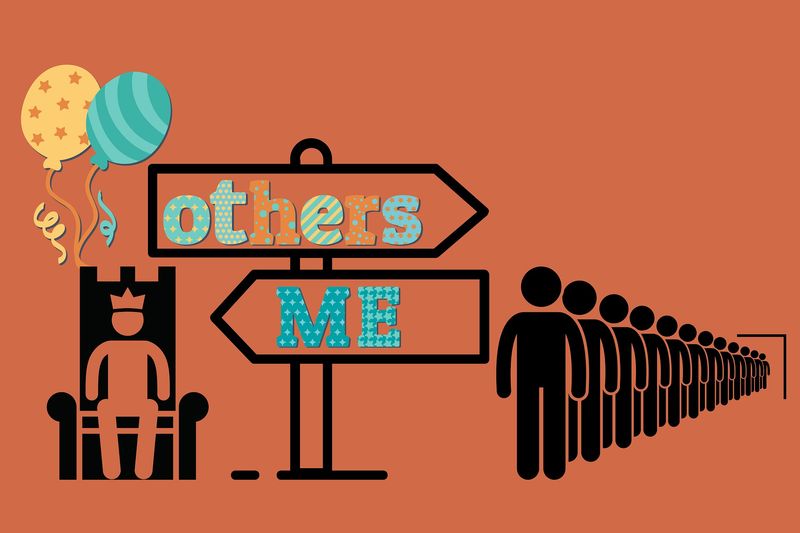
Credit is something a narcissist guards fiercely for themselves. Even when a team effort produced results, they will find a way to position themselves as the hero of the story.
Acknowledging someone else’s hard work feels like giving away something that belongs to them.
This behavior can be deeply demoralizing for teammates, partners, and friends who work hard and receive nothing in return. Over time, people learn not to expect recognition and start pulling away.
A little acknowledgment goes a long way in any relationship.
8. “Thank You For That” – Said And Meant

There is a big difference between saying the words and actually meaning them. Narcissists can perform gratitude when it benefits them socially, but genuine warmth behind those words is usually missing.
It tends to feel scripted, like they are checking a box rather than connecting with you.
Over time, the people around them sense that something is off, even if they cannot name it right away. Real thankfulness acknowledges the other person’s effort and time.
Without that sincerity, “thank you” becomes just another tool in a manipulation kit.
9. “I Understand How You Feel”

Empathy is the ability to step into someone else’s emotional shoes, and it is something narcissists genuinely struggle with. Saying “I understand how you feel” requires actually caring about another person’s inner world.
For many narcissists, that kind of emotional connection simply does not compute.
Research from psychology journals suggests that narcissists often lack the neural and emotional wiring for deep empathy. So when you share your feelings and get a blank stare or a topic change, it is not your imagination.
You deserve someone who truly listens.
10. “Let’s Talk About What Matters To You”

Conversations with a narcissist often feel one-sided because they usually are. They tend to steer every discussion back to their own experiences, opinions, or achievements.
Inviting someone else to take the spotlight goes against everything their ego demands.
Friends and partners often describe leaving conversations feeling unheard and invisible. That repeated experience quietly erodes self-esteem over time.
Healthy communication means both people get space to speak and be heard – a balance that narcissists rarely allow without a specific agenda behind it.
11. “I Need Your Help”

Asking for help signals vulnerability, and vulnerability is something most narcissists go out of their way to avoid. Needing someone else suggests they are not fully self-sufficient, which conflicts with the image of superiority they project.
So they will struggle quietly rather than admit they could use support.
Interestingly, they may accept help when it is offered on their terms, framed as a favor they are graciously receiving. But outright asking?
That rarely happens. Real strength, of course, includes knowing when to lean on others.
12. “I Admire Your Success”

Genuine admiration for someone else’s success requires setting your own ego aside, even briefly. For a narcissist, another person’s achievements can feel like a personal threat rather than something to celebrate.
Behind any compliment they offer, there is often a quiet sting of envy or a subtle put-down hiding nearby.
They may say something like, “That is great, but you got lucky,” which undercuts the praise entirely. True admiration lifts people up without strings attached.
Surrounding yourself with people who genuinely cheer for your wins makes a real difference.
13. “I’m Proud Of You”

Celebrating someone else’s win wholeheartedly is a beautiful thing, but it requires stepping out of your own spotlight. A narcissist’s world revolves around their own accomplishments and image, leaving little room to genuinely celebrate others.
Even parents with narcissistic traits often struggle to express authentic pride in their children.
Children raised in this environment may grow up feeling like nothing they do is ever quite enough. That emotional gap can take years to heal.
Everyone deserves to hear “I am proud of you” from someone who truly means it.
14. “What Can I Do To Make It Better?”

Conflict resolution requires a willingness to repair what is broken, and that takes effort and selflessness. Asking how to make things better shifts the focus onto the other person’s needs, which is territory most narcissists avoid.
For them, the goal in a conflict is usually to win, not to heal.
Offering to fix things also means admitting something went wrong in the first place. That combination is a double hit to their ego.
Partners of narcissists often carry the full weight of emotional repair in the relationship, which is exhausting and unfair.
15. “I’ll Take Responsibility For That”

Responsibility and narcissism rarely share the same sentence. Taking ownership of a mistake means accepting that you are fallible, and that cracks the flawless image a narcissist carefully maintains.
So instead of stepping up, they find ways to sidestep, redirect, or reframe the situation entirely.
Over time, the people around them end up holding all the responsibility while the narcissist walks away clean. It is a frustrating and unbalanced dynamic that can leave others feeling powerless.
Accountability is a cornerstone of trust, and trust cannot grow without it.
16. “I Want To Change”

Personal growth starts with one honest belief: that you have room to improve. Narcissists generally do not hold that belief about themselves.
In their mind, they are already operating at a superior level, so the idea of needing to change simply does not register as relevant.
Even when loved ones beg them to seek help or therapy, many narcissists refuse or attend only to prove there is nothing wrong with them. This makes genuine change rare without significant outside pressure.
Hope for change is valid, but it should be paired with realistic expectations.
17. “You’re Right, I Made A Mistake”

Being corrected is uncomfortable for most people, but for a narcissist it can feel catastrophic. Their sense of self depends on being the smartest, most capable person in the room.
Admitting a mistake out loud shatters that narrative in a very public way.
Even with undeniable proof, many narcissists will double down, change the subject, or attack the person pointing out the error. It is less about the facts and more about protecting their identity.
Learning to trust your own judgment around someone like this is absolutely essential.
18. “I Appreciate You”

Appreciation means recognizing someone’s value independent of what they do for you. For a narcissist, other people are often valued only in terms of usefulness.
Once you stop serving their needs, genuine appreciation fades fast, if it was ever really there to begin with.
People in relationships with narcissists frequently describe feeling like props in someone else’s story rather than valued partners. That quiet sense of invisibility is deeply painful.
You deserve to be appreciated simply for who you are, not just for what you provide.
19. “I’m Scared”

Behind the bravado, arrogance, and need for control, many narcissists carry deep-seated fear and insecurity. But admitting fear out loud is something they almost never do.
Vulnerability feels like weakness, and weakness threatens the powerful image they project to the world.
Psychologists often describe narcissism as a protective shell built around a fragile core. Cracking that shell takes extraordinary circumstances, and even then, many narcissists retreat further into defense mode.
Understanding this does not excuse harmful behavior, but it does explain the armor they wear every single day.