
New Mexico has one of the most unique food cultures in the entire United States, shaped by centuries of Indigenous, Spanish, and Mexican influences. Many of these dishes have been feeding families and communities long before food trends ever made them cool.
But if you grew up outside the Land of Enchantment, or even if you live there now, some of these classics might be totally new to you by name. Get ready to discover the flavors that locals have been loving for generations.
1. Green Chile Cheeseburger
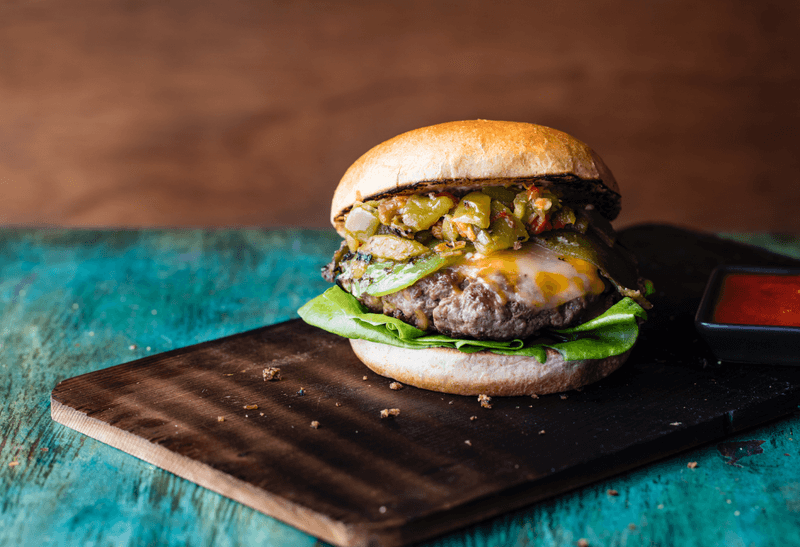
Ask any New Mexican what makes their state special, and a green chile cheeseburger will likely come up within seconds. Blake’s Lotaburger claims it put green chile on a burger menu as far back as 1952, sparking a tradition that spread across the state.
Today, spots like the Owl Bar and Buckhorn Tavern in San Antonio are legendary stops for this classic. The smoky, slightly spicy roasted chile takes a regular cheeseburger to a whole new level.
2. Fry Bread
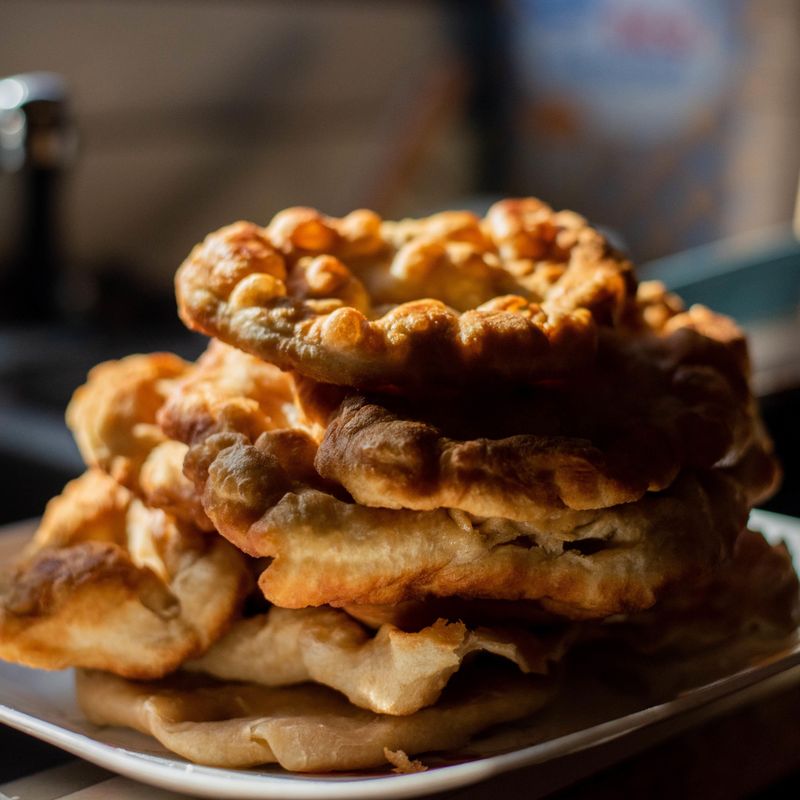
Fry bread holds deep meaning in Indigenous communities across New Mexico. Made from simple ingredients like flour, salt, and water, it is fried until golden and airy on the outside while staying soft inside.
You might spot it at tribal fairs, roadside stands, or community gatherings. Some people enjoy it plain, while others top it with honey or powdered sugar.
Its history is tied closely to the resilience and creativity of Native peoples who made the most of limited government-issued supplies.
3. Frito Pie
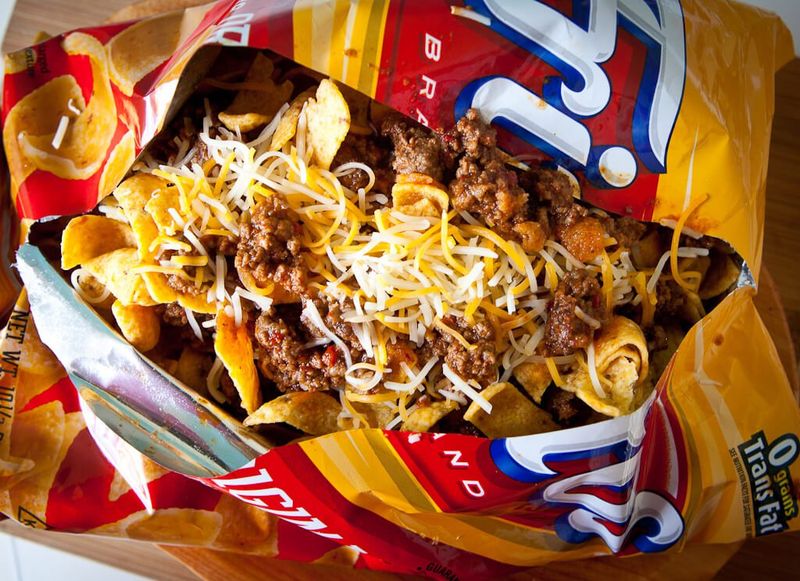
Comfort food does not get much simpler or more satisfying than Frito Pie. The dish layers corn chips with red chile sauce and melted cheese, sometimes eaten right out of the chip bag for a truly no-fuss experience.
Santa Fe’s old Woolworth’s Lunch Counter is often credited as a birthplace of the dish. Horseman’s Haven in Santa Fe is still a go-to spot for fans.
Whether Texas or New Mexico invented it first is still debated, but locals will tell you New Mexico does it best.
4. Blue Corn Enchiladas Christmas Style
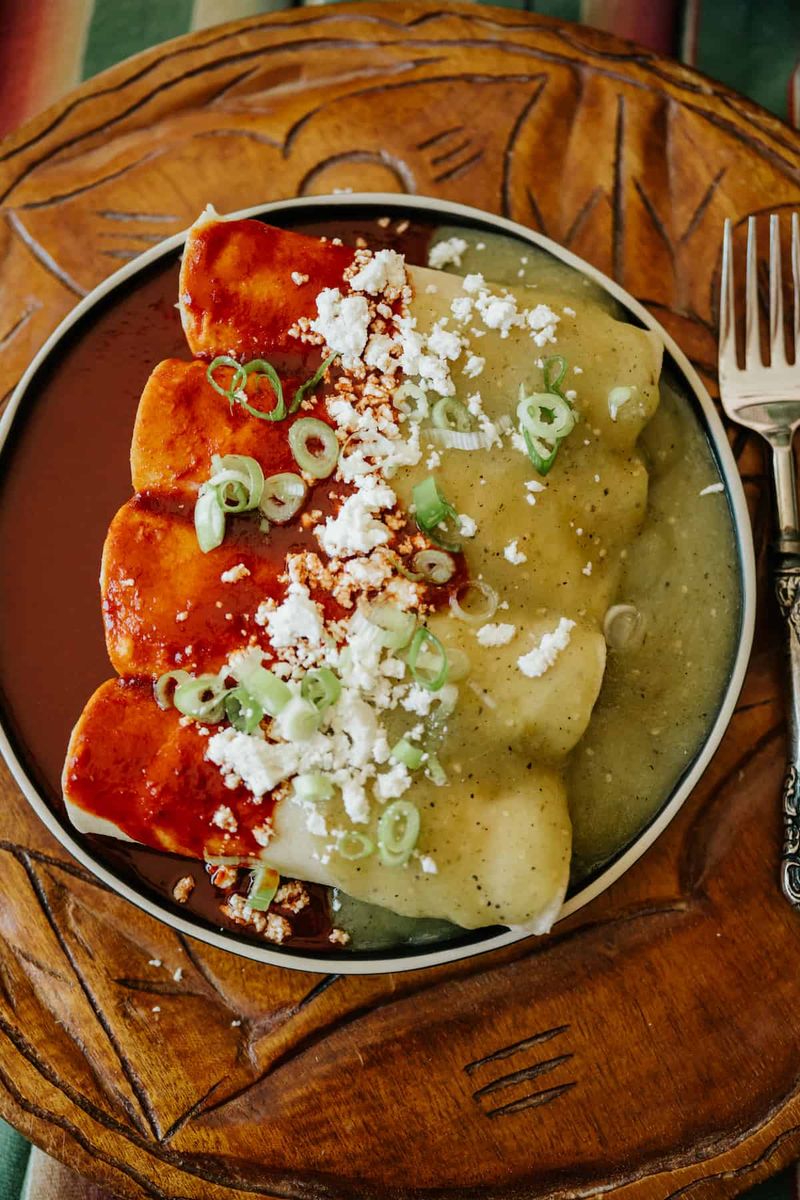
Ordering something “Christmas style” in New Mexico has nothing to do with the holiday. It simply means you want both red and green chile sauce on your plate at the same time, and it is one of the best decisions you can make at any local restaurant.
Blue corn tortillas give these enchiladas a nuttier, slightly earthier flavor compared to yellow corn. The combination of the two sauces creates a flavor balance that feels bold and satisfying.
It is a true New Mexico original move.
5. Posole
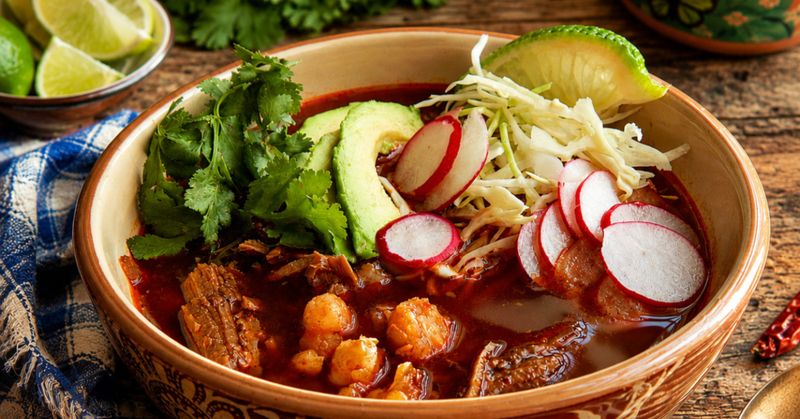
Posole is the kind of dish that feels like a warm hug on a cold day. Made with hominy, which is dried corn treated with an alkali to create a chewy, satisfying texture, this stew is slow-cooked with pork and either red or green chile.
Many New Mexico families have their own version passed down through generations. It shows up at holiday tables, community feasts, and everyday dinners alike.
Once you taste a bowl made from scratch, it is hard to forget.
6. Hatch Chile Rellenos
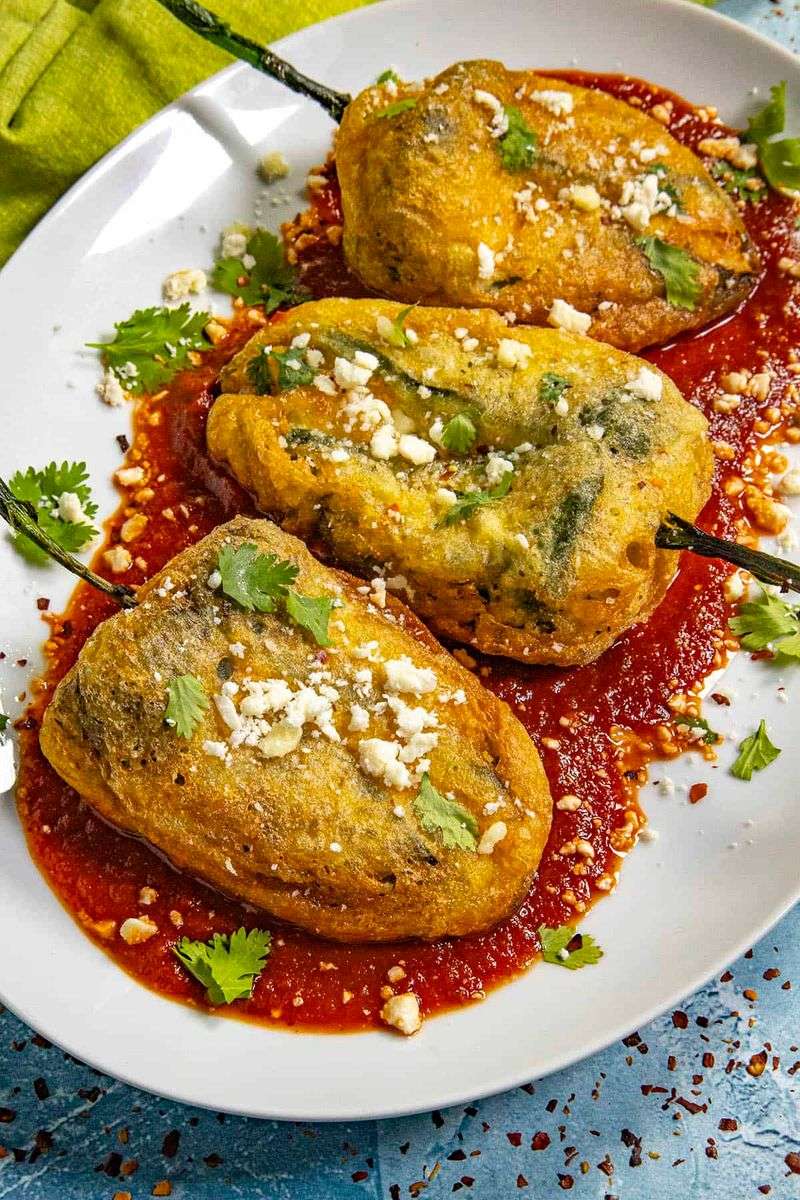
Hatch chiles are grown in the Hatch Valley of southern New Mexico and are considered some of the finest chiles in the world. When stuffed with cheese, battered, and fried into chile rellenos, they become something truly extraordinary.
The batter puffs up around the chile, creating a crispy shell that gives way to gooey cheese and smoky pepper inside. Many restaurants serve them topped with red or green sauce.
If you see Hatch chile rellenos on a menu, ordering them is never a bad call.
7. Pork Adovada
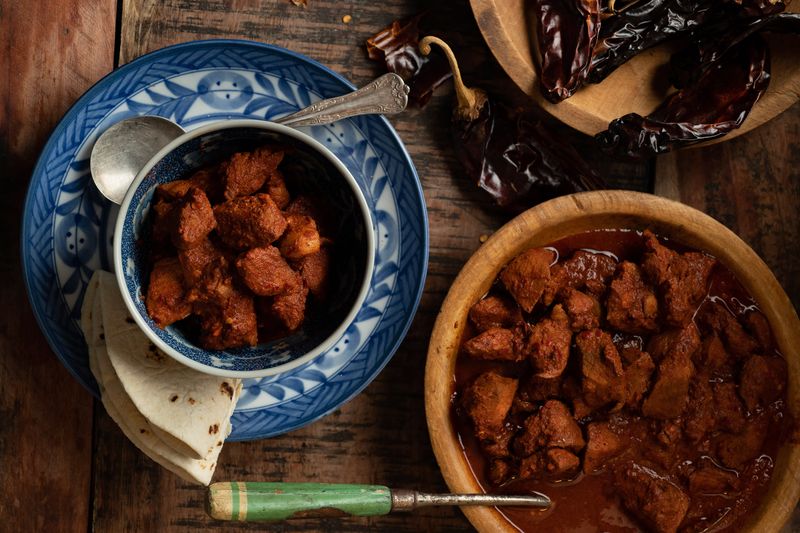
Red chile and pork were simply made for each other, and pork adovada is the proof. Chunks of pork are marinated for hours, sometimes overnight, in a rich red chile sauce before being slow-cooked until the meat practically falls apart.
Perea’s New Mexican Cuisine in Albuquerque is one spot celebrated for this dish. The deep, earthy heat of the red chile soaks into every bite.
Younger diners who have never tried it are in for a genuinely memorable first experience.
8. Calabacitas
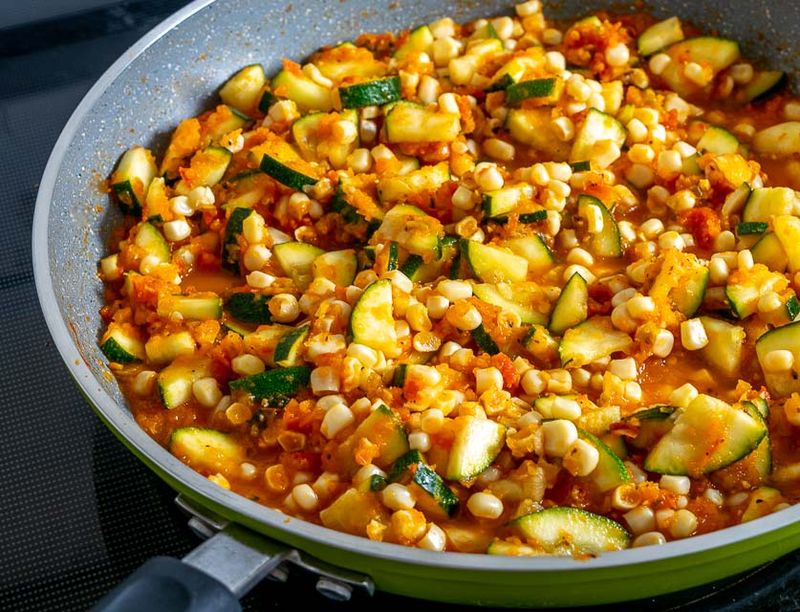
Calabacitas is a humble, garden-fresh side dish that has been part of New Mexican cooking for centuries. The name comes from the Spanish word for small squash, and the dish typically combines summer squash with corn and beans.
These three ingredients are part of what Indigenous farmers called the Three Sisters, a companion planting method that sustained communities for generations. A little green chile is often added for kick.
Simple as it sounds, calabacitas delivers real, wholesome flavor that pairs beautifully with almost any New Mexico entree.
9. Chicos
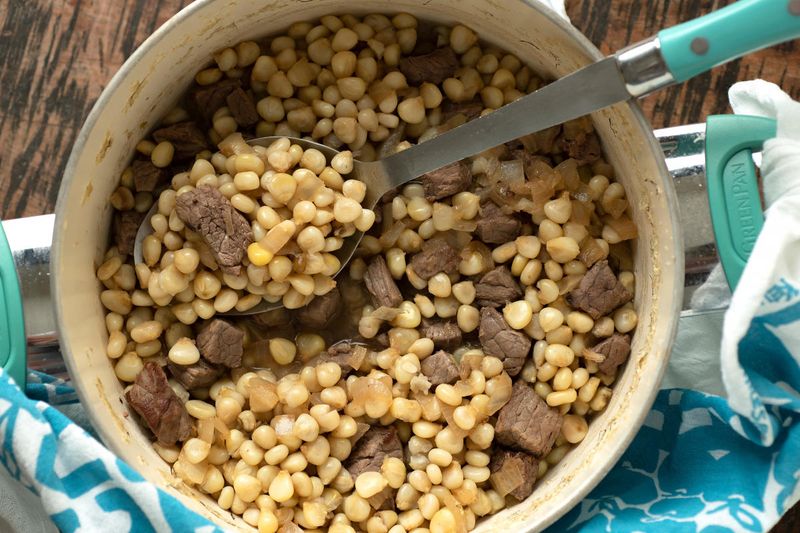
Chicos might just be one of the most underrated ingredients in all of New Mexico cooking. They are dried corn kernels that have been roasted inside the husk, giving them a smoky, toasty flavor that no regular corn can match.
Once rehydrated and cooked, chicos become tender and chewy, adding body and depth to stews and soups. They are often cooked alongside beans or pork.
Many younger diners have eaten dishes made with chicos without ever knowing the ingredient by name.
10. Sopaipillas
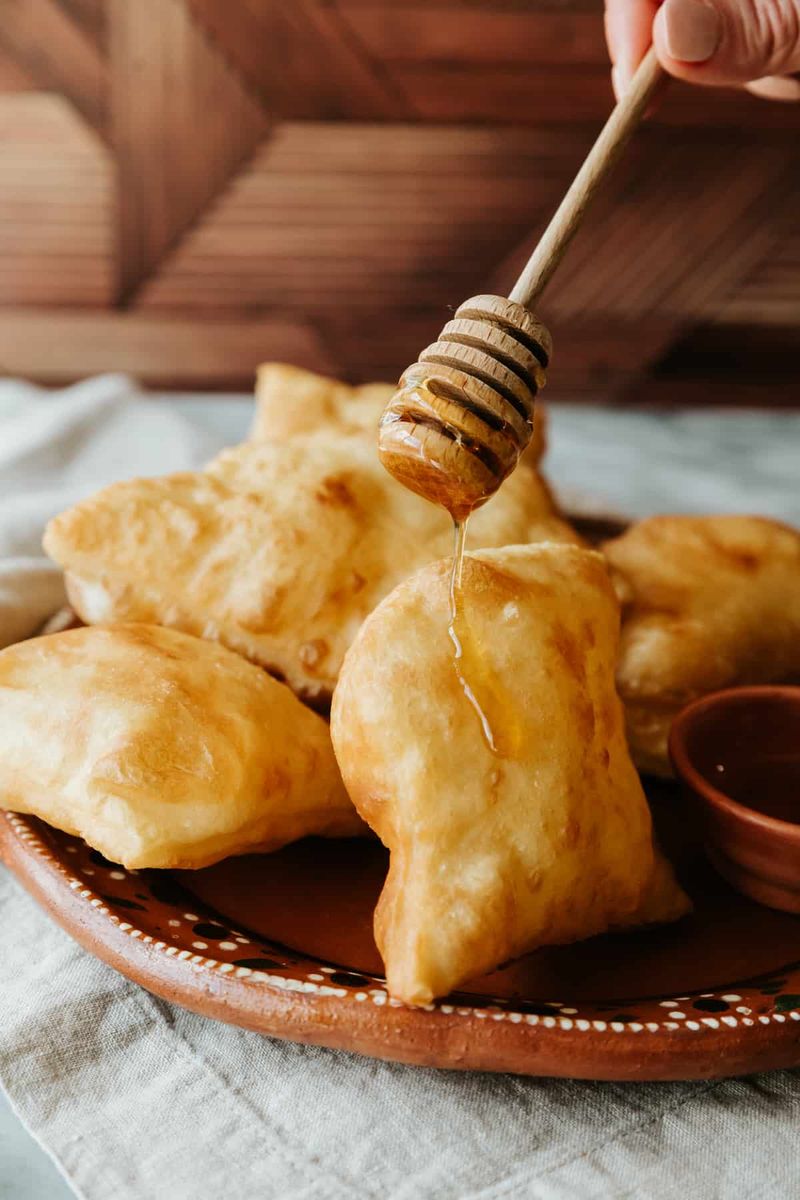
Sopaipillas are one of those foods that make you smile the moment they arrive at the table. These light, hollow fried pastries puff up into little pillows of dough that are impossible to resist.
Most New Mexico restaurants serve them at the end of a meal with honey for drizzling inside the puffed pocket. Some people enjoy them as a bread alongside the main course.
Either way, tearing one open and filling it with honey is a ritual that every visitor to New Mexico should experience at least once.
11. Horno Bread
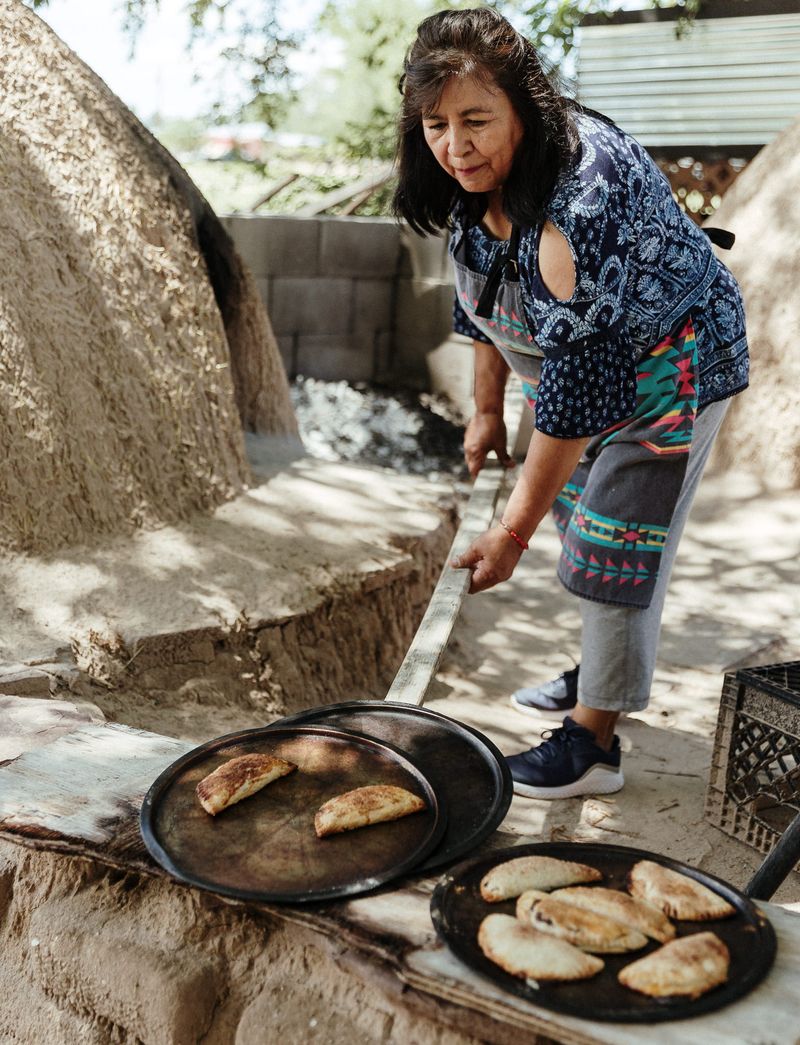
Long before modern ovens existed, people in New Mexico were baking bread in hornos, which are dome-shaped adobe ovens built from clay and mud. The bread baked inside develops a thick, crackling crust with a soft and chewy center.
This centuries-old tradition is still kept alive by Pueblo communities across New Mexico. The smoky, wood-fired flavor is something a standard oven simply cannot replicate.
Finding freshly baked horno bread at a pueblo feast day is a rare and meaningful culinary experience.
12. Natillas
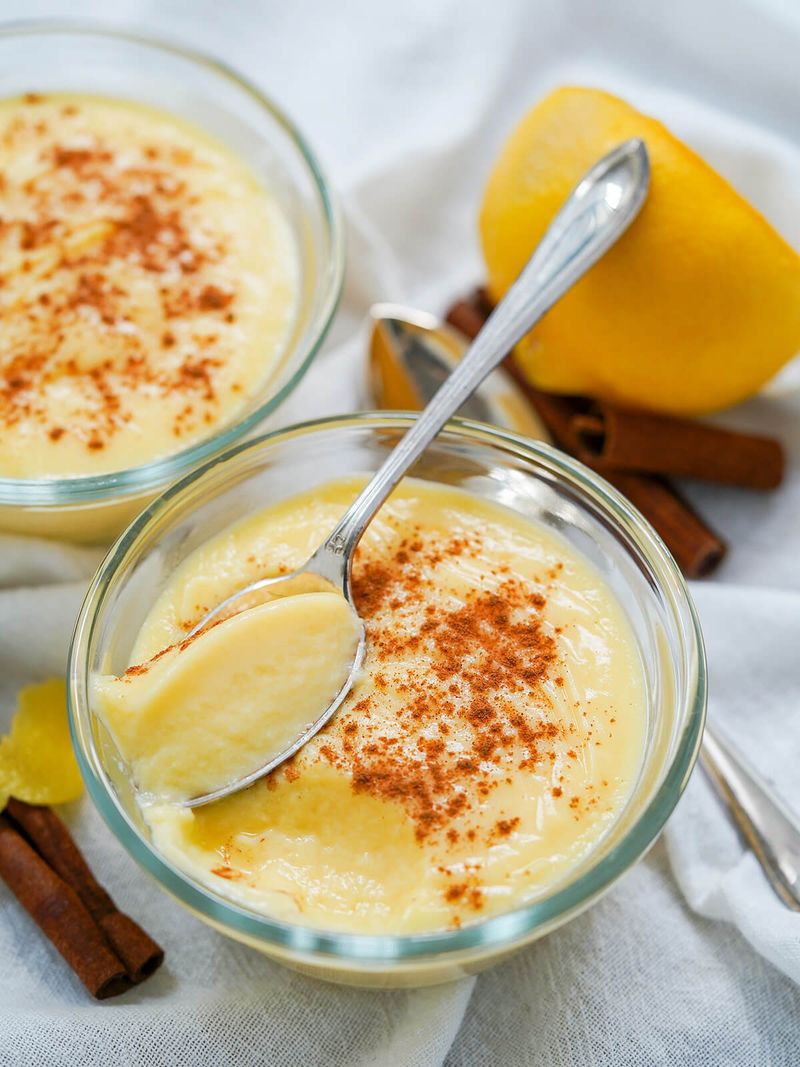
Natillas is the kind of dessert that feels like it belongs at a grandmother’s table after Sunday dinner. This old-fashioned custard is silky smooth, gently sweet, and finished with a sprinkle of cinnamon on top.
Rooted in Spanish culinary tradition, natillas has been part of New Mexican cooking for generations. It is lighter than a typical pudding and has a delicate flavor that lets the cinnamon shine.
Younger dessert lovers who have never heard of natillas are genuinely missing out on something special and comforting.
13. Biscochitos
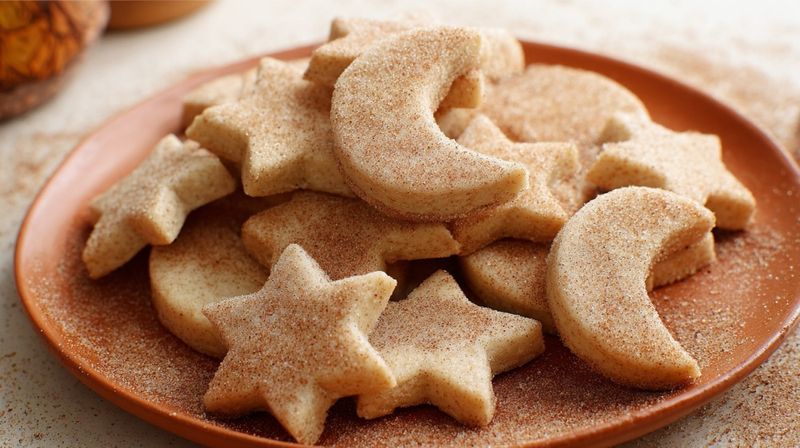
New Mexico takes its state cookie seriously, and biscochitos have earned that honor. These crisp, buttery cookies are traditionally flavored with anise and cinnamon, giving them a distinctive taste that sets them apart from any ordinary sugar cookie.
Lard is the classic fat used in the dough, which creates a uniquely tender and flaky texture. Biscochitos show up at weddings, holidays, and family celebrations throughout the state.
One bite of the real thing explains immediately why New Mexico made them official back in 1989.
14. Indian Taco
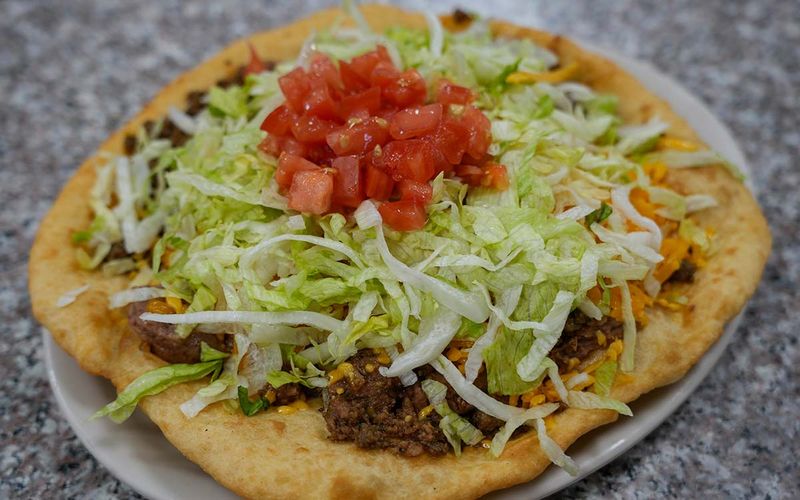
An Indian taco swaps the typical tortilla for a piece of fry bread, turning it into something much heartier and more satisfying. Piled high with toppings like seasoned meat, beans, lettuce, cheese, and tomato, it is practically a meal on its own.
The Ranch Kitchen in Gallup, New Mexico, has been mentioned as a possible origin spot for this crowd-pleasing dish. It is a staple at fairs, powwows, and community events.
If you have only ever had a regular taco, an Indian taco will genuinely surprise you.
15. Tortilla Burger
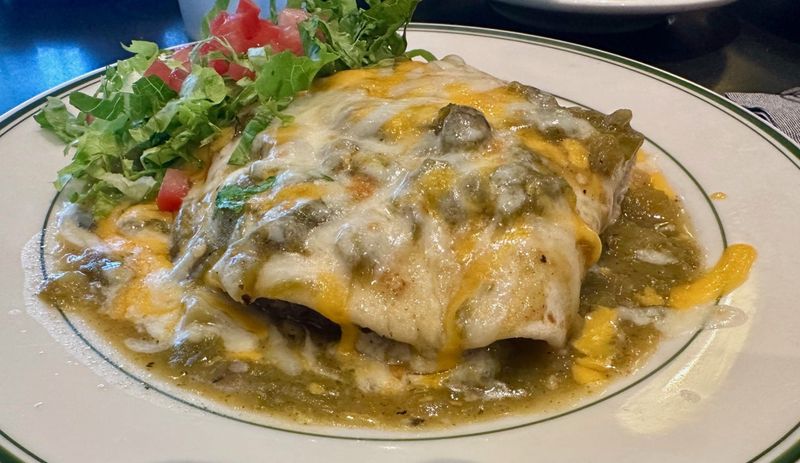
Before fancy fusion food was even a concept, New Mexicans were already swapping burger buns for flour tortillas. The former owner of Circle T Burger in Belen claims to have invented this swap back in 1958, creating a handheld meal that just makes sense.
A flour tortilla wraps snugly around a beef patty and toppings, holding everything together in a softer, chewier way than a standard bun. Add green chile on top and you have a fully New Mexican creation.
It is simple, clever, and surprisingly delicious.
16. Green Chile Stew
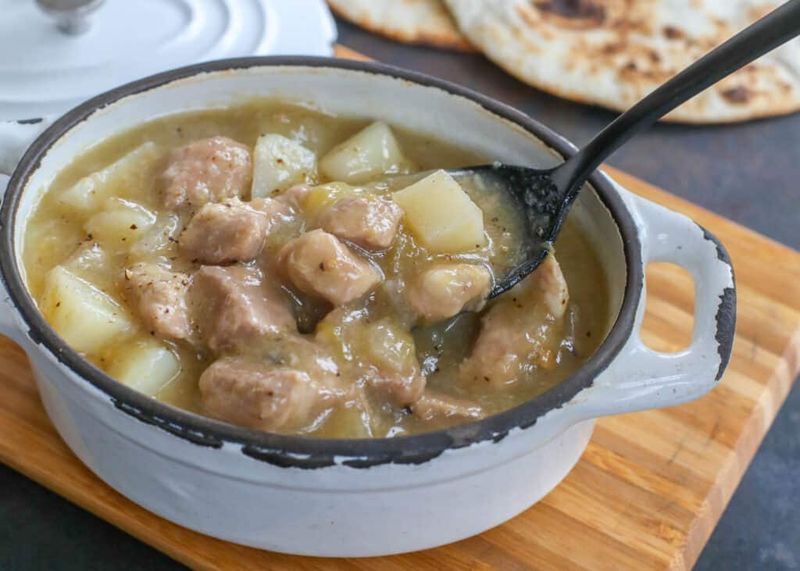
Green chile stew is the backbone of New Mexico home cooking. Tender chunks of pork or beef simmer alongside roasted green chiles, potatoes, and garlic in a rich, satisfying broth that fills the whole kitchen with incredible aroma.
Every cook has their own version, and debates about whose is best are taken very seriously. It is eaten year-round, not just in cold weather, because New Mexicans need very little excuse to enjoy a bowl.
Pair it with warm flour tortillas and you have a perfect meal.
17. Huevos Rancheros
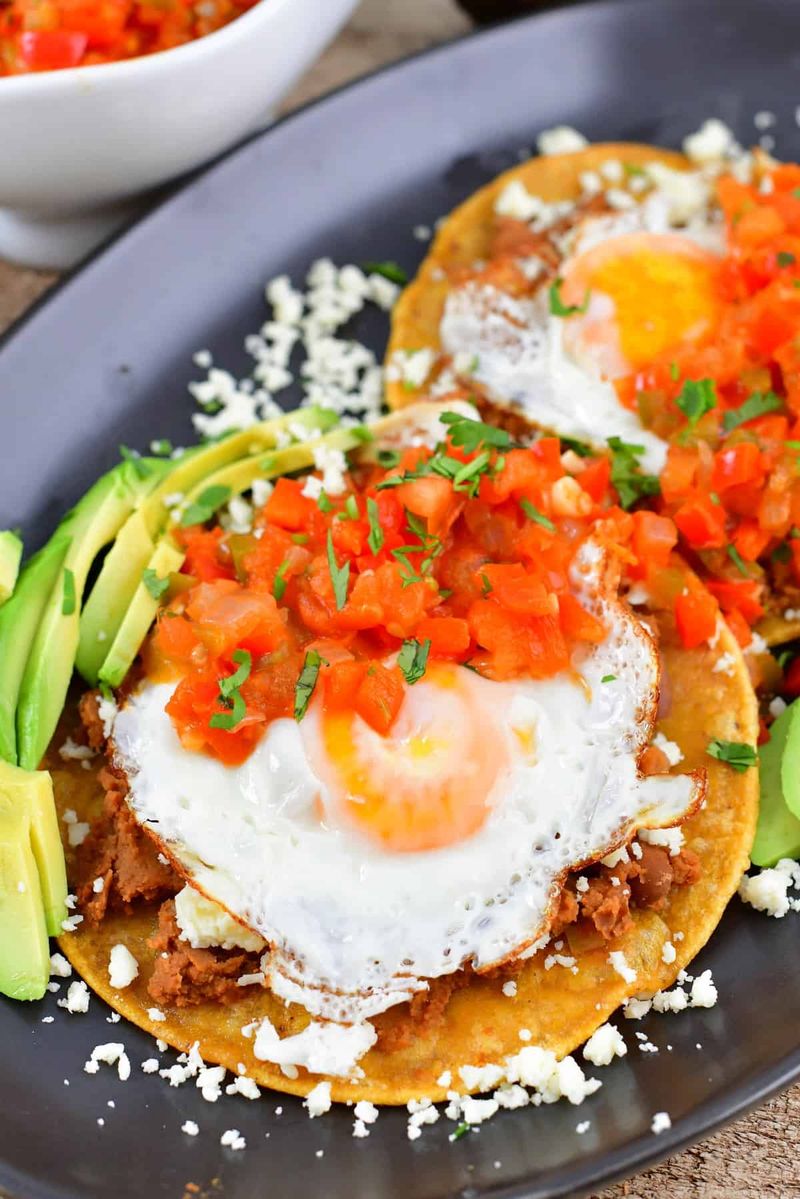
Huevos rancheros might be on menus around the world now, but New Mexico has a deep and personal connection to this classic breakfast. The dish traces its roots to ranch life near the New Mexico region, where workers needed a hearty morning meal before long days of work.
Fried eggs sit on warm corn tortillas and get smothered in red or green chile sauce, sometimes both. Queso fresco and avocado are popular additions.
Eaten fresh and hot, it is one of the most satisfying breakfasts imaginable.
18. Stacked Red Chile Enchiladas
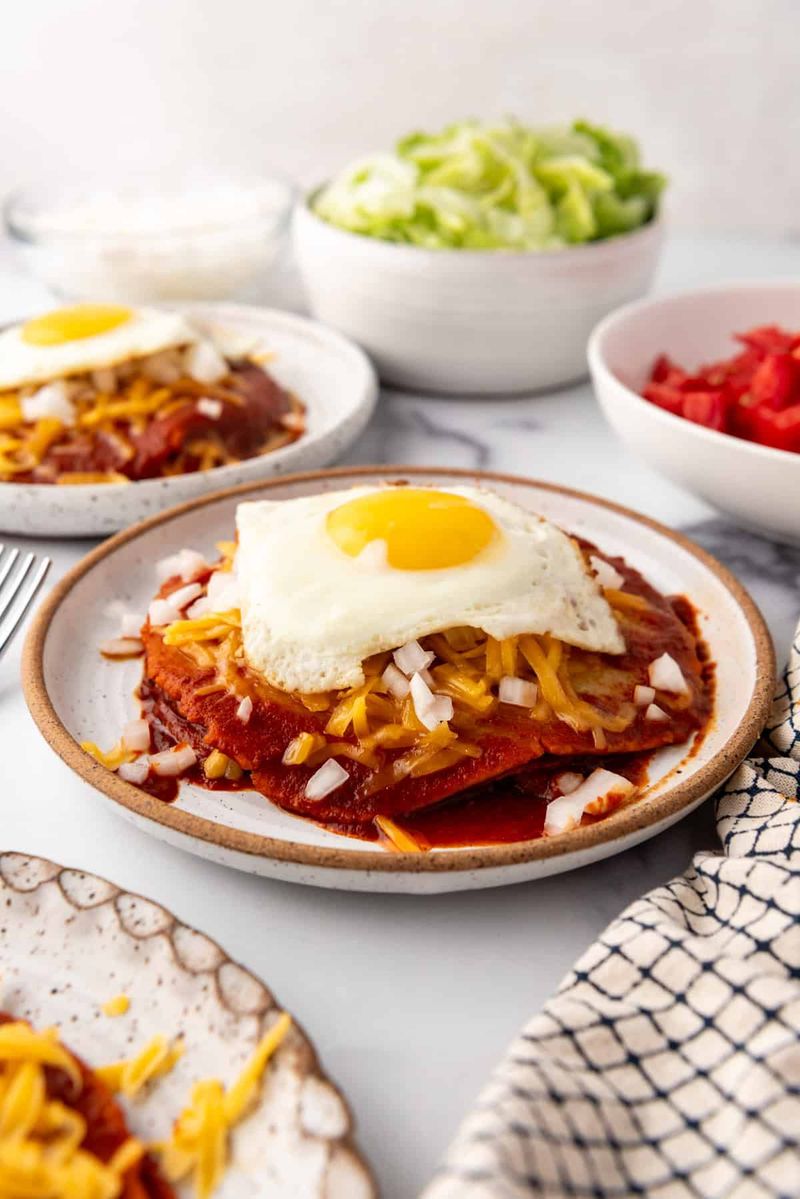
Rolled enchiladas are fine, but stacked enchiladas are something else entirely. Instead of rolling the tortillas around the filling, this New Mexico style layers them flat, stacking tortillas with filling and red chile sauce between each one like a savory cake.
The result is more chile, more cheese, and more meat in every single bite. A fried egg on top is a traditional finishing touch that adds richness.
Many New Mexico diners consider this the definitive way to eat enchiladas, and it is hard to argue once you have tried it.
19. Chile, the Sacred Ingredient
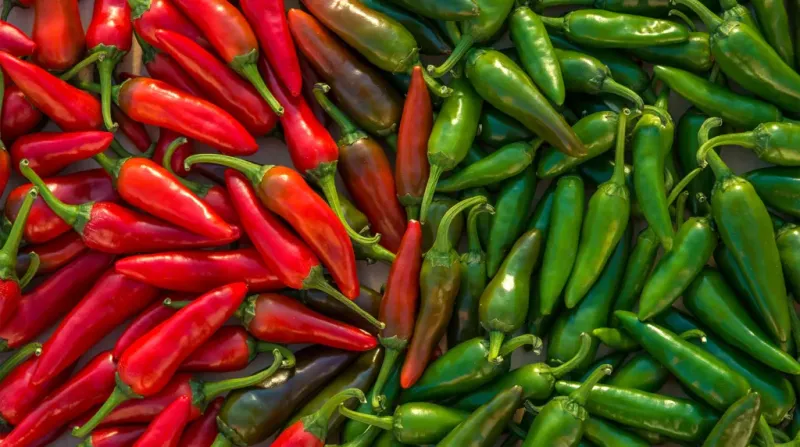
No ingredient defines New Mexico cooking more completely than chile. Not chili, spelled with an “i” like the Texan stew, but chile, the pepper itself, grown in the state’s unique soil and climate that gives it a flavor found nowhere else on earth.
Red or green, roasted or dried, fresh or powdered, chile shows up in nearly every New Mexico dish on this list. Locals take it so seriously that the state question is officially “Red or green?” Chile is not just a seasoning here.
It is an identity.