
Some foods just cannot be recreated the same way outside their home region. Whether it is the local ingredients, the water, the climate, or generations of tradition passed down through families, certain dishes only truly shine in one specific place on Earth.
Traveling to taste these foods is an adventure all on its own. Get ready to discover 19 incredible dishes that are best enjoyed exactly where they were born.
1. Hakarl – Iceland
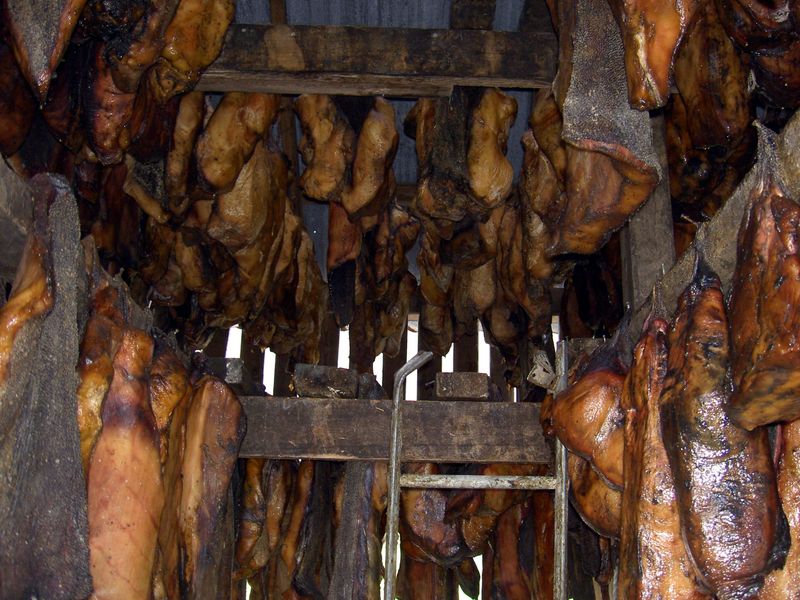
Fermented shark might sound like the last thing you would want to eat, but in Iceland, hakarl is a proud national tradition. The Greenlandic shark is buried underground for months to ferment before being hung to dry.
The result is a pungent, ammonia-rich bite that locals eat without flinching.
Most visitors struggle with their first piece. Trying hakarl at a Reykjavik market during a winter festival is a memory that never fades.
2. Fugu – Japan
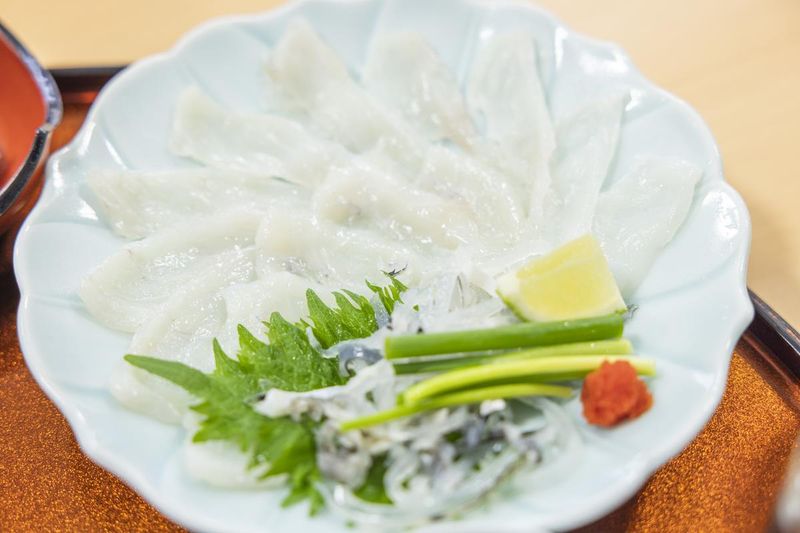
Only licensed chefs in Japan are legally allowed to prepare fugu, the famous puffer fish that contains a potentially deadly toxin. Getting this dish right requires years of training and razor-sharp precision.
The flavor itself is surprisingly delicate, almost mild, which makes the experience more about the thrill than the taste.
Eating fugu in Osaka or Tokyo at a specialized restaurant is one of the most unique dining experiences a person can have anywhere on the planet.
3. Cuy – Peru
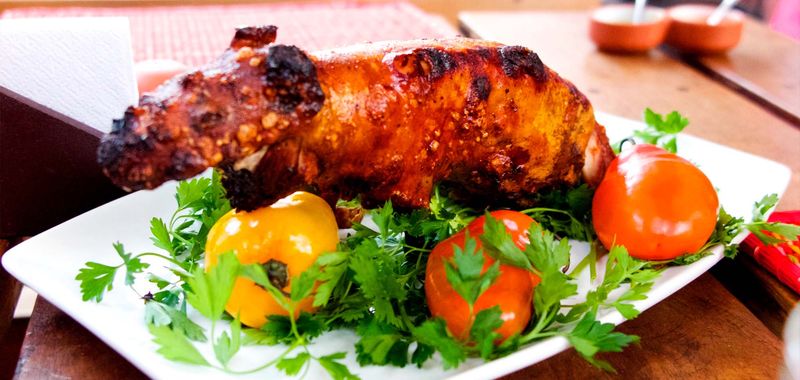
Guinea pig has been a staple food in the Andean highlands of Peru for thousands of years. Called cuy, it is typically roasted whole over an open flame and served with potatoes and corn.
The meat is lean, a little gamey, and surprisingly satisfying once you get past the presentation.
Trying cuy in Cusco near the Sacred Valley connects you to an ancient food culture that long predates modern tourism. It is a genuinely eye-opening culinary moment.
4. Injera with Wat – Ethiopia
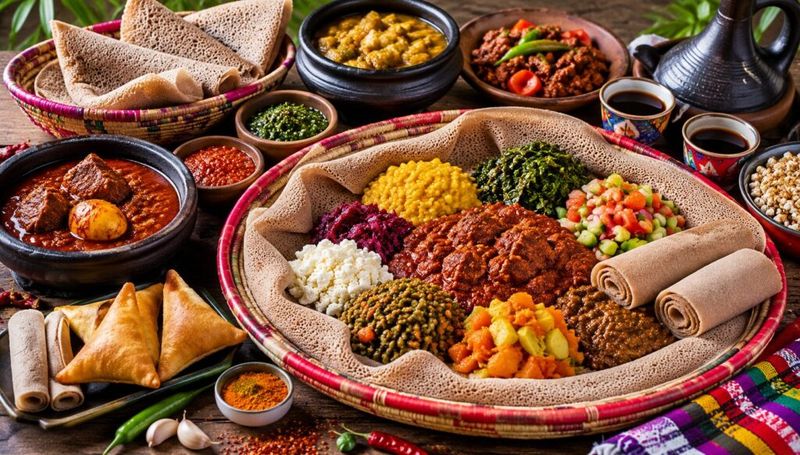
Injera is a spongy sourdough flatbread made from teff grain, and it forms the base of nearly every Ethiopian meal. Topped with rich, spiced stews called wat, the whole dish is eaten communally using pieces of bread torn by hand.
No utensils needed, just good company.
The teff grain used for authentic injera grows primarily in the Ethiopian highlands, making the real version nearly impossible to replicate abroad. Eating it fresh in Addis Ababa is an entirely different experience.
5. Balut – Philippines
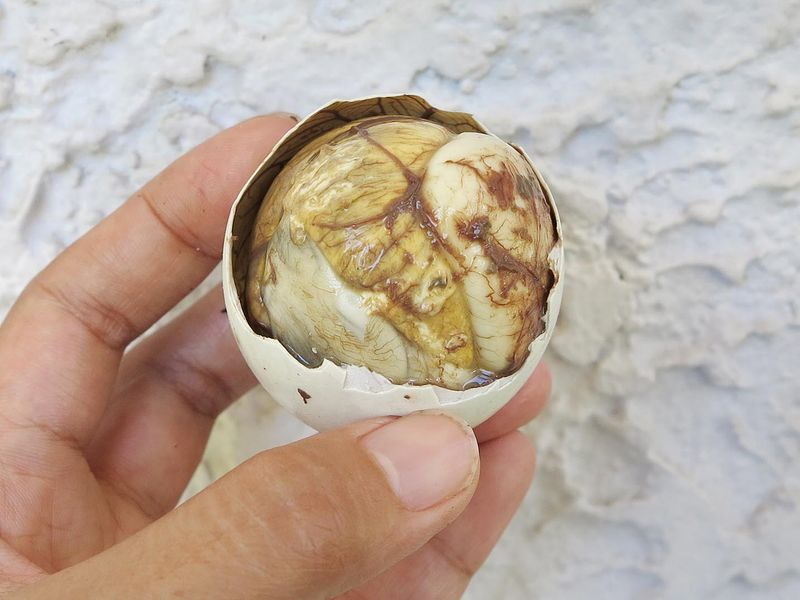
Balut is a fertilized duck egg with a partially developed embryo inside, boiled and eaten as a street snack across the Philippines. Vendors sell them warm from baskets late at night, and locals season them with salt and spiced vinegar.
The broth inside is savory and rich before you even get to the solid part.
First-timers often hesitate, but most come around after that first sip. It is the kind of food that tells you more about a culture than any guidebook ever could.
6. Lutefisk – Norway
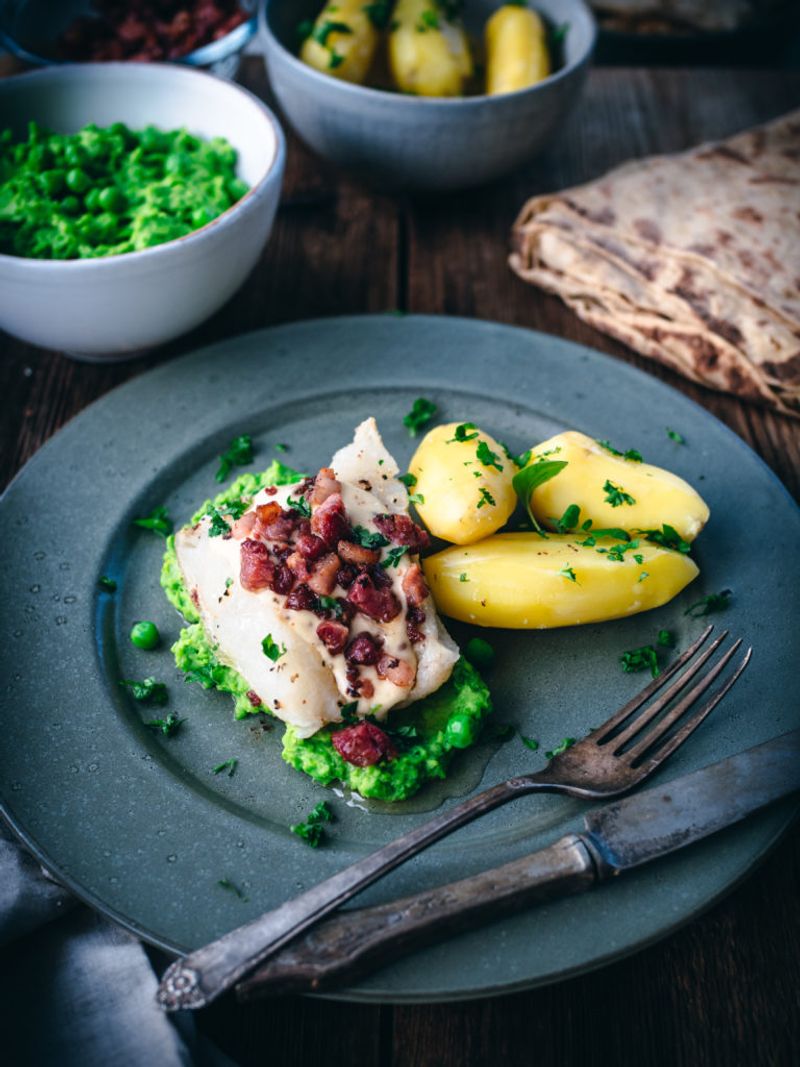
Lutefisk is dried whitefish that has been soaked in lye for days, giving it a gelatinous, almost jelly-like texture that baffles newcomers. In Norway, it is a beloved holiday tradition, especially around Christmas, served with butter, peas, and bacon.
The smell alone is enough to make non-Norwegians stop at the doorway.
Eating lutefisk at a family gathering in Bergen or Oslo is a deeply cultural experience. Locals will tell you with a straight face that they love it, and somehow you believe them.
7. Khachapuri – Georgia
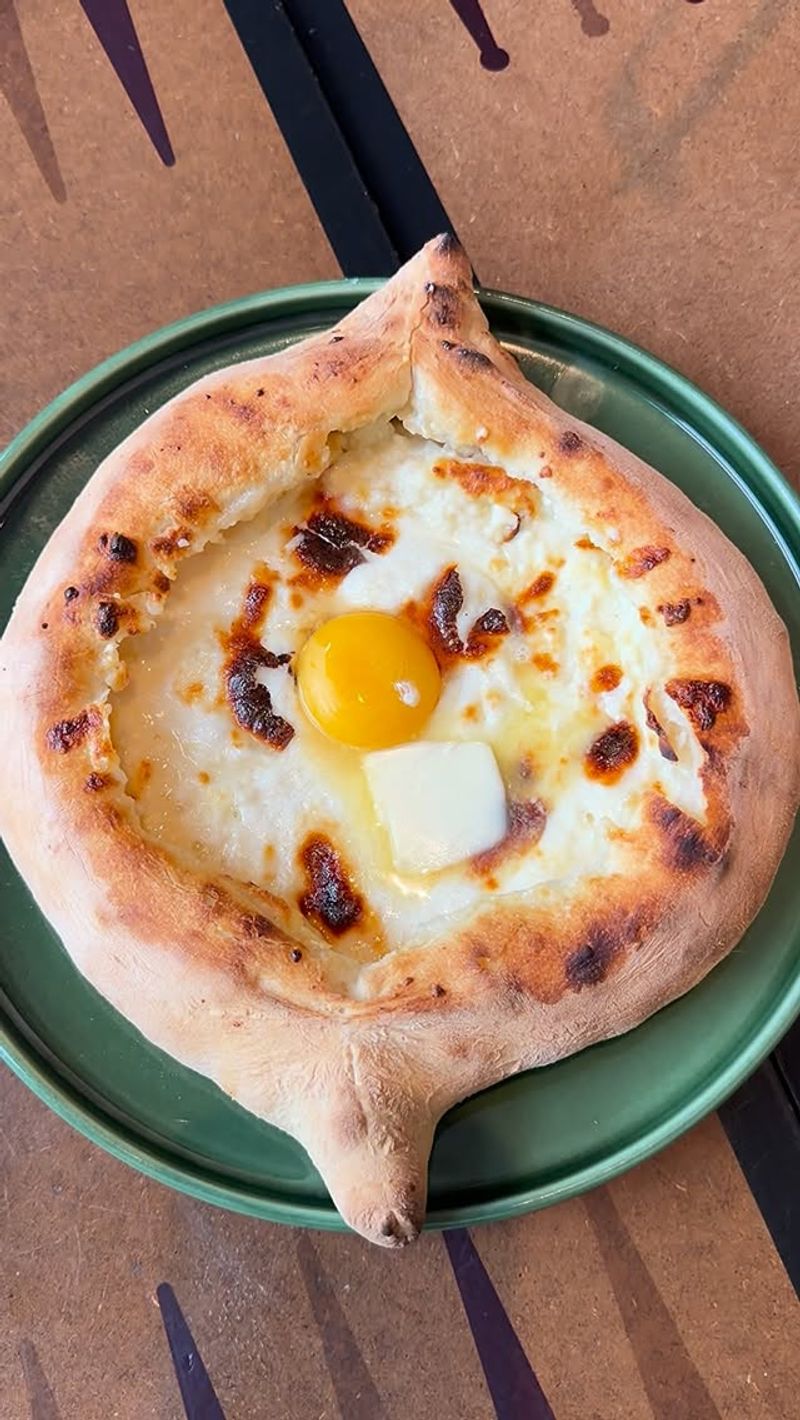
Georgia, the country nestled between Europe and Asia, produces one of the world’s most satisfying breads: khachapuri. The Adjarian version is shaped like a boat, filled with stretchy sulguni cheese, topped with a raw egg, and finished with a knob of butter.
You stir it all together and tear bread to scoop it up.
No frozen or restaurant version outside Georgia quite captures the flavor of fresh-baked khachapuri from a Tbilisi bakery. Once you try it there, you will understand the obsession.
8. Sannakji – South Korea
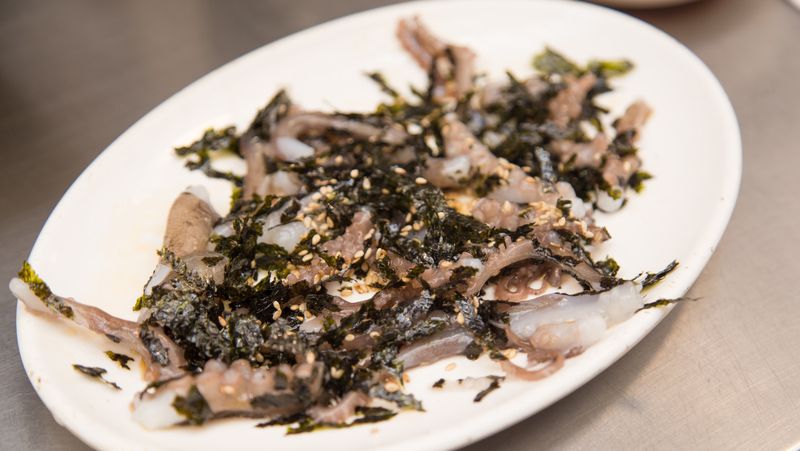
Sannakji is not for the faint of heart. This South Korean dish features small octopus tentacles that are cut and served immediately, still wriggling on the plate.
Sesame oil and seeds are drizzled on top, and you eat them quickly, being careful to chew thoroughly so the suction cups do not stick to your throat.
Seafood markets in Seoul, like Noryangjin, are the best places to experience sannakji fresh. It is as much a sensory event as it is a meal.
9. Mole Negro – Mexico
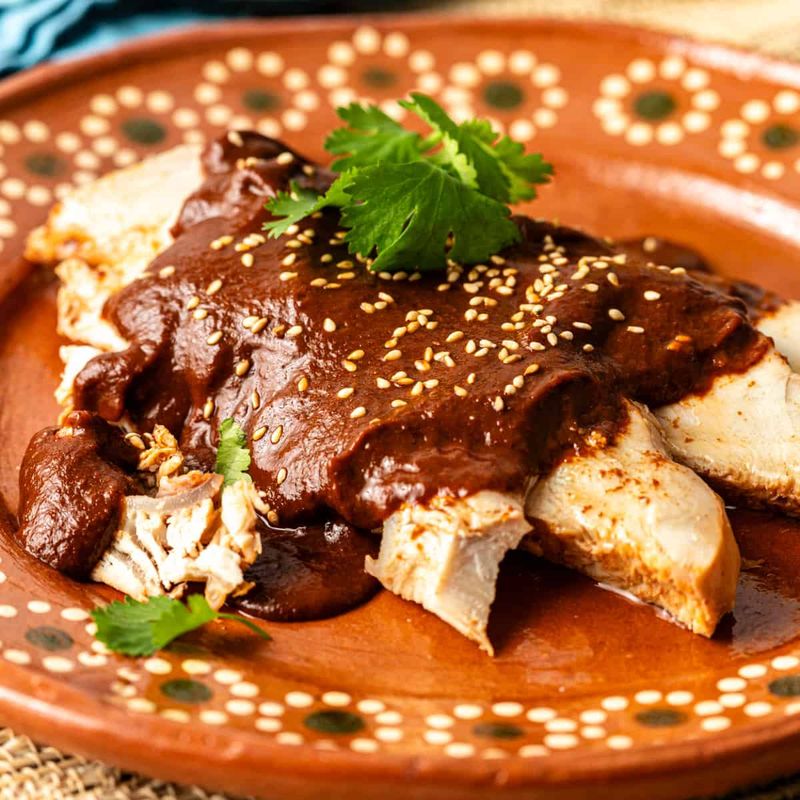
Mole negro from Oaxaca, Mexico is one of the most complex sauces on Earth, made from over 30 ingredients including dried chilies, chocolate, spices, and charred tortillas. Every family has its own version, and recipes are passed down like heirlooms.
Making a proper mole can take two full days.
The depth of flavor you get from a bowl of mole negro in Oaxaca simply cannot be matched by jarred versions sold elsewhere. Eating it fresh, in the city where it was born, is a revelation.
10. Pho – Vietnam
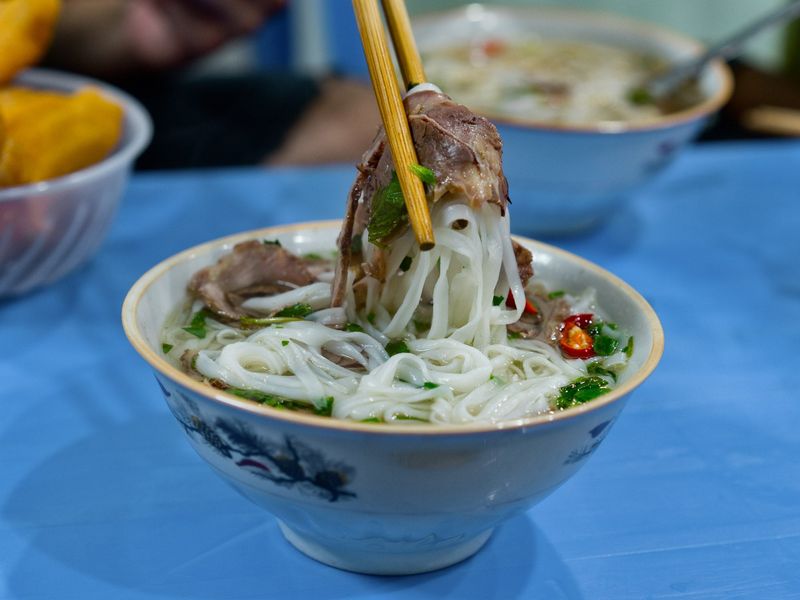
Pho might be familiar to many people worldwide, but the version you get in Hanoi at 6 in the morning from a street vendor is something else entirely. The broth is simmered for hours with bones, star anise, and ginger, building a depth that no restaurant abroad fully replicates.
Fresh herbs and lime are added tableside.
Northern Vietnamese pho is cleaner and less sweet than southern styles. Slurping a bowl while seated on a tiny plastic stool in Hanoi is the authentic way to do it.
11. Ackee and Saltfish – Jamaica
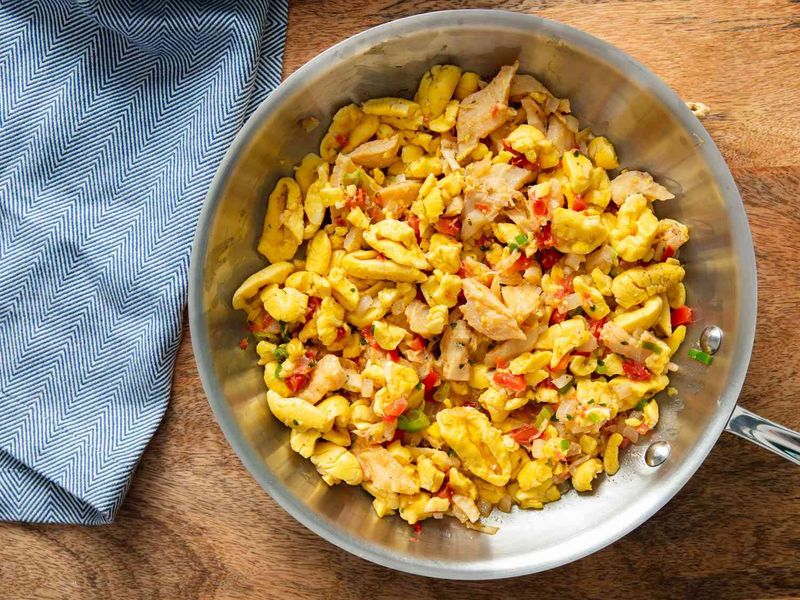
Jamaica’s national dish is a fascinating combination of the ackee fruit, which looks and tastes almost like scrambled eggs when cooked, and salted codfish sauteed with onions, tomatoes, and scotch bonnet peppers. It is a breakfast dish at heart, bold and filling, full of island flavor.
Ackee must be harvested at exactly the right time or it becomes toxic, which is why fresh ackee outside Jamaica is rare. Eating it properly prepared in Kingston is a true Caribbean morning ritual.
12. Biltong – South Africa
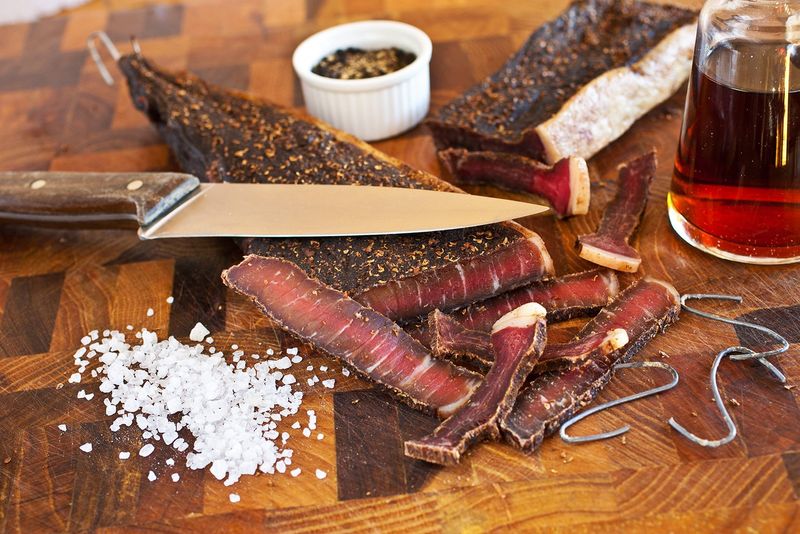
Biltong is South Africa’s answer to beef jerky, but calling it jerky is almost an insult. Made from thick cuts of meat cured with vinegar, salt, coriander, and black pepper, then air-dried slowly, biltong has a richness and texture that the American version simply does not match.
Every region has its own spice blend and preferred cut.
Buying biltong freshly sliced from a butchery in Cape Town or Johannesburg is a completely different experience from the packaged kind. The difference is remarkable.
13. Ramen – Japan (Specific Regional Styles)
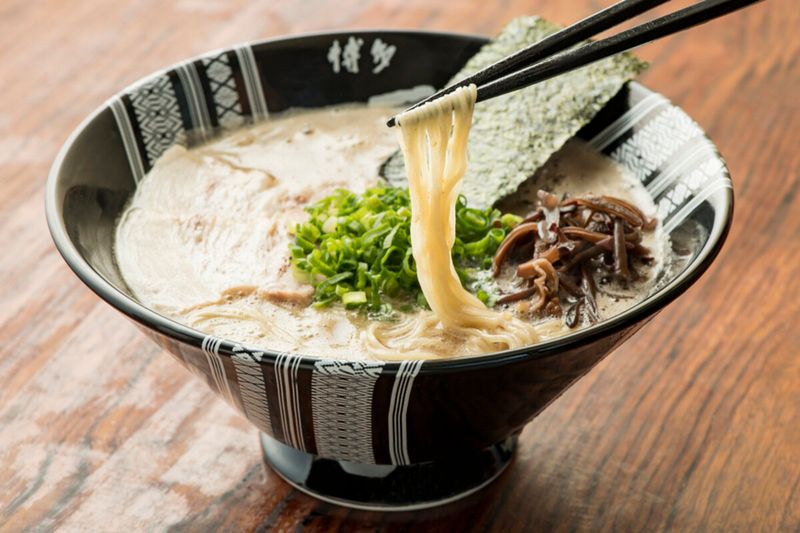
Japan takes ramen so seriously that different cities have developed completely distinct styles. Fukuoka’s tonkotsu ramen features a creamy pork bone broth so thick it coats the back of a spoon.
Sapporo is known for its miso-based version, while Tokyo leans toward a clear soy broth. Each style reflects its city’s personality.
Eating ramen at a tiny 8-seat counter in Fukuoka, where the chef hands you your bowl personally, is a moment of quiet perfection. No chain restaurant comes close.
14. Ceviche – Peru (Coastal Style)
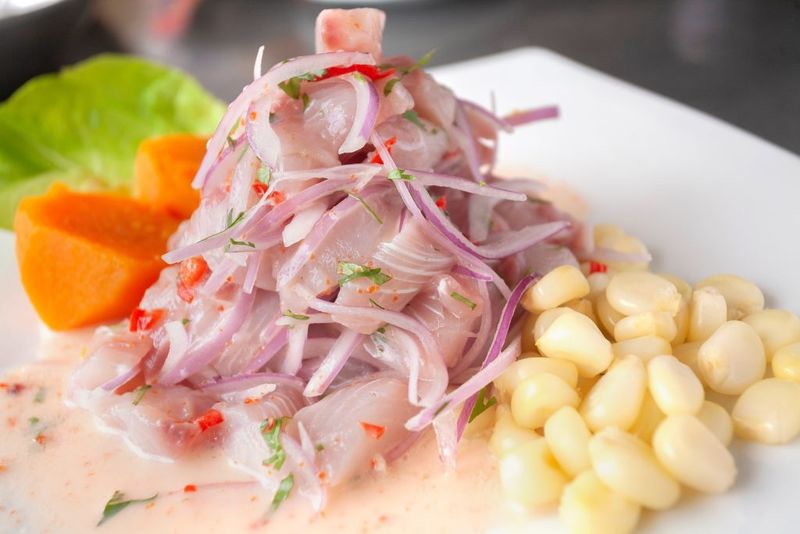
Peru’s coastal ceviche is a masterclass in simplicity and freshness. Raw fish is cured in lime juice with aji amarillo chili, red onion, and cilantro, then served with choclo corn and sweet potato.
The citrusy liquid left behind, called leche de tigre, is practically a drink on its own.
The fish used in Lima’s best cevicherias is pulled from the Pacific that same morning. That level of freshness is what makes Peruvian ceviche impossible to truly replicate anywhere else on Earth.
15. Biryani – Hyderabad, India
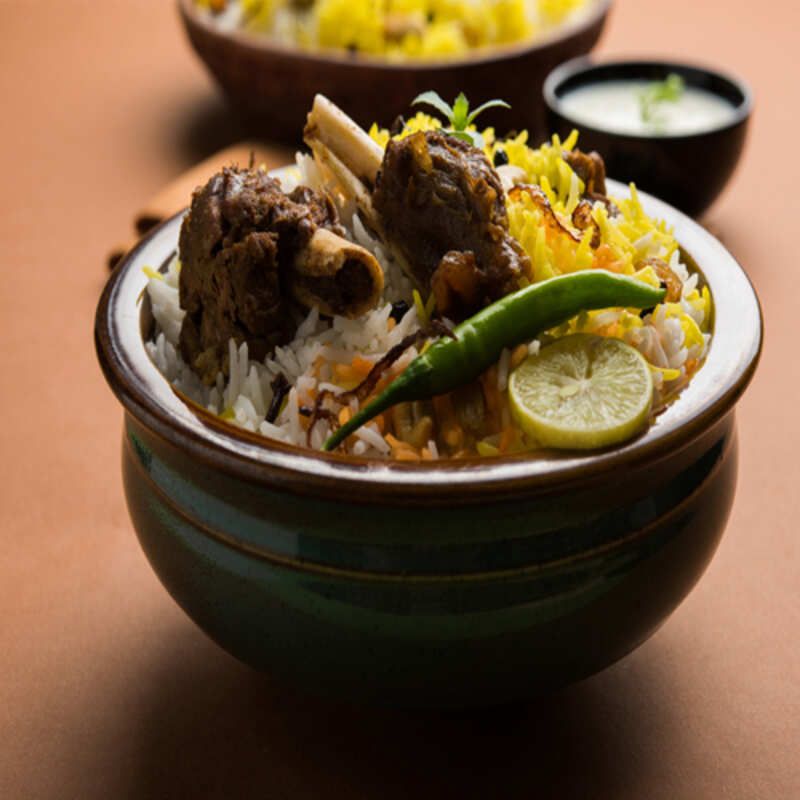
Hyderabadi biryani is in a class of its own among the many biryani styles across India. Made using the dum method, where meat and partially cooked rice are sealed in a pot and slow-cooked together, the result is a fragrant, layered masterpiece.
Saffron, whole spices, fried onions, and marinated mutton all meld into something extraordinary.
Locals in Hyderabad are fiercely loyal to their favorite biryani shops. Eating a fresh serving straight from the handi at a place like Paradise Restaurant is an unforgettable experience.
16. Chimichurri Asado – Argentina
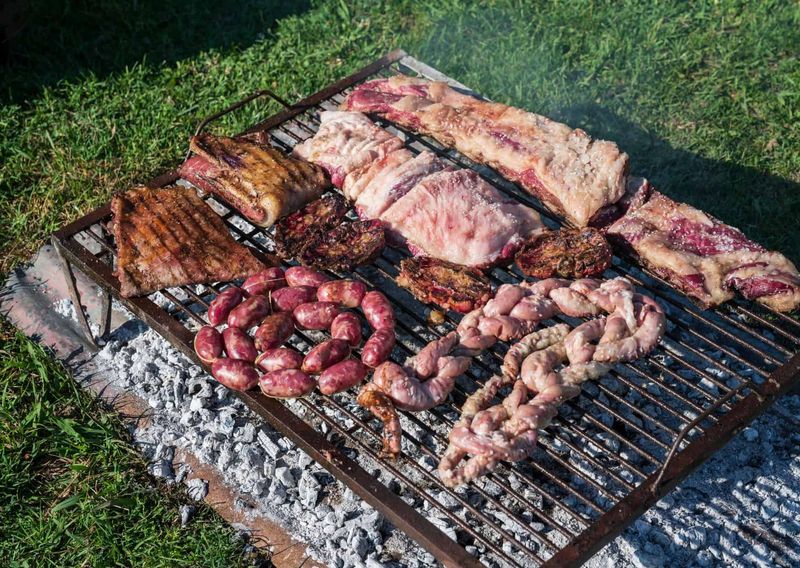
Argentina’s asado is not just a meal, it is a social event that can last an entire afternoon. Beef cuts like ribs, skirt steak, and offal are grilled slowly over wood embers, never gas, by a designated cook called the asador.
Fresh chimichurri sauce made from parsley, garlic, and vinegar is the only condiment you need.
The cattle raised on Argentina’s Pampas grasslands produce beef with a flavor that grass-fed programs elsewhere cannot fully replicate. Sharing an asado with a family in Buenos Aires is pure joy.
17. Rendang – West Sumatra, Indonesia
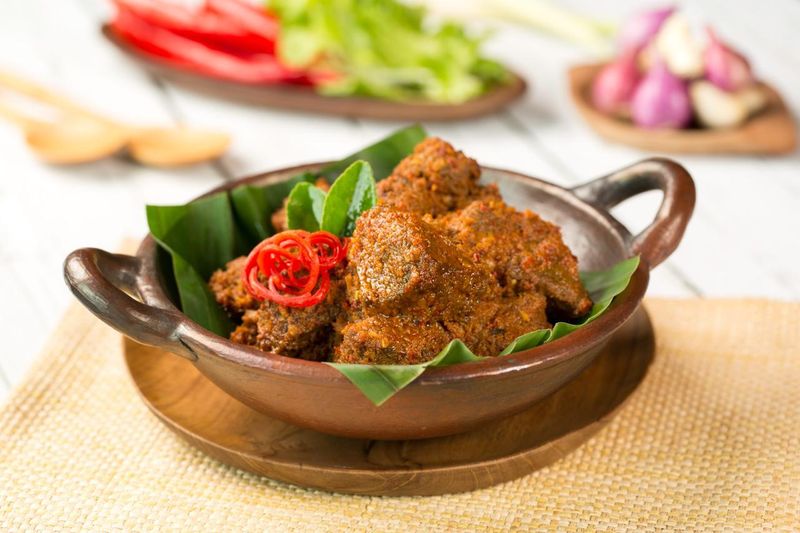
Rendang from West Sumatra is often called the world’s most flavorful dish, and after one bite, it is easy to see why. Beef is slow-cooked for hours in coconut milk and a paste of lemongrass, galangal, turmeric, and chilies until the liquid evaporates and the meat turns dark and caramelized.
The result is intensely aromatic and deeply satisfying.
Authentic rendang from a Padang restaurant, where it sits in communal bowls and is priced by what you eat, is a completely different level from any export version.
18. Pastel de Nata – Lisbon, Portugal
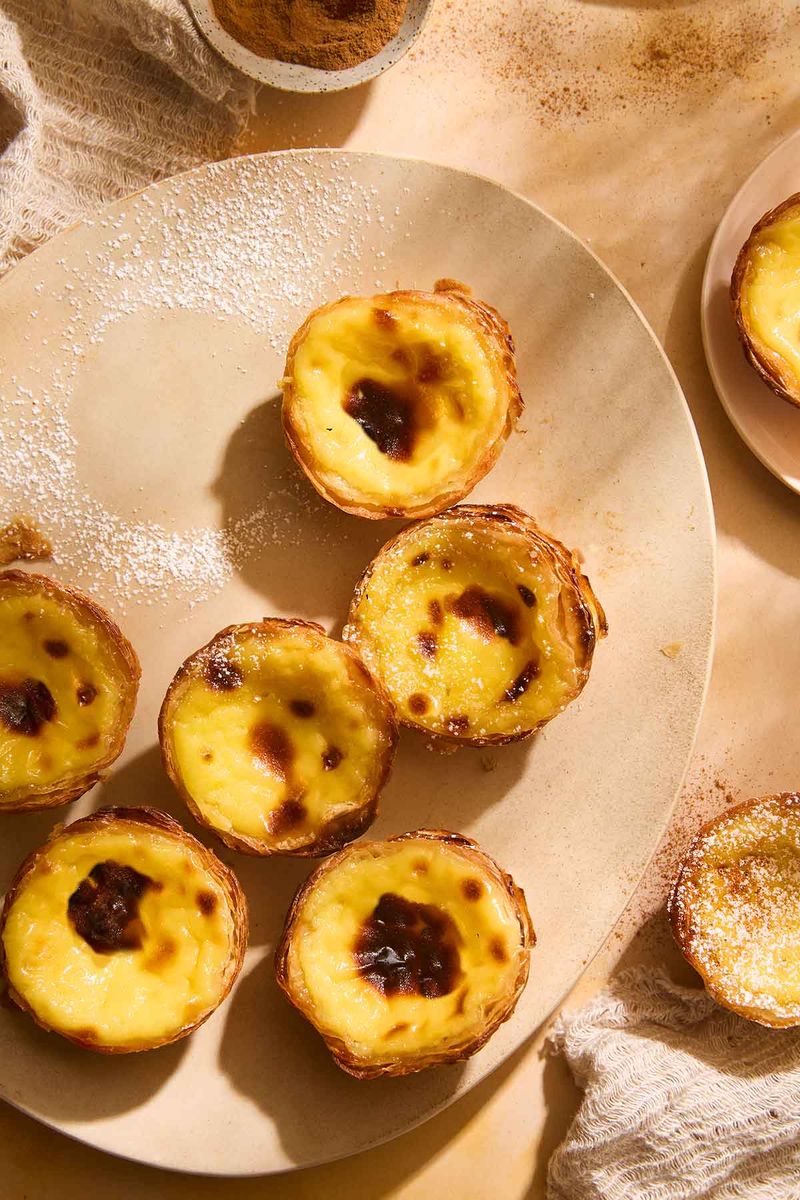
Portugal’s custard tart, the pastel de nata, has traveled the world, but nothing compares to eating one warm from the oven at Pasteis de Belem in Lisbon. The pastry shell is shatteringly flaky, and the custard inside is just barely set, with slightly scorched edges and a dusting of cinnamon.
It is perfection in three bites.
The original recipe from the Belem monastery is still a closely guarded secret. Standing in line for these tarts on a cool Lisbon morning is one of life’s simple pleasures.
19. Gumbo – Louisiana, USA
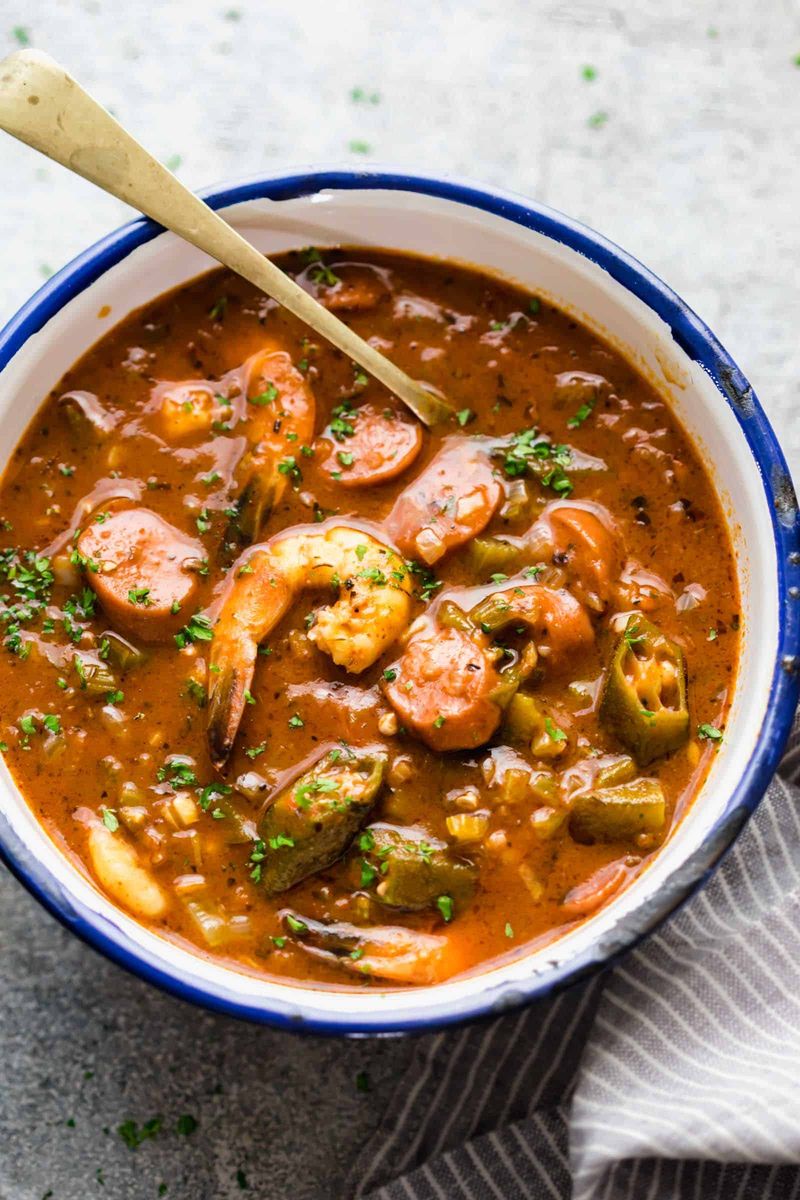
Louisiana gumbo is the edible story of New Orleans itself, blending West African, French, Spanish, and Native American cooking traditions into one deeply satisfying stew. The dark roux is the heart of the dish, cooked low and slow until it turns the color of chocolate.
Shrimp, sausage, and okra fill out the rest.
Every family and restaurant in New Orleans has a slightly different version, and debates about the right way to make gumbo are taken very seriously. Eating a bowl in the French Quarter is a cultural experience as much as a culinary one.