
Some movies prove you do not need a big budget or exotic locations to tell a gripping story. Bottle movies are films that take place almost entirely in one location, forcing the story to survive on character, dialogue, and tension alone.
From a sweltering jury room to a coffin buried underground, these films turn tight spaces into unforgettable worlds. Get ready to discover 15 movies that made one setting feel like the whole universe.
1. 12 Angry Men (1957)
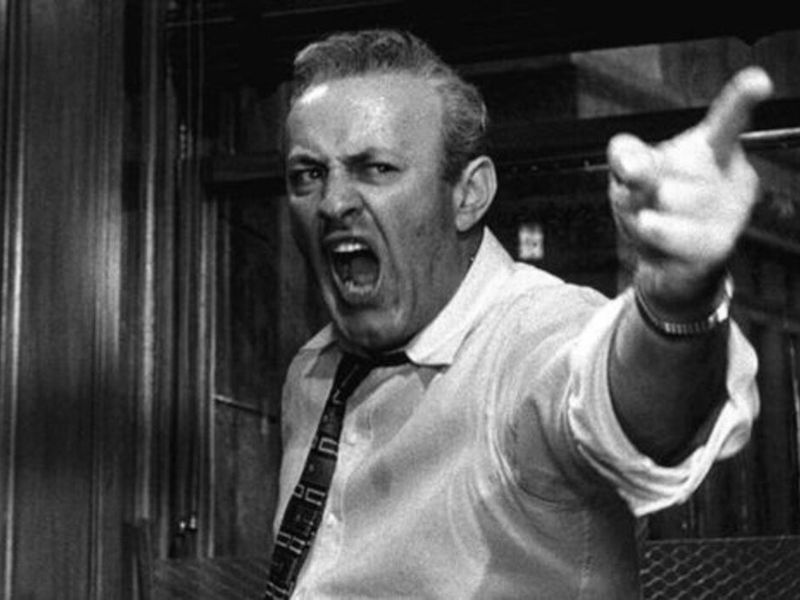
Picture twelve strangers crammed into a hot, stuffy room with one man’s life in their hands. Sidney Lumet’s courtroom classic never leaves the jury room, yet it crackles with more tension than most action films.
Every chair scrape and raised voice feels loaded with meaning.
The film shows how prejudice, logic, and conscience collide when people are forced to truly listen to each other. It earned three Academy Award nominations and remains one of cinema’s most powerful arguments for the power of conversation over spectacle.
2. Rope (1948)
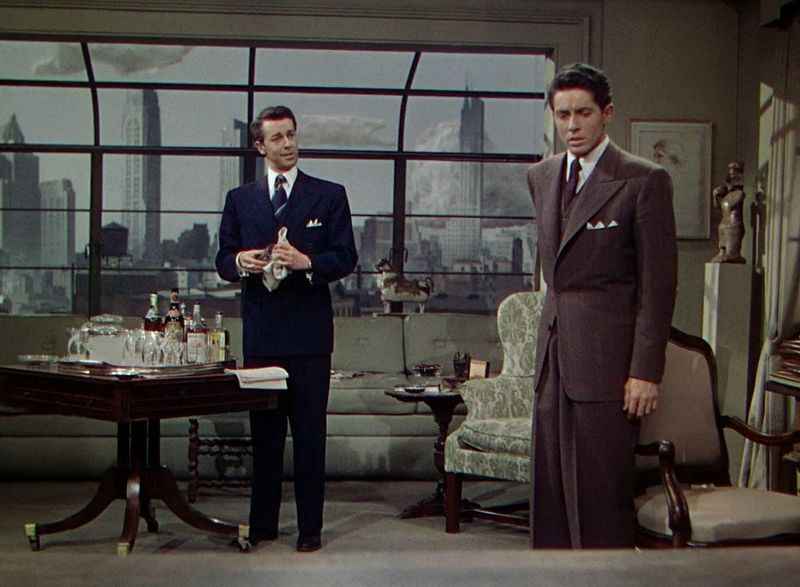
Alfred Hitchcock once described filmmaking as putting an audience through it, and Rope is proof he meant every word. Two men strangle a classmate, hide his body in a chest, and then host a dinner party right on top of it.
The audacity alone is breathtaking.
Hitchcock edited the film to look like one long, unbroken take, which was nearly impossible with 1940s technology. That seamless illusion makes the apartment feel inescapable, like you are trapped at the party too, waiting for someone to open the chest.
3. Rear Window (1954)
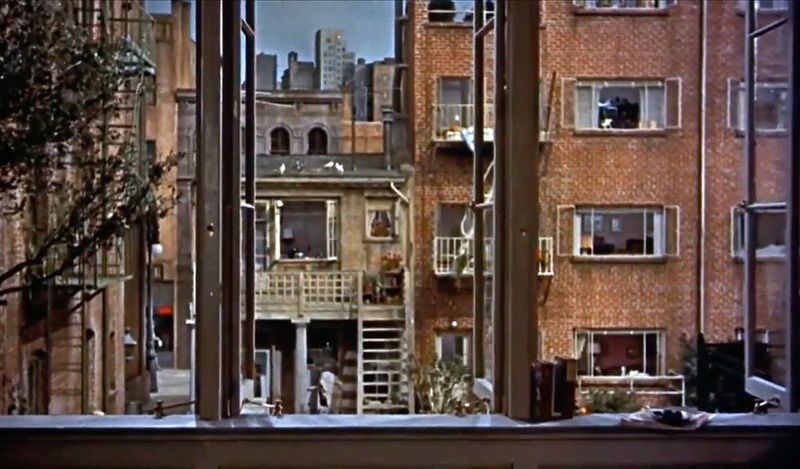
Stuck in a wheelchair with a broken leg, photographer L.B. Jefferies does what any curious person would do: he watches his neighbors through binoculars.
What starts as harmless people-watching turns into a possible murder mystery. Hitchcock turns one apartment window into a portal of dread.
The genius here is that the audience sees only what Jefferies sees, making everyone a voyeur along with him. Grace Kelly and James Stewart keep the chemistry electric even when neither of them can go anywhere meaningful.
4. Lifeboat (1944)
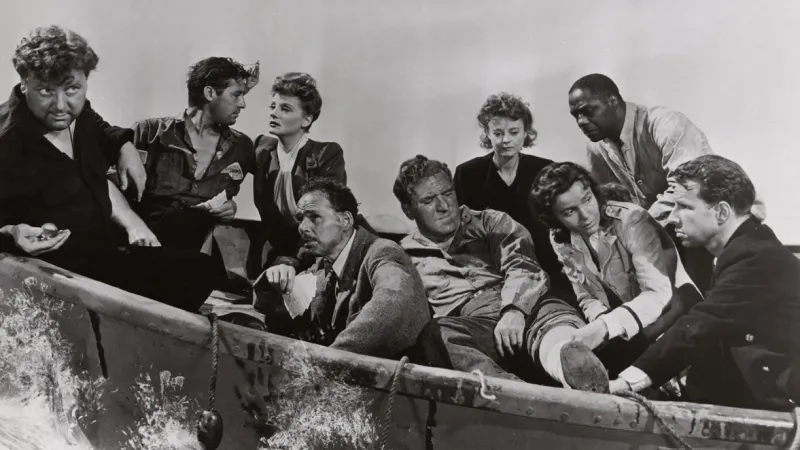
Hitchcock loved a challenge, and Lifeboat is his most extreme experiment in confined storytelling. The entire film takes place on a small wooden boat floating in the middle of the Atlantic after a torpedo strike.
There is nowhere to run, nowhere to hide, and no escape from the tension between survivors.
What makes it fascinating is how quickly social order breaks down under pressure. The film was shot on a studio tank, yet the cramped, waterlogged performances feel brutally real and surprisingly modern in their themes.
5. Wait Until Dark (1967)
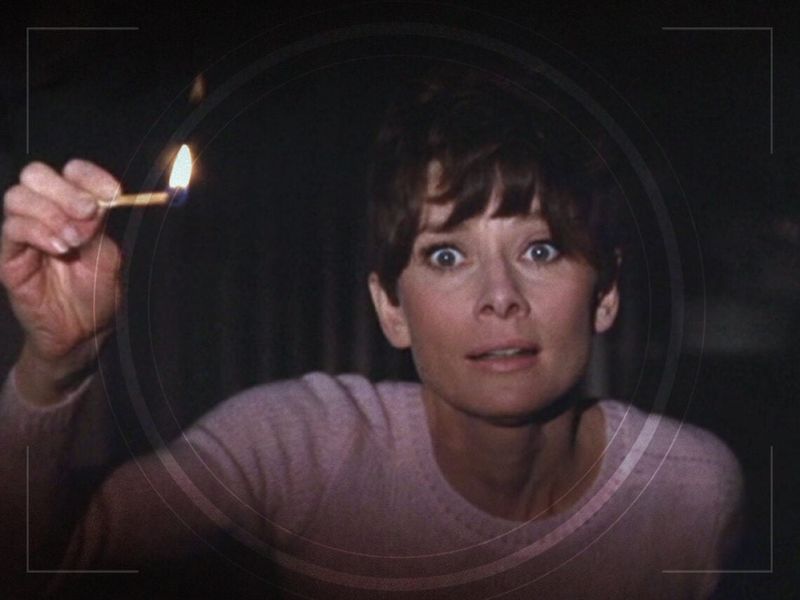
Audrey Hepburn earned an Academy Award nomination for playing Susy Hendrix, a blind woman terrorized by three criminals in her own apartment. The film smartly flips the usual thriller logic: Susy realizes her blindness is actually an advantage in the dark.
She begins destroying every light source to level the playing field.
That single decision transforms the small apartment into a battlefield where the audience holds its breath. Few thrillers have ever made darkness feel so physically terrifying while keeping their hero so fiercely determined and resourceful.
6. Sleuth (1972)
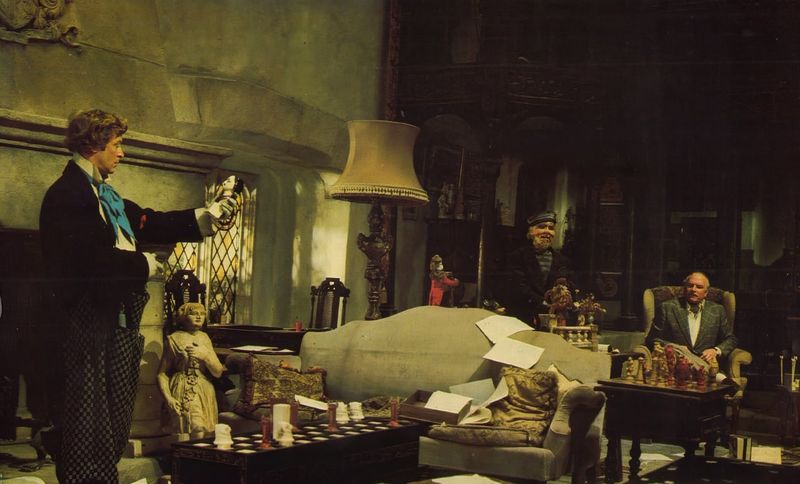
Andrew Wyke is a wealthy mystery writer who lives in a manor stuffed with games, gadgets, and traps. When his wife’s younger lover shows up, Wyke invites him to play a very dangerous game.
What follows is a wickedly clever battle of wits that twists and turns with every scene.
Laurence Olivier and Michael Caine both received Oscar nominations, which is remarkable given they are the film’s only two actors. The mansion itself feels like a third character, full of hidden meanings and playful menace that rewards close attention.
7. My Dinner with Andre (1981)
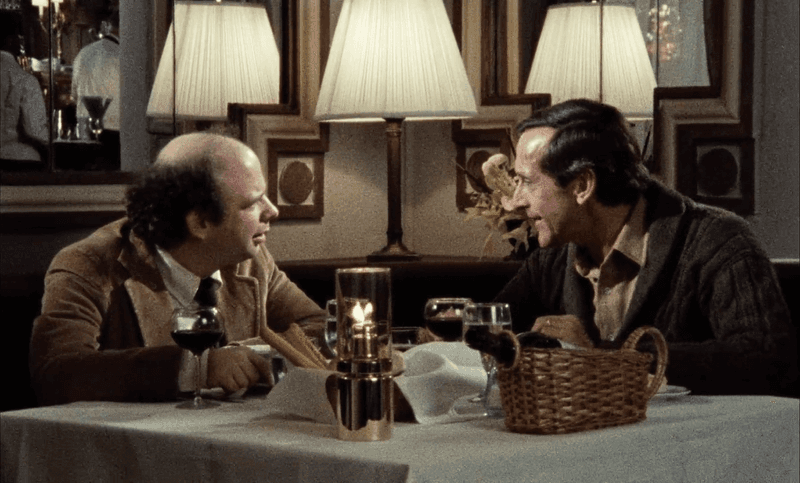
Two old friends sit down for dinner in a New York restaurant, and for nearly two hours, they simply talk. No car chases, no explosions, just conversation.
Yet director Louis Malle makes every word feel urgent, funny, and occasionally unsettling in the best possible way.
Wallace Shawn and Andre Gregory play fictionalized versions of themselves, and their real-life friendship gives every exchange an unusual warmth. The film quietly asks whether modern life makes people feel more alive or just more comfortable, and it never fully lets you off the hook.
8. Misery (1990)
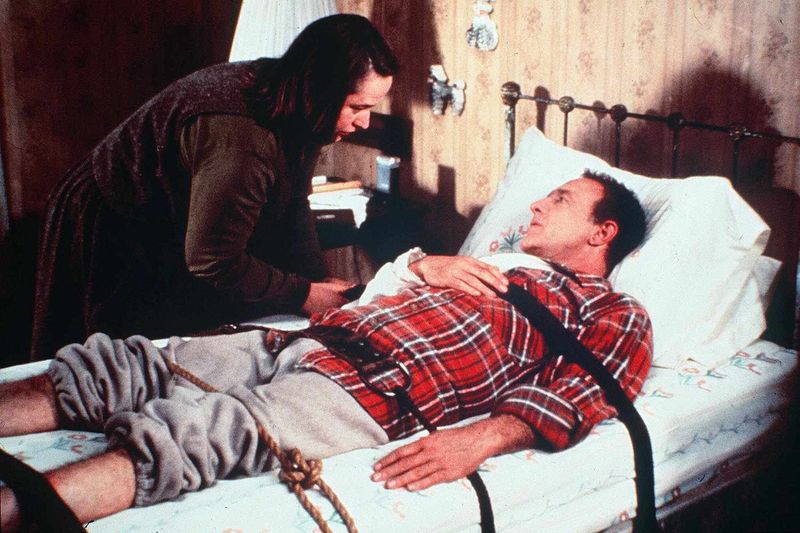
Author Paul Sheldon survives a car crash in a blizzard only to wake up in the home of his self-described number one fan. Annie Wilkes seems helpful at first, but her obsession quickly curdles into something terrifying.
The bedroom where Paul is kept becomes a prison cell in all but name.
Kathy Bates won the Academy Award for Best Actress for her chilling performance, and James Caan makes Paul’s helplessness feel genuinely painful to watch. Stephen King’s story proves that the scariest monsters sometimes bring you soup with a smile.
9. Reservoir Dogs (1992)
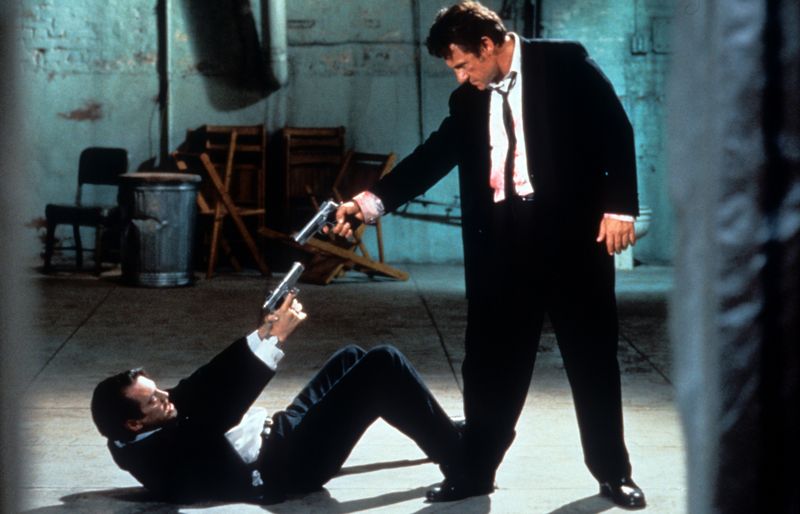
Quentin Tarantino’s debut feature drops you into a warehouse with a crew of criminals after a diamond heist has gone catastrophically wrong. Nobody trusts anybody, someone is bleeding out on the floor, and the audience slowly pieces together what actually happened through sharp, overlapping flashbacks.
The warehouse setting strips everything down to pure character conflict. With nowhere to run and no one to trust, every line of dialogue feels like a loaded weapon.
Few directorial debuts have ever been this confident, this stylish, or this brutally entertaining from start to finish.
10. Cube (1997)
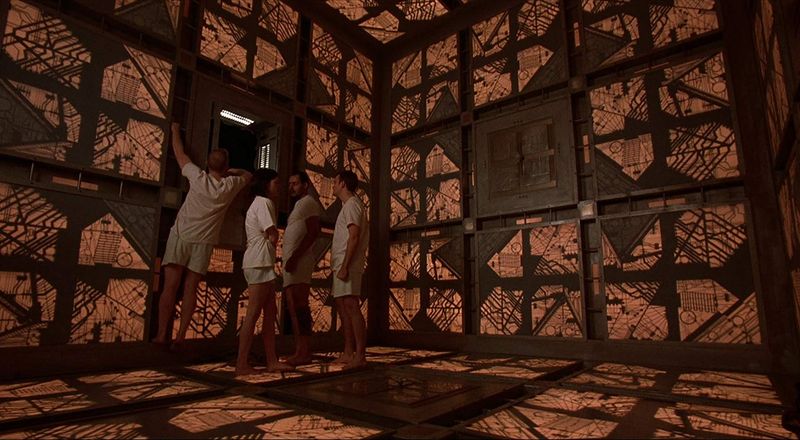
Wake up in a room with no memory of how you got there. Every door leads to another identical room, and some of those rooms will kill you.
That is the terrifying premise of Cube, a low-budget Canadian sci-fi film that became a cult classic almost immediately upon release.
The film cleverly uses the repetitive setting to build paranoia rather than boredom. As the characters argue, break down, and try to decode the maze’s logic, the cube itself becomes a symbol of bureaucratic cruelty.
You never need to see what is outside to feel completely trapped.
11. Phone Booth (2002)
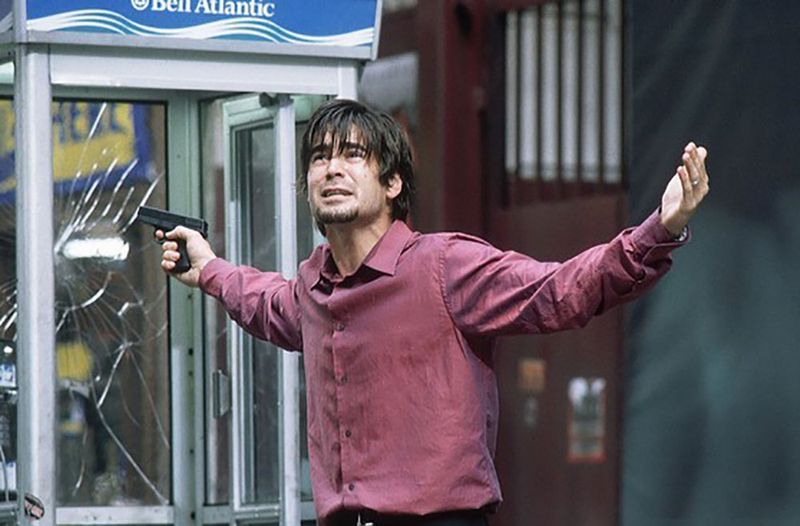
Stuart Shepard picks up a ringing phone booth in Manhattan and cannot put it down. A sniper on the other end of the line knows every dirty secret Stuart has and threatens to shoot him if he hangs up.
For most of the film, the entire story unfolds within a few square feet of sidewalk.
Director Joel Schumacher keeps the camera restless to compensate for the static location, and Colin Farrell delivers a raw, sweaty performance that holds everything together. It is a reminder that the most claustrophobic cage is sometimes just the one you built yourself.
12. Buried (2010)
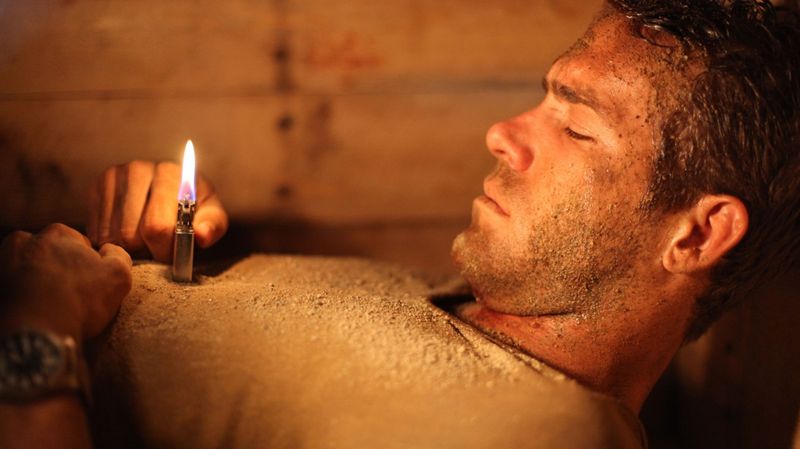
Ryan Reynolds spends the entire film inside a coffin buried underground in Iraq with only a lighter and a cell phone. No cutaways, no flashbacks, no relief.
Director Rodrigo Cortes keeps the camera locked inside that box for the full 95 minutes, and the effect is genuinely suffocating.
What is remarkable is how visually inventive the film manages to be within such a tiny space. Light, shadow, and Reynolds’s increasingly desperate performance do all the heavy lifting.
Buried stands as one of cinema’s boldest single-location experiments and one of its most emotionally exhausting.
13. 127 Hours (2010)
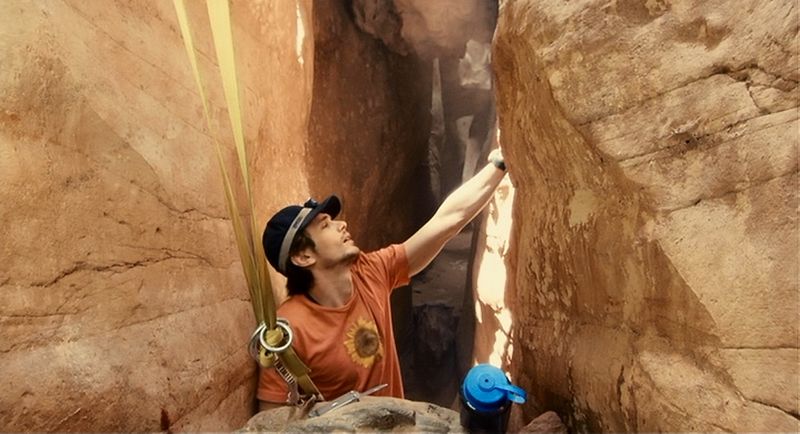
Aron Ralston went hiking alone in Blue John Canyon, Utah, and did not tell anyone where he was going. A falling boulder pinned his right arm against the canyon wall, and for five days, that narrow crack in the earth became his entire world.
Director Danny Boyle turns one man’s ordeal into a visually dazzling survival story.
James Franco’s performance carries almost every frame solo, making the audience feel every hour of Ralston’s desperation and dark humor. Based on a true story, the film transforms physical confinement into a meditation on connection and the will to live.
14. The Hateful Eight (2015)
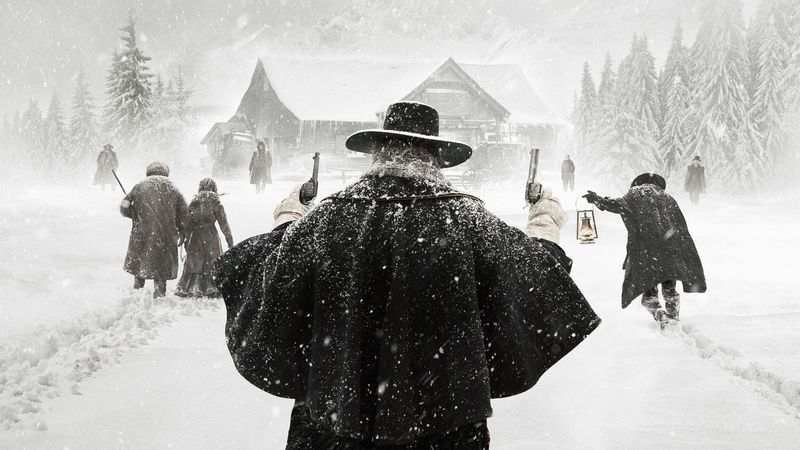
A blizzard forces eight strangers into Minnie’s Haberdashery, a remote Wyoming stagecoach stop, and nobody is quite who they claim to be. Quentin Tarantino stretches the tension across nearly three hours, letting conversations simmer before they explode.
The snowstorm outside makes the cramped interior feel even more suffocating.
Shot in glorious 70mm widescreen, the film uses its single location to expose lies, loyalties, and long-buried grievances one by one. The Hateful Eight proves that Tarantino is as comfortable staging a slow-burn chamber drama as he is directing full-scale action sequences.
15. Ex Machina (2014)
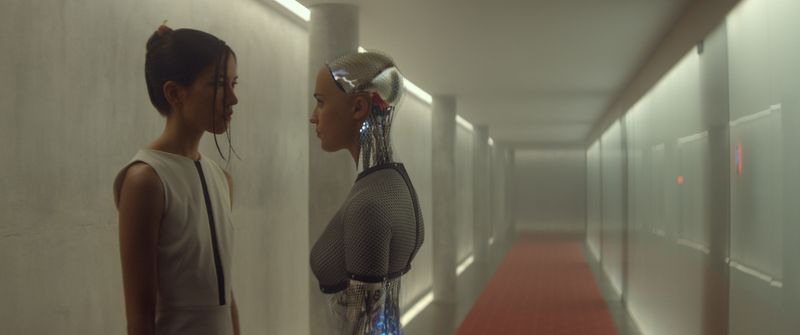
A young programmer wins a trip to his reclusive CEO’s isolated research facility hidden deep in the Norwegian wilderness. Once there, he is asked to evaluate Ava, a humanoid robot with an unsettling ability to hold a conversation.
Writer-director Alex Garland uses the facility’s clean, sealed rooms to make every interaction feel like a psychological test.
The film raises genuinely uncomfortable questions about consciousness, control, and what it means to be human. Alicia Vikander’s performance as Ava is mesmerizing, blending warmth and calculation in ways that keep you guessing her true intentions right up to the final frame.