
A frog can turn an ordinary joke into something wonderfully strange. Gary Larson’s The Far Side uses animal habits and human problems to make readers look twice, often saving the laugh for one tiny detail.
The supplied descriptions show how much timing matters, even in a single drawing. Some entries below describe specific scenes, while others are loosely described concepts rather than verified cartoons.
1. One Person’s Swamp Is Another’s Fortune
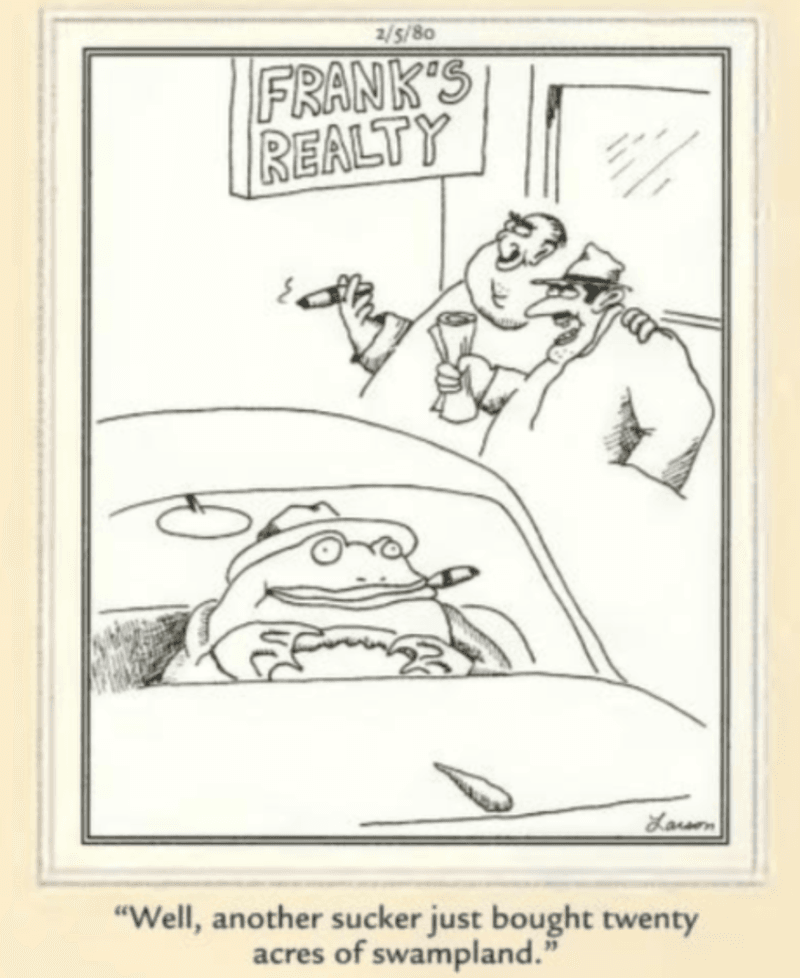
Buying a swamp sounds foolish until you remember who wants to live there. Two shady real estate agents celebrate selling wet land to a frog, but their supposed victim looks surprisingly comfortable with the deal.
The cigar and car make the buyer seem confident, not clueless. Pause over those details before judging the sale.
The laugh arrives when you realize the agents may have mistaken a perfect home for a worthless piece of property themselves.
2. A Spell Gone Wrong
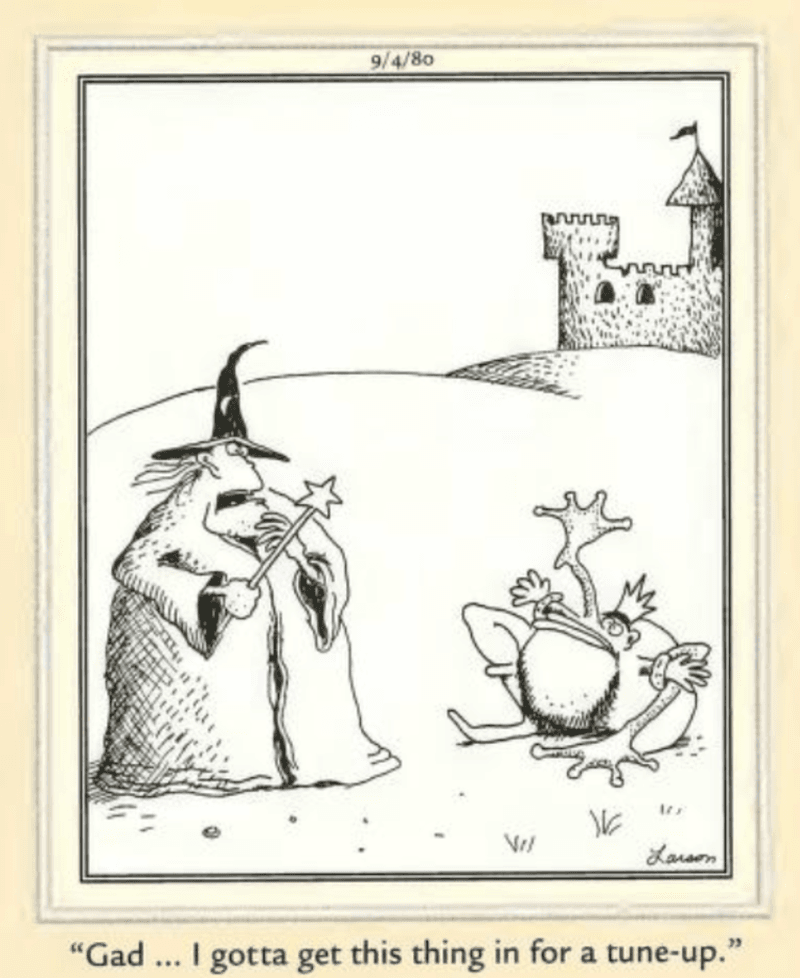
Magic apparently needs maintenance, just like a lawn mower. After producing a creature that is partly human and partly frog, the wizard treats his wand as faulty equipment rather than facing a grand magical disaster.
That ordinary reaction gives the strange scene its kick. Look at the gap between the size of the mistake and the calm response.
Anyone who has blamed a printer for a terrible result can recognize the wizard’s wonderfully convenient excuse.
3. Frog Legs
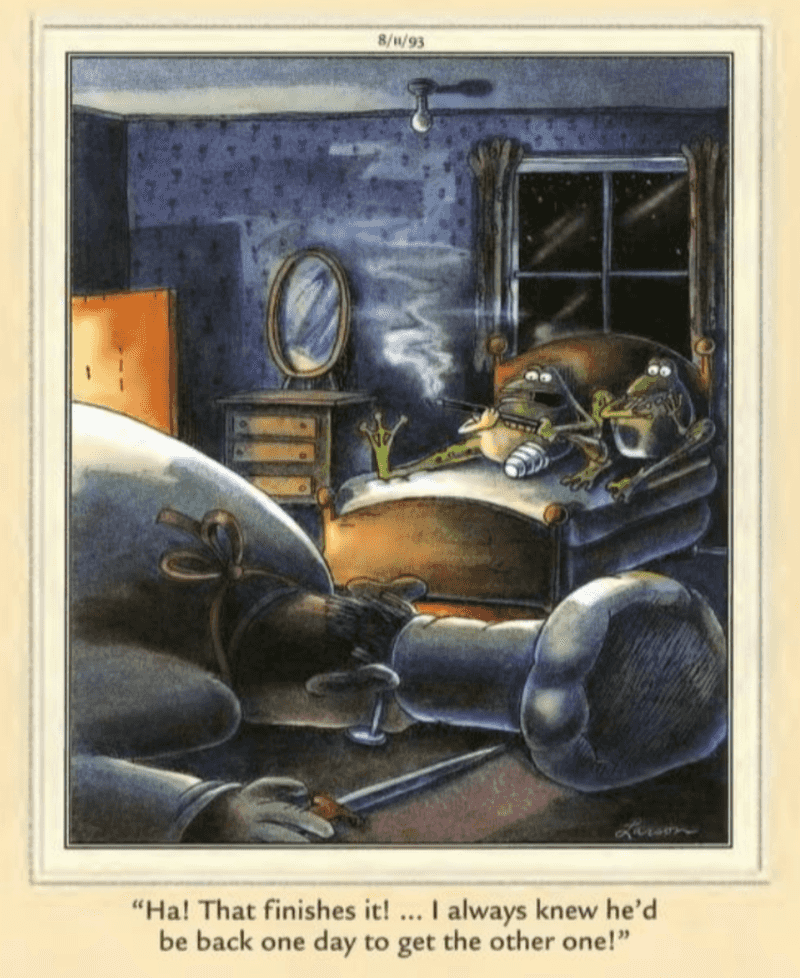
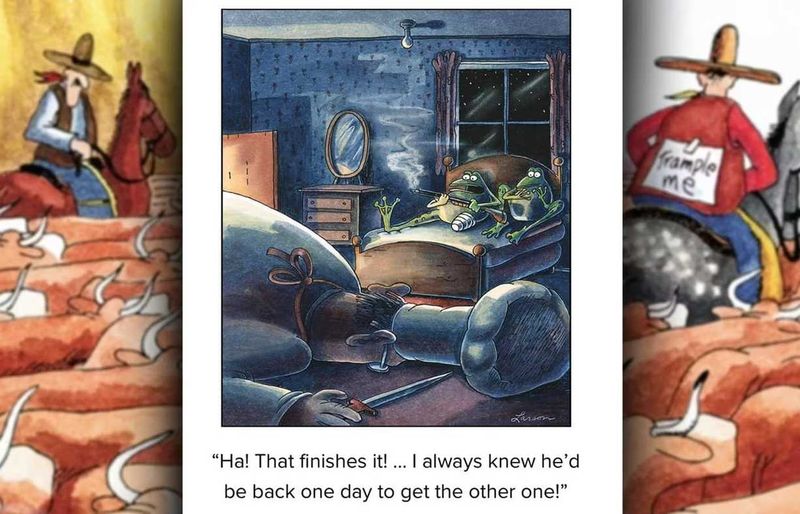
Dinner takes a dark turn when the ingredient fights back. A frog missing one leg confronts a chef, convinced the cook has returned for the other, and the scene becomes a tiny revenge drama.
The supplied description places the joke immediately after the frog acts. That timing lets its explanation change how we understand the encounter.
Beneath the grim humor sits a familiar feeling: once someone hurts you, even an ordinary visit can seem deeply suspicious.
4. Frog Mobsters
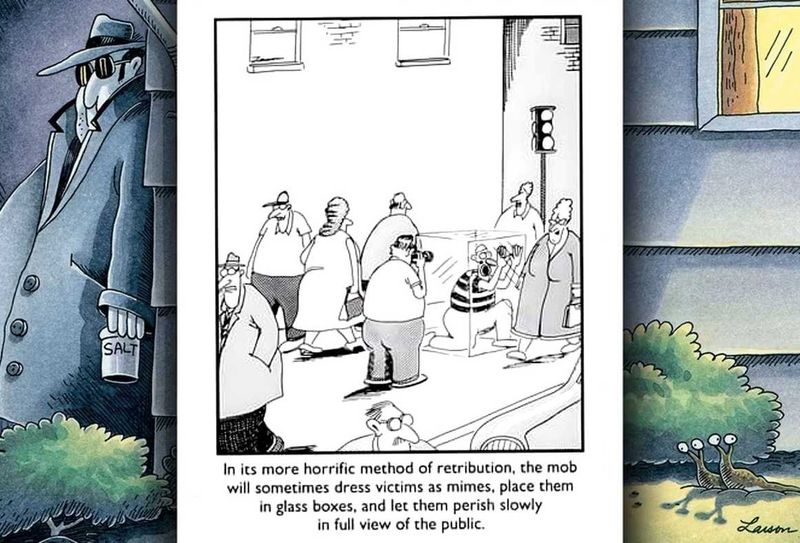
Even an amphibian criminal needs a better hiding place. One frog suggests the swamp, only for its partner to point out that pursuers would naturally search there first.
The quick reply turns a sensible animal choice into terrible gangster advice. Read the exchange as if it came from a serious crime movie, then notice the frogs again.
Their natural habitat becomes the punchline because survival instincts and criminal planning suddenly pull in completely opposite directions here.
5. Frog Hunting
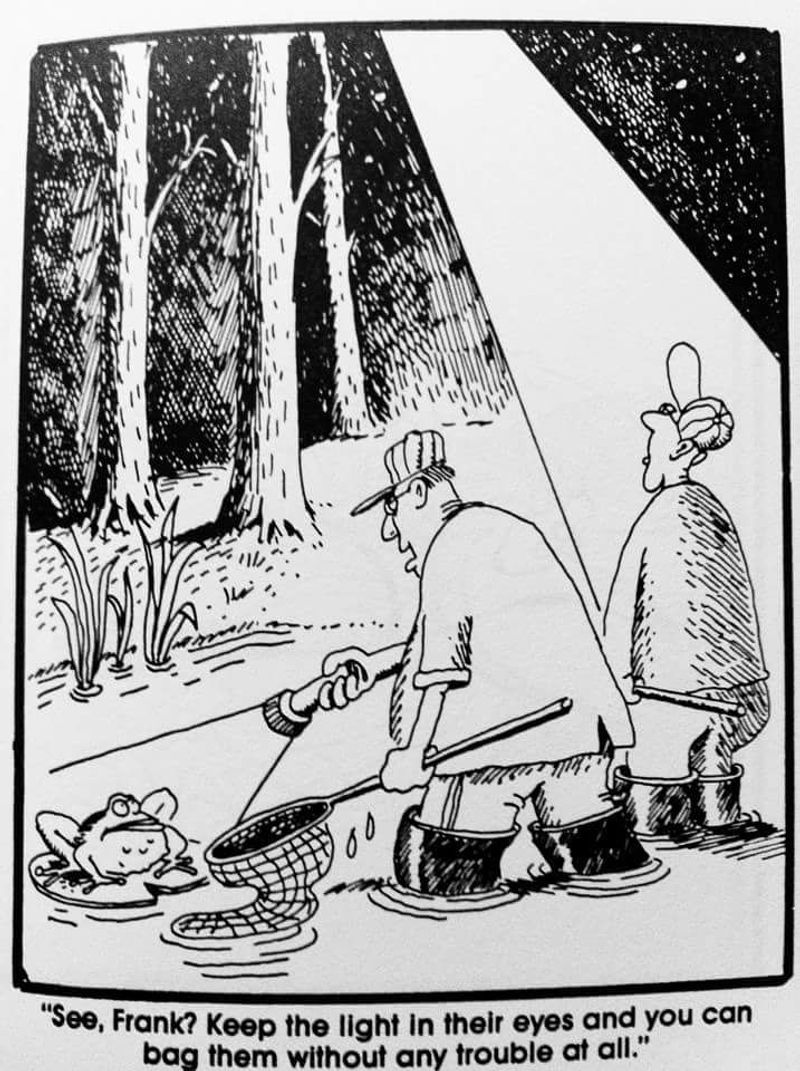
Confidence looks silly when a bigger hunter enters the picture. A person explains how light can hold a frog’s attention while aliens use a similar trick on the person’s companion.
Both actions happen together, giving the reader information the speaker lacks. Follow the beams of light to catch the visual connection.
The scene pokes fun at feeling completely in control, especially when you have not bothered to check what might be happening right behind your back.
6. Creature from the Black Lagoon
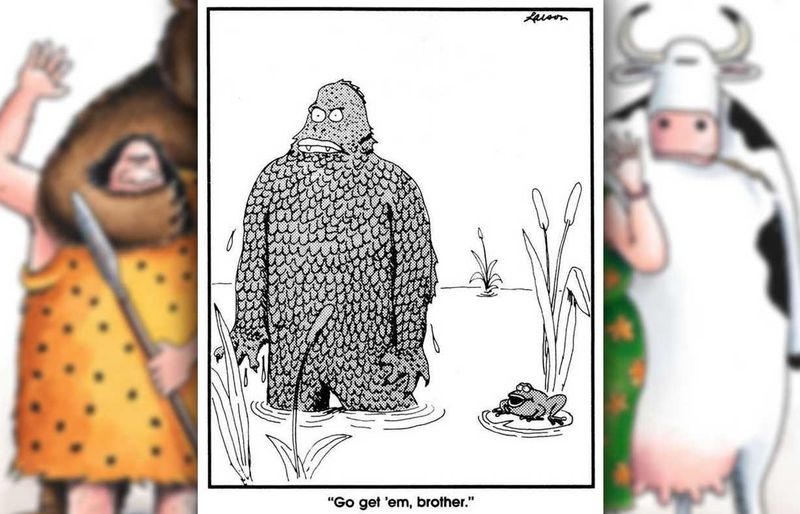
A monster getting a pep talk feels oddly like someone preparing for a school game. In the supplied scene, a frog encourages the Gill-Man before the creature approaches nearby humans.
Friendly support clashes with the threatening situation, and that clash supplies the laugh. Watch how a small social gesture changes the mood without changing the danger.
The frog treats a frightening movie moment as routine business, making the monster seem less mysterious and almost amusingly ordinary.
7. Waiter, Waiter Joke
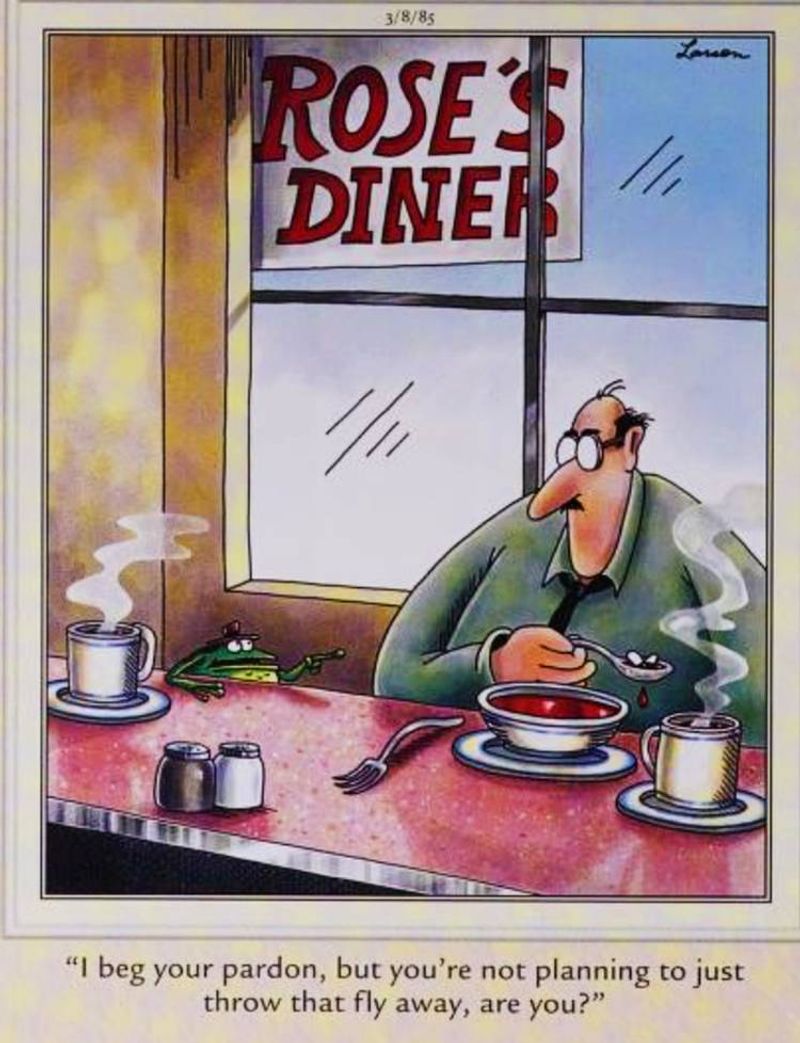
Good manners can make a gross moment even funnier. Instead of complaining about a fly in soup, a frog politely asks another diner whether it may have the unexpected snack.
The joke flips a familiar restaurant complaint by changing who finds the situation unpleasant. Picture the exchange happening with perfect table manners.
That calm request is the key: what ruins one customer’s lunch could improve another’s, and neither needs to understand the other’s taste at all.
8. Frog Stuck to an Airplane
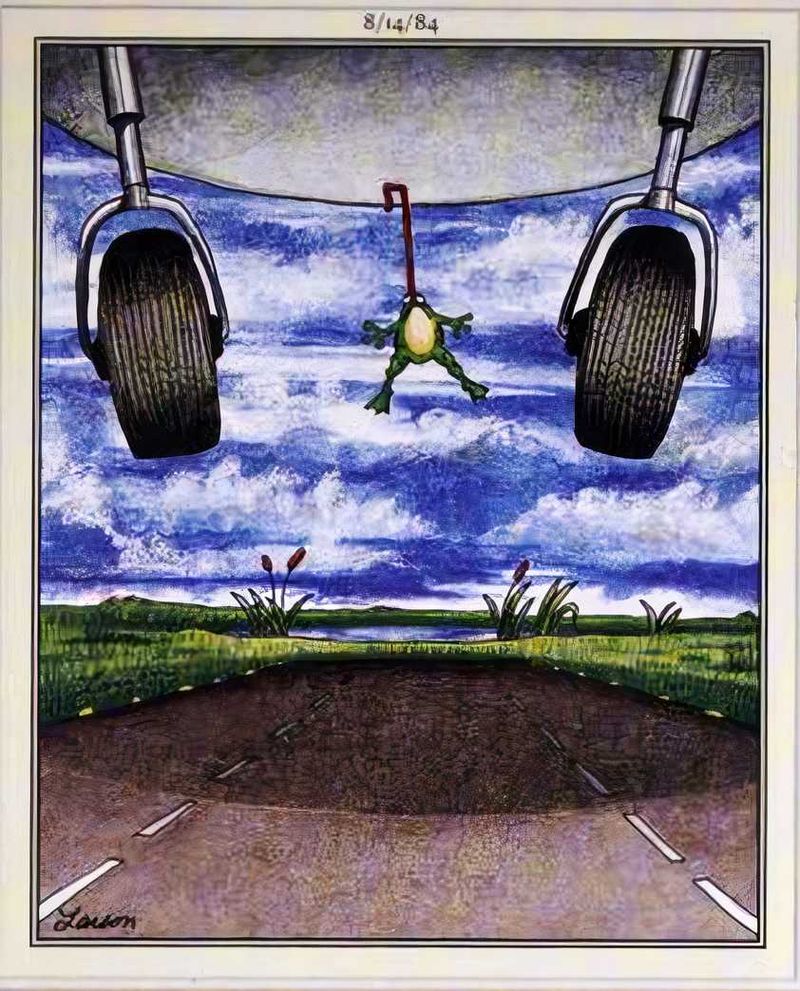
One sticky tongue creates a very unusual travel problem. A frog hangs beneath a taxiing airplane, leaving readers to invent the chain of mistakes that brought it there.
No long explanation is needed because the picture catches the worst possible pause. First notice the size difference, then imagine the plane moving faster.
The humor grows from missing information: perhaps a badly judged snack led to this, but the supplied description never tells us exactly what happened.
9. Ahhhh… Life!
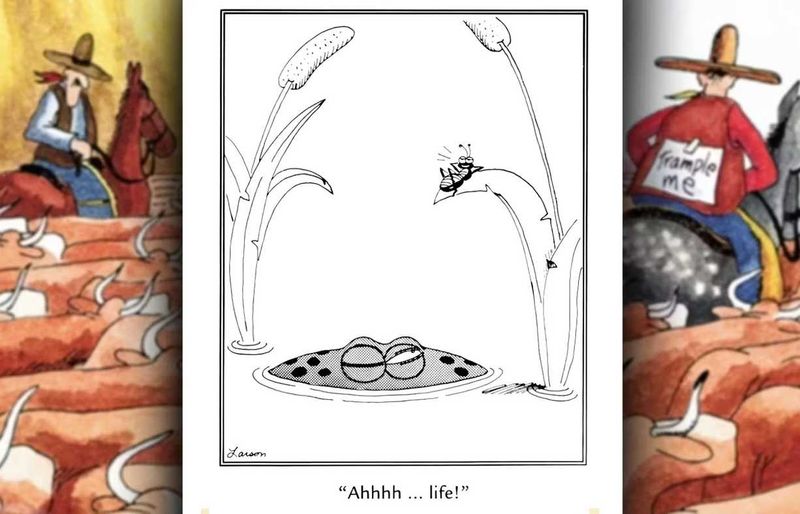
Sometimes the funniest character is the one enjoying everything at exactly the wrong moment. The supplied notes associate this title with frog contentment, but they do not establish a specific drawing or caption.
Treat it as a viewing idea rather than a confirmed scene. If you locate the actual panel, compare the frog’s relaxed mood with its surroundings.
A peaceful expression can become hilarious when readers spot trouble, nonsense, or inconvenience that the happy character misses.
10. Air Sac
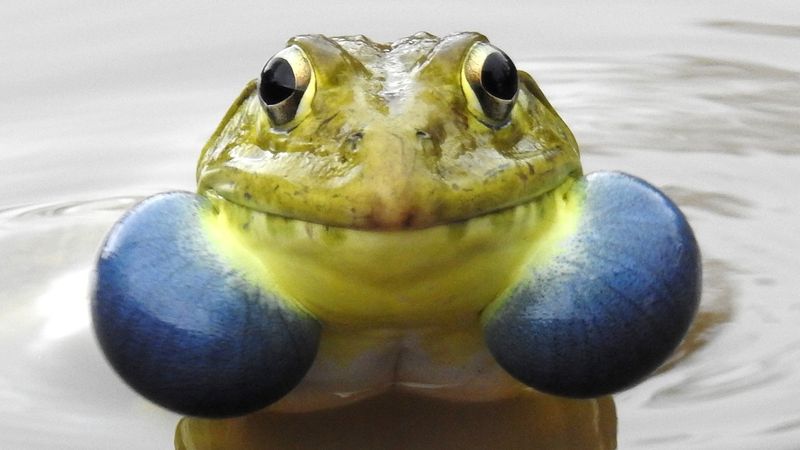
A frog’s throat can look like a built-in comic prop. Many male frogs inflate a vocal sac while calling, so an ordinary animal feature already offers a surprising visual shape.
However, the supplied entry does not describe a verified gag for this title. Avoid assuming a balloon accident or another invented event actually appears.
When checking the original, look for how the visible sac interacts with the caption; the contrast could explain the joke’s precise timing.
11. Frog Pioneers
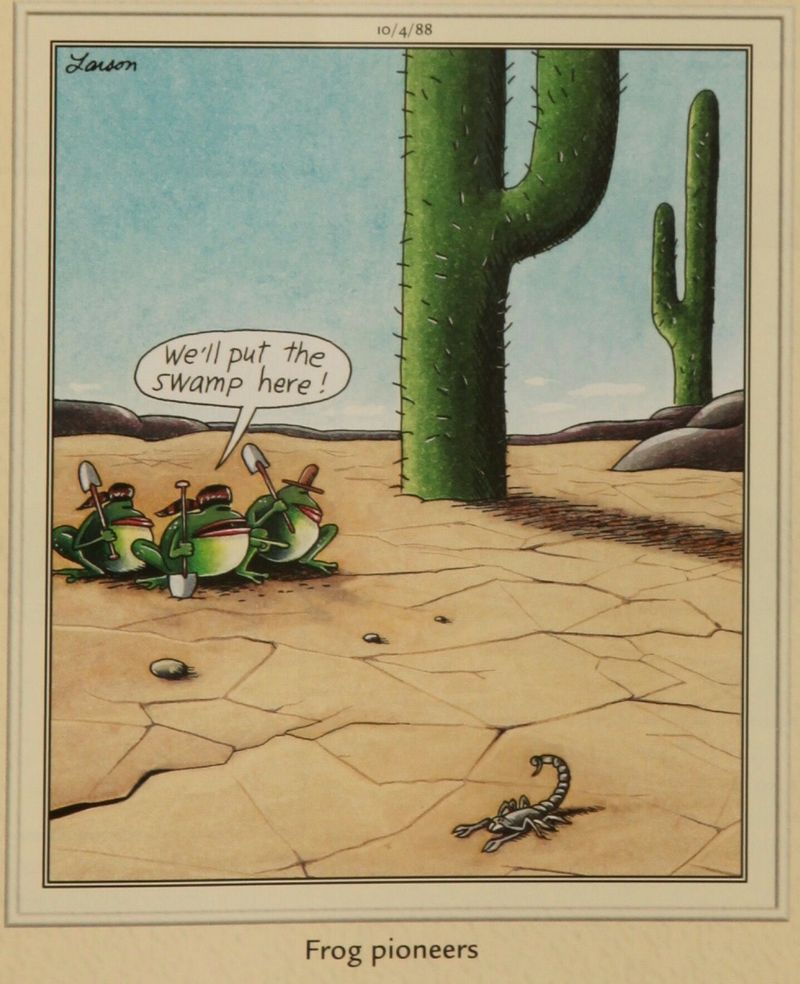
Covered wagons and webbed feet make an amusing mental picture. The research notes suggest frogs placed in a pioneer setting, although they provide no confirmed action, caption, or visual details.
That limit matters because a costume alone does not explain a punchline. Search for the original before deciding what the travelers are doing.
As a general comic idea, human ambition placed beside amphibian needs could create a neat mismatch between a grand journey and practical comfort.
12. Ribbit, Ribbit, Ribbit
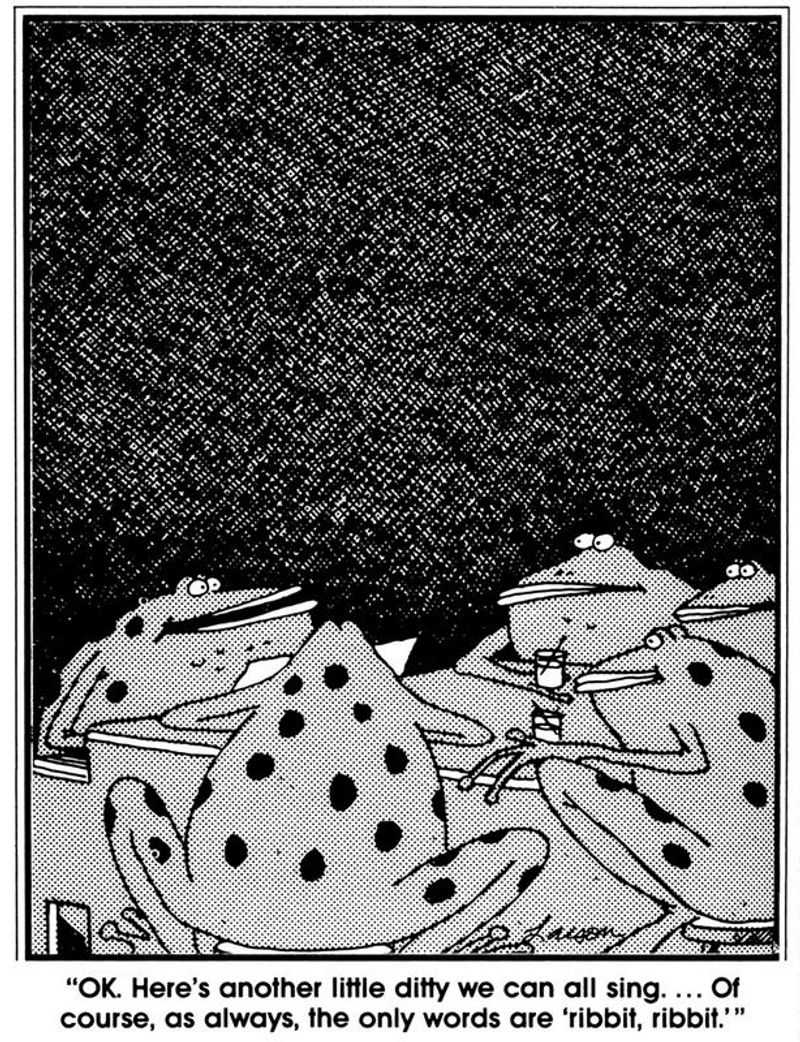
Three little croaks can carry a joke if the audience expects a speech. This supplied title suggests frog sounds used in conversation, but the notes do not confirm the actual setup.
Listen for repetition when reading any verified panel you find. A repeated sound might build expectation, interrupt someone, or stand against an unusually serious setting.
Those are possible comic devices, not established details here. The useful clue is the gap between animal noise and human meaning.
13. Croaked by the Amphibian Mafia
Wordplay gets slippery when a frog enters a crime story. Croaked can mean making a frog sound or dying, which gives an amphibian mafia concept an obvious double meaning.
The supplied notes do not verify a separate panel under this label, so it should not automatically be counted as distinct from Frog Mobsters. Look for an actual image and caption before comparing them.
If confirmed, the reveal would depend on which meaning readers recognize first while reading.
14. Dog Meets Frog
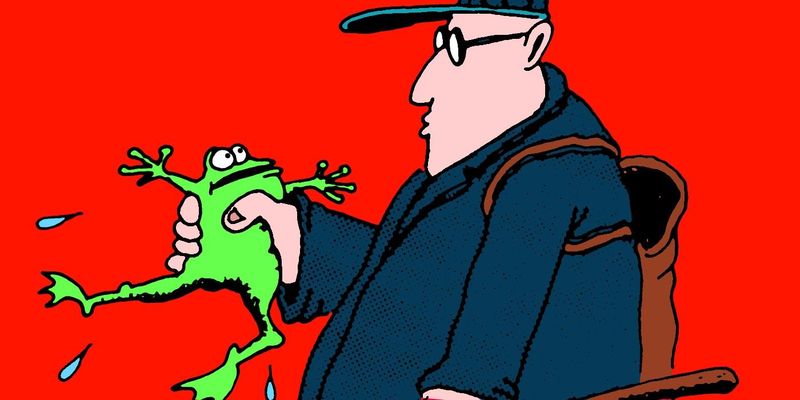
A curious nose meeting a cool stare can promise comic trouble. The supplied research proposes a dog and frog encounter, but it does not identify a specific Larson panel.
Keep that uncertainty in mind rather than inventing dialogue or a surprise attack. In an authenticated cartoon, compare what each animal seems to know.
Different expectations can make a simple meeting funny, especially when the smaller creature appears calmer or better informed than its much larger visitor nearby.
15. The Frog and the Fly
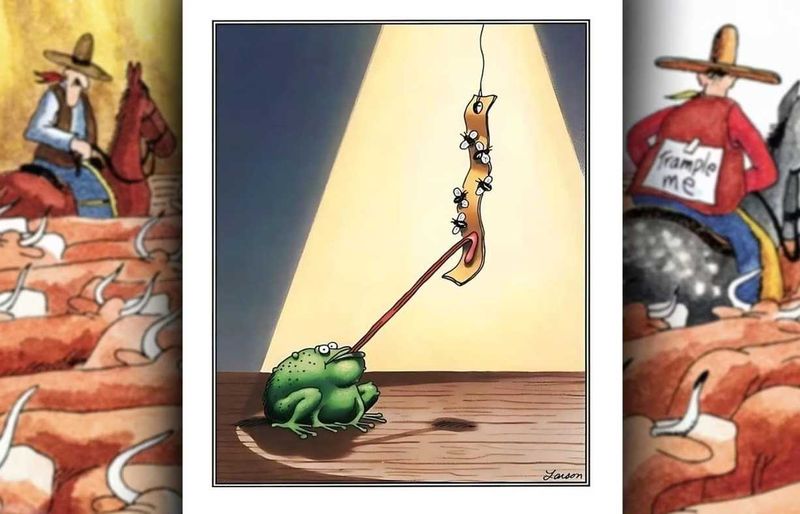
Lunch becomes a contest when the snack has its own plans. Frogs and flies offer a natural predator relationship that a cartoon can turn into a battle of patience or wit.
However, this entry is a broad theme, not a verified scene in the supplied material. Do not assume the fly wins or the frog delivers a speech.
Instead, examine any located panel for the instant when an expected meal becomes something stranger than an easy catch.
16. Frog Philosopher
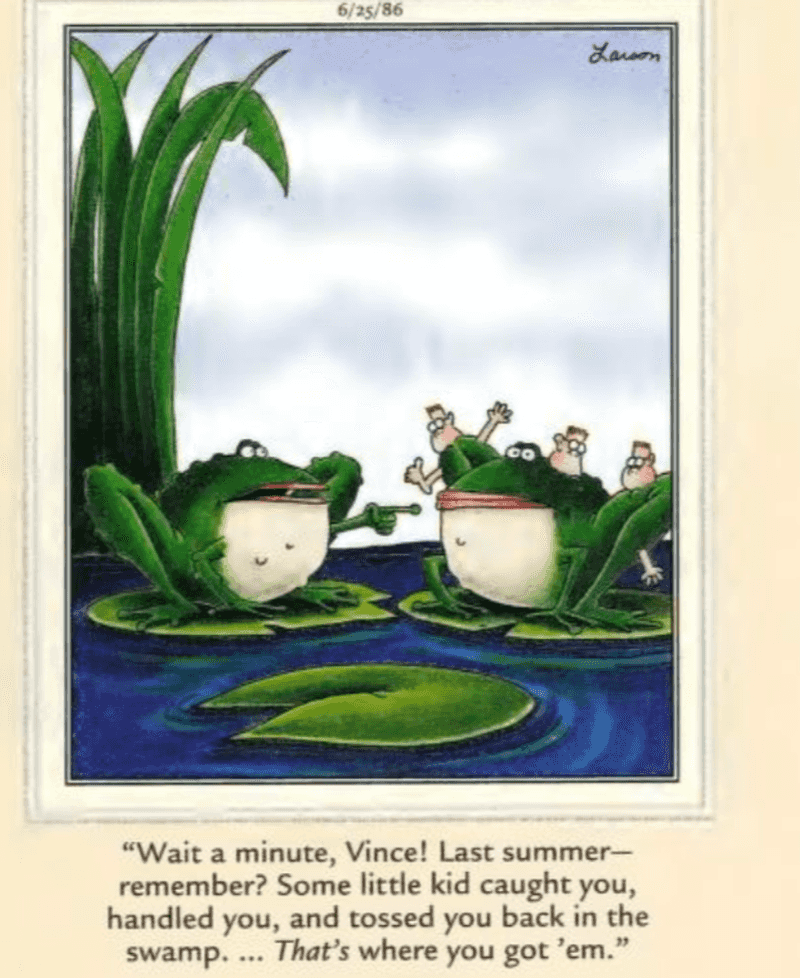
Big questions sound wonderfully odd coming from a pond resident. A frog pondering existence fits the broader idea of animals carrying human worries, but this supplied label lacks a confirmed cartoon.
Enjoy the concept without treating an imagined speech as Larson’s writing. If you find a matching original, check what interrupts the thoughtful mood.
Hunger, danger, or another everyday need could undercut a grand thought, though none of those possibilities is established by the available notes here.