
Breakfast across the UK is far from a one-size-fits-all meal. From the misty Scottish Highlands to the sunny streets of Cornwall, every region has its own morning traditions that locals swear by.
Some of these dishes have been around for centuries, while others are newer favorites that have become part of daily life. Get ready to explore the delicious, quirky, and comforting foods that people wake up to all across Britain.
1. Full English Breakfast
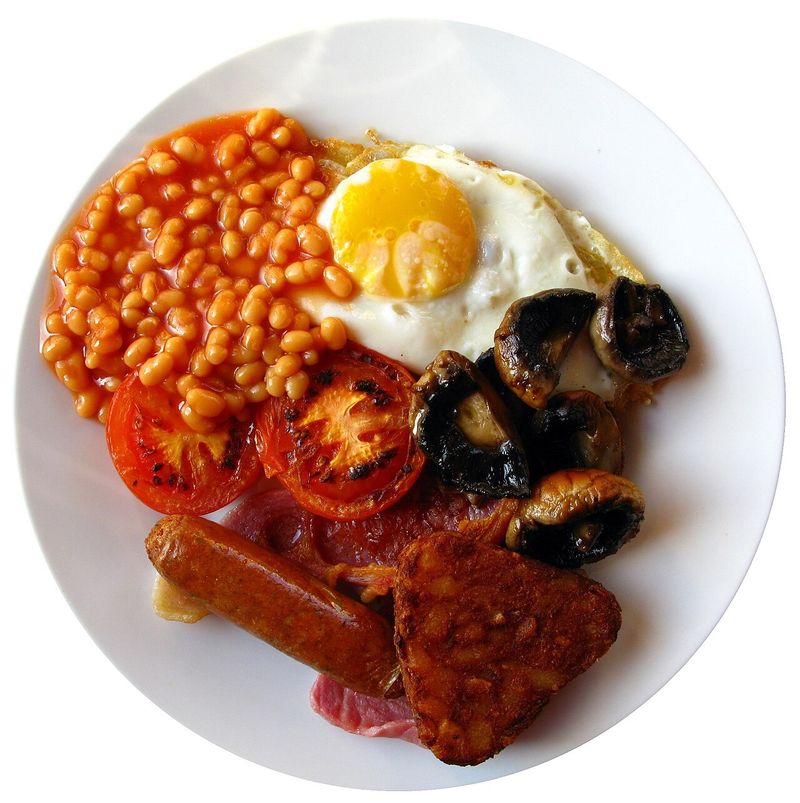
Walk into any greasy spoon cafe in England and the Full English is king. This iconic plate stacks up bacon, eggs, sausages, baked beans, toast, grilled tomatoes, and mushrooms all at once.
It is hearty enough to keep you going until dinner.
Each region tweaks it slightly. In some parts of the Midlands, you might find an extra hash brown slipped in.
The Full English has been a beloved morning ritual for working-class Brits for well over a century.
2. Scottish Porridge
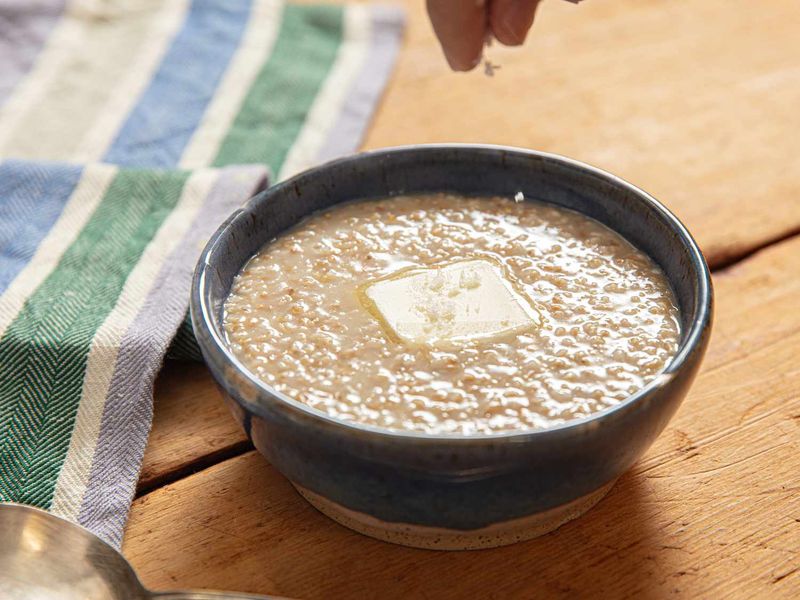
Up in Scotland, porridge is not just breakfast, it is practically a national identity. Made from coarse oatmeal and simmered slowly with water or milk, it comes out thick, warming, and deeply satisfying on cold mornings.
Traditionalists insist on stirring it clockwise and adding just a pinch of salt instead of sugar. Every October, the World Porridge Making Championship is held in Carrbridge, Scotland, drawing competitors from around the globe.
Who knew oats could be so competitive?
3. Welsh Rarebit
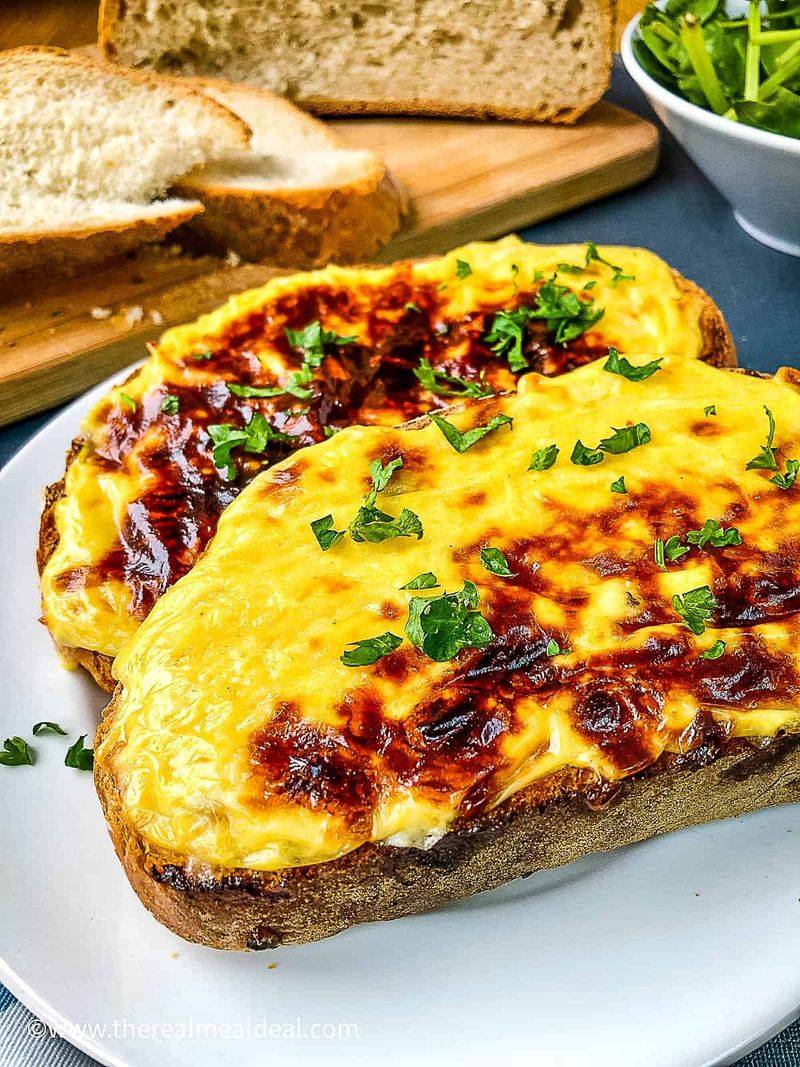
Welsh Rarebit sounds fancy, but at its heart it is gloriously simple comfort food. A rich, savory cheese sauce made with Welsh ale, mustard, and Worcestershire sauce gets poured over thick toast and grilled until bubbling and golden.
Wales has been making this dish since at least the 1700s, and locals still argue about the perfect recipe. Some add a poached egg on top, turning it into a dish called Buck Rarebit.
Either way, it is a proper morning treat.
4. Ulster Fry
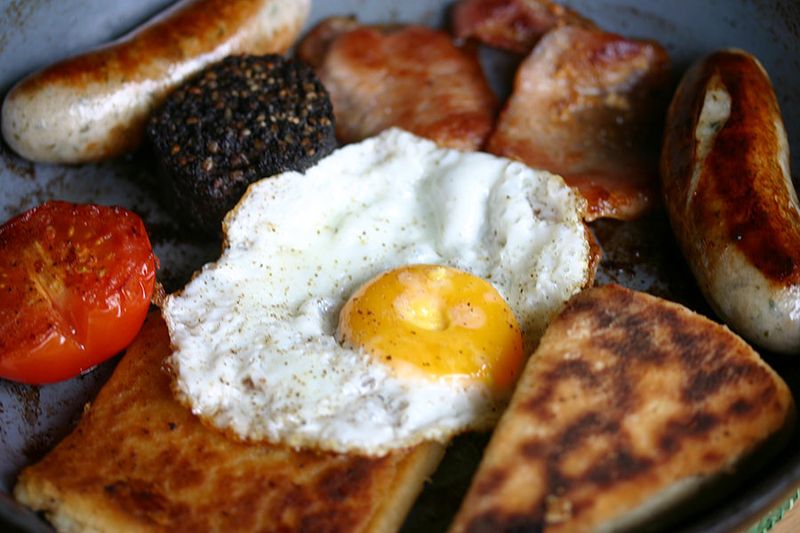
Northern Ireland takes breakfast seriously, and the Ulster Fry is proof. What sets it apart from other fry-ups across the UK is the inclusion of soda bread and potato bread, both fried in butter until crispy on the outside and soft inside.
Locals call it simply “the fry” and it is a weekend staple in households across Belfast and beyond. Some cafes serve it all day long because demand never seems to slow down.
It is unapologetically filling and unapologetically delicious.
5. Cornish Hevva Cake
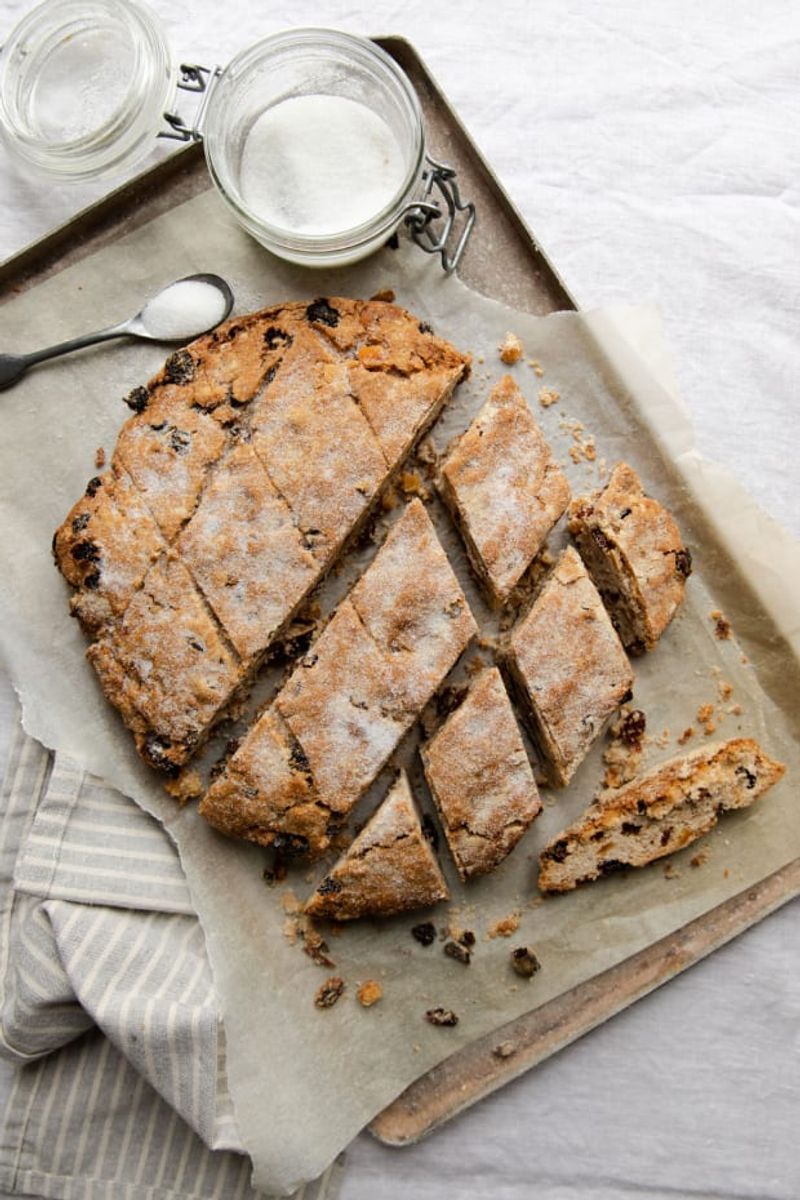
Down in Cornwall, some families still start the morning with a slice of Hevva Cake alongside their tea. This dense, crumbly fruit cake was historically made by women waiting on the cliffs for fishing boats to return, baked quickly to celebrate a good catch.
Made with flour, lard, sugar, and currants, it has a firm texture that holds up well. The distinctive crosshatch pattern scored on top represents the fishing nets.
It is a breakfast choice steeped in Cornish maritime history.
6. Staffordshire Oatcakes
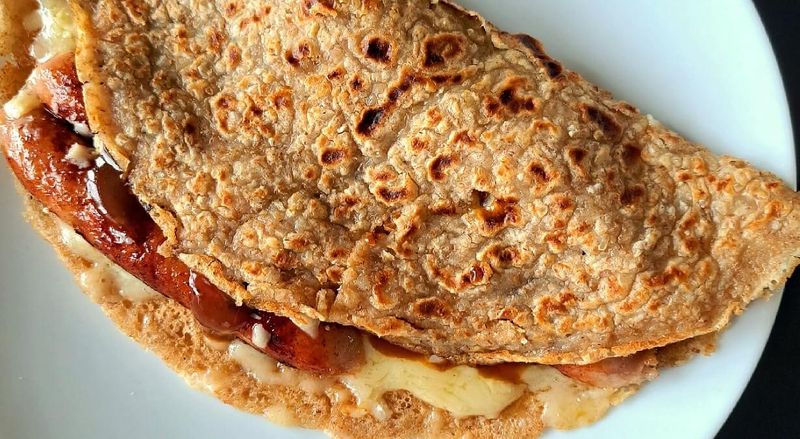
Forget the Scottish kind, Staffordshire oatcakes are something entirely different. These soft, pancake-like flatbreads are made from oatmeal, flour, and yeast, then cooked on a griddle until golden and slightly chewy.
In Stoke-on-Trent and the surrounding Potteries area, oatcake shops are a local institution. People line up early to grab them filled with cheese, bacon, or egg.
They have been a staple of the Midlands working-class breakfast for generations and remain fiercely loved by locals today.
7. Lorne Sausage
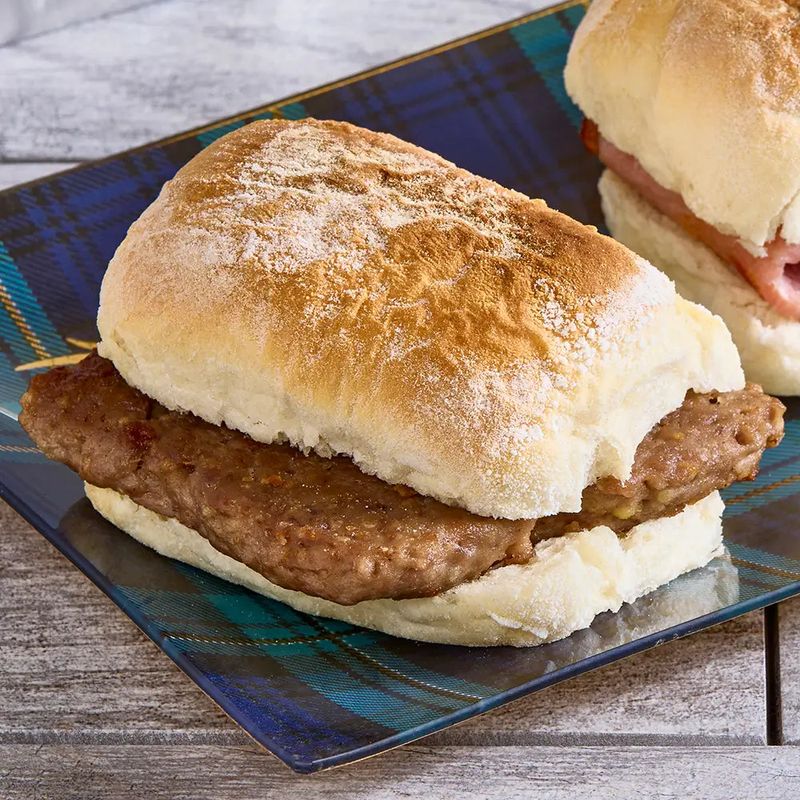
Round sausages are fine, but Scotland prefers theirs square. The Lorne sausage, also called a slice or square sausage, is a flat, rectangular patty made from minced beef, pork, and spices, then sliced and fried until browned.
Tucked into a soft morning roll with a slick of brown sauce or ketchup, it becomes the legendary Scottish breakfast roll. It is fast, filling, and found in every Scottish cafe and bakery.
Nobody really knows who Lorne was, but the sausage named after them is iconic.
8. Laverbread
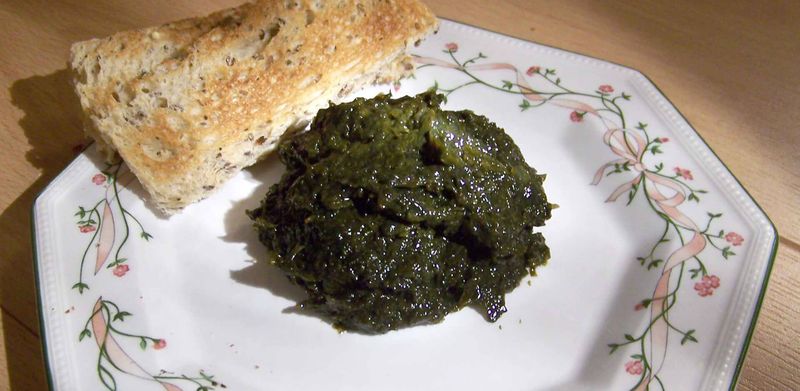
Laverbread sounds like it should involve a loaf of bread, but it is actually made from seaweed. Laver seaweed is harvested from the Welsh coastline, boiled for hours until it becomes a smooth, dark green paste with a deep, salty, oceanic flavor.
Traditionally served with bacon and cockles, laverbread is a proud Welsh breakfast staple, especially in South Wales. Dylan Thomas once called it “Welshman’s caviar.” Rich in iron and minerals, it is one of the most nutritious ways to start the morning.
9. Yorkshire Fat Rascals
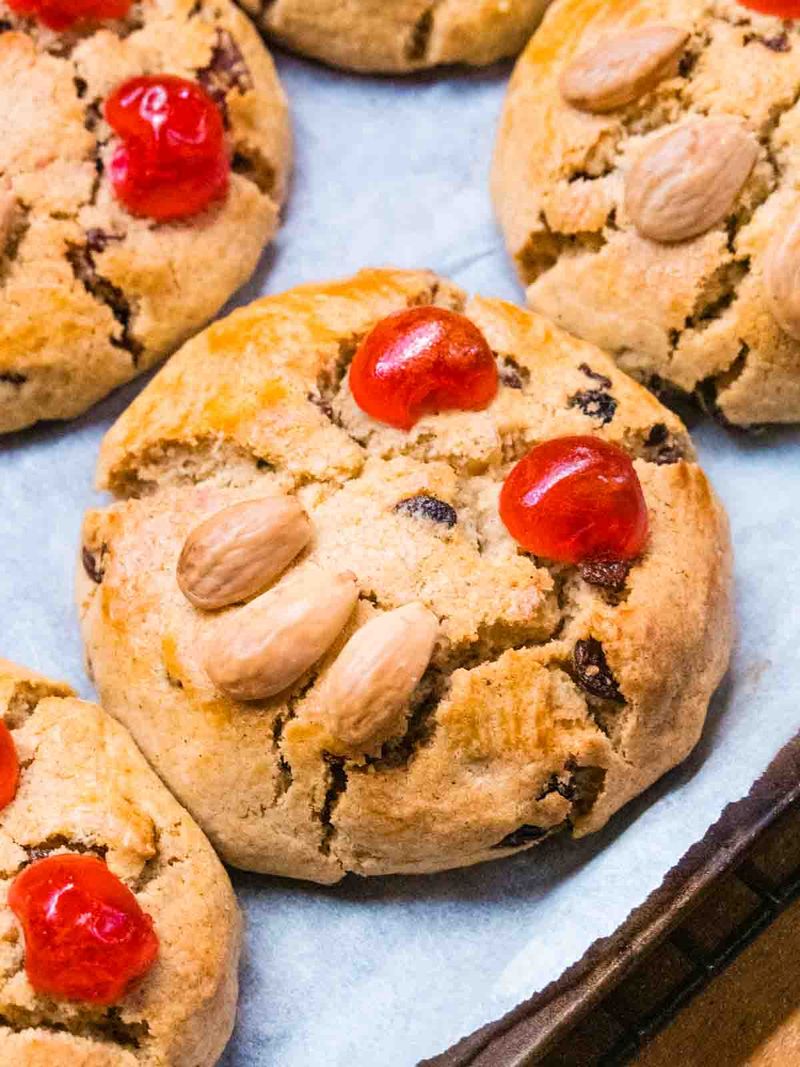
Yorkshire folk have a soft spot for Fat Rascals at breakfast time, especially on weekends. These plump, scone-like pastries are loaded with dried fruit, spices, and citrus peel, then decorated with glace cherries and almonds before baking.
Betty’s Tea Rooms in Harrogate made them famous, but the recipe dates back centuries in Yorkshire. They sit somewhere between a scone and a teacake, best eaten warm with lashings of butter.
Bold, fruity, and satisfying, they match Yorkshire’s no-nonsense personality perfectly.
10. Kedgeree
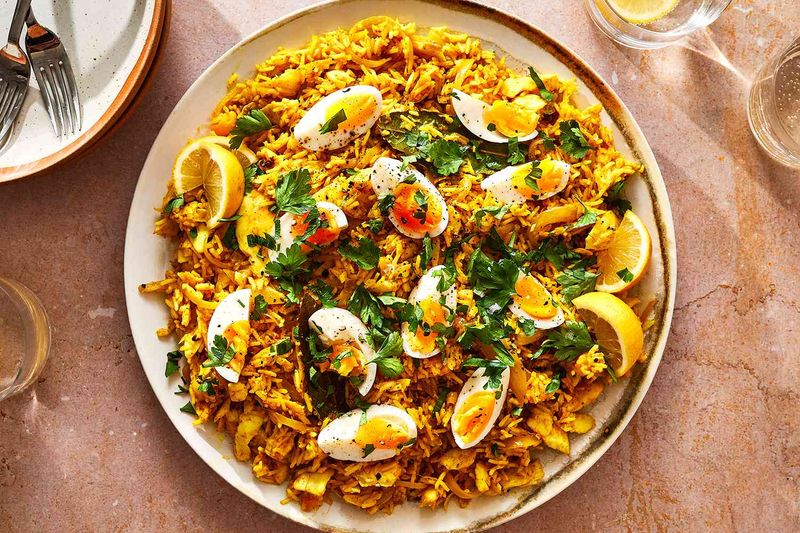
Kedgeree is one of those fascinating dishes that tells a story of empire. Brought back from India by British colonists in the 1800s, it was adapted into a breakfast dish featuring smoked haddock, rice, boiled eggs, butter, and mild curry spices.
It became a fixture on Victorian country house breakfast tables and still appears regularly in traditional English homes, particularly in the south. The smoky fish combined with warm spice is a genuinely unique morning flavor that feels both exotic and deeply British at the same time.
11. Devonshire Splits
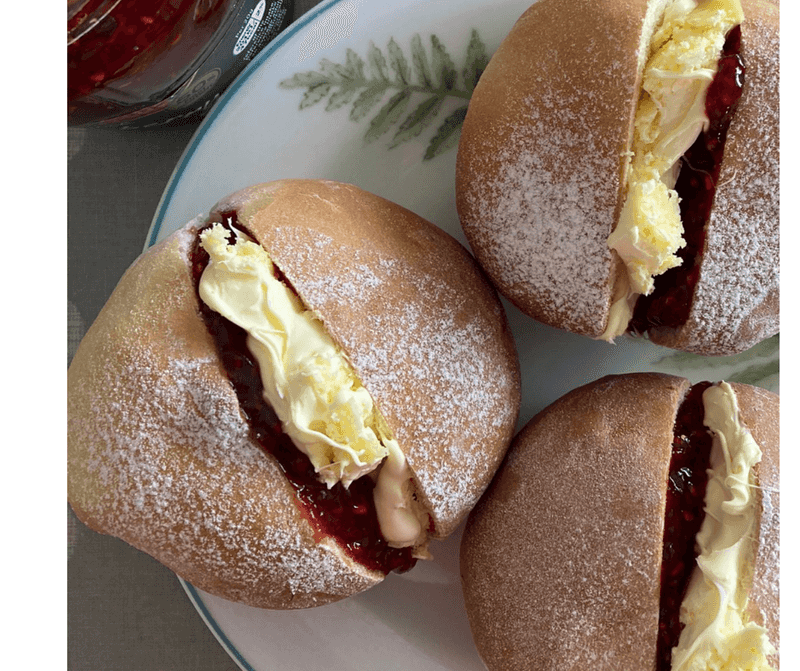
Devon has a morning tradition that involves soft bread rolls called splits, filled generously with clotted cream and jam. Unlike the Cornish cream tea debate, Devon firmly places cream first and jam second, and locals will not hear otherwise.
Devonshire Splits are lighter and slightly sweeter than scones, making them a popular breakfast choice in local cafes and family kitchens alike. The combination of pillowy bread, rich cream, and fruity jam is indulgent in the best possible way.
Devon mornings deserve nothing less.
12. Arbroath Smokie
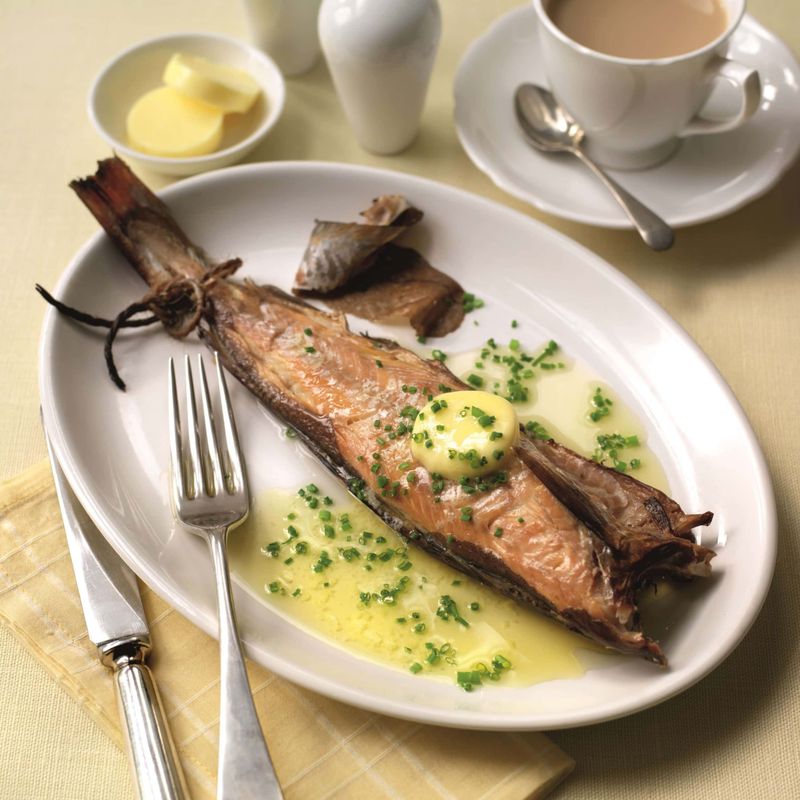
The Arbroath Smokie has protected geographical status, meaning only haddock smoked in the traditional way around Arbroath in Angus, Scotland can carry the name. The fish is hot-smoked over hardwood in small barrels, giving it a rich, distinctive flavor unlike any other smoked fish.
Locals often eat it simply with buttered bread in the morning, letting the natural smokiness shine. It has been made this way since the 1800s in the fishing village of Auchmithie.
For seafood lovers, it is breakfast perfection.
13. Lincolnshire Sausage
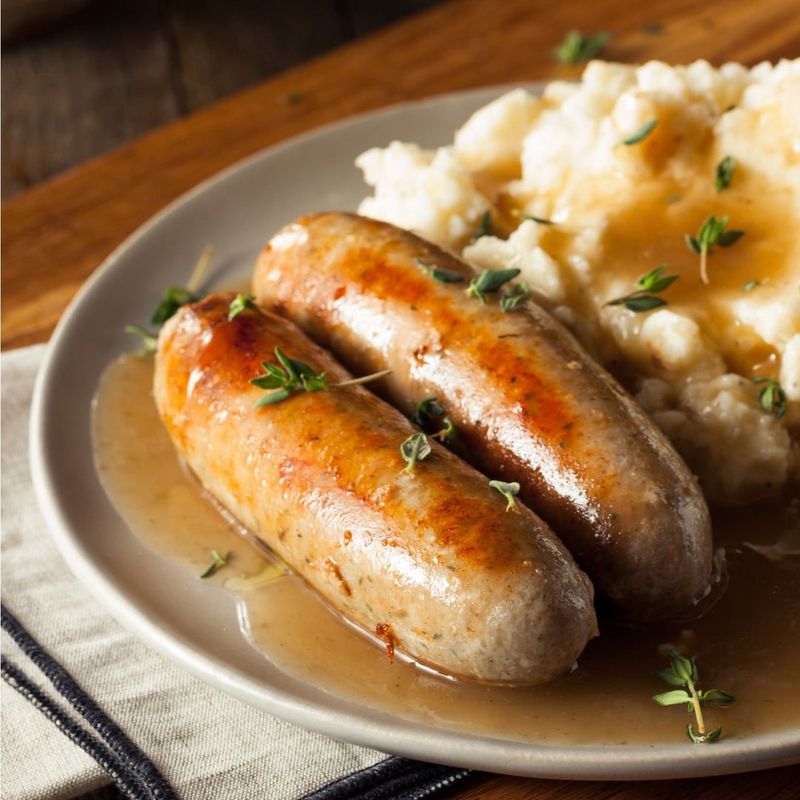
Lincolnshire sausages stand out from the crowd thanks to one key ingredient: sage. Coarsely ground pork is seasoned generously with dried sage and black pepper, giving these sausages a herby, aromatic flavor that sets them apart from every other British banger.
They have been made this way in Lincolnshire for well over 150 years and now carry protected geographical status. Farmers and food lovers across the county take enormous pride in them.
Served alongside eggs and toast, they make a breakfast that smells as good as it tastes.
14. Manx Kippers
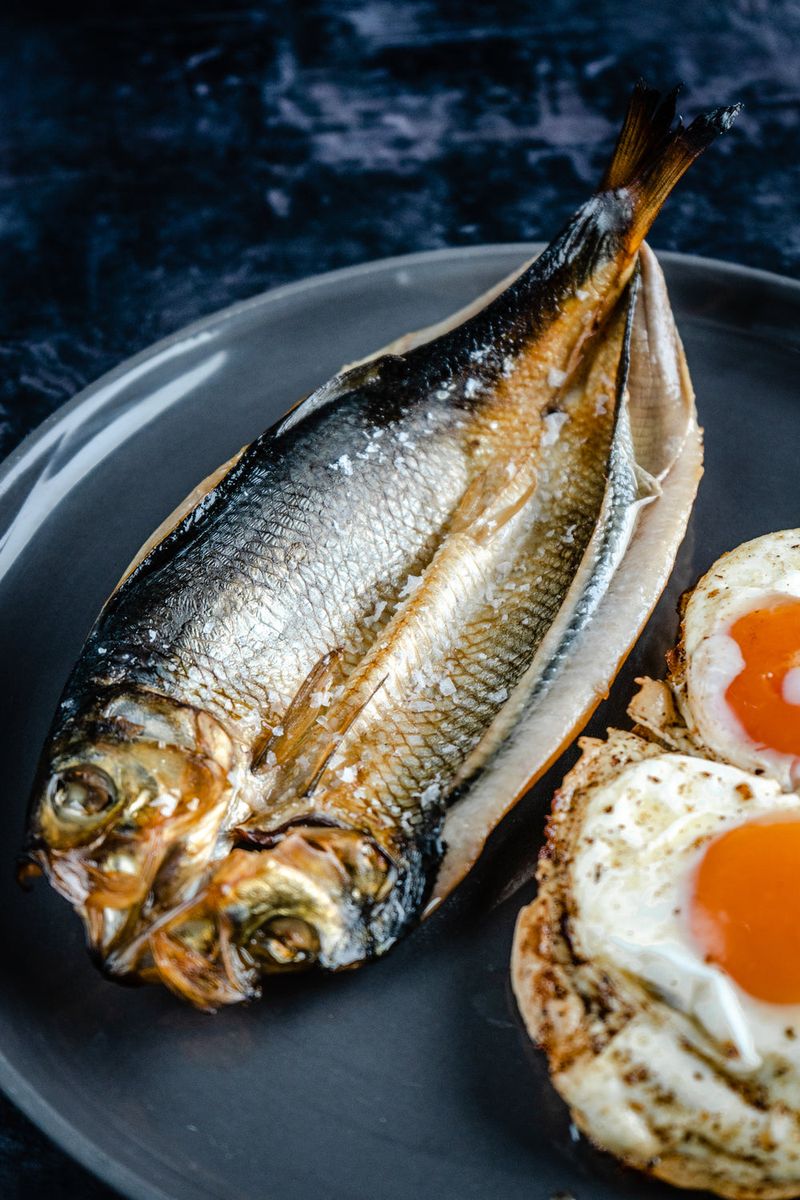
From the Isle of Man come some of the most celebrated kippers in the whole of the British Isles. Manx kippers are herrings that are split, salted, and cold-smoked over oak chips for many hours, producing a deeply flavored, amber-colored fish.
The Moore’s smokehouse in Peel has been making them since 1882. Eaten grilled with butter and brown bread, they are a breakfast that fills the whole kitchen with a gloriously smoky aroma.
Kipper lovers across the UK consider the Manx version the gold standard.
15. Tattie Scones
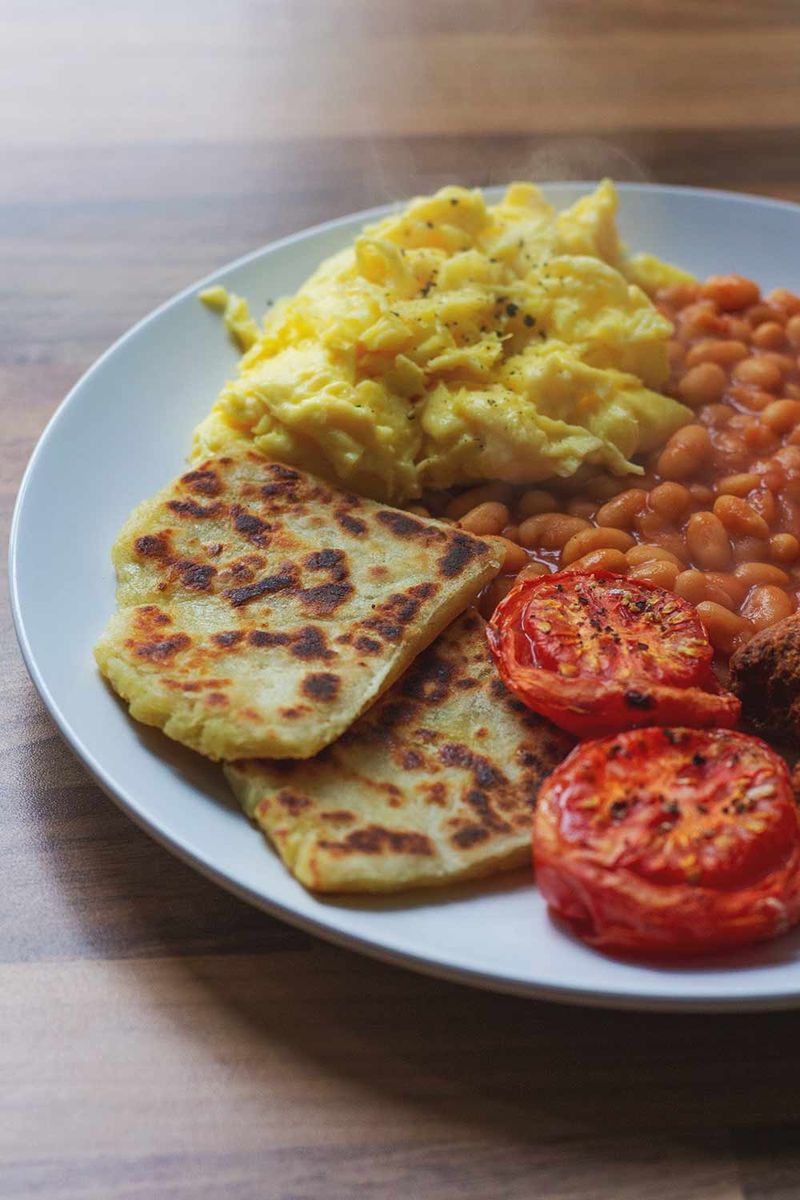
Potato scones, affectionately called tattie scones in Scotland, are one of the simplest and most satisfying breakfast foods around. Leftover mashed potato is mixed with flour and a little butter, then rolled flat and cooked on a dry griddle until golden patches appear.
They are a standard part of a Scottish cooked breakfast and pair perfectly with eggs, bacon, or baked beans. Some families have been making them from the same recipe for generations.
Soft, slightly doughy, and quietly brilliant, tattie scones deserve far more fame than they get.
16. Glamorgan Sausages
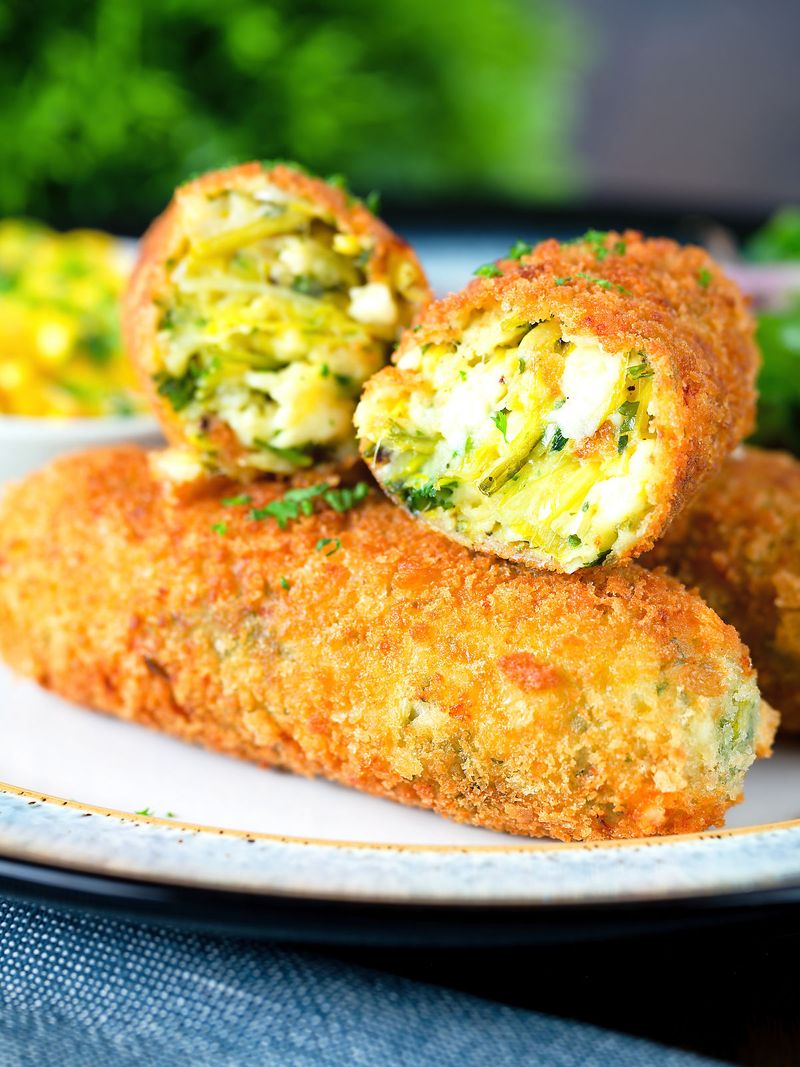
Glamorgan sausages are a Welsh breakfast gem that contain absolutely no meat. Instead, they are made from Caerphilly cheese, leeks, mustard, and breadcrumbs, shaped into sausage form and fried until golden and crispy on the outside.
They have been around since at least the early 1800s and were especially popular during wartime rationing when meat was scarce. Today they are enjoyed by vegetarians and meat-eaters alike.
The combination of tangy cheese and sweet leek is a flavor pairing that feels uniquely and proudly Welsh.
17. Geordie Stottie Cake
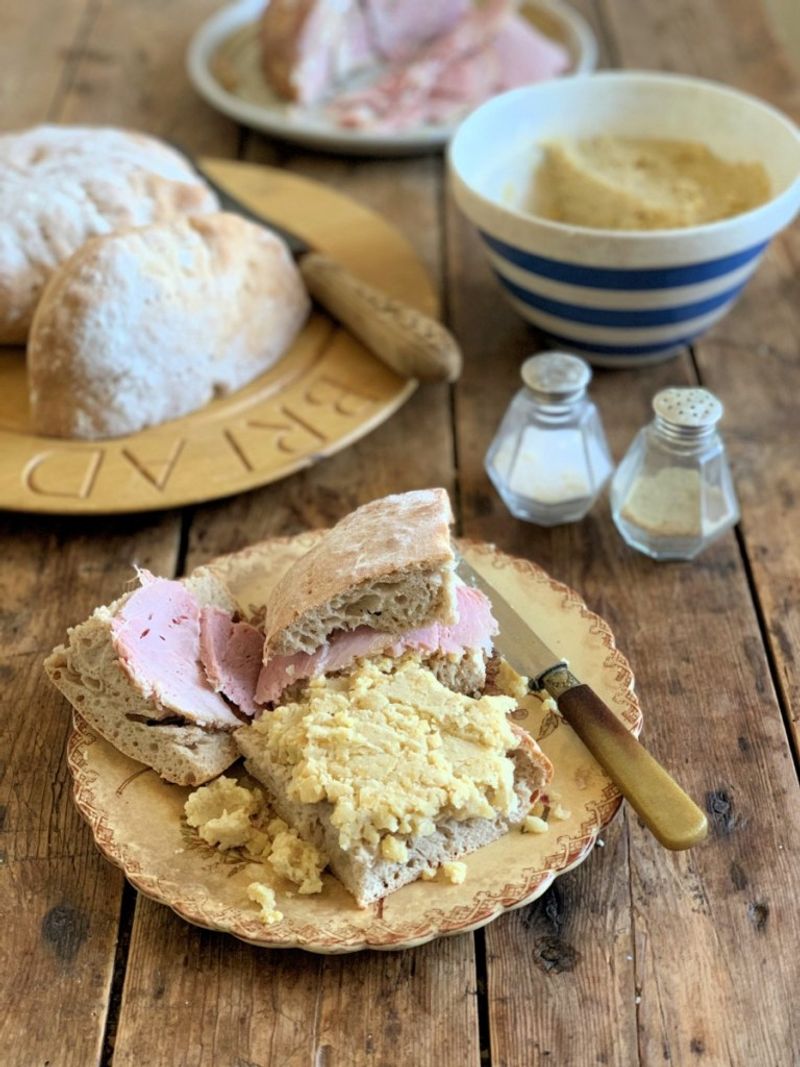
In Newcastle and across the northeast of England, the stottie cake is a breakfast institution. This thick, doughy, flat bread roll is soft on the inside with a slightly dense crumb that soaks up fillings beautifully.
The name is thought to come from the Geordie word meaning to bounce, because a good stottie will supposedly bounce if dropped on the floor. Filled with bacon, egg, or pease pudding, it is a working-class morning staple that locals are fiercely proud of.
Nothing else quite matches it.
18. Black Pudding
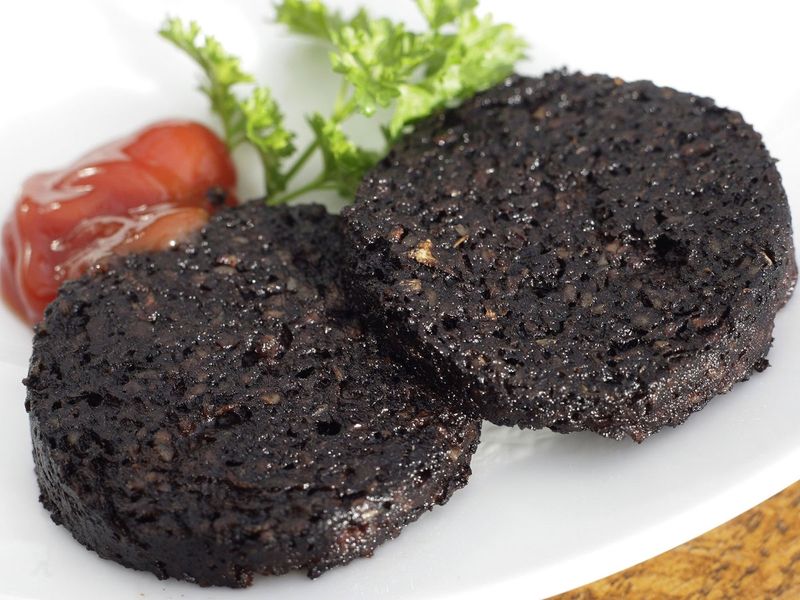
Black pudding divides opinion across the UK, but in the north of England and Scotland, it is a breakfast non-negotiable. Made from pork blood, oatmeal, and spices stuffed into a casing, it is sliced and fried until the outside crisps up beautifully.
Bury in Greater Manchester is considered the black pudding capital of England, and its market has sold the stuff for centuries. High in protein and iron, it is surprisingly nutritious.
Once you get past the idea of what it is, the rich, spiced flavor is genuinely addictive.
19. Fried Bread
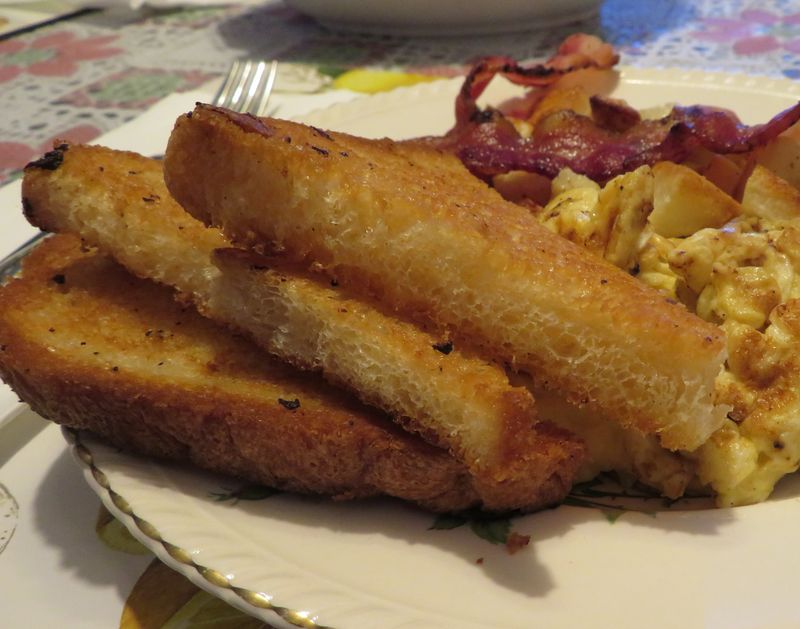
Fried bread is the kind of breakfast food that nutritionists wince at and everyone else secretly loves. A thick slice of white bread is fried in bacon fat or lard until it becomes gloriously crispy on the outside while staying soft and chewy inside.
It is a staple addition to cooked breakfasts across England, particularly in traditional cafes and transport diners. Some people argue it is better than toast in every possible way.
Simple, indulgent, and completely unapologetic, fried bread is a reminder that sometimes the simplest things taste the best.
20. Butteries (Aberdeen Rowies)
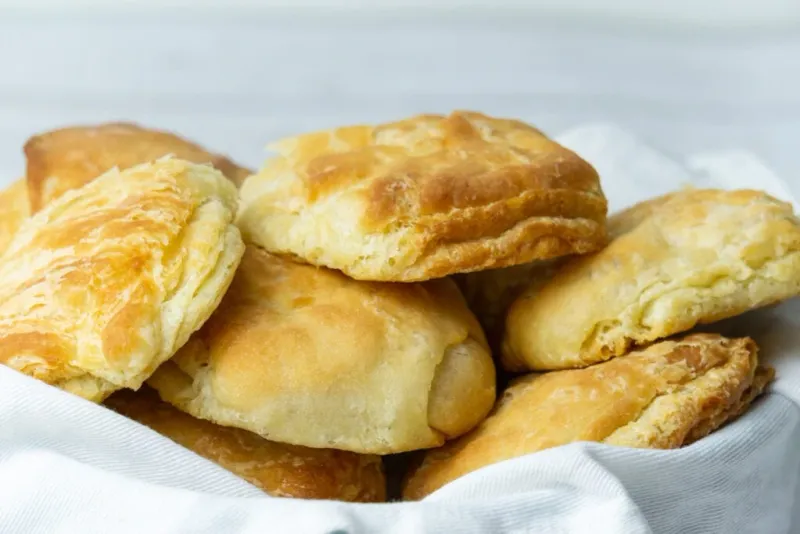
Aberdeen butteries, also known as rowies, look like a croissant had a relaxed Scottish holiday and never went back to France. These flat, irregular bread rolls are made with a high proportion of butter and lard folded into the dough, giving them an incredibly flaky, rich texture.
Bakers in Aberdeen have been making them since the 1800s, originally as a long-lasting bread for fishermen heading out to sea. Eaten warm with even more butter, they are indulgent in a way that feels completely justified on a cold Scottish morning.
21. Crumpets
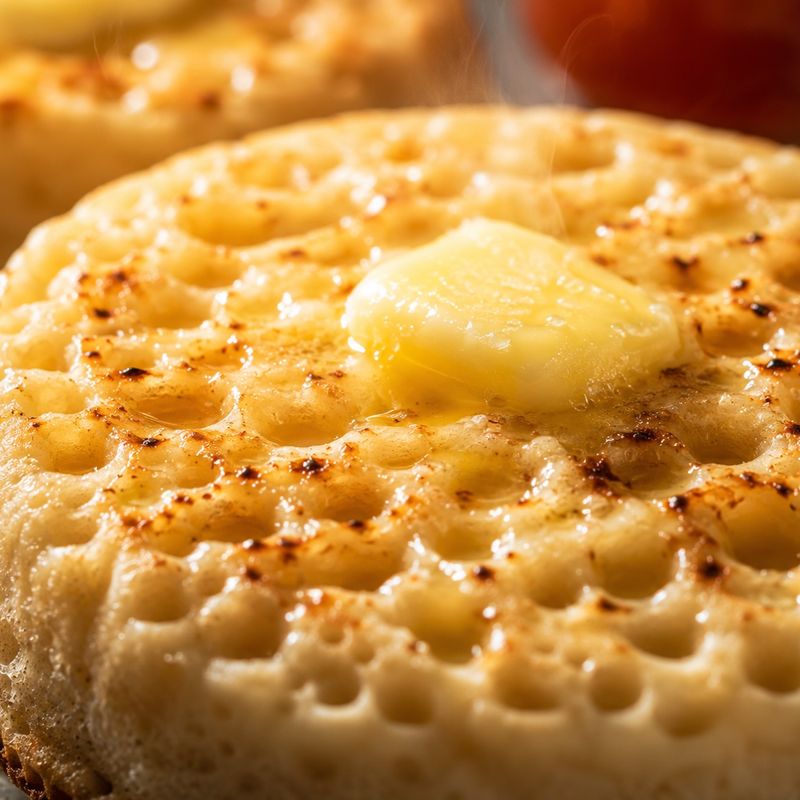
Few breakfast foods are as satisfying to watch as a crumpet being buttered. The butter melts straight down through all those little holes, creating a rich, golden base that makes every bite soft and savory.
Crumpets are a quintessentially English morning treat.
Particularly popular in the Midlands and the north of England, they are made from a yeasted batter cooked slowly on a griddle. The result is a spongy, slightly chewy round that toasts beautifully.
Top them with honey, jam, or just plain butter and morning suddenly feels like a reward.