
Drumming is the heartbeat of music, and some players have taken it far beyond just keeping the beat. From thunderous rock fills to intricate jazz polyrhythms, the world’s greatest drummers have shaped entire genres and inspired generations of musicians.
These 20 standout drummers are celebrated not just for their technical skill, but for the lasting mark they left on music history. Get ready to meet the legends behind the kit.
1. John Bonham (Led Zeppelin)
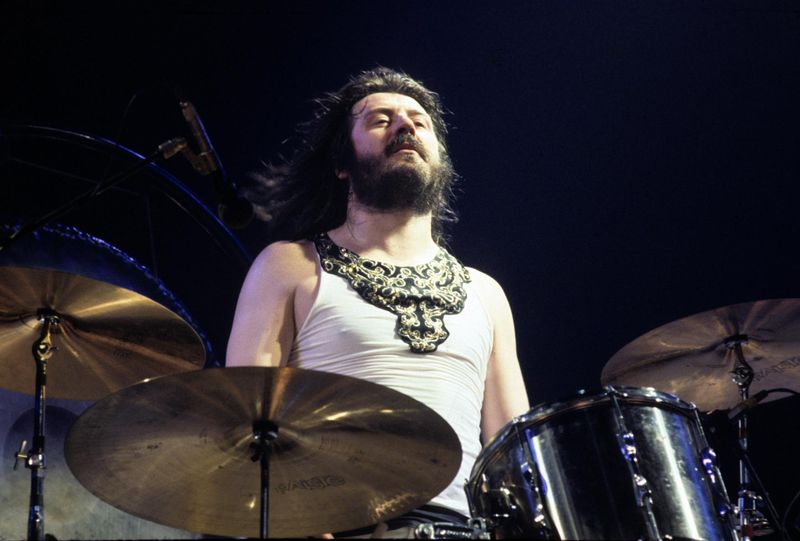
If rock drumming had a god, it would be John Bonham. Nicknamed “Bonzo,” his playing with Led Zeppelin was a force of nature, combining raw power with an almost supernatural sense of groove.
His fast single-footed kick drumming and iconic use of triplets redefined what a drummer could do. Songs like “Moby Dick” and “When the Levee Breaks” remain benchmarks for heavy drumming.
Dave Grohl, Neil Peart, and Chad Smith all credit Bonham as a major influence.
2. Neil Peart (Rush)
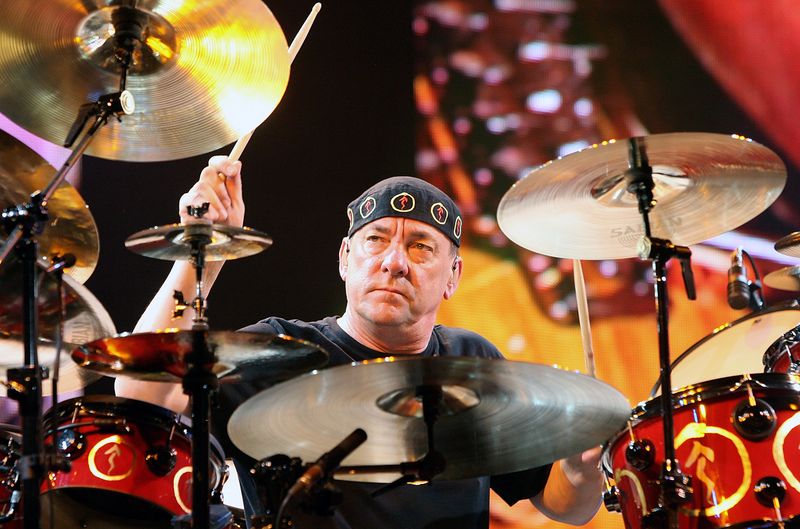
Nicknamed “The Professor,” Neil Peart approached the drum kit like a scientist approaches a lab, always experimenting, always perfecting. His work with Rush blended rock power with jazz-like complexity in a way nobody had heard before.
Every night on tour, he could reproduce intricate, multi-layered drum patterns flawlessly. Inducted into the Modern Drummer Hall of Fame in 1983, Peart also wrote most of Rush’s lyrics, making him one of rock’s most complete artists.
3. Buddy Rich
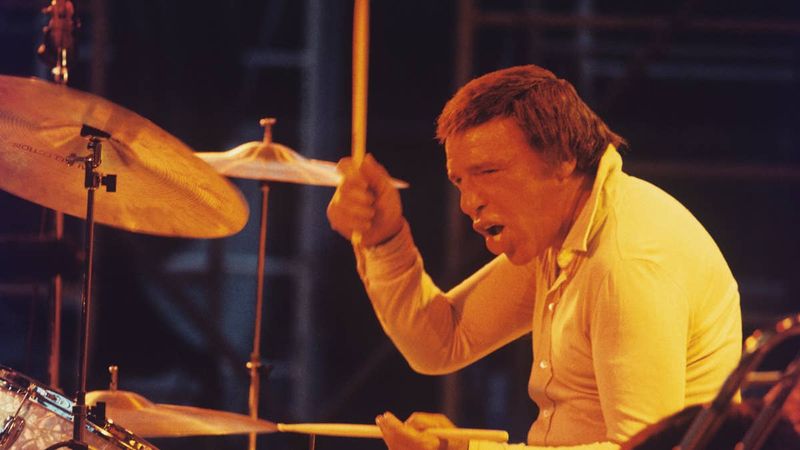
Watching Buddy Rich play felt like watching a superhero. His speed, stick control, and explosive power behind a jazz kit were simply unmatched, earning him the nickname the “Godfather” of the modern drum kit.
Rich’s career spanned decades, leading his own orchestras and dazzling audiences worldwide. Drummers like John Bonham and Phil Collins openly admired his technique.
Even without formal training as a child, he performed professionally from a very early age.
4. Keith Moon (The Who)
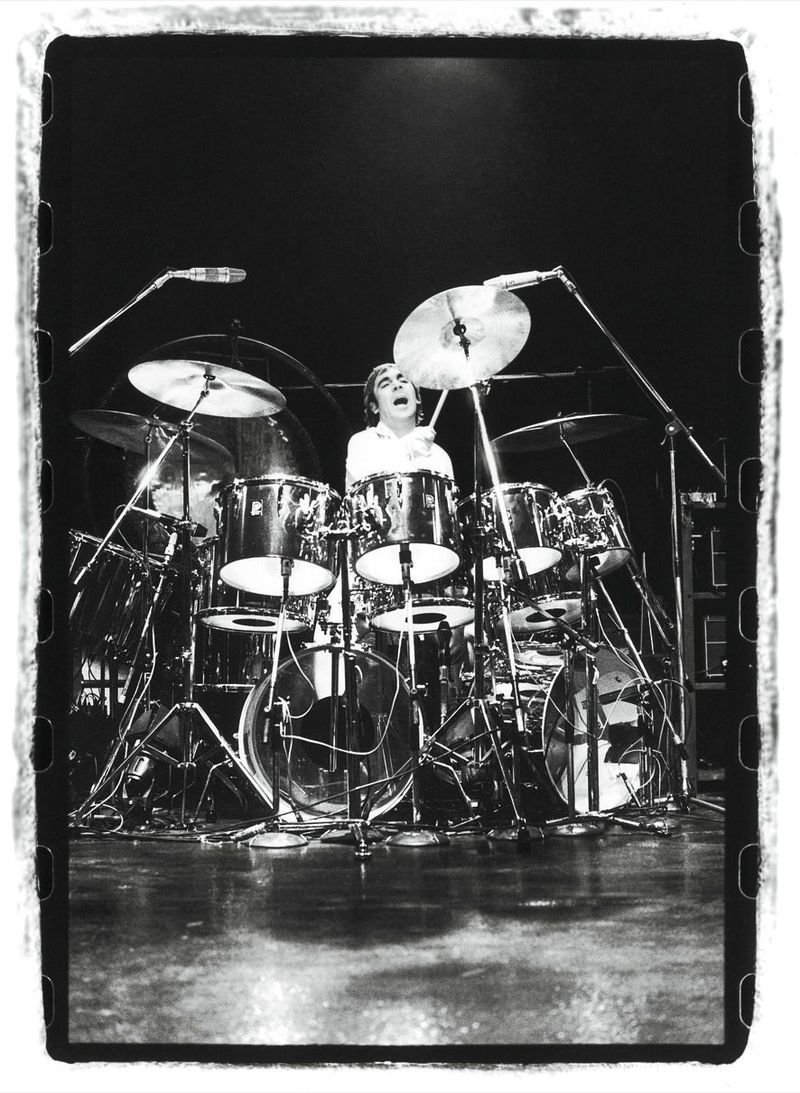
Keith Moon did not just play drums; he attacked them. His chaotic, unpredictable style for The Who turned every performance into a spectacle that audiences could barely believe.
Rather than sticking to standard patterns, Moon filled unexpected spaces with thundering tom rolls and crashing cymbals, making his parts almost melodic. Offstage, his wild personality matched his playing perfectly.
He was as much a performance artist as a musician, and rock drumming has never quite seen anything like him since.
5. Ginger Baker (Cream)
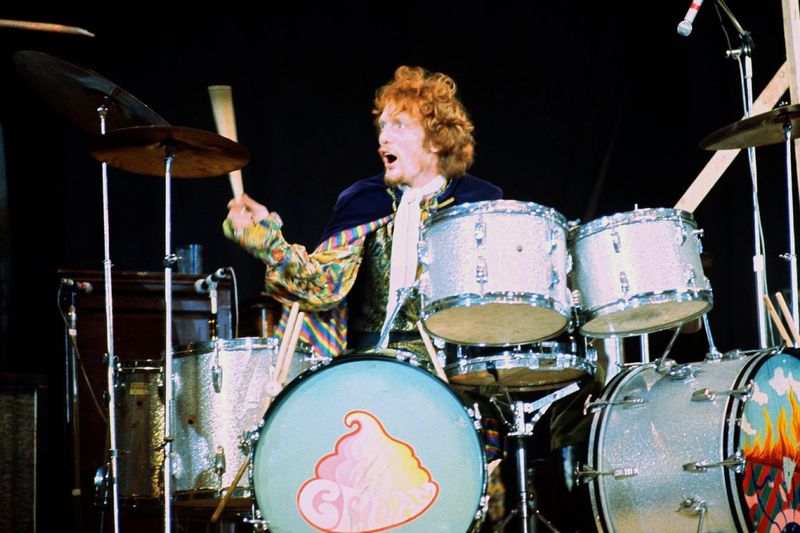
Ginger Baker brought something no other rock drummer had attempted before: a genuine jazz sensibility fused with African rhythms and raw blues energy. As a co-founder of Cream, he helped craft one of rock’s most distinctive sounds.
Baker pioneered double bass drumming in rock music, giving Cream a thunderous low-end foundation. His smooth tempo control was surprisingly refined for such an aggressive style.
Many consider him rock’s first true superstar drummer, opening the door for every heavy hitter who followed.
6. Hal Blaine (The Wrecking Crew)
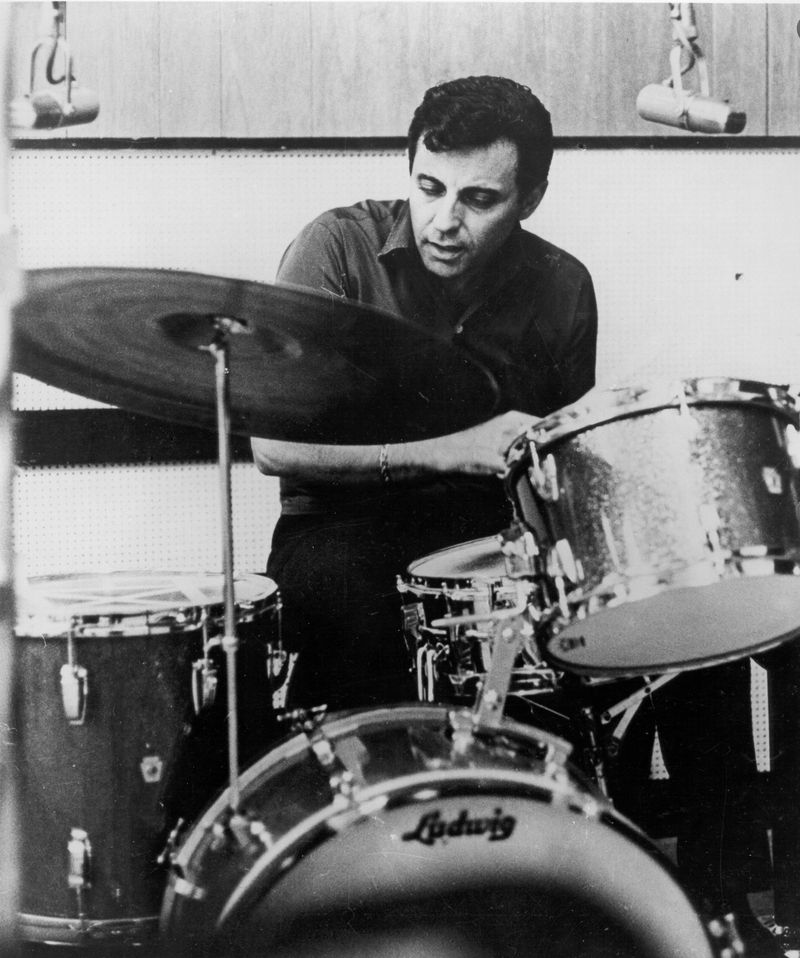
Most people have never heard of Hal Blaine, yet they have heard him thousands of times. As part of the legendary Los Angeles session group The Wrecking Crew, Blaine played on more than 35,000 recordings throughout his career.
His versatility was astonishing, moving effortlessly between pop, rock, jazz, and everything in between. That iconic “Be My Baby” drum intro?
That was him. From Frank Sinatra to The Beach Boys, Blaine was the secret rhythmic engine behind some of music’s biggest hits.
7. Steve Gadd
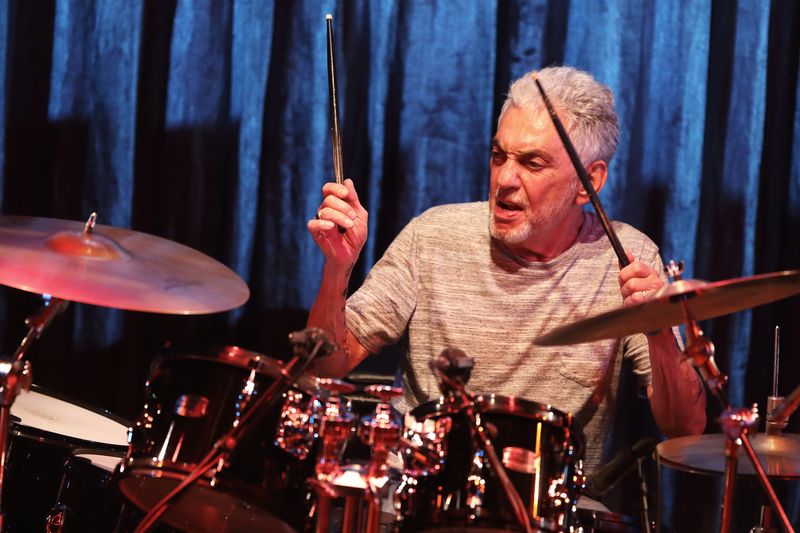
Steve Gadd is the kind of drummer other drummers study obsessively. His combination of precision, groove, and musical intelligence made him one of the most sought-after session musicians of the 20th century.
His signature groove on Paul Simon’s “50 Ways to Leave Your Lover” drew from military drumming patterns in a brilliantly creative way. Gadd’s subtle use of dynamics and impeccable timing made every recording feel alive.
Across jazz, rock, and pop, few drummers have been as consistently excellent.
8. Tony Williams
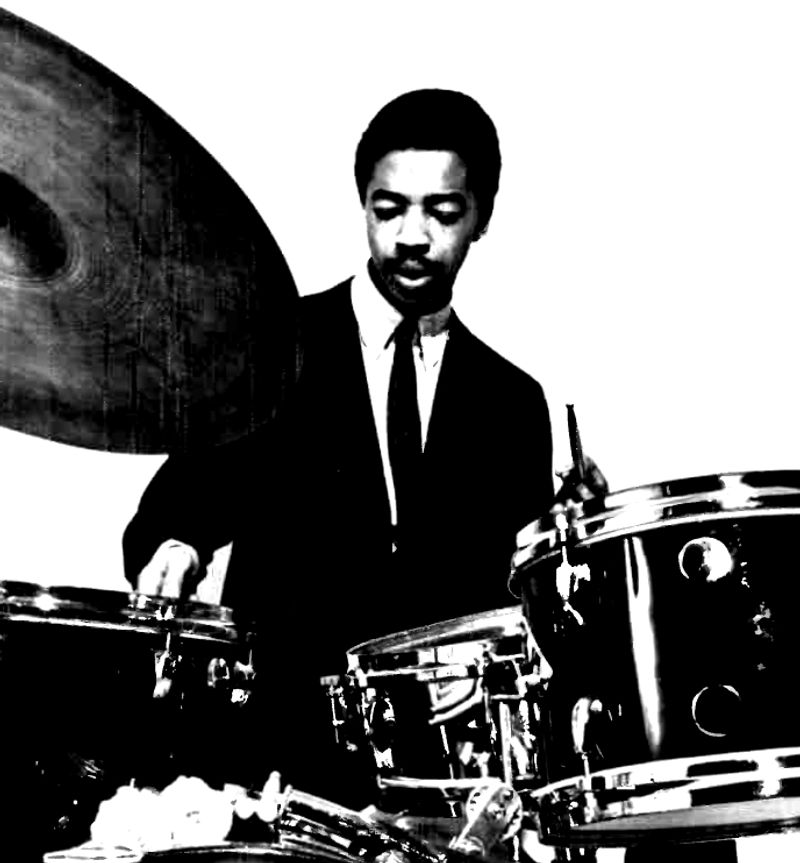
Tony Williams was a teenage prodigy who joined Miles Davis’s band at just 17 years old and immediately changed the way jazz drumming was understood. His energy behind the kit was relentless and forward-thinking.
Later, with his group Tony Williams Lifetime, he helped lay the groundwork for jazz fusion, blending rock intensity with jazz improvisation. His influence touched nearly every jazz drummer who came after him, earning him a place in multiple halls of fame throughout his celebrated career.
9. Stewart Copeland (The Police)
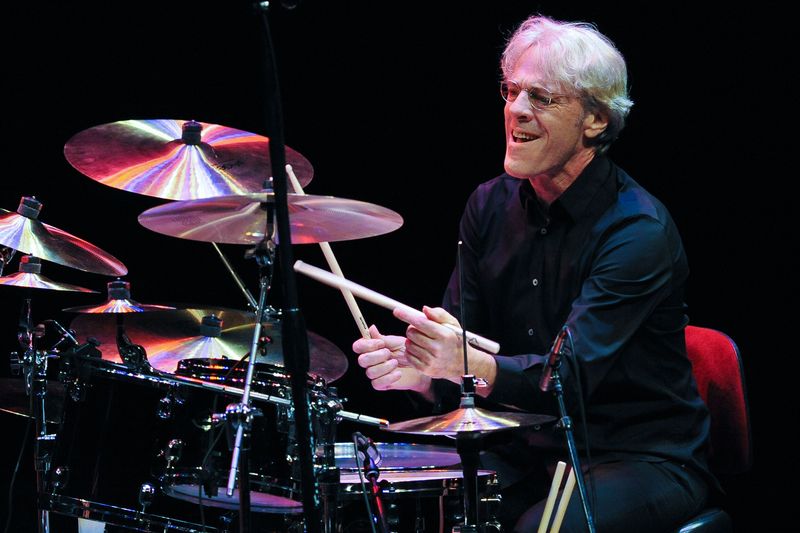
Stewart Copeland built his drumming style from an unusual mix of reggae offbeats, punk aggression, and sharp pop sensibility, and the result was something totally unique in rock music.
His rhythmic backbone gave The Police their distinctive, almost hypnotic sound that set them apart from every other band of the early 1980s. Tracks like “Roxanne” and “Every Breath You Take” showcase how his drumming could be both restrained and explosive at the right moments.
Copeland proved that originality beats imitation every time.
10. Jeff Porcaro (Toto)
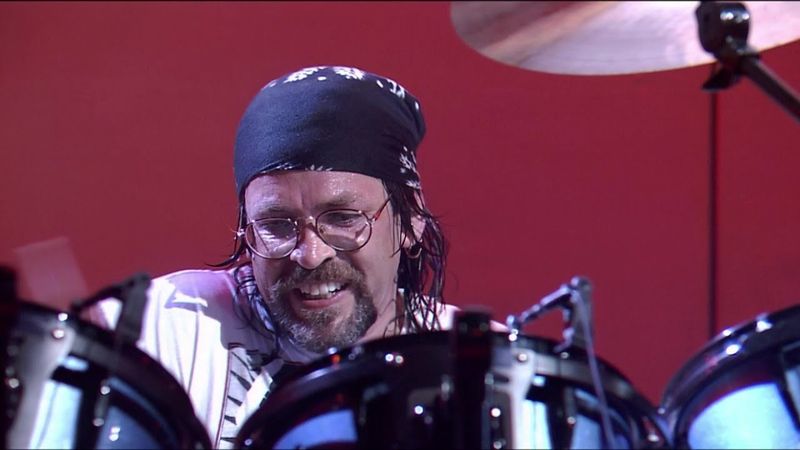
Jeff Porcaro had a rare gift for making complex drumming feel completely effortless. As both the drummer for Toto and one of Hollywood’s most in-demand session players, his resume reads like a who’s who of popular music.
His “Rosanna Shuffle,” a half-time groove inspired by both Bernard Purdie and John Bonham, became one of the most studied drum patterns in music history. Porcaro’s refined touch and musical instincts made every track he touched feel polished, warm, and undeniably groovy.
11. Bernard Purdie
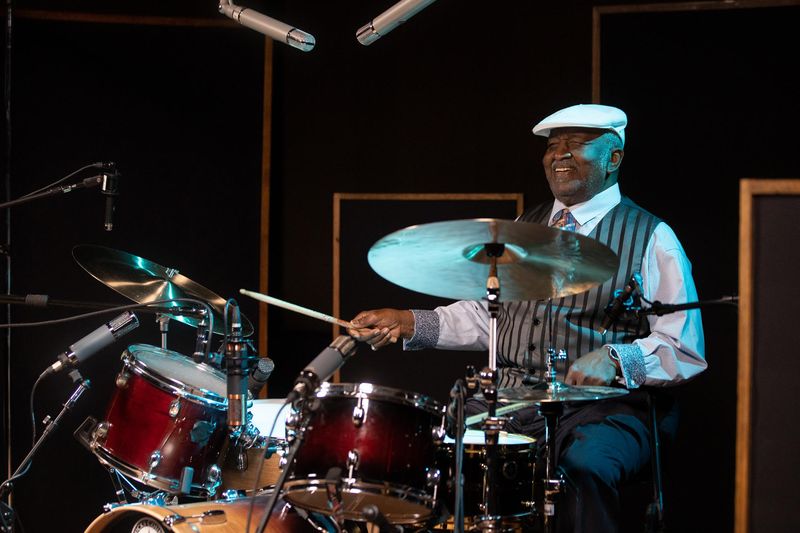
Bernard Purdie’s name might not be on the marquee, but his rhythmic fingerprints are all over popular music history. He is one of the most sampled drummers of all time, and for good reason.
His invention, the “Purdie Shuffle,” is a masterclass in syncopation and feel, influencing everyone from Led Zeppelin to modern hip-hop producers. Purdie worked as a session legend for decades, playing alongside Aretha Franklin, Steely Dan, and many others.
His grooves feel less like drumming and more like a conversation.
12. Danny Carey (Tool)
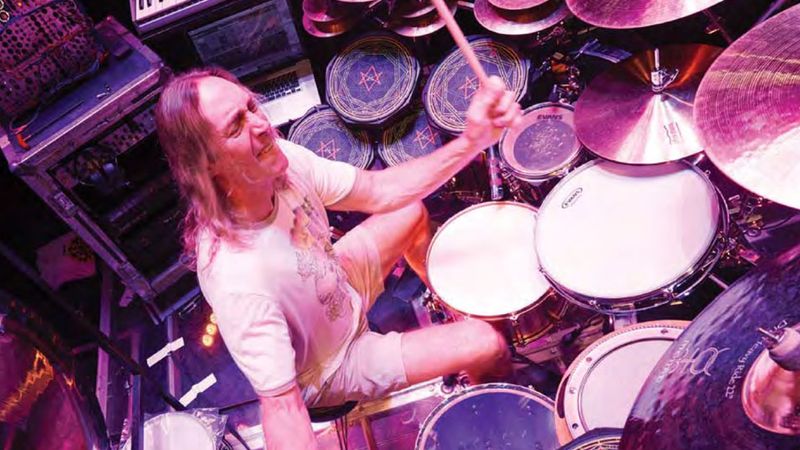
Danny Carey operates in rhythmic territory most drummers would not even attempt. As the drummer for Tool, he has built a reputation as one of progressive rock and metal’s most technically brilliant players.
His drumming incorporates odd time signatures, polyrhythms, and electronic elements in ways that challenge listeners and fellow musicians alike. Carey is also a student of sacred geometry, and some fans believe his drum patterns reflect mathematical principles.
Whatever the source, the result is drumming that sounds like nothing else on earth.
13. Bill Bruford (Yes, King Crimson)
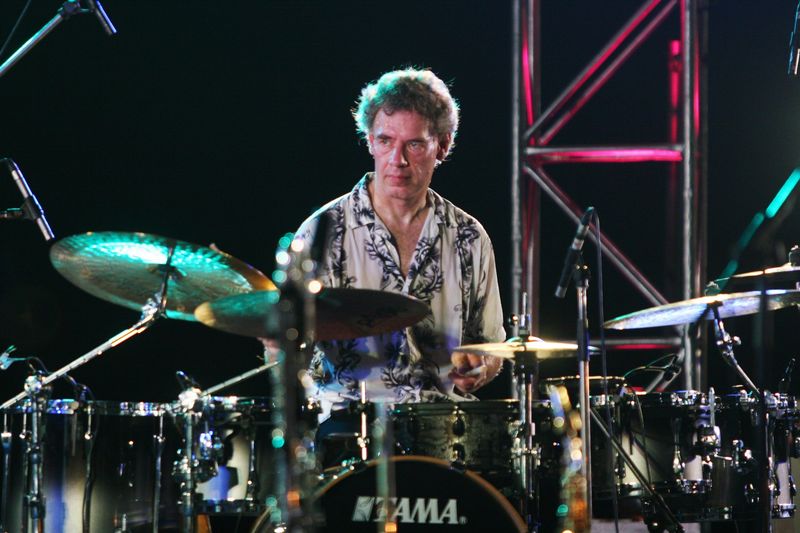
Bill Bruford made syncopation exciting for rock audiences who had never thought much about odd time signatures. With Yes and later King Crimson, he pushed rhythmic boundaries in ways that felt adventurous rather than academic.
Unlike many rock drummers of his era, Bruford approached the kit with a jazz musician’s mindset, always listening, always adapting. He later transitioned to electronic drums, proving his willingness to evolve.
His influence on progressive rock drumming is enormous, and younger drummers still study his recorded work carefully.
14. Dave Grohl (Nirvana, Foo Fighters)
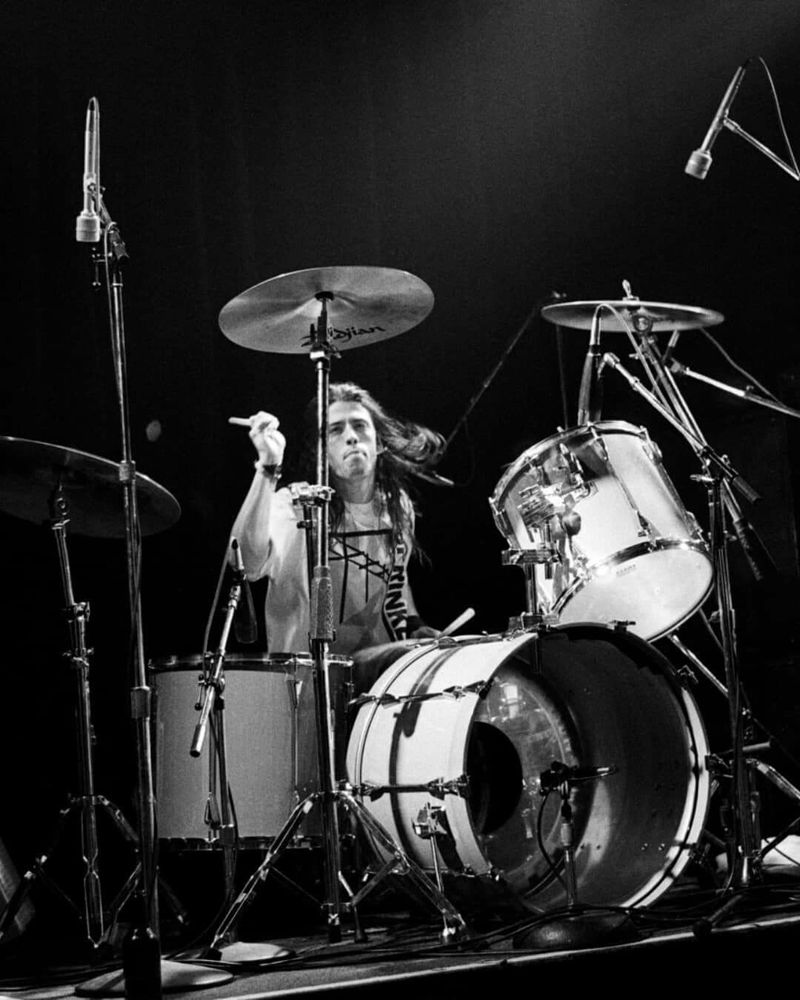
Before the world knew Dave Grohl as a frontman, he was the explosive engine powering Nirvana. His aggressive, hard-hitting drumming style helped define the grunge movement and gave songs like “Smells Like Teen Spirit” their unstoppable momentum.
Grohl openly credits John Bonham as his biggest drumming hero, and you can hear that influence in every thunderous fill. After Nirvana, he went on to found Foo Fighters, proving his musical range was far wider than anyone expected.
Few rock drummers have had a bigger cultural impact.
15. Vinnie Colaiuta
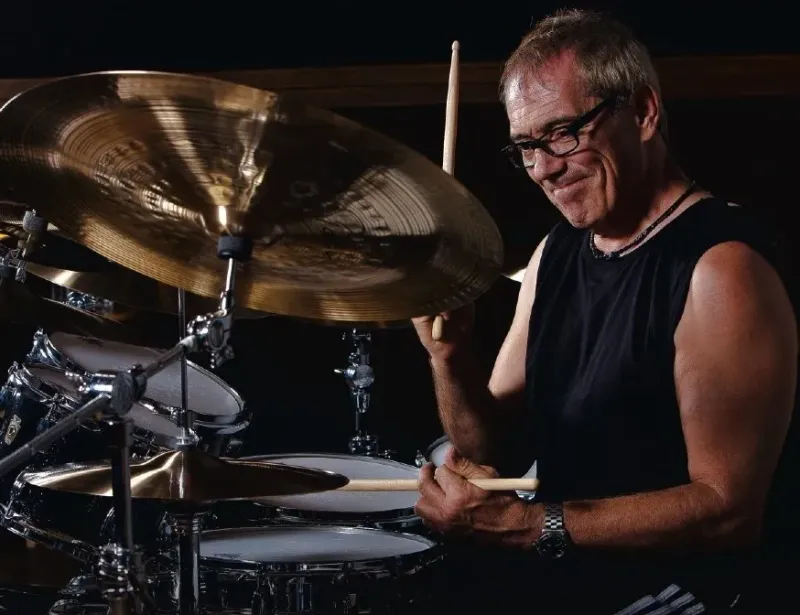
Vinnie Colaiuta is the kind of drummer that other professional drummers call a “musician’s musician.” His technical ability is jaw-dropping, but what truly sets him apart is how musically he uses every bit of that skill.
Colaiuta can shift seamlessly between jazz, rock, pop, and fusion without missing a beat, literally. He spent years as Frank Zappa’s drummer, a role that demanded extraordinary reading and improvisation skills.
Today, he is widely regarded as one of the most complete drummers alive, admired across every genre.
16. Elvin Jones (John Coltrane Quartet)
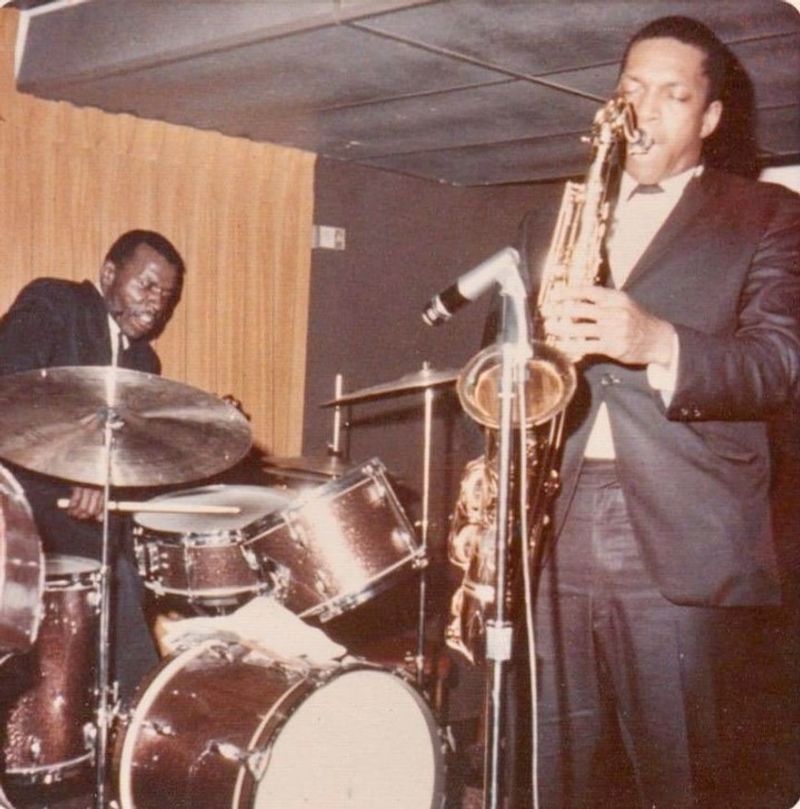
Elvin Jones played drums like he was having a full conversation with every other musician on stage simultaneously. His polyrhythmic approach brought an entirely new level of energy and interaction to jazz drumming in the 1960s.
As the drummer for the John Coltrane Quartet, Jones provided a relentless, swirling foundation that elevated Coltrane’s improvisations to legendary status. Mitch Mitchell, Ginger Baker, and Bill Bruford all cited Jones as a major influence.
His recordings with Coltrane remain some of the most thrilling moments in jazz history.
17. Max Roach
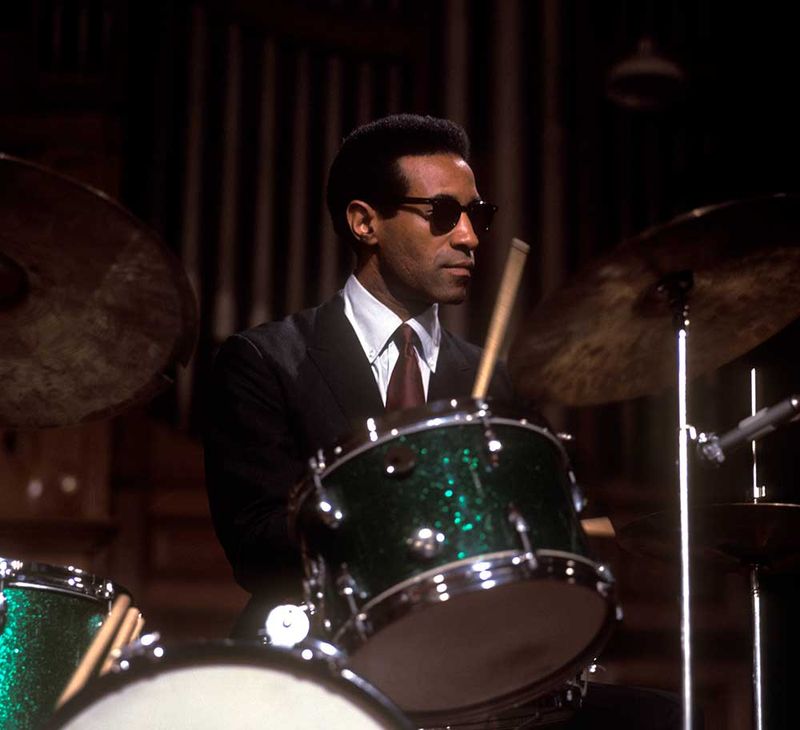
Max Roach helped turn the drum kit into a true solo instrument during the bebop revolution of the 1940s and 1950s. Before Roach, drummers were largely expected to stay in the background and keep time.
He shattered that expectation with compositions that placed the drums front and center, showing the world how rhythmically sophisticated jazz could be. Roach collaborated with Charlie Parker and Thelonious Monk, contributing to some of bebop’s most defining recordings.
His technical brilliance and artistic vision permanently elevated the role of the drummer in jazz.
18. Charlie Watts (The Rolling Stones)
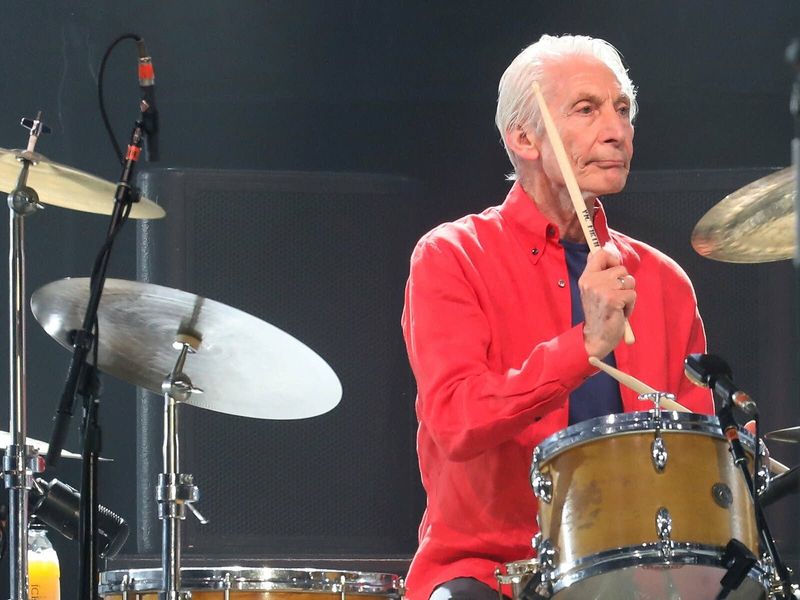
Charlie Watts proved that restraint can be just as powerful as flash. For nearly six decades as the drummer for The Rolling Stones, he anchored the band with a cool, jazz-rooted style that never sought the spotlight but always held everything together.
His trademark of playing slightly behind the beat gave the Stones their loose, swaggering feel that no other band could quite replicate. Watts passed away in 2021, leaving behind a legacy of understated mastery that musicians across all genres deeply respect and admire.
19. Billy Cobham
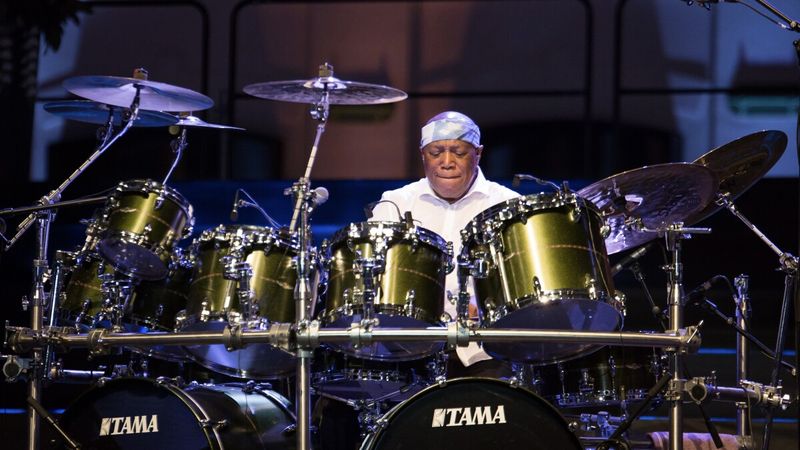
Billy Cobham exploded onto the jazz fusion scene in the 1970s and immediately raised the bar for what drummers could physically and creatively accomplish. His work on the Mahavishnu Orchestra’s early albums left musicians and audiences completely stunned.
Cobham combined blazing speed, enormous power, and a sophisticated musical sense that made him a true showstopper. He was also among the first prominent left-handed drummers to set up an open-handed kit, inspiring generations of drummers to rethink their approach to the instrument entirely.
20. Tito Puente
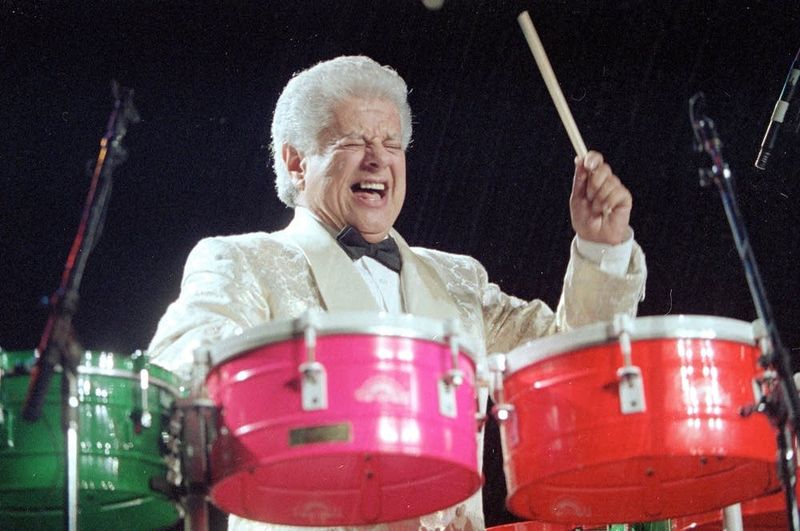
Known as “El Rey” or The King, Tito Puente was the beating heart of Latin music for more than five decades. His mastery of the timbales brought an irresistible energy to mambo and Latin jazz that made entire concert halls move as one.
Puente blended traditional Afro-Cuban rhythms with jazz harmonies in a way that felt both rooted and completely fresh. As a bandleader and composer, he recorded over 100 albums throughout his career.
His rhythmic legacy continues to influence Latin musicians and percussionists around the world today.