
America is home to some of the most iconic filming locations in movie history. From the busy streets of New York City to the red rock deserts of the Southwest, real places have brought unforgettable stories to life on the big screen.
Visiting these spots lets you step right into the scenes you know and love. Get ready to explore 20 amazing locations that made movie magic happen.
1. Philadelphia Museum of Art Steps (Rocky Steps), Philadelphia, Pennsylvania
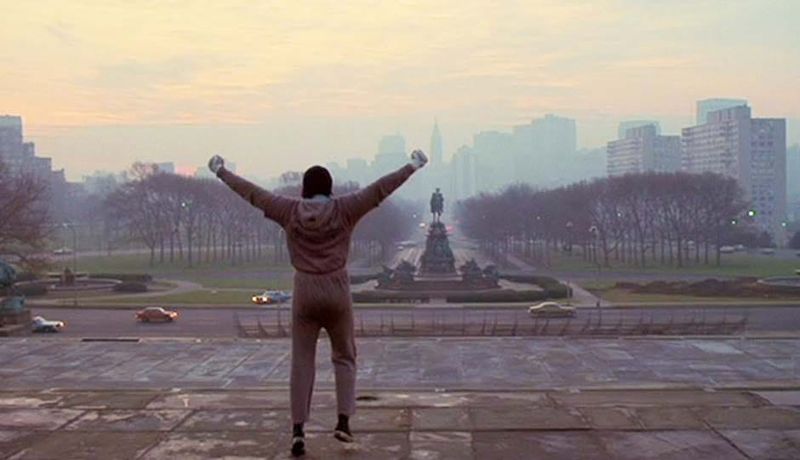
Seventy-two stone steps changed sports movie history forever. When Sylvester Stallone sprinted to the top in the 1976 film Rocky, fists raised in triumph, audiences everywhere felt every single stride.
That training montage became one of cinema’s most powerful moments.
The steps have appeared in nearly every Rocky film and the Creed series. A bronze statue of Rocky Balboa now stands at the base, and fans still run up the steps daily, arms raised, living out their own movie moment.
2. Griffith Observatory, Los Angeles, California
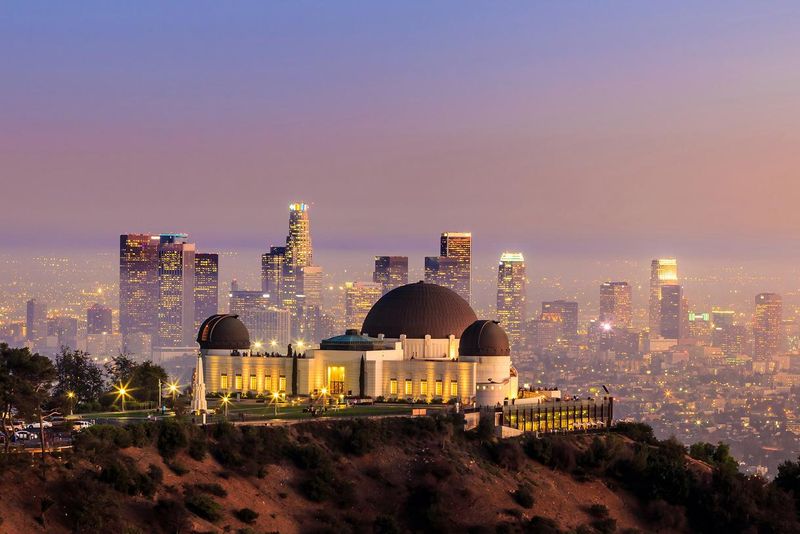
Sitting high above Los Angeles, Griffith Observatory has a way of making every visitor feel like the star of their own film. James Dean made it legendary in Rebel Without a Cause back in 1955, and the location has never looked back.
La La Land brought it back into the spotlight in 2016 with a breathtaking waltz scene inside the planetarium. The Terminator and Jurassic Park also claimed this hillside gem, cementing its status as Hollywood’s favorite real-world backdrop.
3. Alcatraz Island, San Francisco, California
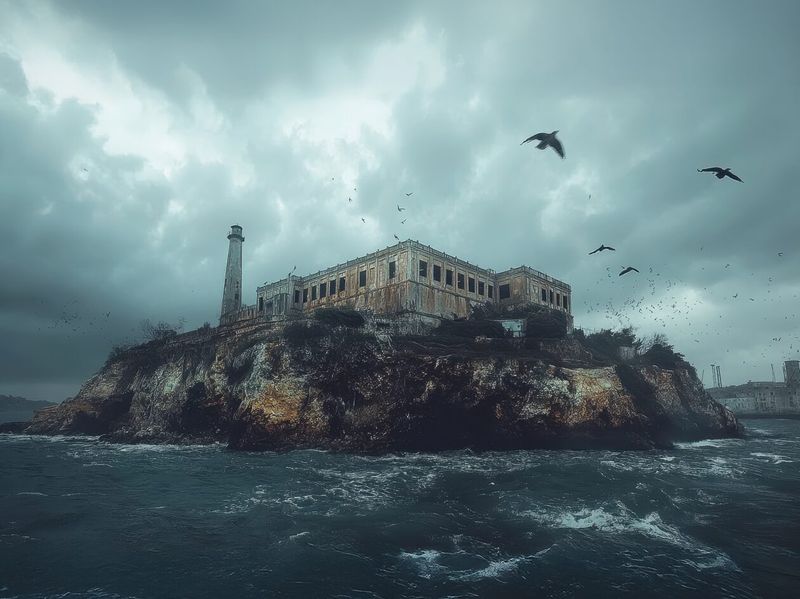
Few places carry as much cinematic menace as Alcatraz Island, sitting cold and isolated in San Francisco Bay. The Rock (1996) starring Sean Connery and Nicolas Cage turned this notorious former prison into the ultimate action movie stage.
Long before that, Escape from Alcatraz (1979) and Birdman of Alcatraz (1962) also used the island’s grim walls to powerful effect. Today, visitors can tour the real cellblocks and feel the same eerie atmosphere that filmmakers have always found irresistible.
4. The Goonies House, Astoria, Oregon
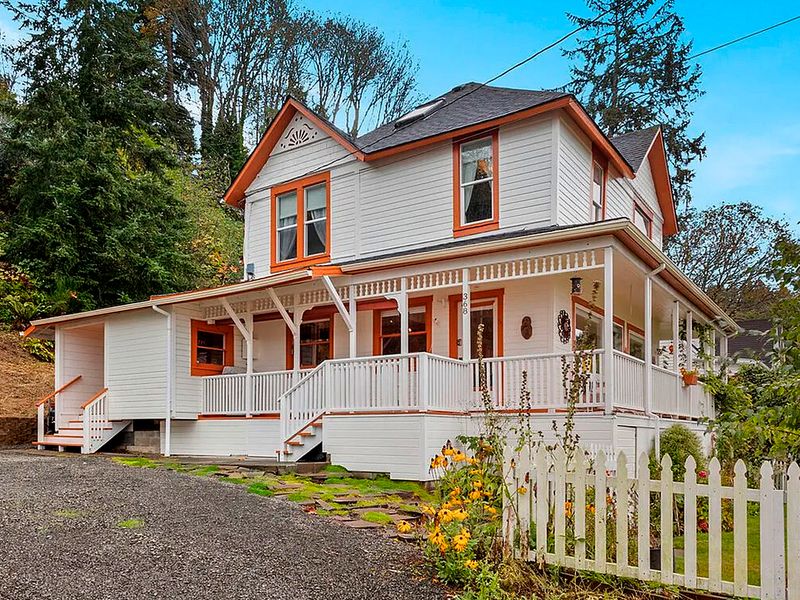
Somewhere in Astoria, Oregon, a modest house holds the dreams of every kid who ever watched The Goonies and wanted an adventure of their own. This private residence served as the Walsh family home in the beloved 1985 film, and fans have been making pilgrimages ever since.
Public access has been restricted at times because real people actually live there, so visiting respectfully is a must. Still, just seeing it from the street is enough to spark that classic Goonies feeling all over again.
5. Tiffany and Co. Fifth Avenue, New York City, New York
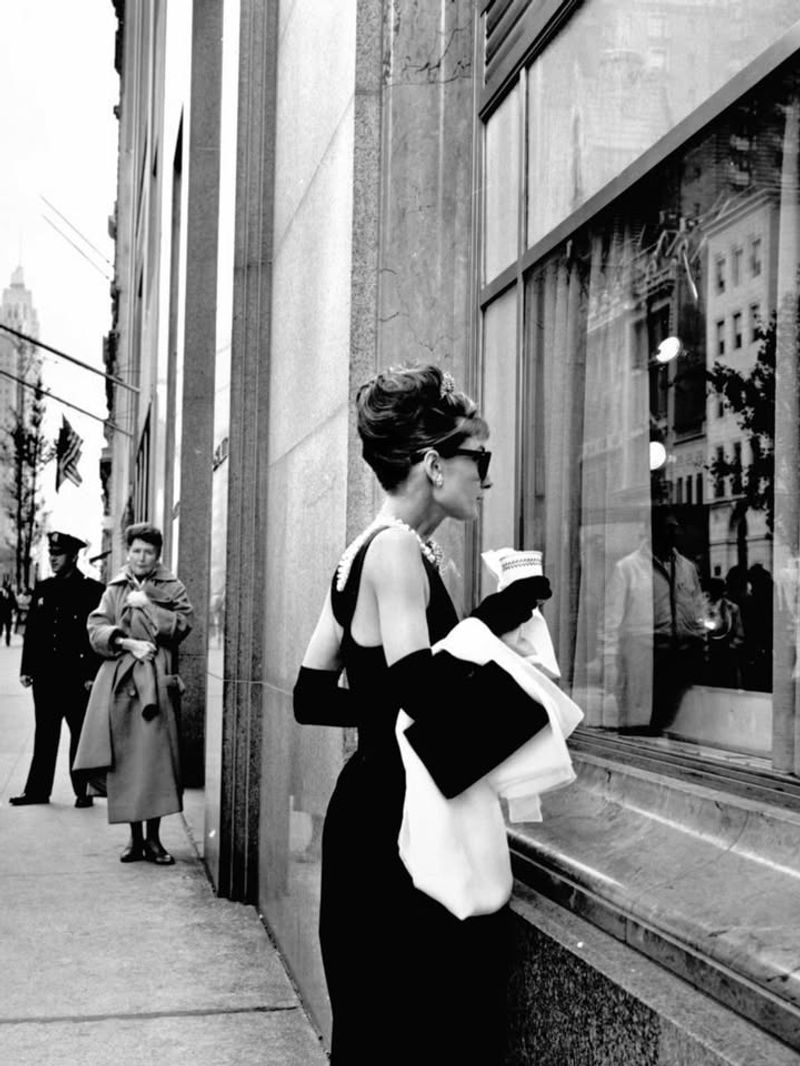
Picture Audrey Hepburn in a black dress, pastry in hand, gazing into a glittering jewelry window at dawn. That opening scene from Breakfast at Tiffany’s (1961) is one of the most quietly glamorous moments in film history, and it all happened right here on Fifth Avenue.
The flagship Tiffany store has stood as a symbol of elegance and aspiration for decades. Fans of the film still recreate that iconic sidewalk moment, coffee in hand, hoping to capture just a sliver of Holly Golightly’s magic.
6. Hook and Ladder Company 8, New York City, New York
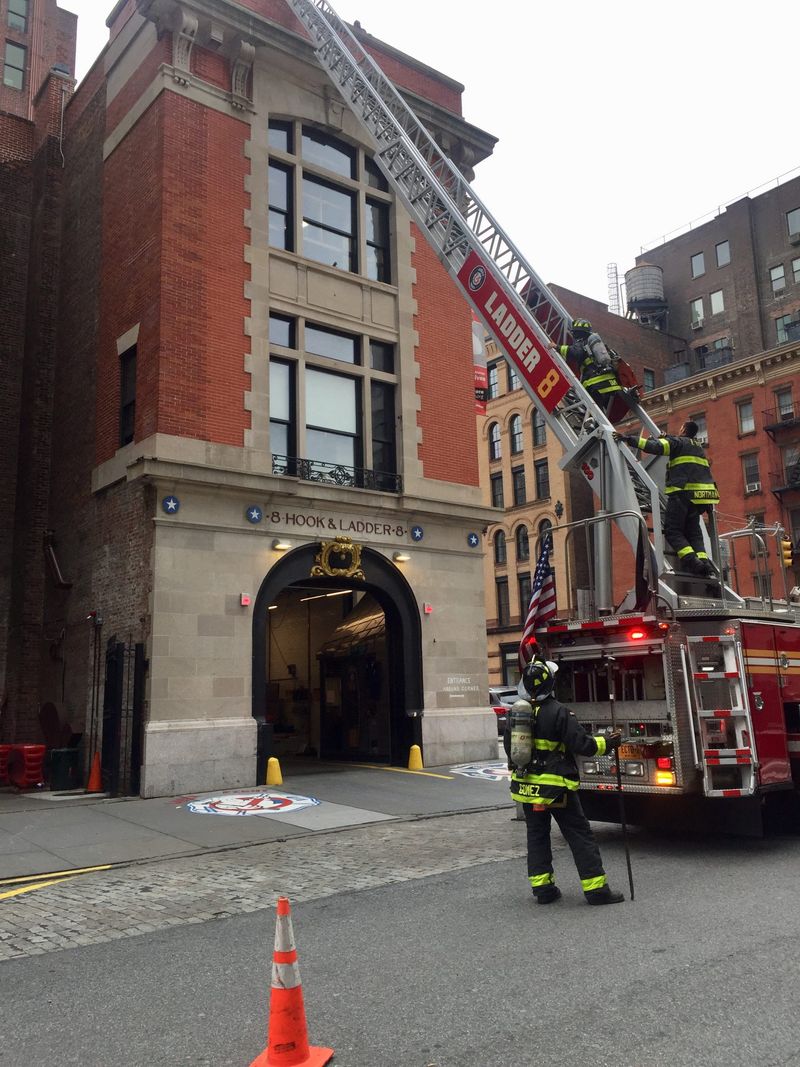
Who ya gonna call? For millions of fans, the answer lives at a red-brick firehouse on North Moore Street in Manhattan.
Hook and Ladder Company 8 became the Ghostbusters headquarters in the 1984 blockbuster, and its Beaux-Arts exterior has appeared in nearly every Ghostbusters production since.
The real firehouse is still active, with working firefighters inside. Visitors regularly stop to snap photos outside the famous doors, and a painted Ghostbusters logo on the sidewalk makes it easy to find your inner Egon Spengler.
7. Monument Valley, Arizona and Utah
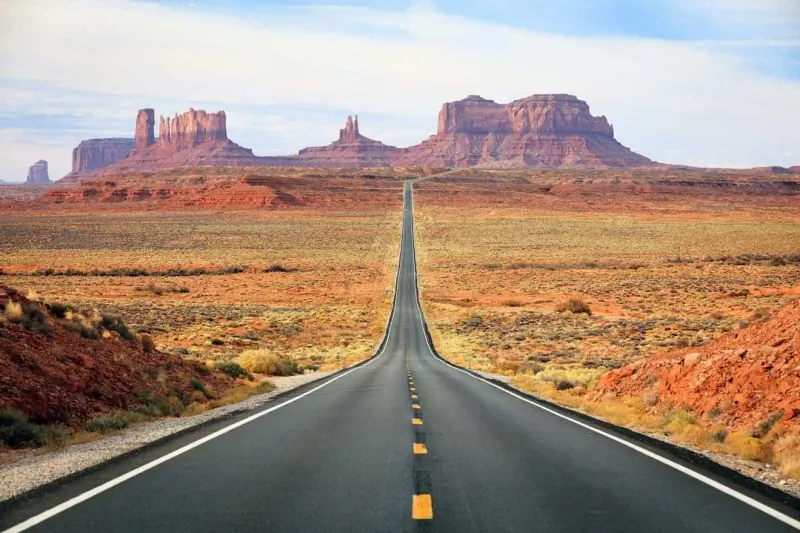
No landscape says American West quite like Monument Valley. Those towering red sandstone buttes have been starring in films since John Ford put them on screen in Stagecoach (1939), and John Wayne rode through them so often they practically became his backyard.
Forrest Gump fans will recognize the valley too, as the spot where Forrest famously decided to stop running during his cross-country trek in 1994. Located on the Navajo Nation, the land holds deep cultural significance far beyond any movie set.
8. Mount Rushmore National Memorial, Keystone, South Dakota
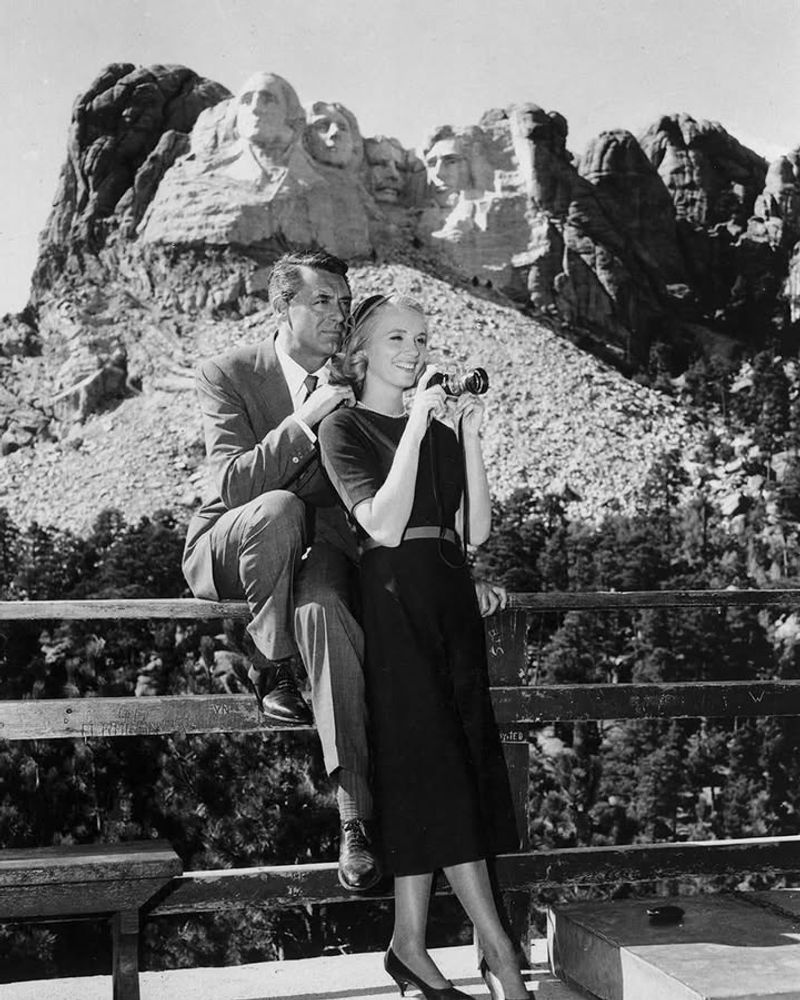
Alfred Hitchcock had a gift for turning American landmarks into stages for suspense, and Mount Rushmore gave him one of his most dramatic backdrops. The 1959 thriller North by Northwest features a nail-biting chase across the monument that audiences still talk about today.
Interestingly, the National Park Service wouldn’t allow filming directly on the presidents’ faces, so Hitchcock recreated those action shots on a studio mock-up. The parking lot and cafeteria, however, were filmed right on location, blending reality with Hollywood illusion seamlessly.
9. Lincoln Memorial, Washington D.C.
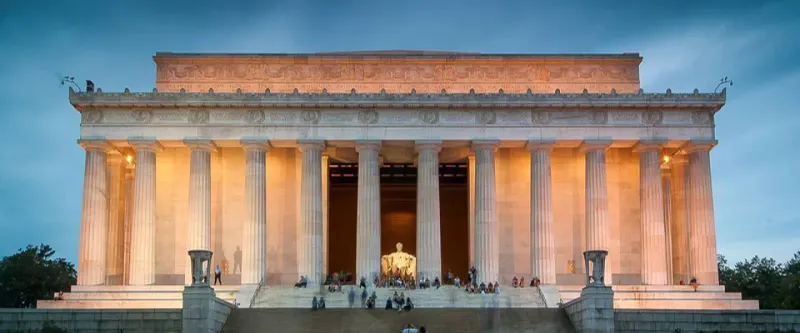
Standing at the Lincoln Memorial’s Reflecting Pool, it’s easy to imagine the massive crowd that gathered there in Forrest Gump (1994). In that unforgettable scene, Forrest stumbles onto a Vietnam War protest and delivers a heartfelt, unplanned speech to thousands of people.
The Lincoln Memorial has long been a symbol of hope and unity, which is exactly why filmmakers keep returning to it. Its grand marble steps and towering columns give any scene an instant sense of historical weight and emotional power.
10. Martha’s Vineyard, Massachusetts
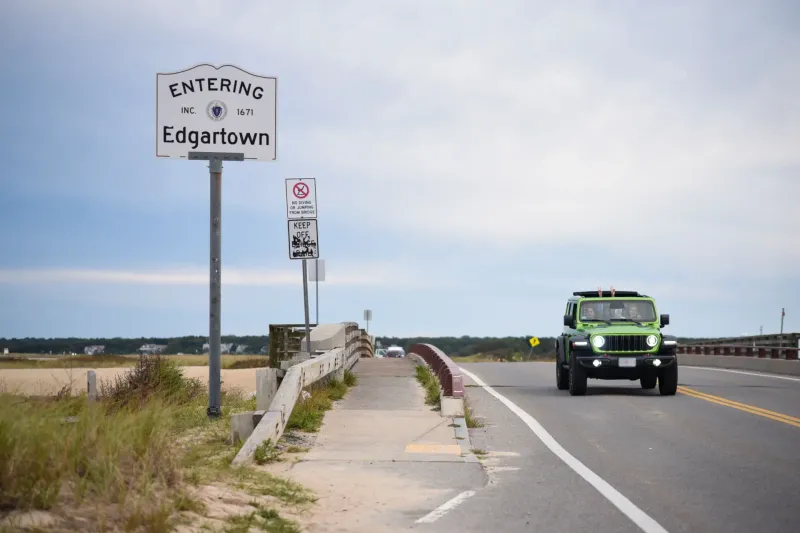
Before Jaws (1975), Martha’s Vineyard was a quiet island retreat off the Massachusetts coast. Steven Spielberg changed that forever when he transformed it into the fictional Amity Island, a beach town terrorized by a great white shark.
The film made an entire generation afraid of the ocean.
Edgartown stood in for Amity’s town center, while Joseph Sylvia State Beach hosted several shark attack scenes. The American Legion Memorial Bridge, nicknamed Jaws Bridge by locals, remains one of the most visited spots on the island for film fans.
11. Ohio State Reformatory, Mansfield, Ohio
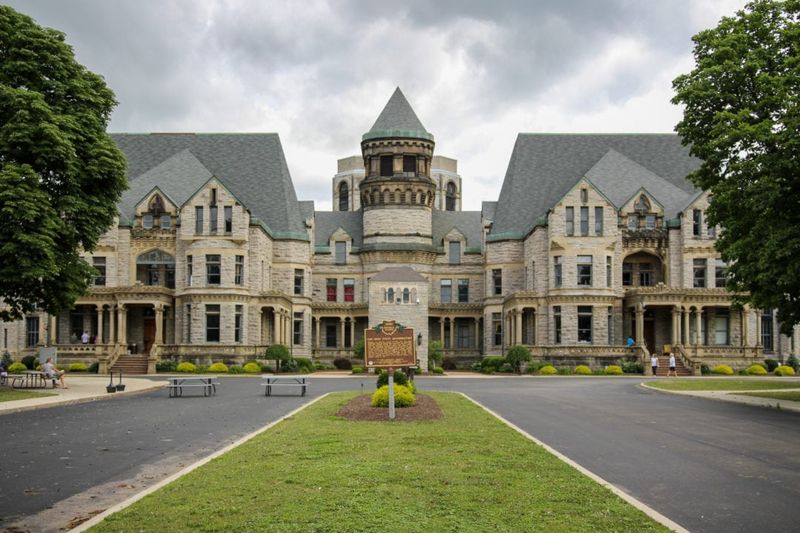
Dark stone walls, towering Gothic architecture, and long echoing corridors made the Ohio State Reformatory an obvious choice for a prison drama. The Shawshank Redemption (1994) transformed this historic Mansfield building into the fictional Shawshank State Penitentiary, and the film went on to become one of the most beloved movies ever made.
The reformatory now operates as a museum and offers tours that take visitors through the very cellblocks seen on screen. Die-hard fans of the film travel from across the country just to walk those halls.
12. Bradbury Building, Los Angeles, California
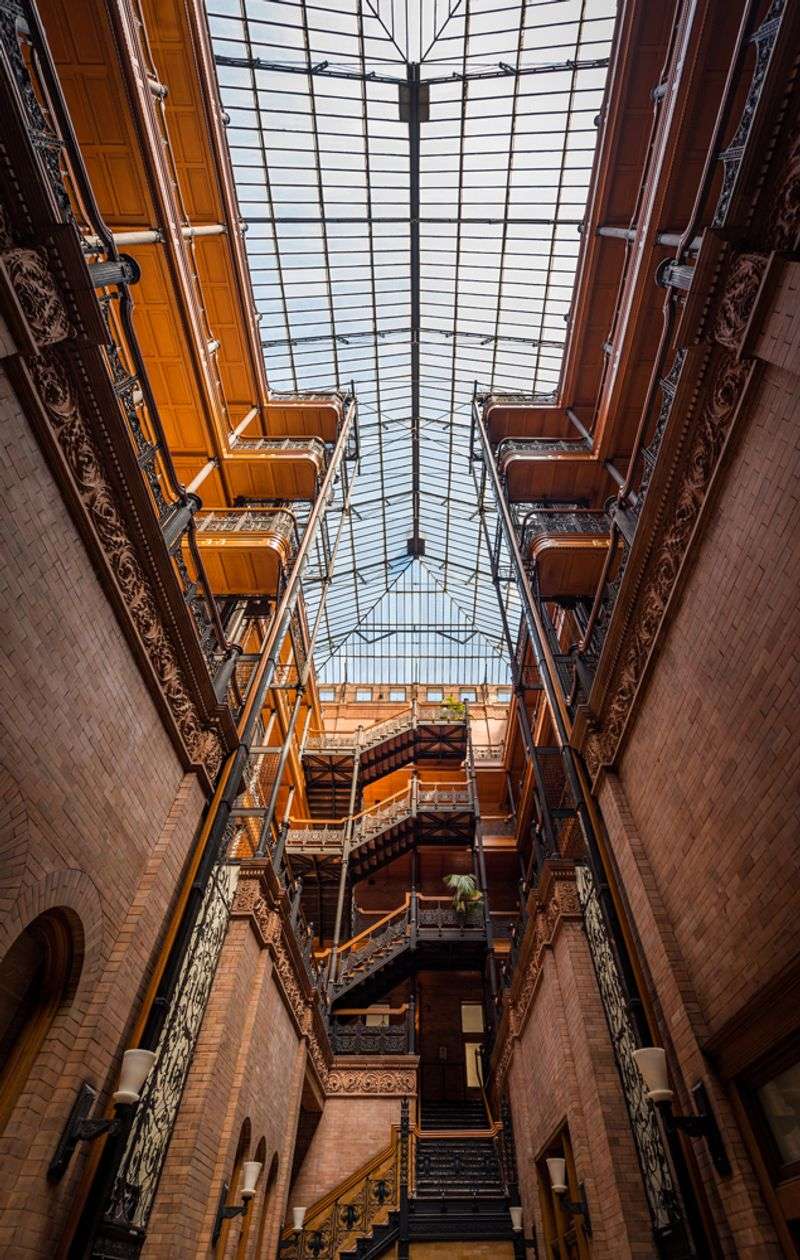
Step inside the Bradbury Building in downtown Los Angeles and you feel like you’ve walked straight into a science fiction dream. The open cage elevators, intricate ironwork balconies, and skylit atrium gave Blade Runner (1982) its haunting, layered visual identity when it was used as J.F.
Sebastian’s crumbling apartment building.
Built in 1893, the Bradbury is one of Los Angeles’s most treasured architectural landmarks. Its otherworldly beauty has attracted filmmakers across dozens of productions, making it one of the most frequently filmed interiors in the entire city.
13. Chippewa Square, Savannah, Georgia
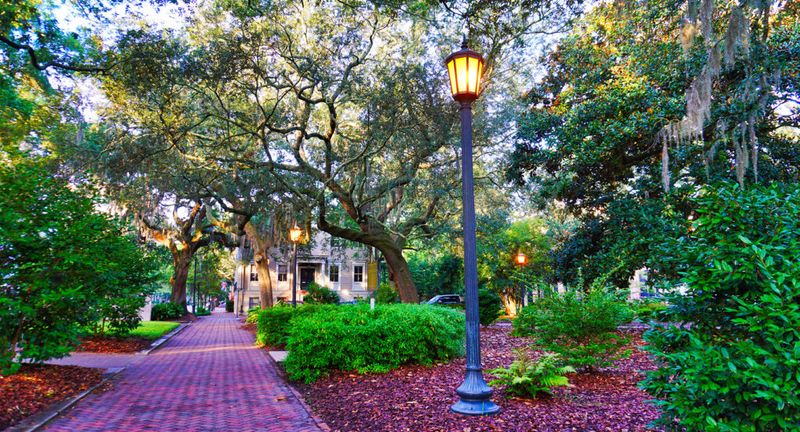
A park bench in Savannah, Georgia became one of the most memorable seats in cinema history. Chippewa Square was where Forrest Gump sat and told his extraordinary life story to a series of strangers, a simple setup that somehow captured the entire spirit of the film.
The actual bench used in production was a prop, not a permanent fixture, but a replica now lives at the Savannah History Museum for fans to see up close. The square itself remains a charming, shady spot worth visiting on any trip through Georgia.
14. The Plaza Hotel, New York City, New York
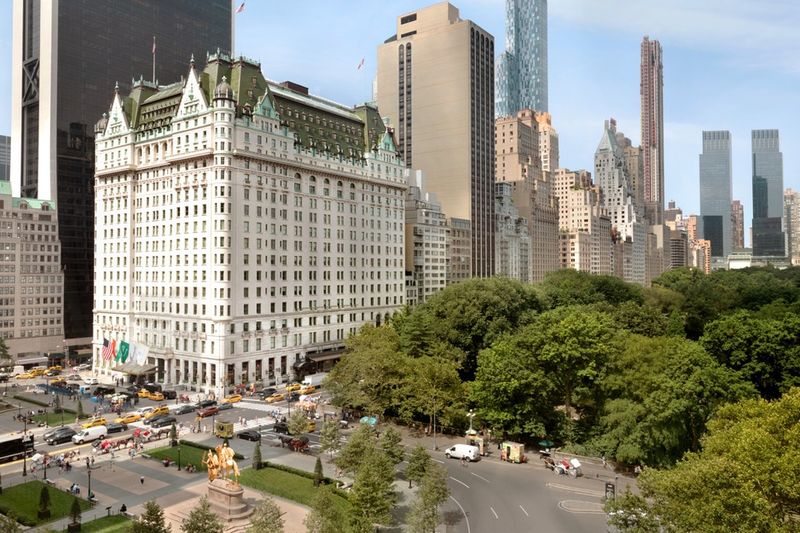
Kevin McCallister had expensive taste for a kid left alone in New York City. In Home Alone 2: Lost in New York (1992), young Kevin checks himself into the legendary Plaza Hotel and orders room service like a pro, turning one of Manhattan’s grandest addresses into a comedy stage.
Many interior and exterior scenes were filmed directly at the Plaza, giving the movie an authentic air of over-the-top luxury. The hotel has since leaned into its Hollywood connection, welcoming guests who want to live out their own Kevin McCallister fantasy.
15. Point Dume State Preserve, Malibu, California
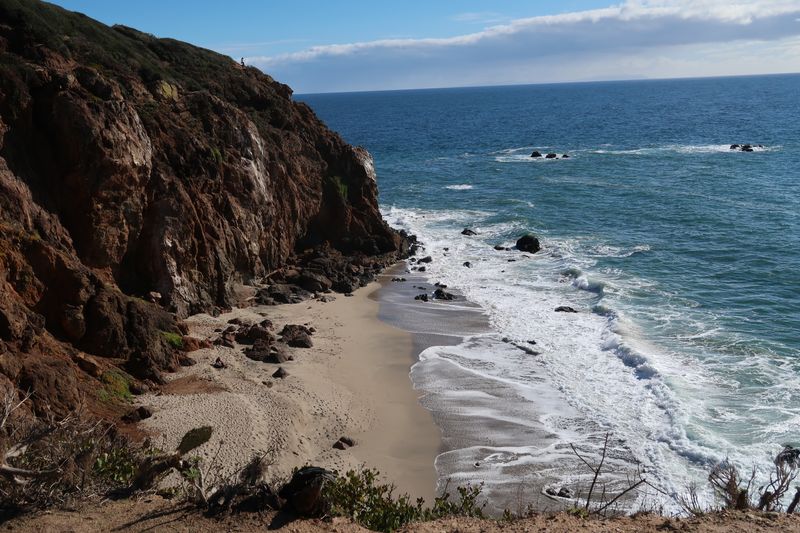
One of cinema’s greatest twist endings played out on a Malibu beach. At Point Dume State Preserve, the original Planet of the Apes (1968) delivered its jaw-dropping final image: a half-buried Statue of Liberty jutting from the sand, revealing that the astronauts had been on Earth all along.
The rugged cliffs and isolated shoreline gave the scene an eerie, end-of-the-world atmosphere that no studio set could have matched. Today, Point Dume remains a beautiful stretch of California coastline with one very dramatic cinematic legacy attached to it.
16. Central Park, New York City, New York
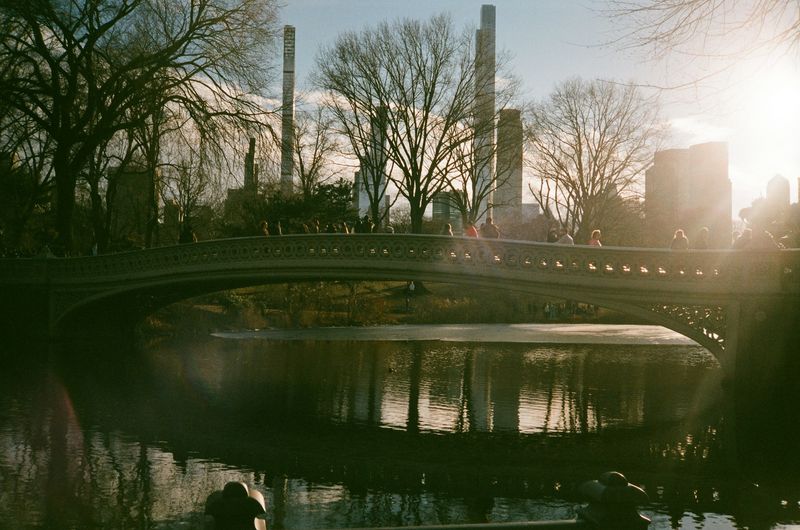
Central Park might be the most filmed outdoor space in American movie history. Romantic comedies, thrillers, holiday films, and superhero blockbusters have all claimed a piece of this 843-acre urban oasis in the heart of Manhattan.
When Harry Met Sally (1989) used the park for tender autumn strolls, while Home Alone 2 and Ghostbusters both staged memorable scenes among its paths and fountains. No matter the genre, Central Park has a way of making every scene feel alive with energy and possibility.
17. Golden Gate Bridge, San Francisco, California
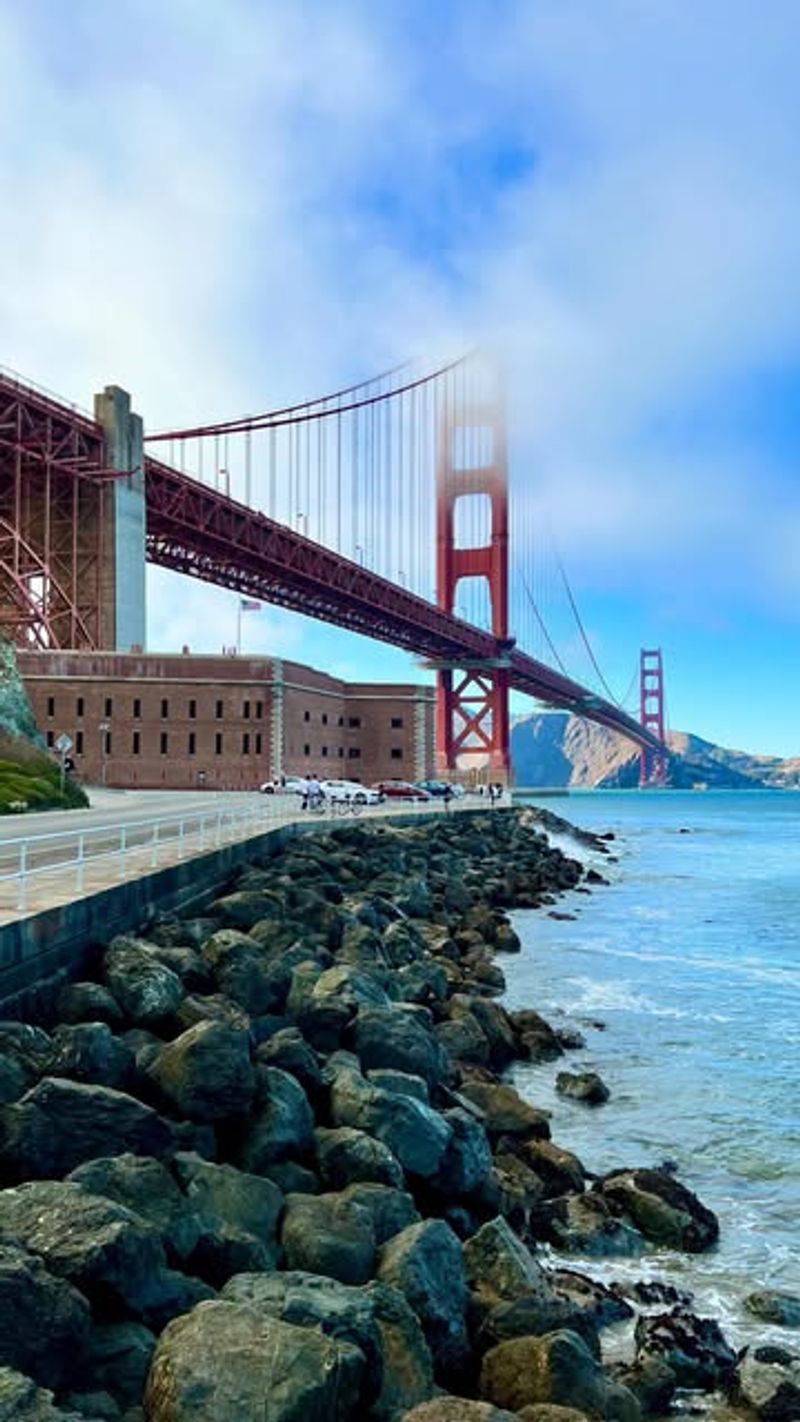
Stretching across San Francisco Bay in brilliant international orange, the Golden Gate Bridge is practically a movie star in its own right. Alfred Hitchcock used it memorably in Vertigo (1958), while James Bond sped beneath it in A View to a Kill (1985).
X-Men: The Last Stand (2006) ripped the entire bridge from its foundations in one of the most ambitious CGI sequences of its era, and Rise of the Planet of the Apes (2011) turned it into a primate battleground. Few landmarks have been destroyed on film quite so many times.
18. Pike Place Market, Seattle, Washington
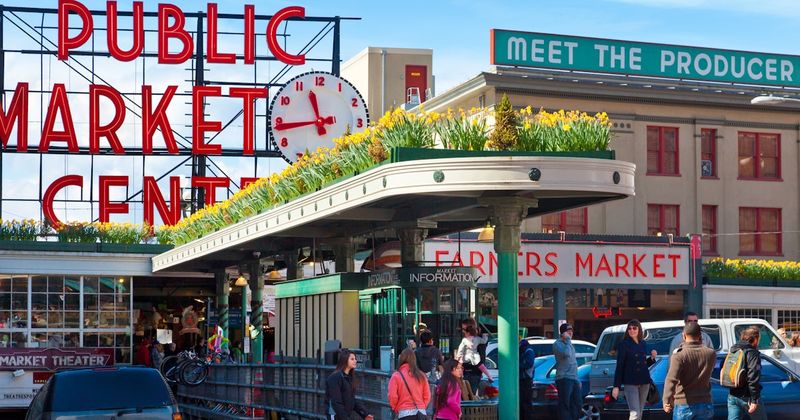
Rain, coffee, and romantic longing set the tone for Sleepless in Seattle (1993), and Pike Place Market captured all three perfectly. The historic waterfront market helped establish the film’s cozy Pacific Northwest atmosphere, giving audiences a vivid sense of Seattle’s distinct personality and charm.
Founded in 1907, Pike Place is one of the oldest continuously operating farmers markets in the United States. Whether you’re there for the famous fish-throwing vendors or chasing a movie memory, the market buzzes with energy that no Hollywood set could replicate.
19. Timberline Lodge, Mount Hood, Oregon
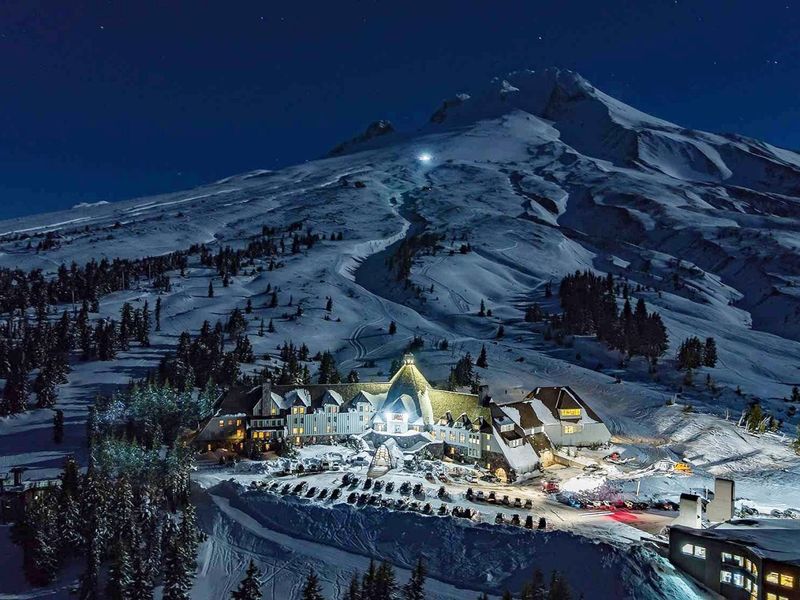
Stanley Kubrick’s The Shining (1980) needed a hotel that looked both magnificent and deeply unsettling. The Timberline Lodge on the snowy slopes of Mount Hood in Oregon was the perfect exterior for the fictional Overlook Hotel, radiating grandeur and isolation in equal measure.
Built in the 1930s by the Works Progress Administration, the lodge is a masterpiece of rustic craftsmanship. Guests still stay there year-round, and many book their trips specifically hoping to feel that unmistakable chill that Kubrick’s camera captured so brilliantly on those snowy mountain slopes.
20. Statue of Liberty, New York City, New York
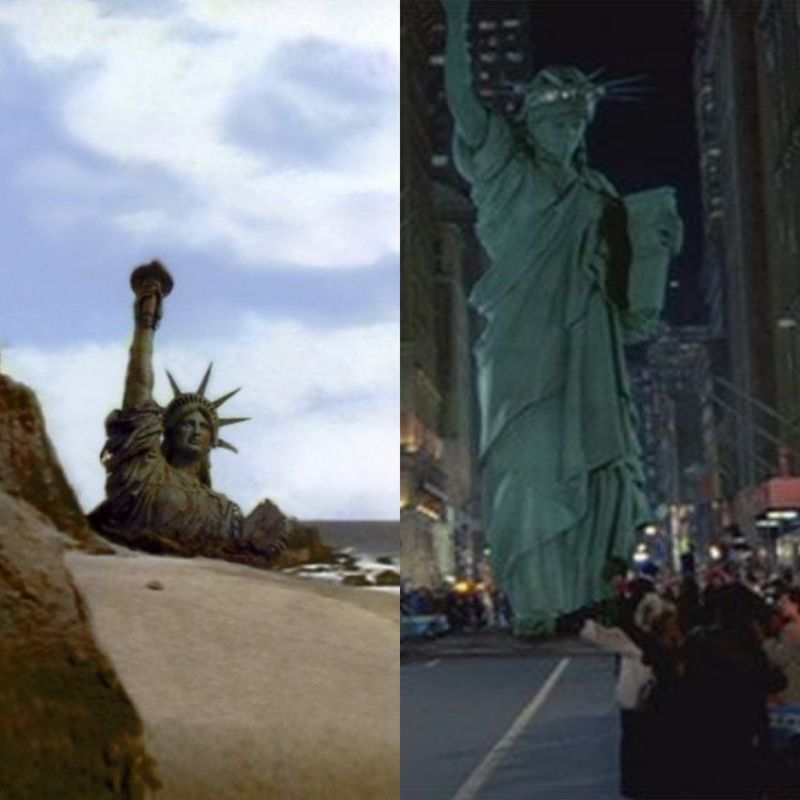
No American landmark has been destroyed, reanimated, or dramatically revealed on film more often than the Statue of Liberty. Its shocking appearance half-buried in sand closed out Planet of the Apes (1968) with one of cinema’s most haunting final images, forever linking the statue to apocalyptic storytelling.
Ghostbusters II (1989) brought it to life entirely, walking it through Manhattan to the tune of Jackie Wilson. Alfred Hitchcock’s Saboteur (1942) staged a climax on its torch, proving that Lady Liberty has always been Hollywood’s favorite national monument to put in peril.