
Hollywood’s Golden Age was a time when cowboys, outlaws, and sheriffs ruled the silver screen. From the dusty trails of Monument Valley to the saloons of the Old West, these films captured the imagination of millions.
The stars who brought these stories to life became legends, shaping American culture for generations. Get ready to meet the 20 iconic actors who made the Western genre unforgettable.
1. John Wayne
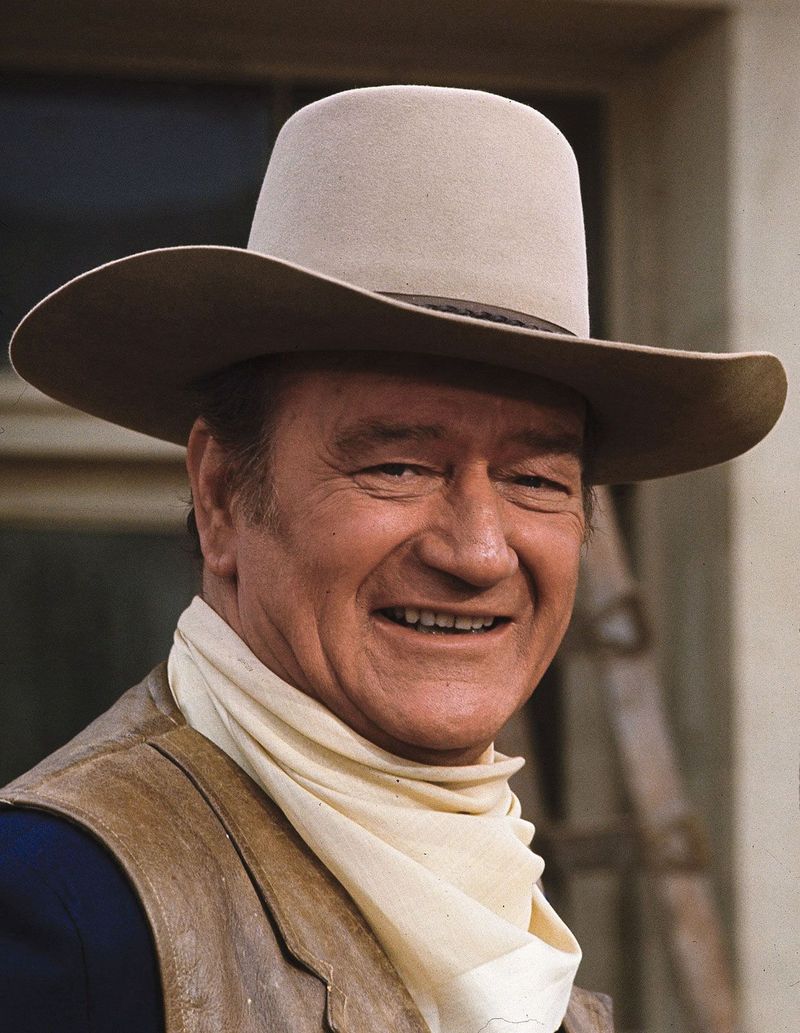
Nobody wore a cowboy hat quite like John Wayne. Known as “The Duke,” he burst into mainstream fame with the 1939 film Stagecoach, directed by John Ford, and never looked back.
Wayne starred in 142 movies and became the face of the American frontier. His roles in Red River, The Searchers, and Rio Bravo are still celebrated today.
He won an Oscar for Best Actor playing Rooster Cogburn in True Grit (1969), proving his talent matched his legend.
2. Gary Cooper
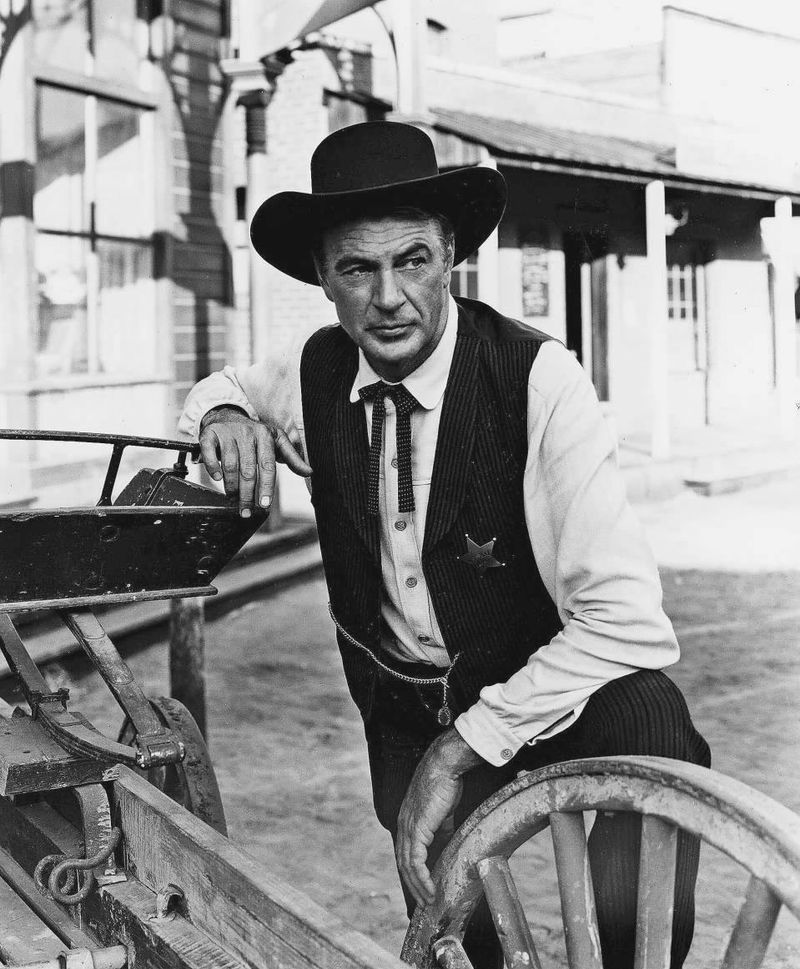
Gary Cooper had a quiet strength on screen that made audiences trust him completely. His career stretched from 1925 to 1961, covering both silent films and the sound era, a rare achievement for any Hollywood actor.
He became a talking picture star with The Virginian in 1929 and never slowed down. His role in High Noon (1952) is one of cinema’s most gripping performances.
Cooper perfectly captured the ideal of the honest, brave American hero every Western needed.
3. James Stewart
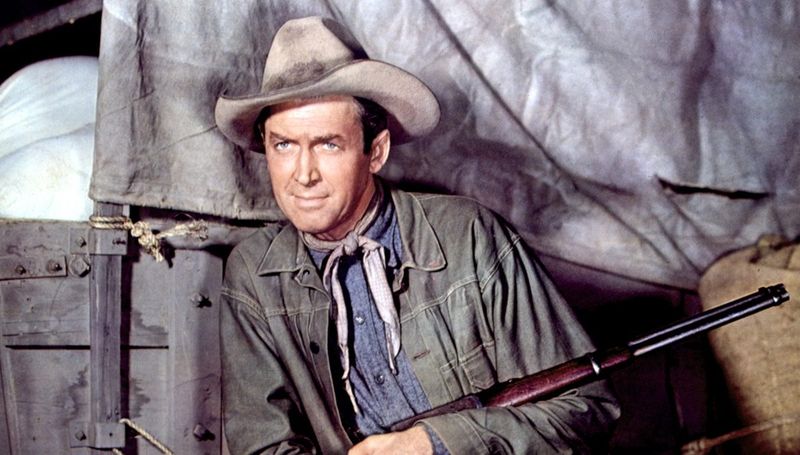
James Stewart brought something different to the Western genre: genuine warmth mixed with unexpected toughness. His role in Destry Rides Again (1939) showed he could play a sheriff who relied on smarts over a six-shooter.
Stewart later starred in The Man Who Shot Liberty Valance (1962) alongside John Wayne, a film that asked hard questions about myth and truth in the Old West.
Few actors could blend humor, heart, and heroism the way Stewart did so naturally.
4. Randolph Scott
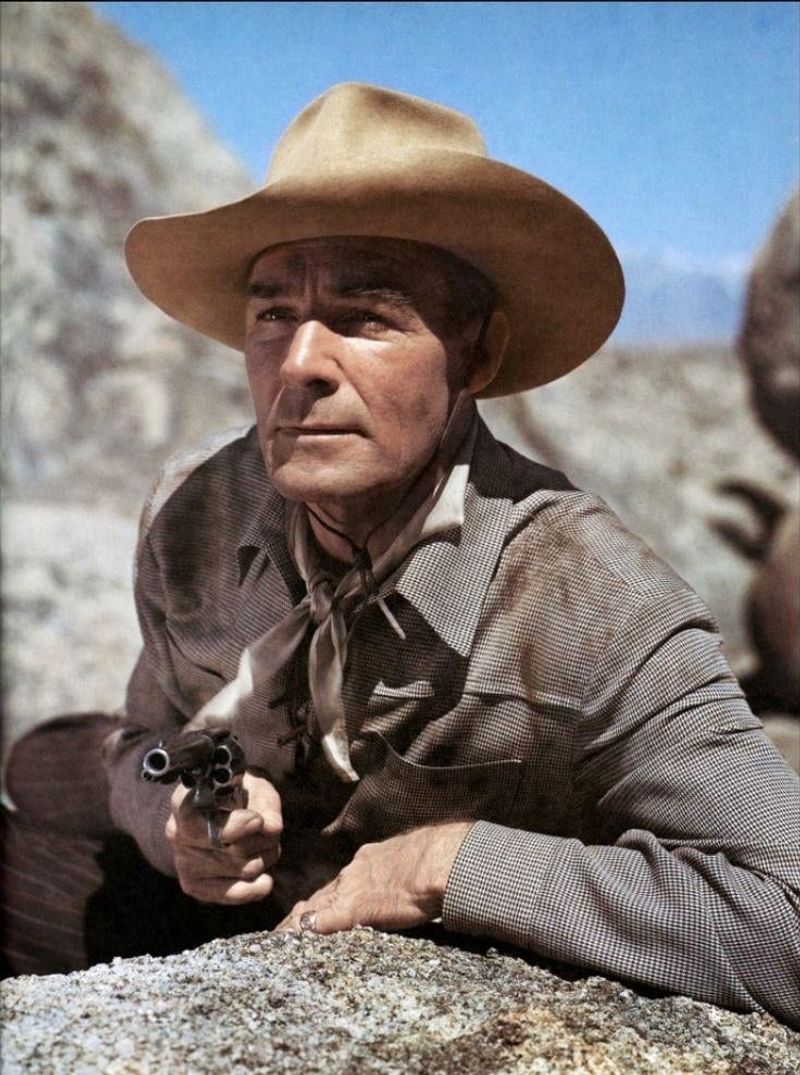
Randolph Scott helped build the Western genre into a Hollywood powerhouse. With his chiseled jaw and no-nonsense style, he was exactly what audiences pictured when they imagined a frontier lawman or drifting cowboy.
He starred in dozens of Westerns, including The Nevadan (1950), and later teamed with director Budd Boetticher for a celebrated series of lean, gripping films.
Scott dedicated most of his career to Westerns, making him one of the genre’s most committed and beloved stars.
5. Glenn Ford
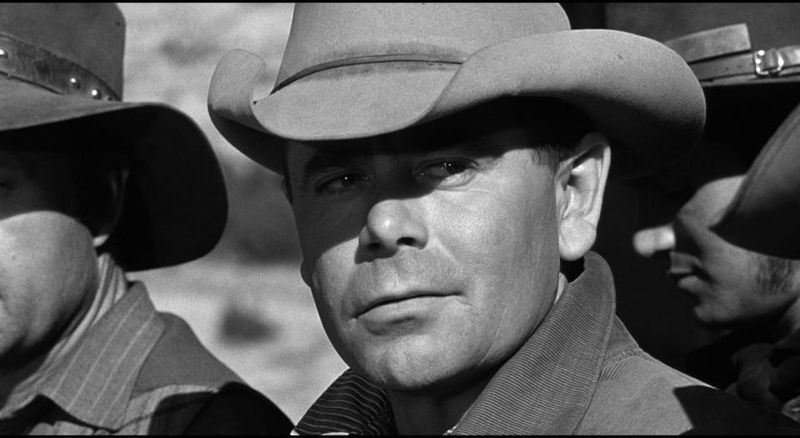
Glenn Ford had a cool, steady energy that made him a natural fit for the Western saddle. He never seemed to be trying too hard, and that relaxed confidence made his characters feel completely believable.
Ford starred in some of the most exciting Westerns of the 1950s, including the original 3:10 to Yuma (1957) and The Fastest Gun Alive (1956).
His performances in The Sheepman (1958) and Cimarron (1960) showed his impressive range within the genre.
6. Alan Ladd
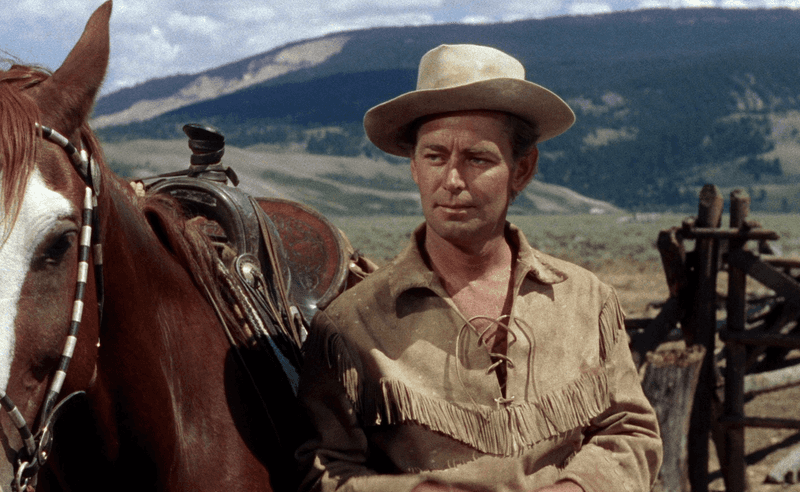
Alan Ladd may not have been the tallest cowboy in Hollywood, but his screen presence was enormous. He carried an old-fashioned charm that fit perfectly in the rugged world of Western adventure films.
His role in Shane (1953) is considered one of the greatest Western performances ever captured on film. He plays a mysterious gunfighter who steps in to protect a farming family from a ruthless cattle baron.
Earlier hits like Whispering Smith (1948) and Branded (1950) proved he was built for the saddle.
7. Henry Fonda
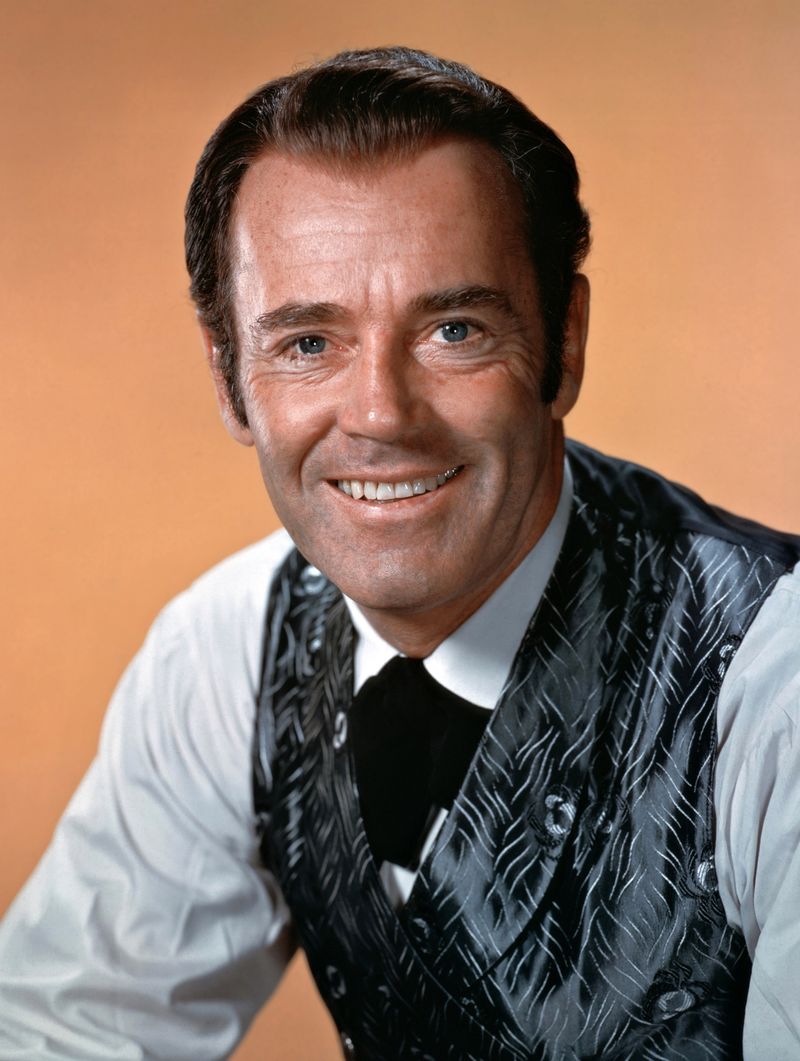
Henry Fonda had the look of a man born to walk down a dusty Western street. His rangy build, steely blue eyes, and slow drawl made him one of the most believable Western leads Hollywood ever produced.
He starred in My Darling Clementine (1946) as the legendary Wyatt Earp, a role that fit him like a glove. His work with director John Ford also included Jesse James (1939) and Fort Apache (1948).
Fonda’s characters often wrestled with justice and morality in ways that felt deeply human.
8. Robert Mitchum
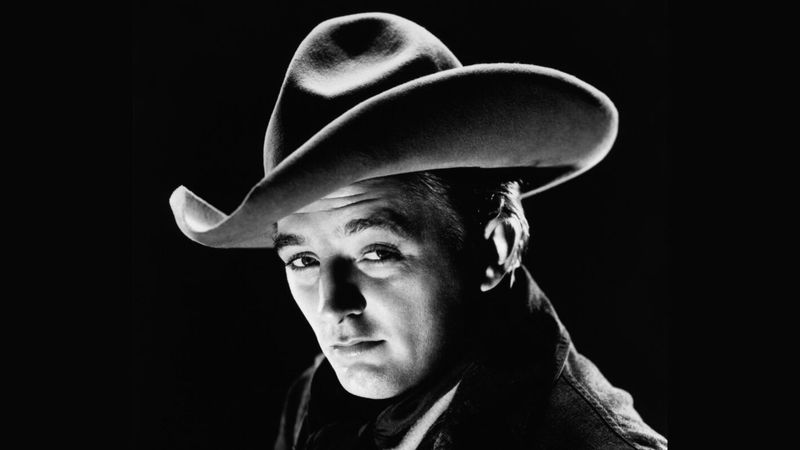
Robert Mitchum brought a slow-burning intensity to everything he touched, and Westerns were no exception. Most fans know him from film noir, but he carved out a solid reputation on the frontier too.
After signing with RKO Pictures, he appeared in a string of B-Westerns before landing more prominent roles. The Lusty Men (1952) and River of No Return (1954) showcased his gritty, unpolished appeal.
He also reunited with John Wayne in Howard Hawks’ El Dorado (1966), a fan favorite to this day.
9. William Holden
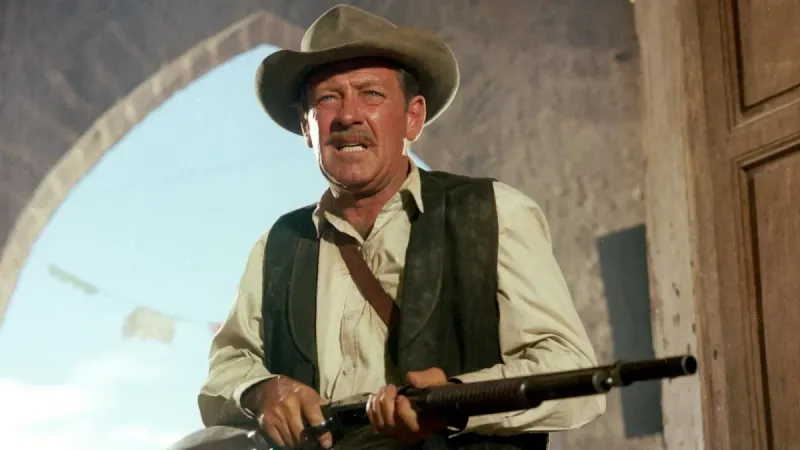
William Holden was not the first name people thought of when it came to Westerns, but his contributions to the genre were unforgettable. His role as Pike Bishop in Sam Peckinpah’s The Wild Bunch (1969) is raw, emotional, and brilliantly acted.
Playing an aging outlaw facing a changing world, Holden brought real depth to a character caught between loyalty and survival.
Earlier appearances in Texas (1941) and The Horse Soldiers (1959) showed he had always been comfortable riding the range.
10. Roy Rogers
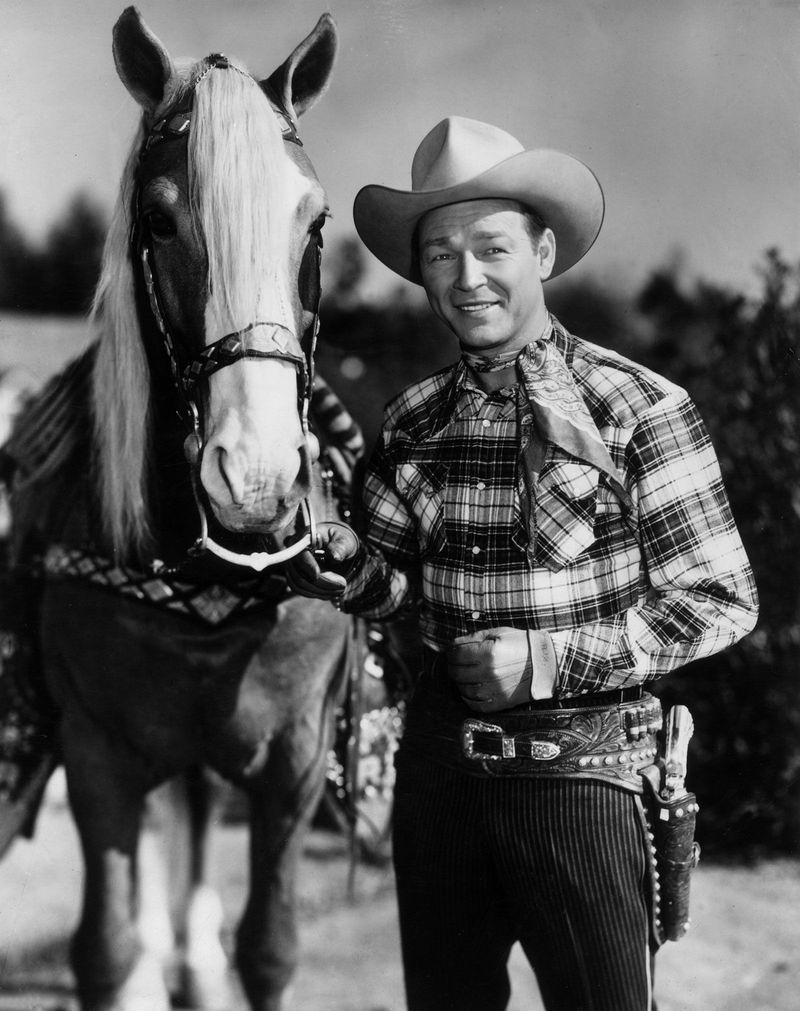
Roy Rogers was not just a movie star – he was a symbol of wholesome cowboy spirit that captured the hearts of kids and adults alike. Nicknamed the “King of Cowboys,” he ruled the B-Western circuit during Hollywood’s Golden Age.
His singing cowboy persona set him apart from grittier Western stars, making his films feel like celebrations of frontier life rather than dark adventures.
Rogers became a cultural icon, with merchandise, comics, and a long-running TV show extending his cowboy brand far beyond the movie theater.
11. Charles Bronson
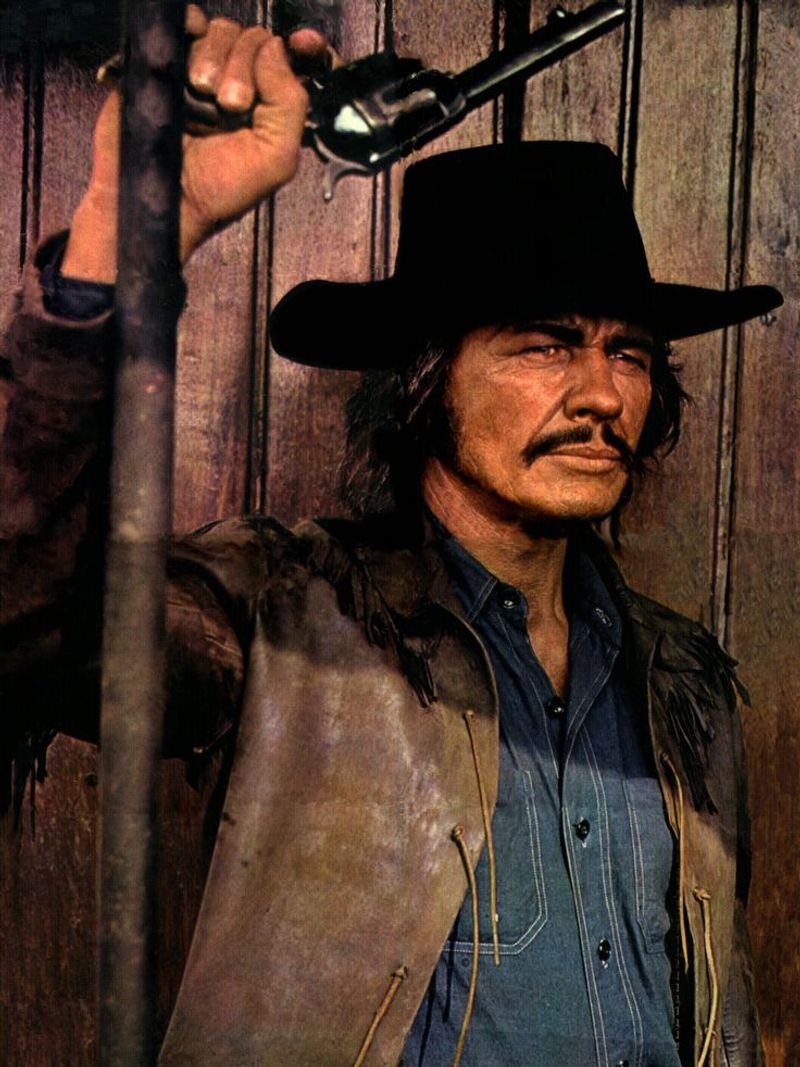
Charles Bronson had a face that looked like it was carved from granite, and directors loved putting that face in front of a camera in the Wild West. His quiet menace made him stand out even in supporting roles.
He appeared in Vera Cruz (1954) alongside Gary Cooper and Burt Lancaster, and played Bernardo O’Reilly in the beloved ensemble film The Magnificent Seven (1960).
That role launched him toward international stardom, proving that a small part in the right film can change everything.
12. Steve McQueen
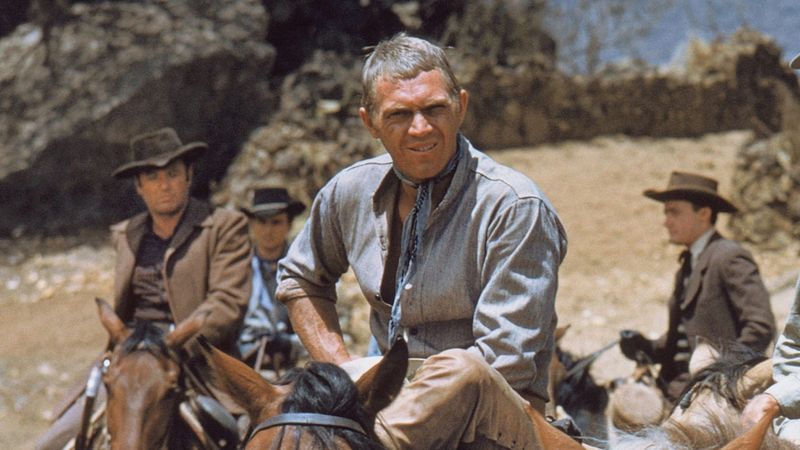
Steve McQueen earned the nickname “King of Cool” long before he became a major Hollywood star, and his Western roots played a big part in building that reputation. His TV role as bounty hunter Josh Randall in Wanted: Dead or Alive (1958-1961) made him a household name.
Then came The Magnificent Seven (1960), where he held his own alongside Yul Brynner and a cast of heavy hitters.
McQueen had a magnetic screen presence that made audiences feel like he was the coolest person in any room.
13. Gregory Peck
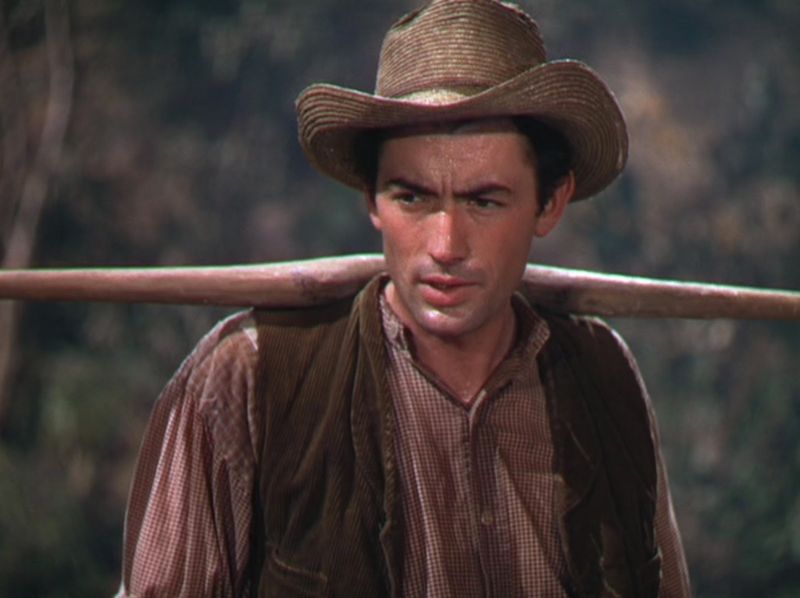
Gregory Peck brought a thoughtful, dignified quality to the Western genre that set him apart from flashier cowboy stars. He was not the type to brag or swagger – his characters carried a quiet weight that felt real.
In The Gunfighter (1950), Peck played a legendary outlaw desperate to leave his violent past behind, a role that was both emotionally complex and gripping.
His earlier work in Duel in the Sun (1946) showed he could handle passionate, conflicted characters just as skillfully in the frontier setting.
14. Richard Widmark
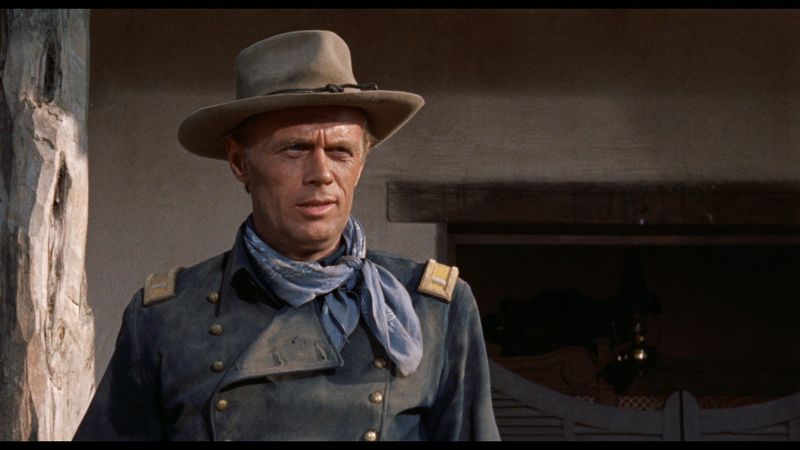
Richard Widmark was the kind of actor who kept you guessing. Whether he was playing a hero, a villain, or something in between, you could never quite predict what his character would do next, and that made him thrilling to watch.
He appeared in 19 Westerns from 1948 to 1988, starting strong with Yellow Sky (1948) and delivering standout performances in Broken Lance (1954) and Warlock (1959).
Widmark’s ability to play morally complicated characters gave the Western genre some of its most interesting and unpredictable moments.
15. Forrest Tucker
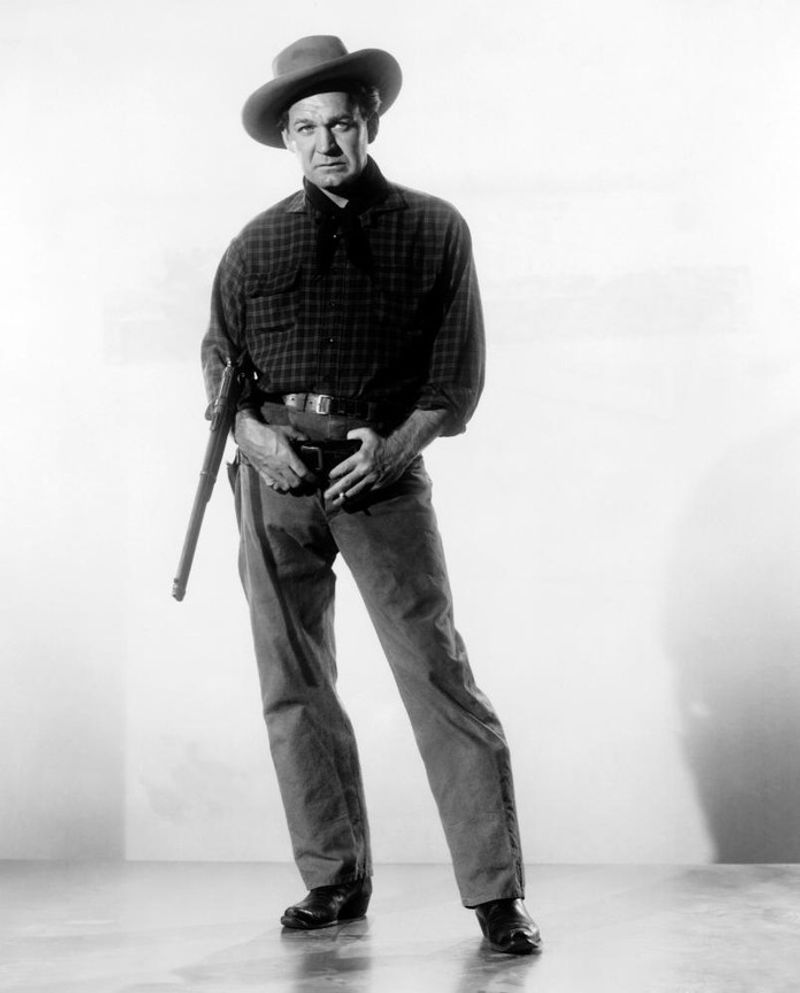
Forrest Tucker was a big, imposing presence who fit naturally into the world of Western films. His size and confident delivery made him convincing whether he was playing a tough hero or a menacing villain.
Tucker made his film debut in The Westerner (1940) starring Gary Cooper, and went on to appear in films like Coroner Creek (1948) and The Nevadan (1950).
Later generations know him best as the lovably scheming Sergeant O’Rourke in the TV comedy F Troop, showing his fun side.
16. Yul Brynner
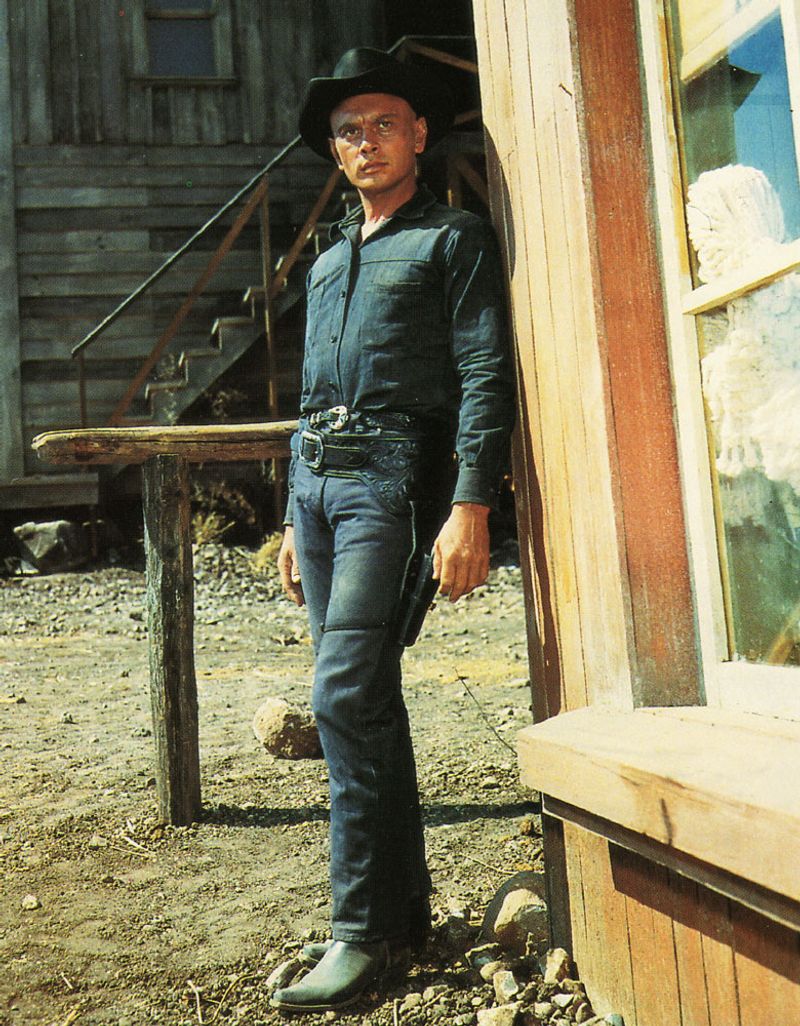
Yul Brynner walked onto the screen in The Magnificent Seven (1960) dressed all in black, and the audience immediately knew he was the one in charge. His commanding presence as Chris Adams, the leader of the hired gunfighters, became one of Western cinema’s most iconic images.
Brynner’s shaved head and piercing stare gave him an otherworldly authority that no other actor could quite replicate.
He returned to the Western genre in Villa Rides (1968) and Catlow (1971), continuing to bring that unforgettable intensity to the frontier.
17. Burt Lancaster
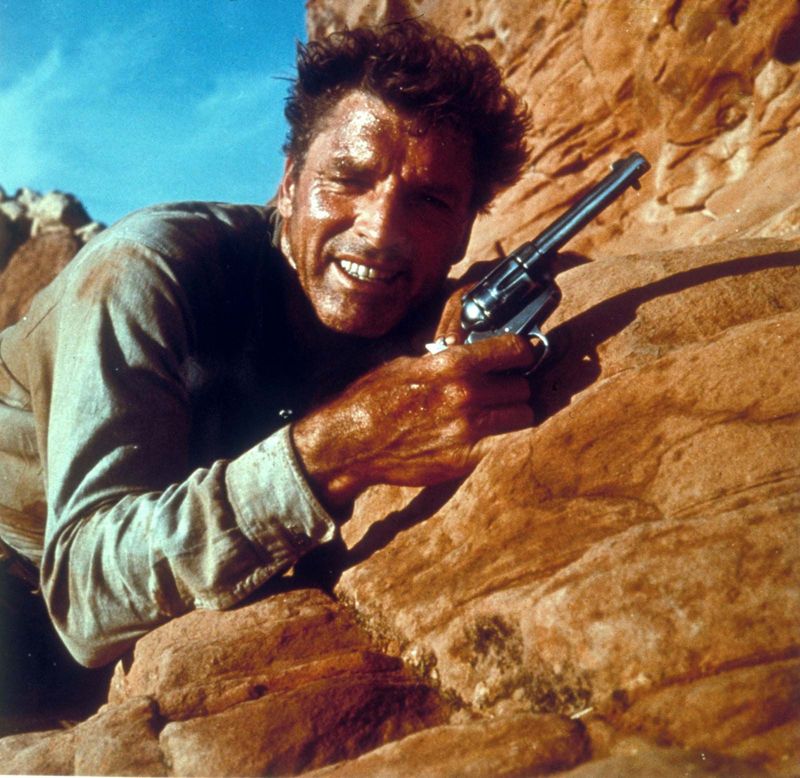
Burt Lancaster brought an athletic energy to the Western genre that was almost impossible to ignore. He moved with the grace of a former circus acrobat, which he actually was, and that physicality made his action scenes look effortless.
He co-starred with Gary Cooper in the adventurous Vera Cruz (1954) and played Apache leader Massai in Apache (1954) the same year.
His work in Gunfight at the O.K. Corral (1957) alongside Kirk Douglas gave audiences one of the era’s most exciting Western pairings.
18. Kirk Douglas
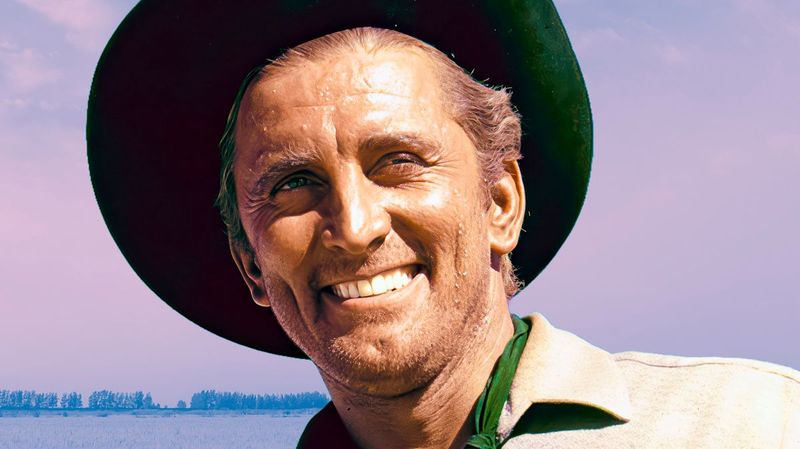
Kirk Douglas had a jaw like a steel trap and an intensity that lit up the screen in every genre he tackled, including the Western. His ambition and competitive nature made him one of Hollywood’s most driven leading men during the Golden Age.
He starred in Man Without a Star (1955) and played the memorable Doc Holliday in Gunfight at the O.K. Corral (1957) opposite Burt Lancaster.
Last Train from Gun Hill (1959) further cemented his status as a top-tier Western star of the era.
19. Joel McCrea
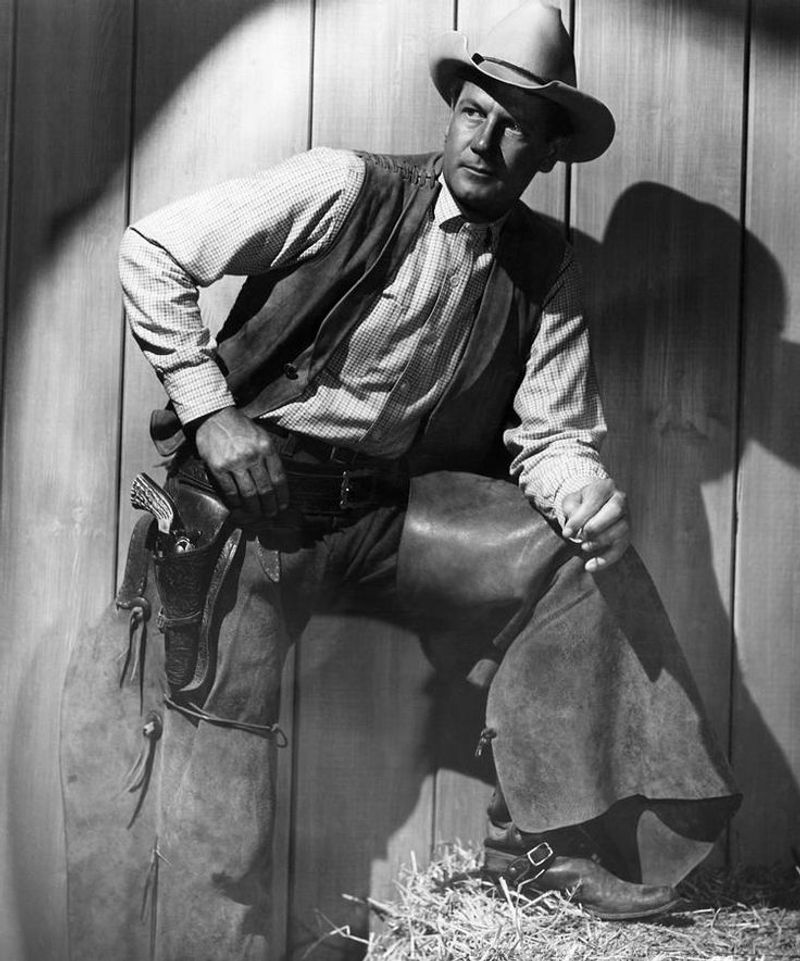
Joel McCrea dedicated himself to the Western genre more completely than almost any other serious actor of his generation. He had a quiet, understated style that felt honest and grounded, making his characters feel like real people rather than movie heroes.
His long list of Westerns includes Union Pacific (1939), Colorado Territory (1949), and The Virginian (1946).
McCrea once said he preferred Westerns to any other type of film, and that genuine love for the genre showed clearly in every performance he gave.
20. Audie Murphy
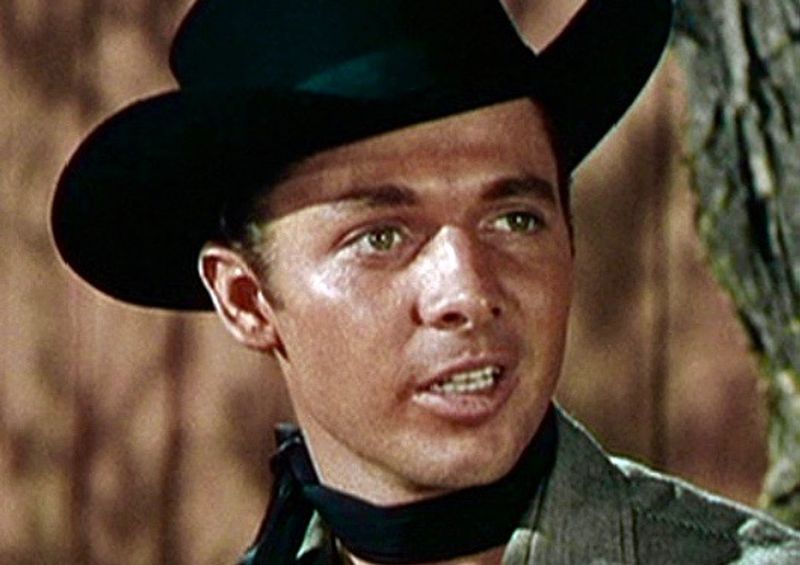
Audie Murphy’s life story was already more dramatic than any movie script before he ever set foot on a Hollywood set. As America’s most decorated World War II soldier, he brought a real-life heroism to his Western roles that audiences could feel.
Murphy starred in over 30 Western films, often playing fresh-faced heroes or conflicted anti-heroes. He portrayed Billy the Kid in The Kid from Texas (1950) and Jesse James in Kansas Raiders (1950).
His film No Name on the Bullet (1959) is still praised as one of his finest acting performances.