
Greek food is full of sunshine, olive oil, and recipes passed down through many generations. Every dish tells a story about family, islands, villages, and long meals shared with friends.
Trying these foods is one of the best ways to understand Greek culture without even leaving your kitchen. Grab a fork and get ready to discover the flavors that make Greece so special.
1. Moussaka, the Layered Legend
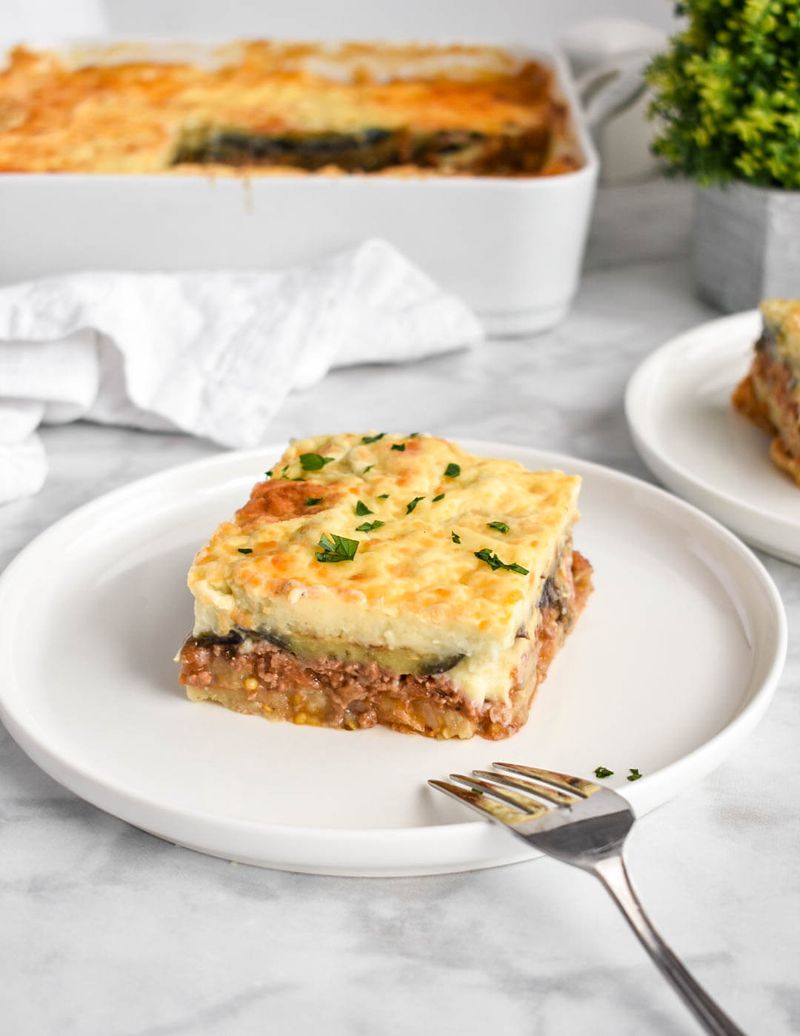
Picture a Greek grandma pulling a bubbling pan from the oven on Sunday. That is moussaka in its natural habitat.
Layers of soft eggplant, spiced ground meat, and fluffy bechamel sauce bake together until golden.
The modern version became famous in the 1920s thanks to chef Nikolaos Tselementes. Cinnamon gives the meat a warm, surprising flavor.
Tip: let it rest for twenty minutes before slicing so the layers hold their shape.
2. Souvlaki on a Stick
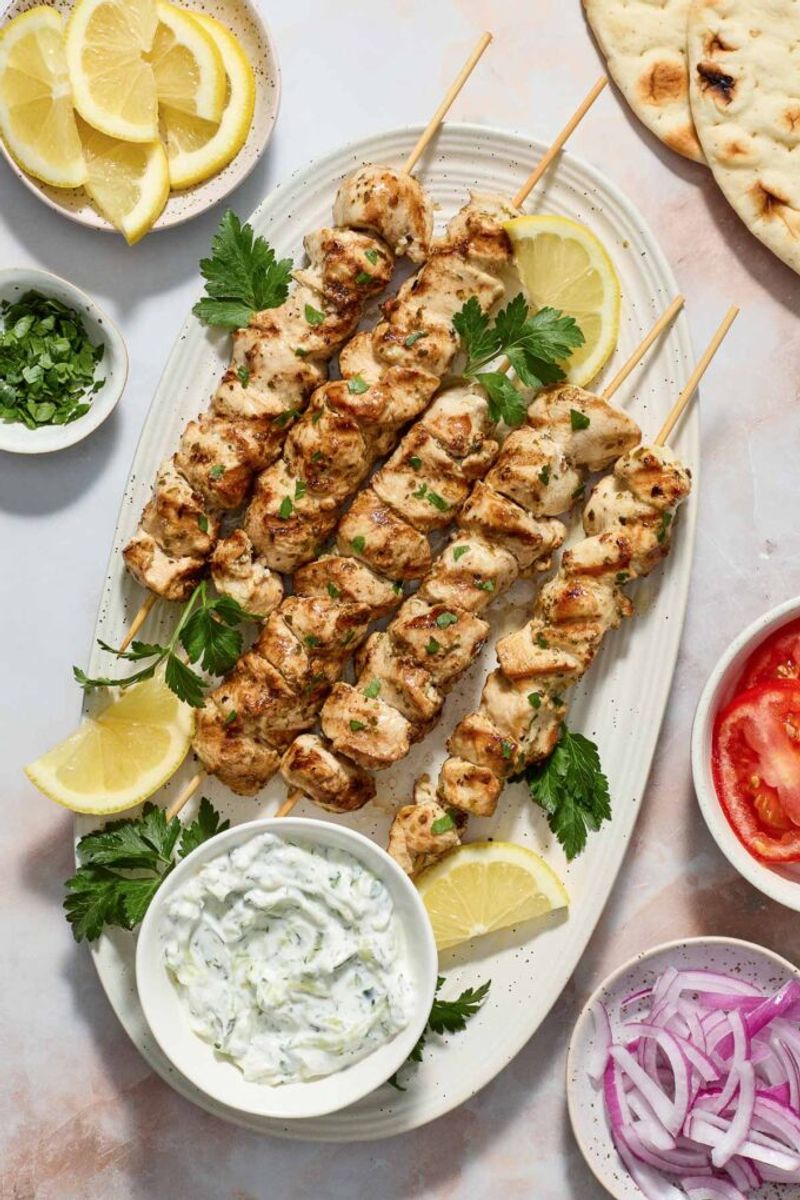
Ask any Athenian about their favorite quick bite, and souvlaki usually wins. Small chunks of pork or chicken are marinated in lemon, oregano, and olive oil, then grilled on skewers.
The name means little skewer, and the idea goes back to ancient Greece. Homer even described meat cooked on spits.
Order it wrapped in pita with tomato, onion, and fries tucked inside. It is cheap, filling, and perfect for eating while you explore.
3. Gyros Straight from the Spit
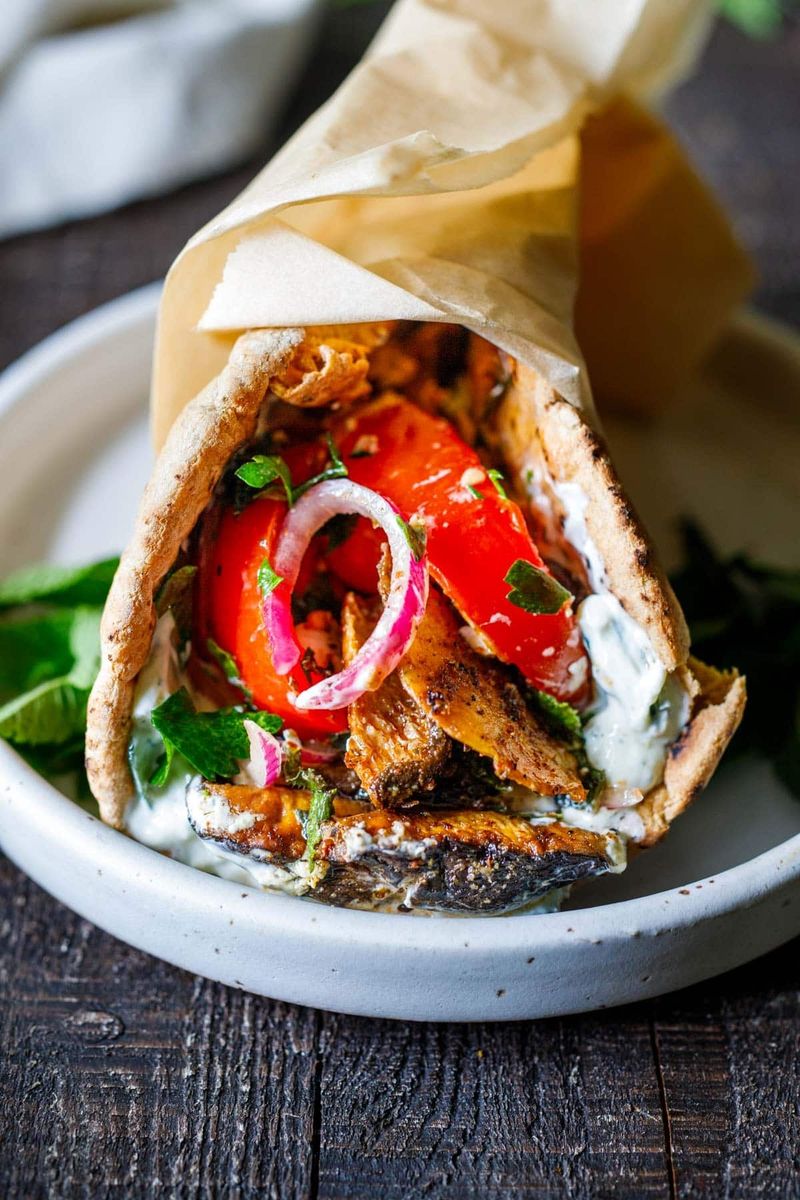
Thin, crispy slices shaved from a spinning tower of meat are hard to resist. Gyros comes from a Greek word meaning turn, which describes how the meat slowly rotates in front of the heat.
Greek immigrants from Asia Minor helped make it popular in the 1900s.
Most shops wrap it in warm pita with tzatziki and fries. Try it late at night, when locals line up for one after an evening out.
4. Spanakopita’s Flaky Charm
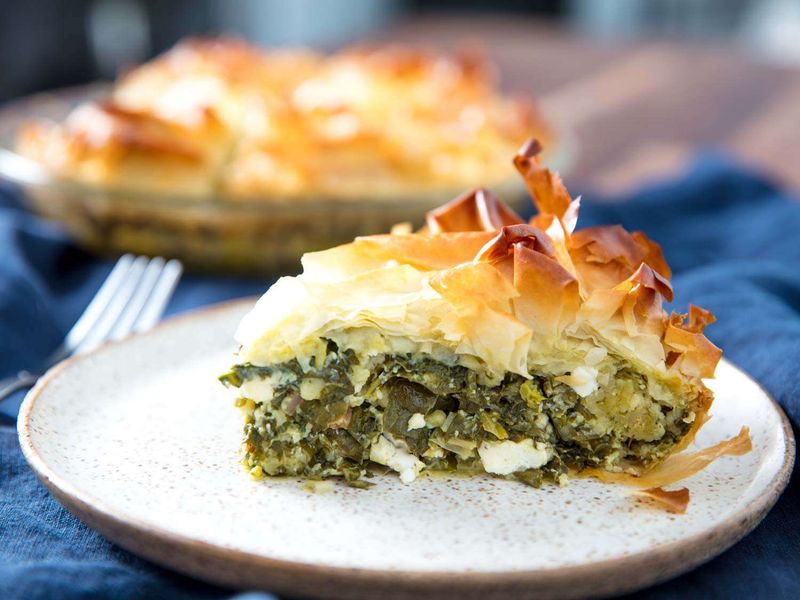
Crunch! That first bite of spanakopita breaks through paper-thin layers of phyllo dough.
Inside waits a soft filling of spinach, feta cheese, onions, and fresh herbs like dill.
Greek families bake it in big trays or fold it into small triangles for snacks.
Bakeries sell it warm in the morning, so it makes an easy breakfast. Brushing each phyllo sheet with olive oil is the secret to that golden, crackly top.
5. Horiatiki, the Real Greek Salad
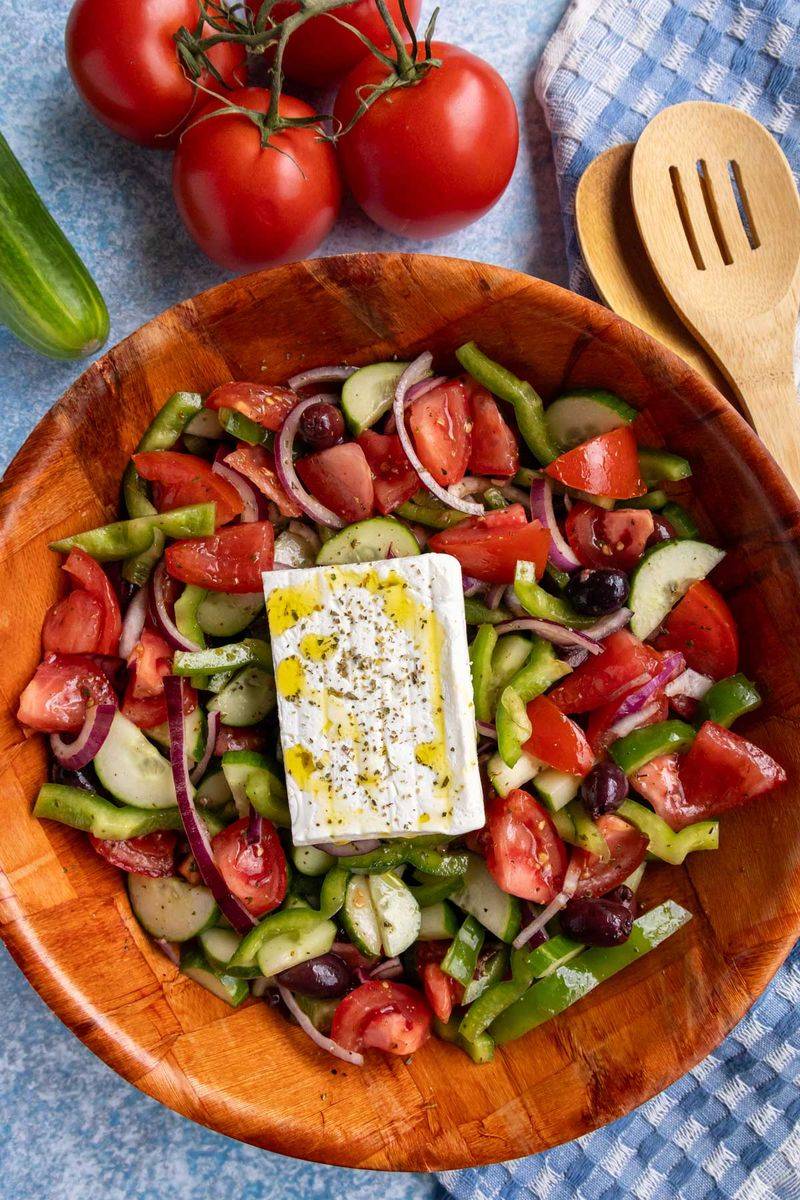
Forget lettuce. A true Greek village salad has none at all.
Juicy tomatoes, cucumbers, onions, green peppers, and olives get topped with one thick slice of feta.
Olive oil and a sprinkle of dried oregano finish it off.
Here is a local habit worth copying: save some bread to soak up the juices left at the bottom of the bowl. Greeks call it papara, and it might be the tastiest part.
6. Cool and Creamy Tzatziki
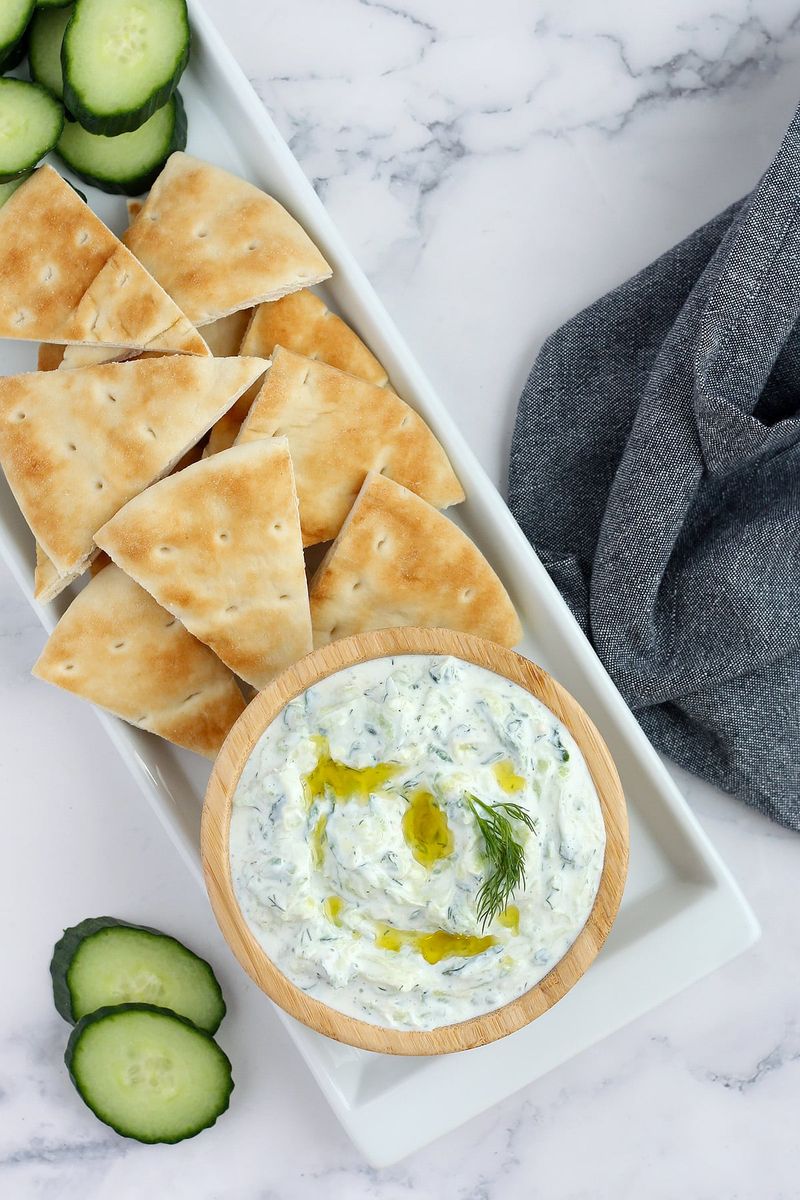
On a scorching summer day, nothing cools you down like a spoonful of tzatziki. This thick dip mixes strained yogurt, grated cucumber, garlic, olive oil, and a splash of vinegar.
Squeeze the water out of the cucumber first, or the dip gets runny.
Greeks serve it with grilled meat, fried vegetables, or plain bread. Fair warning, though.
The garlic can be strong, so maybe skip it before a big date!
7. Dolmades Wrapped with Care
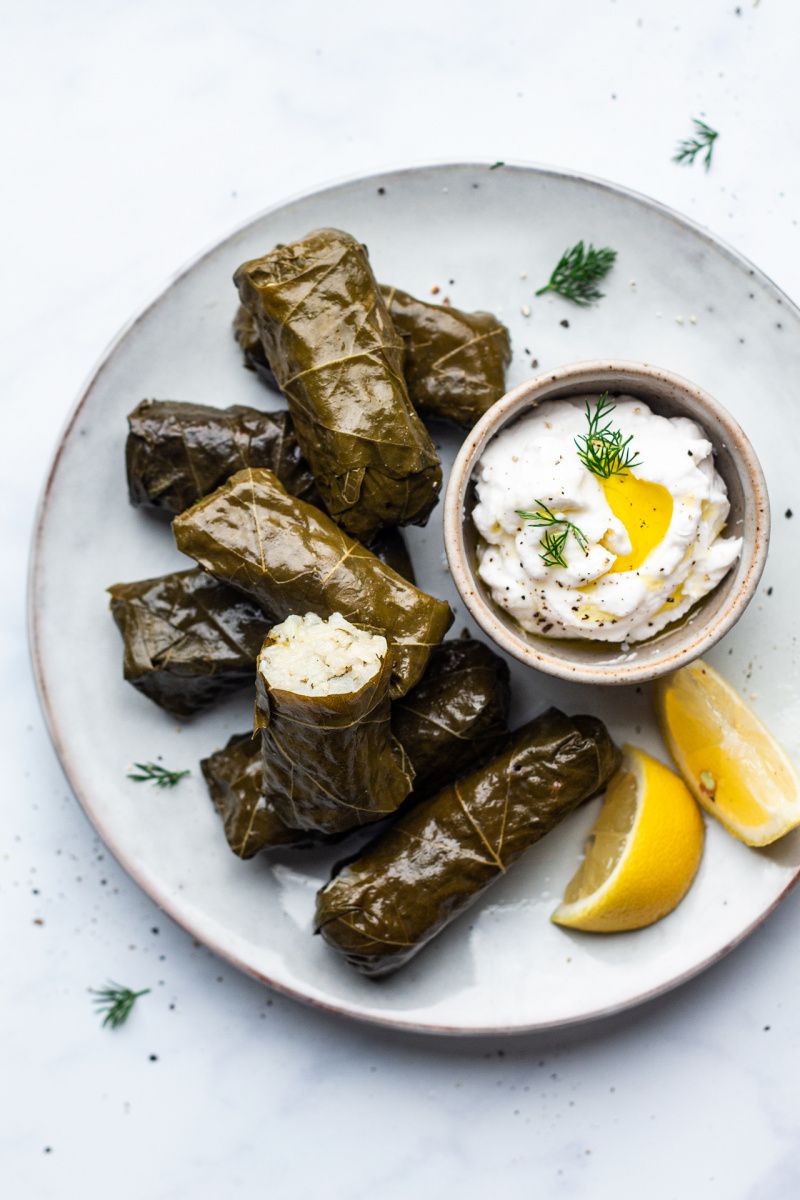
Rolling dolmades is a family job in many Greek homes, with aunts and cousins chatting while their hands stay busy. Grape leaves are stuffed with rice, herbs, and sometimes meat, then rolled into neat little bundles.
They simmer slowly in lemony broth.
Meatless versions are usually served cold as an appetizer. Warm ones with meat often come with a silky egg and lemon sauce called avgolemono.
Both are worth tasting.
8. Pastitsio, Greece’s Answer to Lasagna
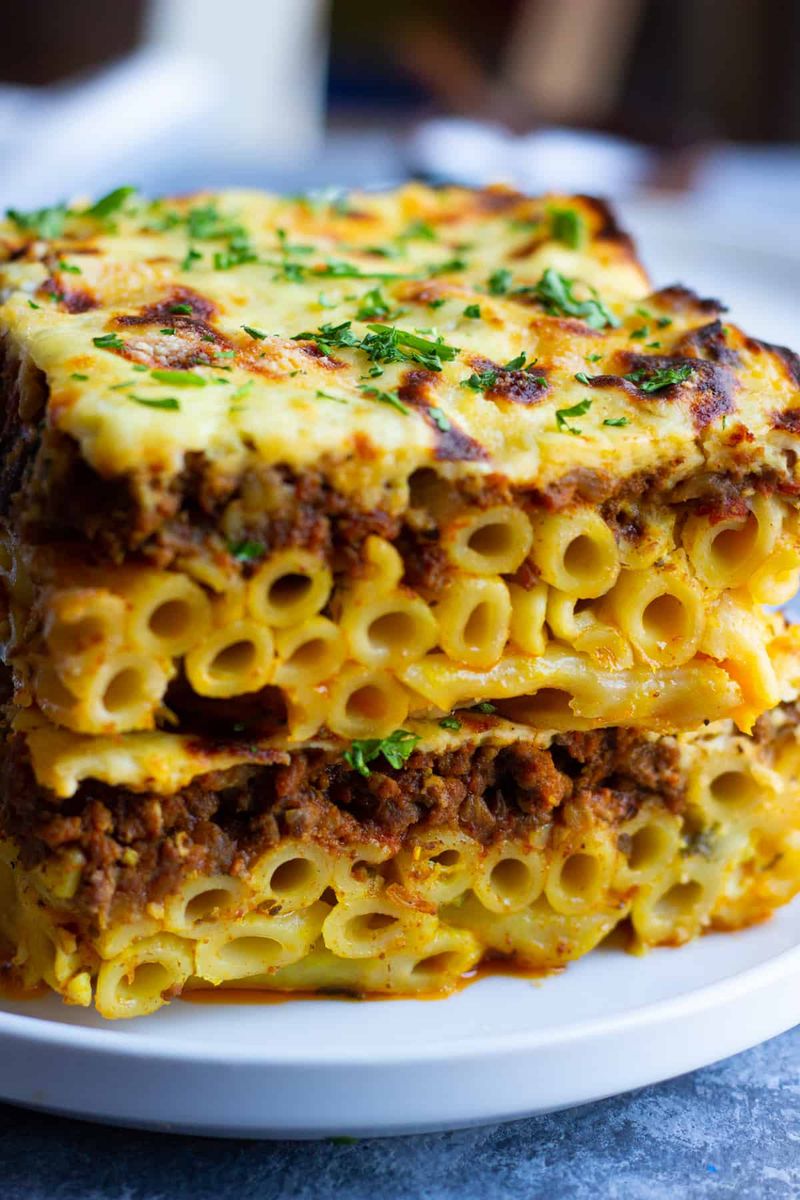
Some people call it Greek lasagna, but pastitsio has its own personality. Long, hollow pasta tubes sit underneath a cinnamon-spiced meat sauce.
A thick blanket of creamy bechamel goes on top.
After baking, the whole thing slices into tall, tidy squares.
This dish is a favorite at holidays and big family gatherings. Leftovers taste even better the next day, so cooking a full tray is never a bad idea.
9. Sticky, Sweet Baklava
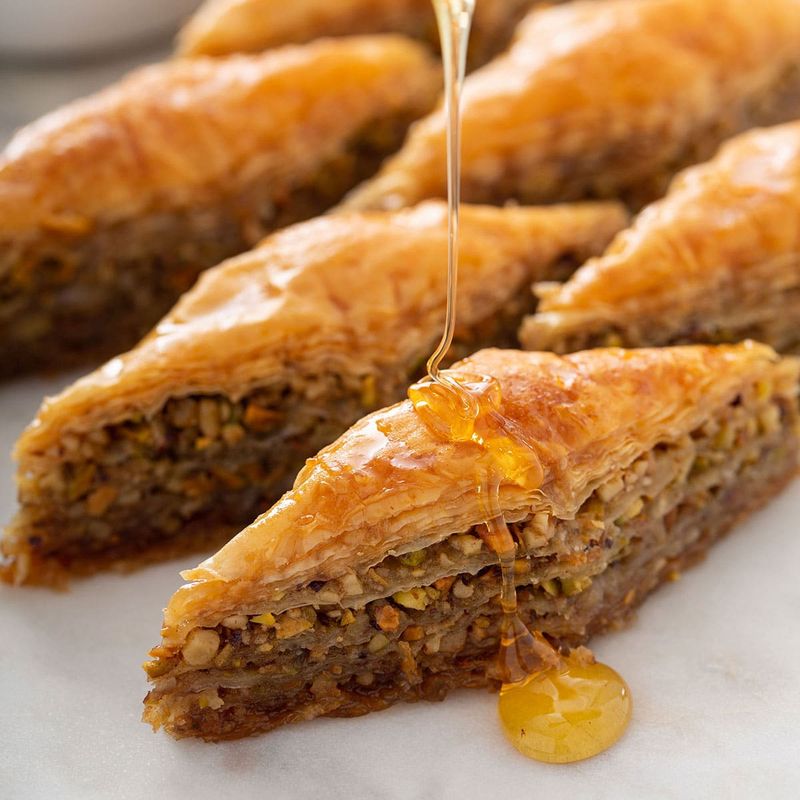
Honey drips down your fingers, and you will not even care. Baklava stacks dozens of thin phyllo sheets with chopped walnuts or pistachios, then soaks everything in a sweet syrup.
Cinnamon and cloves add a cozy spice.
Several countries claim baklava, and the Greek version often uses walnuts and honey. One small piece goes a long way because it is very rich.
Pair it with strong coffee to balance the sweetness.
10. Loukoumades, Little Honey Puffs

Did you know these golden bites may be one of the oldest desserts in the world? Ancient Olympic winners were reportedly rewarded with fried dough balls covered in honey.
Today, loukoumades are crispy outside and fluffy inside.
Shops drizzle them with honey, then add cinnamon, walnuts, or even chocolate. Eat them hot, right after they come out of the fryer.
Waiting too long makes them lose their crunch.
11. Galaktoboureko’s Custard Comfort
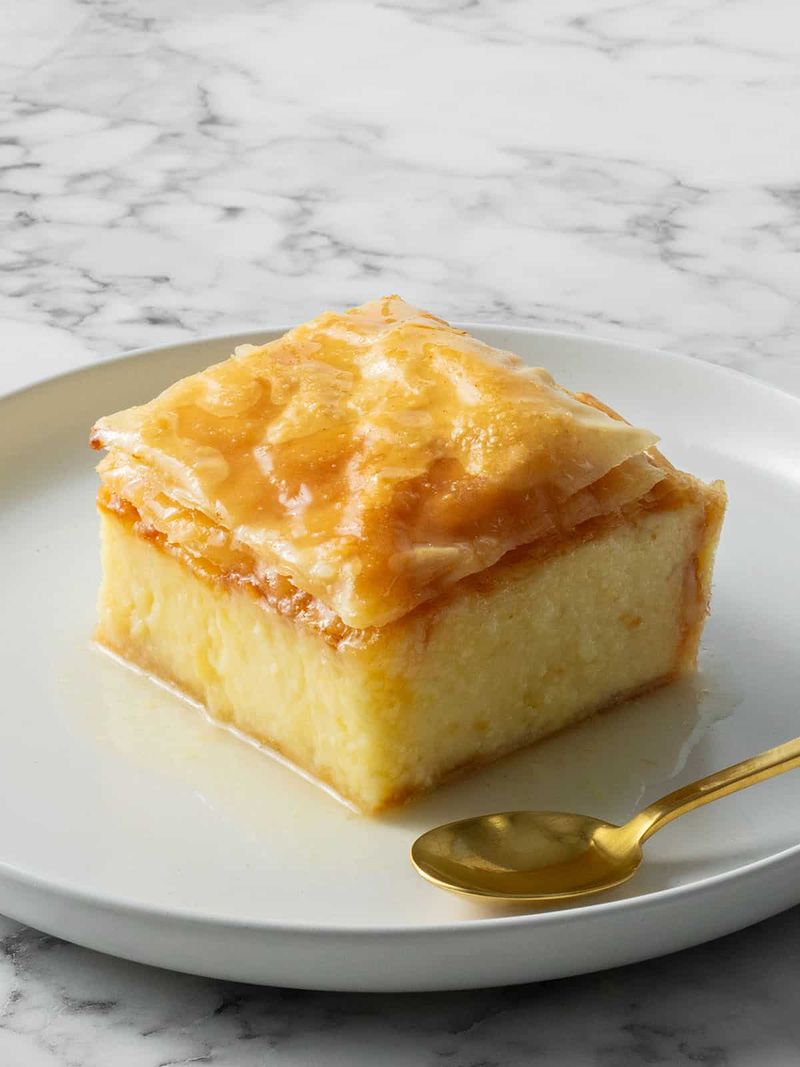
Imagine a warm vanilla pudding hiding inside crispy pastry. Galaktoboureko is exactly that.
Creamy semolina custard sits between golden phyllo sheets, and a lemony syrup gets poured over the top.
The name roughly means milk pastry.
Many Greeks have fond memories of grandparents buying a piece from the neighborhood sweet shop. Try it slightly warm, when the custard is soft and the top still crackles under your spoon.
12. Fasolada, the National Soup
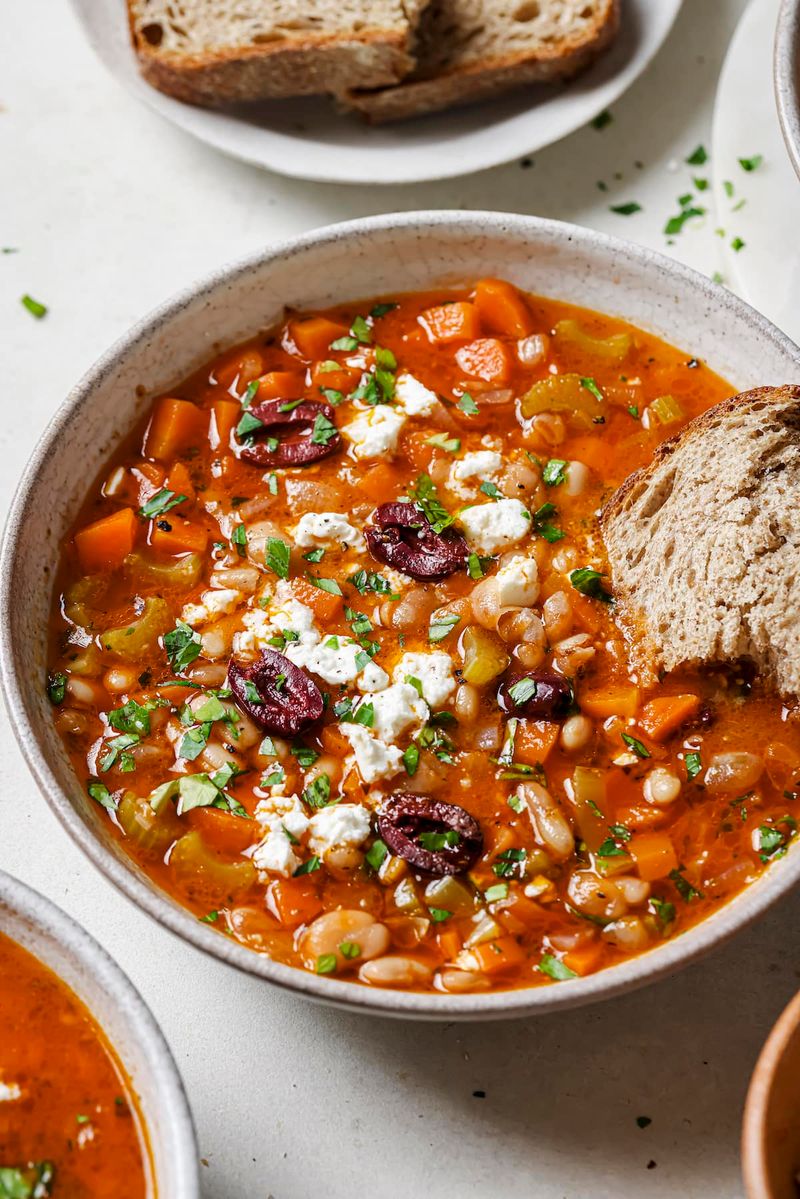
Humble beans might not sound exciting, yet fasolada is often called the national dish of Greece. White beans simmer slowly with tomatoes, carrots, celery, and plenty of olive oil.
The result is thick, hearty, and very filling.
Greek families have eaten it for generations, especially during cold winter months and fasting periods. Serve it with crusty bread, olives, and a little feta.
It is cheap, healthy, and easy to make at home.
13. Grilled Octopus by the Sea
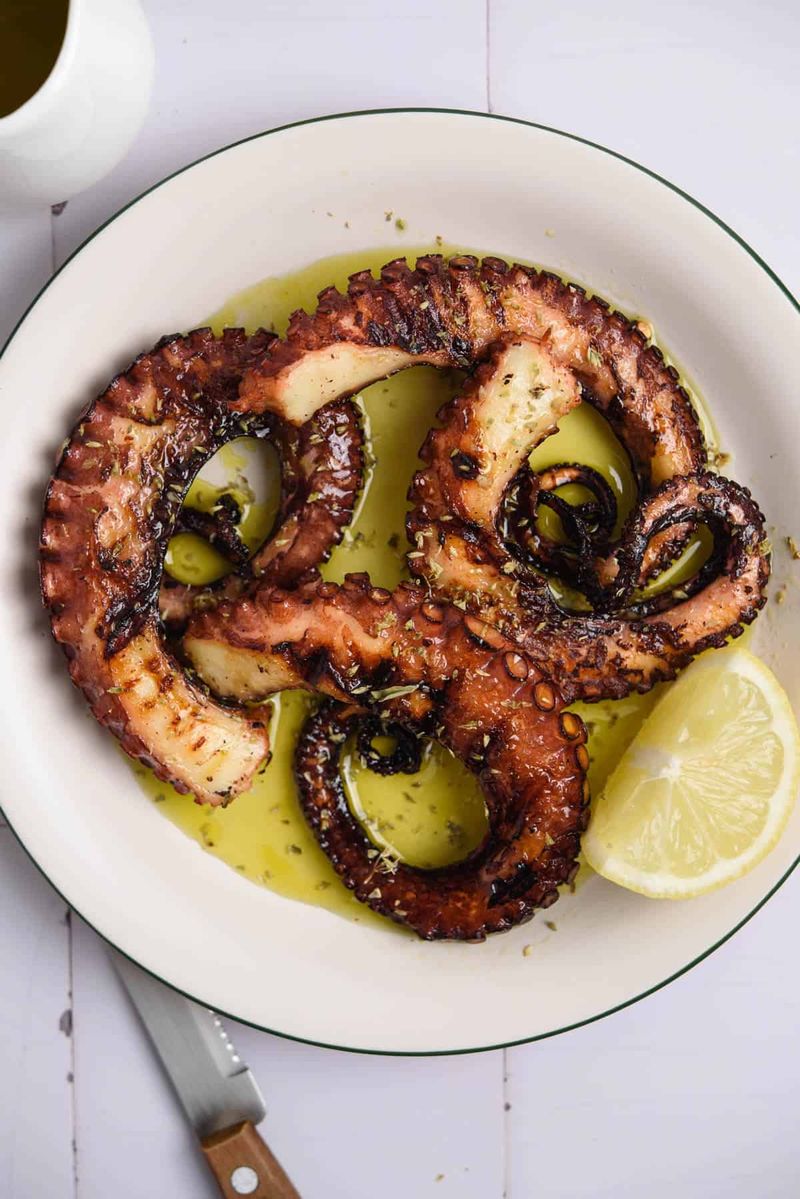
Walk past a fishing harbor on a Greek island and you might spot octopus hanging on a line, drying in the sun. Fishermen do this to make the meat tender before grilling.
Charred over coals, it turns smoky and soft.
A splash of vinegar, olive oil, and oregano is all it needs. Order it at a seaside taverna with your feet almost in the water.
That view makes it taste even better.
14. Saganaki That Sizzles

Cheese, fried until golden. Honestly, what more do you need?
Saganaki is named after the small pan it is cooked in. Firm cheeses like kefalograviera or kasseri work best.
The outside gets crispy while the inside turns gooey.
Some restaurants in America light it on fire and shout opa, but in Greece it usually arrives simply with lemon. Squeeze the lemon over it right away and eat it hot.
15. Kleftiko, the Outlaw’s Lamb
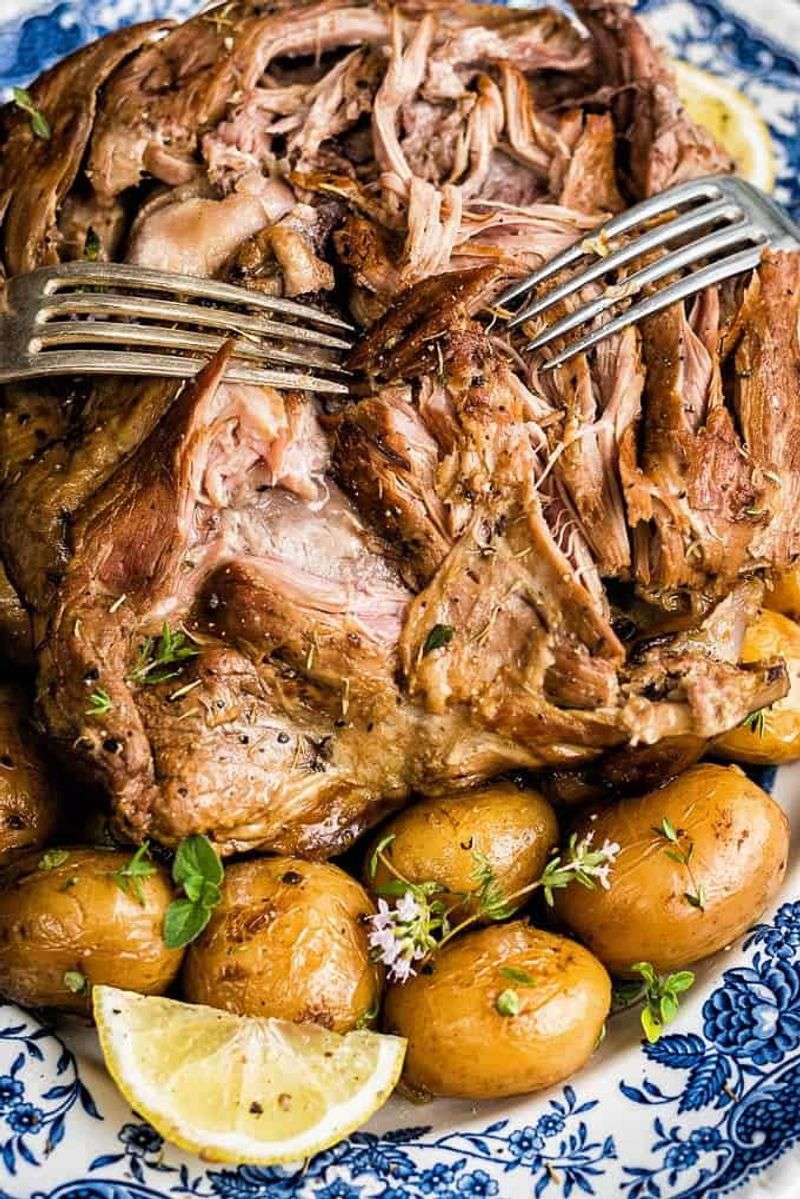
Legend says Greek rebels called klephts cooked lamb in sealed pits so the smoke would not reveal their hiding spots. That sneaky trick created kleftiko.
Today, lamb is wrapped in parchment with garlic, lemon, potatoes, and herbs.
It bakes slowly for hours until the meat falls right off the bone. Opening the paper package at the table releases an amazing smell.
Bring plenty of bread for the juices.
16. Avgolemono Soup for the Soul
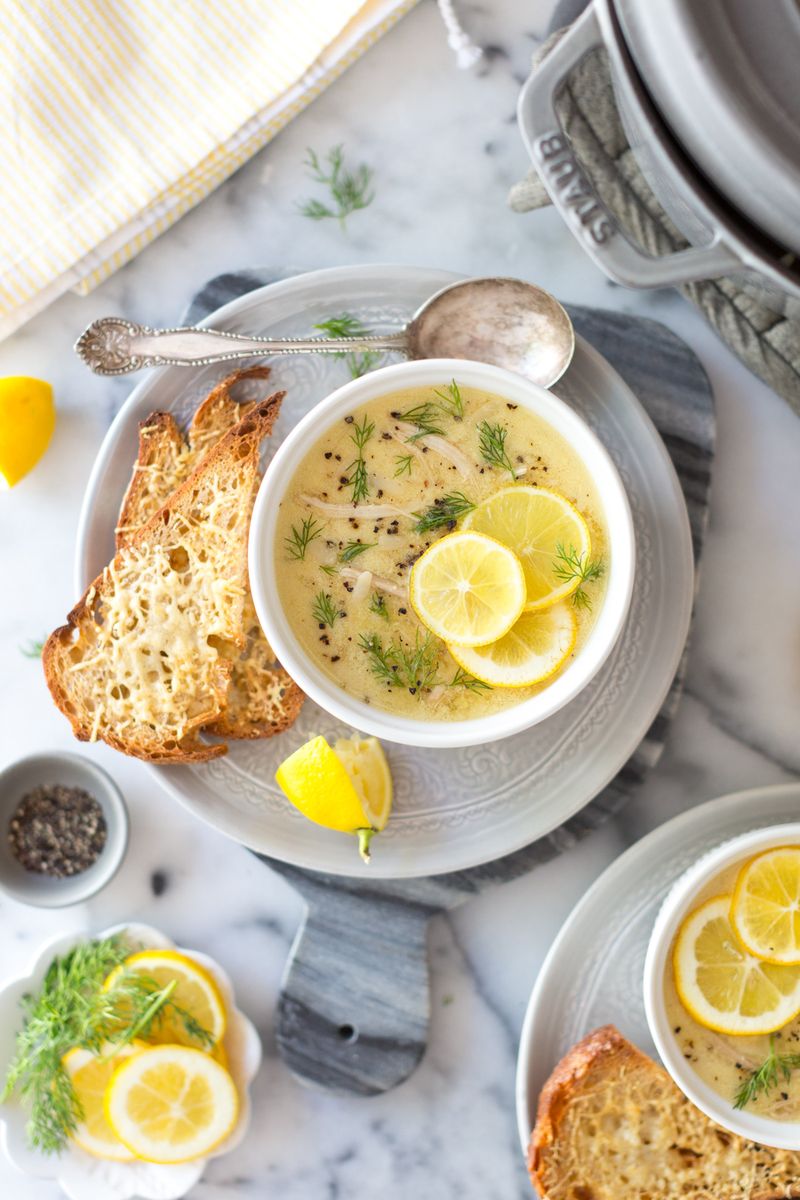
Feeling under the weather? Many Greek parents would hand you a bowl of avgolemono.
Chicken broth and rice get turned silky with a mixture of eggs and lemon juice.
The tangy, creamy taste is gentle on the stomach.
The trick is adding warm broth to the eggs slowly so they do not scramble. It takes patience, but the result is smooth and bright.
Some families also make it with fish.
17. Gemista, Veggies with a Secret
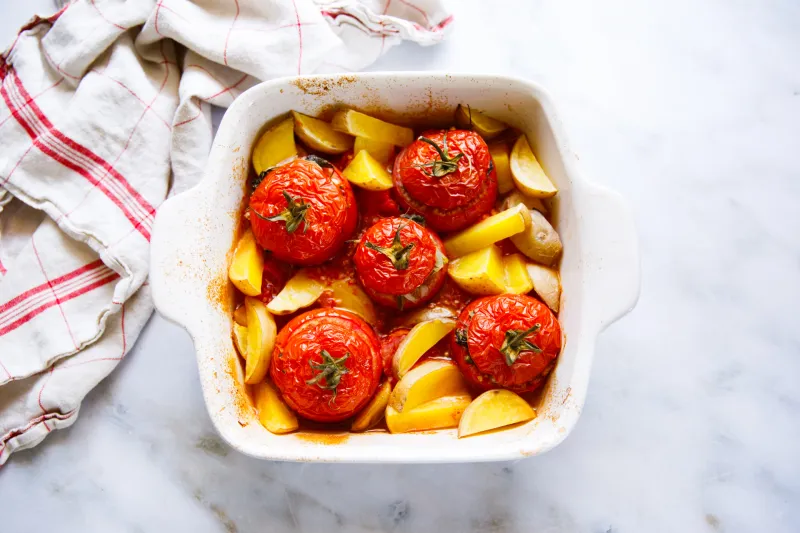
Summer gardens in Greece overflow with tomatoes and peppers, so cooks found a clever use for them. Gemista means stuffed, and these vegetables get filled with rice, herbs, and sometimes meat.
Potato wedges usually bake alongside them.
The tomato tops are saved and placed back on like little hats. After roasting, everything becomes sweet and juicy.
Gemista tastes great at room temperature, making it a perfect picnic dish.
18. Bougatsa for Breakfast
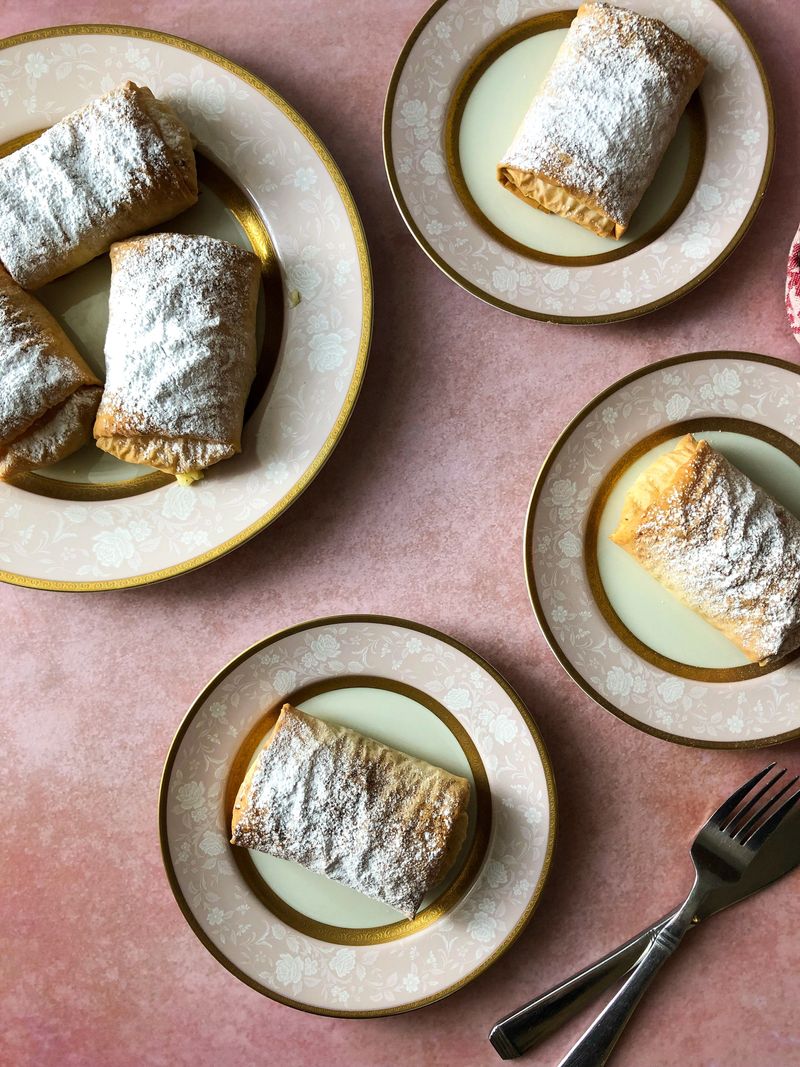
Thessaloniki locals start their mornings with bougatsa, and they take it seriously. Flaky phyllo is wrapped around sweet semolina custard, cheese, or even meat.
Bakers cut it into small squares right in front of you.
The sweet version comes dusted with powdered sugar and cinnamon. Visit an old bakery early, when trays are fresh from the oven.
Pair it with a cold coffee, just like the regulars do.
19. Greek Coffee, Slow and Strong

Rushing is not allowed here. Greek coffee is brewed in a small pot called a briki, and the finely ground beans stay right in the cup.
A good one has a thick layer of foam on top.
Order it plain, medium sweet, or sweet. Sip slowly and stop before reaching the muddy grounds at the bottom.
Some grandmothers even read fortunes in them! It is about chatting, not caffeine.