
There is something almost magical about stepping into a French boulangerie on holiday. The warm smell of buttery pastries and fresh bread hits you the moment you open the door, and suddenly your diet feels very far away.
Britons visiting France often find themselves returning to the same bakery every morning, unable to choose just one treat. From flaky croissants to custard-filled eclairs, French bakeries offer an irresistible world of flavour that is hard to leave behind.
1. Croissant
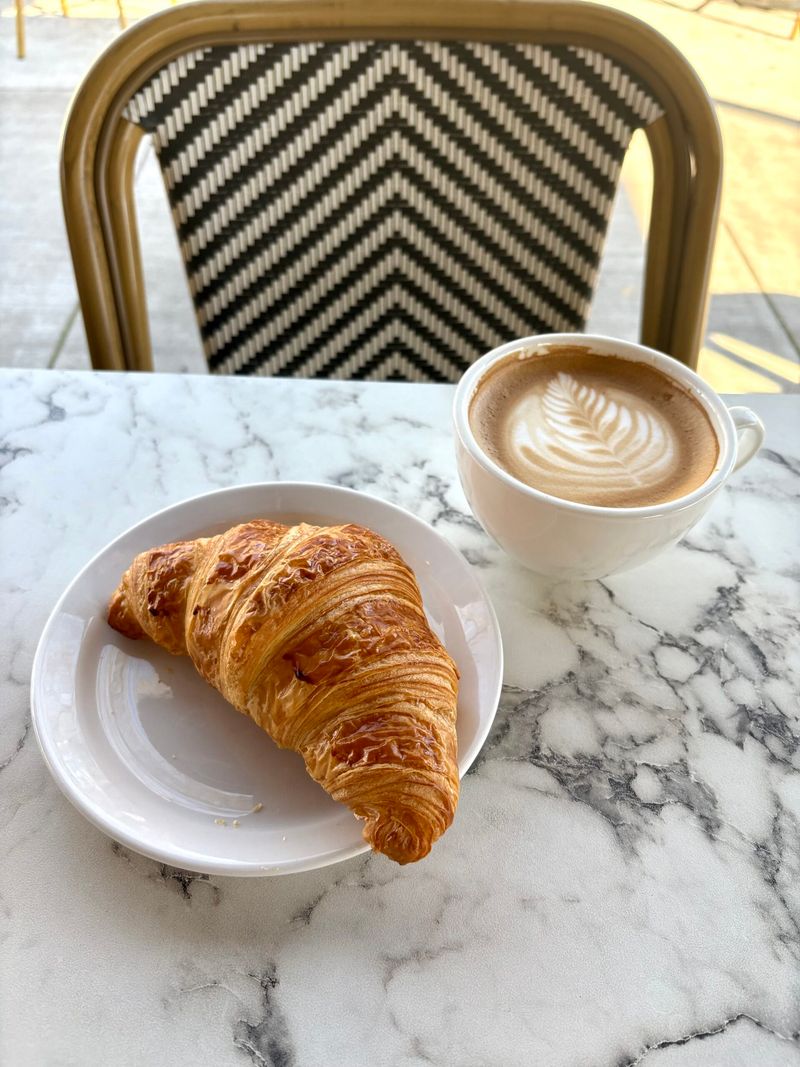
Ask any Brit what they ate every morning in France, and the answer is almost always the same: croissants. These buttery, crescent-shaped pastries are made with layers of folded dough that shatter beautifully with every bite.
French bakeries take real pride in their croissants, using high-quality butter that gives them a rich, almost nutty flavour. Nothing from a British supermarket comes close.
Enjoying one warm from the oven at a pavement cafe is one of life’s simple pleasures.
2. Pain au Chocolat
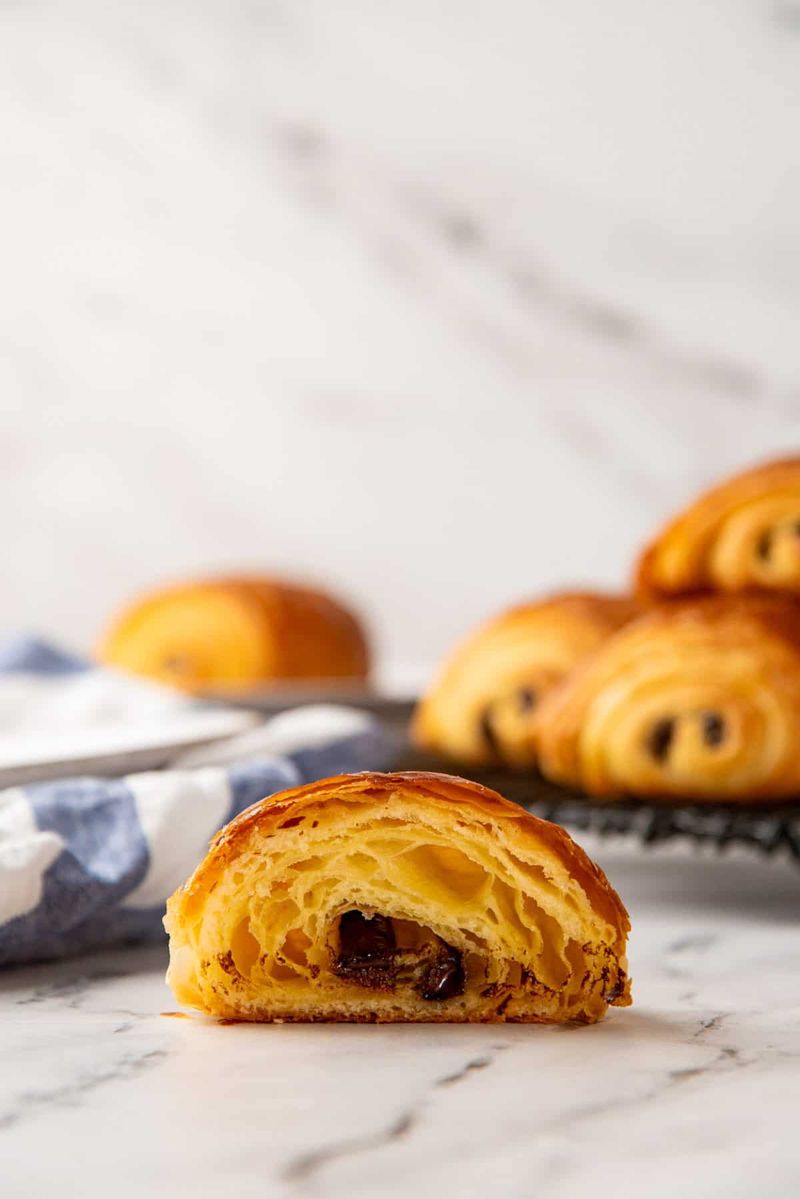
Chocolate wrapped in buttery pastry is a combination that is almost impossible to argue with. Pain au chocolat is the croissant’s richer, more indulgent sibling, and Britons on holiday tend to eat far more of them than they planned to.
The chocolate inside melts slightly when the pastry is fresh from the oven, creating a gooey, satisfying centre. French bakers use dark chocolate sticks called batons, which give a slightly bitter contrast to the sweet, flaky dough surrounding them.
3. Eclair
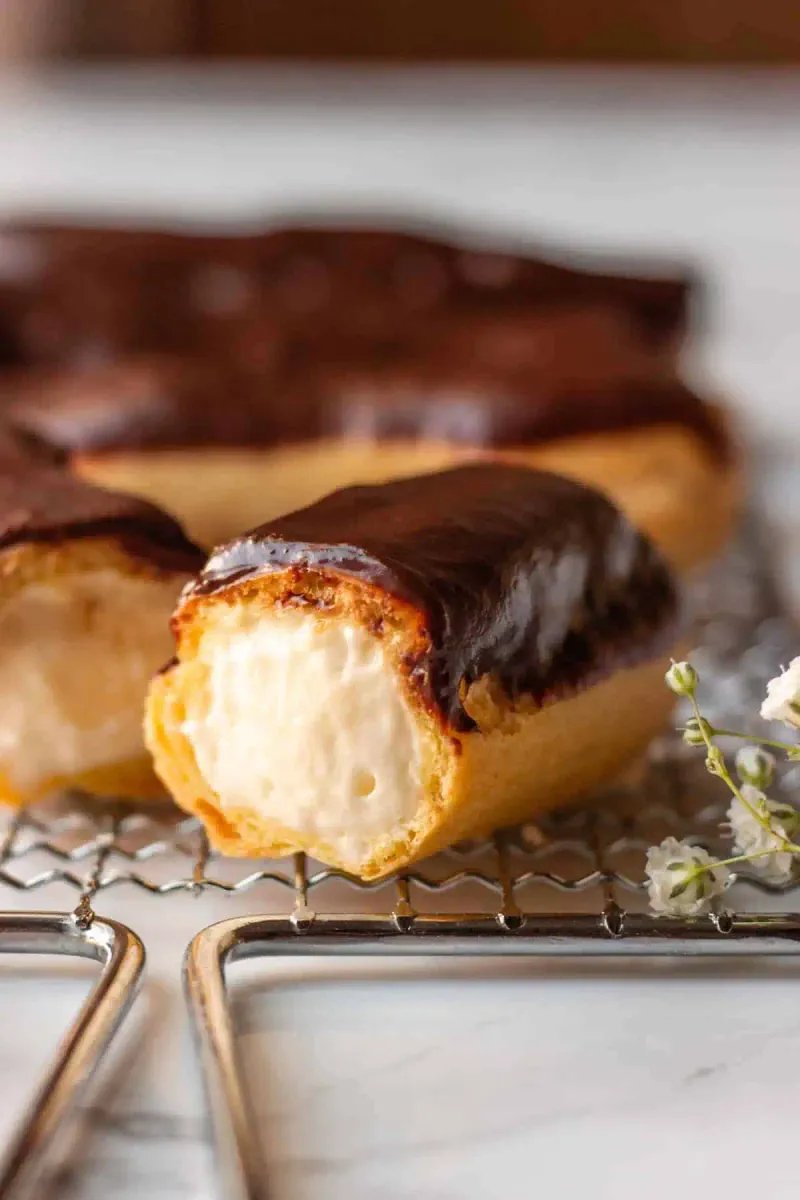
Long, elegant, and completely over the top in the best possible way, the eclair is a French patisserie icon. Choux pastry is piped into a finger shape, baked until hollow, then filled with thick creme patissiere and topped with glossy icing.
Chocolate is the classic flavour, but French bakeries often offer coffee and caramel versions too. Britons frequently buy one, eat it on the street before reaching the car, and then go straight back for another without a hint of guilt.
4. Tarte Tatin
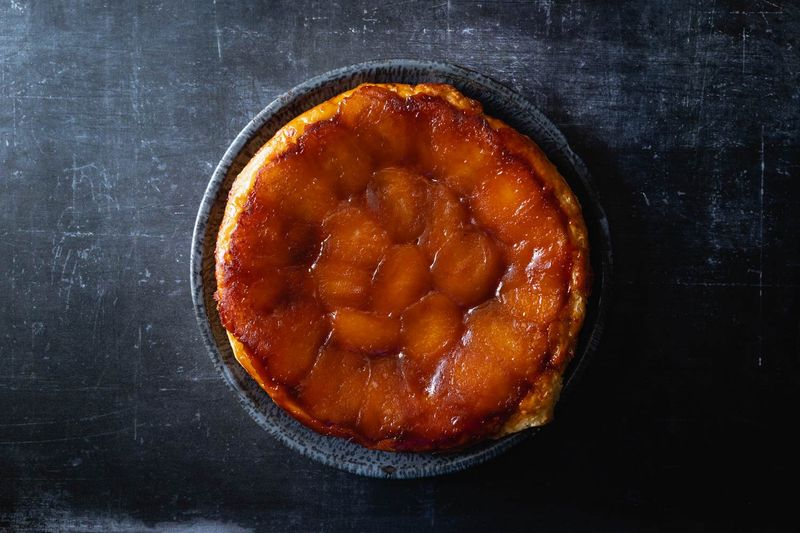
Legend has it that tarte tatin was invented by accident when a French hotelier forgot to line the tin before adding her apples. The result was an upside-down caramelised apple tart that became one of France’s most beloved desserts.
The apples are cooked slowly in butter and sugar until deeply golden, then baked beneath a layer of short pastry. Served warm with a spoonful of creme fraiche, it is the kind of dessert that makes you want to cancel your flight home.
5. Macaron
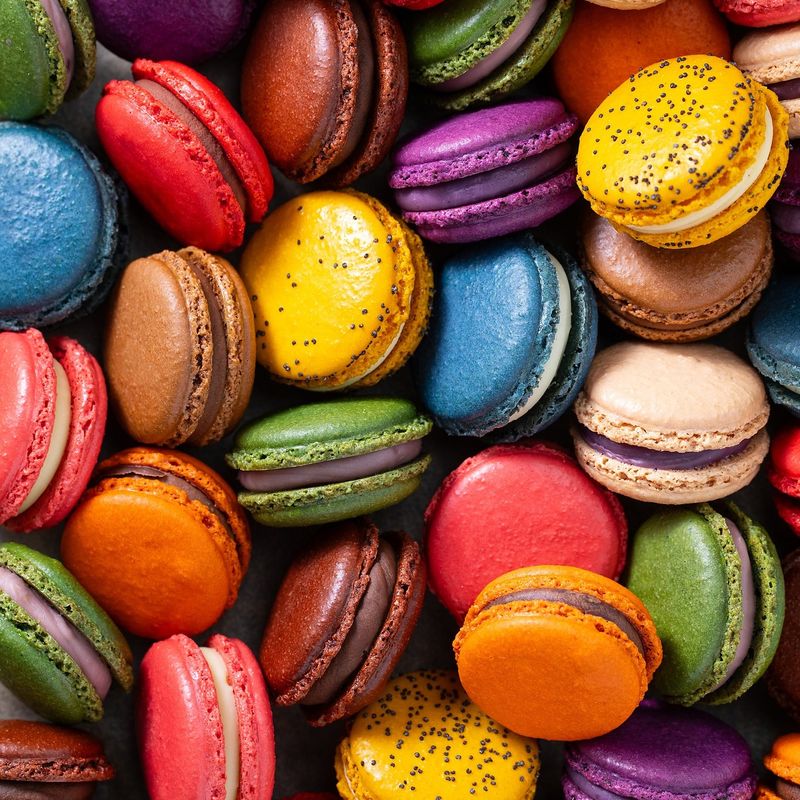
Macarons look almost too pretty to eat, which is exactly why Britons spend so long photographing them before finally giving in. Two delicate almond meringue shells sandwich a layer of ganache, buttercream, or jam in flavours ranging from raspberry to salted caramel.
Getting the texture right is notoriously tricky, which is why a proper French macaron tastes so different from imitations sold elsewhere. The shell should have a slight crunch that gives way to a chewy, moist interior.
Pure edible art.
6. Mille-Feuille
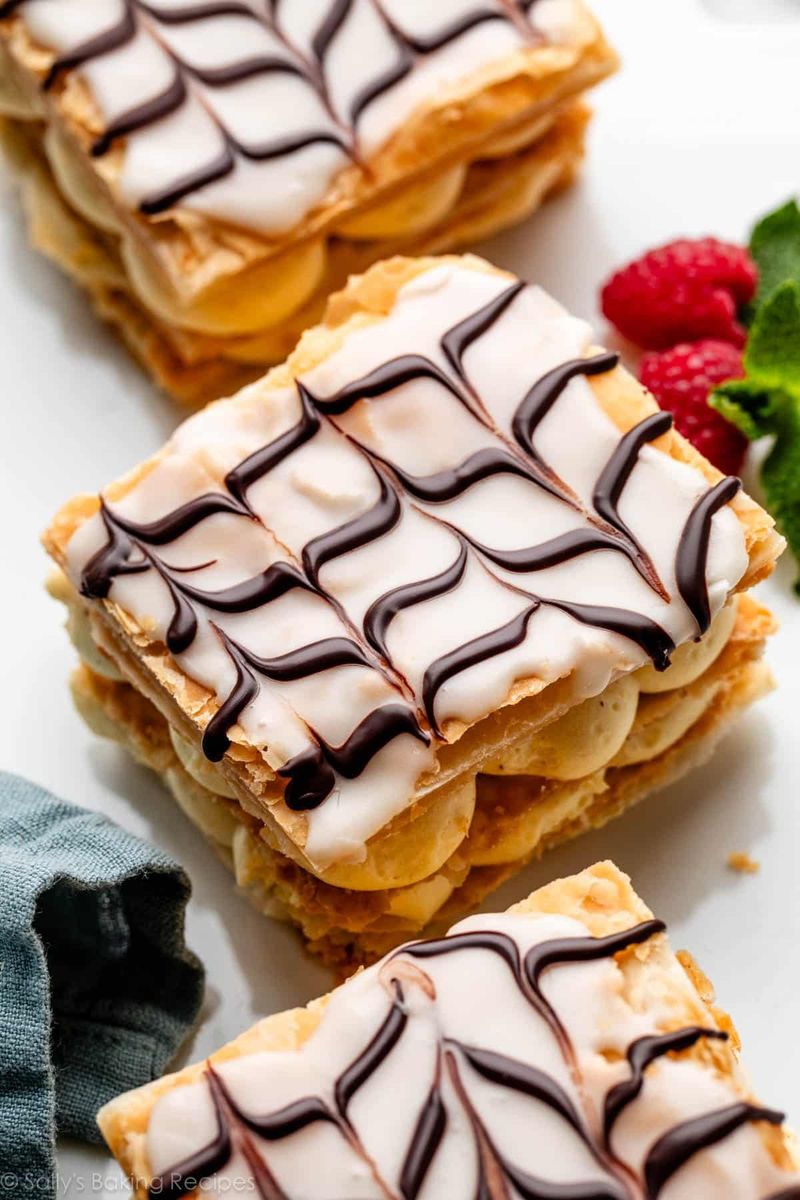
Mille-feuille translates to “a thousand leaves,” which gives you a sense of just how many layers of puff pastry are involved. Sandwiched between those crispy layers is a generous filling of vanilla creme patissiere, with a decorative iced top that looks almost architectural.
Eating one neatly is nearly impossible, and most Britons end up with cream on their chin within seconds. That is part of the charm.
French patisseries often display them in glass cabinets like edible jewellery, making them very hard to walk past.
7. Baguette
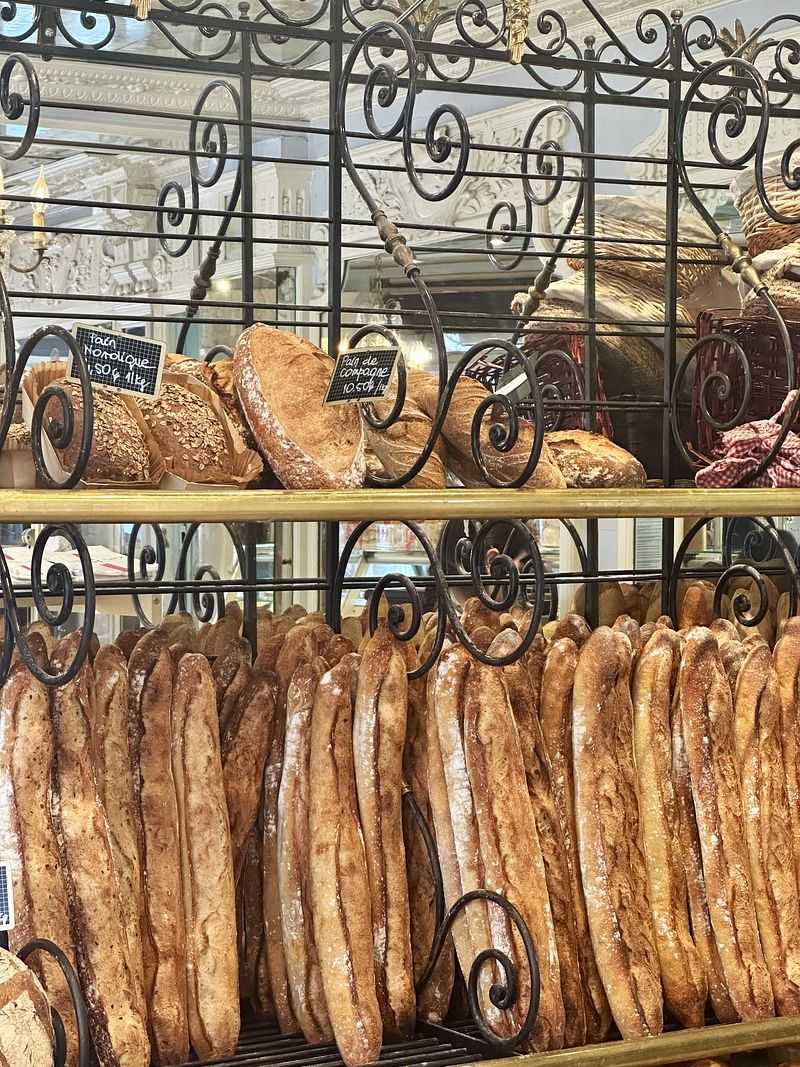
No trip to France feels complete without buying a baguette from a local boulangerie. The crust crackles when you squeeze it, the inside is soft and chewy, and the smell alone is enough to make you hungry even if you have just eaten.
Britons often buy one to take back to a gite or holiday apartment, though it rarely survives the walk home intact. Breaking off a chunk and eating it plain, still warm, is one of those simple holiday joys that sticks with you long after returning home.
8. Religieuse
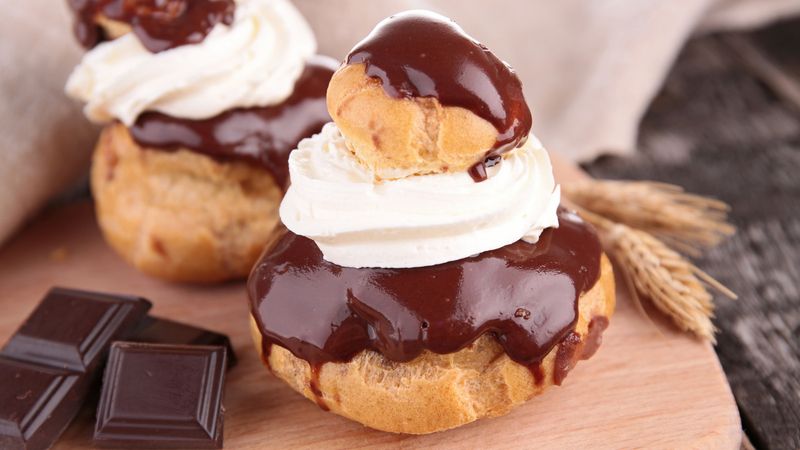
Shaped like a little nun in a habit, the religieuse is a choux pastry creation that is both whimsical and wonderfully indulgent. Two cream-filled choux buns are stacked on top of each other, then decorated with fondant icing and a piped collar of buttercream.
Chocolate and coffee are the most popular flavours, though some bakeries get creative with seasonal variations. Many Britons discover this pastry by accident, drawn in by its unusual shape and leaving completely converted.
It is a proper patisserie showstopper in a compact form.
9. Financier
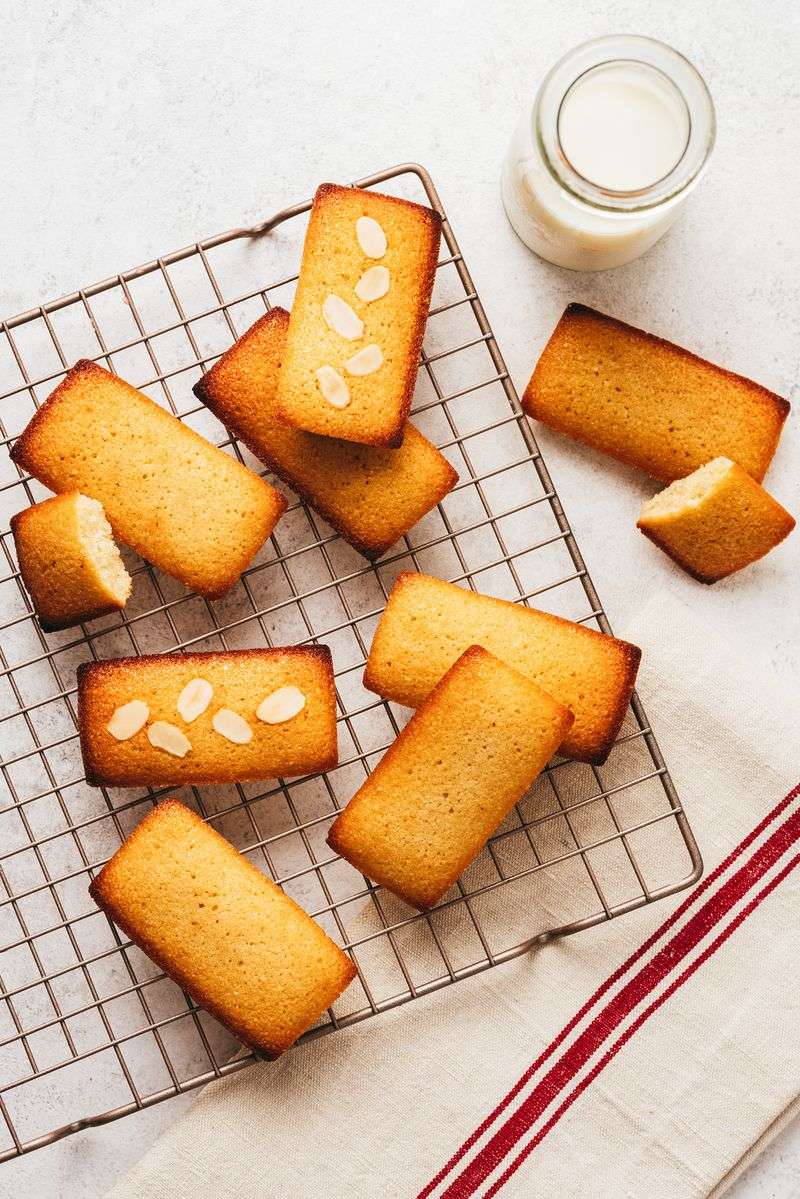
Financiers are small, golden cakes with a crispy outer shell and a moist, nutty interior made from brown butter and almond flour. They are named after the financial district of Paris, where they were reportedly sold to busy bankers who could eat them without dirtying their suits.
Britons often buy a bag of them as a snack and end up eating the whole lot before reaching the next street corner. They pair wonderfully with coffee and are far more satisfying than they look at first glance.
10. Kouign-Amann
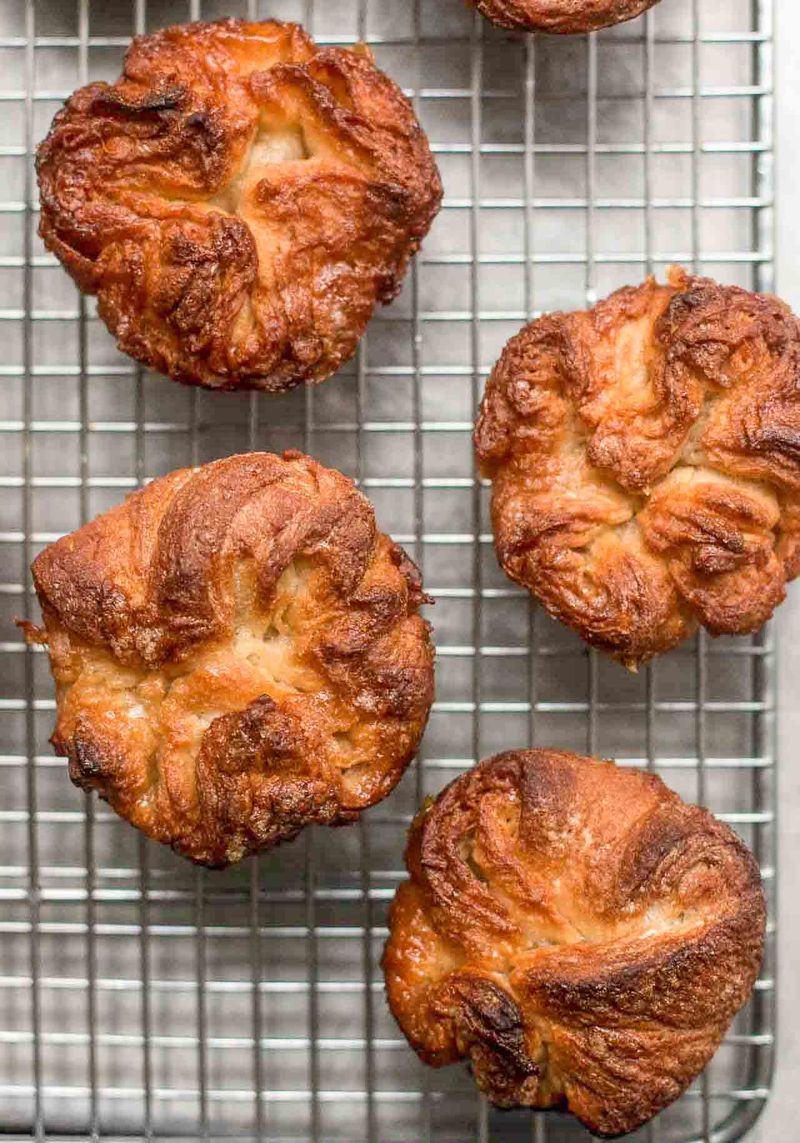
Kouign-Amann comes from Brittany and is one of the most gloriously unhealthy things you can eat on a French holiday, which is precisely why it is so popular. Layers of yeasted dough are folded with butter and sugar, then baked until the outside caramelises into a shattering, toffee-like crust.
The inside stays soft and slightly chewy, making every bite a contrast of textures. Britons who try it for the first time are often stunned by how something so simple can taste so extraordinary.
One slice is never enough.
11. Canele
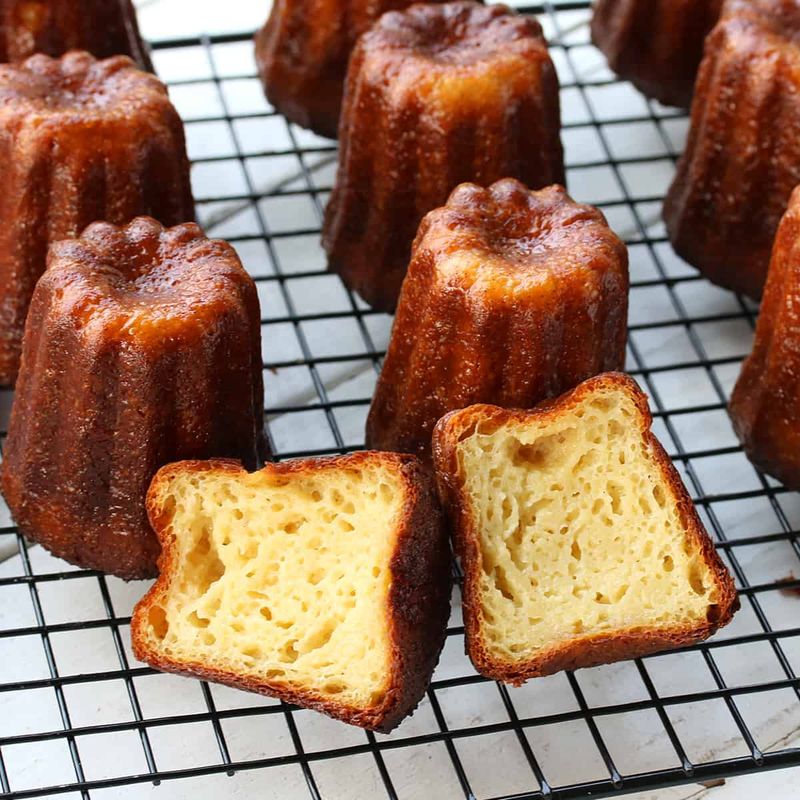
Caneles are one of those French bakery treats that look almost too dark to be edible, yet taste absolutely extraordinary. These small, ridged Bordeaux cakes have a deeply caramelised exterior that gives way to a soft, custardy centre flavoured with vanilla and rum.
The contrast between the crispy shell and the wobbly inside is genuinely addictive. Britons who discover them in a French patisserie often become obsessed and spend the rest of the holiday trying to find the best version.
They are worth every calorie.
12. Galette des Rois
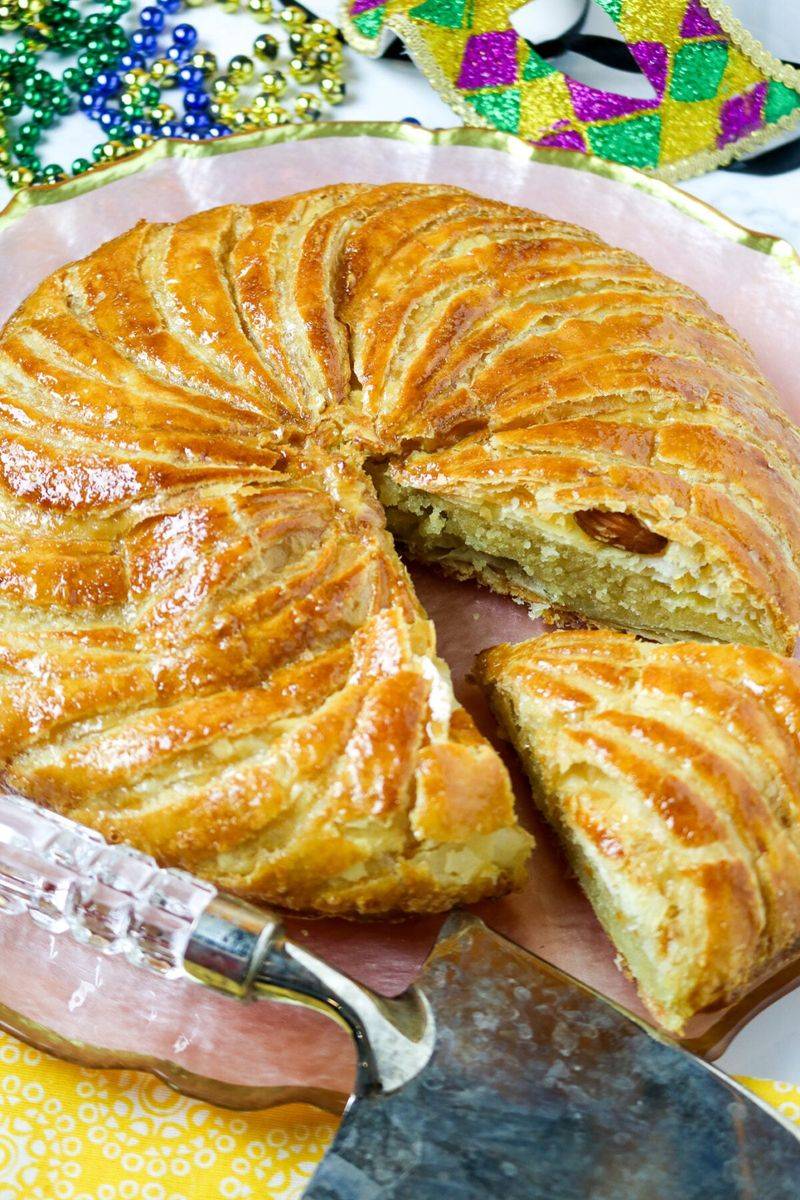
Traditionally eaten in January to celebrate Epiphany, galette des rois is a round puff pastry tart filled with frangipane, a rich almond cream that puffs up beautifully as it bakes. Hidden inside is a small ceramic figurine called a feve.
Whoever finds it in their slice is crowned king or queen for the day and gets to wear the paper crown that comes with every galette. Britons who happen to visit France in January are always charmed by this tradition, and the pastry itself is absolutely delicious.
13. Pain aux Raisins
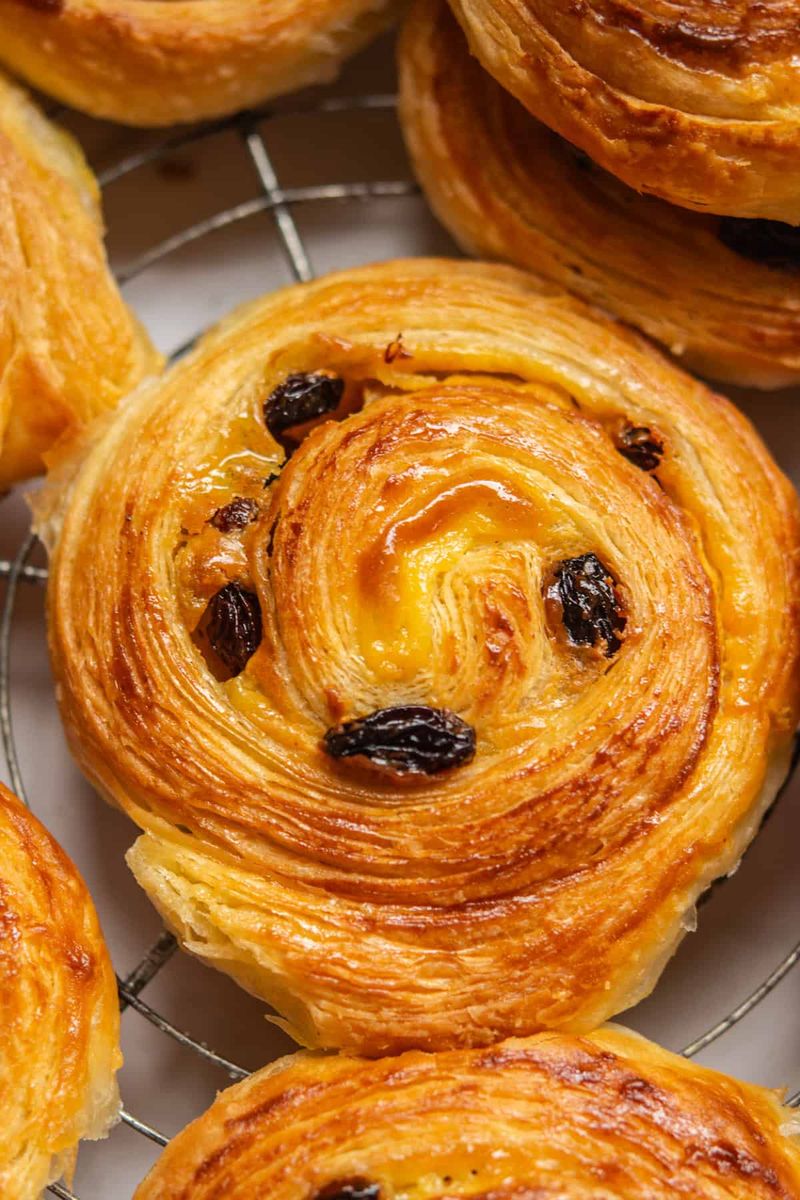
Spiralled pastry, vanilla custard, and plump raisins make pain aux raisins one of the most comforting things you can eat for breakfast in France. The dough is similar to a croissant but rolled out flat, spread with creme patissiere, scattered with raisins, then rolled up and sliced into rounds.
After baking, each swirl is glossy and golden, with the custard peeking through the layers. Britons who overlook this in favour of a croissant are truly missing out on one of the boulangerie’s best-kept everyday secrets.
14. Tarte au Citron
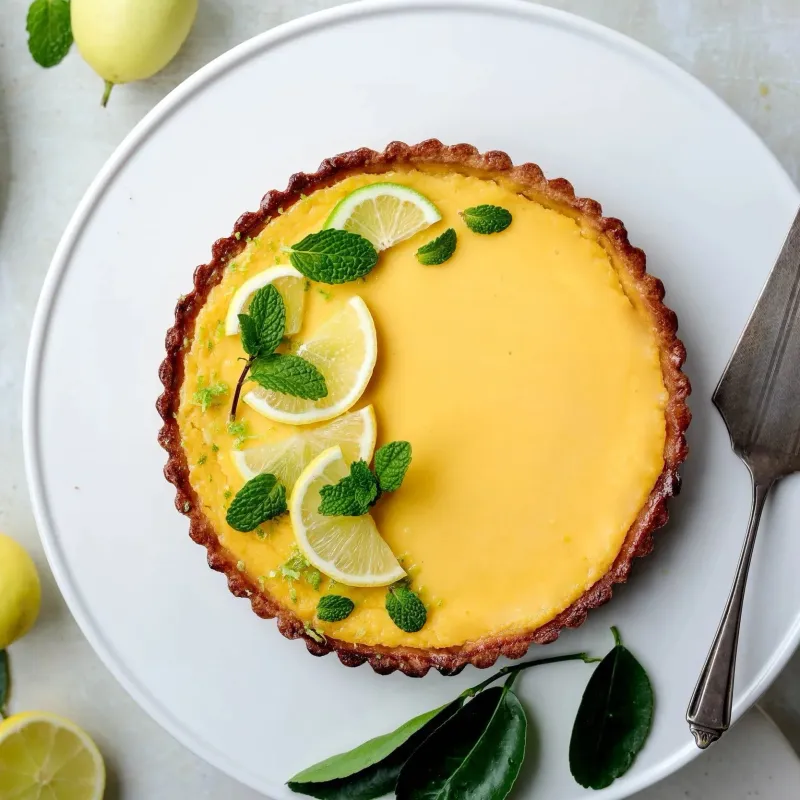
Sharp, bright, and refreshing, tarte au citron is the perfect antidote to all the rich, buttery treats you have been eating on holiday. The filling is a smooth, intensely lemony curd baked inside a crisp, buttery pastry shell that holds its shape beautifully.
French patisseries often top it with a thin layer of meringue or simply dust it with icing sugar. Either way, the balance of sweet and sour is spot on.
Britons tend to order it after lunch and end up thinking about it for the rest of the trip.
15. Brioche
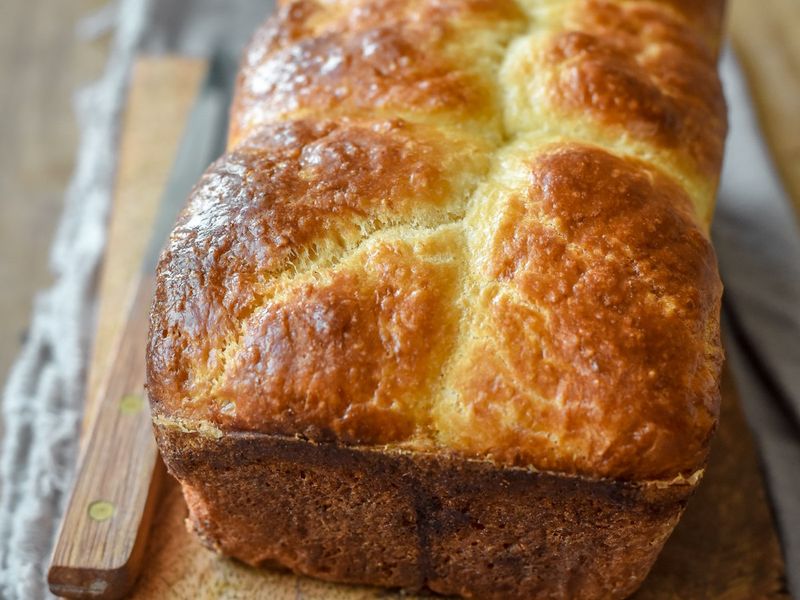
Brioche sits somewhere between bread and cake, which makes it one of the most versatile things in any French bakery. Made with generous amounts of butter and eggs, it has a rich, tender crumb and a soft, pillowy texture that is unlike any bread you will find back home.
French bakeries sell it as a whole loaf, in individual rolls, or as the base for other treats. Toasted with a scraping of jam, it is the kind of breakfast that makes mornings feel worth getting up for.
16. Paris-Brest
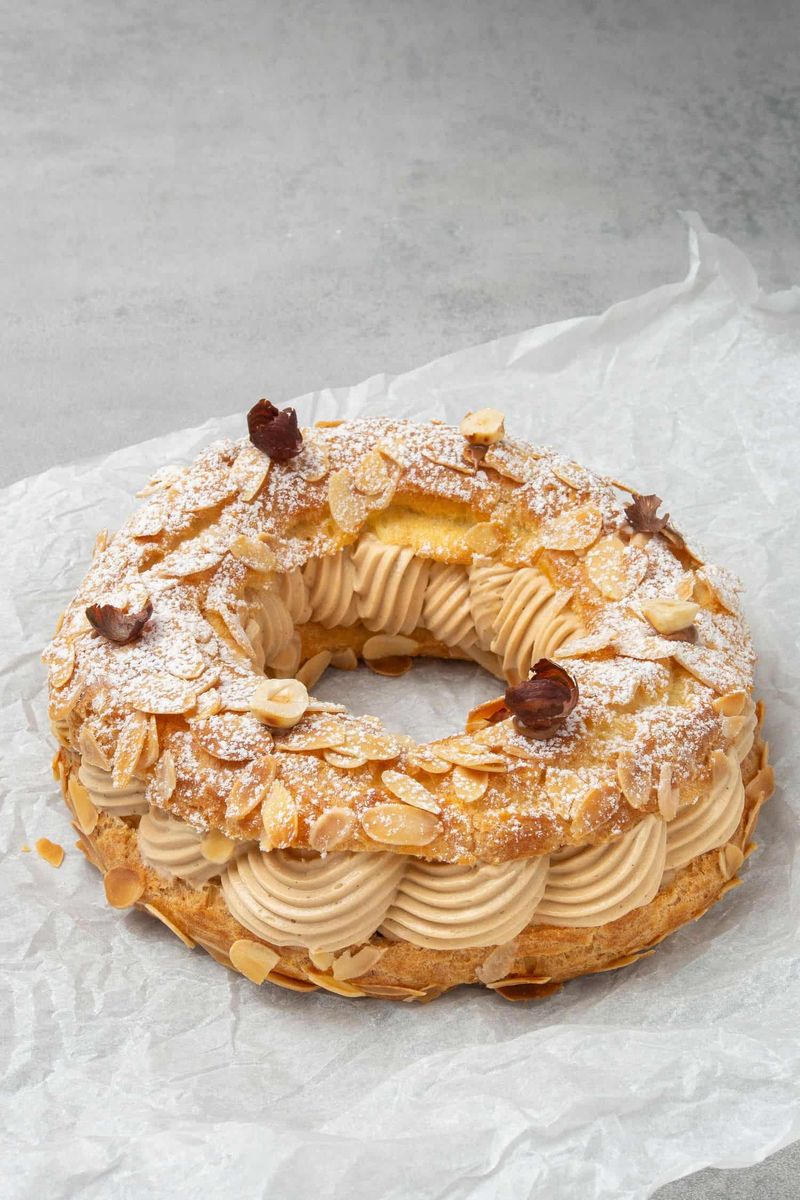
Created in 1910 to celebrate a famous bicycle race between Paris and Brest, this pastry is shaped like a wheel and filled with praline mousseline cream, a lighter-than-air mixture that is nutty, sweet, and completely irresistible.
The choux ring is topped with flaked almonds before baking, adding a gentle crunch to each mouthful. Britons who spot a Paris-Brest in a patisserie window often order it more out of curiosity than anything else, and then immediately wish they had ordered two.
It is a magnificent pastry.
17. Flan Patissier
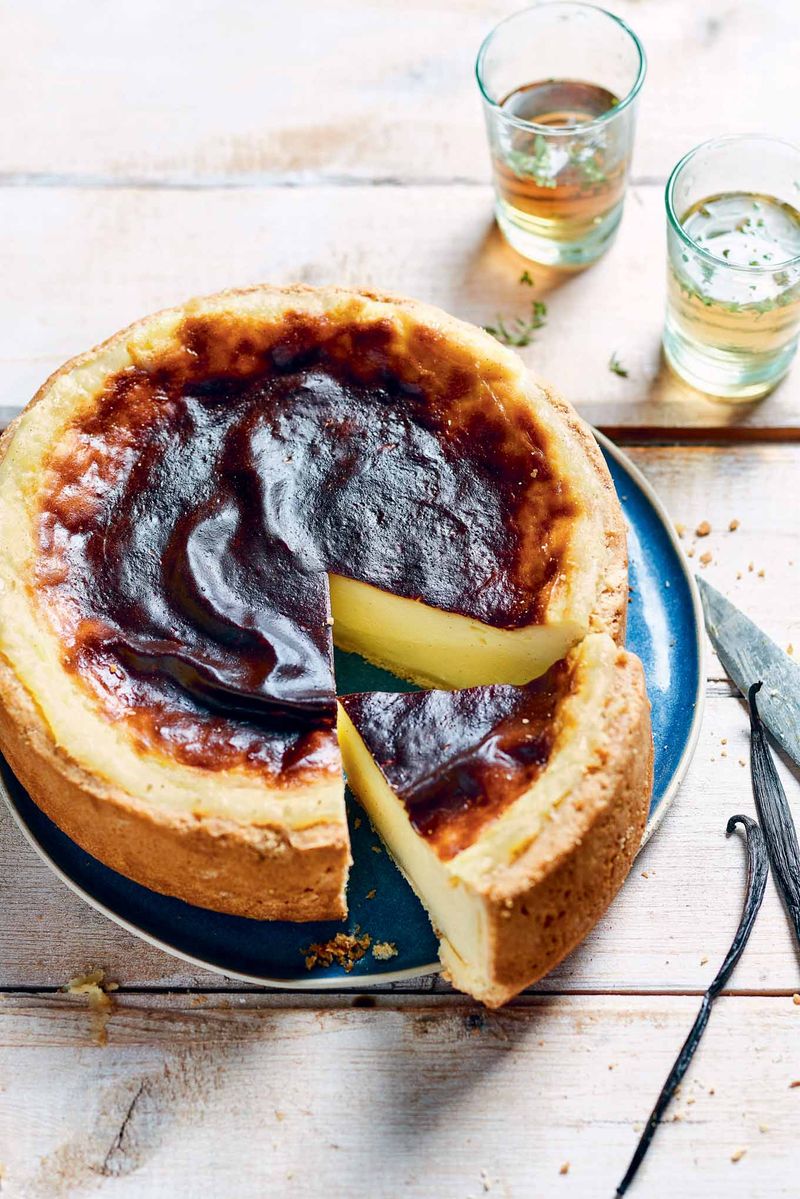
Flan patissier is the kind of thing you walk past, stop, walk back, and then buy without fully understanding why. It is a thick, set vanilla custard tart baked in a pastry shell until the top turns a deep, speckled golden brown.
The texture is firm but creamy, with a concentrated vanilla flavour that is far more intense than it looks. Many Britons discover it by accident when every macaron in the case has already sold out, and end up considering it one of their best holiday food discoveries.
18. Chausson aux Pommes
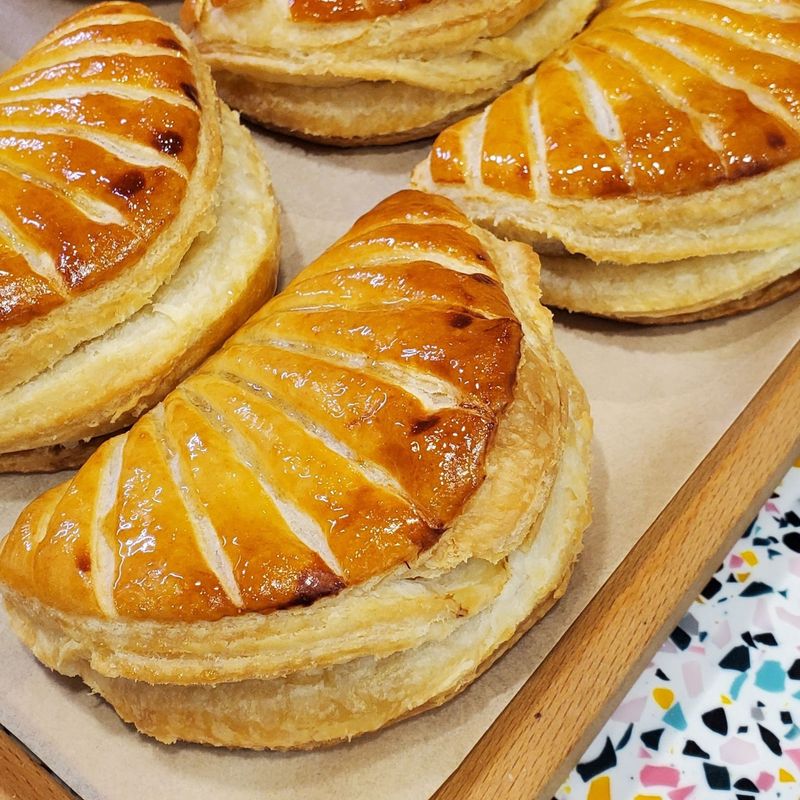
Chausson aux pommes is the French answer to the apple turnover, and it puts most British versions to shame. A half-moon of flaky puff pastry is filled with a thick, spiced apple compote, then crimped at the edges and baked until puffed and golden.
The filling is soft and fragrant, tasting of cinnamon and slow-cooked fruit rather than the watery, overly sweet versions found elsewhere. Britons often pick one up as a mid-morning snack and find it so satisfying that lunch feels entirely unnecessary.
19. Chouquette
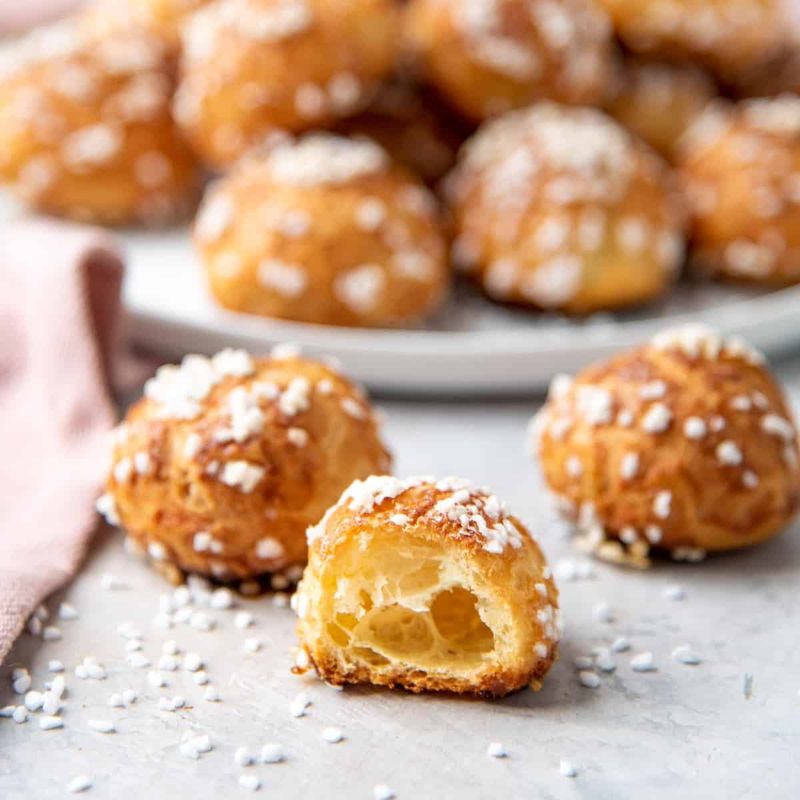
Chouquettes are tiny, airy choux pastry puffs studded with crunchy pearl sugar, and they are utterly addictive in the way that only very simple things can be. French children eat them as after-school snacks, and adults buy bags of them for no particular reason other than the fact that they are wonderful.
They have no filling, which makes them lighter than you expect. Britons discover them when the boulangerie hands them out as a little gift with a purchase, and from that moment on, they cannot leave without a bag of their own.