
German cuisine goes far beyond bratwurst and pretzels. Across the country’s many regions, you’ll find dishes that might look strange at first glance but have been loved for centuries.
From fermented meats to sweet-and-sour soups, these foods tell the story of a culture that wastes nothing and savors everything. Get ready to explore some of the most fascinating and unexpected flavors Germany has to offer.
1. Sauerbraten
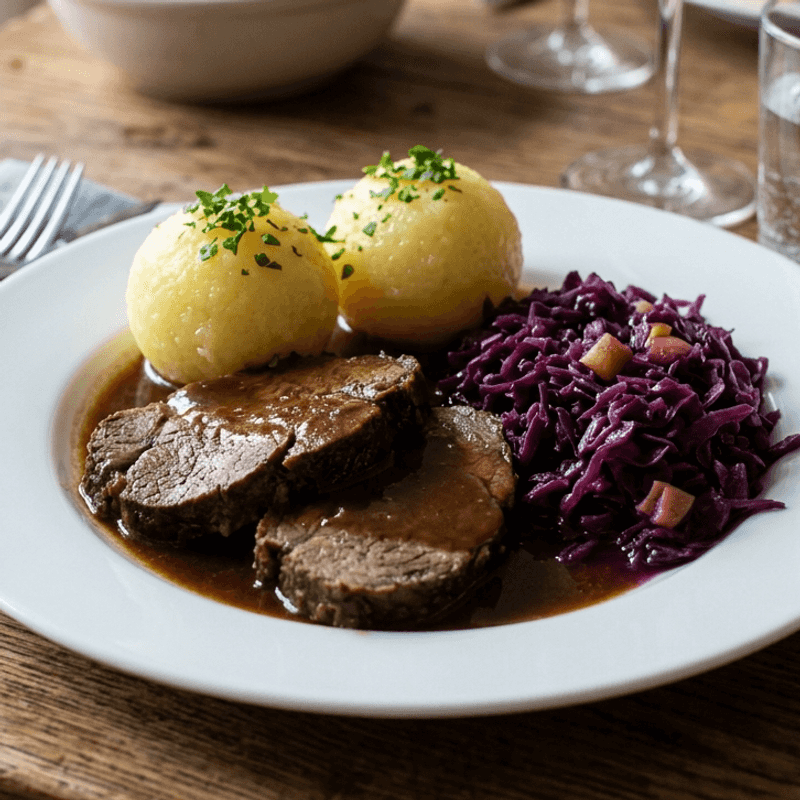
Imagine a pot roast that soaks in vinegar, wine, and spices for up to three days before it even touches the stove. That is Sauerbraten, one of Germany’s most beloved national dishes.
The long marinating process gives the beef a tangy, deep flavor unlike anything you have tasted before.
Traditionally served with red cabbage and potato dumplings, this dish is a Sunday staple in many German homes. Some families even add gingerbread to the gravy for a sweet twist.
2. Blutwurst (Blood Sausage)
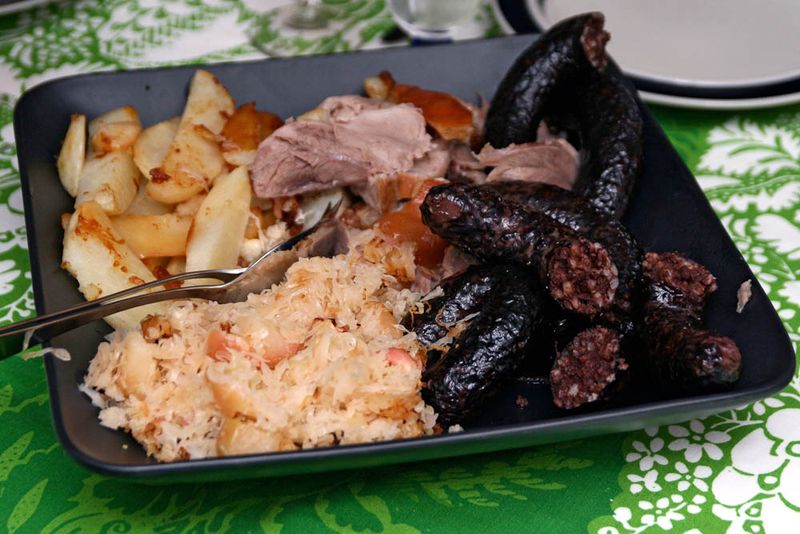
Blutwurst might sound alarming to newcomers, but it has been a staple of German butcher shops for hundreds of years. Made from pork blood, fat, and spices stuffed into a casing, this dark sausage has a rich, earthy flavor that fans absolutely adore.
It is often served warm with fried onions and mashed potatoes or eaten cold on rye bread. In many regions, making Blutwurst is a family tradition passed down through generations of skilled butchers.
3. Handkaese mit Musik
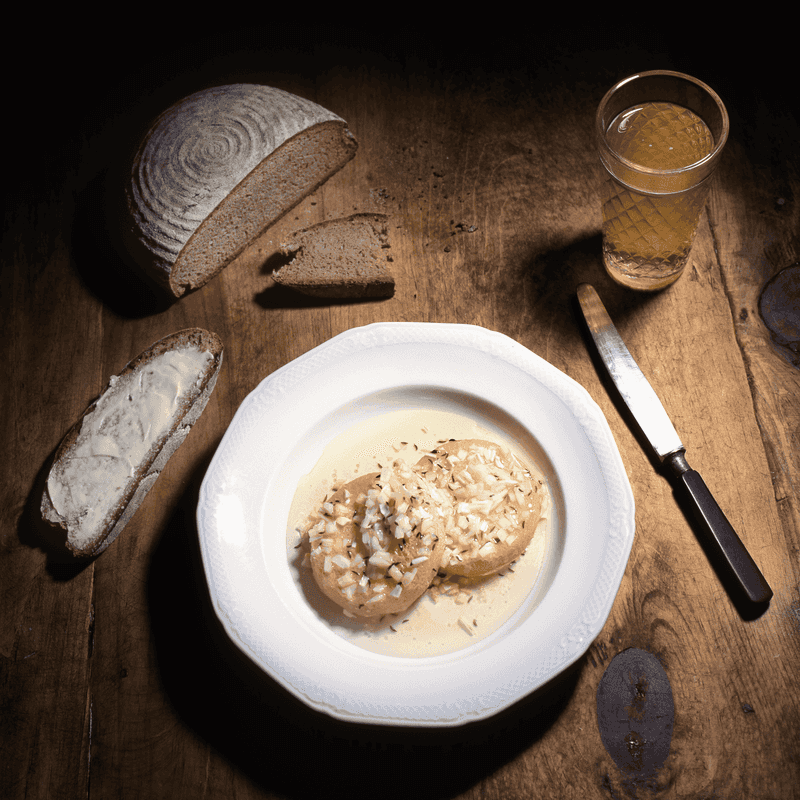
The name translates to “hand cheese with music,” and yes, the “music” refers to the gassy effect the dish is known to cause. Handkaese is a small, pungent sour milk cheese from the Frankfurt area, shaped by hand and aged until it turns soft and slightly translucent.
It is served with a marinade of vinegar, oil, onions, and caraway seeds. Locals eat it as a snack with apple wine, and it is considered a true taste of old Frankfurt culture.
4. Schwarzsauer (Black Sour Soup)
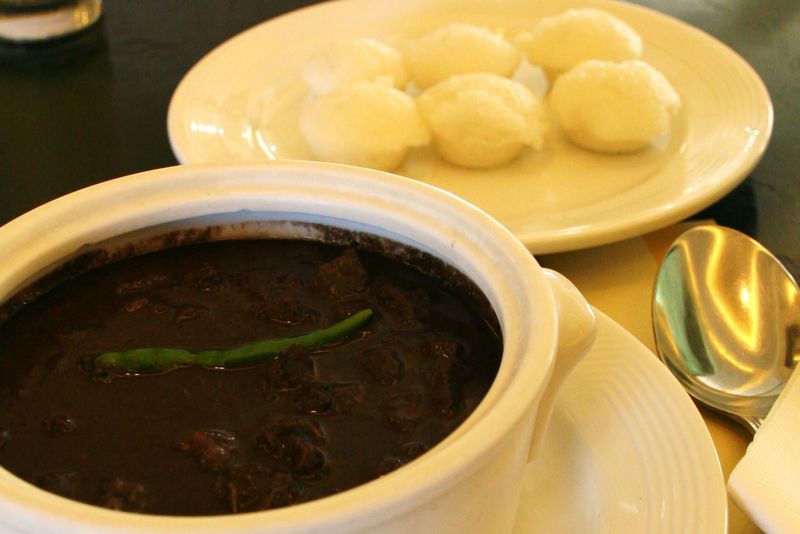
Schwarzsauer is one of those dishes that sounds almost mythical. This thick, dark soup is made from the blood and offal of goose or pork, cooked with vinegar and a mix of warming spices.
The result is a sour, hearty broth with a flavor that is genuinely unlike anything else.
Rooted in northern Germany and Prussia, Schwarzsauer was historically a way to use every part of a slaughtered animal. It remains a rare but cherished dish at traditional regional festivals.
5. Mett (Raw Minced Pork)
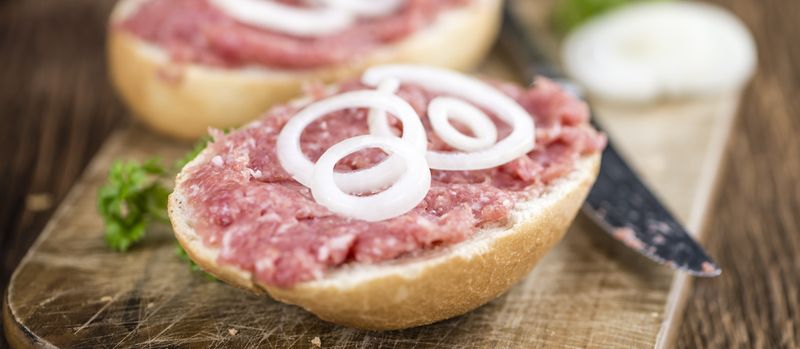
Raw pork on a bread roll might raise eyebrows outside of Germany, but Mett is a beloved classic at breakfast buffets and family gatherings across the country. Freshly minced pork is seasoned with salt, pepper, and sometimes caraway, then spread thickly on a crusty roll.
The key is freshness – Mett must be eaten the same day it is prepared. A fun tradition involves shaping it into a hedgehog decorated with onion rings and pretzel sticks at parties.
6. Grunkohl mit Pinkel (Kale with Smoked Sausage)
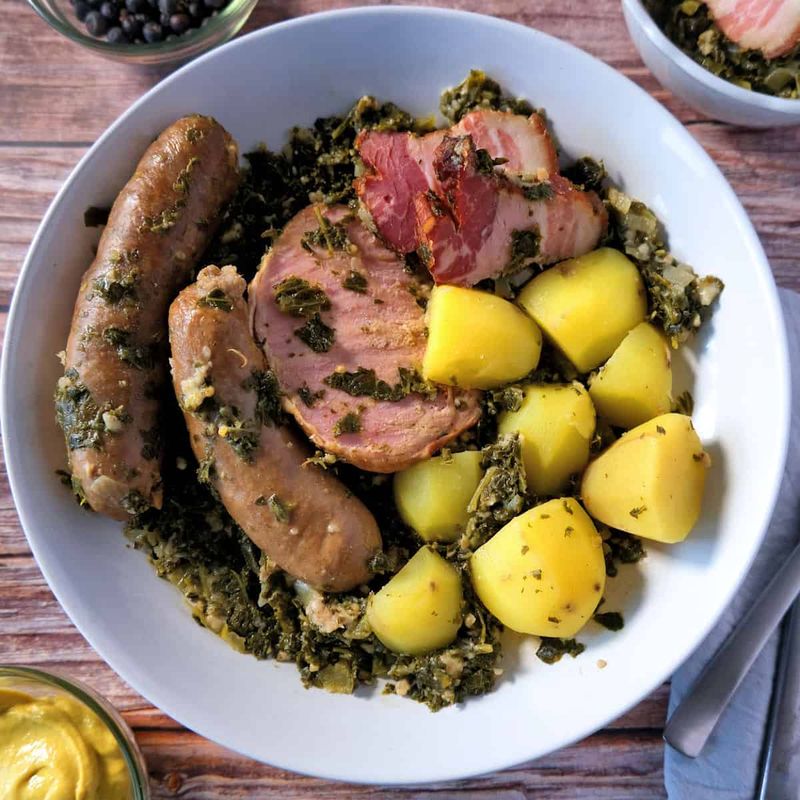
In northern Germany, the first frost of the year is practically a holiday because it signals kale season. Grunkohl mit Pinkel is a winter dish featuring slow-cooked kale braised with lard, mustard, and smoked Pinkel sausage made from oats and pork fat.
It is warming, smoky, and deeply satisfying.
The dish is so popular in Bremen and Lower Saxony that entire “kale tours” are organized, where groups hike to a restaurant to enjoy this meal together. It is a true cold-weather celebration.
7. Leberwurst (Liver Sausage)
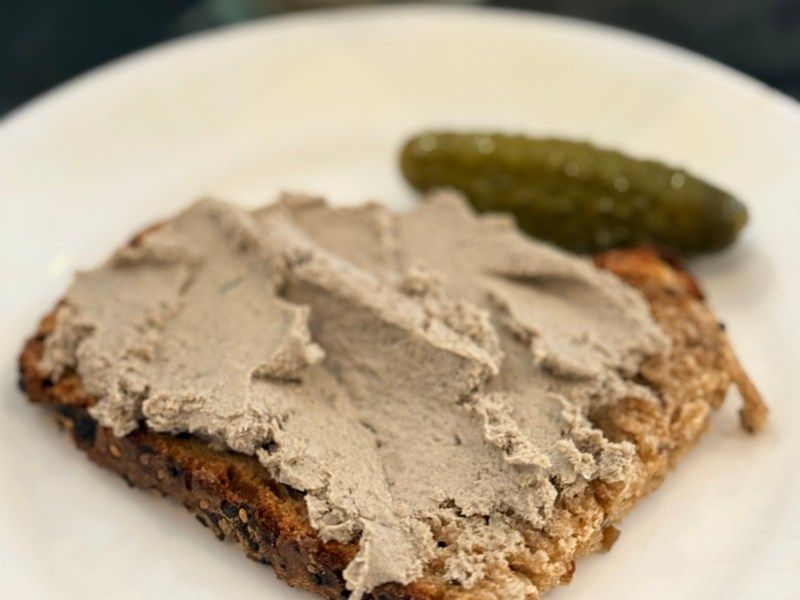
Creamy, spreadable, and packed with flavor, Leberwurst is Germany’s answer to French pate. Made from pork liver, fat, and a blend of herbs and spices, this smooth sausage is a staple in German lunchboxes and on breakfast tables nationwide.
Depending on the region, you might find versions with onions, marjoram, or even truffles. Spread thickly on dark rye bread with a crunchy pickle on the side, Leberwurst is a simple pleasure that Germans never seem to tire of eating.
8. Himmel und Aerde (Heaven and Earth)
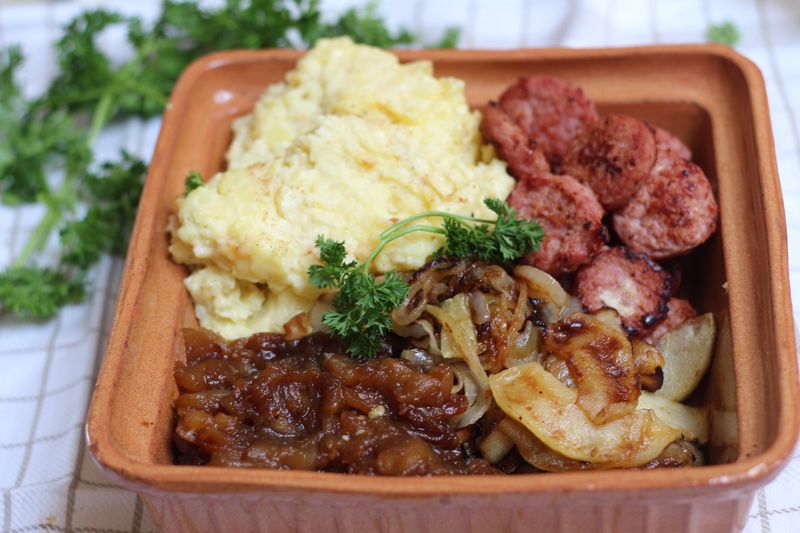
“Heaven and Earth” is a poetic name for a dish that combines apples from the trees above with potatoes from the ground below. This Rhineland classic mixes creamy mashed potatoes with tangy applesauce and tops the whole thing with slices of fried Blutwurst and golden caramelized onions.
The combination of sweet, savory, and earthy flavors sounds unusual but works beautifully. It is a comforting dish that has been served in German homes and taverns for well over two hundred years.
9. Sulze (Head Cheese)
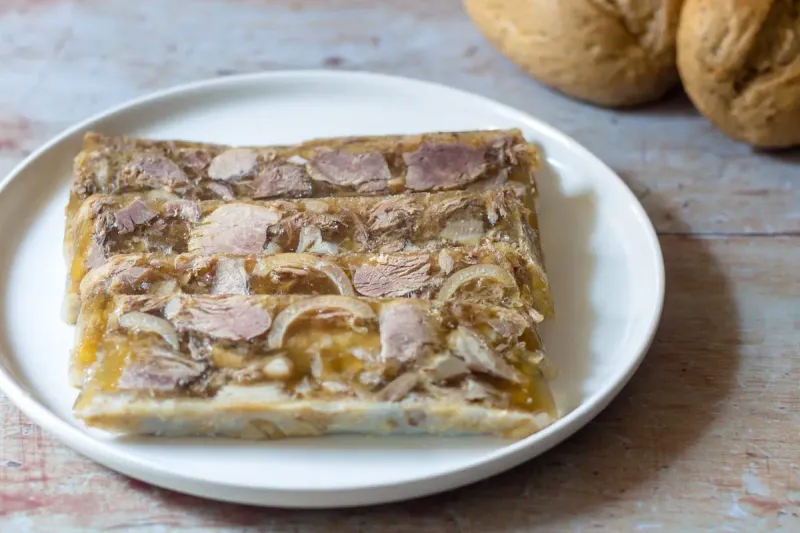
Sulze looks like something from a science experiment – chunks of pork meat suspended in a shimmering, clear jelly. But this cold cut has been a German delicacy for centuries.
Made from the meat of a pig’s head cooked down and set in its own gelatin, it is sliced thin and served with vinegar and onions.
The texture is unlike most foods, firm yet jiggly, and the flavor is mild and savory. Sulze is a butcher shop classic that still has devoted fans across Germany.
10. Falscher Hase (Fake Rabbit)
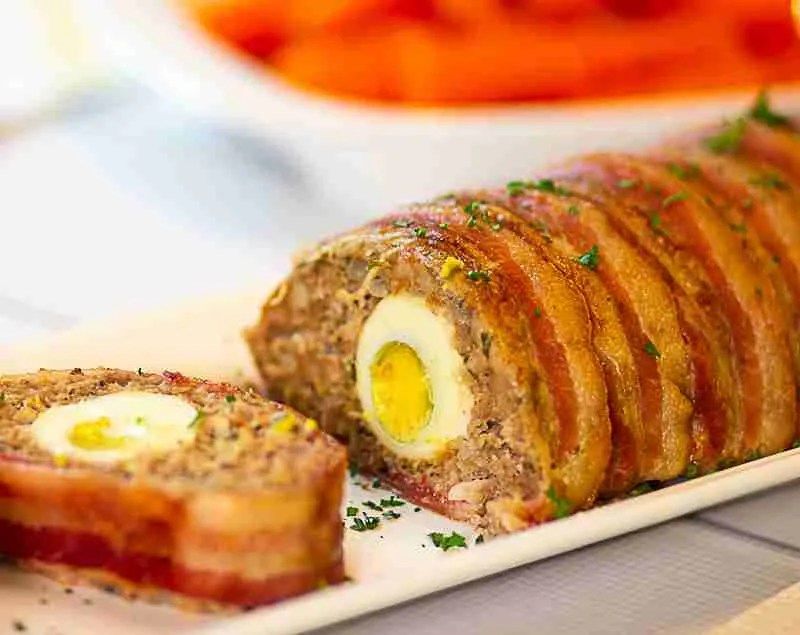
Despite the dramatic name, no rabbits are involved in this dish. Falscher Hase, or “fake rabbit,” is a German meatloaf that got its name because its oval shape and browned exterior once resembled a roasted hare.
Inside, a whole hard-boiled egg is hidden at the center, making every slice a small surprise.
It became especially popular during and after World War Two when real rabbit and other meats were scarce. Today it remains a nostalgic comfort food that many Germans associate with their grandmothers’ kitchens.
11. Spundekase (Spiced Cream Cheese Spread)
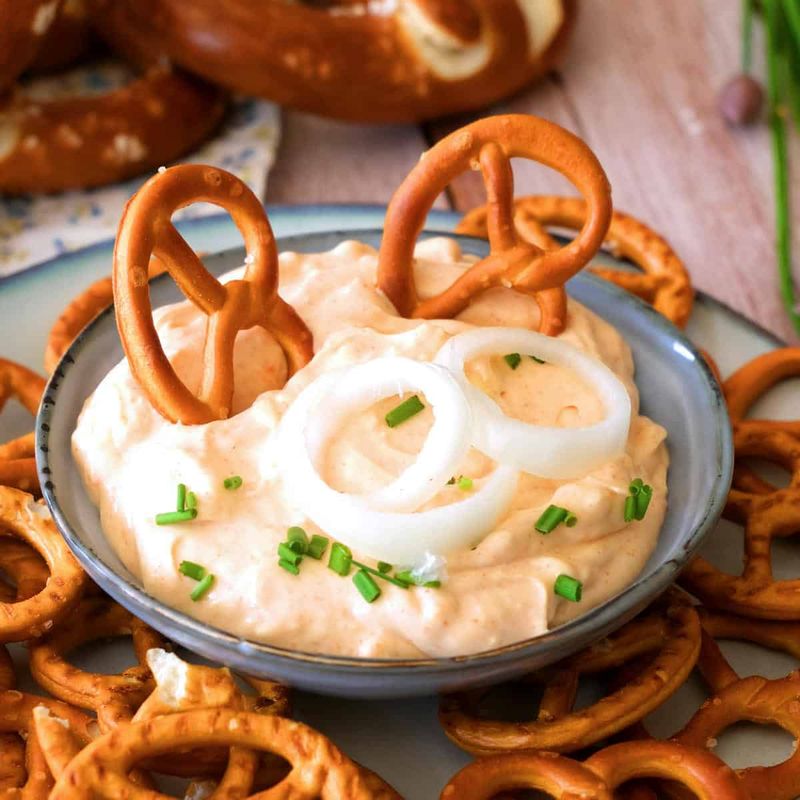
Walk into any traditional beer garden in the Rhineland-Palatinate region and you will likely find a bowl of Spundekase on the table. This spreadable cheese is made from cream cheese or quark blended with sour cream, paprika, caraway, and onion until silky smooth.
It is served with pretzels or crusty bread and pairs perfectly with a cold glass of local wine or beer. The name comes from an old German word for a barrel bung, referencing the cheese-making process used centuries ago.
12. Labskaus (Sailor’s Hash)
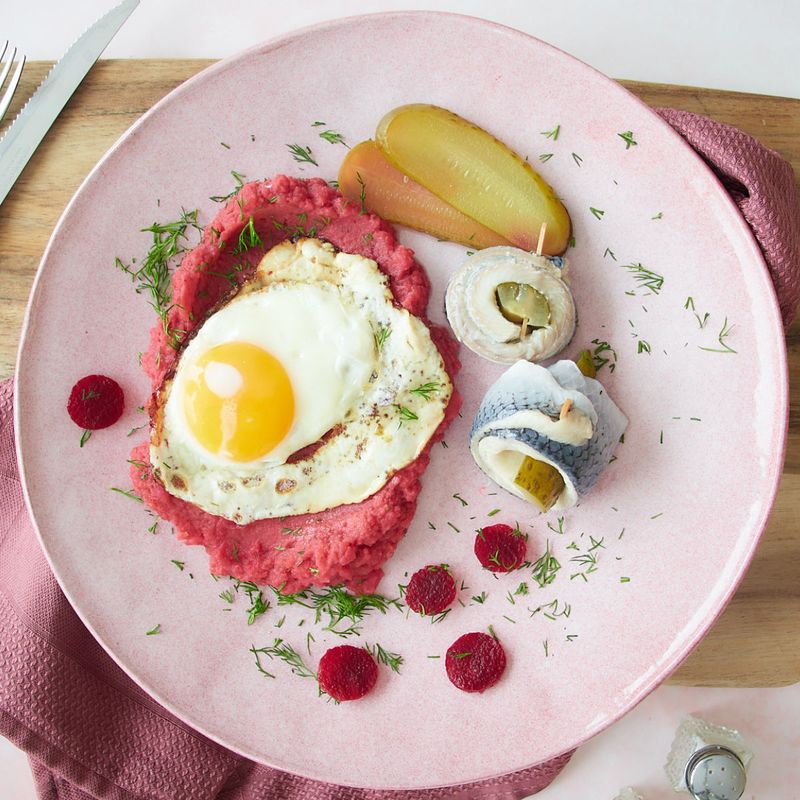
Born in the port cities of Hamburg and Bremen, Labskaus was originally sailors’ food – a mash of whatever was available on long sea voyages. Today it is a beloved regional specialty made from corned beef, mashed potatoes, and beets all mixed together into a striking pink heap.
Topped with a fried egg, a rollmop herring, and a few pickles, it looks almost too wild to eat. But the flavors balance each other surprisingly well, salty, earthy, and tangy all at once.
13. Kohlrouladen (Stuffed Cabbage Rolls)
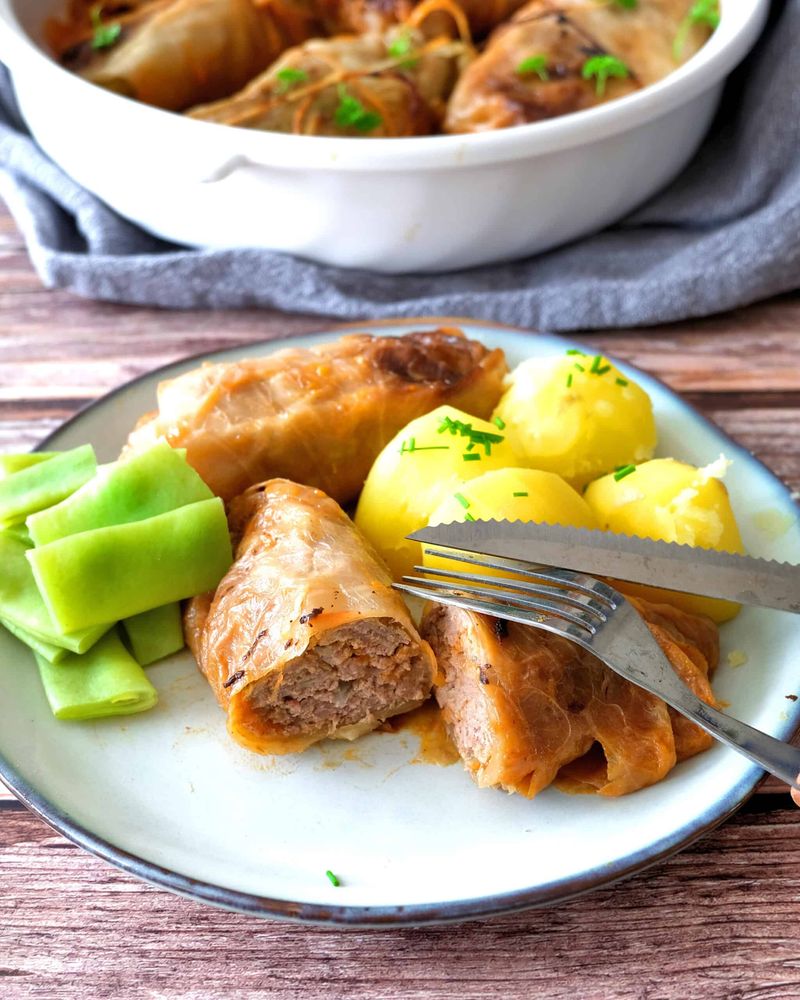
Cabbage leaves wrapped around a filling of seasoned minced pork and beef, then braised low and slow in a savory broth – that is the magic of Kohlrouladen. This dish takes patience to make, but the result is a tender, flavorful roll that practically melts in your mouth.
It is a classic German grandmother dish, the kind that fills the whole house with an irresistible aroma. Served with gravy and boiled potatoes, Kohlrouladen is the definition of old-fashioned German comfort food at its best.
14. Reibekuchen (Potato Pancakes)
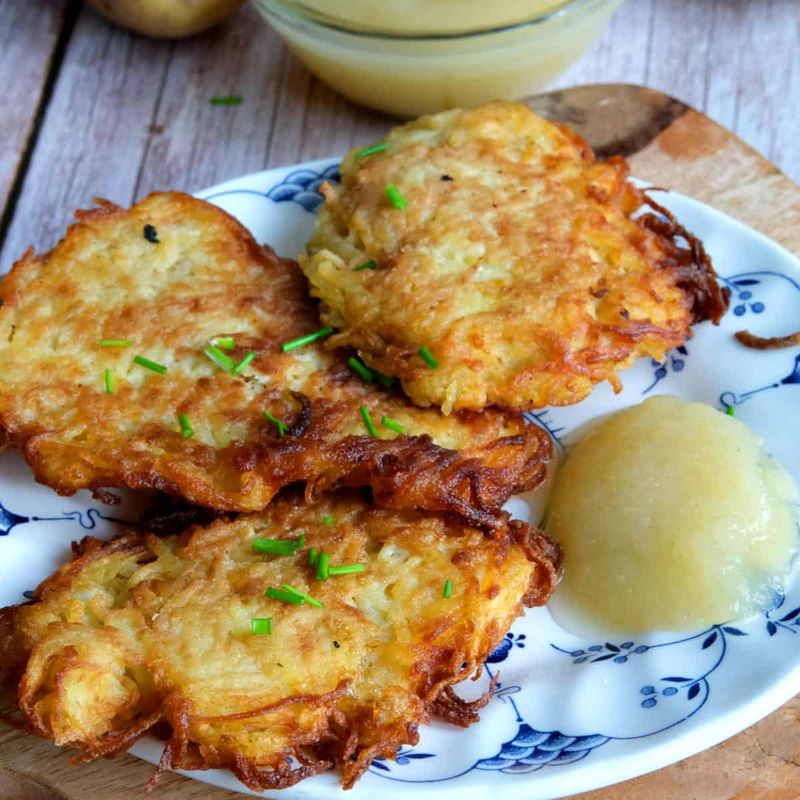
Crispy on the outside, soft and fluffy on the inside, Reibekuchen are a street food legend at German Christmas markets. These pan-fried potato pancakes are made from grated raw potatoes mixed with egg, flour, and onion, then fried until perfectly golden and crunchy.
You can eat them sweet with applesauce or savory with sour cream. The smell of Reibekuchen frying at a winter market is one of those sensory memories that Germans carry with them for life, no matter where they end up living.
15. Schneckensuppe (Snail Soup)
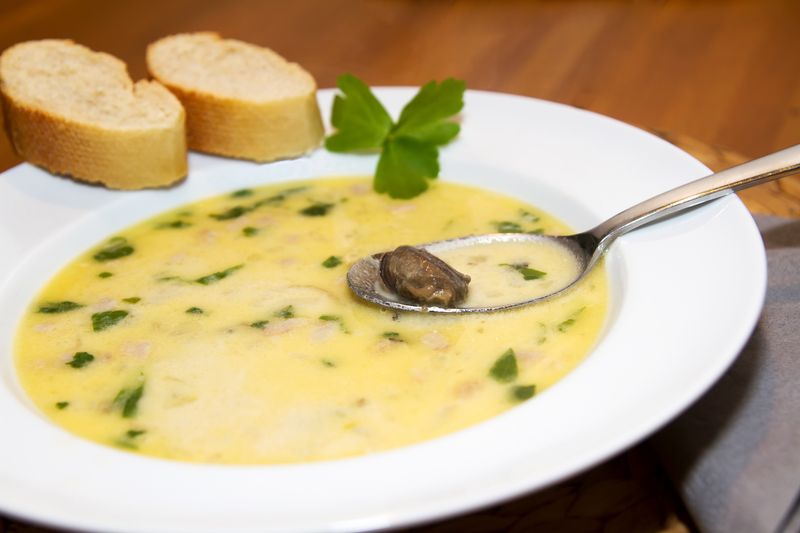
Long before snails became associated with French cuisine, Germans were enjoying them in a rich, herby soup. Schneckensuppe, or snail soup, was once a common dish in southern Germany and Baden-Wurttemberg, where vineyard snails were plentiful and considered a delicacy worth celebrating.
The snails are cooked in a creamy broth flavored with parsley, garlic, and white wine, giving the soup an elegant yet earthy quality. Today it is rarely found outside of specialty restaurants, making it a true culinary curiosity worth seeking out.
16. Griesskochbrei (Semolina Porridge)
To many German children, a bowl of warm Griesskochbrei is the ultimate comfort food. This simple semolina porridge is cooked in milk until thick and creamy, then served with a generous pool of melted butter in the middle and a dusting of cinnamon sugar on top.
It sounds plain, but the buttery richness and gentle sweetness make it deeply satisfying. Traditionally eaten as a light dinner or when someone is feeling under the weather, it is one of those dishes that carries serious emotional weight for many Germans.
17. Tote Oma (Dead Grandmother Sausage Dish)
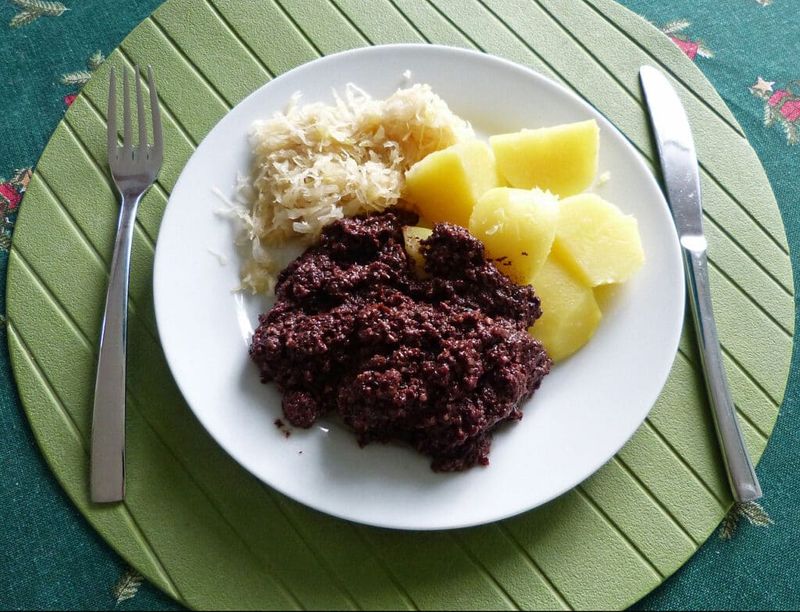
The name is certainly dramatic, but Tote Oma, which translates to “dead grandmother,” is simply a hearty East German dish made from crumbled fried blood sausage mixed with sauerkraut. The dark color of the finished dish is what inspired the rather grim nickname.
It is a working-class comfort food with a long history in the former East Germany, where simple, filling meals were a daily necessity. Served with mashed potatoes, it is surprisingly tasty and far more appealing than its name suggests.
18. Bienenstich (Bee Sting Cake)
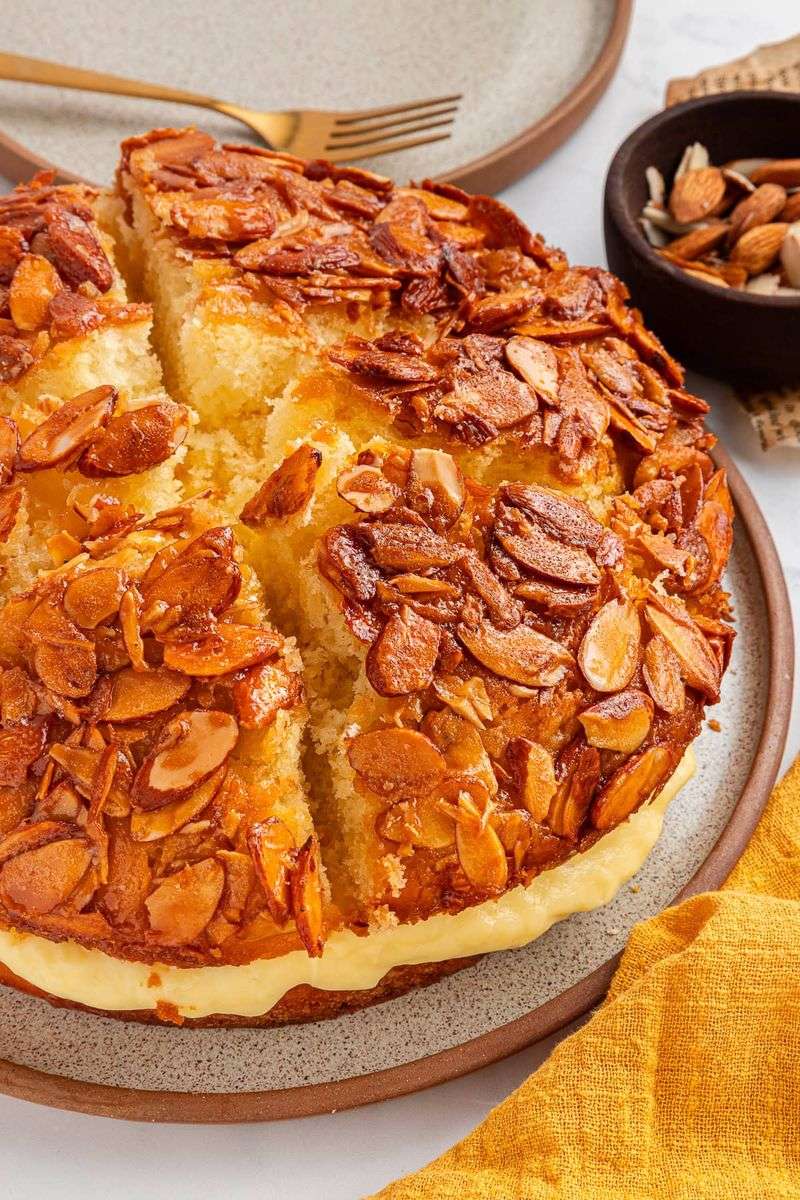
Legend has it that German bakers once threw beehives at invading enemies to protect their village, and afterward celebrated with this honey-almond cake. Whether the story is true or not, Bienenstich is one of Germany’s most treasured baked goods.
A soft yeast dough is topped with caramelized honey and flaked almonds, then filled with rich vanilla custard cream.
The contrast between the crunchy, sticky top and the pillowy cream inside is extraordinary. Every German bakery has its own version, and heated debates about whose is best are entirely normal.