
Some questions are not really questions at all. Instead, they are clever tools used to push you toward a certain answer, make you feel guilty, or take control of the conversation.
Knowing how to spot these tactics can protect you from being manipulated without even realizing it. Once you learn to recognize them, you will feel more confident speaking up and holding your ground.
1. Leading Questions

Ever notice how some questions already have the answer baked right in? Leading questions are designed to nudge you toward agreeing with what the other person already believes.
A classic example is, “Option Two is clearly better, isn’t it?”
The manipulator frames things so that disagreeing feels awkward or even rude. Recognizing this tactic gives you the power to pause, think independently, and respond with your own honest opinion instead of the one being handed to you.
2. Loaded Questions

Loaded questions are sneaky because they hide an accusation inside what sounds like a normal question. “Why do you always avoid responsibility?” assumes you already do that, forcing you to defend yourself before you even understand what happened.
Answering a loaded question can feel like a trap no matter what you say. The best move is to call out the assumption directly.
Try saying, “That question assumes something that isn’t true,” and calmly reframe the conversation on your own terms.
3. Guilt-Tripping Questions

Guilt-tripping questions wrap emotional pressure inside innocent-sounding words. “You don’t want to let me down, right?” sounds caring on the surface, but underneath it is pushing you to act out of obligation rather than genuine desire.
Manipulators who use this tactic count on your empathy working against you. Recognizing when guilt is being weaponized helps you respond from a place of calm reasoning.
You can care about someone deeply and still say no without feeling like a bad person.
4. Invasive Personal Questions

Some people ask deeply personal questions not out of genuine curiosity but to collect information they can use later. Questions about your finances, relationships, or fears might seem friendly in the moment but could be storing up ammunition for future manipulation.
A good rule of thumb: if a question makes you feel oddly exposed or uncomfortable, trust that instinct. You never owe anyone your private information.
A simple “I’d rather not get into that” is a complete and perfectly acceptable answer.
5. Gaslighting Questions

Gaslighting questions are designed to make you doubt your own memory and perception of events. “Are you sure that’s what happened? I think you’re remembering it wrong” plants seeds of self-doubt that can grow into full confusion over time.
This tactic is especially damaging because it chips away at your confidence in your own mind. Keeping a journal or trusting a close friend’s outside perspective can help you stay grounded when someone tries to rewrite reality around you.
6. False Choice Questions

False choice questions make it seem like only two options exist when, in reality, many more are available. “Do you want to apologize now or later?” quietly assumes an apology is already owed, skipping right over whether one is actually needed.
This tactic limits your thinking and steers you into a corner the manipulator has already built. Whenever a question feels oddly binary, slow down and ask yourself what other choices exist.
There are almost always more options than the two being presented.
7. Questions That Undermine Confidence

“What makes you think you can actually do that?” These words sting because they target your belief in yourself. Questions designed to undermine confidence are not looking for a real answer.
They exist to make you feel small and second-guess your own abilities.
People who use this tactic are often trying to maintain control by keeping you feeling less capable than you actually are. Remembering your past successes and seeking feedback from people who genuinely support you can help rebuild what these questions try to tear down.
8. Rhetorical Attack Questions

“Are you serious right now?” and “What is wrong with you?” are not real questions. They are verbal jabs disguised with a question mark at the end.
Rhetorical attack questions express contempt and ridicule without technically making a direct insult.
Because they sound like questions, they can catch you off guard and leave you fumbling to respond. Staying calm and refusing to take the bait is often the most powerful response.
You do not have to defend yourself against something that was never a fair question to begin with.
9. “Just Asking” Accusations
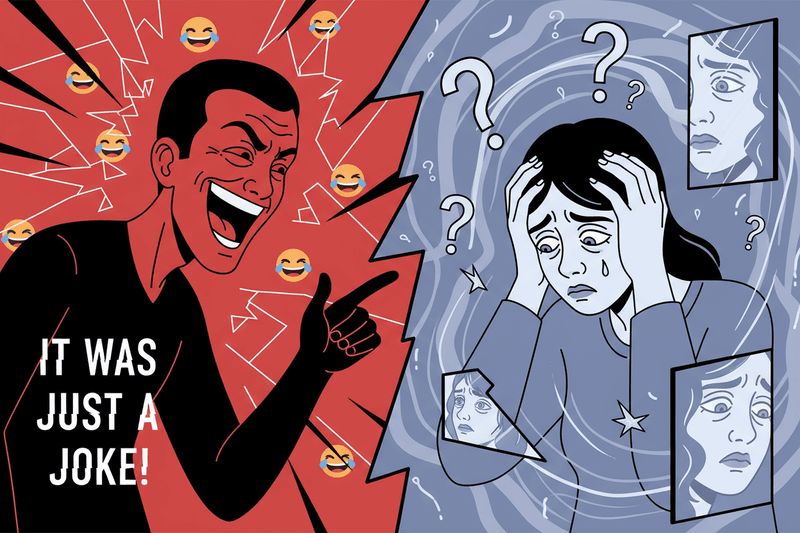
Some questions slip in an accusation and then hide behind the phrase “I was just asking.” For example, “Why are you so defensive all the time?” sounds like curiosity but is really a dig designed to put you on the back foot immediately.
When confronted, the manipulator claims innocence, which is frustrating because there is plausible deniability built right in. Calling it out calmly works better than getting flustered.
You can say, “That question felt like an accusation.
Can we talk about what you actually mean?”
10. Interrogation-Style Questions

Firing question after question without pausing for real answers is an interrogation, not a conversation. “Who were you with? What time did you leave?
Why didn’t you text me?” This rapid-fire style is meant to exhaust you and find a slip-up to exploit.
Real conversations have give and take. When someone turns an exchange into an interrogation, it is okay to pump the brakes.
Saying “I’ll answer one question at a time” sets a boundary and slows the manipulation down before it gains momentum.
11. Questions That Shift Blame

Blame-shifting questions flip the script so that you end up feeling responsible for problems the other person caused. “Why can’t you just take responsibility for your part?” sounds reasonable but is often used to dodge accountability while making you feel like the issue.
This tactic works by keeping you busy defending yourself instead of addressing the real problem. Recognizing the redirect is key.
You can acknowledge your role without accepting blame for things that genuinely were not your fault or your responsibility.
12. Questions That Create Social Pressure

“Everyone thinks you should move back home” uses the invisible weight of a crowd to pressure you into compliance. These questions manufacture social pressure by suggesting that some unnamed majority agrees with the manipulator’s position.
The truth is, “everyone” is rarely everyone. This tactic exploits the human need to belong and fit in.
Before caving to this kind of pressure, ask who specifically thinks that and why their opinion should outweigh your own well-considered judgment about your own life.
13. Questions That Leverage Trust

“Don’t you trust me?” sounds simple but carries enormous emotional weight. This question weaponizes the concept of trust to make you feel that any hesitation or boundary you set is a personal betrayal of the relationship itself.
Trust is earned through consistent actions over time, not demanded through emotionally charged questions. Healthy relationships never require you to prove your loyalty by abandoning your own comfort or judgment.
If a question makes trust feel like a leash, that is worth paying close attention to.
14. Moving Goalposts Questions

You meet one expectation and suddenly a new one appears. Moving goalposts questions keep changing what “enough” looks like. “If you really cared, you’d call more” becomes “If you really cared, you’d visit” once you start calling more frequently.
This pattern keeps you perpetually chasing approval that is never actually granted. It is exhausting and demoralizing by design.
Recognizing the cycle is the first step toward breaking it. Decide what effort is reasonable for you and hold that line confidently, regardless of shifting demands.
15. Statements Disguised as Questions

“I’m wondering why you didn’t stop by yesterday” is not really a question. It is a complaint or accusation wrapped in soft language to avoid direct confrontation.
Phrasing statements as questions gives the manipulator control while maintaining a polished, non-confrontational image.
This tactic can leave you feeling guilty without understanding exactly why. The fix is to treat the hidden message directly.
Respond to what is actually being said rather than dancing around the vague phrasing. Clarity on your end often disarms this technique quickly.
16. Playing the Victim Questions

“Do you want me to feel guilty?” flips the situation so that the person seeking accountability suddenly looks like the aggressor. Playing the victim through questions is a way to dodge responsibility while making the other person feel cruel for even bringing up a concern.
Watch for this tactic when conversations about real problems suddenly become about how hurt the other person feels by the mere act of being questioned. Empathy is important, but it should not be used as a shield to permanently avoid honest conversations.
17. Questions That Discredit the Source

Instead of addressing the actual information, a manipulator might ask “Who told you that?” to shift focus onto the messenger. This tactic is designed to cast doubt on the source so that the information itself never has to be confronted or disproven.
It is a classic deflection move. Once the source is questioned, the original concern gets buried.
Stay focused on the substance of what was shared rather than getting pulled into a debate about who said it. The facts matter more than the face attached to them.
18. Feigned Concern Questions

“I’m just worried about you. Are you sure you know what you’re doing?” sounds supportive, but when used repeatedly, it quietly erodes your confidence in your own decisions.
Feigned concern questions wear the mask of kindness while planting seeds of self-doubt.
The difference between genuine concern and this tactic often lies in timing and intent. Real support encourages you and respects your choices.
If someone’s “concern” always leaves you feeling less capable than before the conversation started, trust that feeling and evaluate the relationship honestly.