
German food often gets overlooked in favor of Italian pizza or French pastries, but that’s a big mistake. Germany has a rich food tradition built on hearty flavors, creative cooking, and recipes passed down for hundreds of years.
From slow-cooked meats to crispy fried treats, German cuisine has something for everyone. Get ready to discover why German food deserves a permanent spot on your must-try list.
1. Sauerbraten – Germany’s Famous Pot Roast
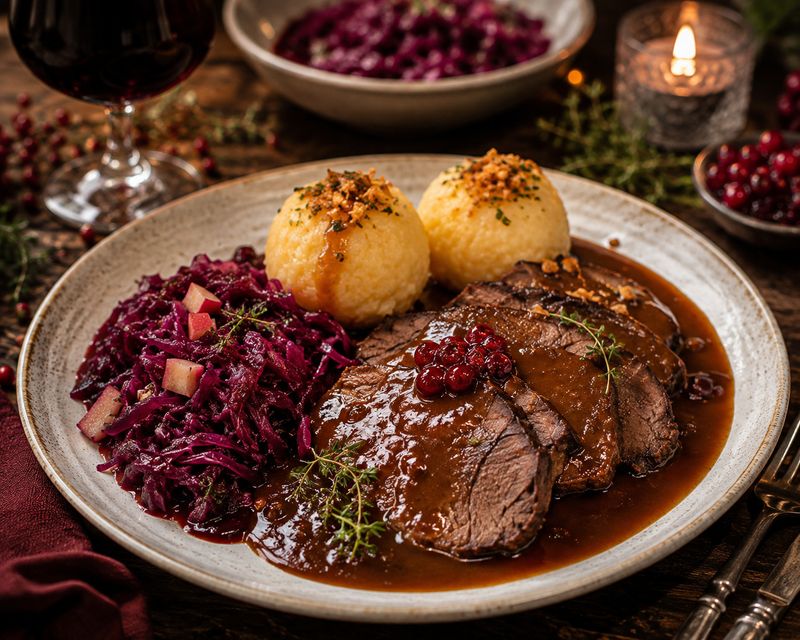
Some dishes take patience, and Sauerbraten rewards every minute of waiting. This slow-cooked pot roast is marinated for up to three days in a tangy mixture of vinegar, water, and spices before being braised until perfectly tender.
The result is meat so flavorful it practically melts on your tongue. A rich, slightly sweet gravy made from the marinade ties everything together.
Served with potato dumplings and red cabbage, this dish is the ultimate German comfort food experience.
2. Bratwurst – The King of German Sausages

Walk through any German town and the smoky, irresistible smell of Bratwurst sizzling on a grill will stop you in your tracks. Made from seasoned pork, beef, or veal, this sausage has been a German staple for over 600 years.
Each region has its own recipe. Nuremberg’s version is small and spiced with marjoram, while Thuringia’s is longer and flavored with caraway.
Tucked into a crusty roll with mustard, Bratwurst is pure, simple, street-food joy.
3. Pretzels – Twisted, Salty, and Absolutely Addictive

Few snacks in the world are as instantly recognizable as the German pretzel. That distinctive twisted shape and shiny, deep-brown crust are the result of dipping the dough in a baking soda solution before baking, giving it a unique chewy texture and bold flavor.
Bavarian bakers have been perfecting this recipe for centuries. Sprinkled generously with coarse salt, a warm pretzel pairs beautifully with butter or a cold beer.
Honestly, once you try one fresh from the oven, store-bought versions feel like a disappointment.
4. Schnitzel – Crispy, Golden, and Absolutely Satisfying
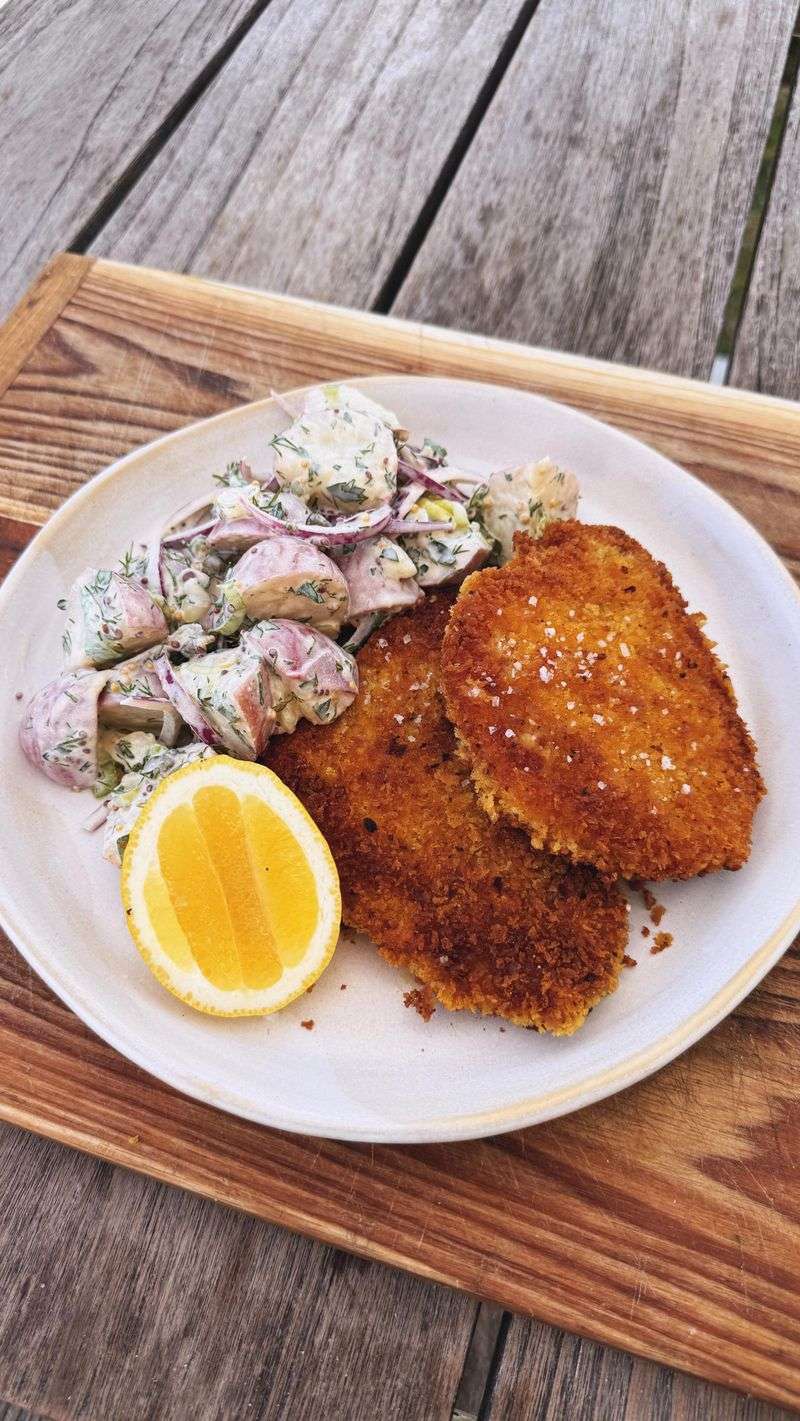
Schnitzel might be Austria’s most famous export, but Germany adopted it wholeheartedly and made it its own. A thin slice of pork or veal is pounded flat, coated in breadcrumbs, and fried until shatteringly crispy and golden brown.
The inside stays juicy while the outside delivers that satisfying crunch. A squeeze of fresh lemon cuts right through the richness.
Whether served with potato salad or French fries, Schnitzel is the kind of straightforward, crowd-pleasing meal that never gets old.
5. Sauerkraut – The Tangy Side Dish Germany Loves
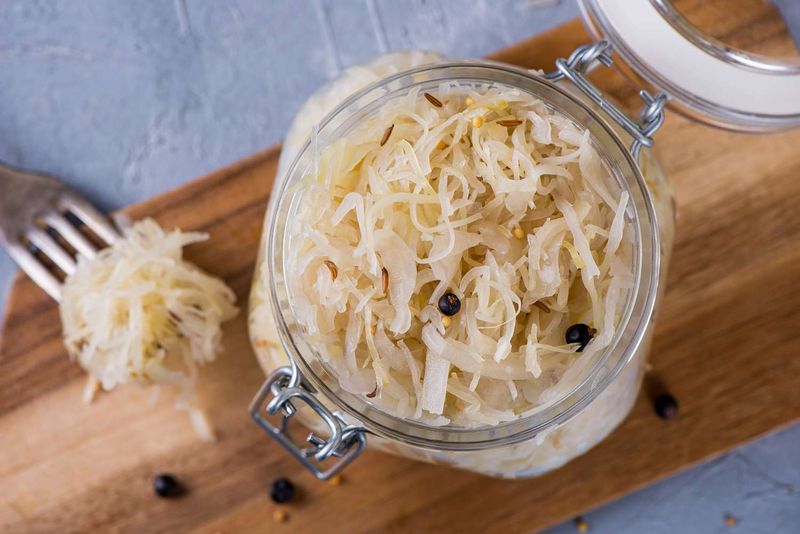
Sauerkraut is simply fermented cabbage, but calling it “just cabbage” would be seriously underselling it. Germans have been fermenting shredded cabbage with salt for over 2,000 years, creating a tangy, crunchy side dish packed with gut-friendly probiotics.
The sour flavor balances perfectly against rich, fatty meats like pork and sausage. Cooked low and slow with caraway seeds, apples, or juniper berries, sauerkraut transforms into something deeply savory and complex.
It is Germany’s most beloved condiment for very good reason.
6. Kartoffelsuppe – A Warming Potato Soup
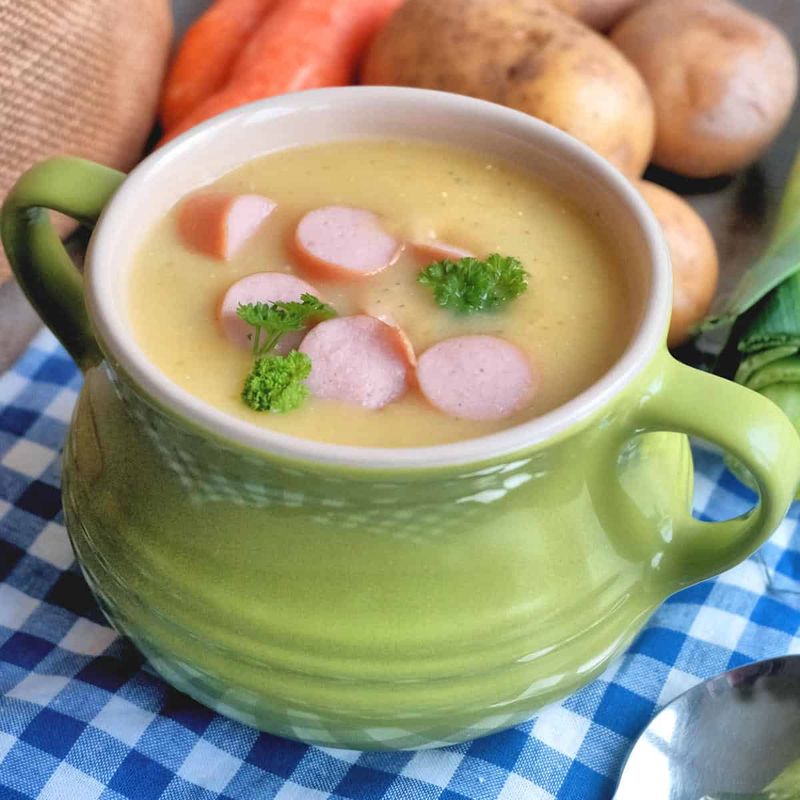
Germany’s love affair with potatoes runs deep, and Kartoffelsuppe is the coziest expression of that devotion. This thick, warming potato soup has been filling German bellies through cold winters for generations.
Every family has their own version. Some keep it chunky and rustic, loaded with vegetables and smoked sausage.
Others blend it silky smooth and finish it with a swirl of cream. Either way, a bowl of Kartoffelsuppe tastes like someone’s grandmother made it specifically to make you feel better on a rough day.
7. Rouladen – Beef Rolls Stuffed with Bold Flavors
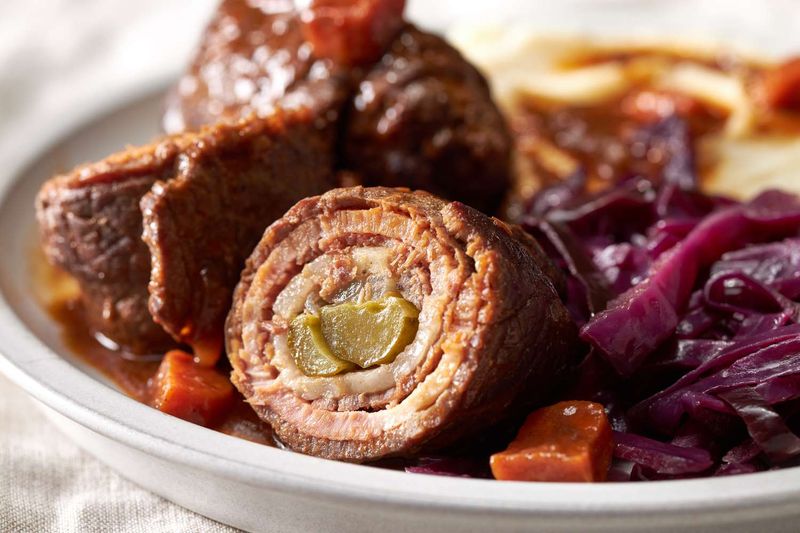
Rouladen looks impressive on the plate, but it starts with a surprisingly simple concept. Thin slices of beef are spread with mustard, layered with bacon, onions, and a pickle, then rolled up tightly and braised slowly in a rich beef broth.
After hours of cooking, the rolls become incredibly tender and the braising liquid reduces into a glossy, deeply savory gravy. This is Sunday dinner food in Germany, the kind of meal families gather around.
Each bite carries layers of smoky, tangy, and savory flavor all at once.
8. Black Forest Cake – Germany’s Most Famous Dessert
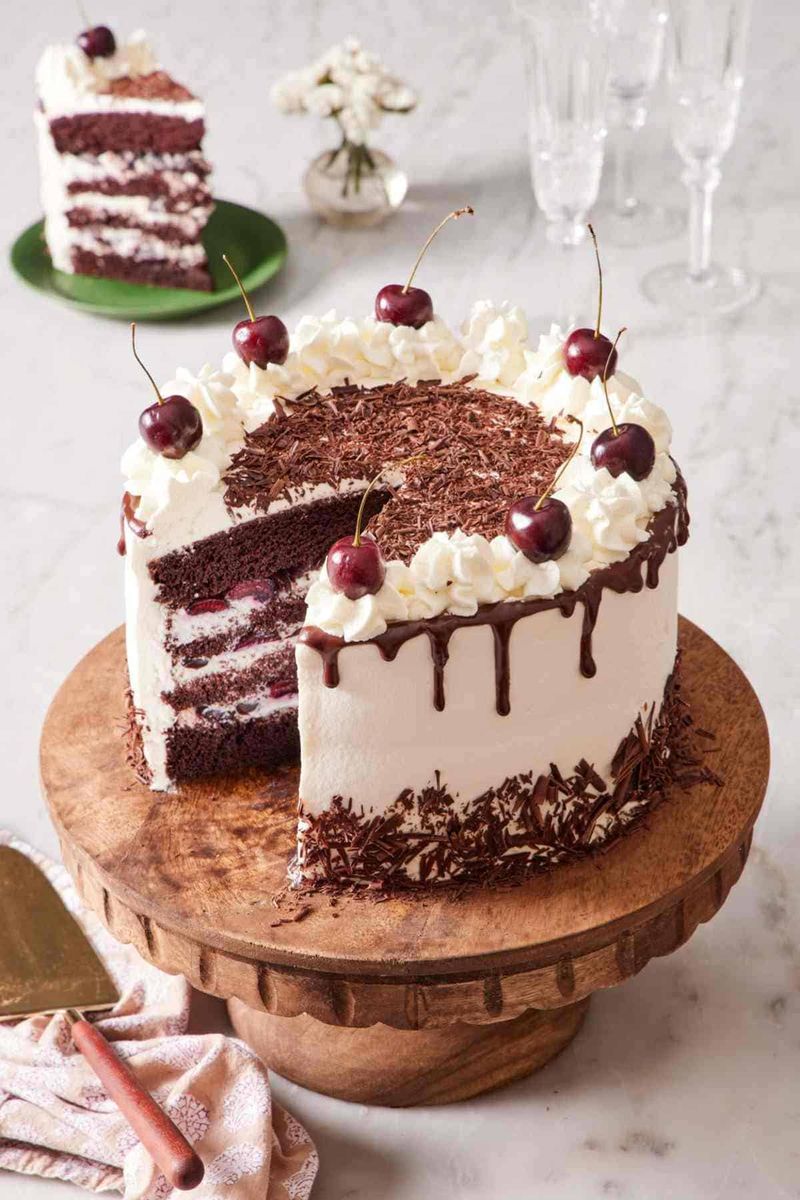
If Germany had to choose one dessert to represent itself to the world, Black Forest Cake would win easily. Named after the Black Forest region in southwestern Germany, this showstopper layers moist chocolate sponge cake with whipped cream and tart cherries.
A generous splash of Kirsch, a cherry brandy, soaks into the cake and gives it a distinctive grown-up flavor. Topped with chocolate shavings and whole cherries, it is as beautiful as it is delicious.
No wonder it has fans on every continent.
9. Currywurst – Berlin’s Beloved Street Food Obsession
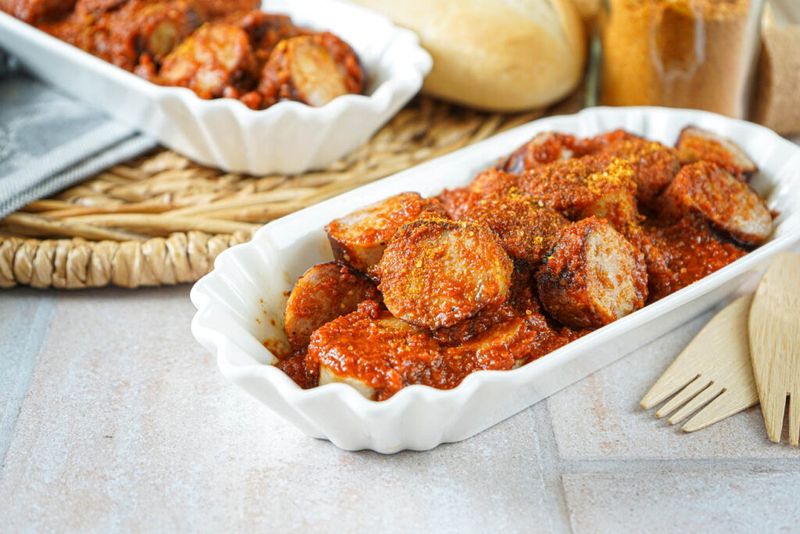
Currywurst was invented in Berlin in 1949, and the city has been obsessed with it ever since. A steamed or fried pork sausage gets sliced into rounds, smothered in a spiced tomato ketchup sauce, and dusted generously with curry powder.
It sounds odd on paper, but one bite makes everything click. The sweet, tangy, spiced sauce clings to the juicy sausage in a way that is completely addictive.
Berlin even has a dedicated Currywurst museum, which tells you everything you need to know about how seriously Germans take this dish.
10. Kartoffelpuffer – Crispy German Potato Pancakes
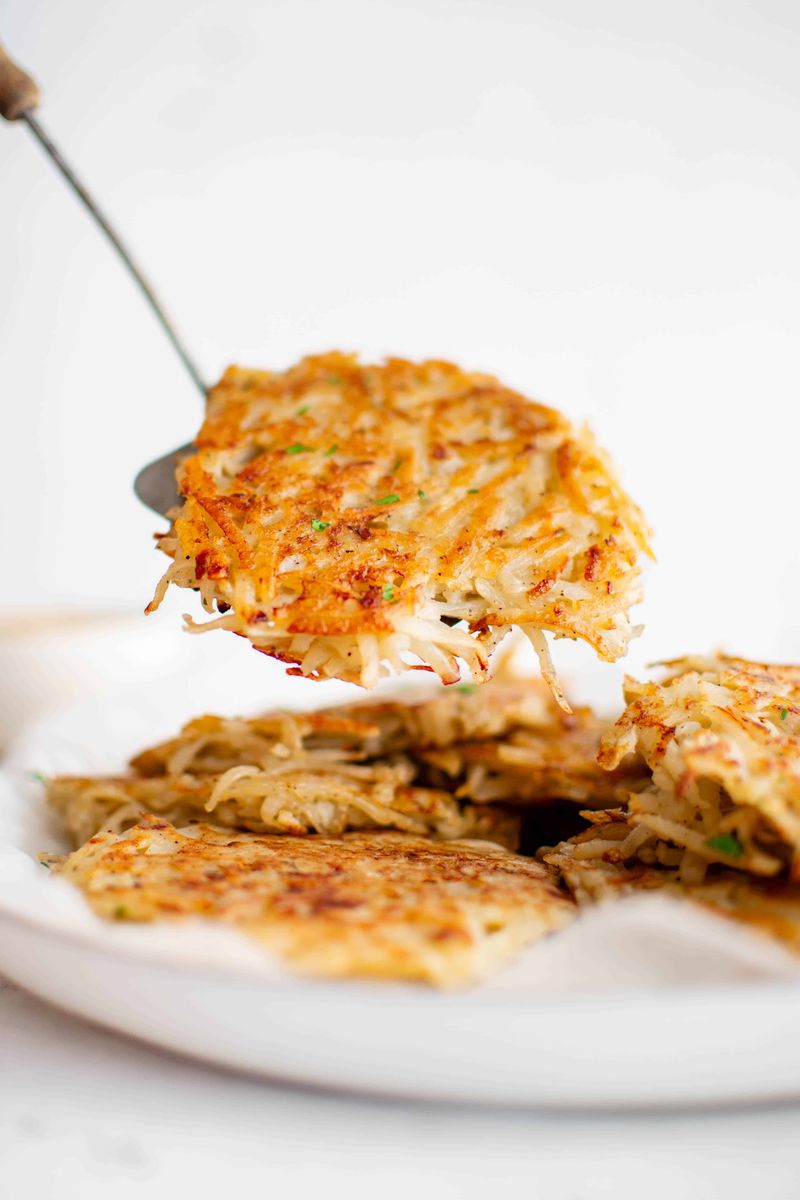
Crispy on the outside, soft and steamy on the inside, Kartoffelpuffer are the German answer to hash browns and they are far superior. These pan-fried potato pancakes are made from grated raw potatoes mixed with egg and onion, then fried in oil until deeply golden.
They show up at Christmas markets across Germany, served in paper napkins alongside applesauce or sour cream. Eating one fresh off the griddle, slightly greasy and perfectly salted, is one of those simple food pleasures that sticks in your memory for years.
11. Lebkuchen – Germany’s Spiced Gingerbread Tradition
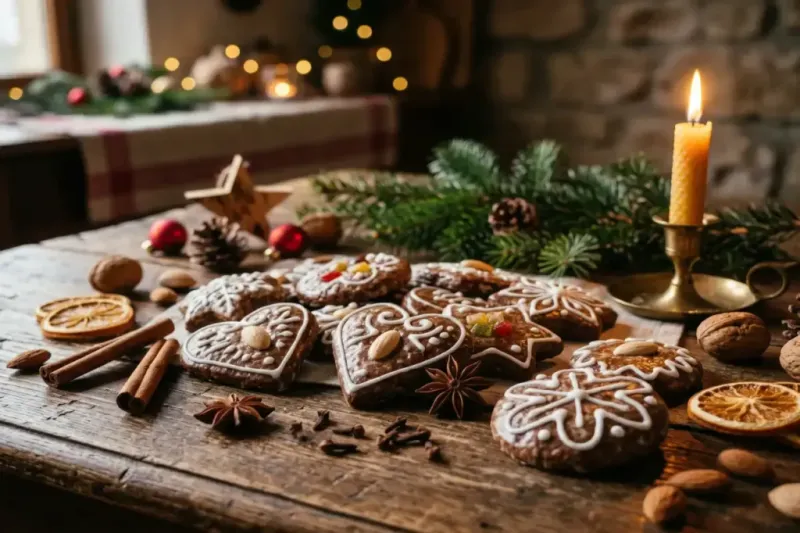
Long before gingerbread became a holiday cliche, German bakers in Nuremberg were crafting Lebkuchen with serious artistry. Dating back to the 14th century, these spiced cookies are made with honey, nuts, and a warming blend of spices including cinnamon, cardamom, and cloves.
They come in many forms, from soft cake-like rounds to crispy thin varieties glazed with chocolate or icing. Nuremberg Lebkuchen even has protected geographic status in Europe, meaning authentic versions can only come from that city.
That is how special this treat really is.
12. Maultaschen – Swabia’s Beloved Stuffed Pasta Pockets
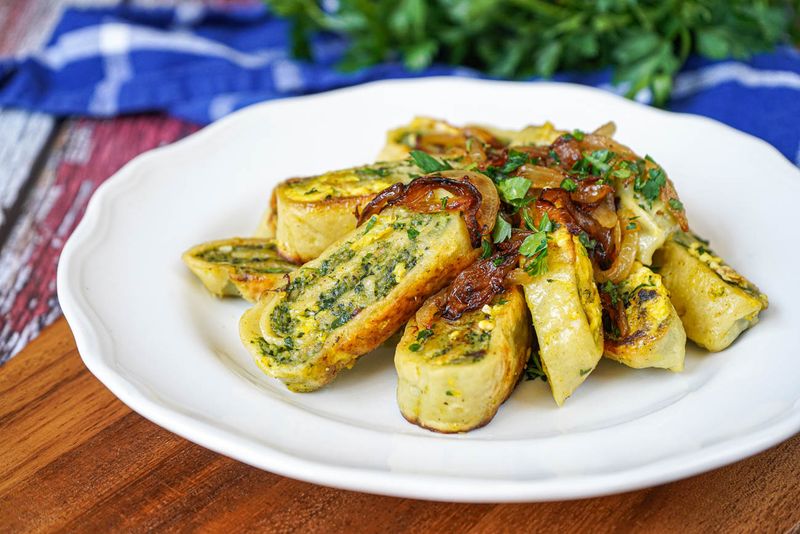
Maultaschen are often called Germany’s version of ravioli, but locals in the Swabia region would strongly disagree with that comparison. These large pasta pockets have their own centuries-old tradition and their own distinct personality.
Filled with a savory mixture of minced meat, spinach, onions, and breadcrumbs, they are served either in a clear broth or pan-fried in butter until lightly crispy. Legend says Swabian monks invented Maultaschen to hide meat during Lent, sneaking it inside the pasta so God would not notice.
History or myth, the dish is undeniably delicious.
13. Rindergulasch – Rich German Beef Goulash
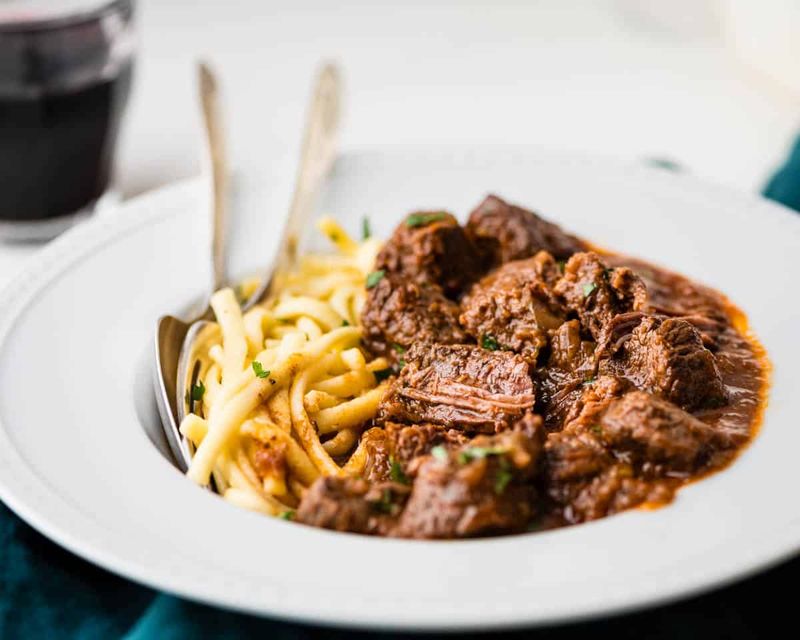
Germany borrowed goulash from Hungary and made it a permanent part of its own food culture. Rindergulasch features chunks of beef braised low and slow in a deeply seasoned sauce built on paprika, onions, tomatoes, and sometimes a splash of red wine.
After hours of gentle cooking, the beef becomes fall-apart tender and the sauce turns thick, glossy, and intensely flavored. Ladled over egg noodles or mashed potatoes, this dish hits every note of comfort food satisfaction.
Cold, rainy evenings were practically invented for a bowl of this.
14. Flammkuchen – The Alsatian-German Flatbread Pizza
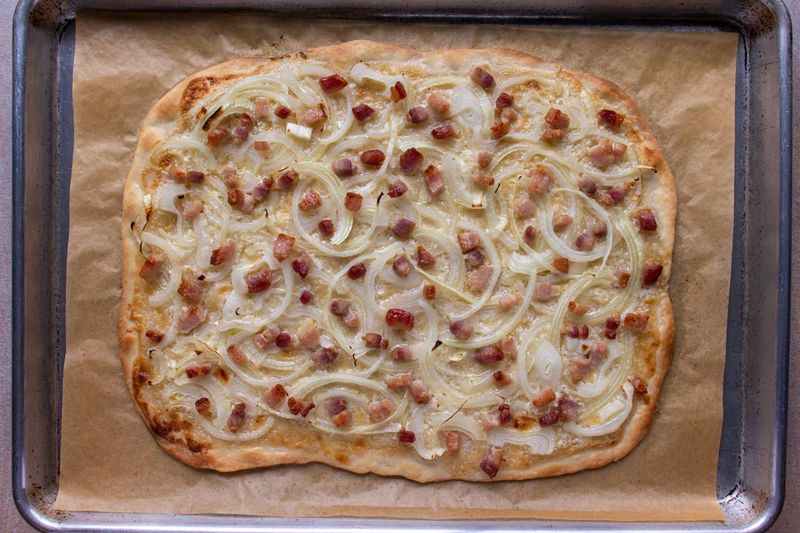
Flammkuchen proves that pizza does not have an Italian monopoly on thin, crispy, oven-baked flatbreads. Originating in the Alsace region along the German-French border, this dish features a paper-thin dough base spread with creme fraiche instead of tomato sauce.
Topped with thinly sliced onions and smoky bacon lardons, it bakes in a very hot oven until the edges turn crisp and slightly charred. The result is light, savory, and incredibly moreish.
Sharing one at a wine festival in Rhineland is basically a mandatory life experience.
15. Zwiebelkuchen – Germany’s Savory Onion Tart
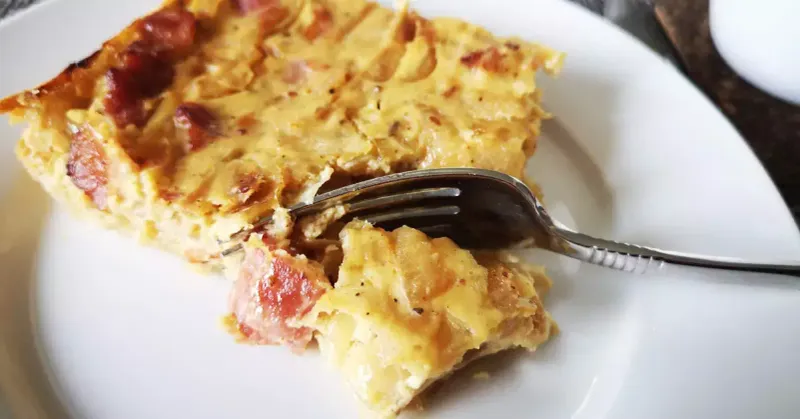
Autumn in Germany means new wine and Zwiebelkuchen, and locals treat this pairing with the kind of reverence usually reserved for holidays. This savory tart features a thick shortcrust or yeast-based pastry shell loaded with caramelized onions, bacon, eggs, and cream.
Slow-cooked onions turn sweet and silky, creating a filling that is rich without being heavy. Served warm alongside a glass of young white wine, Zwiebelkuchen is the flavor of the German harvest season.
It is the sort of dish that makes you wish autumn lasted all year.
16. Eintopf – Germany’s Everything Stew
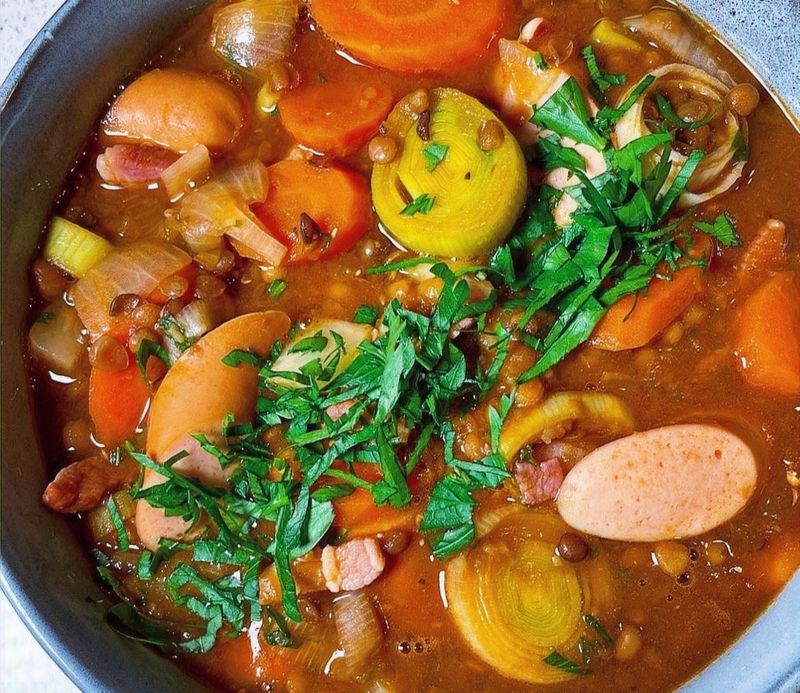
The name Eintopf literally means “one pot,” and that tells you everything about this practical, nourishing German stew. Historically made to stretch limited ingredients through tough times, Eintopf brings together whatever vegetables, legumes, and meat are on hand into a single, deeply satisfying pot.
Lentil Eintopf, potato Eintopf, and bean Eintopf with smoked sausage are all beloved versions. What makes this dish special is not any single ingredient but the way everything melds together after long, slow simmering.
Humble ingredients, extraordinary results, every single time.
17. Himmel und Erde – Heaven and Earth on One Plate
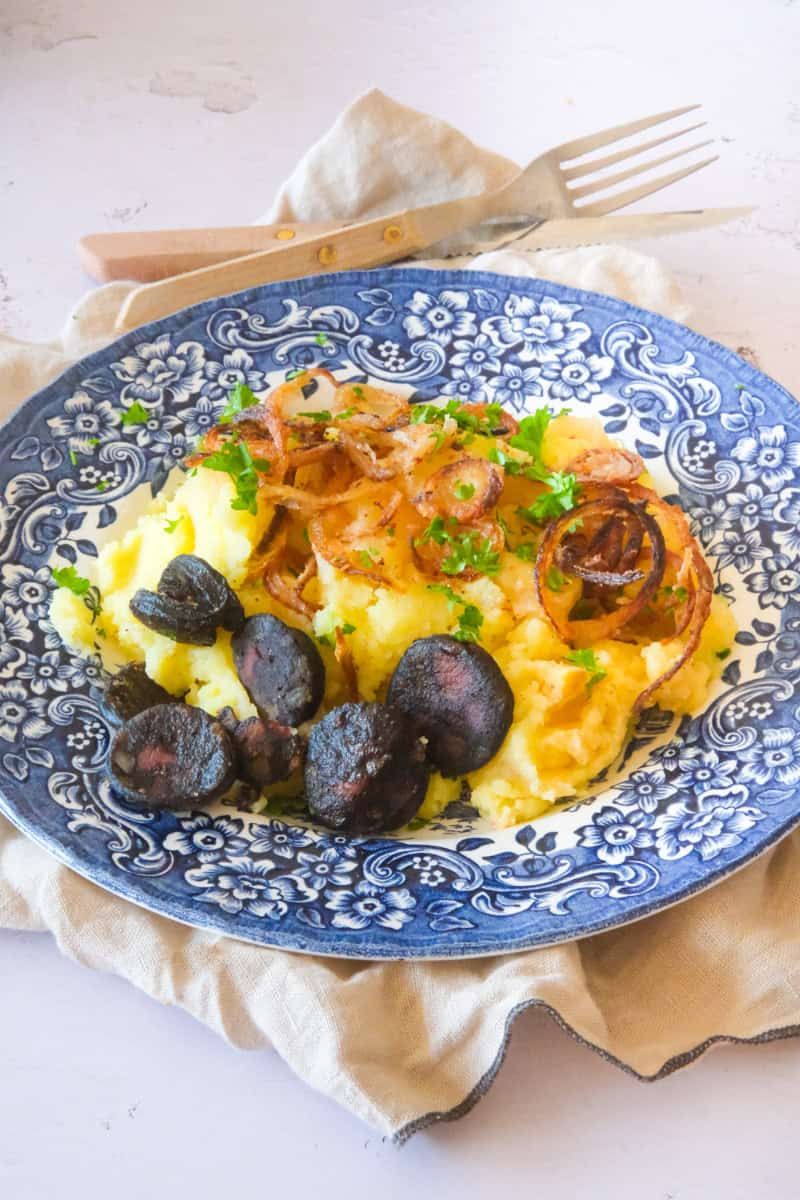
“Heaven and Earth” might sound like a dramatic name for a side dish, but this Rhineland classic earns every bit of that poetry. Potatoes from the earth and apples from the trees combine in a sweet-savory mash that pairs with fried black pudding and caramelized onions.
The contrast of flavors is genuinely surprising. Sweet apple, starchy potato, rich blood sausage, and jammy onions create a combination that should not work but absolutely does.
Regional German cooking at its most creative and most comforting, all on a single plate.
18. Dampfnudeln – Fluffy Steamed Sweet Dumplings
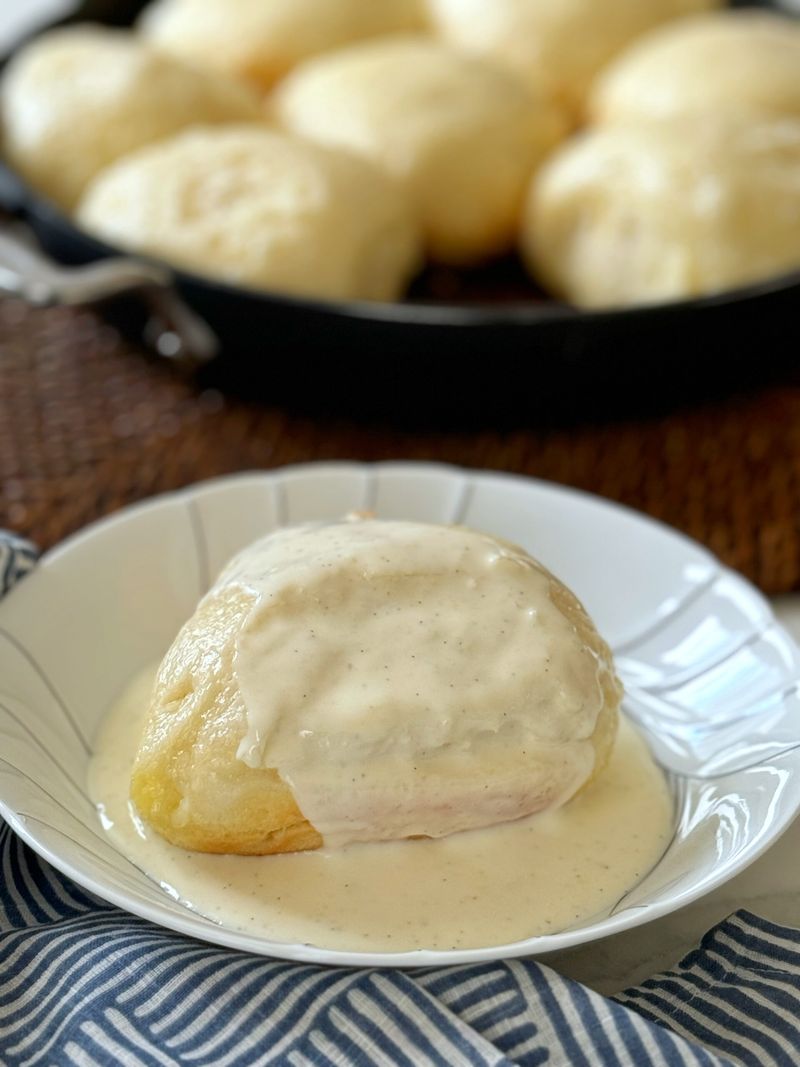
Dampfnudeln are proof that German desserts can be as delicate and comforting as any French pastry. These pillowy yeast dumplings are steamed directly in a covered pan with butter, milk, and sometimes a pinch of salt, creating a crispy golden base while the tops stay cloud-soft.
Served sweet with vanilla custard or plum sauce, they are a Bavarian and Palatinate specialty beloved by children and adults alike. The moment the lid comes off the pan and steam rises, the smell alone is enough to make everyone gather around the table.
19. Kohlrouladen – Cabbage Rolls Packed with Flavor
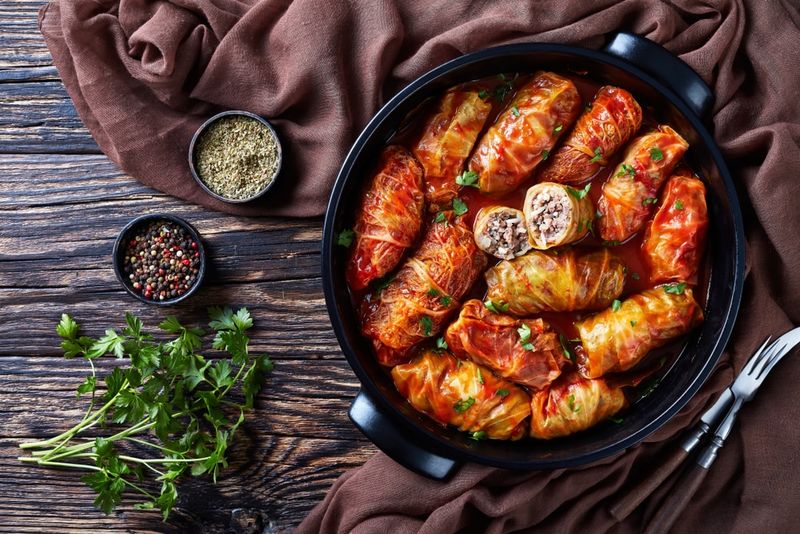
Kohlrouladen are the kind of dish that grandmothers made famous. Blanched cabbage leaves are wrapped around a savory filling of ground meat, onions, and herbs, then braised slowly in a tomato-laced broth until tender and fragrant.
The cabbage softens completely around the filling, soaking up the cooking liquid and becoming almost silky. Every bite delivers a balanced mix of meaty richness and gentle vegetable sweetness.
Served with mashed potatoes or bread to soak up the sauce, Kohlrouladen are traditional German home cooking at its most heartwarming and satisfying.
20. Apfelstrudel – Germany’s Flaky Apple Pastry
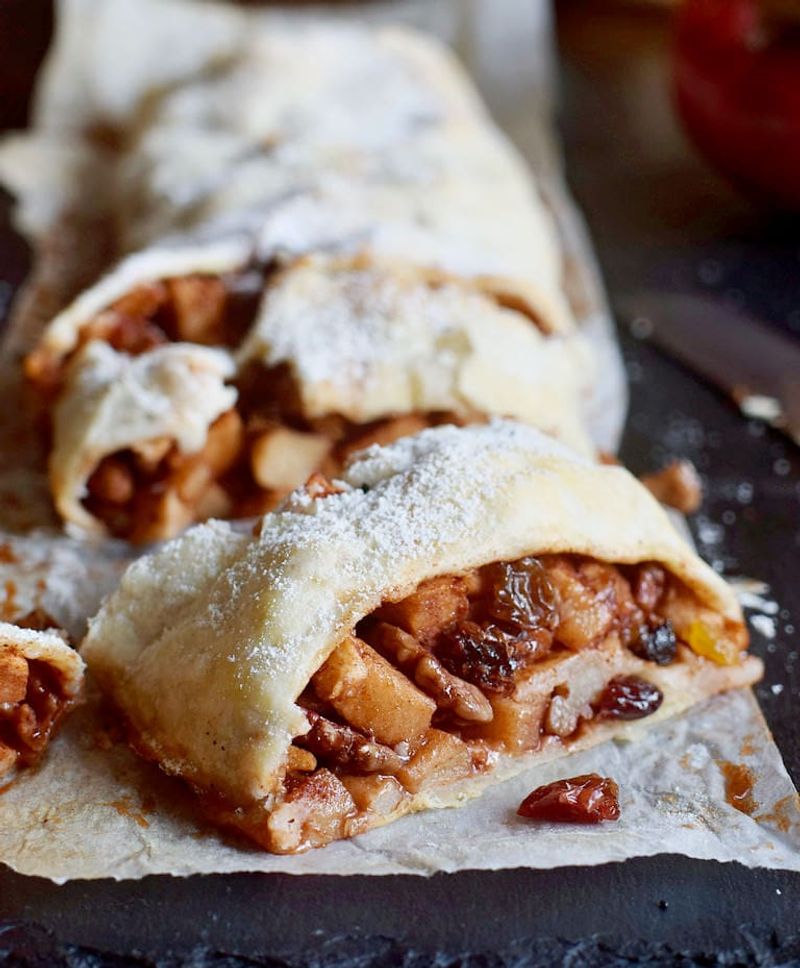
Shared with Austria but claimed with equal pride by southern Germany, Apfelstrudel is a masterpiece of simple ingredients done extraordinarily well. Tissue-thin pastry dough is stretched by hand until nearly transparent, then filled with cinnamon-spiced apples, raisins, and breadcrumbs before being rolled and baked golden.
The pastry shatters at the first touch of a fork. Inside, the apple filling is warm, sweet, and fragrant with spice.
Dusted with powdered sugar and served with vanilla sauce or a scoop of cream, this dessert is elegance without pretension.
21. Grunkohl mit Pinkel – Northern Germany’s Winter Classic
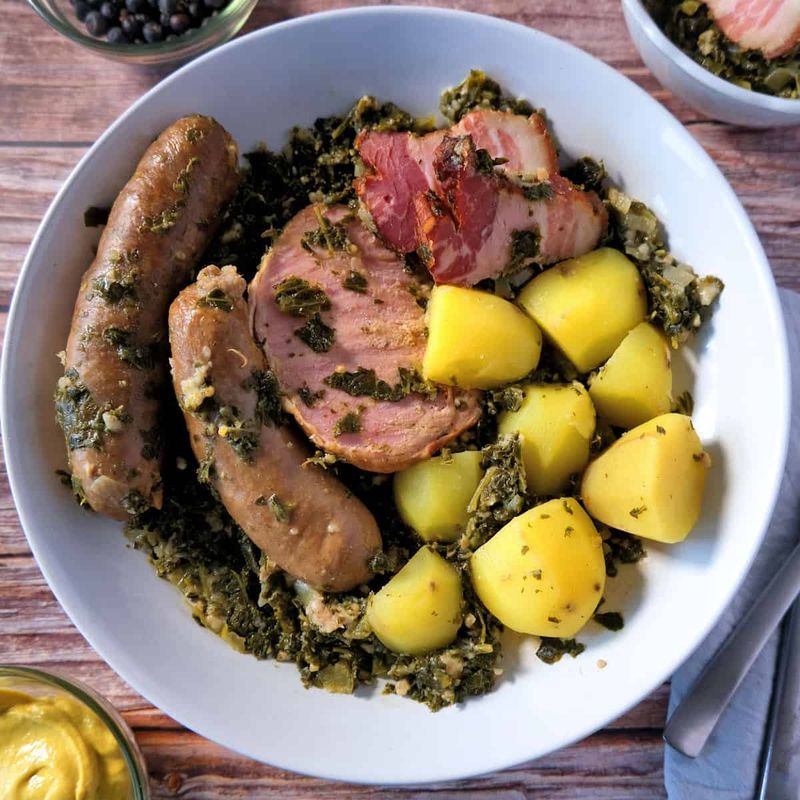
In northern Germany, particularly around Bremen and Oldenburg, kale season is treated like a festival. Gruenkohl mit Pinkel is the centerpiece: braised kale cooked long and slow with smoked meats, lard, and oats until it becomes rich, deeply savory, and almost meaty itself.
Pinkel is a smoky, grainy sausage unique to the region, and it adds bold flavor to every forkful. Locals organize “Kohlfahrt” trips, group hikes through winter fields followed by a communal feast of this dish.
Food rarely gets more culturally rooted than this.
22. Bienenstich – The Legendary German Bee Sting Cake
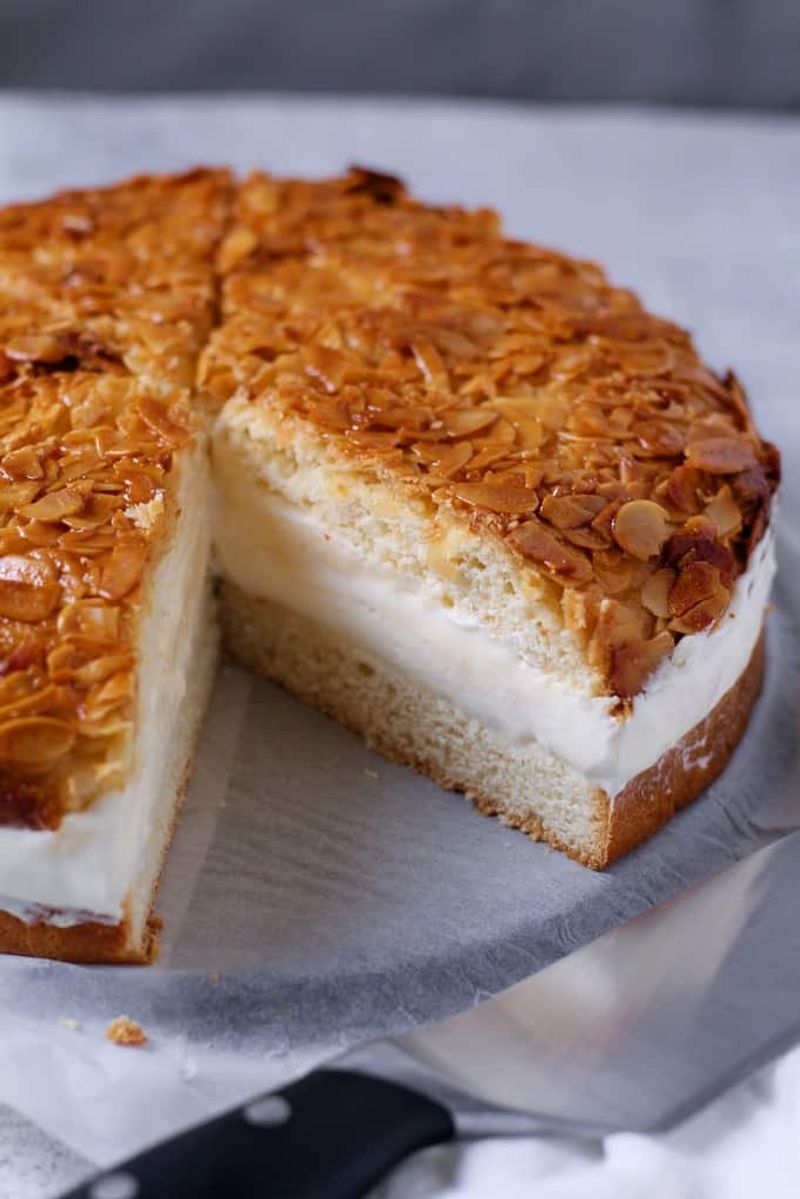
Nobody knows for certain how Bienenstich got its name, but one popular legend claims a baker was stung by a bee attracted to the honey topping while pulling the cake from the oven. True or not, the story fits a cake this extraordinary.
A soft, brioche-like yeast base is topped with a caramelized honey and almond crust, then split and filled with rich vanilla cream. The contrast between the crunchy top and the pillowy, cream-filled interior is genuinely unforgettable.
Germany’s bakeries have been perfecting this recipe for centuries, and it shows.
23. Reibekuchen – Cologne’s Crispy Potato Fritter Favorite
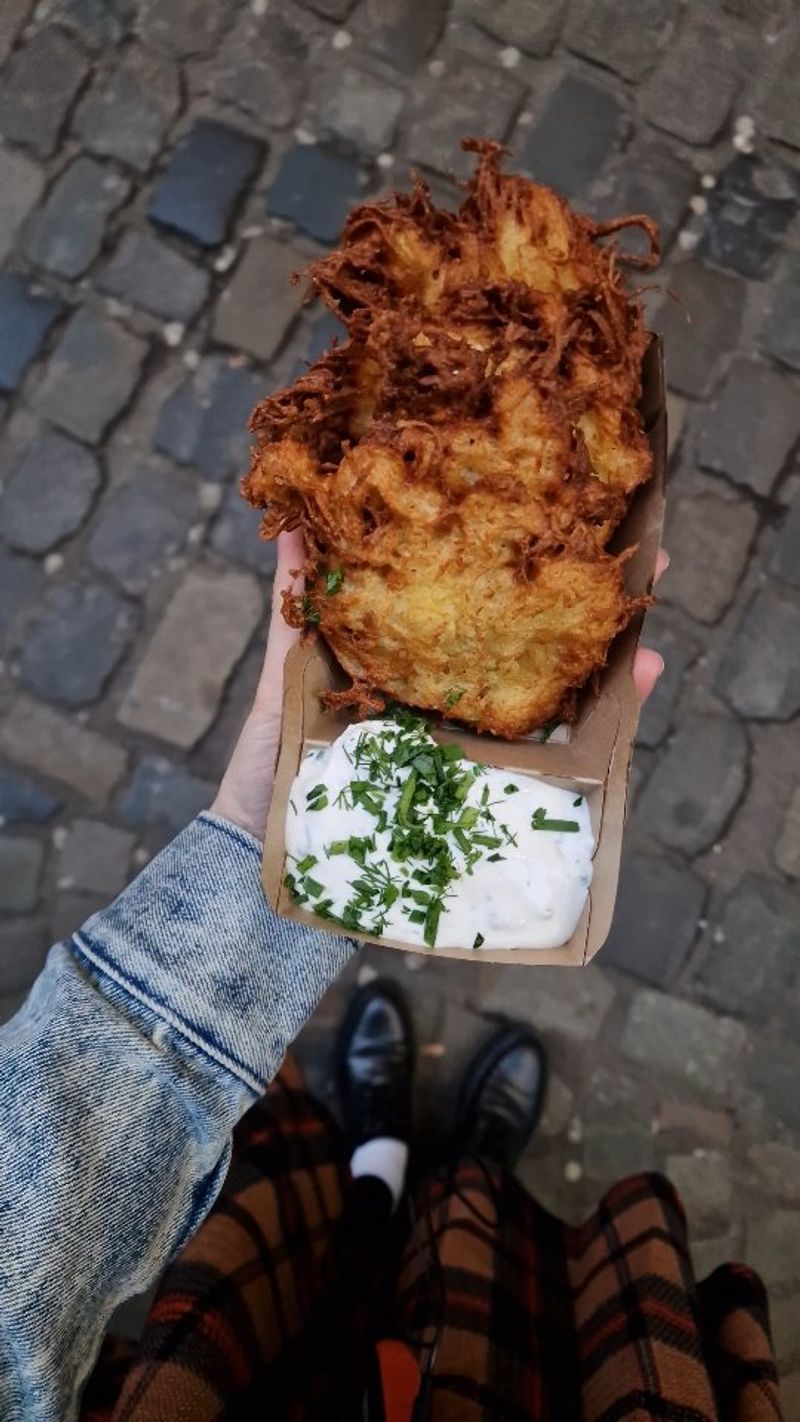
Cologne has a deep, almost spiritual connection to Reibekuchen. These thin, lacy potato fritters are fried in oil until the edges turn deeply golden and irresistibly crispy, while the center stays tender and potato-sweet.
At Cologne’s famous Christmas market, the smell of Reibekuchen frying in huge pans drifts through the cold air like an invitation. Served in a paper bag with a side of applesauce for dipping, they are the ultimate cold-weather street snack.
Simple, affordable, and completely impossible to eat just one of.