
Not every movie villain is pure evil. Some of the most memorable bad guys in cinema history turn out to be deeply human, driven by pain, fear, or a twisted sense of justice.
When a villain has real reasons behind their actions, it makes the story so much richer and harder to forget. Get ready to look at some iconic antagonists in a whole new light.
1. Magneto – X-Men (2000)
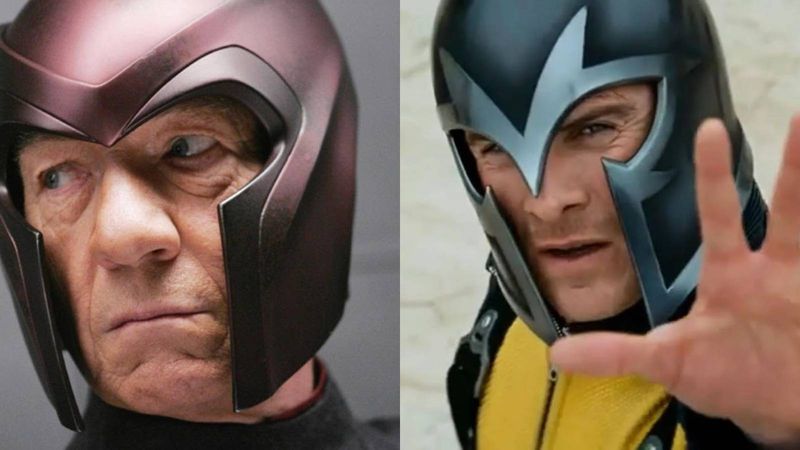
Born in a Nazi concentration camp, Erik Lehnsherr watched his people be destroyed simply for being different. That trauma never left him.
As Magneto, he fights to make sure mutants never face the same fate.
His methods are brutal, but his fear is completely understandable. He is not fighting for power.
He is fighting because he genuinely believes the world will always turn on those who are different.
2. Ozymandias – Watchmen (2009)
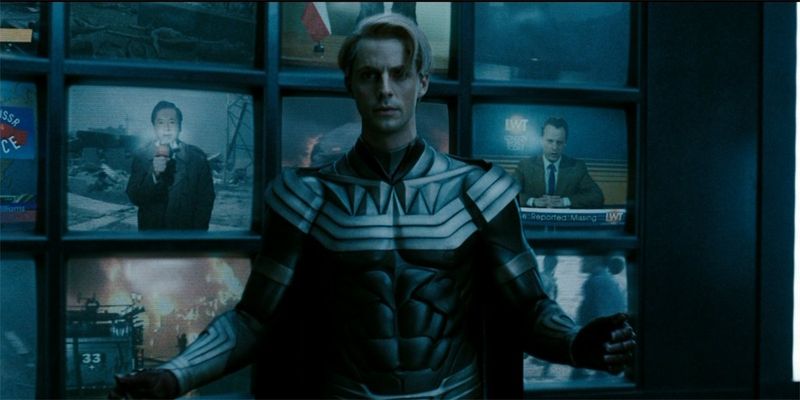
Adrian Veidt is the smartest man in the world, and he uses that gift to plan the most horrifying act of mercy ever put on screen. He kills millions to save billions, and he sleeps just fine afterward.
Fans have debated for decades whether he is a monster or a savior. His plan actually works, which makes the moral question even harder to shake.
He forces you to ask what you would sacrifice for world peace.
3. Thanos – Avengers: Infinity War (2018)
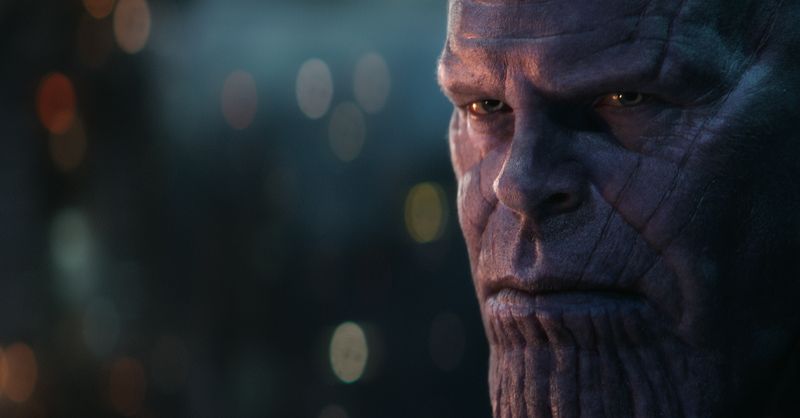
Thanos watched his home planet collapse under the weight of overpopulation, and that memory never left him. His solution, wiping out half of all life, is horrifying.
But his grief is painfully real.
He genuinely loves Gamora, cries when he sacrifices her, and truly believes he is being merciful. Josh Brolin played him with such quiet sadness that audiences almost forgot to hate him.
Almost.
4. Roy Batty – Blade Runner (1982)
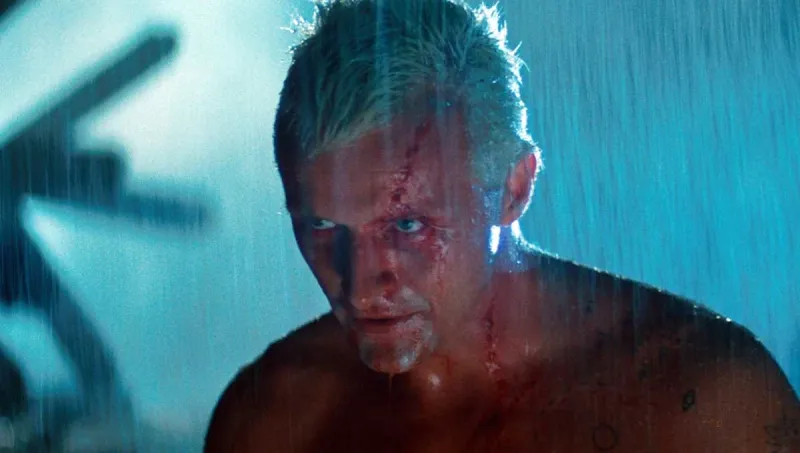
Roy Batty is a replicant who just wants more life. He kills, yes, but every act of violence comes from a desperate fear of dying before he has truly lived.
That is not so different from any of us.
His final monologue, delivered in the rain, is one of the most beautiful speeches in movie history. He saves the man who hunted him and then dies quietly.
A villain who ends as a poet.
5. Killmonger – Black Panther (2018)
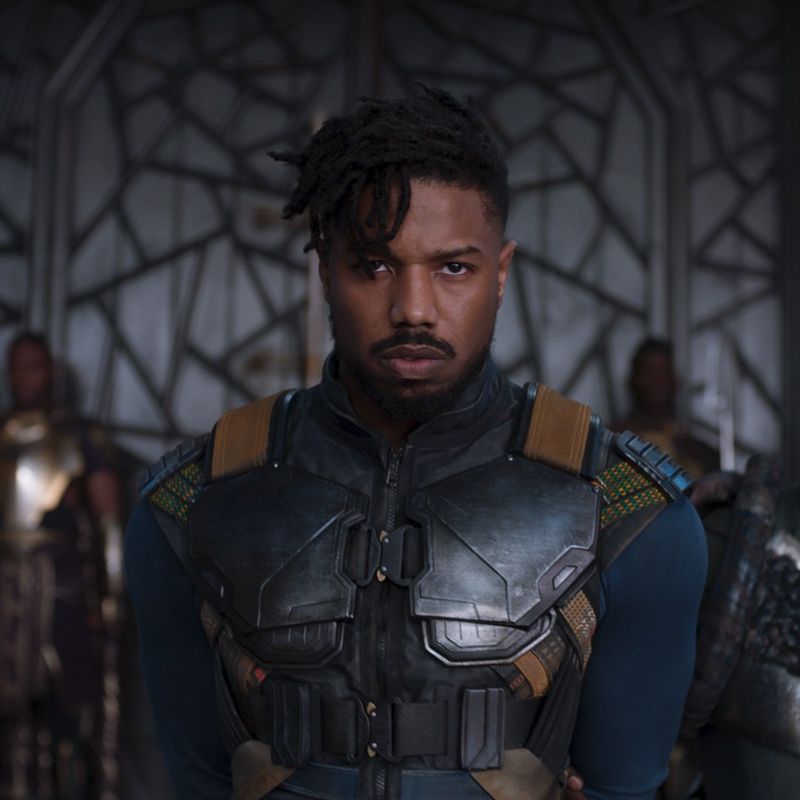
Erik Stevens grew up in Oakland after his father was killed by the king of Wakanda, left to fend for himself with no family and no country. His anger did not come from nowhere.
It came from abandonment.
His goal, to arm oppressed people around the world, is actually rooted in real injustice. The tragedy is not that he is wrong about the problem.
It is that his solution would create more suffering.
6. Javert – Les Miserables (2012)
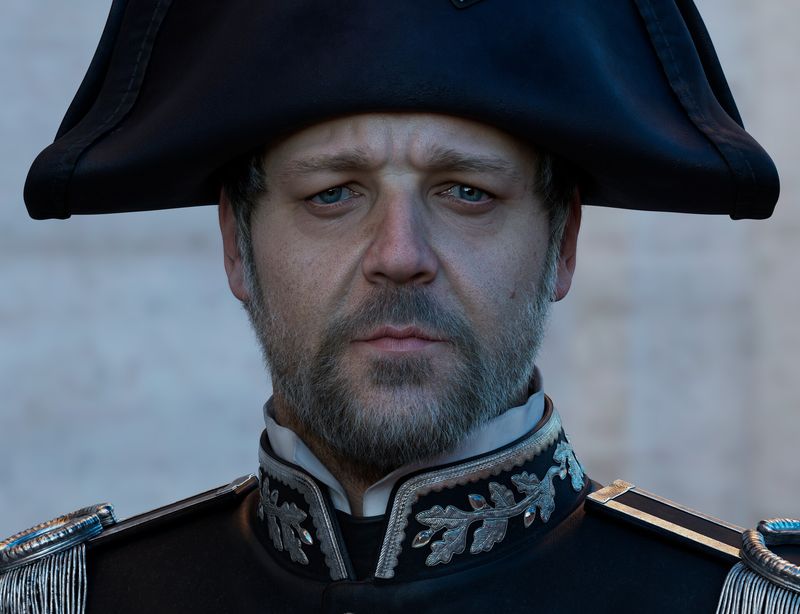
Inspector Javert is not cruel for fun. He is a man who grew up in prison and clawed his way out by following the law with absolute devotion.
Rules are all he has ever trusted.
When Jean Valjean shows him mercy, Javert cannot process it. His entire worldview shatters.
He jumps from a bridge not out of defeat, but because he cannot survive a world that does not match his beliefs. That is genuinely heartbreaking.
7. Loki – Thor (2011)
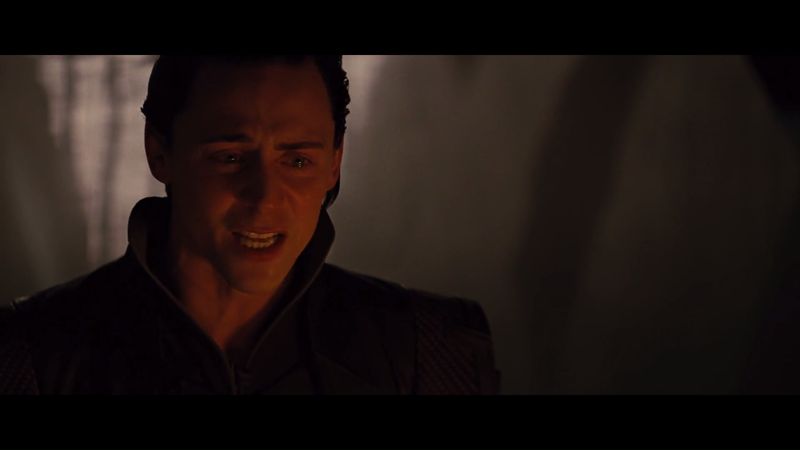
Loki found out he was adopted and that his biological father was the king of a people Asgard considered monsters. In one moment, his entire identity was ripped away.
His villainy grew directly from that wound.
Tom Hiddleston played him with so much charm and quiet pain that fans rooted for him even when he was clearly in the wrong. Loki is not evil.
He is a kid who never felt like he belonged.
8. Amy Dunne – Gone Girl (2014)
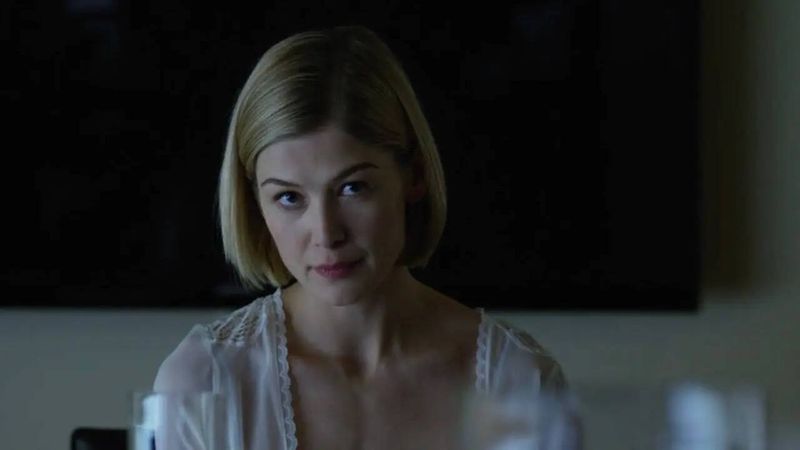
Amy Dunne spent her whole life being shaped into a character, the Amazing Amy, a perfect fictional girl her parents created. By the time we meet her, she has learned to perform rather than feel.
Her revenge plot is terrifying, but the movie quietly shows how she was never truly seen as a real person. She is monstrous and also a product of everyone around her refusing to treat her as human.
That tension is what makes the film unforgettable.
9. Hannibal Lecter – The Silence of the Lambs (1991)
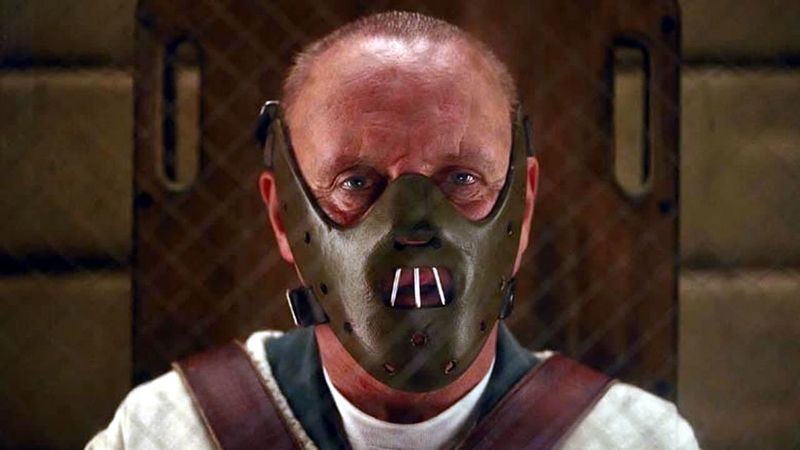
Hannibal Lecter is terrifying not because he is loud or violent, but because he is so refined and so genuinely helpful. He assists Clarice with real insight, builds a real connection, and then eats people.
Anthony Hopkins plays him with such warmth that you almost forget what he is. Lecter punishes rudeness and rewards intelligence, which gives him a twisted moral code that feels almost logical.
Almost is doing a lot of work in that sentence.
10. Michael Corleone – The Godfather (1972)
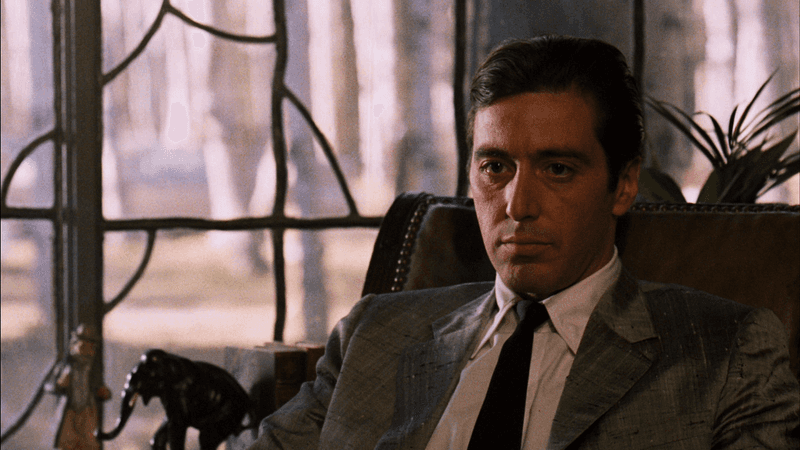
Michael Corleone started the story as the clean one, the war hero who wanted nothing to do with his family’s crime empire. Watching him become the most ruthless Corleone of all is one of cinema’s greatest slow burns.
He does not turn evil overnight. Every choice he makes is driven by love for his family.
By the time he orders the deaths of all rival bosses, you understand exactly how he got there, and that understanding is deeply uncomfortable.
11. The Joker – The Dark Knight (2008)
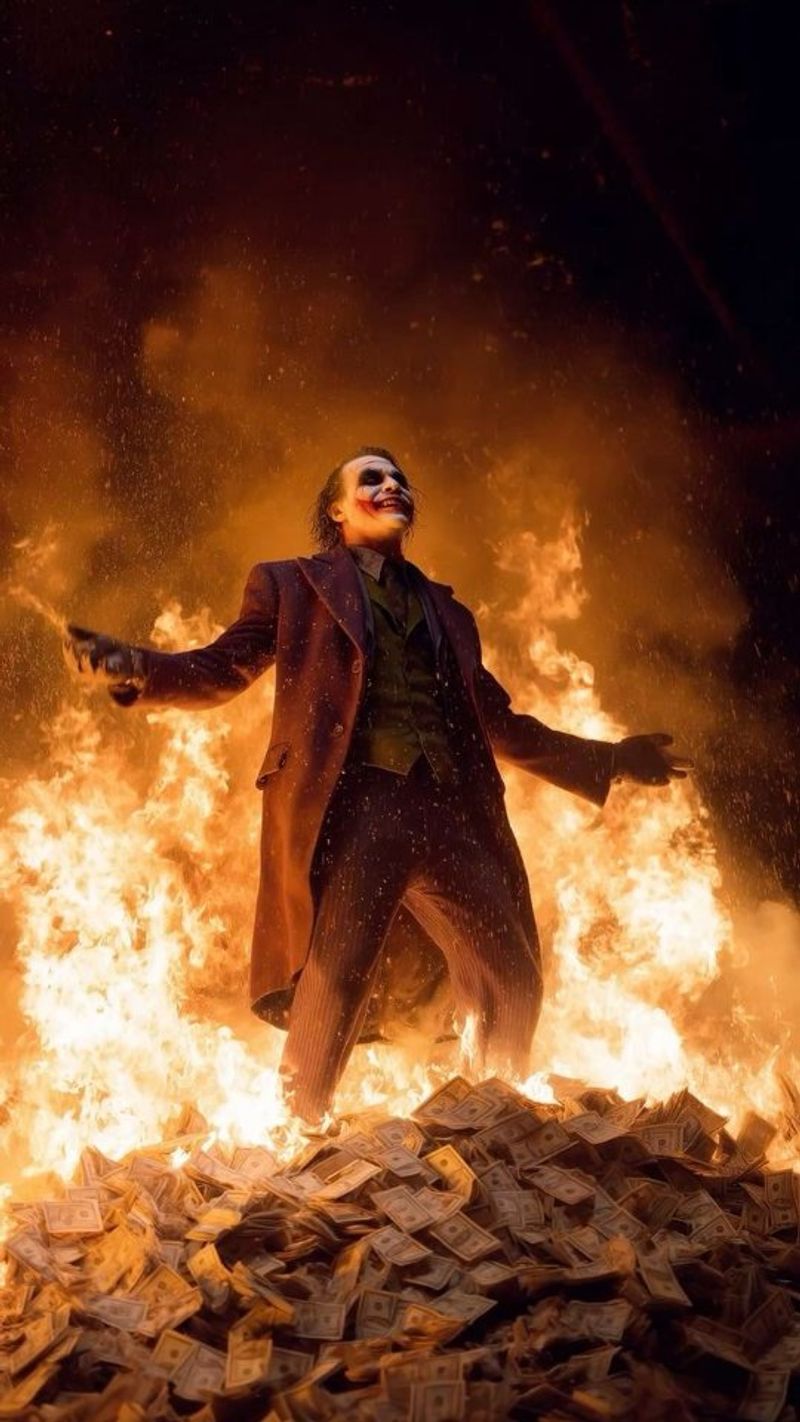
Heath Ledger’s Joker tells a different story about his scars every time someone asks. That detail alone tells you everything.
He is not a man with a plan so much as a man who holds up a mirror to Gotham’s chaos.
He wants to prove that anyone can break under the right pressure. What makes him complicated is that he is often right.
The ferry scene in particular shows how close ordinary people come to crossing his line.
12. Colonel Hans Landa – Inglourious Basterds (2009)
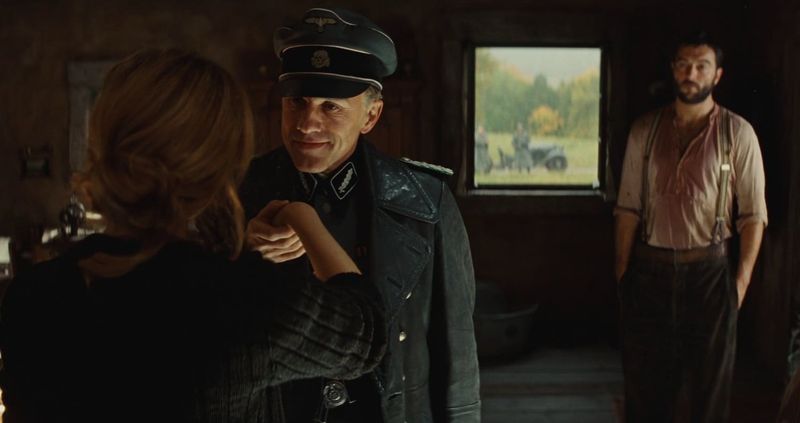
Hans Landa is the most chilling kind of villain, the one who knows exactly what he is doing and enjoys the performance of it. He calls himself a detective, not a Nazi, which is its own kind of horror.
Christoph Waltz won an Oscar for making Landa feel almost likable. The opening farmhouse scene is unbearable precisely because he is so polite.
He is complicated not because he has a sad backstory, but because he has no excuses and does not want any.
13. Nurse Ratched – One Flew Over the Cuckoo’s Nest (1975)
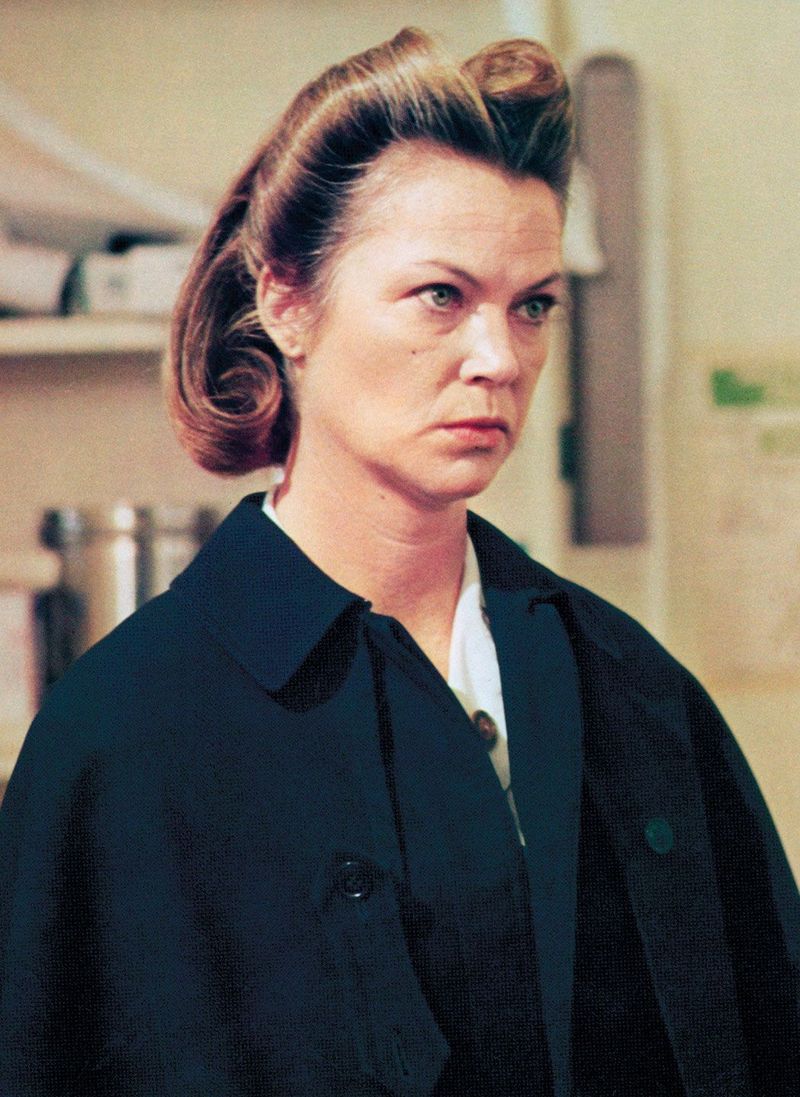
Nurse Ratched is not screaming or threatening. She uses quiet authority and institutional power to crush the patients in her care, and she genuinely believes she is helping them.
That belief is what makes her so scary.
She is a product of a broken system that rewards control over compassion. Louise Fletcher played her with such rigid composure that the rare cracks feel seismic.
She is the villain of the story, but the system behind her is the real monster.
14. Commodus – Gladiator (2000)
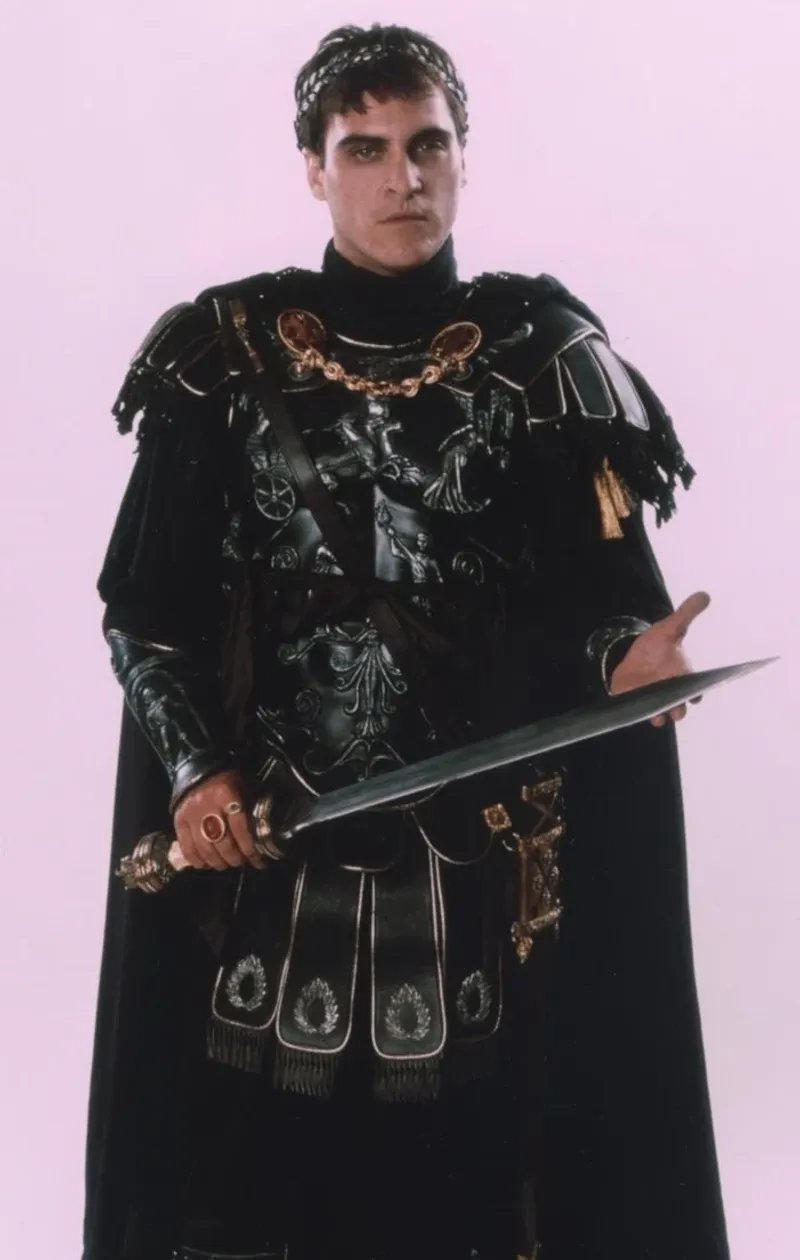
Commodus kills his own father because his father never told him he was loved. That is the whole tragedy in one sentence.
He is a boy who wanted approval so badly he became a monster to get power instead.
Joaquin Phoenix plays him as petulant and terrified underneath all the cruelty. He knows he is not the man his father wanted, and that knowledge eats him alive.
His villainy is rooted entirely in a child’s unmet need for acceptance.
15. Anton Chigurh – No Country for Old Men (2007)
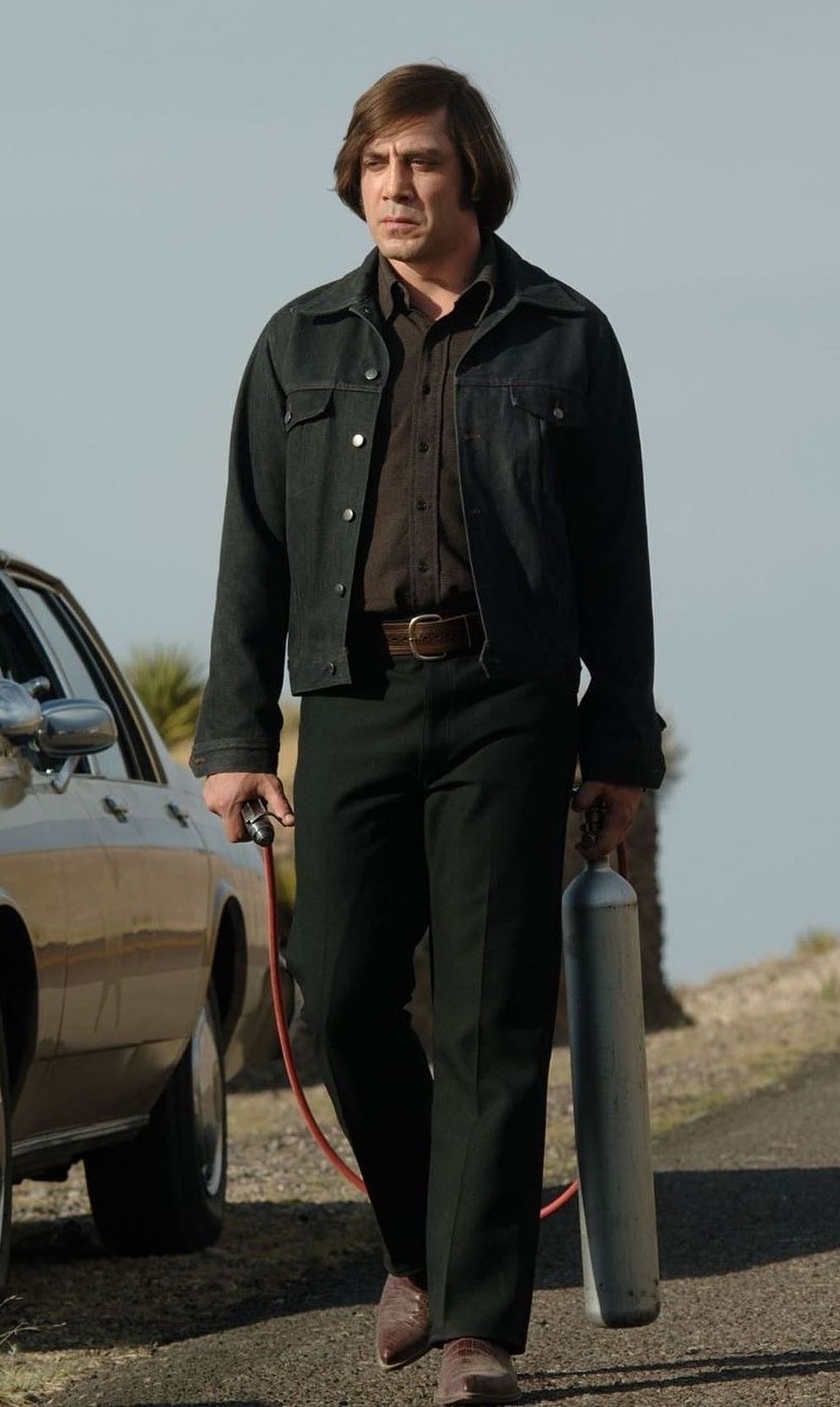
Anton Chigurh operates by a code that is almost philosophical. He flips a coin to decide if people live or die, not out of cruelty, but because he genuinely believes fate should decide, not him.
Javier Bardem plays him with a stillness that is more unsettling than any amount of shouting. He is not complicated in the sense of being sympathetic.
He is complicated because he has a consistent, internally logical worldview that just happens to include murder as an acceptable outcome.
16. Frollo – The Hunchback of Notre Dame (1996)
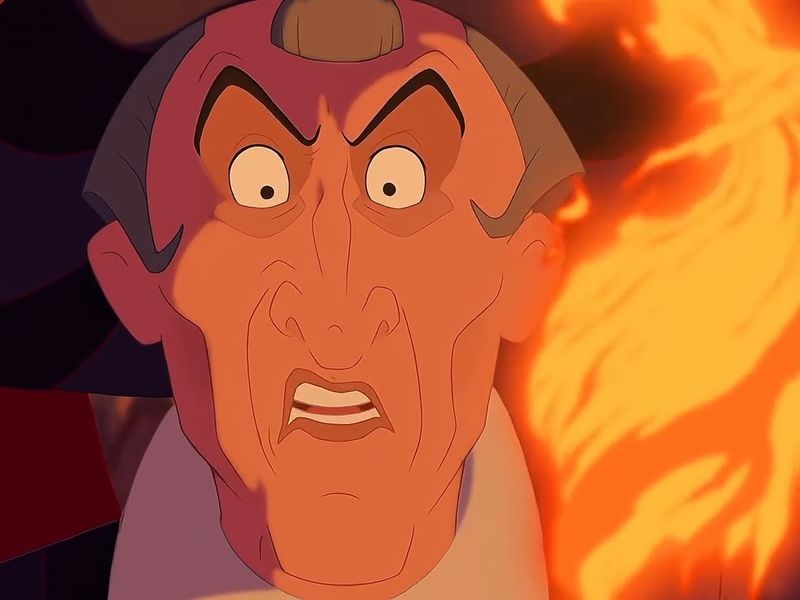
Judge Frollo is perhaps Disney’s darkest villain because he truly believes he is righteous. He persecutes an entire people, obsesses over a woman he cannot have, and frames all of it as God’s will.
That is genuinely chilling for a kids movie.
His song Hellfire is one of the most psychologically honest villain moments in animation history. He does not want to be evil.
He wants to be good, but he refuses to take responsibility for his own darkness. That refusal is what makes him so recognizable.