
Some restaurants feel like old friends, and losing them stings more than we expect. Across America, dozens of beloved fast food chains have quietly shut their doors, leaving behind only memories and the occasional craving.
Whether they lost the battle to bigger competitors or simply ran out of time, these places mattered to the people who loved them. Here is a look at 17 fast food chains that vanished before we could say a proper goodbye.
1. Howard Johnson’s
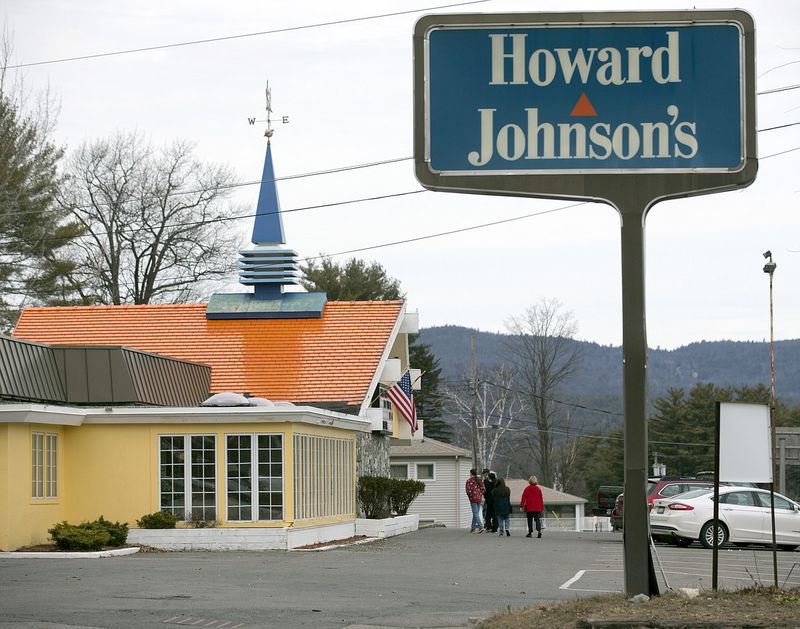
Once the biggest restaurant chain in America, Howard Johnson’s ruled the roadside from the 1960s through the 1970s with over 1,000 locations. Families on road trips knew that orange roof meant a reliable meal and a scoop of ice cream.
Sadly, the last location in Lake George, New York, shut down in 2022 after the COVID-19 pandemic dealt the final blow. A true American institution, gone for good.
2. Burger Chef
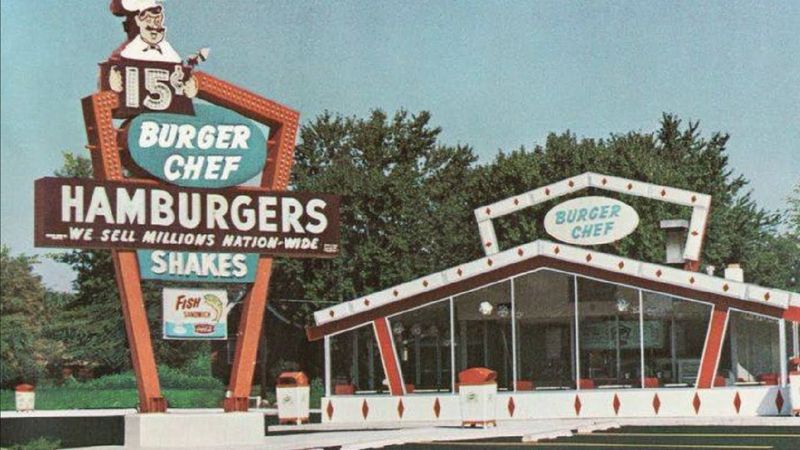
Founded in Indianapolis in 1954, Burger Chef actually beat McDonald’s to the punch by creating the very first kids’ meal, called the Fun Meal. At its peak, it boasted 1,050 locations across the country.
But rapid expansion and a tragic 1978 kidnapping and murder of four employees left the brand struggling. Hardee’s eventually bought the chain, and just like that, Burger Chef faded from the American fast food landscape forever.
3. Red Barn
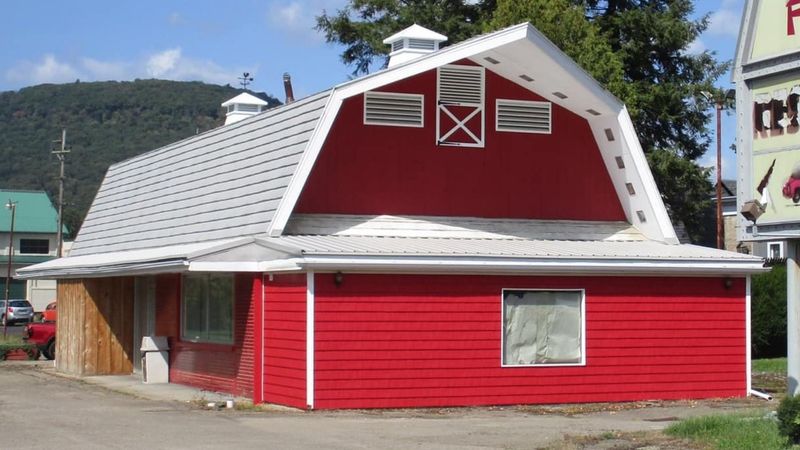
Shaped like an actual red barn, this chain was impossible to miss along American highways after its 1961 launch in Springfield, Ohio. Burgers like the Big Barney and Barnbuster kept customers coming back, and Red Barn was even an early pioneer of the self-service salad bar.
Unfortunately, its parent company stopped advertising and let leases expire. Most locations closed by 1988, and the very last one finally shut its doors in 2020.
4. Arthur Treacher’s
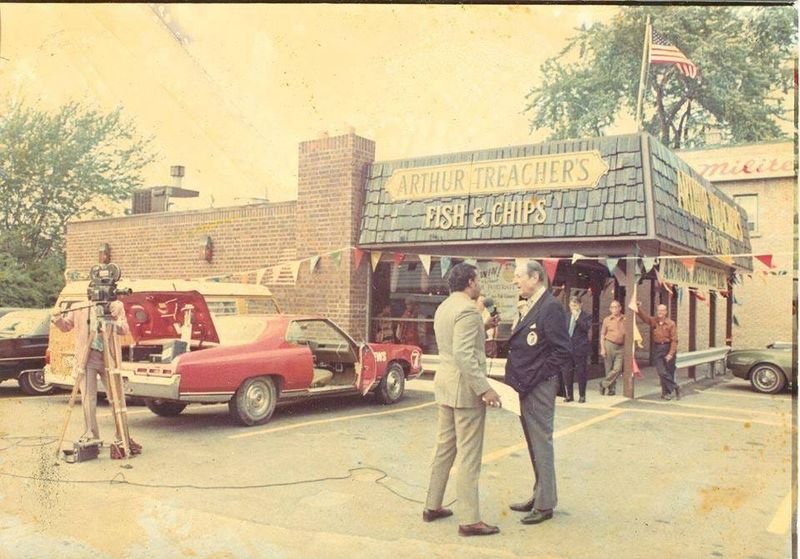
Fish and chips in a fast food format sounds like a winning idea, and for a while Arthur Treacher’s proved it absolutely was. The chain carved out a niche by serving crispy battered fish, chips, and coleslaw in a fun, casual setting that felt different from the burger-heavy competition.
Over time, the chain struggled to hold its ground and eventually faded out. A handful of locations survived as ghost brands, but the real Arthur Treacher’s experience is long gone.
5. Doggie Diner
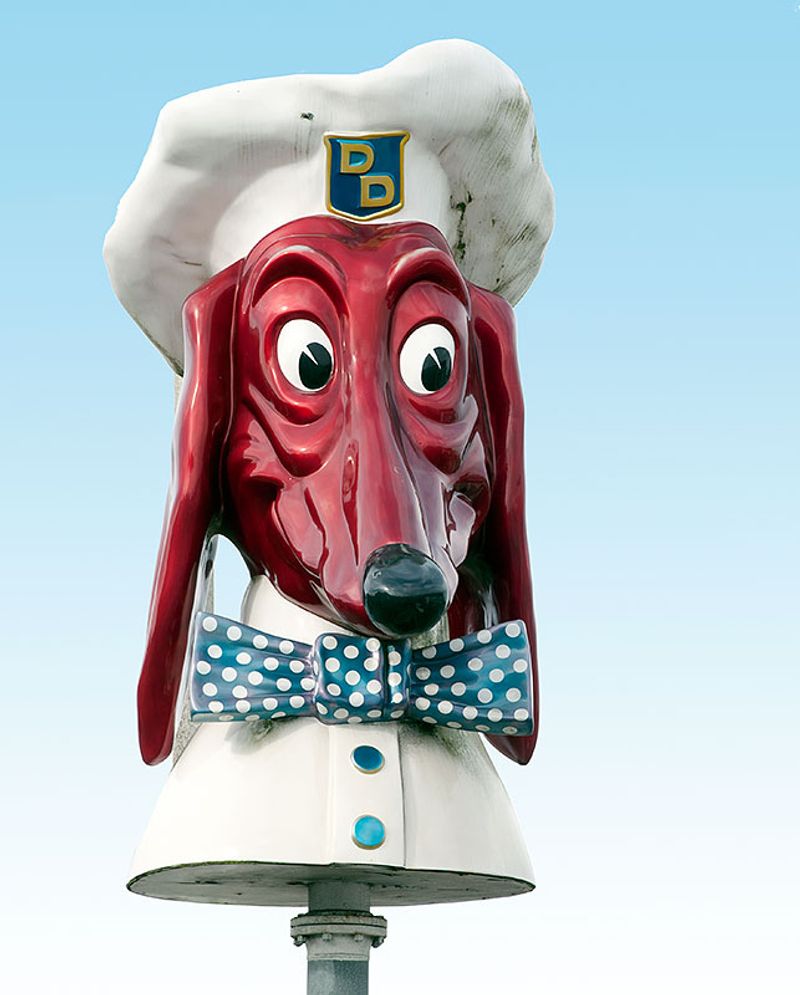
Imagine pulling up to a hot dog stand watched over by a giant, grinning dachshund head perched on a pole. That was the Doggie Diner experience, a Bay Area staple from 1948 to 1986 in San Francisco and Oakland, California.
The quirky mascots became so beloved that several are now recognized as San Francisco landmarks. The food is gone, but those cheerful dog heads are still watching over the city like loyal sentinels.
6. Lum’s
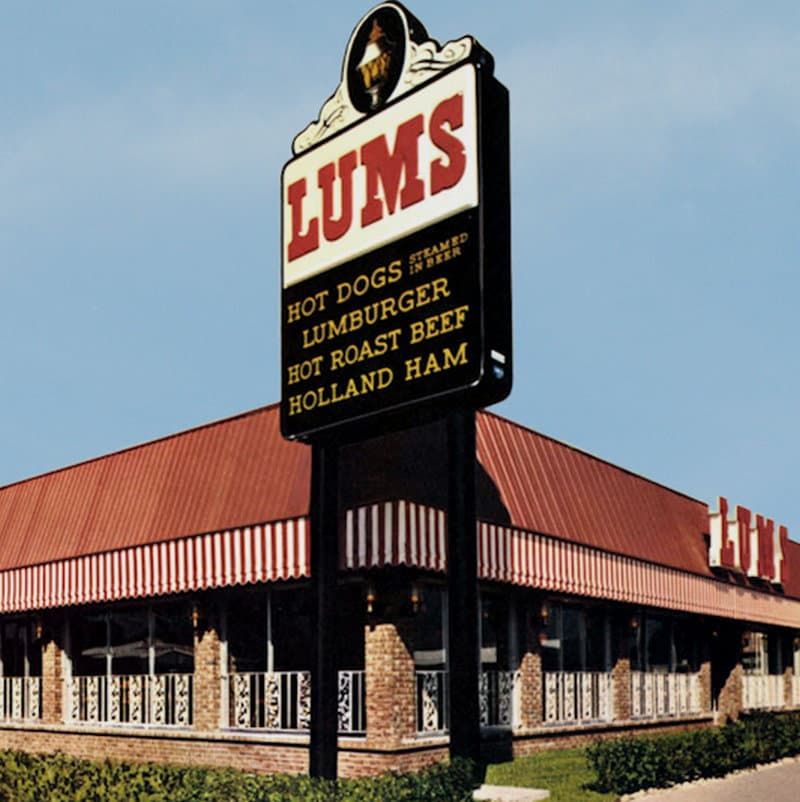
Hot dogs steamed in beer might sound unusual, but Lum’s turned that quirky concept into a nationwide hit with 400 locations across the United States, Europe, and Puerto Rico. The chain had a fun, casual vibe that felt refreshingly different from typical burger joints.
Financial trouble caught up with Lum’s, and the company filed for bankruptcy in 1982. One lone location in Bellevue, Nebraska, somehow held on until 2017, serving as the chain’s final farewell.
7. Wetson’s
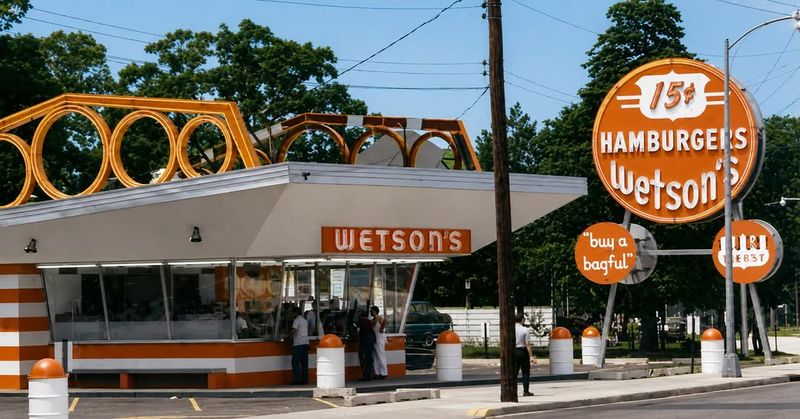
Back when a burger cost just 15 cents and fries were only a dime, Wetson’s was a favorite in the northeastern United States. Founded in 1959, the chain built about 70 locations around its famous Big W burger and wallet-friendly prices.
Competing against powerhouses like McDonald’s and Burger King proved too tough. Wetson’s merged with Nathan’s Famous in 1975 but closed that same year, making it one of the shortest post-merger lifespans in fast food history.
8. Little Tavern
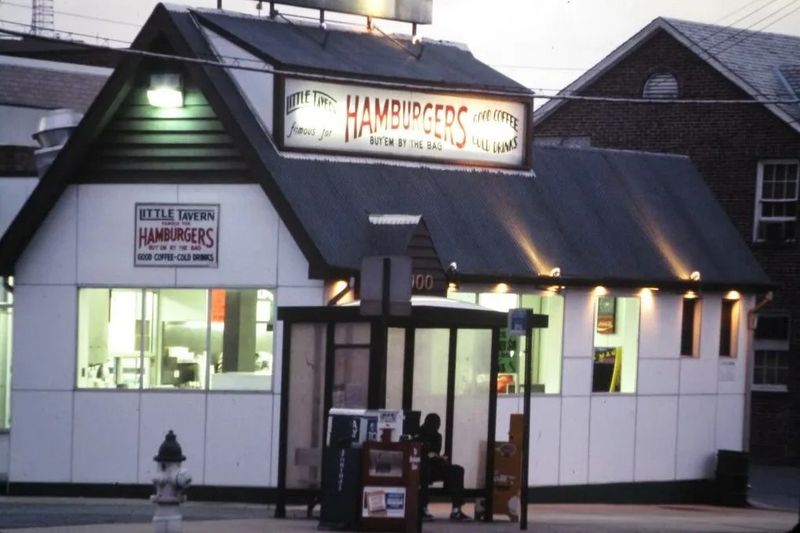
“Buy ’em by the bag” was the catchy slogan that defined Little Tavern, a chain that opened in 1927 and served small, square hamburgers reminiscent of White Castle. East Coast customers loved the cozy, no-frills experience that felt timeless and familiar.
Changing tastes and economic pressure gradually wore the chain down. The very last Little Tavern location closed in 2008, ending over 80 years of slider history and leaving loyal fans without their beloved bag of burgers.
9. D’Lites
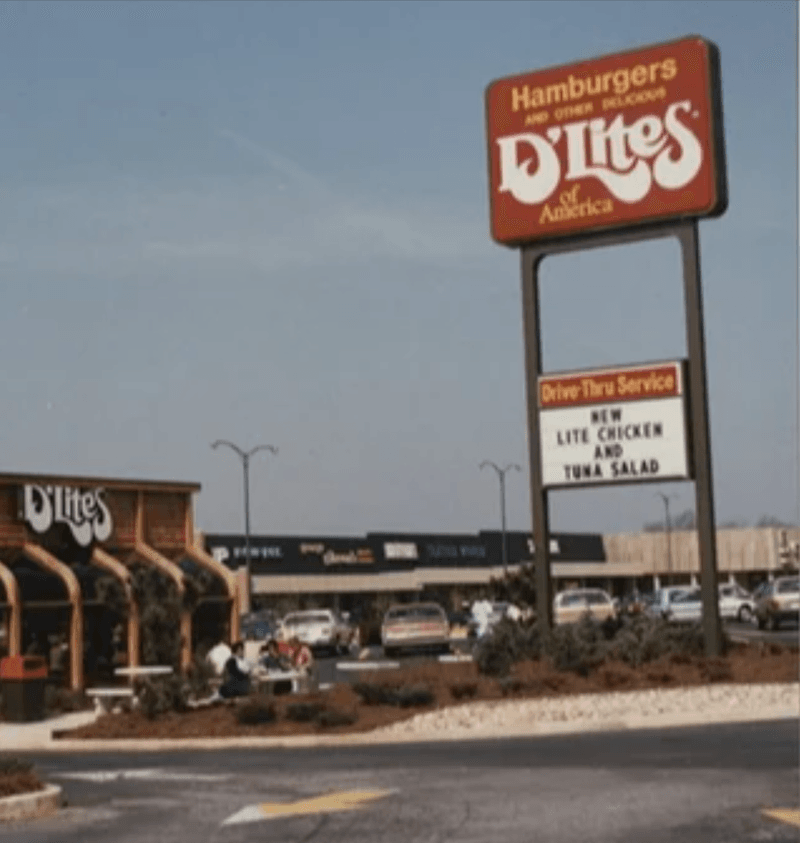
Way ahead of its time, D’Lites built its entire identity around healthier fast food during the 1970s and 1980s, long before salads and light options became standard. Customers craved a guilt-free burger experience, and D’Lites delivered with lower-calorie menu items.
The chain’s downfall came when McDonald’s, Wendy’s, and Burger King started offering their own healthier choices. By 1987, D’Lites had closed, and most of its locations were quietly converted into Hardee’s restaurants.
10. All-American Burger
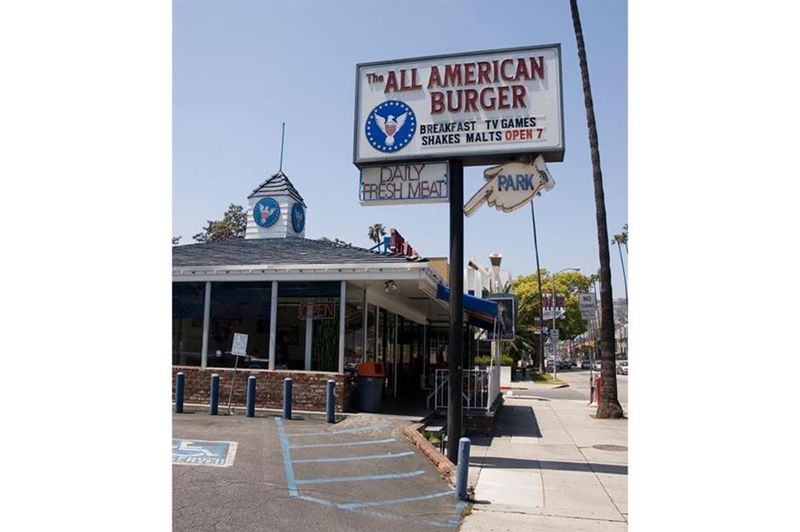
Founded in Los Angeles during the 1960s by Aaron Binder, All-American Burger was a California original that built a loyal following through its no-nonsense, classic burger menu. The chain felt like the kind of place where the food did all the talking.
Bankruptcy eventually caught up with the brand, and its locations quietly disappeared one by one. In a strange twist of fast food fate, one of its last known spots now operates as a Chipotle.
11. Pioneer Chicken
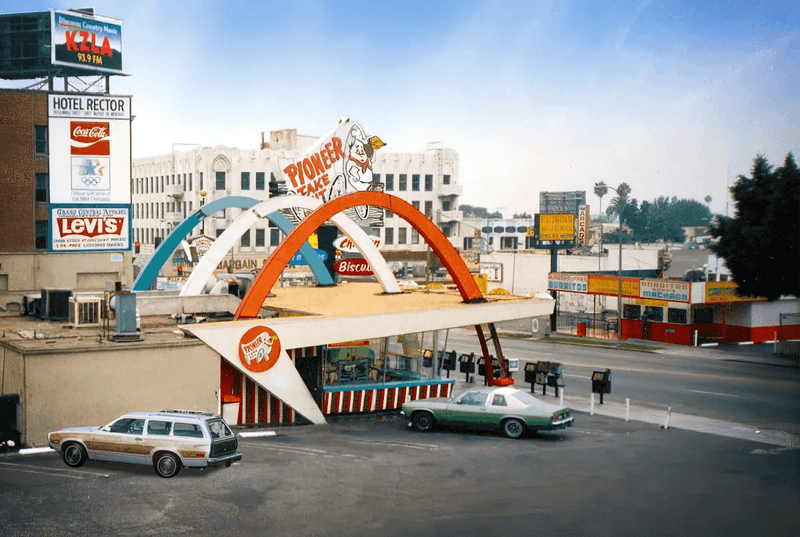
Pioneer Chicken was once a California staple, famous enough to land O.J. Simpson as a celebrity spokesperson before his football fame peaked.
The chain served up fried chicken across hundreds of locations, building a devoted fanbase along the West Coast.
Filing for bankruptcy in 1988 sent the chain into a steep decline. What had been 270 locations eventually shrank to just two remaining spots, both still operating in California as quiet survivors of a mostly forgotten era.
12. Sandy’s
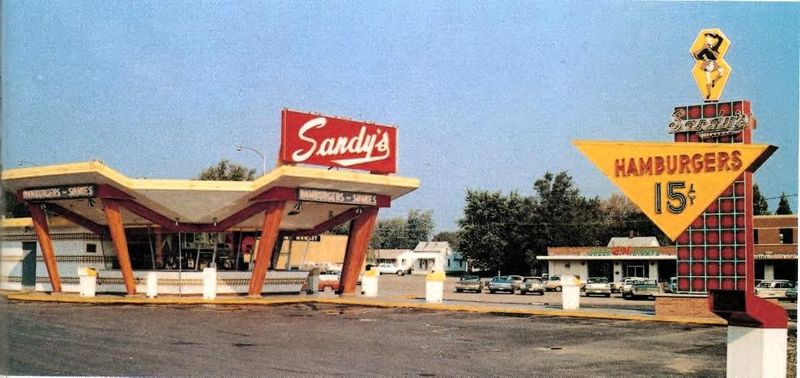
Launched in Illinois in 1956 with a Scottish theme designed specifically to stand out against McDonald’s golden arches, Sandy’s was scrappy, creative, and genuinely competitive. The chain grew to over 120 locations, proving there was room for a plaid-flavored rival in the burger wars.
Financial pressures forced a merger with Hardee’s in 1971, and the Sandy’s name disappeared entirely by 1979. A bold, original concept absorbed into a bigger machine, never to return.
13. Yankee Doodle Dandy
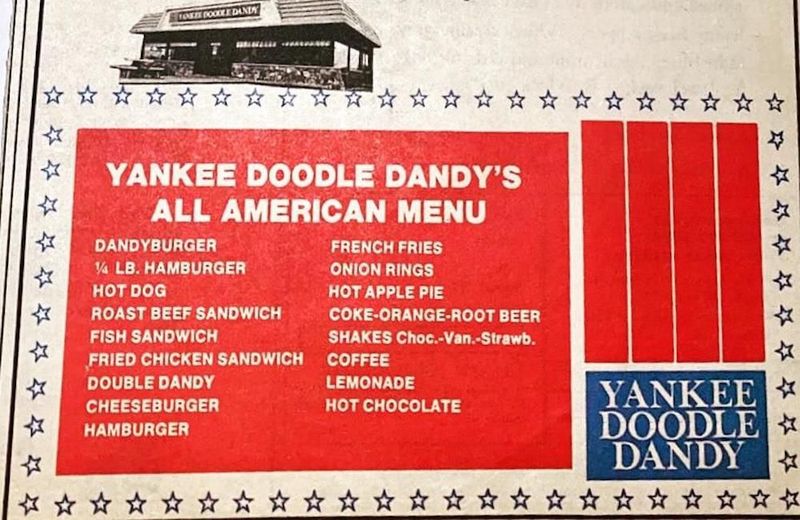
Patriotism and burgers might seem like a natural pairing, and Yankee Doodle Dandy leaned all the way into that idea with its American-themed branding and 27 locations. The chain had a bold personality that made it memorable, even if its reach was never massive.
Like many regional chains of its era, it could not survive the competitive pressure of the 1980s fast food boom. Yankee Doodle Dandy closed during that decade, taking its stars-and-stripes spirit with it.
14. Pup ‘N’ Taco
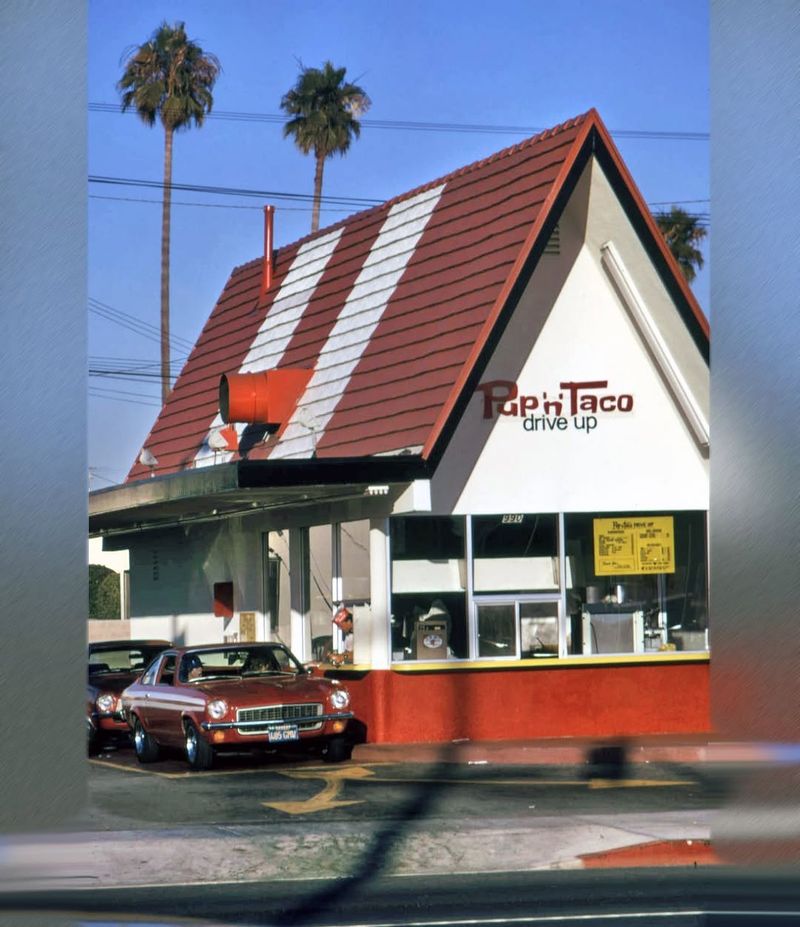
Hot dogs and tacos sharing the same menu sounds like a wild experiment, but Pup ‘N’ Taco made it work beautifully across 99 California locations plus three in Albuquerque, New Mexico. Founded in Pasadena, the chain also served burgers and pastrami sandwiches, giving customers plenty of reasons to stop in.
Taco Bell saw the potential and acquired all 99 California spots in 1984. The New Mexico locations held on longer but eventually went dark by the 2010s.
15. Mighty Casey’s
Atlanta locals had a soft spot for Mighty Casey’s, a regional chain that set itself apart by focusing on premium ingredients in its hot dogs, shakes, and wings. In a sea of mass-produced fast food, that commitment to quality felt refreshing and personal.
Krystal purchased the chain in 1994, and most Mighty Casey’s locations were converted into Krystal restaurants. A regional gem swallowed by a bigger brand, leaving Atlanta with only memories of something special.
16. Chi-Chi’s
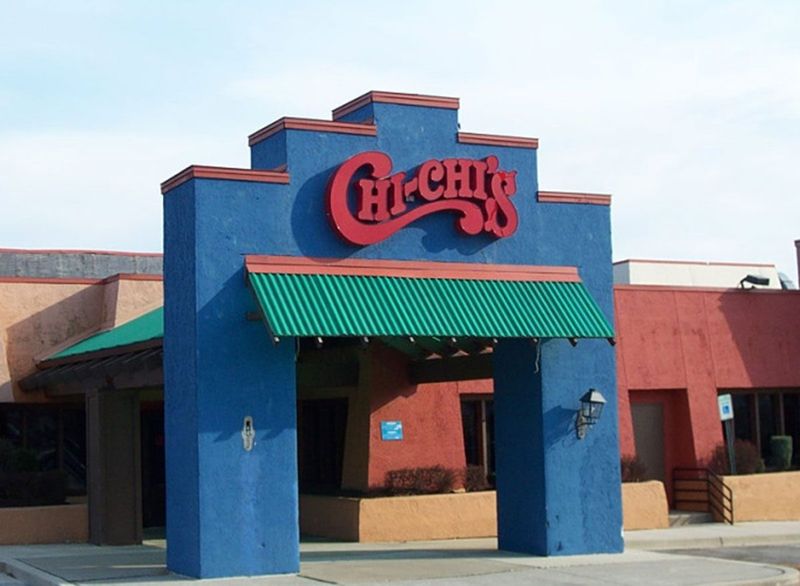
When Chi-Chi’s opened in 1975, it brought a festive Tex-Mex energy to American dining that felt exciting and fresh. The chain expanded boldly to 230 locations across the United States and even reached into Europe, turning salsa and margaritas into mainstream fast casual staples.
A series of problems unraveled the brand dramatically, and Chi-Chi’s suffered a disastrous end that shocked the restaurant world. The chain’s collapse serves as a cautionary tale about overexpansion and the fragile nature of brand trust.
17. Horn & Hardart
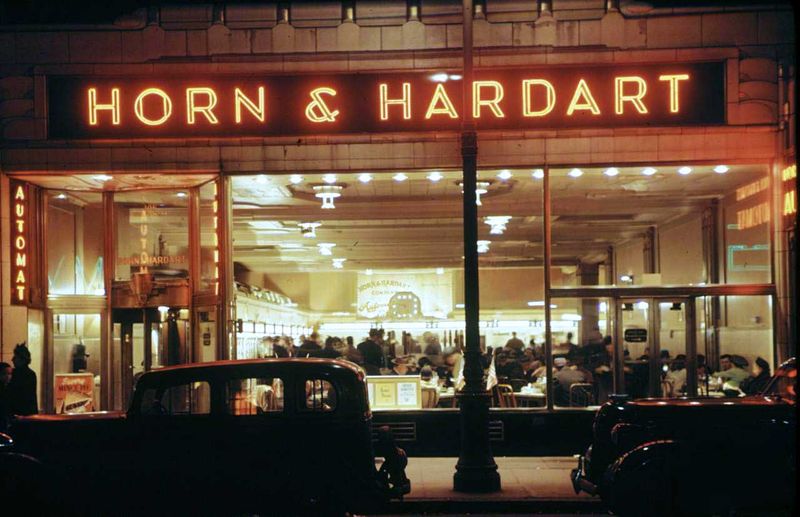
Forget drive-throughs. Horn and Hardart served meals through coin-operated vending compartments called automats, a concept that thrived during the Great Depression by offering affordable, hot food to everyday workers and families in New York and Philadelphia.
The rise of modern fast food eventually outpaced the charming automat model. Horn and Hardart never successfully modernized, and the last location closed in 1991.
A genuinely unique dining experience that the world, frankly, was not ready to let go of.