
One Flew Over The Cuckoo’s Nest is one of the most celebrated films in Hollywood history, winning all five major Academy Awards in 1975. Based on Ken Kesey’s powerful novel, it tells the story of a rebellious patient who shakes up life inside a psychiatric ward.
Behind the scenes, the movie is packed with fascinating secrets, surprising casting stories, and bold creative choices. Whether you’ve seen it once or a dozen times, there’s always something new to discover.
1. Kirk Douglas and the Broadway Beginning
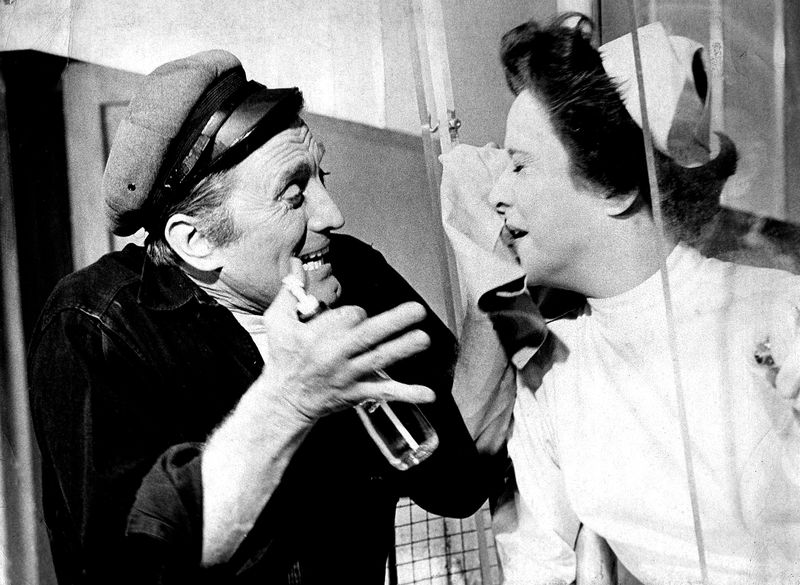
Long before Jack Nicholson ever put on that famous grin, Kirk Douglas was the man behind Randle McMurphy. Douglas bought the film rights to Ken Kesey’s novel and starred in a 1963 Broadway stage adaptation of the story.
He was so passionate about the project that he fought hard to bring it to life on stage.
Sadly, the Broadway production wasn’t a major hit. Still, Douglas never gave up on the story he loved so much.
2. A Father Passes the Torch to His Son
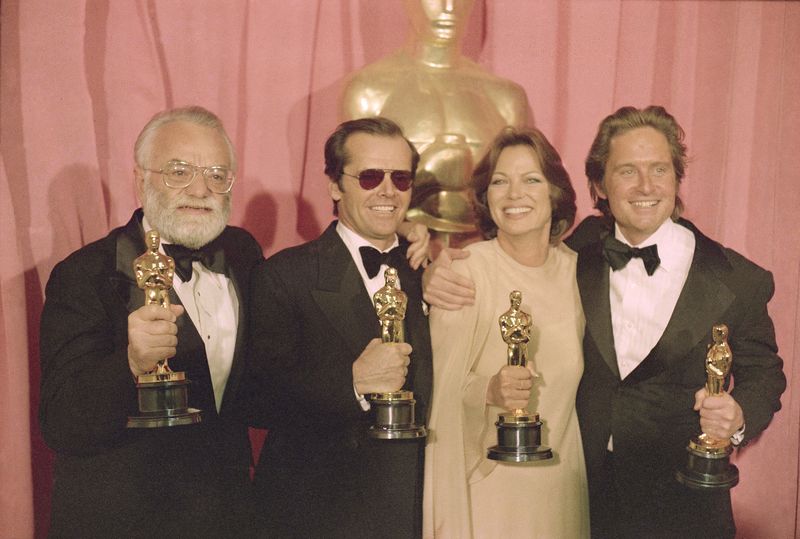
By the time Hollywood was ready to turn the story into a film, Kirk Douglas had aged out of playing McMurphy. Rather than let the project die, he handed the film rights over to his son, Michael Douglas, to produce.
It was a remarkable act of trust between a father and son.
Michael Douglas was still relatively new to producing at the time. The gamble paid off in a huge way, earning him an Academy Award for Best Picture.
3. Filming Inside a Real Psychiatric Hospital
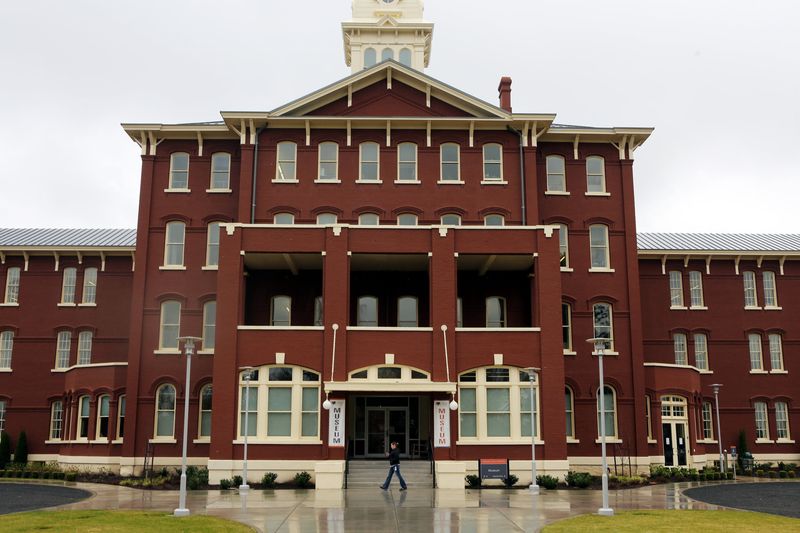
Most movies fake their settings on studio lots, but this film went somewhere real. The production team shot the entire movie at the Oregon State Hospital, an actual working psychiatric institution in Salem, Oregon.
The building’s heavy doors, long corridors, and clinical atmosphere gave the film an authenticity that no set designer could replicate.
Kesey had based his novel on this very place. Filming there added a haunting layer of truth to every single scene.
4. Real Patients Appeared on Screen
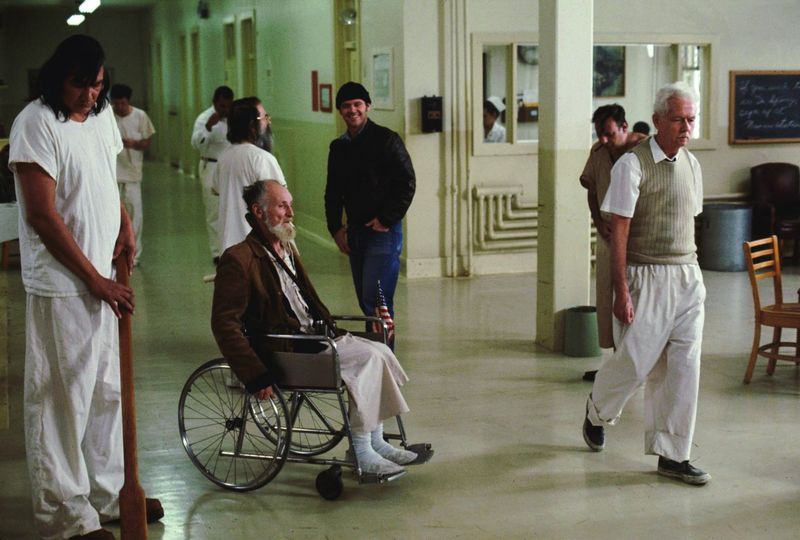
Casting extras for a film set inside a mental institution could have gone in many artificial directions. Instead, director Milos Forman made the bold choice to cast actual patients and staff from the Oregon State Hospital in minor roles and as background extras.
Their presence gave the ward scenes a sense of lived-in reality that professional actors couldn’t easily fake.
Watching the film again knowing this adds a whole new emotional weight to even the quietest background moments.
5. The Real Hospital Superintendent Played Dr. Spivey
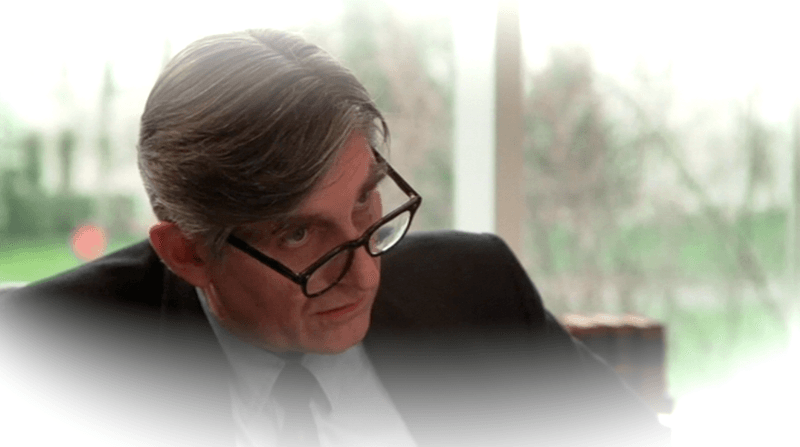
Dr. Dean Brooks was the actual superintendent running the Oregon State Hospital during filming. Rather than hire an actor for the role of Dr. Spivey, the filmmakers cast Brooks himself.
His calm, professional demeanor translated naturally to the screen, and his scenes with Jack Nicholson feel genuinely unscripted and real.
Brooks reportedly used his real clinical instincts during those conversations. It’s one of the most quietly brilliant casting decisions the film ever made.
6. Forman Lived at the Hospital Before Filming
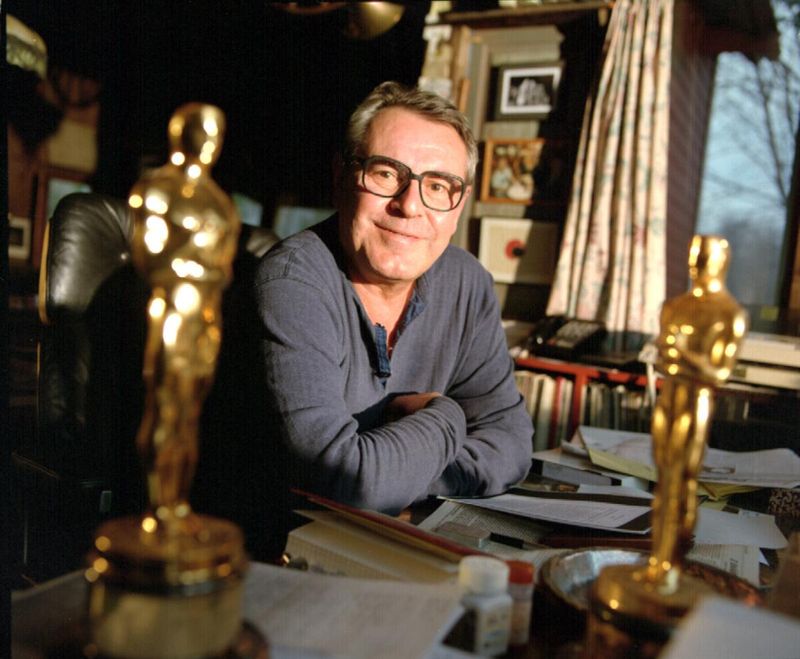
Milos Forman didn’t just visit the Oregon State Hospital for a tour. He actually lived there for a full month before cameras ever started rolling.
He wanted to understand the rhythms of daily life inside the institution, from morning routines to group therapy sessions.
Forman also used hidden cameras at times to capture raw, unguarded reactions from his actors. That commitment to authenticity shows in every frame of the finished film.
7. Louise Fletcher’s Long Road to Nurse Ratched
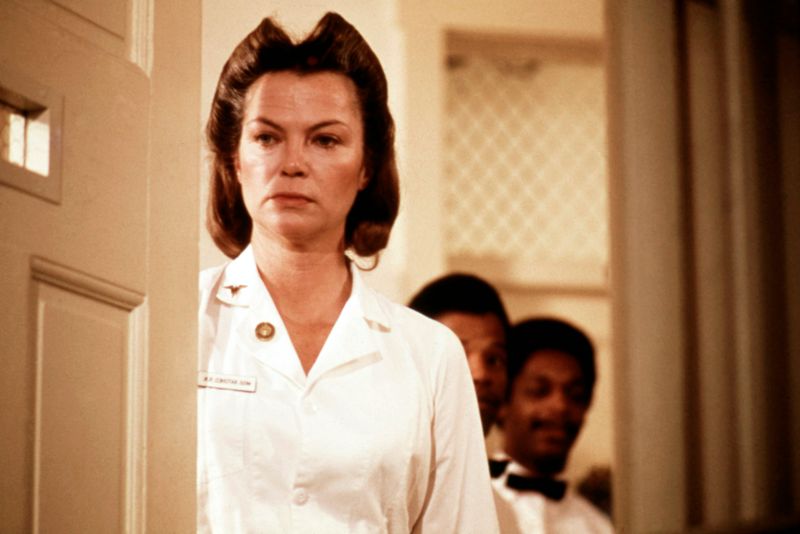
Getting cast as Nurse Ratched wasn’t a quick phone call for Louise Fletcher. She met with Milos Forman four or five separate times over the course of an entire year before landing the role.
Forman had been deeply impressed by her quiet, controlled performance in the 1974 film Thieves Like Us.
That patience and persistence clearly paid off. Fletcher went on to win the Academy Award for Best Actress, cementing Nurse Ratched as one of cinema’s greatest villains.
8. Nurse Ratched’s First Name Was Fletcher’s Invention
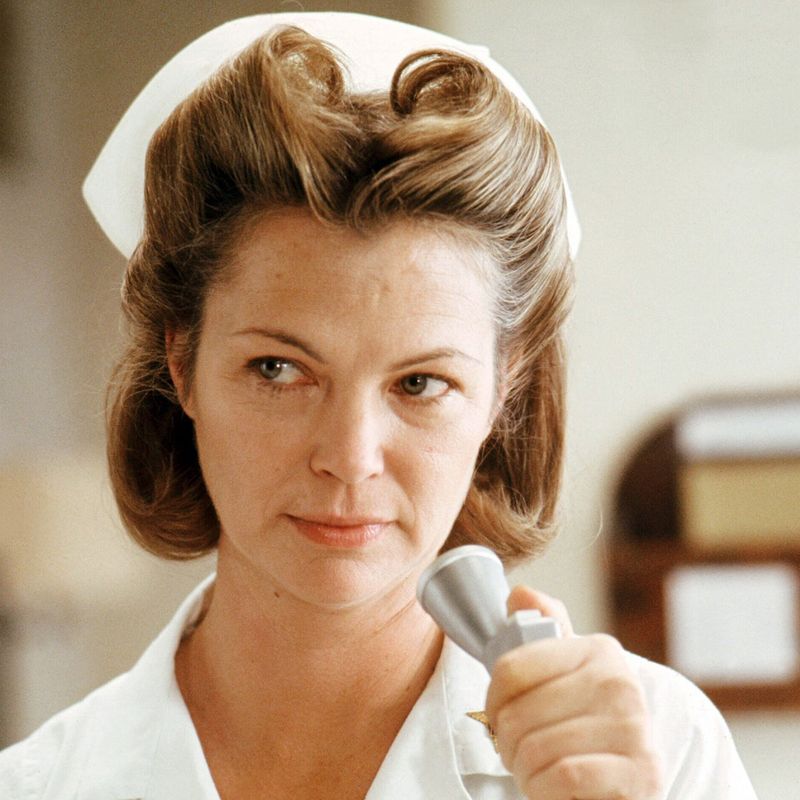
Here’s a fun detail that surprises even devoted readers of the novel: Nurse Ratched has no first name anywhere in Ken Kesey’s book. She’s simply referred to by her last name throughout.
Louise Fletcher decided to give the character a personal identity and chose the name Mildred.
It’s a small creative choice that says a lot about how deeply Fletcher thought about the role. Giving Ratched a name made her feel more human, which somehow makes her scarier.
9. Fletcher Drew Inspiration From Racial Injustice
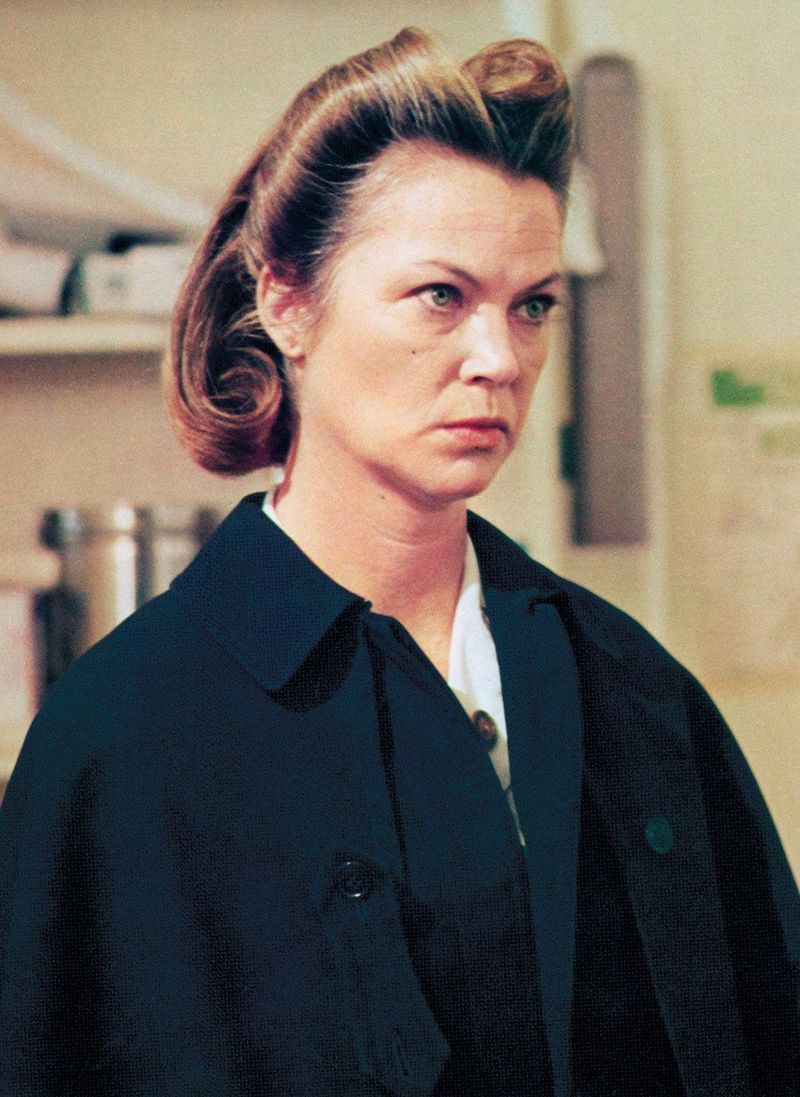
Louise Fletcher’s portrayal of Nurse Ratched is chilling because it feels disturbingly real. She revealed that her inspiration came from watching white people in her home state of Alabama treat Black people in a paternalistic, controlling way.
That quiet, smiling authority over others became the emotional core of her performance.
She translated that social observation into something deeply unsettling on screen. It transformed Ratched from a simple villain into a symbol of institutional power and systemic control.
10. Chief Bromden Was Played by a Park Ranger
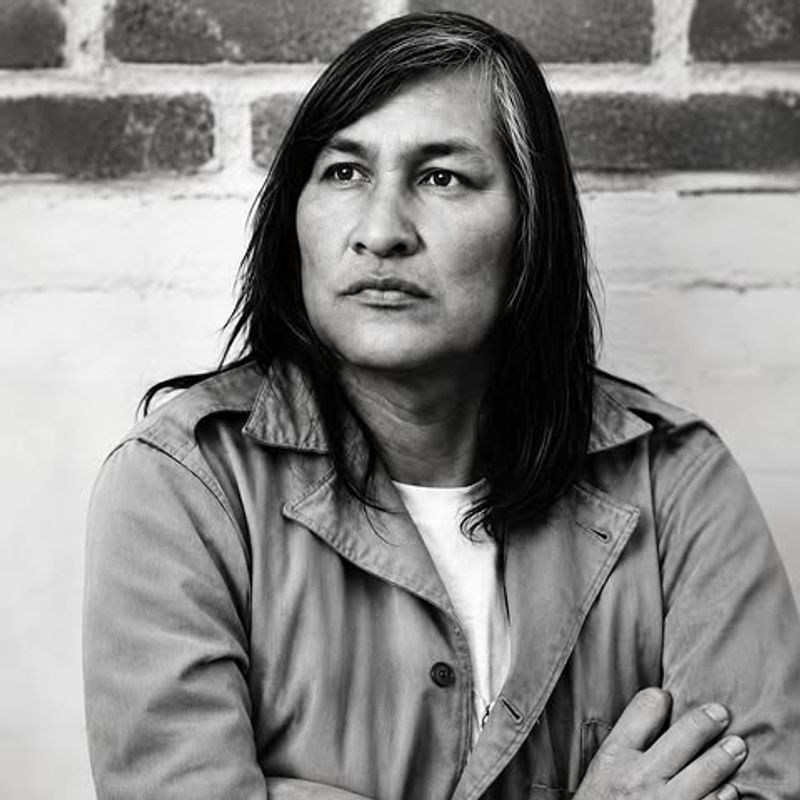
Will Sampson, who brought the towering Chief Bromden to life, had zero acting experience before landing the role. He was working as a park ranger in Oregon when casting directors found him.
The production had struggled to find a Native American actor who matched the character’s imposing physical description.
Sampson’s natural presence and quiet dignity made him perfect for the part. His performance feels effortless, which is remarkable for someone who had never stood in front of a movie camera before.
11. Ken Kesey Refused to Watch the Finished Film
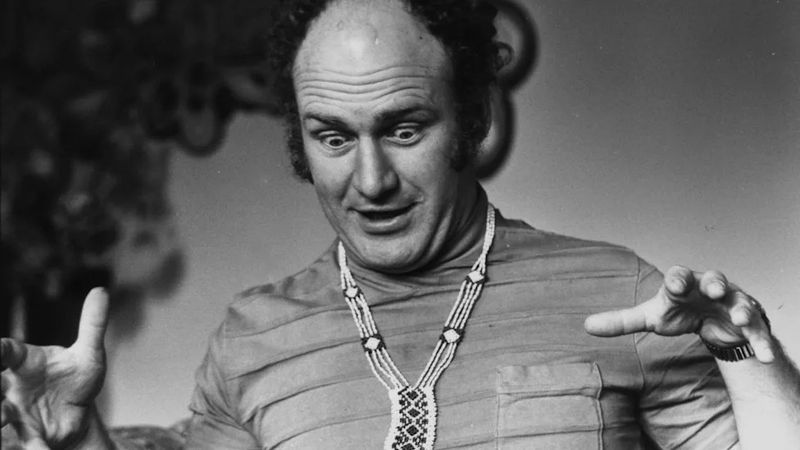
Ken Kesey had strong feelings about how his novel was adapted, and those feelings weren’t positive. He reportedly hated that the film removed Chief Bromden’s first-person narration, which was the emotional and structural backbone of the book.
Kesey felt the story lost its soul without that internal voice guiding viewers.
He was so upset that he refused to watch the completed movie entirely. It became one of the most famous author-versus-Hollywood disputes in literary history.
12. Chief Bromden Narrates the Entire Novel
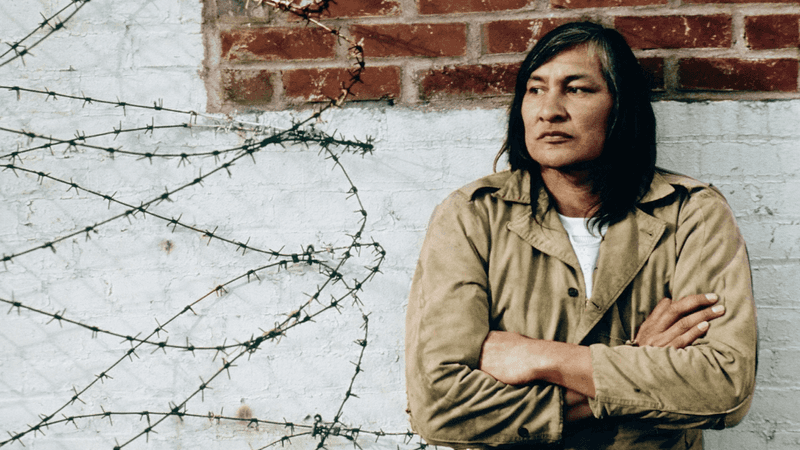
Readers of the original novel experience the story through Chief Bromden’s eyes from start to finish. His internal monologue, hallucinations, and memories shape everything the reader understands about the ward and its patients.
It’s a deeply personal and poetic perspective that makes the book feel unlike anything else.
The film shifts focus entirely to McMurphy as the central figure. That storytelling change is exactly what frustrated Kesey and remains the biggest difference between the two versions.
13. McMurphy Is Darker in the Book Than on Screen
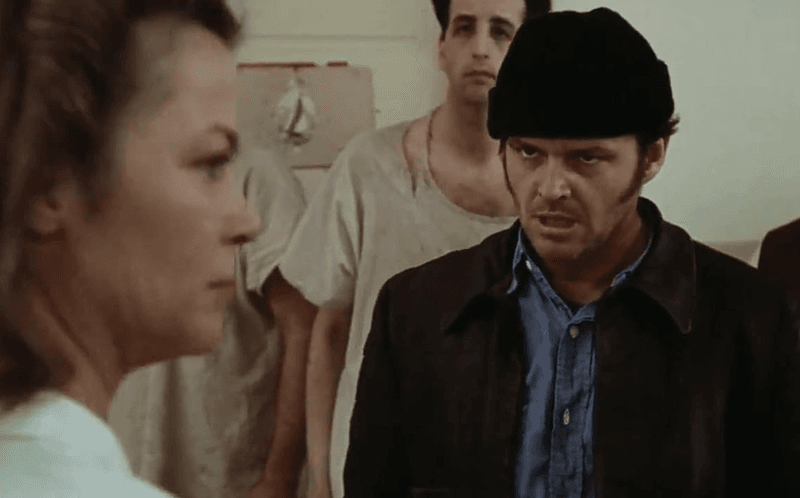
Jack Nicholson’s McMurphy is charismatic, funny, and easy to root for. The novel’s version is considerably more complicated.
Book McMurphy is sometimes violent, cons fellow patients out of their money, and carries a more disturbing criminal past than the movie ever reveals.
The film softened these edges to make him a more crowd-pleasing hero. It was a deliberate creative choice, but one that changed the moral complexity Kesey had carefully built into the character from the very beginning.
14. The Film’s Ending Is Bleaker Than the Book’s
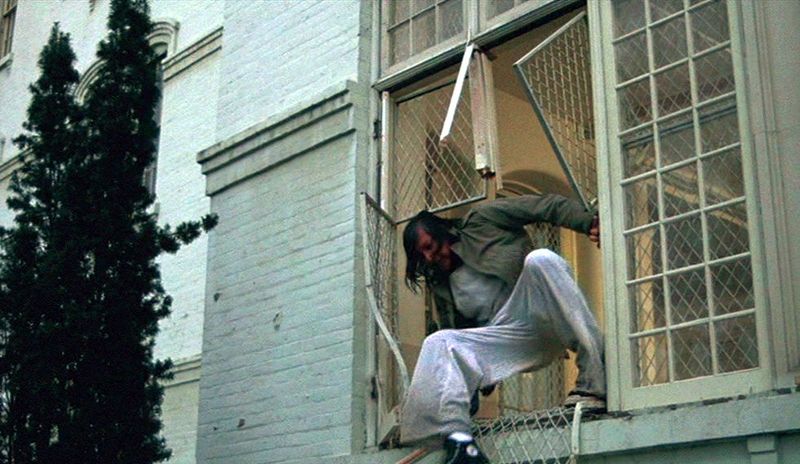
Both the novel and film end with Chief Bromden escaping the institution, but the emotional tone couldn’t be more different. In the book, several other patients also leave the ward, which gives the story a cautiously hopeful feeling despite the tragedy.
The film keeps the focus tightly on Bromden’s escape alone.
That narrower ending feels lonelier and more devastating on screen. Many film scholars argue it’s actually the more powerful conclusion, even if it’s the less optimistic one.
15. The Fishing Trip Scene Was Reimagined for the Film
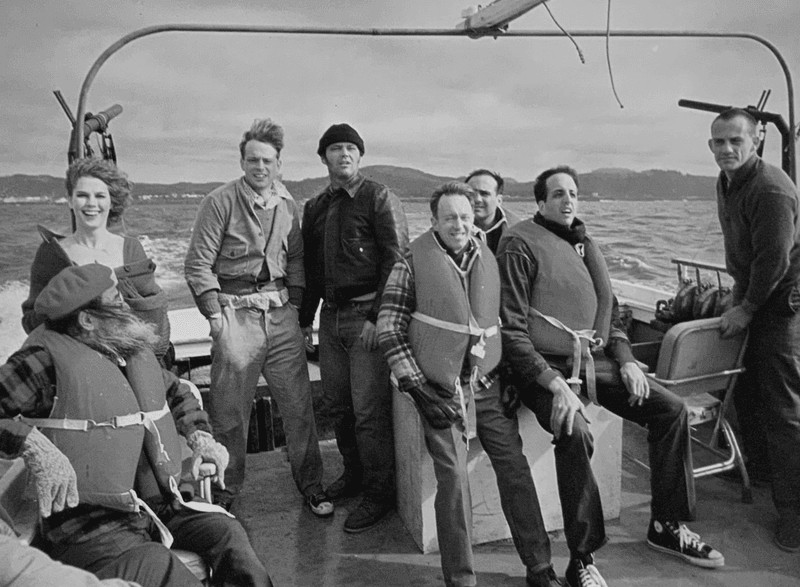
In Ken Kesey’s novel, the fishing trip is a carefully planned outing that Nurse Ratched actively tries to cancel. The film flips this completely.
Movie McMurphy turns the trip into a spontaneous act of rebellion by hijacking an institutional bus and steering everyone toward the ocean without permission.
That change makes the scene feel wilder and more reckless on screen. It captures McMurphy’s impulsive spirit in a way that works beautifully for the film’s faster-paced storytelling style.
16. Nicholson Was Deeply Affected by Electroshock Therapy
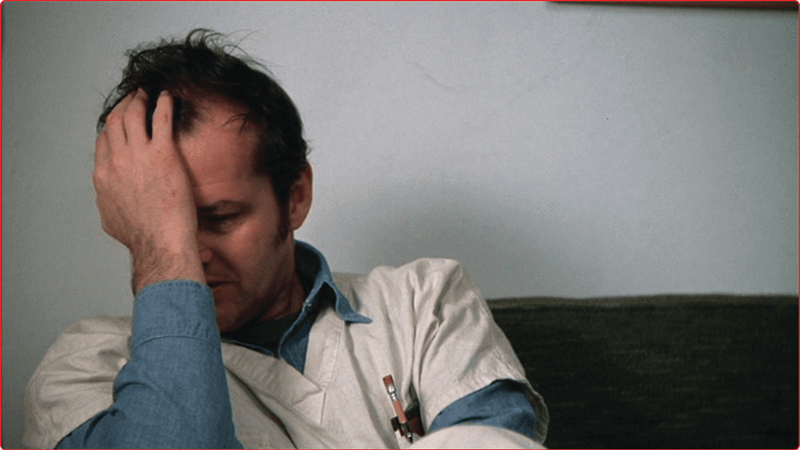
Jack Nicholson brought enormous energy to the role of McMurphy, but filming at a real hospital had a personal cost. He reportedly went through a difficult period of depression after witnessing actual electroshock therapy being administered to a real patient at the Oregon State Hospital during production.
That experience clearly seeped into his performance. The scenes involving electroshock treatment in the film carry a raw emotional weight that feels impossible to manufacture, and now we know exactly why.