
Words and phrases shape how others see us, even when we least expect it. Some expressions feel totally natural in everyday conversation, but to grammar-conscious or professionally polished people, they can come across as sloppy, weak, or just plain wrong.
Whether it is a workplace buzzword or a grammar mix-up, these phrases pop up constantly. Here is a look at 20 of them and why they ruffle so many feathers.
1. “This May Be a Stupid Idea, But…”

Before you even share your idea, you have already talked yourself out of it. Saying “this may be a stupid idea” signals self-doubt before anyone else has a chance to form an opinion.
Polished communicators know that framing matters enormously.
Starting strong builds credibility. Try leading with “Here is something worth considering” instead.
Your idea deserves a fair shot, and so does your confidence. Own your thoughts before presenting them to others.
2. Overusing “Sorry”

Apologizing when you bump into a chair is charming. Apologizing for existing in a room is a different story.
Over-apologizing chips away at your authority and signals to others that you lack confidence in your own space and decisions.
Polished professionals save “sorry” for moments that truly call for it. Swapping unnecessary apologies with phrases like “excuse me” or “thank you for your patience” keeps your tone both warm and grounded without shrinking yourself.
3. Slipping in “Just” Constantly

“I just wanted to check in.” “Just a quick question.” Sound familiar? The word “just” sneaks into sentences so naturally that most people never notice it.
But polished readers and listeners absolutely do, and it quietly shrinks the weight of your message.
Removing “just” from your writing and speech instantly makes you sound more direct and self-assured. Try reading your emails without it and notice how much stronger they feel.
Small edits can create a big impression.
4. “I Feel Like…” or “I Think…”

There is a big difference between stating a fact and hedging an opinion. Phrases like “I feel like” or “I think” are not always wrong, but leaning on them too heavily signals hesitation.
Polished speakers tend to state their views with more conviction.
Try saying “Based on the data” or “My perspective is” for a more grounded tone. You can still be humble without sounding unsure.
Confidence in delivery makes people far more likely to take your ideas seriously.
5. “If That Makes Sense”

Tacking “if that makes sense” onto the end of a statement is a nervous habit many people do not even realize they have. To polished listeners, it signals that the speaker is not fully confident in their own explanation or message.
Here is the thing: if your explanation is clear, you do not need the disclaimer. If it is not clear, adding that phrase does not fix the confusion.
Practice organizing your thoughts before speaking and let your words carry their own weight.
6. Saying “No Problem” Instead of “You’re Welcome”

“No problem” has become the default response to gratitude, especially among younger generations. Most people say it without a second thought.
But polished professionals often wince at it because it subtly implies the request could have been a problem in the first place.
Alternatives like “You’re welcome,” “My pleasure,” or “Happy to help” feel warmer and more intentional. Choosing your response to gratitude thoughtfully is a small but meaningful way to leave a positive and professional lasting impression.
7. “Circle Back” in the Workplace

Few phrases make a polished professional roll their eyes faster than “let’s circle back.” It has become corporate shorthand so overused that it borders on meaningless. People hear it in meetings constantly, and it rarely signals anything concrete or actionable.
What does circling back even look like in practice? Giving a specific time or follow-up plan is always clearer.
Saying “Let’s revisit this on Thursday” is direct and respectful of everyone’s time. Precision always beats jargon in professional settings.
8. “Touch Base” With Someone

“Touch base” sounds harmless enough until you hear it five times before lunch. Originally borrowed from baseball, this phrase has been so absorbed into corporate culture that it has lost nearly all of its original charm and specificity.
Polished communicators prefer clear language: “Can we schedule a 15-minute call?” or “Let’s connect on Tuesday” tells people exactly what to expect. Vague phrases like “touch base” often delay real action.
Replacing them with direct language keeps conversations productive and professional.
9. “Low-Hanging Fruit”

Back in the day, “low-hanging fruit” felt like a clever metaphor for easy wins. Now it is one of the most tired expressions in any boardroom vocabulary.
Polished communicators tend to avoid it because it signals lazy thinking rather than strategic insight.
If you mean “quick wins” or “easy starting points,” just say that. Plain language is almost always more effective than recycled metaphors.
Specific language also shows that you have actually thought through the situation rather than defaulting to autopilot phrasing.
10. “Think Outside the Box”

Ironically, telling someone to “think outside the box” is one of the least creative things you can say. The phrase has been repeated so many times in business and education settings that it has become the very definition of inside-the-box thinking.
Polished speakers looking to inspire creativity use fresher language. Try asking “What would surprise our audience?” or “What approach have we never tried?” Specific prompts spark genuine innovation far more effectively than exhausted idioms that everyone has already tuned out.
11. “At the End of the Day”
“At the end of the day” is supposed to signal a final, important point. In practice, it has become a filler phrase that people sprinkle into sentences without adding any real meaning.
Polished listeners often stop paying attention the moment they hear it.
Replacing it with something like “ultimately” or “what truly matters is” keeps the message focused and impactful. Filler phrases can quietly erode your credibility over time.
Choosing deliberate language shows that you respect both your audience and your own ideas.
12. “Give 110%”

Mathematically speaking, you cannot give more than 100%. Yet “give 110%” has become a motivational staple in sports, workplaces, and classrooms everywhere.
Most people hear it and nod along, but polished thinkers find it logically frustrating and slightly hollow.
Beyond the math issue, the phrase can quietly promote burnout culture by suggesting that maximum effort is never quite enough. Encouraging people to give their best, or to be fully present, is both more realistic and more respectful of human limits and well-being.
13. Using “Leverage” as a Verb

“We need to leverage our existing resources.” Why not just say “use”? The verb form of “leverage” crept into corporate vocabulary as a way to sound more sophisticated, but to many polished communicators, it sounds unnecessarily inflated and even a little pretentious.
Simple words almost always communicate better than complex substitutes. “Use,” “apply,” or “make the most of” are all clearer and friendlier choices. Plain language builds trust and keeps your audience engaged rather than mentally translating your corporate-speak back into plain English.
14. “Bandwidth” for Human Capacity
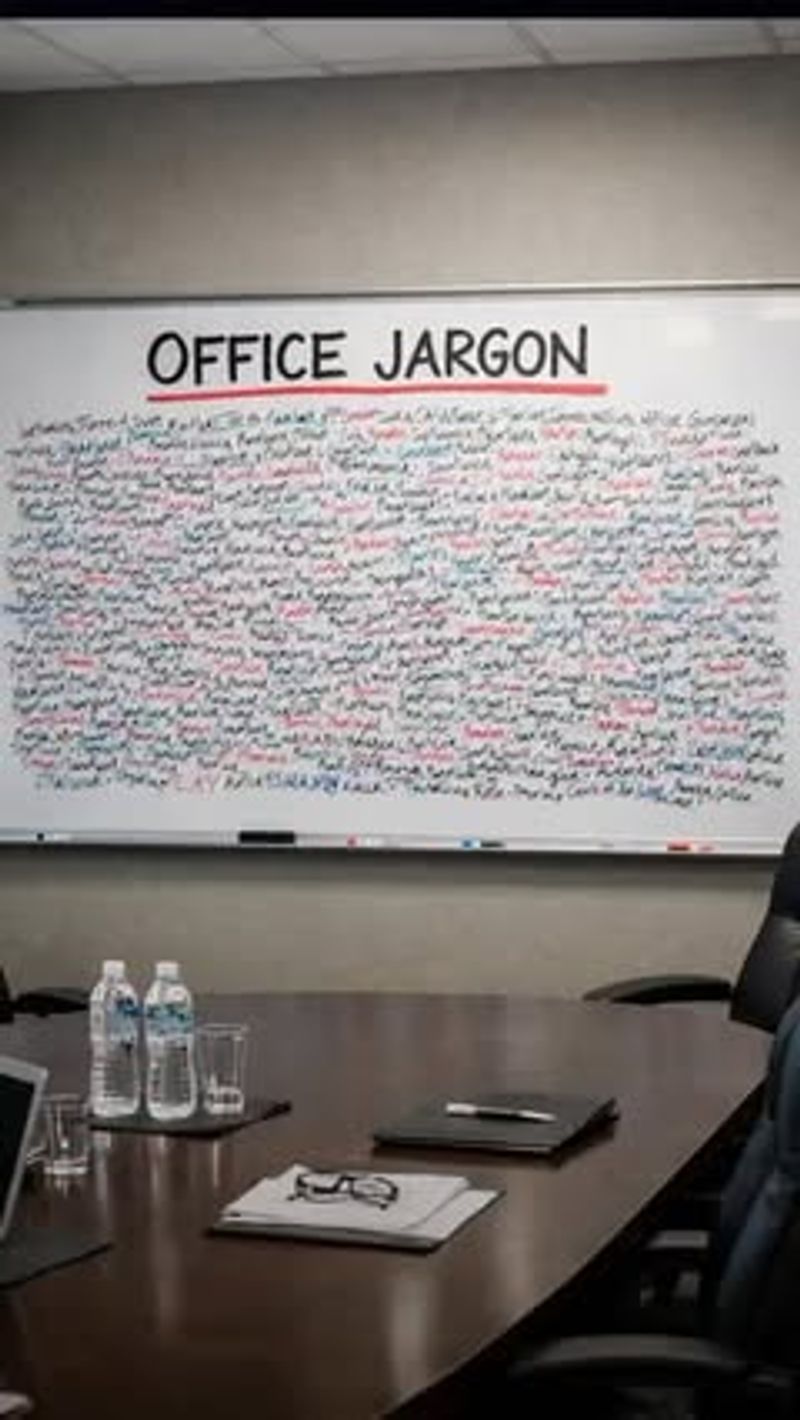
Originally a technical term from the world of internet speeds, “bandwidth” has been fully colonized by office culture. Now people say things like “I don’t have the bandwidth for that,” meaning they are simply too busy or stretched too thin.
Polished professionals often find this usage grating because it replaces perfectly clear human language with tech jargon. Saying “I’m at capacity right now” or “my schedule is full” communicates the same idea without making the workplace sound like a server room.
15. “I Could Care Less”
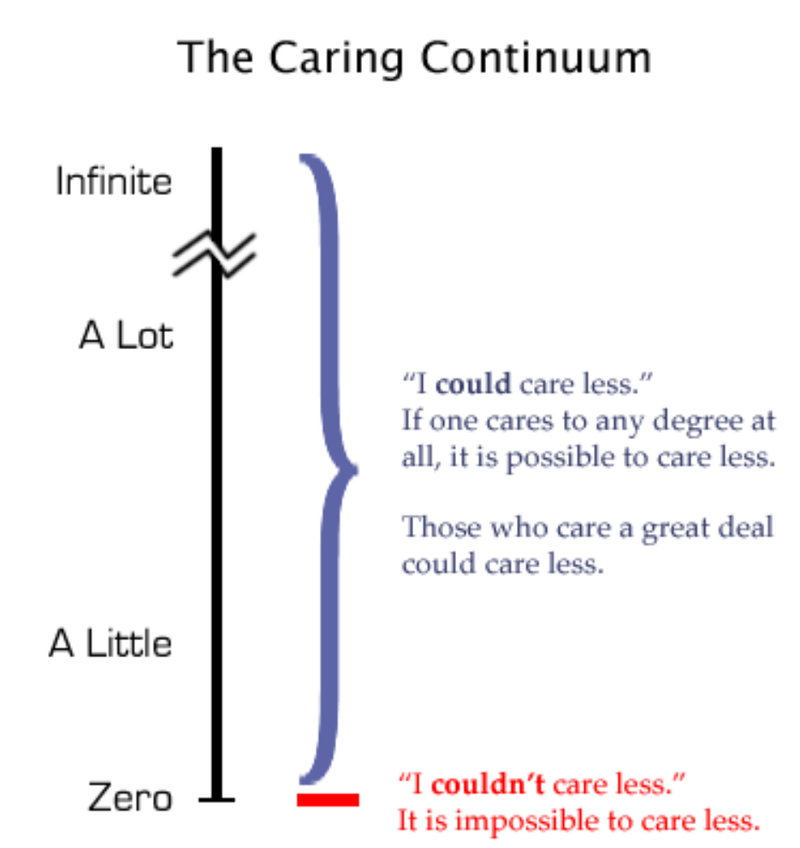
Here is a phrase that means the exact opposite of what most people intend. “I could care less” suggests you actually do care to some degree. The correct expression is “I couldn’t care less,” meaning your care level has already hit rock bottom.
Grammar-conscious people hear this mix-up and cringe every single time. Most speakers use it casually without realizing the error.
Knowing the difference takes about 30 seconds to learn and can save you from sounding careless in front of an audience that notices.
16. “Irregardless”
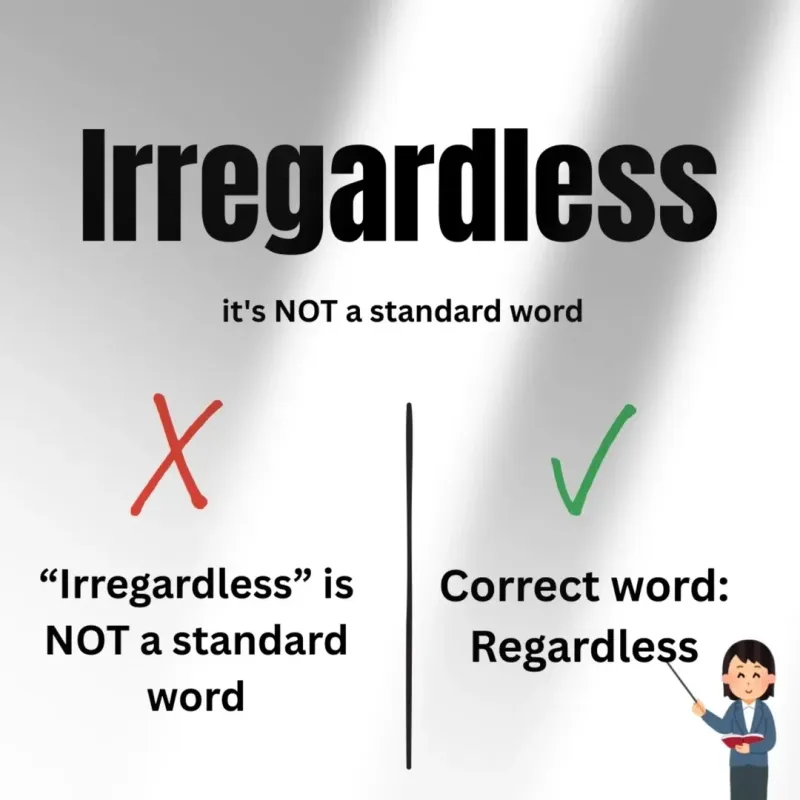
“Irregardless” is not a real standard English word, yet it pops up in conversations everywhere. The prefix “ir” and the suffix “less” both create negatives, making the word a double negative that technically cancels itself out.
Polished grammar lovers find it deeply unsettling.
The correct word is simply “regardless.” It already means “without regard to,” which is exactly what most speakers are trying to say. Using “irregardless” in a formal or professional setting can quietly undermine your credibility with anyone who knows their grammar well.
17. “Should Of,” “Could Of,” “Would Of”
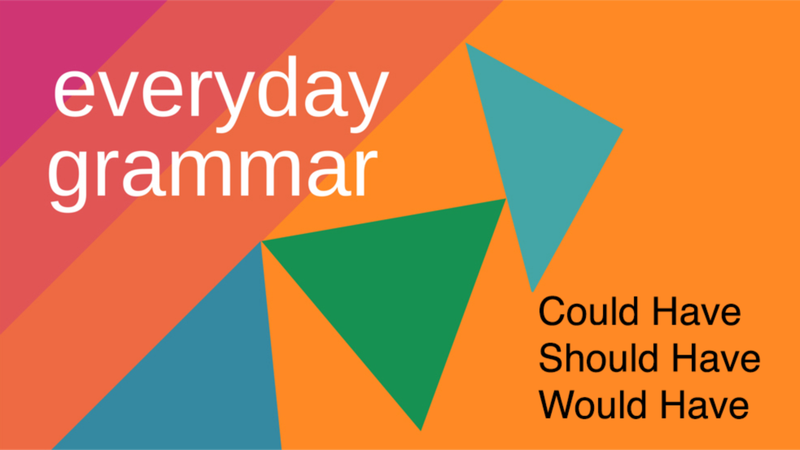
These three phrases are among the most common written grammar errors around. They come from mishearing contractions like “should’ve,” “could’ve,” and “would’ve” spoken aloud.
The word “of” sounds similar to “have” when spoken quickly, which is how the confusion starts.
In writing, though, there is no excuse. “Should have,” “could have,” and “would have” are always correct. Polished readers notice this error immediately, and it can make otherwise strong writing look careless.
A quick grammar check before sending anything important goes a long way.
18. Mixing Up “Your” and “You’re” or “Its” and “It’s”
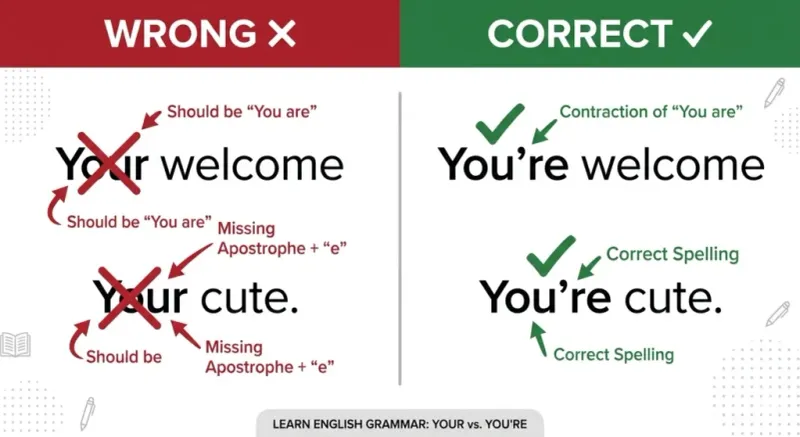
Few things make a grammar enthusiast twitch faster than seeing “your welcome” in an email. “Your” shows possession, while “you’re” is short for “you are.” The same logic applies to “its” versus “it’s.” These are among the most frequently confused word pairs in English.
Most people learned the difference in elementary school but still slip up under pressure. Slowing down before hitting send and reading contractions out loud can catch these errors instantly.
Small mistakes like these can overshadow an otherwise well-written message.
19. “Between You and I”

This one trips people up because it sounds formal and even educated. But “between you and I” is actually grammatically incorrect.
The preposition “between” requires an object pronoun, which means “me” is always the right choice, not “I.”
Interestingly, people often say “between you and I” because they were overcorrected as kids and told not to say “me.” The result is what linguists call hypercorrection. “Between you and me” is the proper form, and knowing this detail can make a quiet but confident impression.
20. “Utilize” Instead of “Use”

“Utilize” sounds impressive, but in most cases, it is just a longer, fancier way of saying “use.” Polished writers and editors often view it as a red flag for unnecessarily inflated language. It tends to make writing feel stiff rather than sophisticated.
There are rare cases where “utilize” has a specific technical meaning, such as using something for a purpose it was not originally designed for. Outside of that narrow context, “use” is almost always cleaner and clearer.
Great writing is about clarity first, not complexity.