
Food has a magical way of telling stories about the places and people it comes from. Pastries, in particular, carry centuries of tradition, creativity, and love baked right into every layer and fold.
From flaky, buttery shells to syrup-soaked dough stuffed with nuts or cream, the world of sweet pastries is endlessly exciting. Whether you have a serious sweet tooth or just love exploring new flavors, these 25 pastries from around the globe are absolutely worth a taste.
1. Croissant – France
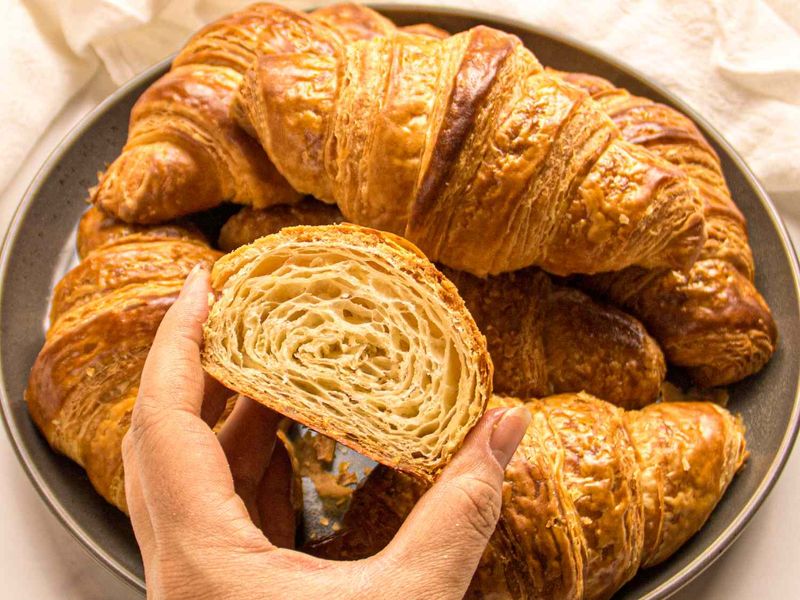
Few things in life feel as luxurious as biting into a perfectly baked croissant. Its shatteringly crisp outer layers give way to a soft, buttery, almost cloud-like interior that practically melts on your tongue.
Originating in France but inspired by the Austrian kipferl, the croissant became a global symbol of bakery excellence. Bakers fold butter into dough dozens of times to create those iconic flaky layers.
Try one warm from a French boulangerie for the full experience.
2. Baklava – Turkey and Greece
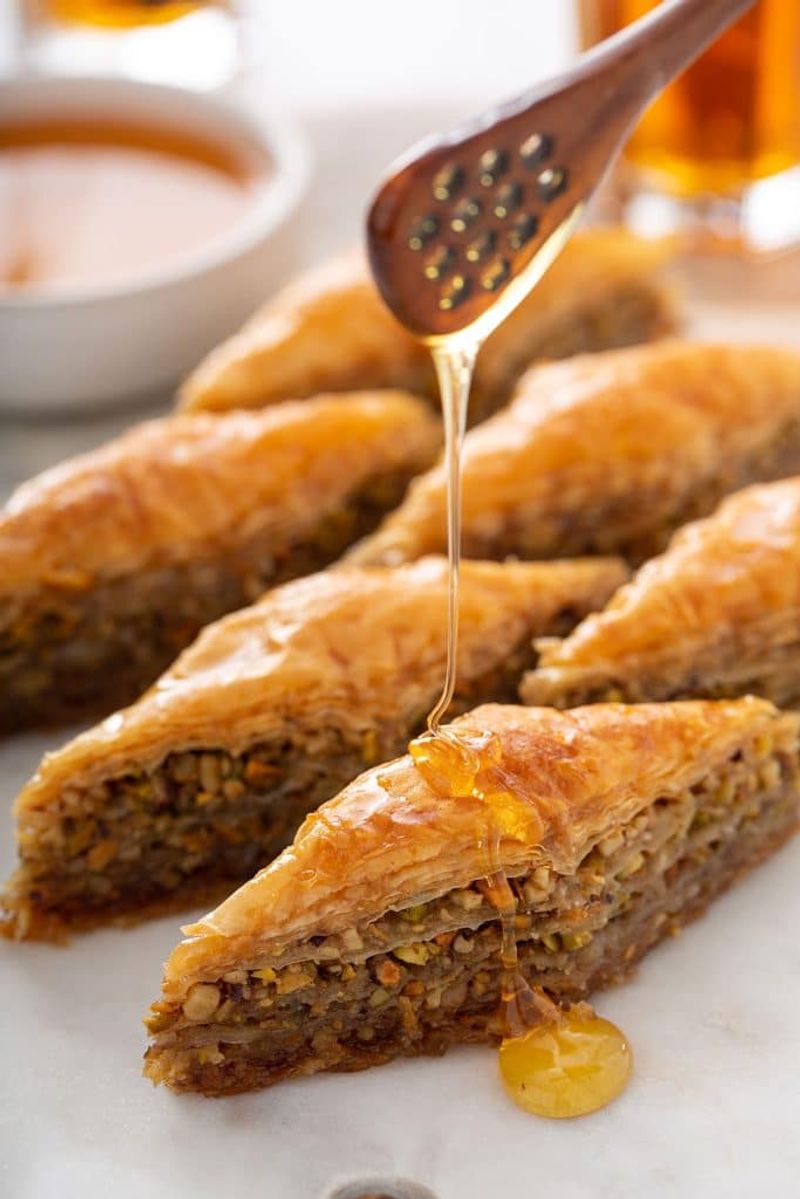
Sticky, crunchy, sweet, and absolutely irresistible – baklava is one of those pastries that stops you mid-conversation the moment you taste it. Layers of paper-thin phyllo dough are stacked with crushed pistachios or walnuts, then soaked in honey or sugar syrup.
Both Turkey and Greece claim it proudly, and variations exist across the Middle East and Balkans too. Each region adds its own twist with different nuts or spices.
One bite and you will understand the obsession.
3. Pastel de Nata – Portugal
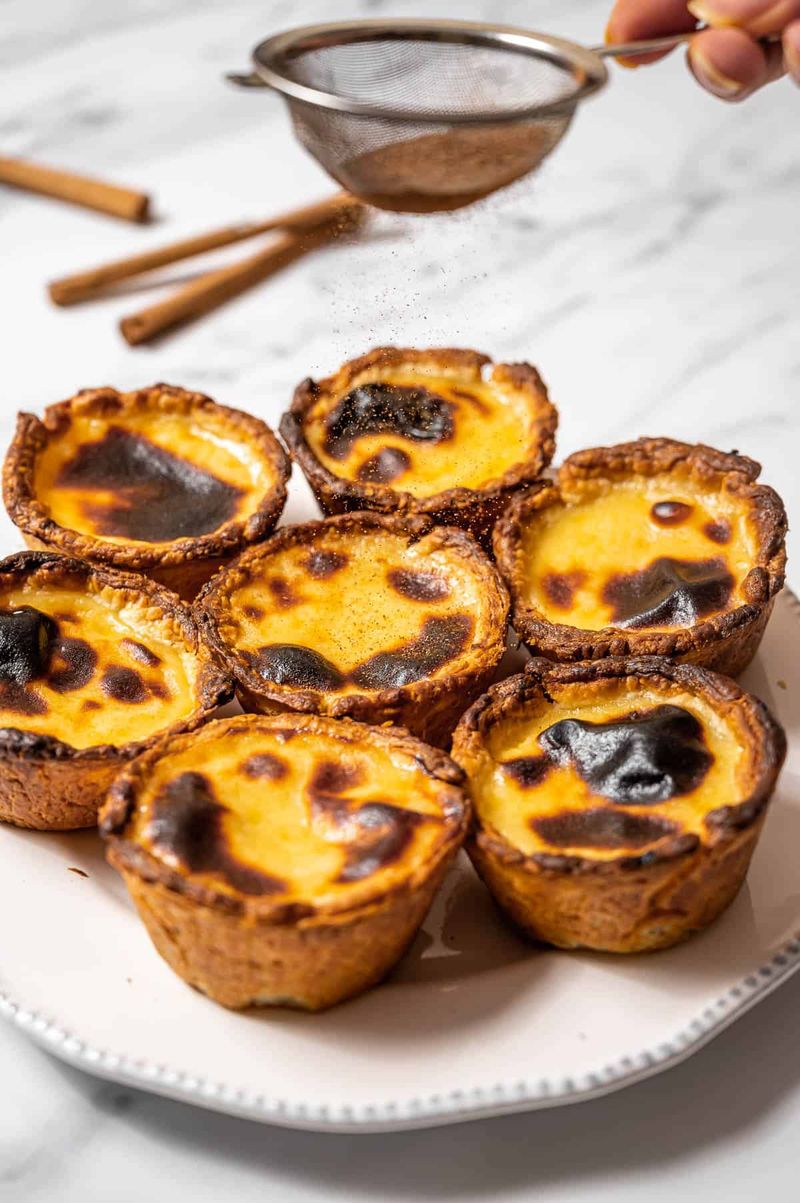
Portugal’s most beloved pastry has a story rooted in 18th-century monastery kitchens, where monks used egg yolks left over from starching their habits to create these creamy custard tarts. The result?
A flaky shell cradling silky, slightly caramelized custard that is nothing short of magical.
Sprinkled with cinnamon and powdered sugar, pastel de nata is best enjoyed warm, straight from the oven.
The original bakery in Belem, Lisbon, still sells thousands daily.
4. Cannoli – Italy
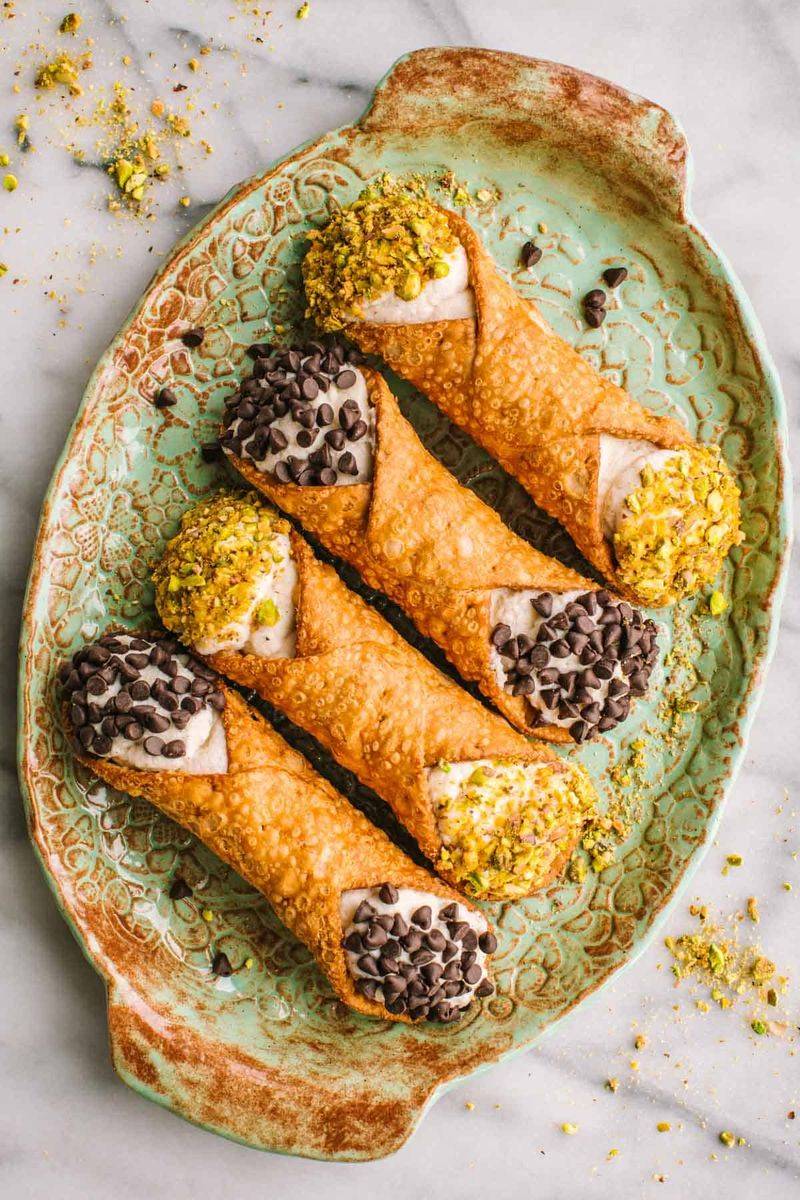
Cannoli are basically edible tubes of joy. Crispy fried pastry shells are packed with sweetened ricotta cheese, often mixed with chocolate chips, candied citrus peel, or pistachios, creating a satisfying contrast of textures in every bite.
Born in Sicily, cannoli were originally made during Carnival season but became so popular they are now enjoyed year-round. The shells must stay crispy, so the best ones are filled fresh to order.
Never settle for a soggy cannoli.
5. Mochi – Japan
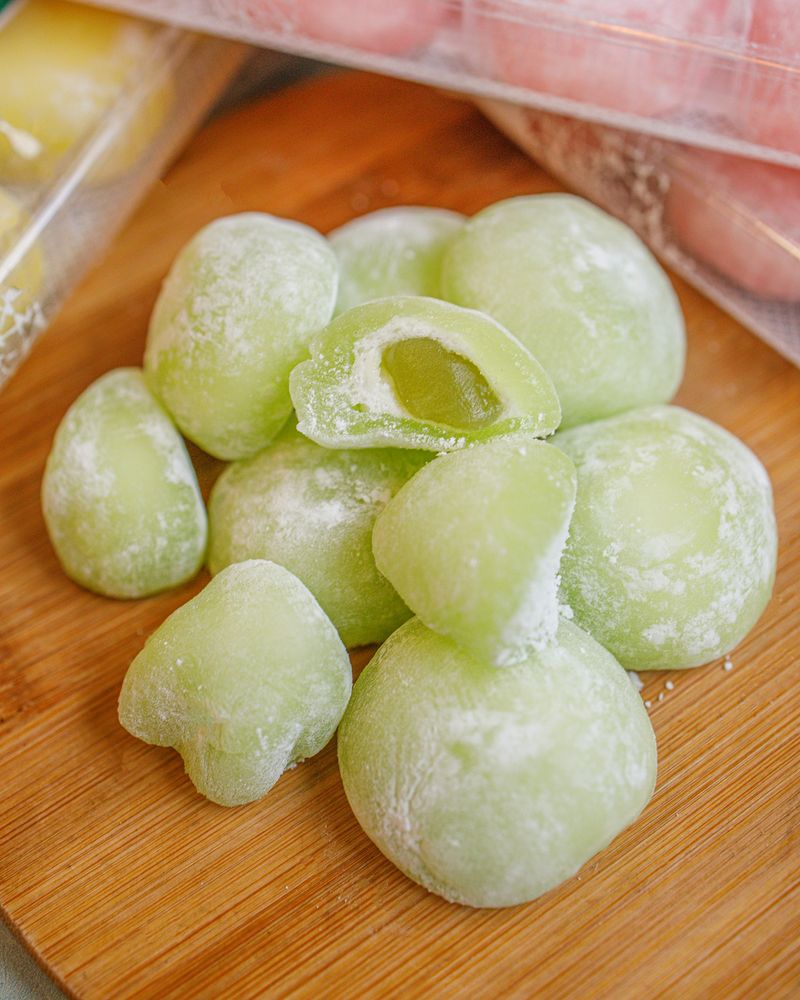
Chewy, soft, and subtly sweet, mochi is a Japanese rice cake made from pounded glutinous rice called mochigome. Its unique stretchy texture is unlike anything else in the pastry world, and once you try it, you will find yourself craving it constantly.
Fillings range from sweet red bean paste to ice cream, matcha cream, or strawberries. Mochi has been part of Japanese culture for over a thousand years and is central to New Year celebrations.
6. Churros – Spain
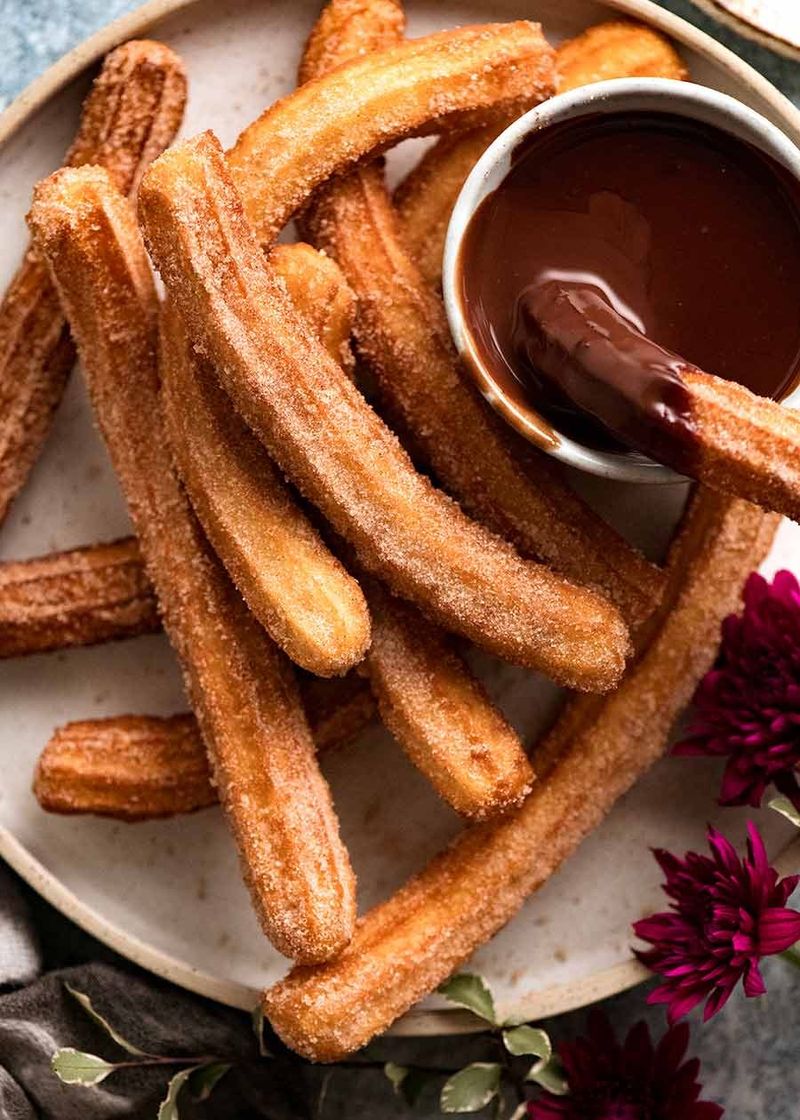
Churros are Spain’s answer to the question: what if fried dough could be even more fun? These ridged, golden sticks of deep-fried choux pastry are rolled in cinnamon sugar and served with a thick, rich chocolate sauce for dipping.
Originally a simple breakfast food for Spanish shepherds, churros have since conquered street food scenes worldwide. In Spain, they are traditionally eaten in the morning at a churreria, paired with a hot cup of thick hot chocolate.
7. Stroopwafel – Netherlands
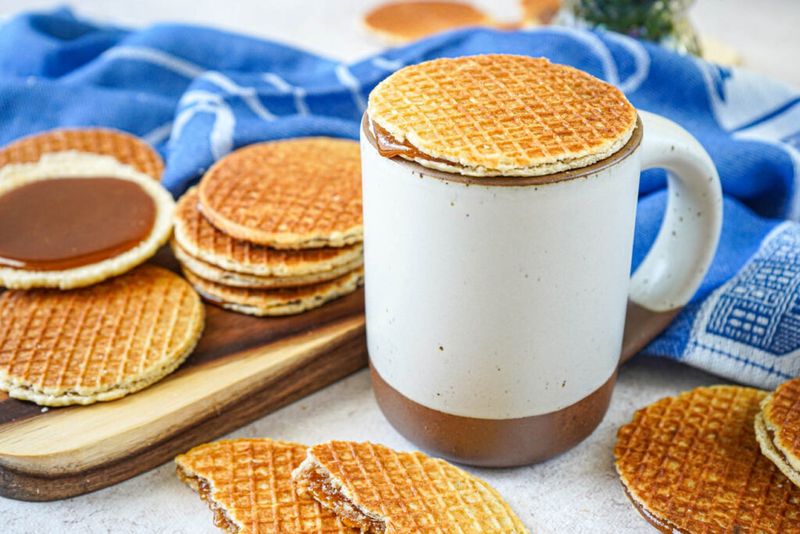
Here is a pastry with a genius built-in trick: place a stroopwafel on top of your hot coffee or tea, and the steam slowly softens the caramel syrup inside, turning it into a gooey, warm treat. Two thin, crispy waffle layers sandwich a layer of spiced caramel in between.
Invented in Gouda, Netherlands, in the early 1800s by a baker named Gerard Kamphuisen, this humble cookie-pastry hybrid became a national treasure. Now it is sold in over 100 countries worldwide.
8. Loukoumades – Greece
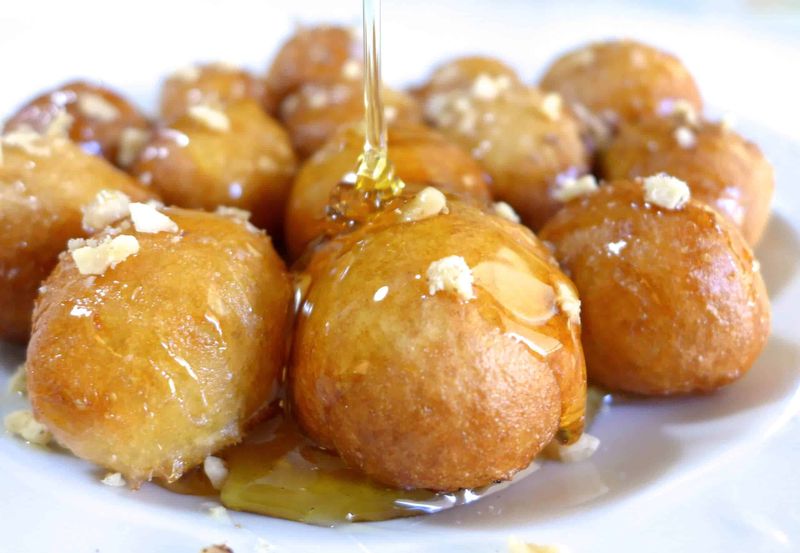
Ancient Greeks served these golden honey puffs to Olympic athletes as a prize. Today, loukoumades are enjoyed at festivals, street stalls, and family gatherings across Greece and the broader Mediterranean region.
These bite-sized fried dough balls are crispy on the outside, airy on the inside, and absolutely drenched in honey. Toppings vary from cinnamon and sesame seeds to chocolate sauce or crushed walnuts.
They are best eaten immediately, while still warm and crackling.
9. Brigadeiro – Brazil
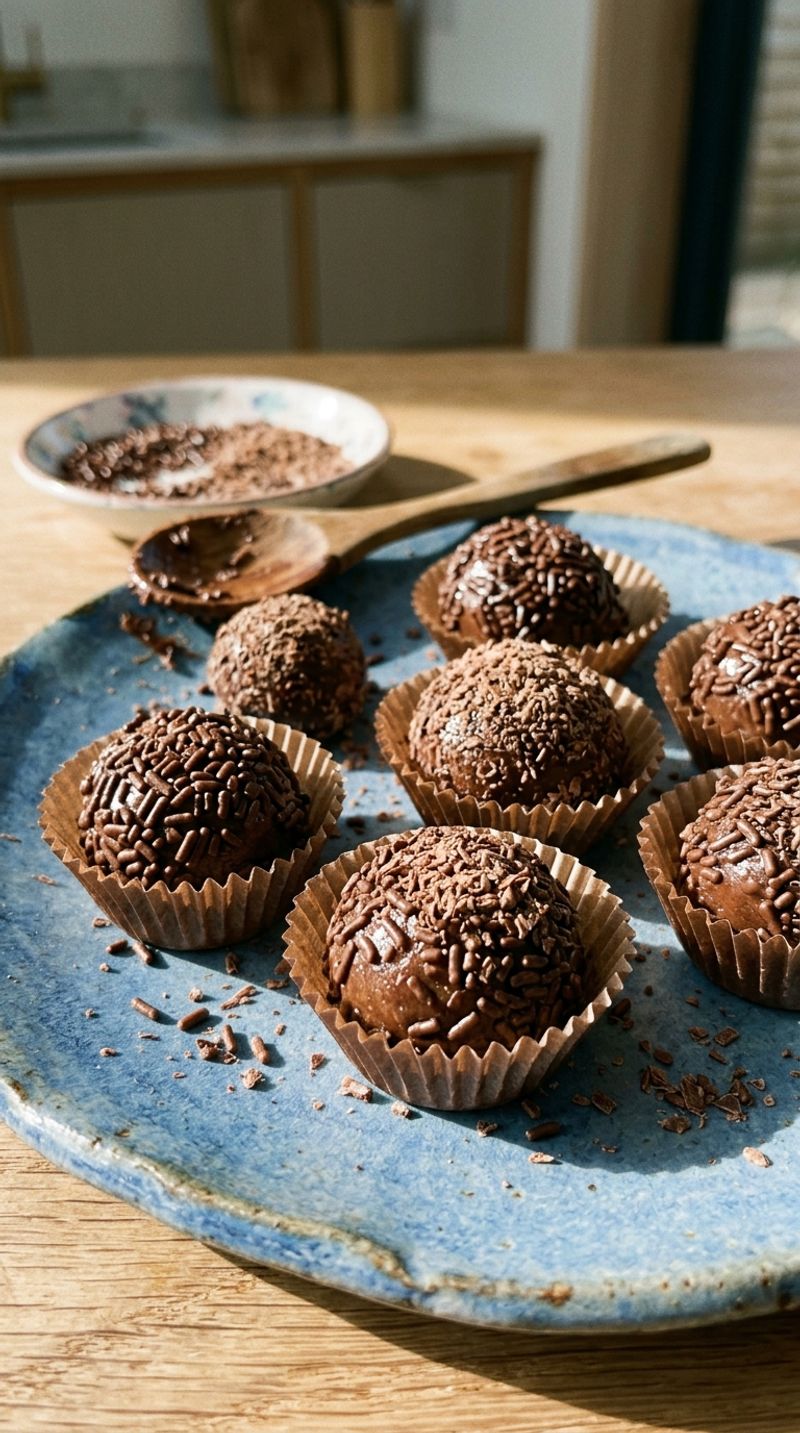
Brazil’s most beloved sweet treat is basically chocolate fudge rolled into a ball and covered in sprinkles. Brigadeiros are made from condensed milk, cocoa powder, and butter, cooked together until thick, then shaped and coated once cooled.
Named after Brigadier Eduardo Gomes, a 1940s political figure, these little truffles are a staple at every Brazilian birthday party. Classic chocolate is the favorite, but modern variations include passion fruit, coconut, and pistachio flavors too.
10. Knafeh – Palestine and Lebanon
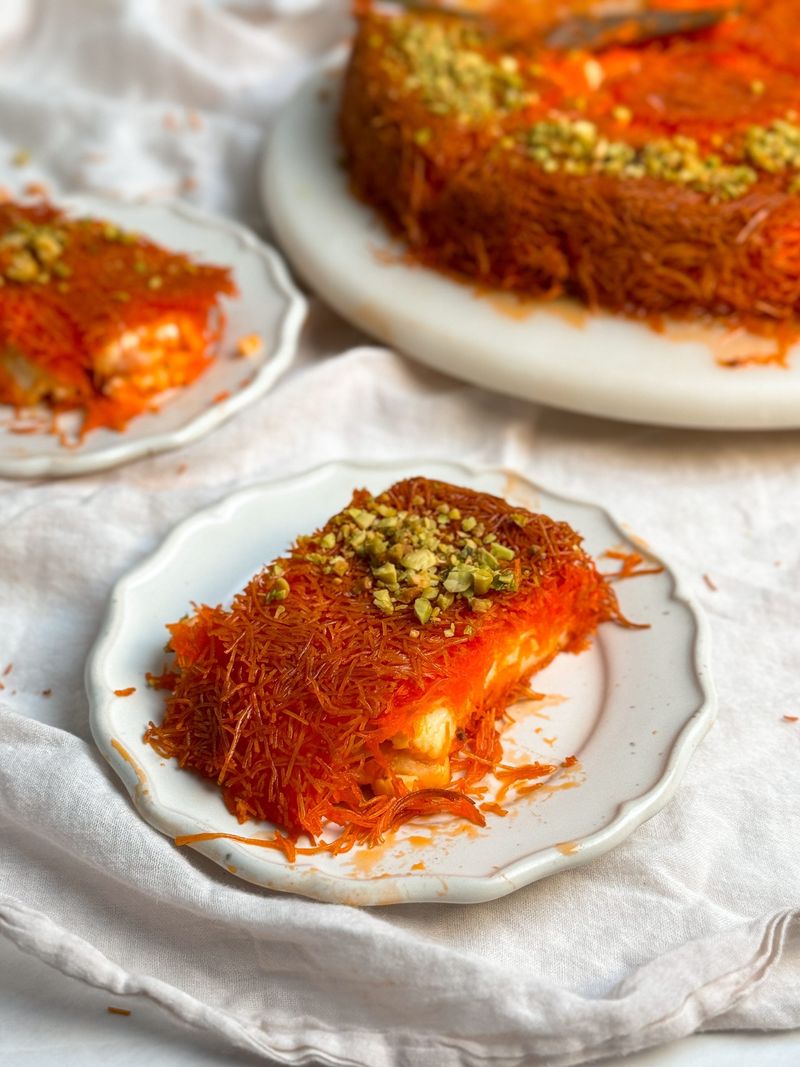
Knafeh is the kind of pastry that commands attention the moment it arrives at the table. A bed of shredded phyllo dough or semolina is layered over soft, stretchy white cheese, baked until golden, then flooded with fragrant rose water and orange blossom syrup.
Popular across the Levant, knafeh is especially famous in Nablus, Palestine, where the local version uses a specific white brined cheese. Served warm, the combination of sweet syrup and salty cheese is extraordinary.
11. Sachertorte – Austria
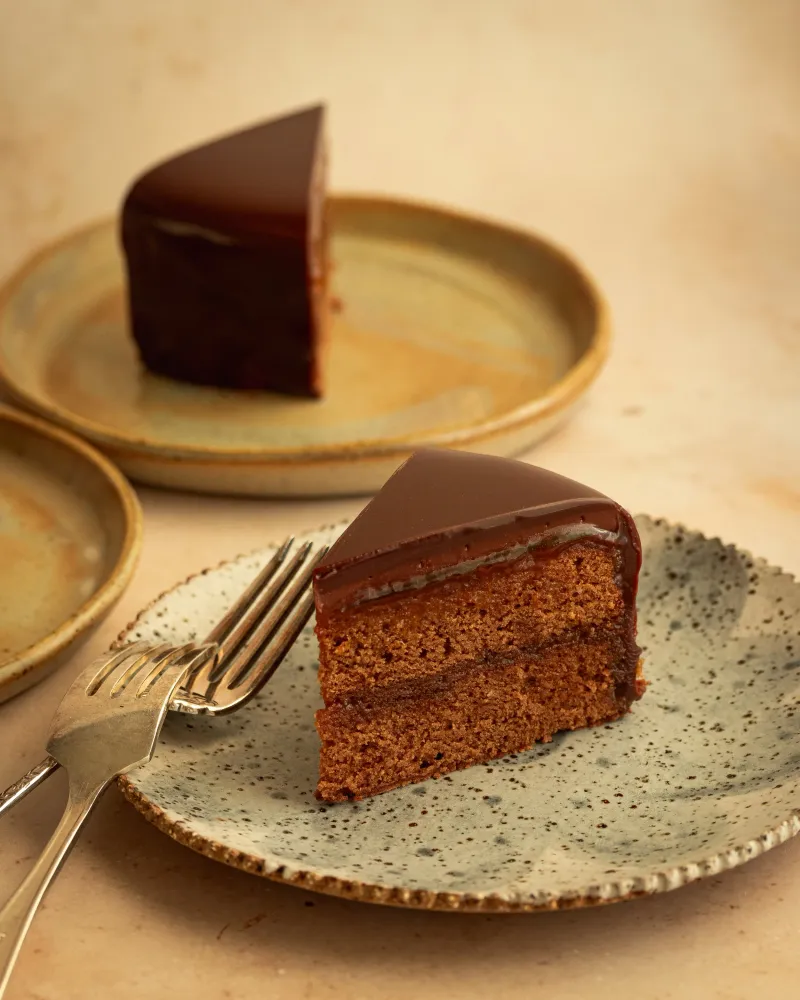
Created in 1832 by 16-year-old apprentice chef Franz Sacher for an Austrian prince, Sachertorte is one of the most famous cakes in culinary history. This dense, rich chocolate cake hides a thin layer of apricot jam beneath a glossy dark chocolate glaze.
Vienna’s Hotel Sacher and Cafe Demel even fought a legal battle for years over who owned the original recipe. Today, both versions are beloved.
Every slice tells a story of imperial elegance.
12. Gulab Jamun – India
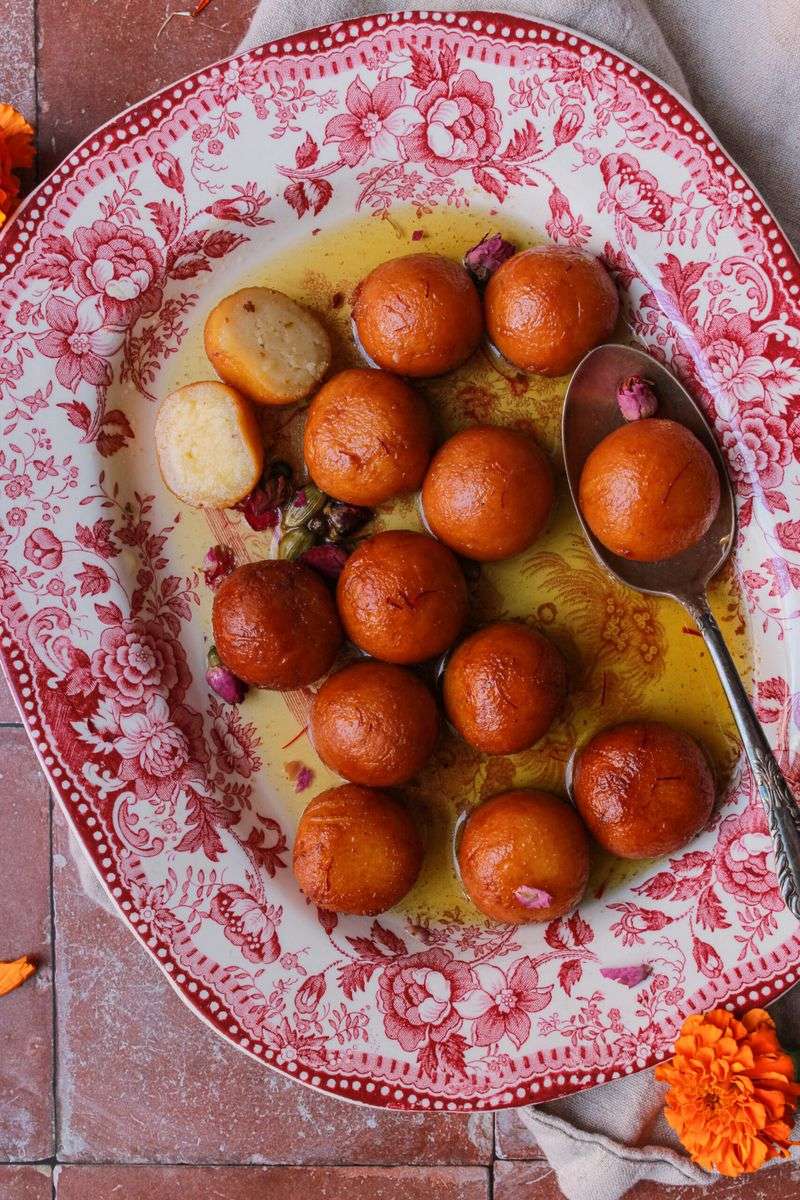
Soft, spongy, and soaked in perfumed syrup, gulab jamun is one of India’s most comforting desserts. These small round dumplings are made from milk solids called khoya, gently fried until deep golden, then submerged in a warm sugar syrup flavored with rose water and cardamom.
The name literally means rose berry in Persian and Hindi. Gulab jamun is served at weddings, festivals, and celebrations across South Asia.
Eating one warm is an experience worth repeating.
13. Koeksister – South Africa
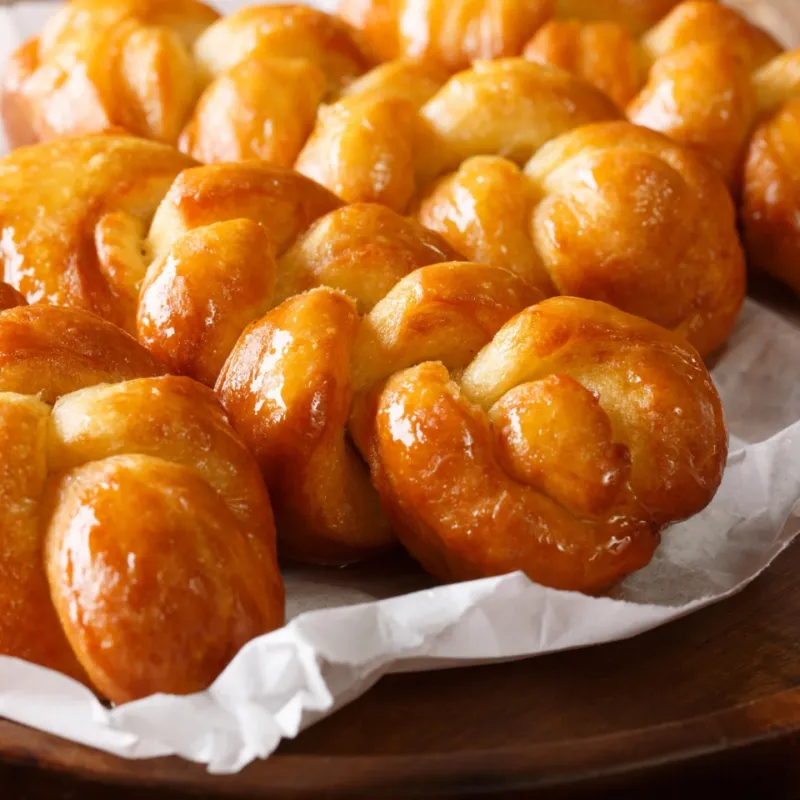
Koeksisters look like shiny, golden braids, and they taste even better than they look. These South African pastries are made from twisted or braided dough that is deep-fried and then immediately plunged into ice-cold sugar syrup, creating an incredibly sticky, sweet, and satisfying treat.
The contrast between the crispy fried exterior and the syrup-soaked interior is what makes koeksisters so addictive. They are a staple at Cape Malay community gatherings and weekend markets throughout South Africa.
14. Kouign-Amann – France (Brittany)
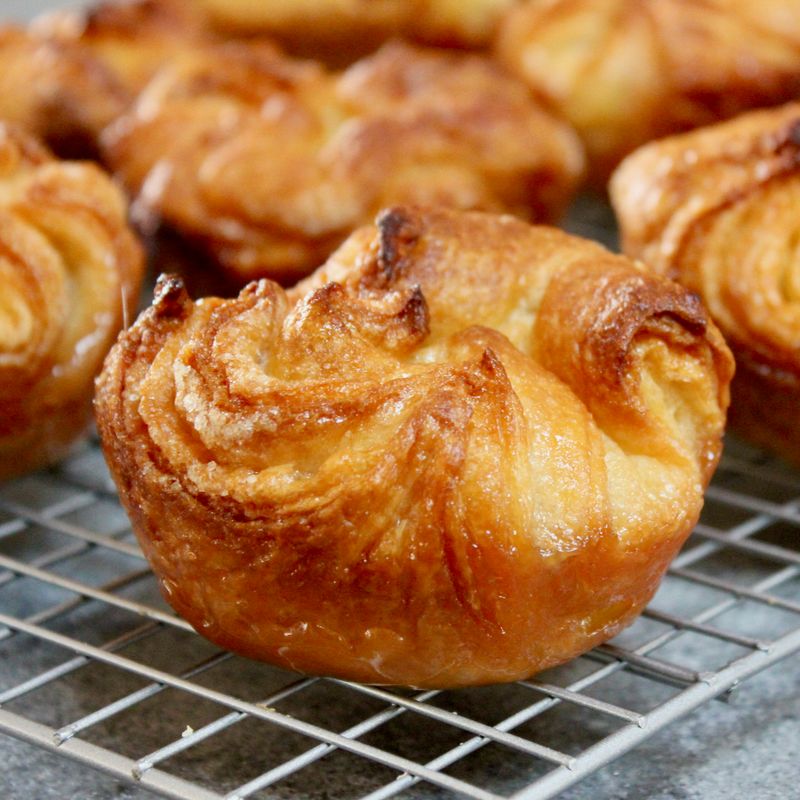
Kouign-Amann, pronounced KWEEN ah-MAHN, translates to butter cake in the Breton language, and that name is perfectly honest. This round pastry from the Brittany region of France is made by folding generous amounts of butter and sugar into yeasted bread dough, then baking it until the sugar caramelizes into a crackling, golden crust.
Invented accidentally in 1860 by baker Yves-Rene Scordia, it became a regional gem. The edges get extra caramelized and are considered the best part.
15. Mooncake – China
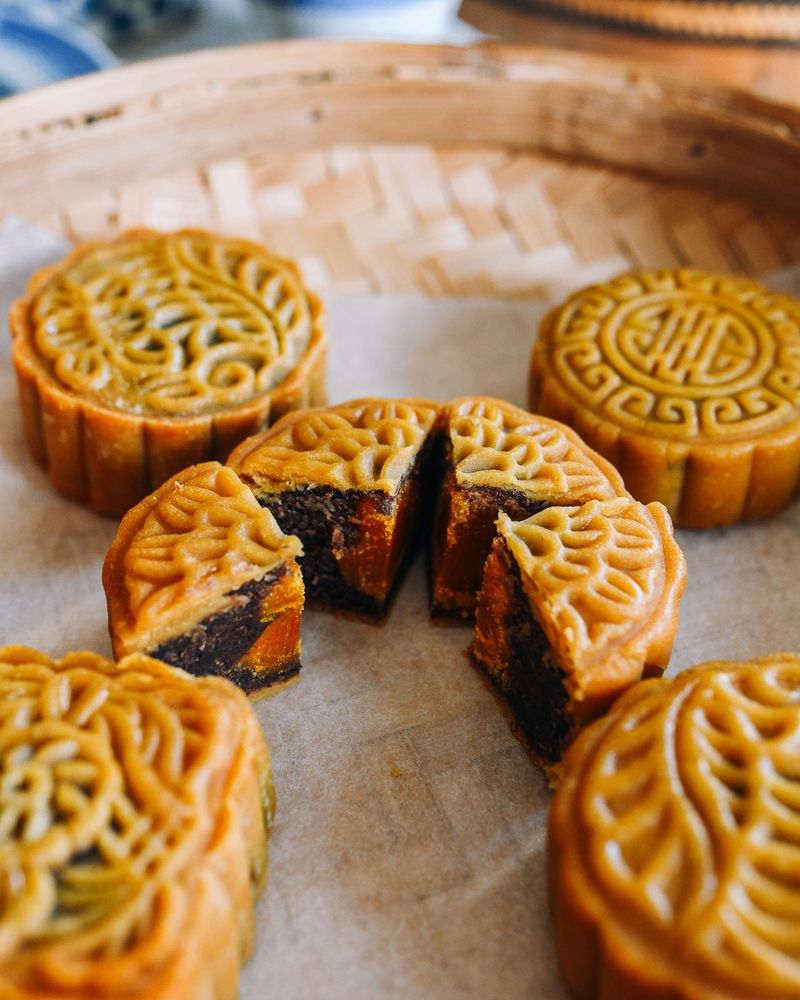
Mooncakes are as much about symbolism as they are about flavor. These dense, round pastries are traditionally eaten during China’s Mid-Autumn Festival, where families gather to admire the full moon together.
The circular shape represents unity and completeness.
Classic mooncakes have a thin pastry crust filled with lotus seed paste or red bean paste, often surrounding a salted egg yolk that resembles the moon. Modern versions include snow skin, matcha, and even ice cream fillings.
16. Sfogliatella – Italy
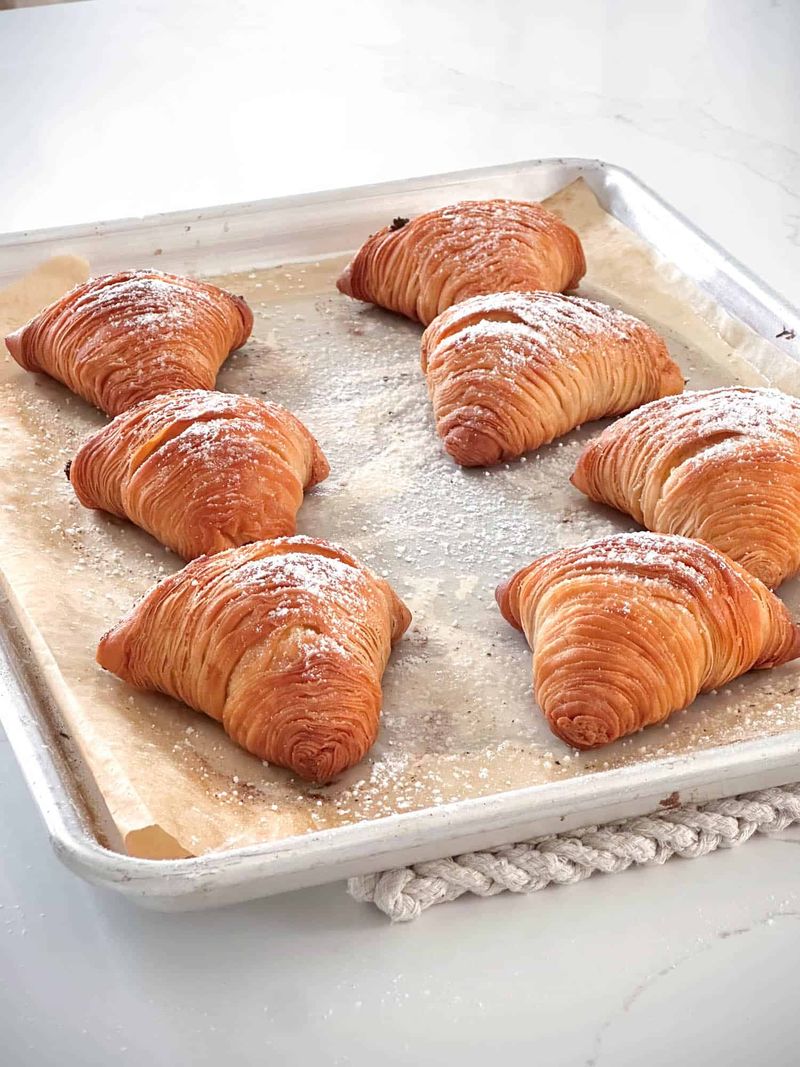
Sfogliatella is a showstopper with its dramatic shell-like shape and dozens of crispy, paper-thin pastry layers fanning outward. Native to Naples, Italy, this pastry takes serious skill to make, which is why the best ones come from dedicated Neapolitan pastry shops.
Inside the crunchy exterior lies a filling of ricotta cheese, semolina, candied citrus peel, and cinnamon. Every bite delivers an incredible crunch followed by a creamy, fragrant center.
It is a true labor of love.
17. Malasada – Portugal and Hawaii
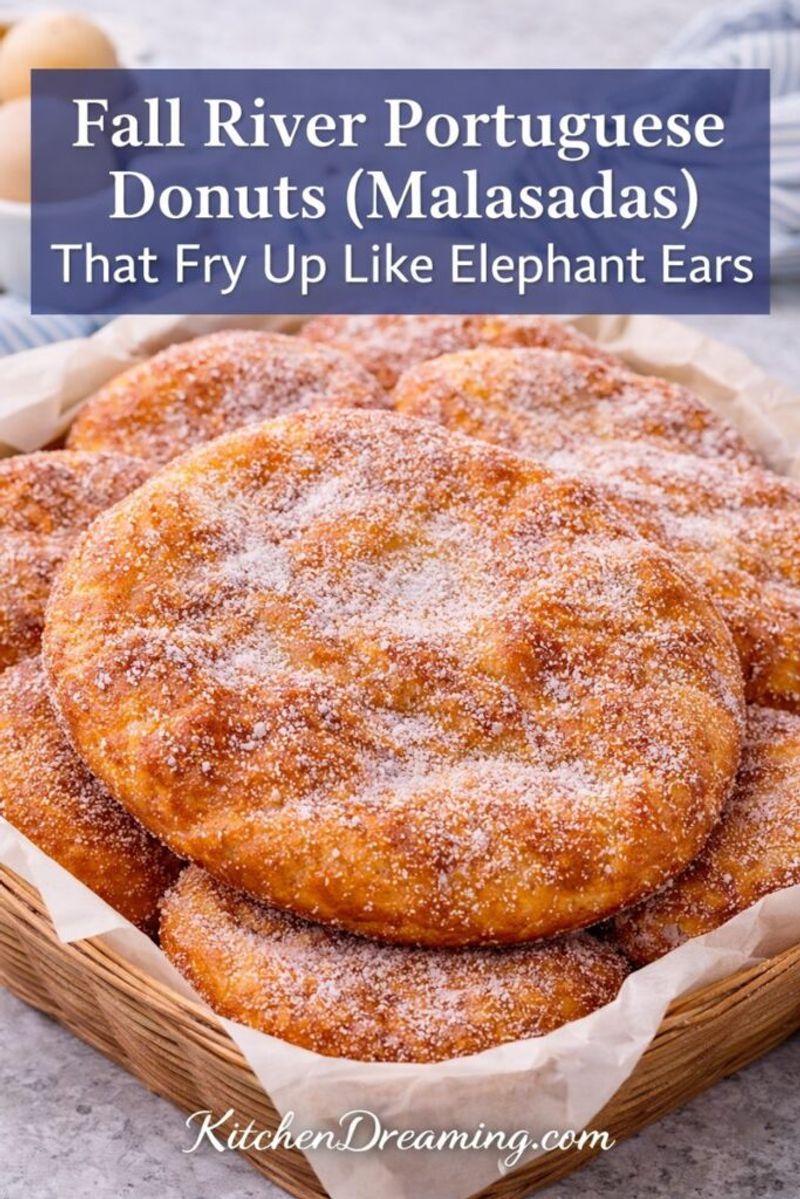
Portuguese immigrants brought malasadas to Hawaii in the 19th century, and the islands embraced them so completely that they are now a Hawaiian icon. These deep-fried dough balls have no hole, unlike regular doughnuts, and are rolled generously in granulated sugar while still hot.
Leonard’s Bakery in Honolulu has been serving legendary malasadas since 1952, and the lines out front are proof of their magic. Filled versions with custard or haupia coconut cream are equally popular.
18. Simit – Turkey
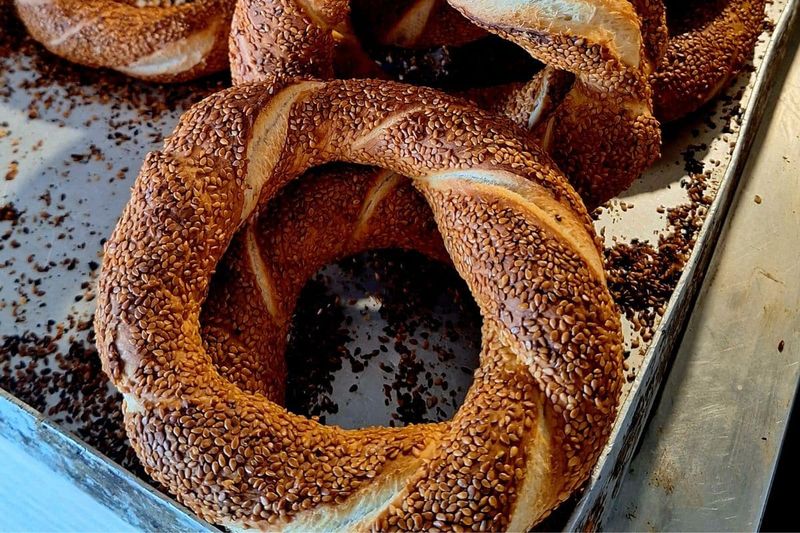
Walk through any Turkish city in the morning and you will spot vendors balancing enormous trays of simit on their heads. This circular bread ring, coated in a thick crust of toasted sesame seeds, is Turkey’s most iconic street food and a breakfast staple for millions.
The dough is dipped in grape molasses before being rolled in sesame seeds and baked, giving simit its distinctive color and subtle sweetness. Pair it with tea and white cheese for a classic Turkish morning.
19. Pastelito – Cuba
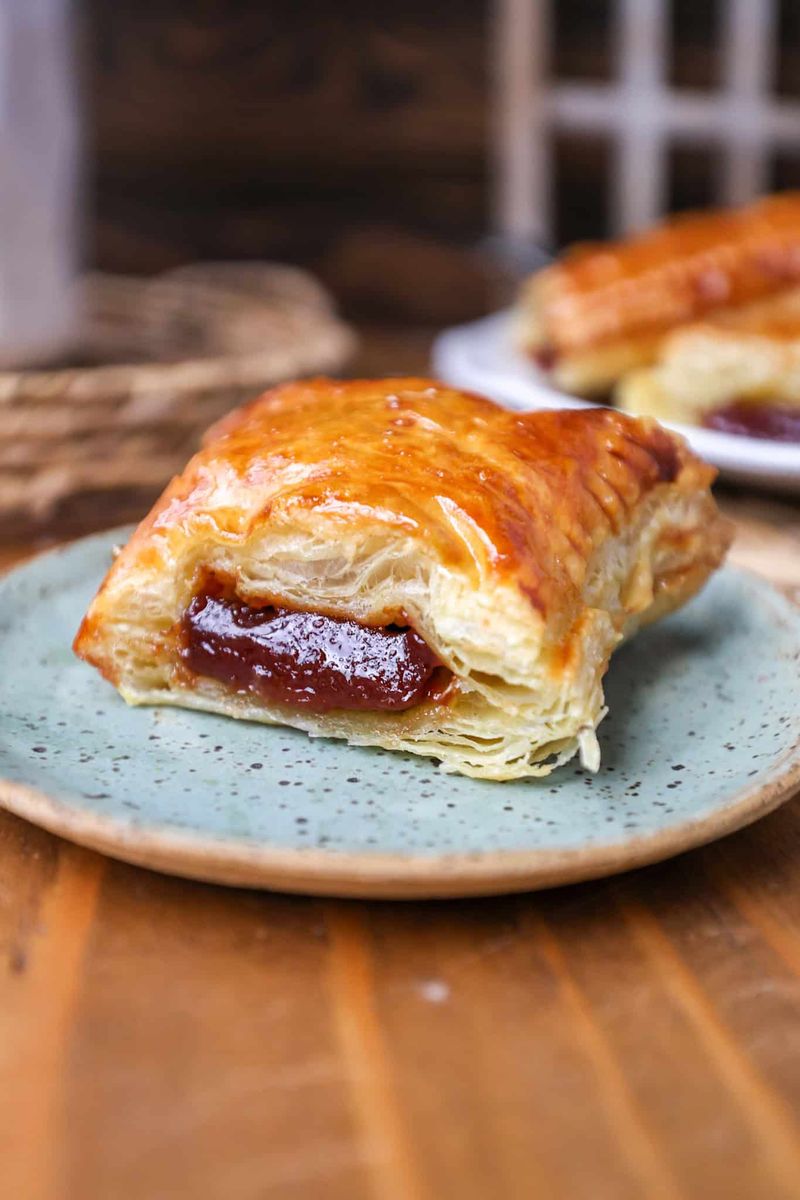
Few pastries capture the spirit of Cuban culture quite like a pastelito de guayaba. Flaky puff pastry is folded around a sweet, bright pink guava paste, sometimes paired with a layer of tangy cream cheese, then baked until golden and glazed with sugar syrup.
Cuban exiles brought this pastry tradition to Miami, where it became a cornerstone of Little Havana’s bakery scene. Grab one warm from a ventanita, a walk-up window cafe, for the most authentic experience possible.
20. Paczki – Poland
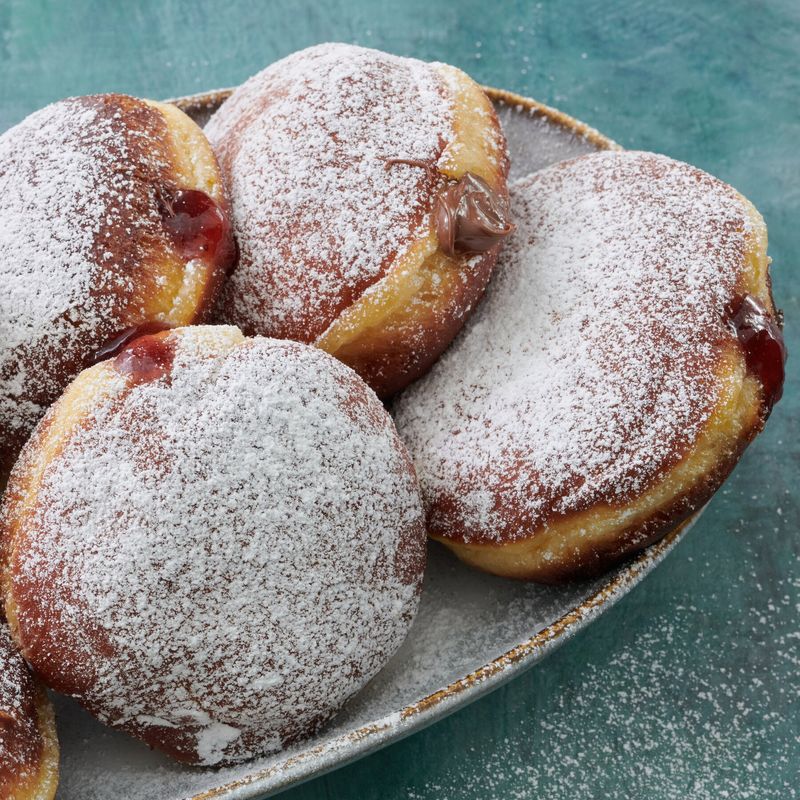
Paczki, pronounced POHNCH-kee, are Polish filled doughnuts that take the concept of a regular doughnut and turn it up several levels. These round, deep-fried pastries are made with a rich dough containing eggs, butter, sugar, and sometimes a splash of grain alcohol to prevent them from absorbing too much oil while frying.
Fillings include rose hip jam, prune, custard, or sweet cheese. They are traditionally eaten on Fat Thursday before Lent, when Poles eat millions of them nationwide.
21. Bolo de Mel – Madeira, Portugal
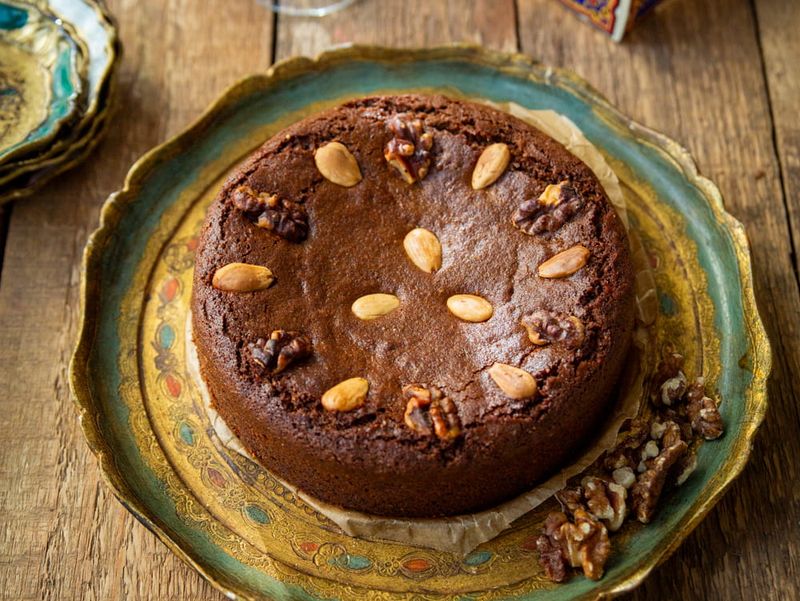
Bolo de mel is one of Portugal’s most ancient and distinctive pastries, hailing from the island of Madeira. Despite its name meaning honey cake, it is actually made with sugar cane molasses, which gives it a deeply dark color and a complex, spiced flavor unlike anything else.
Packed with walnuts, almonds, anise, cinnamon, and cloves, this dense cake is traditionally made at Christmas and can last for over a year without refrigeration. Each family guards its recipe closely.
22. Egg Tart – Hong Kong
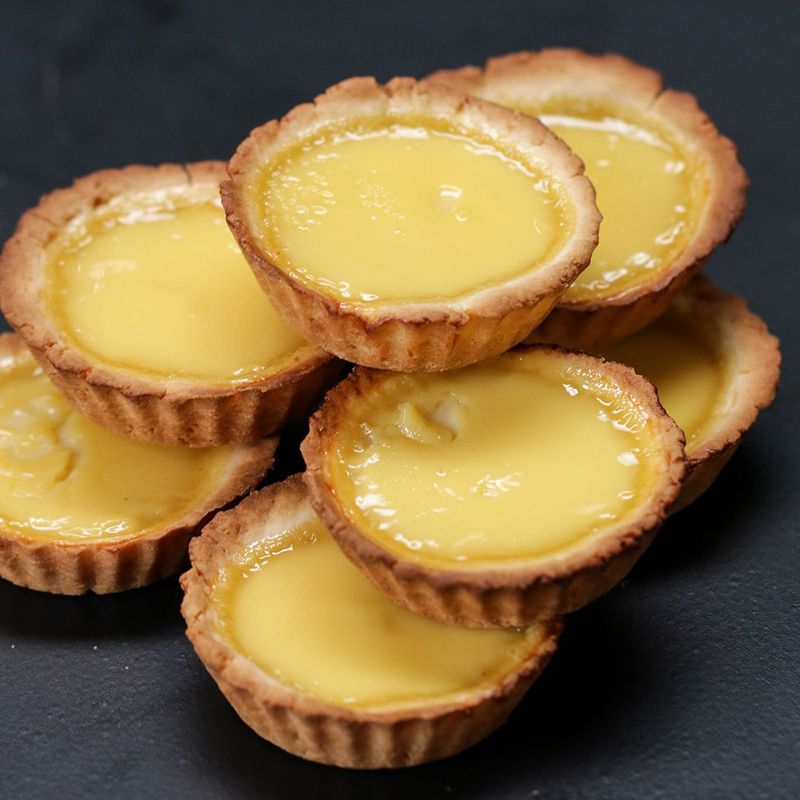
Hong Kong egg tarts are a beautiful fusion of British custard tarts and Chinese pastry traditions, born from the city’s colonial history. A buttery, crumbly shortcrust or flaky puff pastry shell holds a smooth, lightly sweetened egg custard that wobbles gently when the tray is moved.
They are a staple of Hong Kong-style bakeries and dim sum restaurants. The secret to the best ones is a perfectly silky custard with no bubbles and a crust that shatters cleanly on the first bite.
23. Rugelach – Israel and Eastern Europe
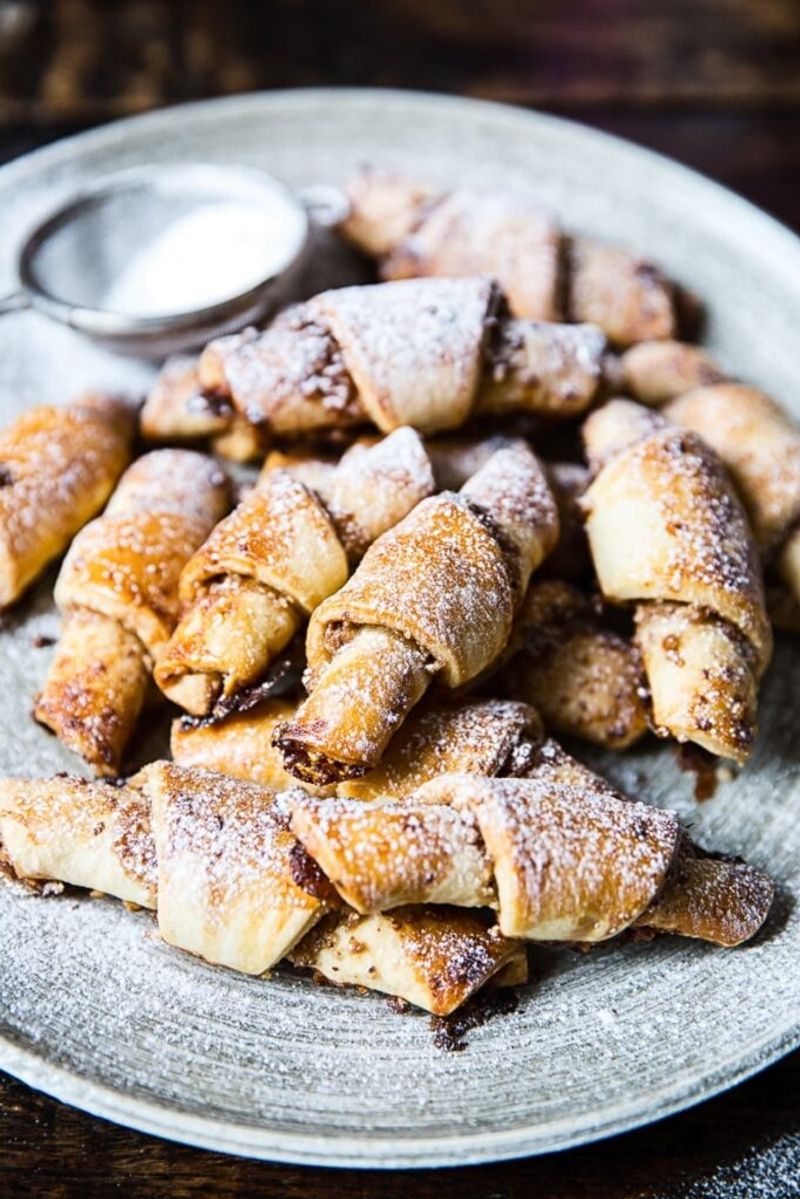
Rugelach are little crescent-shaped rolls of joy that have traveled from Eastern European Jewish kitchens to bakeries all over the world. The pastry dough is made with cream cheese, giving it a wonderfully tender, slightly tangy quality that sets it apart from regular pastry.
Fillings range from cinnamon and walnuts to apricot jam, chocolate, or raisins. Rolled up into tight little spirals and baked golden, rugelach are impossible to eat just one of.
They are a staple at Jewish holiday celebrations.
24. Tarte Tatin – France
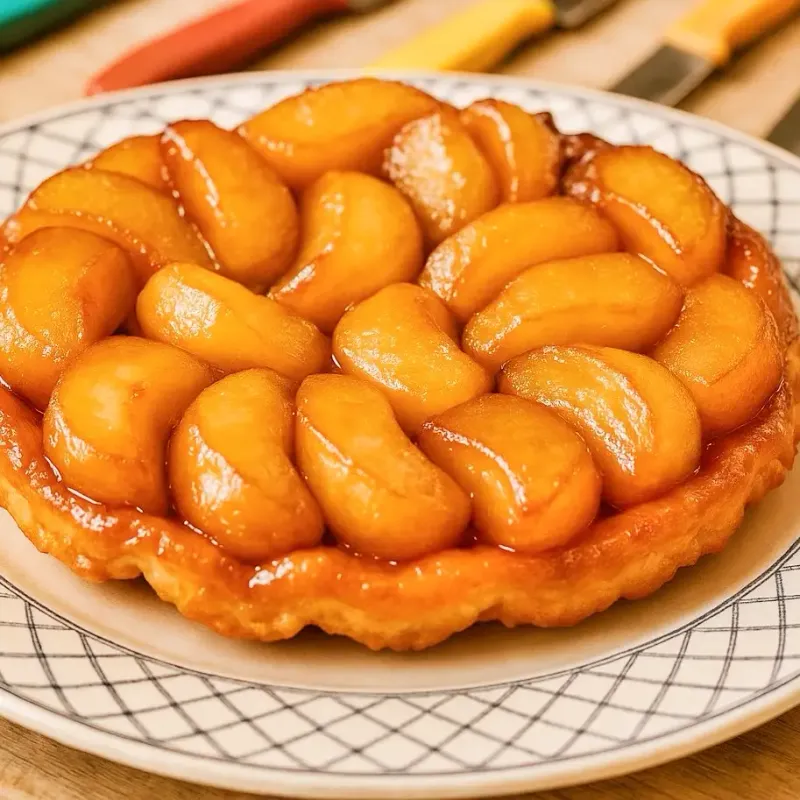
Legend says the tarte tatin was born from a happy accident in the 1880s when the Tatin sisters at their hotel in Lamotte-Beuvron accidentally baked their apple tart upside down. Instead of throwing it away, they served it anyway, and guests loved it immediately.
Apples are cooked in butter and caramel until deeply golden, then topped with pastry and baked, then flipped over to reveal a stunning caramelized top. Served warm with creme fraiche, it is pure French comfort.
25. Klepon – Indonesia
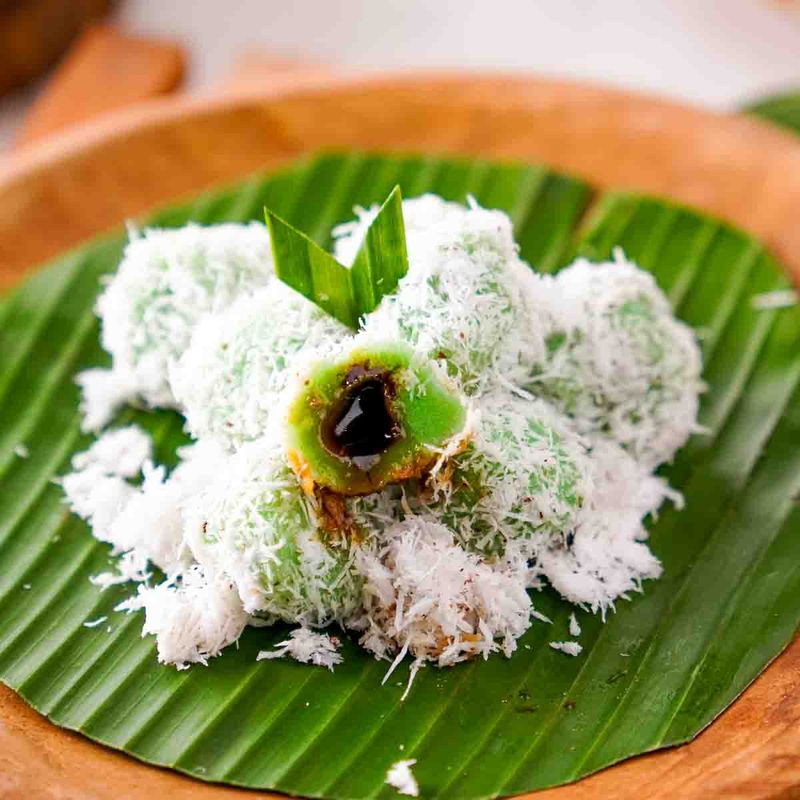
Klepon might be the most fun pastry on this list to eat. These small, bright green balls of glutinous rice dough hide a secret treasure inside: a chunk of palm sugar that melts and bursts in your mouth the moment you bite through the chewy exterior.
The green color comes from pandan leaf juice, which also adds a fragrant, grassy aroma. Rolled in freshly grated coconut, klepon are a popular snack in Indonesia, Malaysia, and the Philippines, often sold at traditional markets.