
Generation X — those born between 1965 and 1980 — has spent decades grinding through corporate hallways, punching time clocks, and playing by rules they never quite agreed with. Now, many of them are done.
After years of watching companies downsize, restructure, and demand loyalty without offering much in return, Gen Xers are choosing a different path. From burnout to bold new dreams, here are the real reasons this generation is walking away from the traditional 9-to-5 grind.
1. Burnout Has Finally Hit a Breaking Point

After 25-plus years of early mornings, late nights, and skipped vacations, the body and mind eventually send a loud, undeniable message: enough. Burnout is not just tiredness — it is a full-on physical and emotional shutdown.
Gen Xers are walking away not out of laziness but out of self-preservation. Many have finally realized that no paycheck is worth destroying their health.
The 9-to-5 grind simply asks too much for too little in return.
2. Remote Work Proved the Office Was Never Necessary

The pandemic did something remarkable — it pulled back the curtain on office culture. Suddenly, millions of people were just as productive, if not more so, working from their kitchen tables.
Gen Xers took notice. If results are what matter, why does location matter at all?
Many have refused to return to mandatory commutes and fluorescent-lit cubicles when they know firsthand that flexibility actually works better for everyone involved.
3. Corporate Loyalty Turned Out to Be a One-Way Street

Remember when companies handed out gold watches after 30 years of service? Those days are gone, and Gen X watched them disappear in real time.
Mass layoffs, outsourcing, and restructuring taught this generation a hard lesson: companies rarely return the loyalty they demand.
Once that truth sinks in, the motivation to sacrifice personal life for a corporation fades fast. Gen Xers are now investing that energy into themselves instead of faceless organizations.
4. Caregiving Responsibilities Demand a Flexible Schedule

Squeezed from both sides, Gen Xers are often raising teenagers while simultaneously caring for aging parents. This “sandwich generation” reality makes a rigid 8-hour workday almost impossible to manage without something breaking down.
Flexibility is not a luxury for many in this group — it is a survival tool. Choosing freelance work, part-time roles, or self-employment often becomes the only practical solution when family demands don’t follow a corporate calendar.
5. Passion Projects Are Finally Getting the Green Light

For decades, many Gen Xers quietly shelved their real passions — photography, writing, music, cooking — to chase a stable paycheck. Now, with kids growing up and mortgages more manageable, those shelved dreams are getting dusted off.
The gig economy and digital platforms make it easier than ever to turn a passion into income. Why spend another decade doing work that feels hollow when something meaningful is finally within reach?
6. Financial Independence Has Changed the Math

Not every Gen Xer is wealthy, but many have spent years steadily building savings, paying down debt, and investing wisely. For some, that groundwork has quietly added up to something powerful: options.
When financial independence becomes a reality — even partially — the 9-to-5 loses its grip. Early retirement, part-time consulting, or passion-based income suddenly becomes a real possibility rather than a distant fantasy.
That kind of freedom changes everything.
7. The Gig Economy Opened a World of Alternatives

Platforms like Upwork, Fiverr, and LinkedIn have made it possible to build a career entirely outside the traditional employment model. Gen Xers, armed with decades of marketable skills, are perfectly positioned to cash in.
Freelancing offers something a corporate job rarely does: control. You pick your clients, set your rates, and choose your hours.
For a generation tired of being told when and where to show up, that kind of autonomy is incredibly appealing.
8. Mental Health Is Now a Priority, Not a Punchline

There was a time when mental health struggles were whispered about or pushed aside entirely in the workplace. Gen X grew up in that culture — and many paid a steep personal price for it.
Today, this generation is more willing than ever to say: my mental health matters. Toxic workplaces, unreasonable managers, and chronic stress are no longer things they are willing to silently endure.
Protecting peace of mind has become a non-negotiable priority.
9. Technology Has Made Self-Employment More Accessible

Starting a business used to require a bank loan, a physical storefront, and a mountain of paperwork. Today, a laptop and a solid internet connection can launch a fully functioning business in a weekend.
Gen Xers are embracing e-commerce, online coaching, digital consulting, and content creation at impressive rates. Technology has lowered every barrier that once kept self-employment out of reach, and this generation has the experience and discipline to make it work.
10. Work-Life Balance Stopped Being Optional

Ask most Gen Xers what they regret most about their 30s and 40s, and the answer is often the same: missing too much of real life chasing a career. Birthdays, weekends, evenings — all swallowed by work obligations.
That regret has become a powerful motivator. Reclaiming time with family, friends, and personal hobbies is no longer something Gen X is willing to postpone.
Work-life balance has shifted from a nice idea to an absolute requirement.
11. Disillusionment With Office Politics Is Real

Few things drain energy faster than navigating a workplace full of power plays, favoritism, and pointless meetings. Gen X has had a front-row seat to office politics for decades, and the show has grown incredibly old.
Many have reached a point where the emotional cost of corporate maneuvering outweighs the financial reward. Walking away from that exhausting environment in favor of something simpler and more genuine is not giving up — it is growing up.
12. Health Scares Have Shifted Priorities Fast

A scary diagnosis, a friend’s heart attack, or a personal health scare has a way of instantly rearranging what feels important. For many Gen Xers, a wake-up call from their own body became the turning point they needed.
Suddenly, the corner office and the quarterly bonus feel much less significant than actually being around to enjoy life. Health scares have pushed countless Gen Xers to restructure their entire relationship with work before it is too late.
13. Entrepreneurship Feels More Rewarding Than Employment

There is something deeply satisfying about building something entirely your own. Gen Xers, who grew up admiring self-made success stories, are increasingly choosing the entrepreneurial route over climbing someone else’s ladder.
Owning a business means your effort directly benefits you — not a shareholder you will never meet. Even when the hours are long and the risks are real, the sense of ownership and purpose makes the work feel completely different from clocking in for a corporation.
14. The Commute Became Completely Unbearable

Add it up: an hour each way, five days a week, 50 weeks a year. That is roughly 500 hours annually spent sitting in traffic or crammed into a subway car — time that could be used for almost anything more meaningful.
Gen Xers have done this math and decided the trade-off no longer makes sense. The daily commute, once accepted as just part of life, now looks like an enormous and unnecessary drain on time, money, and sanity.
15. Younger Generations Inspired a Mindset Shift
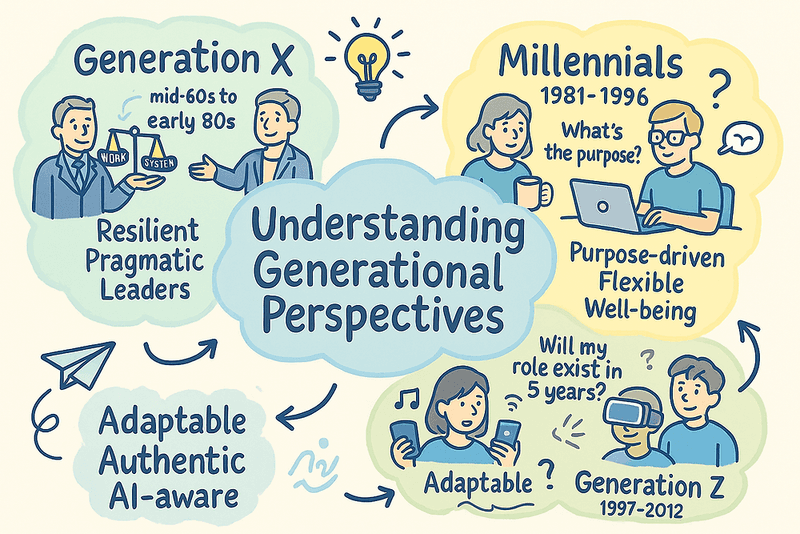
Watching Millennials and Gen Z loudly reject hustle culture and demand better from employers planted a seed in many Gen X minds. If younger generations could push back, why couldn’t they?
Conversations with their own adult children opened Gen Xers’ eyes to new ways of thinking about work and worth. Sometimes, it takes seeing a different generation model healthier boundaries to finally give yourself permission to do the same thing.
16. Retirement Planning Made Leaving Earlier Possible

Years of maxing out 401(k) contributions, investing in real estate, and living below their means has put some Gen Xers in a surprisingly strong financial position. The retirement finish line moved closer than expected.
For those who planned carefully, leaving full-time work in their early 50s is not a fantasy — it is a spreadsheet away from reality. Smart financial habits built over decades are now paying off in the most valuable currency: time.
17. The Pandemic Permanently Rewired Work Expectations

COVID-19 did not just disrupt the economy — it fundamentally changed how millions of people think about work. Gen X, already questioning the traditional model, got a multi-year experiment in alternative arrangements.
Many discovered they were happier, healthier, and more productive outside the traditional office structure. Going back to the way things were stopped feeling like a return to normal and started feeling like a step backward.
That perspective shift has proven permanent for a large portion of this generation.
18. Meaningful Work Matters More Than a Big Title

Corner offices and impressive job titles used to feel like the ultimate goal. Many Gen Xers chased those markers of success for years, only to reach them and feel surprisingly empty.
Purpose has replaced prestige as the real motivator. Whether it is nonprofit work, teaching, mentoring, or community involvement, Gen Xers are gravitating toward roles that leave them feeling genuinely useful.
A meaningful day beats an impressive business card every single time.
19. Side Hustles Grew Into Full-Time Income Streams

What started as a weekend hobby or a little extra cash on the side quietly grew into something much bigger for many Gen Xers. A crafting business, a consulting gig, or a monetized YouTube channel suddenly started generating real, sustainable income.
Once a side hustle matches or exceeds a day job salary, the equation changes dramatically. Choosing the thing you actually enjoy over the thing you merely tolerate becomes the obvious — and exciting — next move.
20. Life Is Simply Too Short to Stay Miserable

At some point, the philosophical question stops being abstract: is this really how I want to spend the hours of my life? For a growing number of Gen Xers, the honest answer is a firm and liberating no.
Watching peers deal with illness, loss, and regret has made this generation fiercely protective of their remaining time. Staying in a soul-draining job out of habit or fear stopped making sense long ago.
Joy, rest, and purpose are not rewards for retirement — they are rights worth claiming now.