
Words carry more weight than people often realize. Some phrases, even when said casually, can cut deep and leave someone feeling invisible or unimportant.
Whether it comes from a friend, family member, or coworker, dismissive language can seriously damage trust and emotional well-being. Recognizing these phrases is the first step toward building healthier, more respectful communication.
1. “You’re Overreacting”

Few phrases sting quite like being told your feelings are too big for the room. “You’re overreacting” shuts down the conversation before it even starts, sending a clear message that your emotions are inconvenient.
The person saying it rarely stops to ask why you feel the way you do. Instead, they place the blame on your reaction rather than examining the situation.
Feeling deeply about something is not a character flaw — it’s human.
2. “Just Calm Down”

Telling someone to “just calm down” is one of the fastest ways to make them feel even more upset. It treats their emotional state like a technical glitch that needs a quick reset button.
Rather than acknowledging what the person is going through, this phrase pushes them to suppress their feelings on command. Emotions don’t work that way.
A more helpful approach would be asking, “What’s going on?” and actually listening to the answer.
3. “It’s Not a Big Deal”

Something being small to you doesn’t mean it’s small to someone else. “It’s not a big deal” erases the weight a person has been carrying, often making them feel foolish for struggling in the first place.
Everyone has a different emotional threshold, and that’s completely okay. What feels minor to one person could be genuinely overwhelming to another.
Dismissing someone’s concern without understanding it first shows a lack of empathy and can quietly chip away at the relationship.
4. “You’re Too Sensitive”

Sensitivity is not a weakness — yet this phrase treats it like one. Labeling someone as “too sensitive” shifts the focus away from the hurtful behavior and onto the person who was hurt by it.
It’s a clever redirect that avoids accountability. The person being called sensitive often ends up apologizing for having feelings at all.
Emotional awareness is actually a strength, and people who feel things deeply tend to be more empathetic and connected to those around them.
5. “I Don’t See What the Problem Is”

Not every problem needs to be visible to be real. When someone says “I don’t see what the problem is,” they’re essentially saying your struggle doesn’t register on their radar — and that’s their final answer.
This phrase offers zero support and closes the door on any real conversation. Even when someone genuinely doesn’t understand, a caring response would be to ask questions and try to understand.
Brushing it off entirely only deepens the emotional distance between people.
6. “That’s Just How I Am”

Used as a shield more than an explanation, this phrase puts up a wall against any possibility of change or growth. It tells the other person that their pain simply isn’t enough reason to try harder.
Everyone has personality traits, but using them to excuse hurtful behavior is a different thing entirely. Relationships require effort and adjustment from both sides.
Hiding behind “that’s just how I am” is a way of refusing that responsibility — and it rarely leads anywhere good.
7. “Just Get Over It”

Healing doesn’t follow a schedule, and telling someone to “just get over it” completely ignores that fact. Grief, hurt, and disappointment take time — sometimes a lot of it — and rushing that process doesn’t help anyone.
This phrase also carries a quiet judgment, suggesting the person is somehow weak for still feeling what they feel. Real support looks like sitting with someone in their pain, not demanding they exit it on your timeline.
Patience goes a long way.
8. “You’re Making a Big Deal Out of Nothing”

Calling someone’s concern “nothing” is a bold move that rarely ends well. It tells the other person that their reality doesn’t match yours — and yours is the one that counts.
Over time, hearing this phrase repeatedly can cause someone to stop sharing how they feel altogether. They learn that their emotions won’t be taken seriously, so why bother?
That kind of silence can quietly poison a relationship, building walls where open communication should exist instead.
9. “Other People Have It Worse”

Suffering isn’t a competition, yet this phrase turns it into one. Pointing out that others have bigger problems doesn’t erase someone’s pain — it just adds a layer of guilt on top of it.
Two things can be true at once: someone else can be struggling more, and you can still be hurting. Comparing pain like this shuts down honest conversation and teaches people to minimize their own feelings.
Compassion means meeting someone where they are, not ranking their problems on a scale.
10. “It’s All in Your Head”

Emotional pain is just as real as physical pain — science backs that up. Yet “it’s all in your head” has a way of making someone feel like they’re inventing their own suffering for attention.
This phrase is particularly damaging because it attacks a person’s sense of reality. When you’re already struggling, being told your experience isn’t valid can feel completely isolating.
Acknowledging someone’s pain, even when you don’t fully understand it, is one of the most powerful things you can do.
11. “Why Can’t You Just Get Over It?”

Slap a question mark on a dismissal and it somehow feels even sharper. “Why can’t you just get over it?” implies there’s something broken in you for still feeling hurt, which is both unfair and untrue.
Emotions don’t vanish on command, and healing isn’t linear. Sometimes old wounds resurface, and that’s a normal part of being human.
Instead of questioning why someone hasn’t moved on, asking how you can help them get there is far more meaningful and kind.
12. “That’s Not My Problem”

Cold, blunt, and completely lacking in empathy — this phrase does real damage. “That’s not my problem” doesn’t just decline to help; it actively signals that the other person’s pain doesn’t matter to you at all.
In close relationships especially, hearing this can feel like a door slamming shut. People need to feel like those around them are at least willing to listen, even if they can’t fix everything.
Indifference has a way of leaving lasting marks on how safe someone feels around you.
13. “I Don’t Care”

Three words. That’s all it takes to make someone feel completely invisible. “I don’t care” communicates emotional abandonment in the most direct way possible, leaving little room for misinterpretation.
Even when said in frustration, the impact sticks. The person on the receiving end often replays those words long after the argument ends.
Relationships are built on the belief that both people matter to each other. Once that belief is shaken, rebuilding it takes a whole lot more than three words.
14. “You’re Dramatic”

Nobody wants to be cast as the villain in their own emotional story. Calling someone “dramatic” reframes their genuine pain as a performance — something put on for effect rather than felt from the heart.
This label tends to follow people around, making them second-guess their reactions before they even express them. Over time, they may start shrinking themselves to avoid the criticism.
Emotions are not theater, and treating them that way pushes people further from honest, open expression.
15. “You’re Imagining Things”

There’s something uniquely cruel about being told your reality isn’t real. “You’re imagining things” doesn’t just dismiss a feeling — it challenges someone’s ability to trust their own mind and instincts.
Psychologists call this kind of behavior gaslighting, and it can have serious long-term effects on mental health. When someone consistently hears this phrase, they begin to doubt themselves in ways that go far beyond the original disagreement.
Trusting your own perceptions is a basic human need, not a luxury.
16. “I Was Only Teasing. Can’t You Take a Joke?”
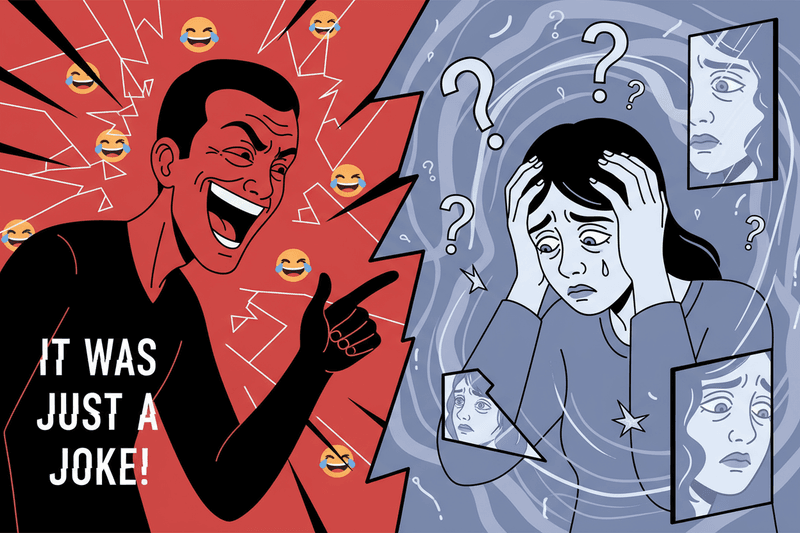
Humor that hurts isn’t really humor — it’s just hurt with a punchline attached. “Can’t you take a joke?” flips the script so the person who was wounded ends up feeling responsible for ruining the fun.
This move is a classic deflection. Instead of owning the impact of the comment, the speaker makes the other person’s hurt feelings the problem.
A genuine joke doesn’t need a disclaimer. If someone has to explain that they were “only teasing,” chances are the teasing went too far.
17. “Everything Happens for a Reason”

Said with good intentions, this phrase still lands like a thud when someone is deep in pain. It suggests that their suffering has a tidy purpose — which can feel deeply dismissive when the wound is still fresh.
People in grief or crisis don’t always need answers; they need presence. Jumping to meaning-making too quickly can make someone feel rushed through their pain.
Sometimes the most powerful thing you can offer is simply sitting beside someone and saying, “I’m here, and I’m sorry you’re going through this.”