
Pirates have captured our imagination for centuries, but how much of what we think we know is actually true? Movies, books, and legends have painted a colorful picture of swashbuckling sea bandits that is often far from reality.
Some of the most popular pirate stories are total fiction, while the real history is even more surprising. Get ready to separate the tall tales from the truth.
1. Myth 1: Pirates Made People Walk the Plank
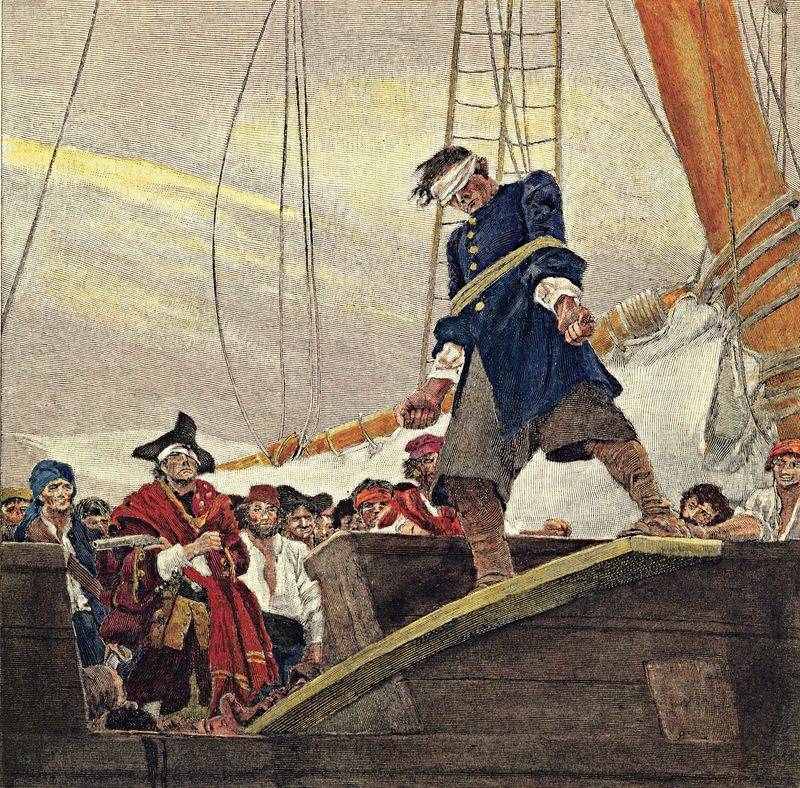
You have probably seen it in cartoons and movies: a blindfolded prisoner shuffling off a wooden plank into shark-infested waters. Scary stuff, right?
The problem is historians have found almost no solid evidence this ever really happened.
Pirates were certainly brutal, but “walking the plank” was not their go-to punishment. They were far more likely to throw someone overboard directly or use a punishment called keelhauling.
The famous plank scene is mostly a product of Hollywood imagination.
2. Myth 2: Pirates Buried Treasure and Used Maps
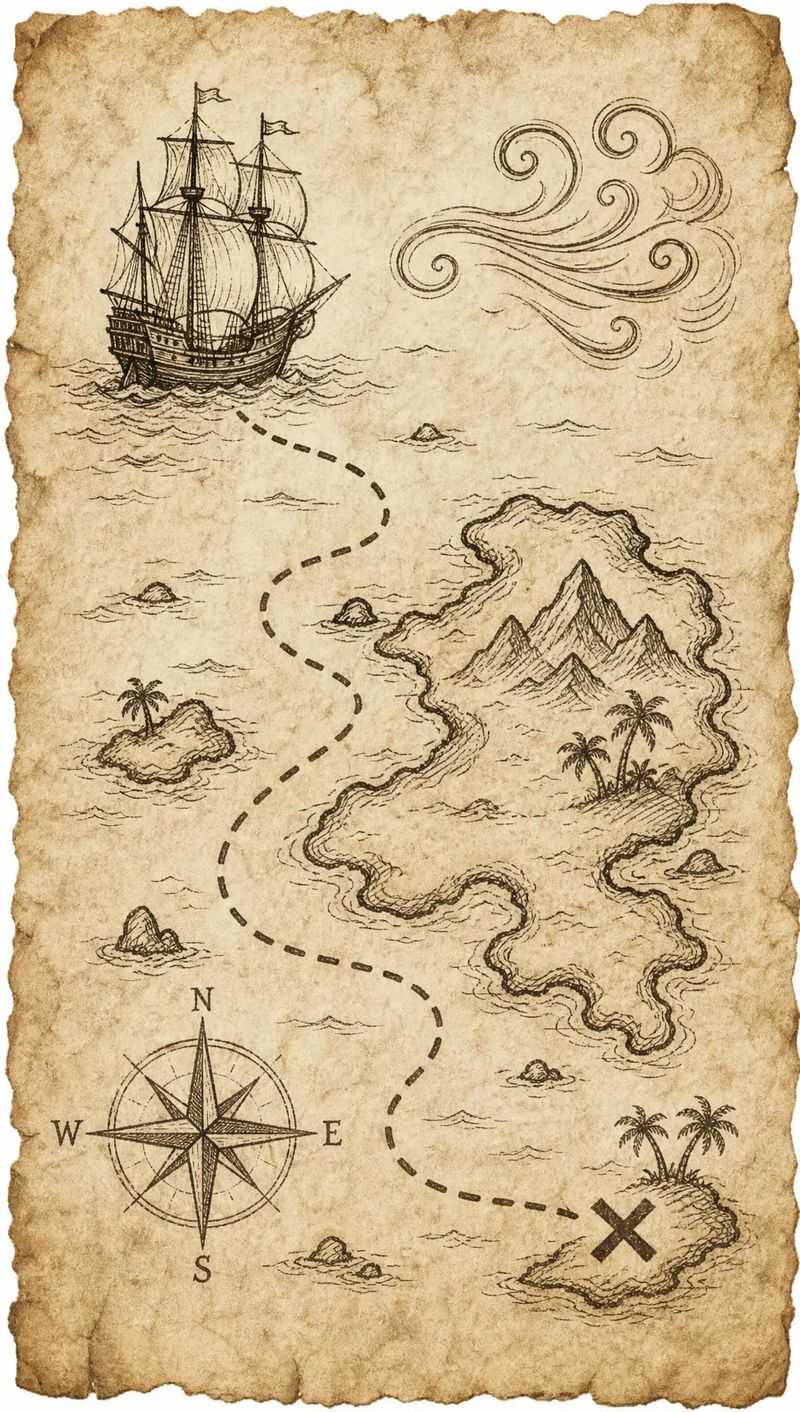
Few images are more iconic than a pirate crouching on a moonlit beach, burying a chest of gold. Robert Louis Stevenson’s novel Treasure Island made this idea wildly popular, and it stuck around ever since.
Real pirates almost never buried their loot. After a successful raid, the crew quickly divided the plunder and spent it on food, drink, and supplies at the nearest port.
Captain William Kidd is one of the only documented cases where buried treasure was actually confirmed.
3. Myth 3: Pirates Said “Arrr!” All the Time
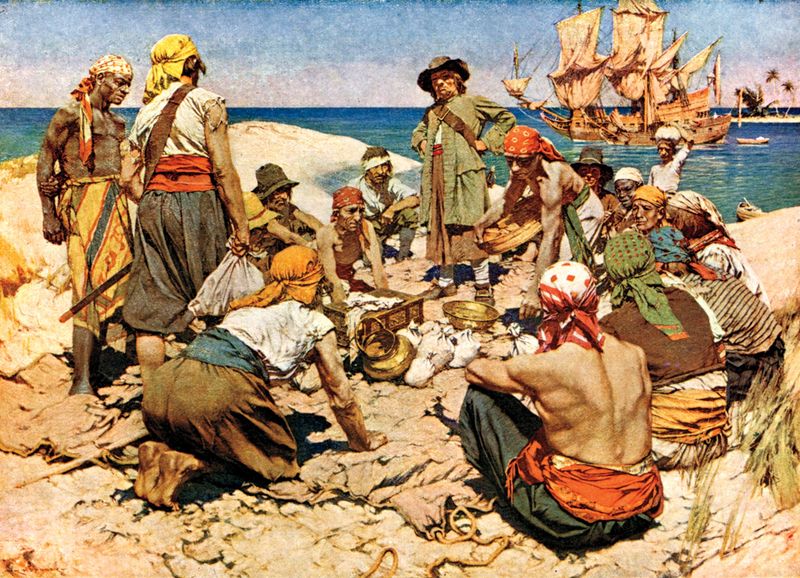
Ask anyone to do their best pirate impression and you will hear a gravelly “Arrr, matey!” almost every time. That accent feels totally real, but it was basically invented for a 1950 Disney movie called Treasure Island.
Actor Robert Newton played Long John Silver with a thick West Country English accent, and audiences loved it so much the sound became a permanent part of pirate culture. Real pirates came from many different countries and spoke in just as many different ways.
4. Myth 4: Eye Patches Meant a Lost Eye
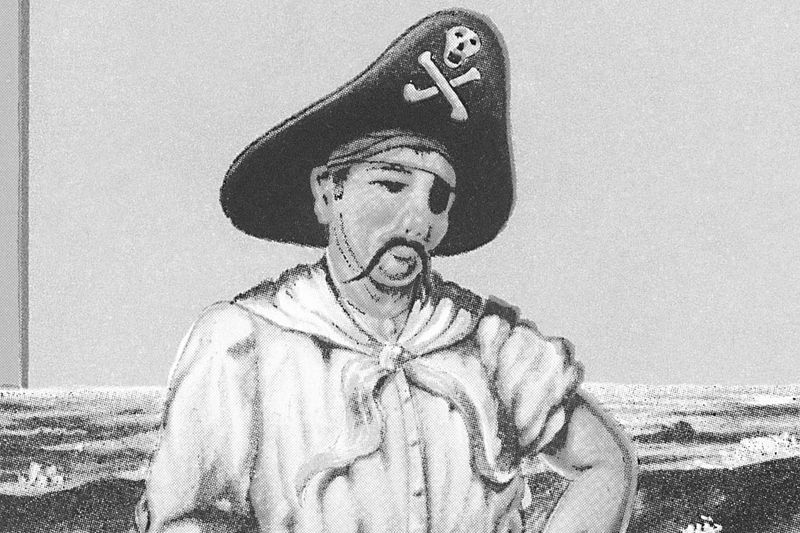
Eye patches have become one of the most recognizable symbols of piracy, and most people assume they covered a missing or injured eye. That may be true for some pirates, but there is a fascinating alternative theory that historians find compelling.
Researchers suggest pirates may have worn eye patches to keep one eye adjusted to darkness below deck. Switching the patch from eye to eye let them see clearly both above and below deck without waiting for their vision to adapt.
Pretty clever, actually.
5. Myth 5: Pirate Ships Were Lawless and Chaotic
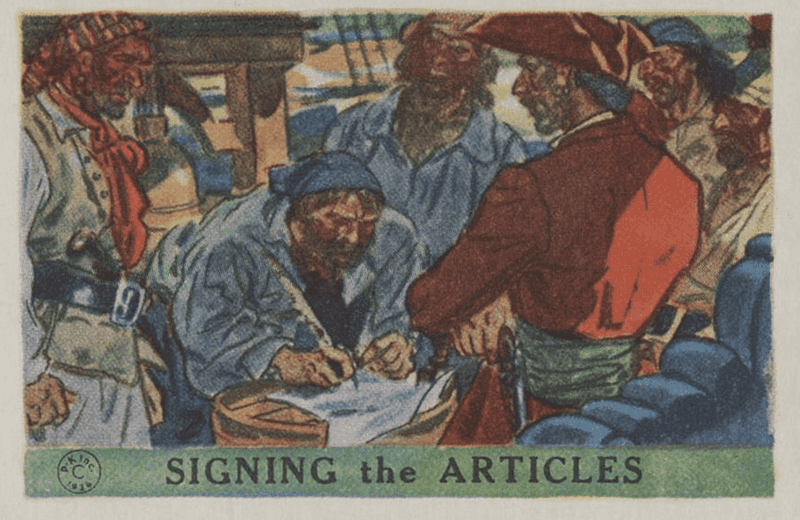
Pop culture loves showing pirate ships as floating chaos, with wild brawls, drunken captains, and zero rules. The reality was almost the complete opposite of that entertaining image.
Most pirate crews operated under a written code called “articles.” These documents spelled out rules for behavior, how loot would be split, and even compensation for crew members injured in battle. Sailors actually voted on major decisions.
In some ways, a pirate ship was more democratic than the countries those pirates came from.
6. Myth 6: Pirates Were Always Barbaric and Old-Fashioned
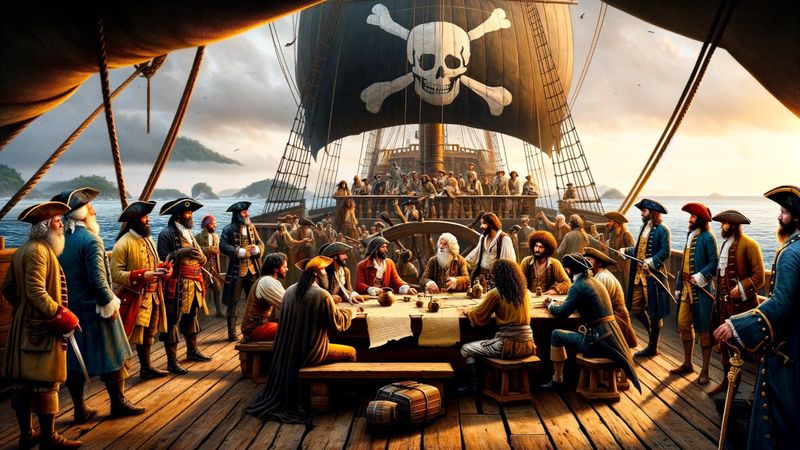
Pirates are usually shown as violent, backward brutes with no sense of fairness or community. While violence was certainly part of their world, some pirate crews had surprisingly progressive social arrangements for their time period.
Certain pirate ships allowed same-sex partnerships called “matelotages,” which were recognized bonds between crew members. Some crews also included people of various races working side by side with more equality than they would have found in mainstream society.
History is full of surprises when you look closely.
7. Myth 7: Pirates Only Wanted Gold and Jewels
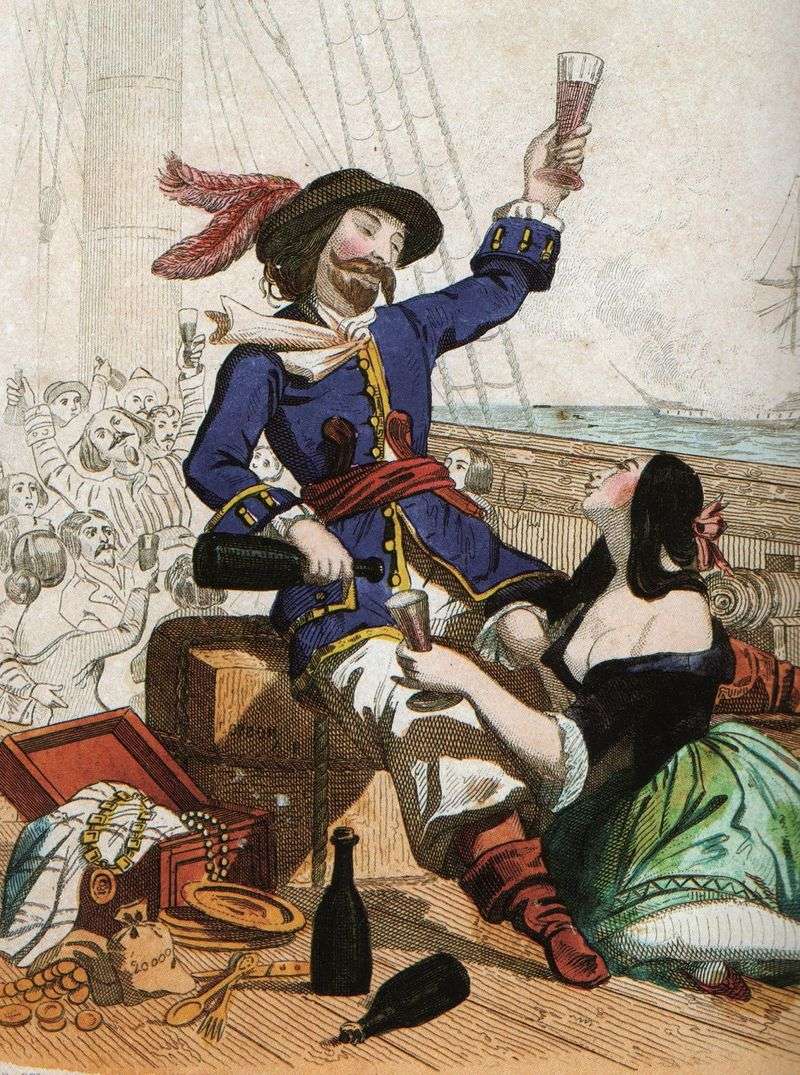
Glittering gold and sparkling jewels make for great movie moments, but real pirates were actually much more practical about what they stole. Fancy treasure was nice, but it was not always the most useful or available cargo on the seas.
Pirates frequently raided ships for everyday goods like food, lumber, cloth, animal hides, medicines, spices, and wine. These items could be traded easily or used by the crew right away.
Sometimes a barrel of salted meat was worth more to a hungry crew than a bag of coins.
8. Myth 8: Piracy Was Only a 17th and 18th Century Problem
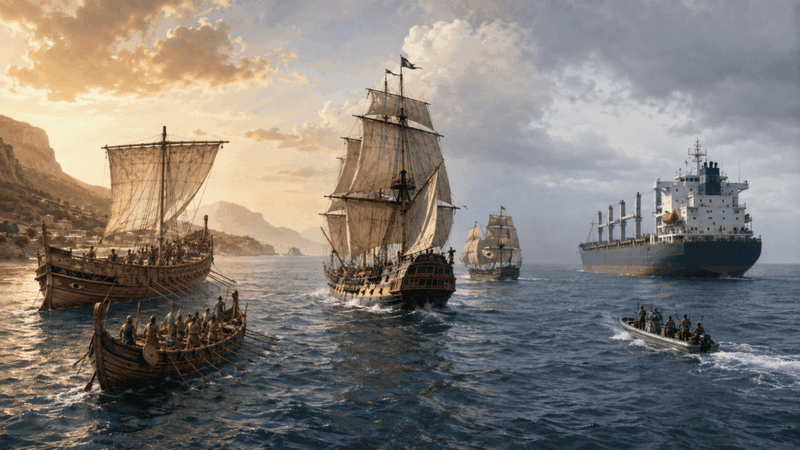
When people think about pirates, they usually picture the Golden Age of Piracy in the 1600s and 1700s. That period was certainly dramatic, but it represents just a small slice of a much longer story.
Historical records show evidence of pirates as far back as 1353 BCE, when sea raiders terrorized ancient Mediterranean trade routes. Piracy has continued in various forms all the way to the present day, with modern piracy still posing a real threat in certain parts of the world’s oceans.
9. Myth 9: Wooden Legs and Pet Parrots Were Common
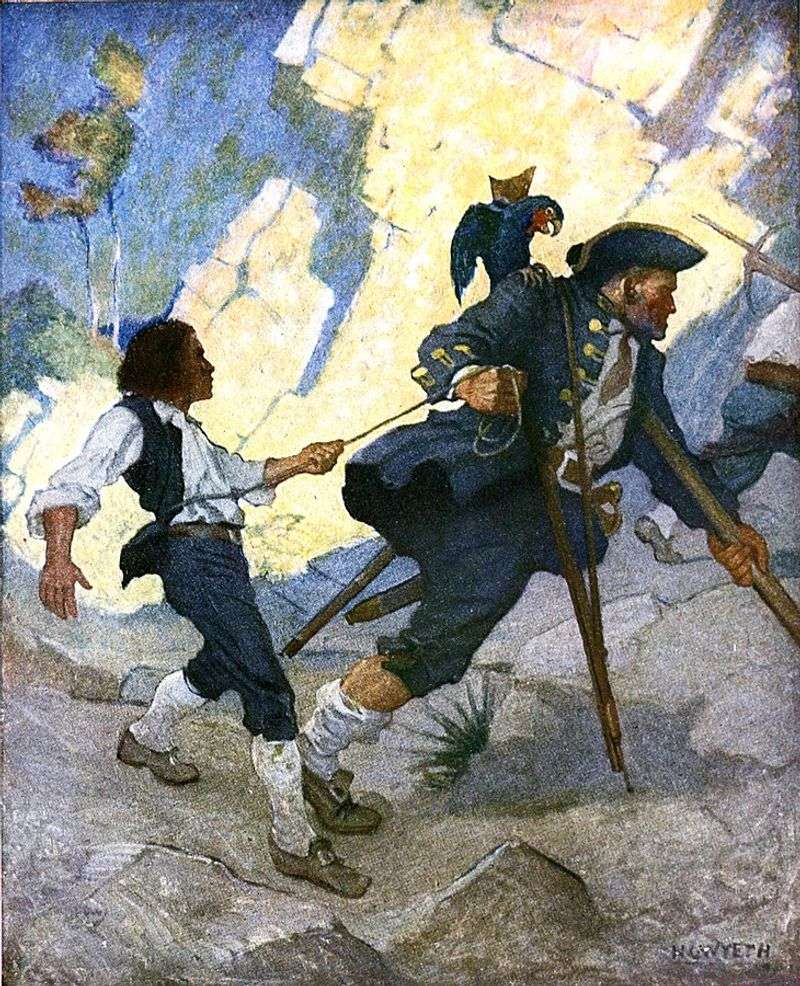
Long John Silver hobbling around on a peg leg with a parrot squawking on his shoulder is one of the most beloved images in all of pirate fiction. It is also one of the most exaggerated.
Wooden prosthetics existed, and some injured sailors did use them, but they were not a pirate trademark. As for parrots, there is little historical evidence that pirates commonly kept them as pets.
These colorful details mostly come from novels and films, not from real sailors on real ships.
10. Myth 10: Pirate Captains Were Brutal Tyrants
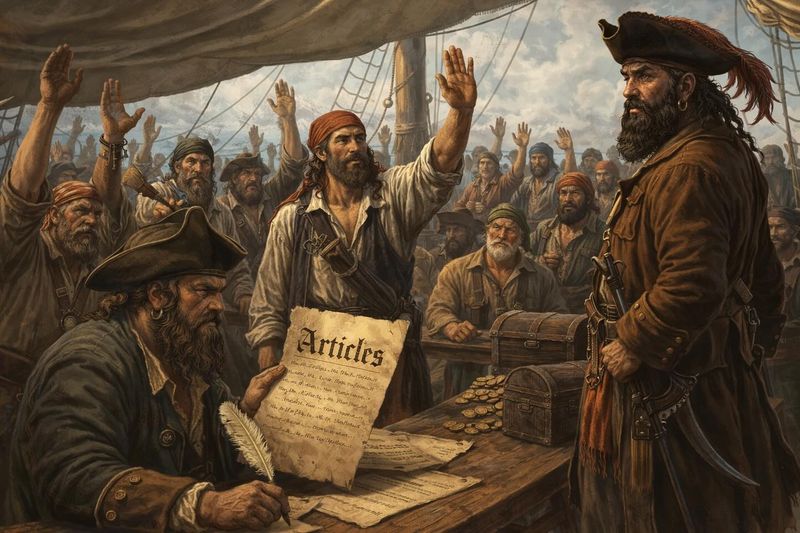
Movies often show pirate captains as terrifying tyrants who ruled their ships through fear and violence alone. One wrong move and overboard you go.
The real situation was far more interesting than that dramatic image suggests.
Unlike naval captains who held almost unlimited power, many pirate captains were actually elected by their crews. The ship’s articles gave every sailor a voice in major decisions, and plunder was distributed according to agreed-upon shares.
A captain who abused his crew could simply be voted out of the job.
11. Fact 1: The Golden Age of Piracy Was a Real Historical Era
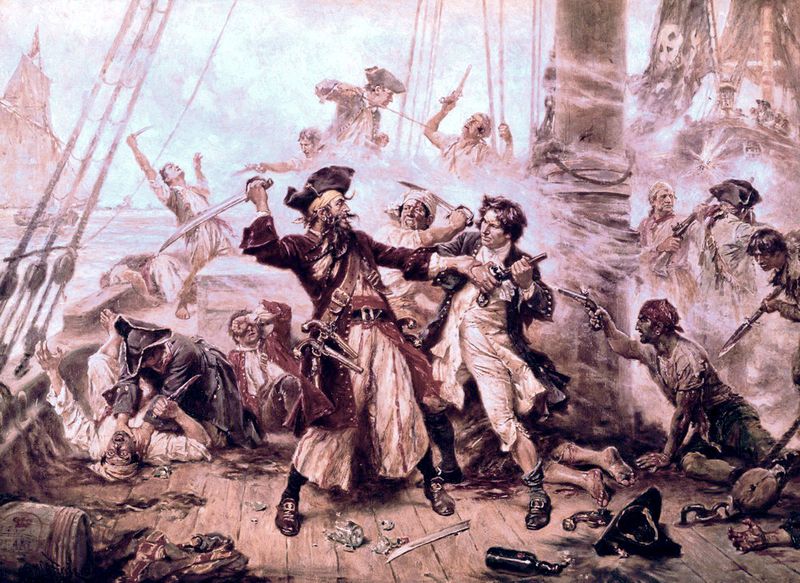
Roughly spanning from the 1650s to the 1720s, the Golden Age of Piracy was a real and well-documented period in history. Pirate activity surged across the Atlantic and Indian Oceans during these decades, disrupting trade routes and alarming governments worldwide.
Famous pirates like Blackbeard, Calico Jack, and Bartholomew Roberts all operated during this era. The period eventually ended as navies cracked down hard, executing pirates publicly to discourage others.
But for about 70 years, the seas were a genuinely dangerous place.
12. Fact 2: Blackbeard Used Psychological Warfare
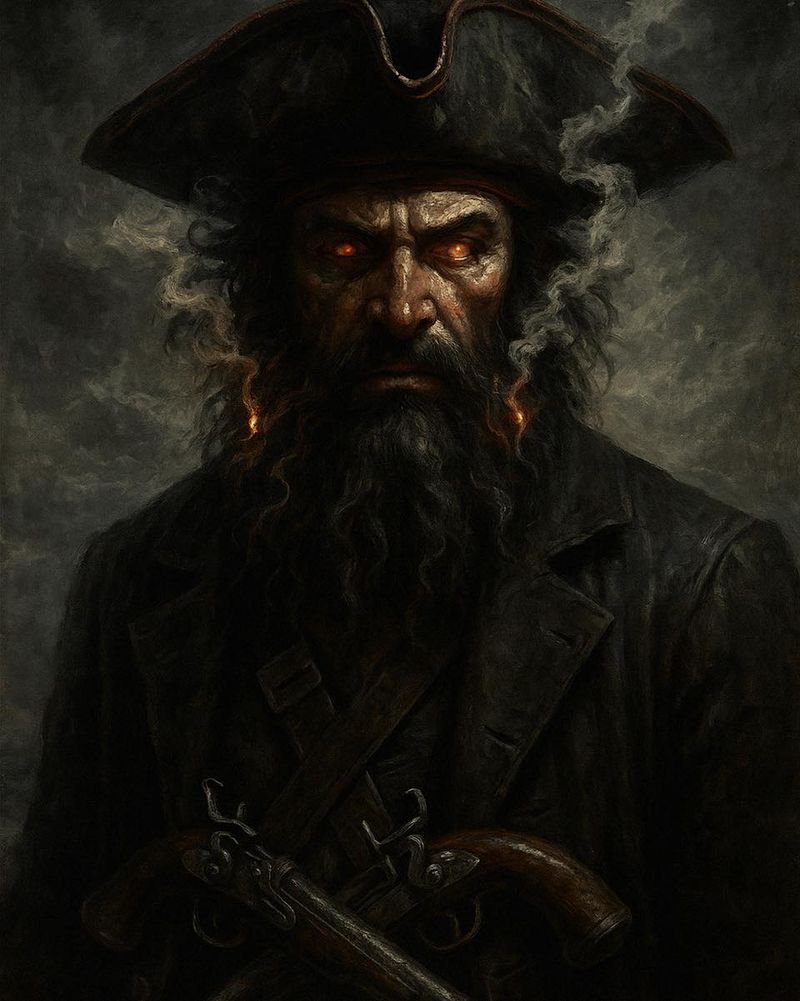
Edward Teach, better known as Blackbeard, was one of the most feared pirates of his time, and he worked hard to keep that reputation. His most shocking trick involved his own beard.
Before going into battle, Blackbeard would weave slow-burning hemp cords into his thick black beard and light them. Smoke curled around his face as he approached enemy ships, making him look like a demon rising from the sea.
Most sailors surrendered without a fight, which was exactly the reaction he was going for.
13. Fact 3: Women Pirates Were Real
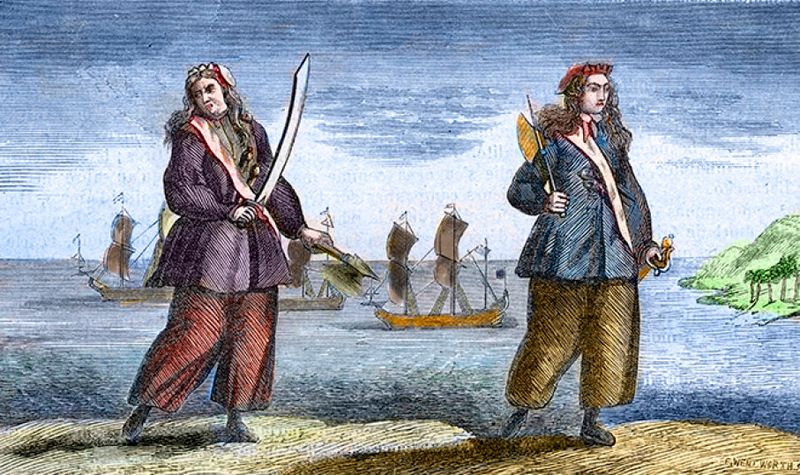
Anne Bonny and Mary Read are two of history’s most remarkable pirates, and both were women. They sailed with Calico Jack Rackham during the Golden Age, with Mary Read disguising herself as a man to serve aboard the ship.
Even more impressive was Ching Shih, a Chinese pirate queen who commanded a fleet of over 300 ships and as many as 40,000 men in the early 1800s. She negotiated her own retirement deal with the Chinese government, which is honestly a pretty incredible way to end a pirate career.
14. Fact 4: Pirate Life Could Be Better Than Navy Life
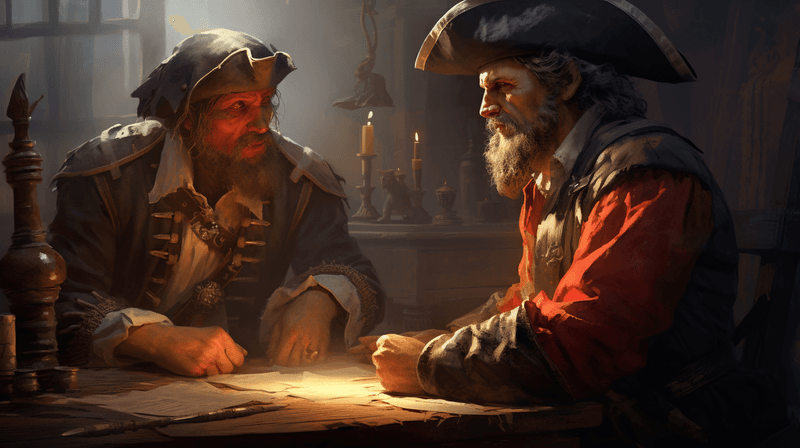
Joining the navy in the 1700s was often a miserable experience. Sailors endured terrible food, brutal punishments, low pay, and captains who treated them like property.
Piracy, oddly enough, sometimes offered a better deal.
Pirate ships tended to have more food variety, fairer treatment, and a democratic structure where crew members had real say in decisions. Injured pirates even received a form of compensation based on how badly they were hurt.
For desperate men with few options, the pirate life had genuine appeal.
15. Fact 5: Pirates Drank Grog
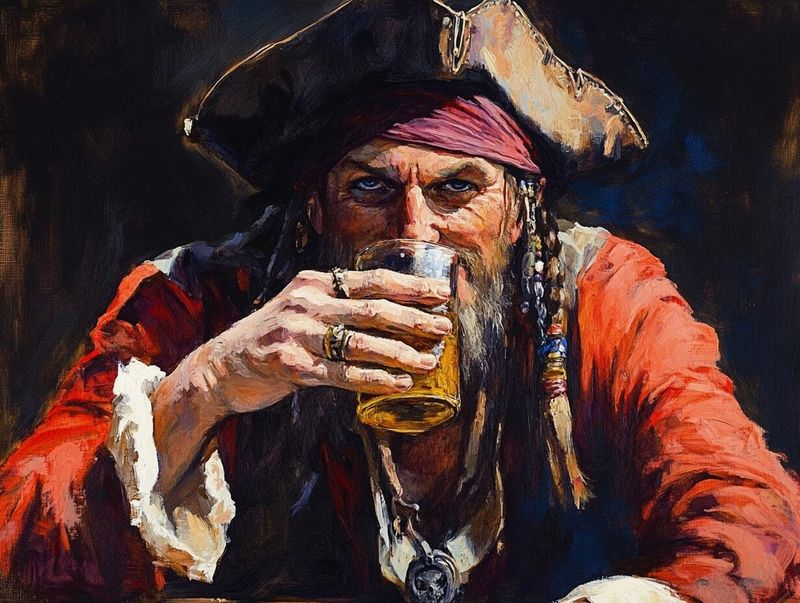
Grog was the drink of choice for pirates and sailors alike during the golden age. Made from rum mixed with water, and sometimes a squeeze of lime and a pinch of sugar, it was cheap, available, and got the job done.
Rum was easy to find in the Caribbean because of the region’s booming sugar production. Fresh water on long voyages often turned foul quickly, so mixing it with rum helped mask the bad taste.
Sailors drank grog daily, making it one of history’s most practical beverages.
16. Fact 6: Privateers Were Government-Approved Pirates
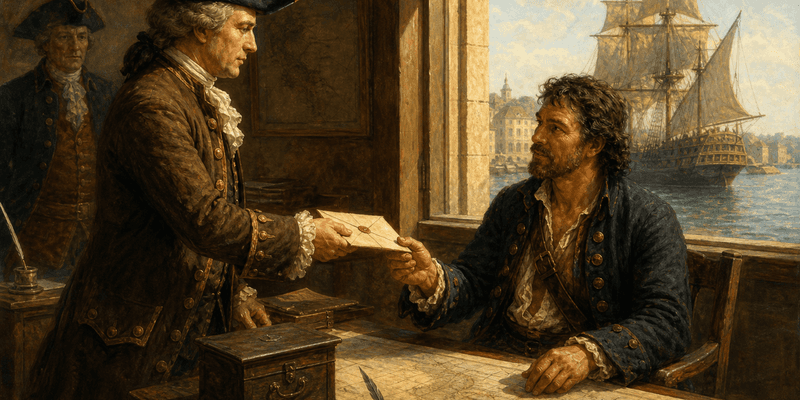
Not every sea raider was working outside the law. Privateers were essentially pirates with permission slips, and governments used them as a sneaky tool of warfare throughout the 17th and 18th centuries.
A government would issue a document called a “letter of marque,” which legally allowed a privateer to attack and plunder enemy ships during wartime. Sir Francis Drake is one of history’s most famous privateers, raiding Spanish ships with Queen Elizabeth’s quiet blessing.
The line between privateer and pirate was often just a piece of paper.
17. Fact 7: Pirate Ships Had Skilled Specialists Onboard
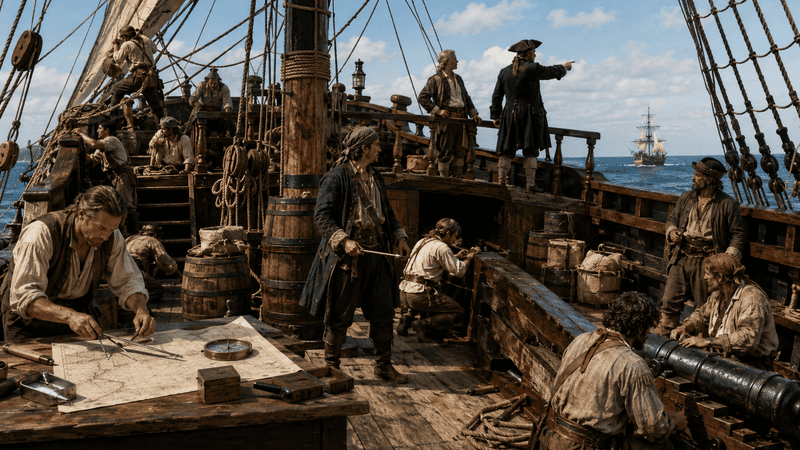
Running a pirate ship was not just about fighting and looting. It required a skilled crew with real expertise across many different trades, and successful pirate captains knew how valuable those specialists were.
A typical pirate crew included carpenters to repair the ship, navigators to chart the course, surgeons to treat injuries, and cooks to keep the crew fed. Each ship also operated under written articles that covered rules, injury compensation, and loot distribution.
Piracy was, in many ways, a surprisingly organized profession.
18. Fact 8: Pirates Were Deeply Superstitious
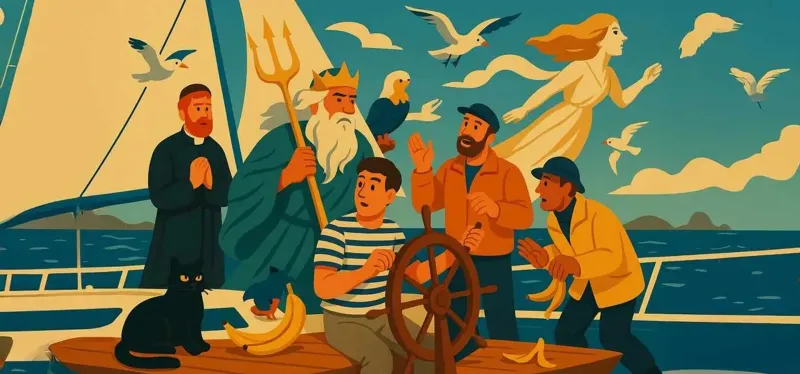
Life at sea was unpredictable and dangerous, which made superstition feel very practical to pirates and sailors. When survival could depend on the weather or pure luck, rituals and beliefs offered a sense of control.
Pirates believed whistling on deck could summon a storm, and black cats were considered bad omens aboard a ship. Some thought starting a voyage on a Friday was asking for trouble.
These beliefs were taken seriously by tough, experienced sailors who had seen enough disasters at sea to be cautious about everything.
19. Fact 9: Pirates Targeted Slave Ships Too
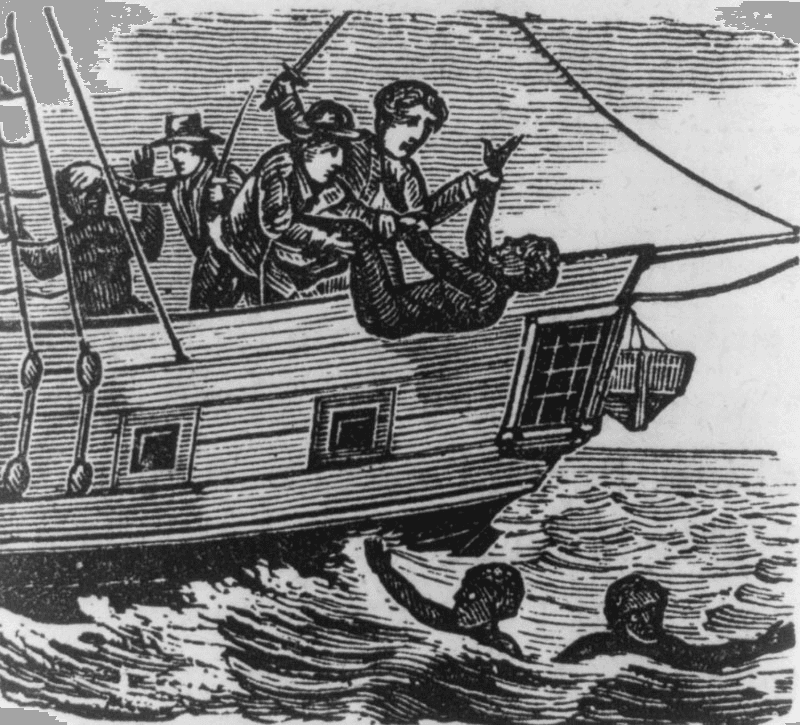
Pirates targeted all kinds of valuable cargo, and that included ships involved in the transatlantic slave trade. This part of pirate history is complicated and often left out of the romanticized stories we see in movies.
While pirates did raid slave ships, they rarely freed the enslaved people they found. More often, they resold them for profit, treating people as cargo just like any other plunder.
Some formerly enslaved people did join pirate crews voluntarily, finding a different kind of life at sea, though still far from a fair one.
20. Fact 10: A 1724 Book Shaped How We See Pirates Forever
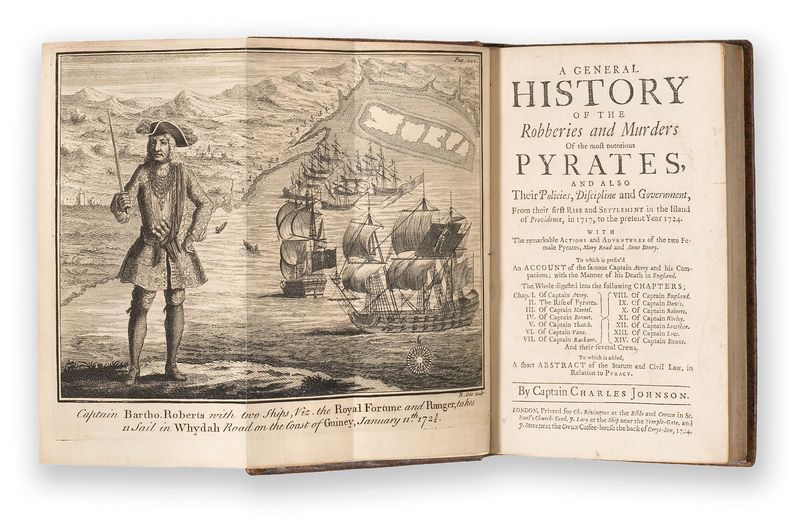
Much of what popular culture believes about pirates traces back to a single book published in 1724. Captain Charles Johnson’s A General History of the Robberies and Murders of the most notorious Pyrates gave readers vivid, dramatic accounts of real pirate figures.
The book covered famous pirates like Blackbeard, Bartholomew Roberts, and Anne Bonny in thrilling detail. Historians still debate how accurate some accounts are, but the book’s influence on storytelling, art, and film is undeniable.
Without it, our entire idea of what a pirate looks and acts like might be completely different.