
A great guitar part can make a song feel like an old friend or a bolt of lightning. Behind many of those sounds are players who changed what people thought a guitar could do.
Their ideas helped shape blues, rock, metal, jazz, and more. Meet the musicians whose riffs, solos, and bold experiments still inspire people to pick up a guitar.
1. Jimi Hendrix: Turning Noise Into Art
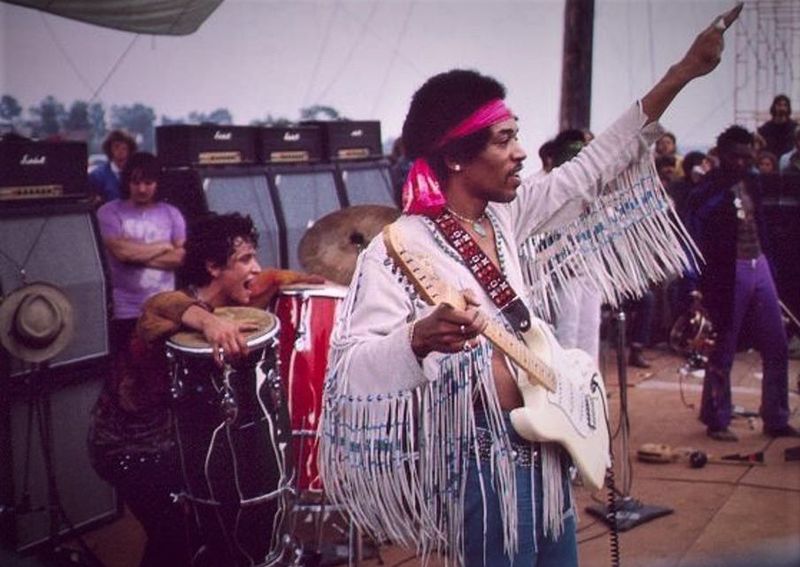
Feedback was not a mistake in his hands; it was another musical color. Hendrix mixed blues roots with distortion, wah effects, and fearless experiments that expanded the sound of rock.
His performances at Monterey and Woodstock became landmarks.
Play Purple Haze and notice how the guitar seems to speak between vocal lines. For beginners, his biggest lesson is freedom: learn the basics, then explore how touch, volume, and effects can help express your own ideas.
2. Eric Clapton: Blues With a Singing Voice
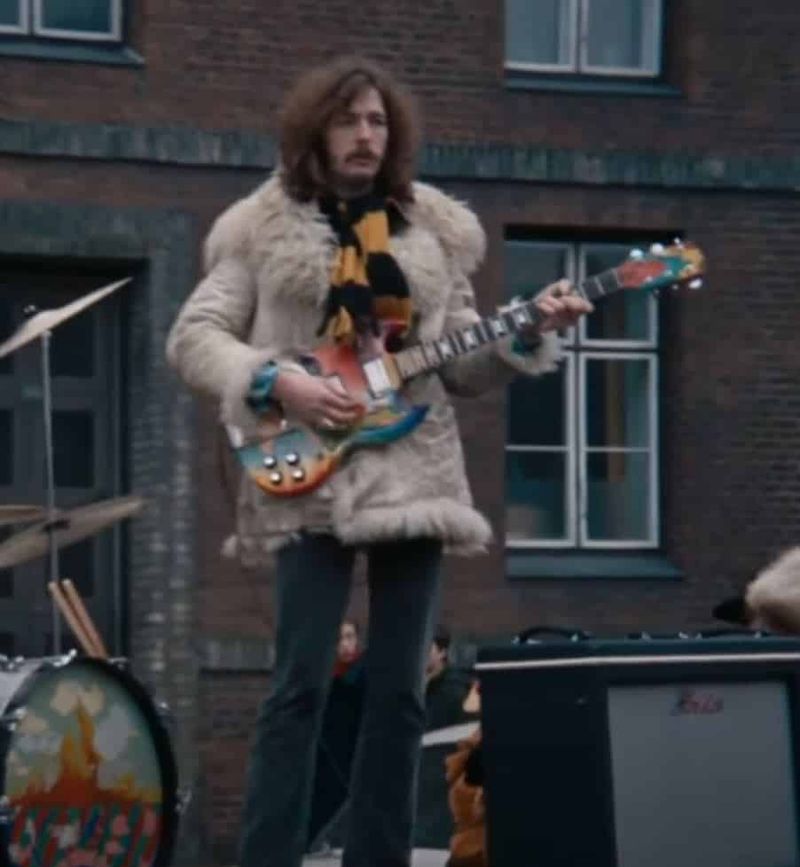
Sometimes a bent note says more than a fast run. Clapton built his reputation on that kind of expression, moving from the Yardbirds and John Mayall’s Bluesbreakers to Cream and a long solo career.
On Crossroads, blues ideas gain the drive of a rock band. Hear how his phrases answer one another instead of filling every gap.
Players can borrow that approach by humming a short melody before trying to play it on the guitar.
3. Jimmy Page: Building Rock on Giant Riffs
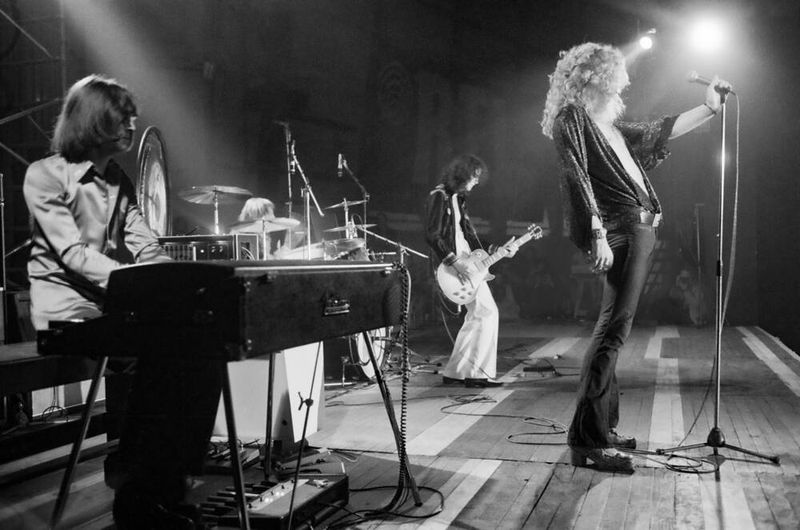
Few opening riffs can fill a room quite like Led Zeppelin’s. Behind them stood a guitarist who treated recording as part of the performance.
Page combined blues leads, acoustic folk textures, and layered electric parts to build enormous musical scenes.
Compare Black Dog with Stairway to Heaven to hear his range. His useful lesson is contrast: a quiet passage can make the next loud section feel bigger without adding more notes or turning everything up.
4. Eddie Van Halen: Making Technique Sound Like Fun
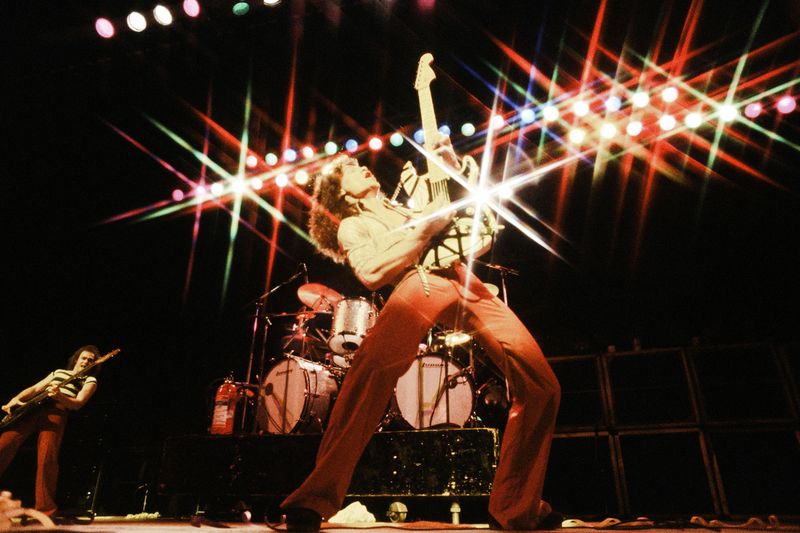
A burst of Eruption could send young players straight to their practice rooms. Van Halen made tapping widely popular, using both hands on the fretboard to create flowing runs.
He did not invent the technique, but his approach changed rock guitar.
His homemade instruments and warm, powerful tone also encouraged experimentation. Beneath the fireworks, hear his strong sense of rhythm.
Practice a tapping pattern slowly, keeping every note clear before chasing his speed and confidence.
5. Jeff Beck: Expression Beyond the Pick
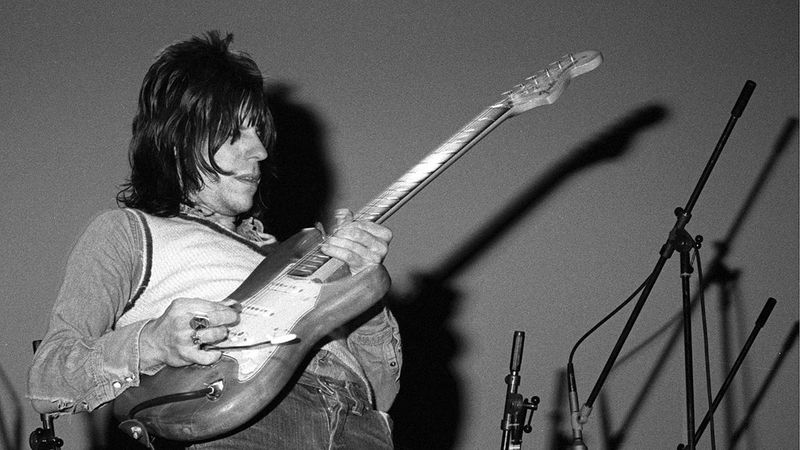
Without singing a word, a guitar could sigh, whisper, or shout when Beck played. After gaining attention with the Yardbirds, he explored blues rock, jazz fusion, and electronic sounds.
His restless curiosity kept his music from settling into one style.
Try Cause We’ve Ended as Lovers and follow the changes in volume and pitch. Rather than copying every lick, experiment with picking strength.
Small changes in your hands can produce surprisingly large shifts in feeling.
6. B.B. King: Saying More With Fewer Notes
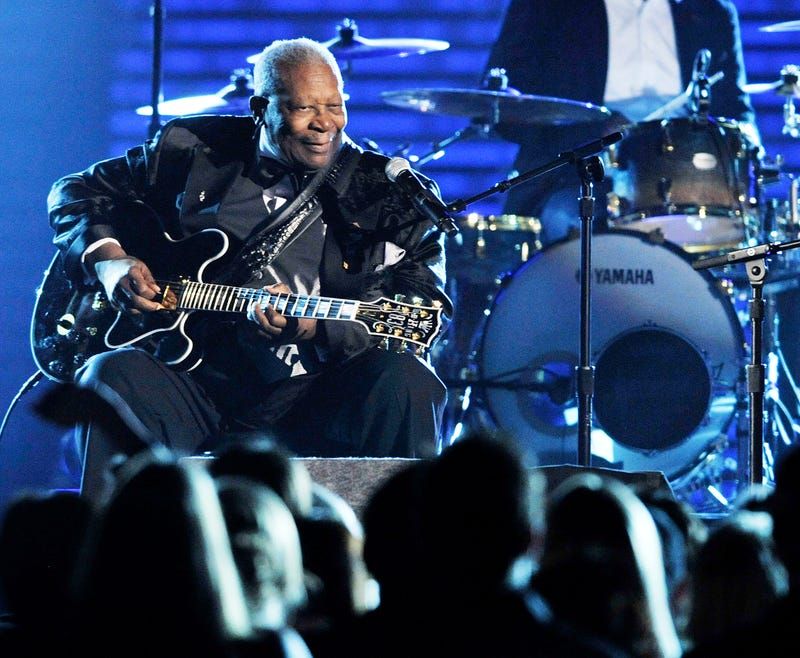
One trembling note could reveal who was playing before the singer even began. King’s famous vibrato and clear phrasing made his guitar, Lucille, feel like a second voice.
His influence reaches far beyond blues into rock and popular music.
In The Thrill Is Gone, notice the spaces around each phrase. Those pauses give the music room to breathe.
When practicing, try answering a sung line with just three notes, making each one count through feeling.
7. Chuck Berry: Writing Rock’s Early Playbook
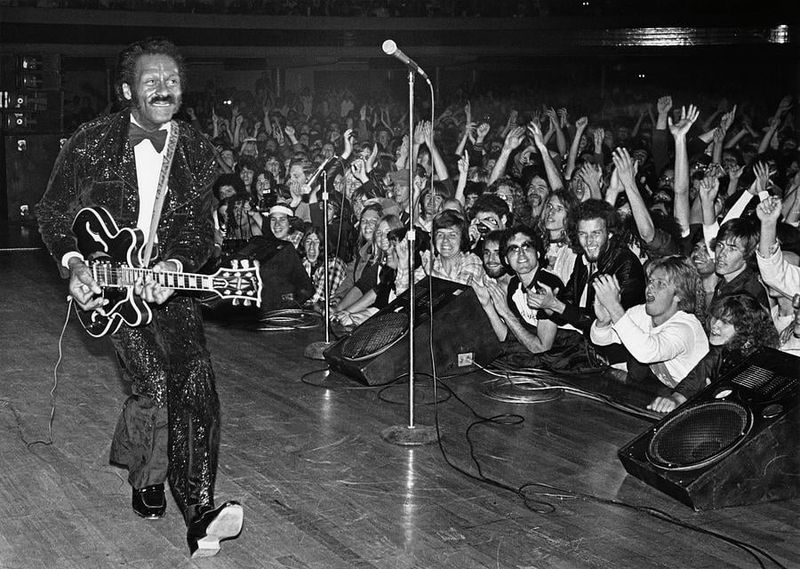
Before stadium rock, a bright guitar introduction could already get a crowd moving. Berry helped establish that excitement with sharp riffs, lively rhythms, and stories about teenage life.
His playing became a shared language for countless rock bands.
Put on Johnny B. Goode and focus on the opening double stops, which sound two notes together.
Learning that basic shape reveals how lead and rhythm can work as one. His showmanship made the guitar visually exciting.
8. David Gilmour: Giving Every Note Room
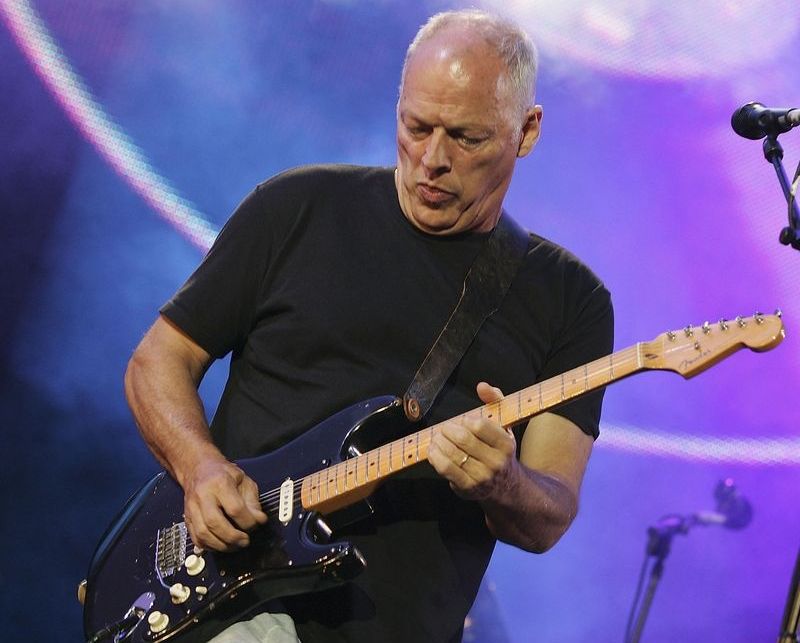
Speed takes a back seat when a melody feels this powerful. With Pink Floyd, Gilmour used long notes, careful bends, and spacious effects to create solos listeners could sing.
His sound helped give the band’s ambitious albums their human center.
Comfortably Numb offers a clear example of a solo that builds like a story. Follow its rise rather than counting notes.
For your own playing, hold a phrase longer and hear how silence changes it.
9. Stevie Ray Vaughan: Bringing Blues Back Loud
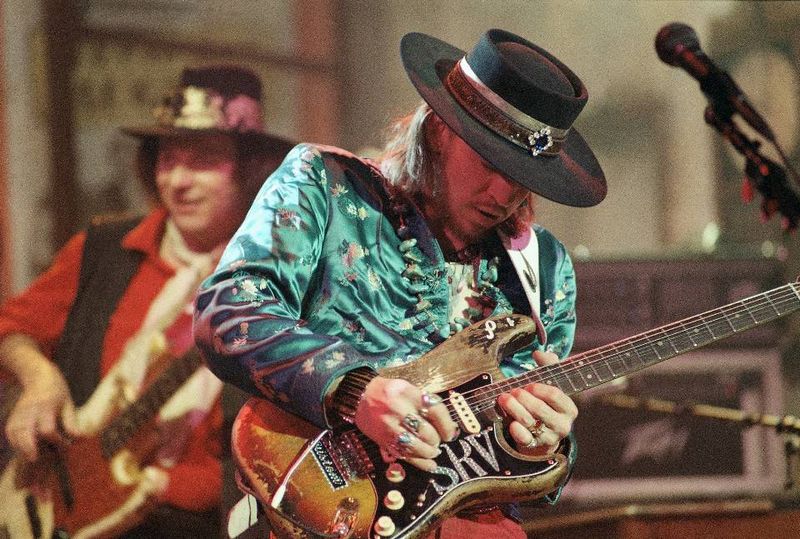
Texas blues arrived with fresh force when Vaughan stepped into the spotlight. His fierce attack, thick tone, and swinging rhythm helped bring the style to a new mainstream audience during the 1980s.
Influences included Albert King and Jimi Hendrix.
Hear Pride and Joy for the way his rhythm playing keeps everything bouncing. The lesson is not simply to strike harder.
Start slowly, keep the beat steady, and make the groove feel good before adding flashy fills.
10. Tony Iommi: Finding Power in the Darkness
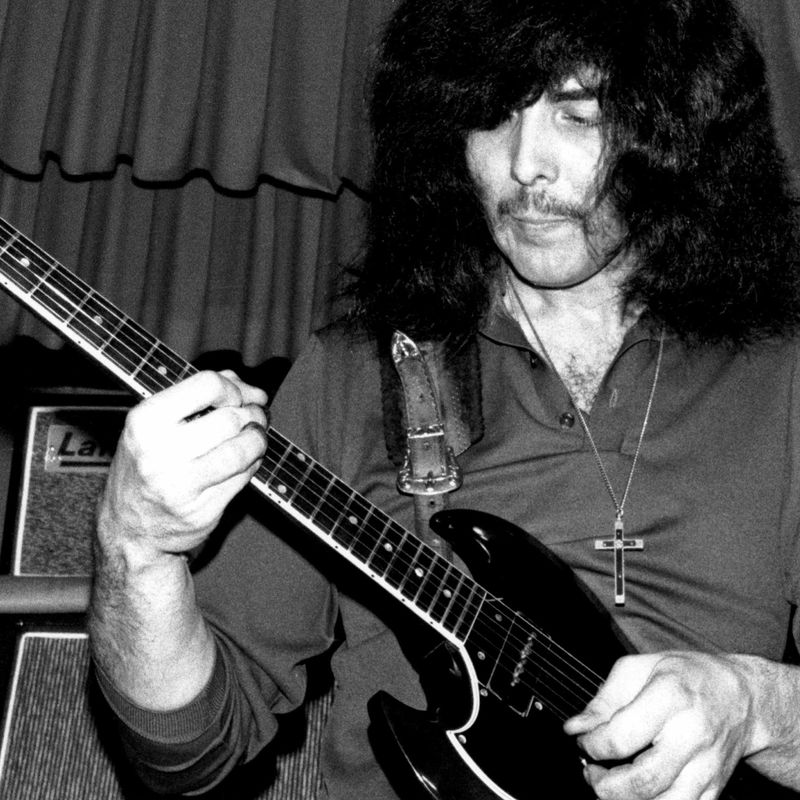
A factory accident damaged two fingertips, but that did not end his musical path. Iommi adapted his playing with protective fingertip caps and lighter strings.
His later use of lower tunings helped deepen Black Sabbath’s already heavy sound.
Tracks such as Iron Man show how a simple riff can carry enormous weight. Count the spaces between its notes to understand the tension.
His legacy helped define heavy metal and shows why working around limits can inspire creativity.
11. Slash: Making Solos Instantly Familiar
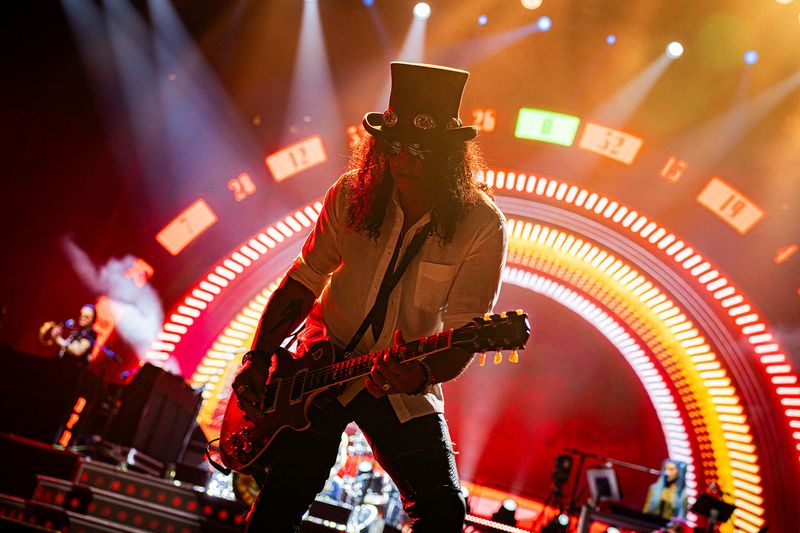
That top hat is famous, but the melodies would stand out without it. Guns N’ Roses gained a powerful musical voice through Slash’s blues roots, bold bends, and memorable lead parts.
His solos often feel like songs within songs.
The opening of Sweet Child O’ Mine turns a repeating guitar figure into an unmistakable hook. Notice how its notes stay clear and even.
When writing a part, aim for something people could recognize after hearing only a few seconds.
12. Les Paul: Changing the Instrument and the Studio
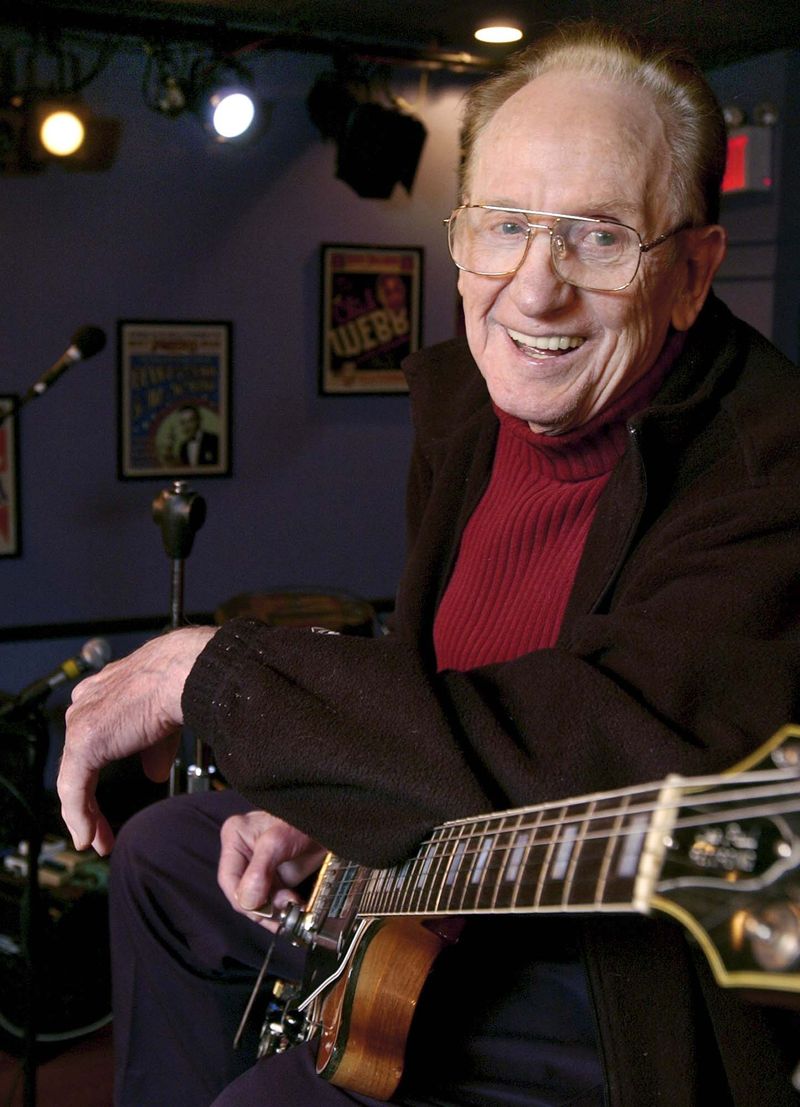
Imagine building musical tools while also dazzling audiences with quick, playful runs. Paul did both.
A skilled jazz and country guitarist, he helped advance solid body guitar design and recording methods that allowed musicians to layer performances.
His recordings with Mary Ford reveal how inventive studio work could transform popular songs. Listen for the stacked parts and crisp guitar lines.
His example encourages players to explore recording, since arranging several simple parts can create something remarkable together.
13. Keith Richards: Where Rhythm Meets Lead
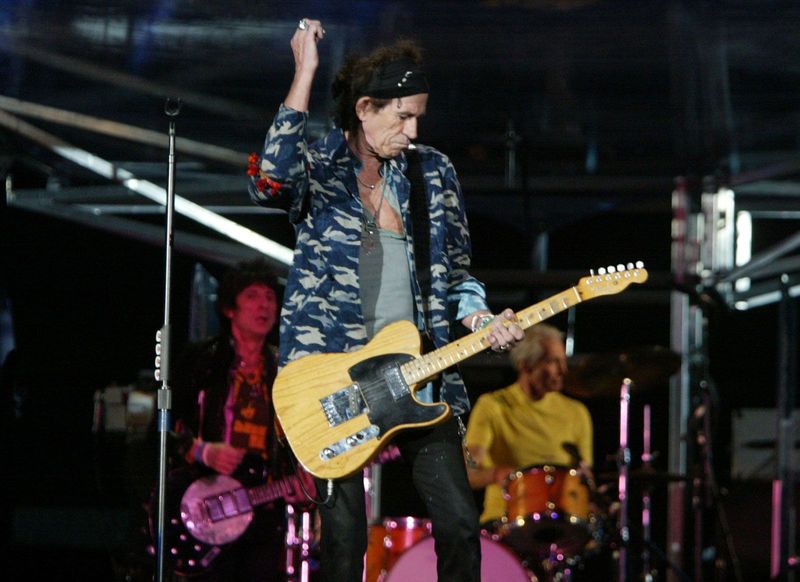
Not every guitar hero lives in a long solo. Although best known for rhythm playing, Richards belongs in this conversation because his riffs helped define rock guitar.
With the Rolling Stones, he blurred the line between backing parts and lead hooks.
Start Me Up shows how timing and chord shapes can drive an entire track. His frequent use of open G tuning offers another creative doorway.
Explore an alternate tuning carefully, then build a riff around its natural sound.
14. Brian May: A Guitar That Sounds Like an Orchestra
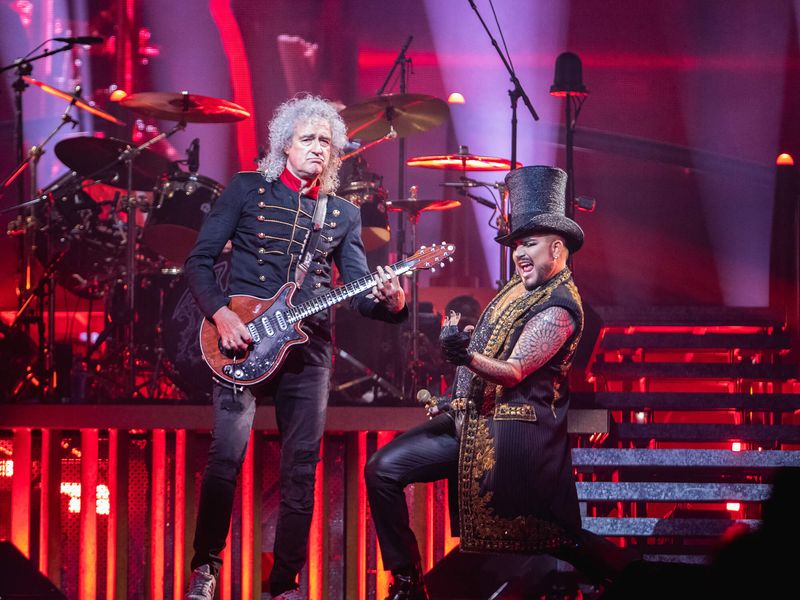
A homemade guitar helped create one of rock’s grandest sounds. May built the Red Special with his father, then used it to shape Queen’s rich musical world.
Layered harmonies made his guitar parts resemble a choir or small orchestra.
In Killer Queen, notice how the solo becomes a carefully arranged melody rather than a display of speed. Record one short line, then add a harmony above it.
That simple exercise opens a window into his remarkable musical thinking.
15. Carlos Santana: Melody With a Latin Pulse
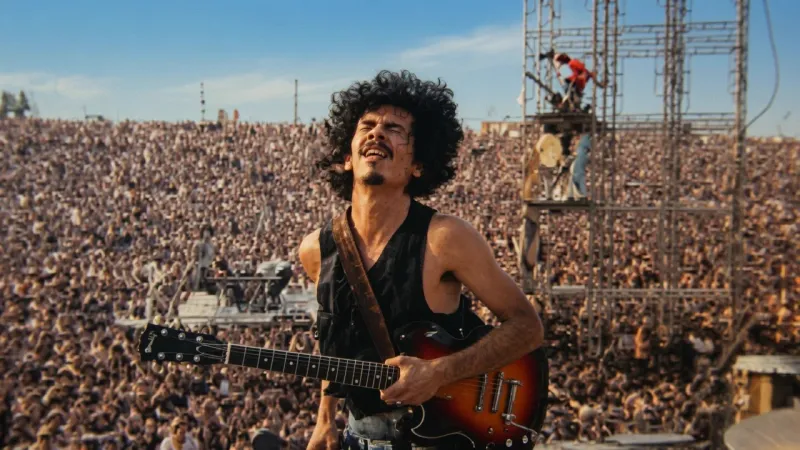
Warm, sustained notes float above rhythms that make it hard to sit still. Santana brought Latin percussion, blues feeling, and rock energy to a broad audience.
His band’s Woodstock performance helped introduce that blend to many new listeners.
Try Black Magic Woman and follow how the guitar moves around the percussion. The melody stays strong without crowding the groove.
For a useful practice session, play a short tune over different rhythms and notice how its mood changes.
16. Sister Rosetta Tharpe: Gospel’s Electric Trailblazer
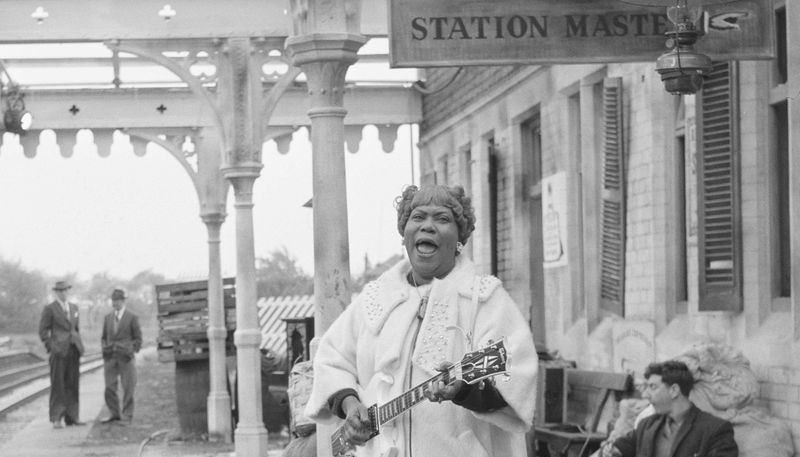
Long before rock became a movement, gospel audiences heard her guitar crackle with energy. Tharpe paired a powerful voice with bold electric leads, mixing sacred songs with the drive of blues and swing.
She helped lay the groundwork for rock and roll.
Watch her perform Didn’t It Rain to see joyful confidence meet sharp technique. Her story broadens the usual picture of early guitar heroes.
It also reminds players that musical boundaries are there to be crossed.
17. Charlie Christian: Bringing Guitar to the Front
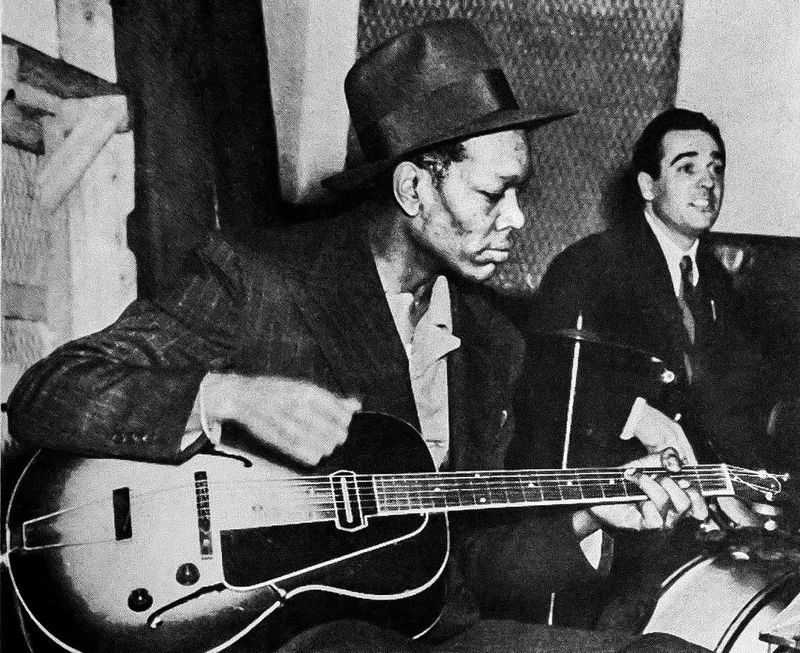
Amplification gave a quiet instrument a chance to stand beside the horns. Christian seized that chance with flowing single note solos in Benny Goodman’s groups.
His late 1930s recordings helped establish the electric guitar as a serious jazz solo instrument.
His work also contributed to the ideas surrounding early bebop. Listen to Seven Come Eleven for lines that move smoothly through changing chords.
Try singing those phrases first, focusing on their swing rather than treating them as exercises.
18. Randy Rhoads: Classical Ideas Meet Metal Fire
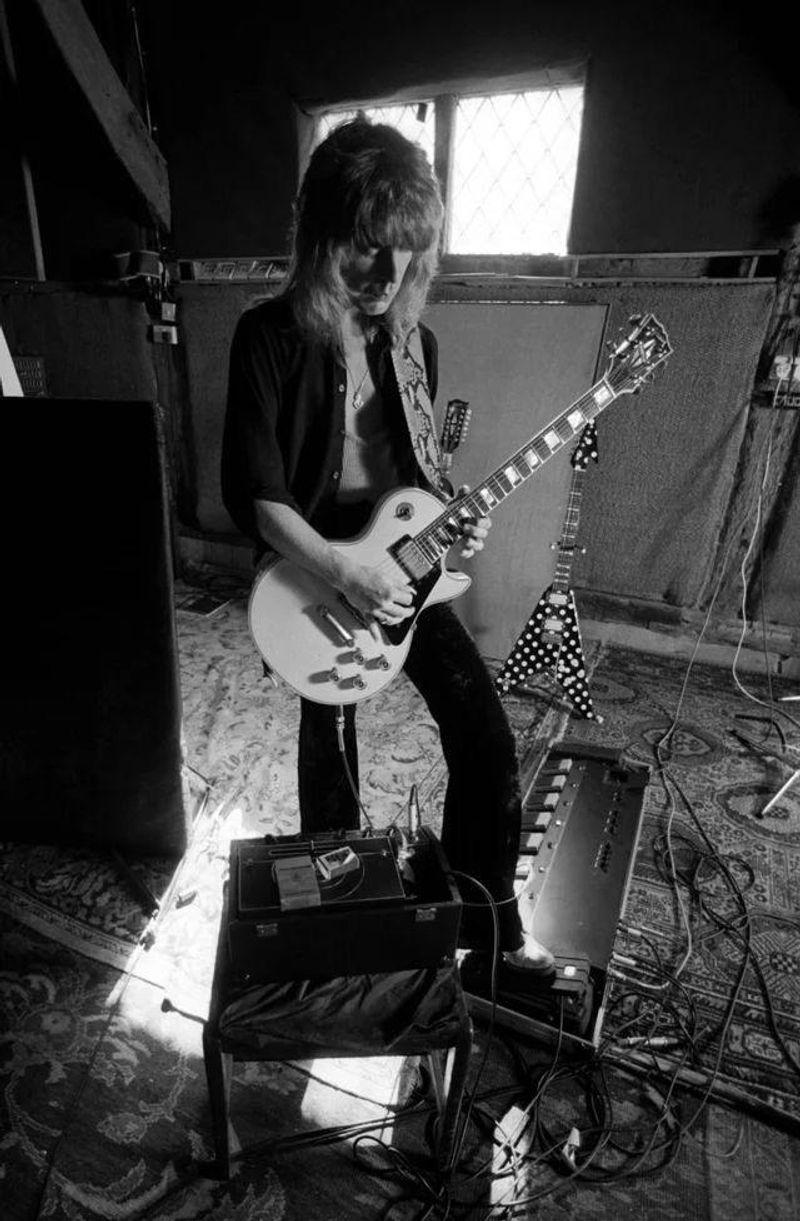
Classical study and heavy riffs made an explosive team in his hands. Rhoads brought precise picking, strong melodies, and carefully built solos to Ozzy Osbourne’s early solo albums.
His career was brief, but his influence on metal guitar remains deep.
Mr. Crowley reveals how dramatic harmony can make fast playing feel purposeful. Break a short passage into small sections and practice each slowly.
More than speed, his example rewards preparation, clear phrasing, and attention to the whole song.