
Red rock towers, giant stone arches, and starry skies make Arches National Park feel like another world. You can explore its desert landscape on short walks, challenging hikes, or a scenic drive with plenty of stops.
A little planning helps you stay safe in the heat and protect the fragile ground. Grab your water, lace up your shoes, and find an adventure that fits your pace.
1. Hike to the Famous Delicate Arch
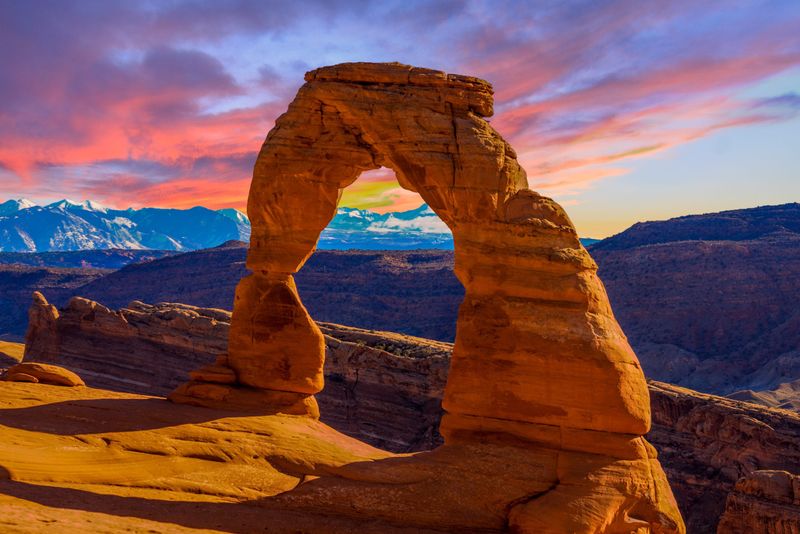
Few sights reward a sweaty climb like Utah’s most famous stone arch. The Delicate Arch Trail covers about three miles round trip, crossing open slickrock and climbing roughly 480 feet before reaching its dramatic finish.
Start early to avoid the strongest heat, and carry plenty of water. A narrow ledge near the end needs careful footing.
If you stay for sunset, pack a headlamp and leave enough energy for the walk back to your vehicle.
2. Marvel at Slender Landscape Arch
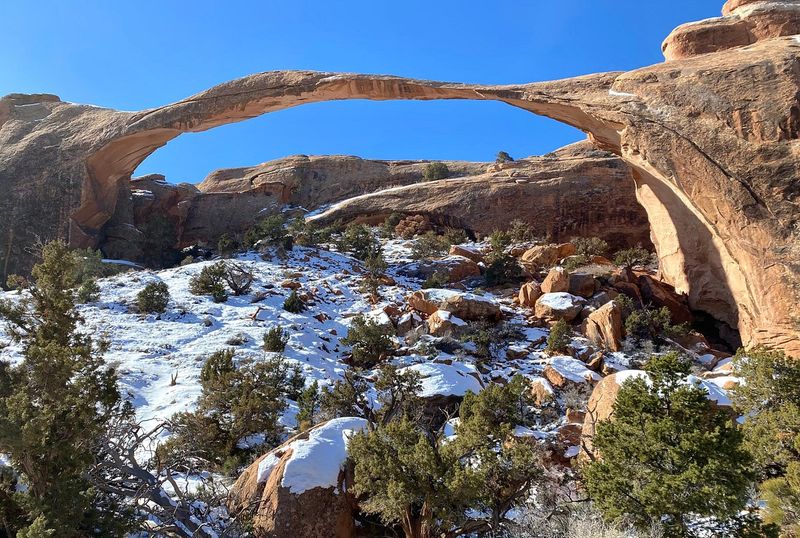
A ribbon of rock stretches across the sky at Landscape Arch, looking almost too thin to hold together. Reached from Devils Garden, the relatively easy walk is about two miles round trip, depending on your starting point and any detours.
Stay behind barriers near the viewing area because rockfalls have changed this formation over time. Morning temperatures make the sandy sections more comfortable, and nearby arch trails offer extra exploring if everyone still feels energetic.
3. Stand Beneath Mighty Double Arch
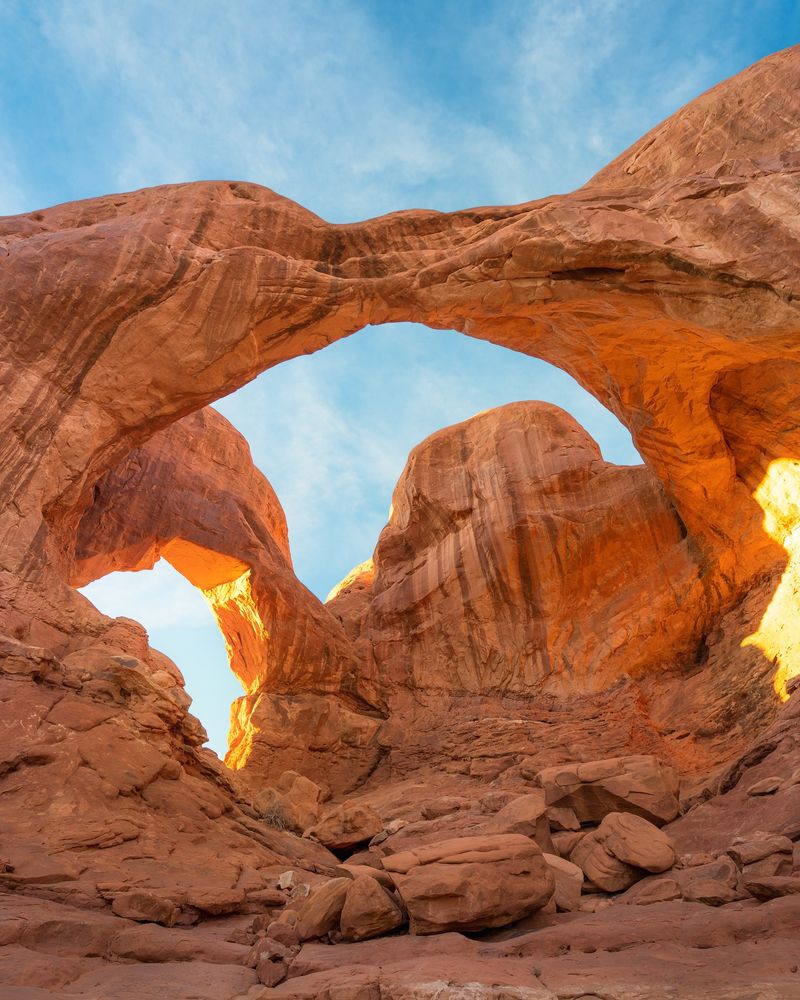
Look up, and two huge stone openings seem to fold across each other overhead. Double Arch offers a big reward for a short walk, with a sandy trail stretching about 0.6 miles round trip from the parking area.
Arrive early for softer light and a quieter visit. You can enjoy the formation without climbing the steep rocks beneath it.
Keep children nearby, watch for uneven footing, and save time for the neighboring Windows area afterward.
4. Wander Through the Windows Section
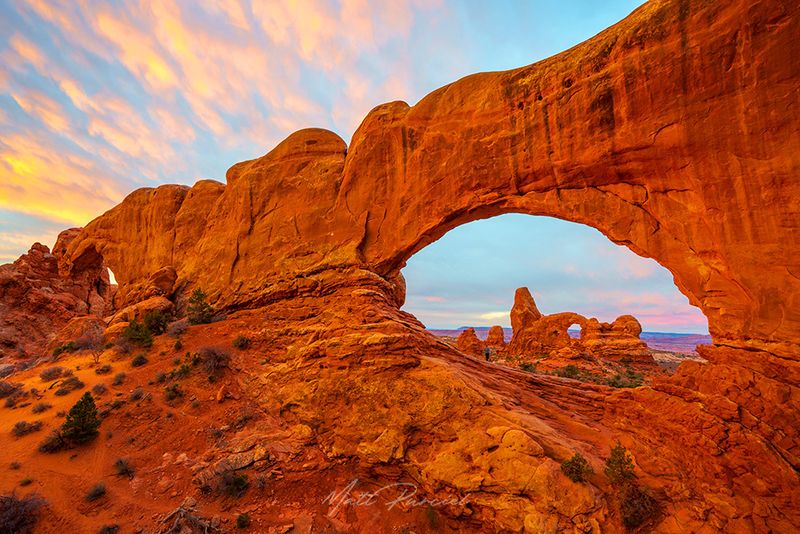
Three major arches share the spotlight here, so your camera will stay busy. North Window, South Window, and Turret Arch sit close together along paths that make this area especially rewarding for a shorter outing.
Plan roughly one mile for the main route, with extra distance if you choose the primitive return trail. Stone steps and uneven ground mean sturdy shoes help.
Sunrise brings lovely color, while marked paths protect the delicate soil between formations.
5. Find a Sandy Hideaway at Sand Dune Arch
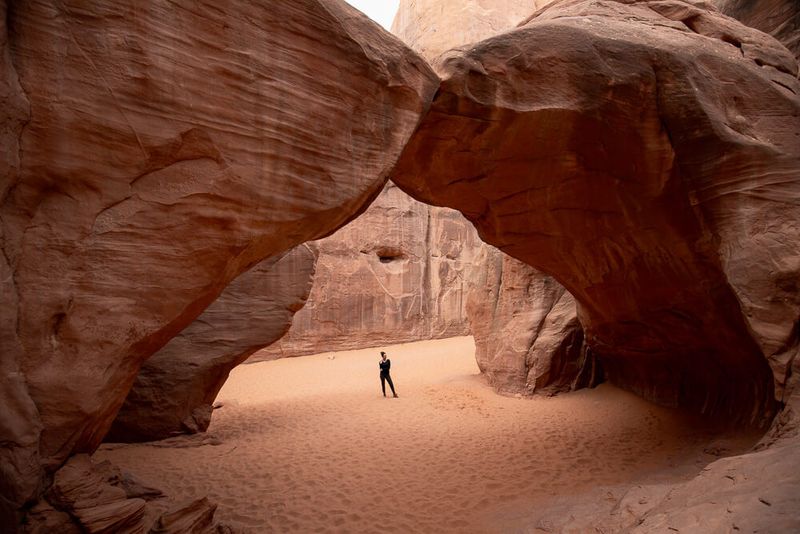
Soft sand and towering rock walls give this little walk a secret hideout feeling. Sand Dune Arch sits inside a narrow space between sandstone fins, reached by a trail about 0.3 miles round trip.
The shaded setting can offer relief from direct sunshine, but summer temperatures still demand caution. Empty sand from your shoes before moving on, and never climb on the arch.
Families can keep this stop brief or continue toward nearby Broken Arch.
6. Cross Open Desert to Broken Arch
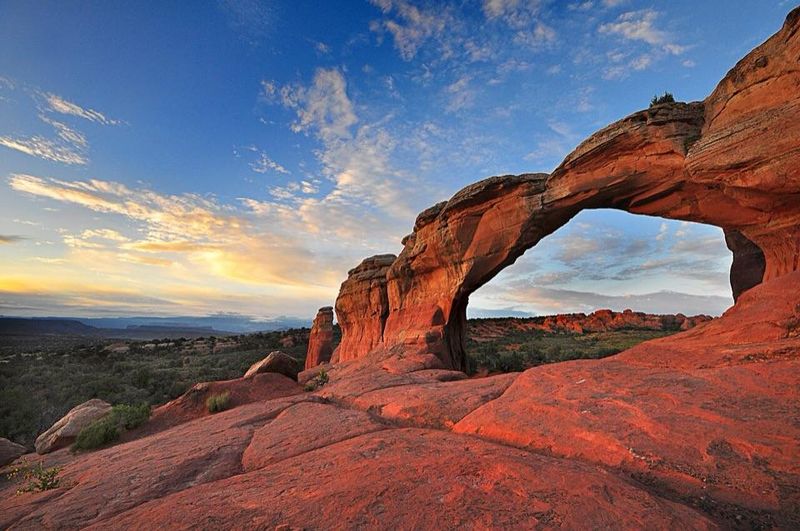
Despite its name, this arch still forms one solid span above the trail. A crack along its top explains the nickname, adding a little mystery to a walk through grassland and sandstone scenery.
Route choices change the distance, with a campground loop running roughly two miles. Check the trail map before setting out, especially if adding Tapestry Arch.
Much of the approach lacks shade, so bring sun protection and avoid crossing open ground during thunderstorms.
7. Discover Pine Tree Arch and Tunnel Arch
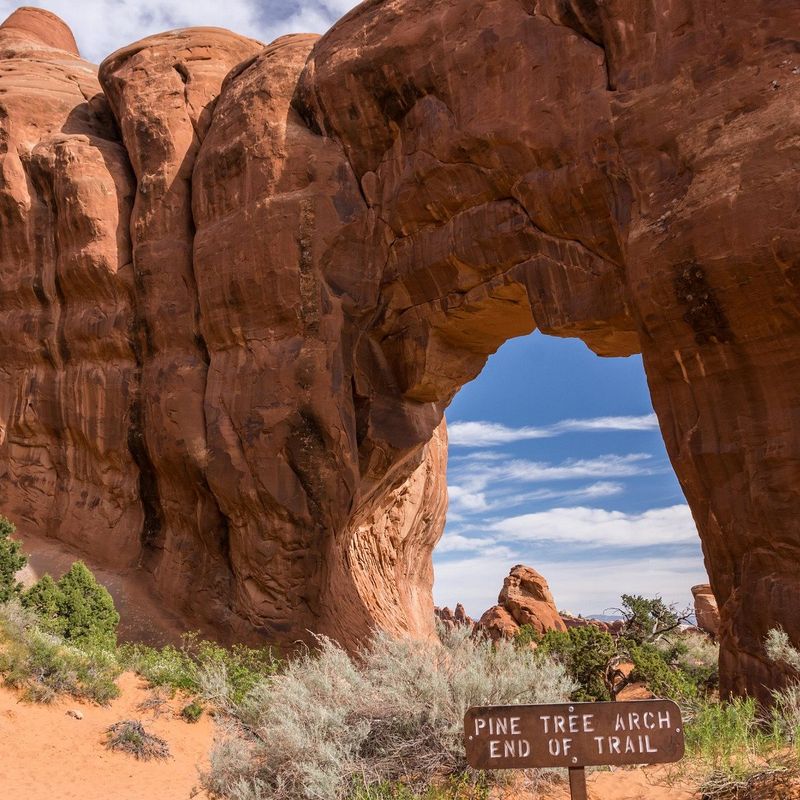
Two short detours turn the entrance to Devils Garden into a small treasure hunt. Tunnel Arch appears high in a rock wall, while Pine Tree Arch frames a broad opening beside hardy desert trees.
Follow signed side trails from the main path, allowing extra time before or after visiting Landscape Arch. Sandy footing can slow your pace more than expected.
Carry water even for these shorter walks, and respect barriers around plants and fragile soil.
8. Take a Quick Walk to Skyline Arch
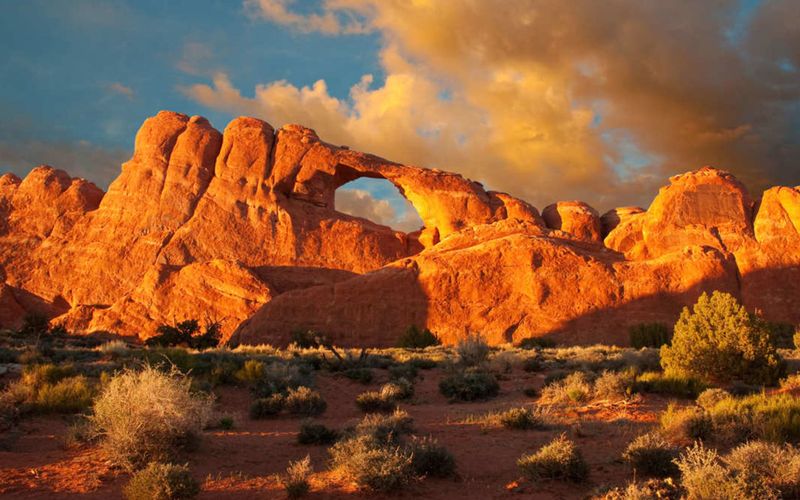
Sometimes the shortest stops leave the strongest impression. Skyline Arch sits high in a sandstone wall, where its bold opening stands out clearly against the sky along a walk of about 0.4 miles round trip.
A major rockfall enlarged the opening in 1940, showing how quickly this landscape can change. Enjoy the view from the established trail rather than climbing loose boulders.
This stop fits nicely between longer hikes when tired legs need something gentler.
9. Seek Solitude on the Tower Arch Trail
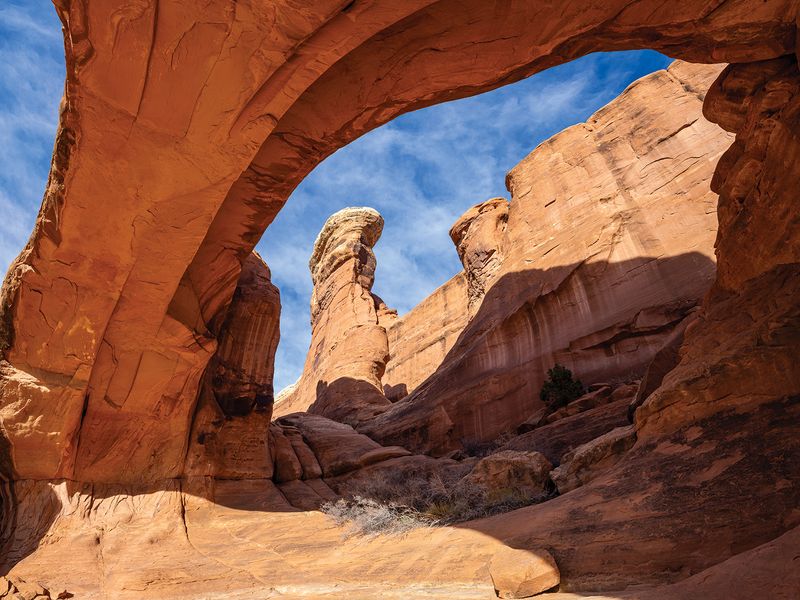
Far from the busiest pullouts, a quieter side of Arches waits near Klondike Bluffs. Tower Arch rewards hikers with a massive opening and rugged scenery along a challenging route of roughly 2.6 miles round trip.
Reaching the trailhead usually involves an unpaved road, so check conditions and your vehicle’s limits first. Expect sand, rocky climbs, and little shade.
Download directions before leaving reliable service, and skip this outing when storms threaten road access or safe footing.
10. Challenge Yourself in Devils Garden
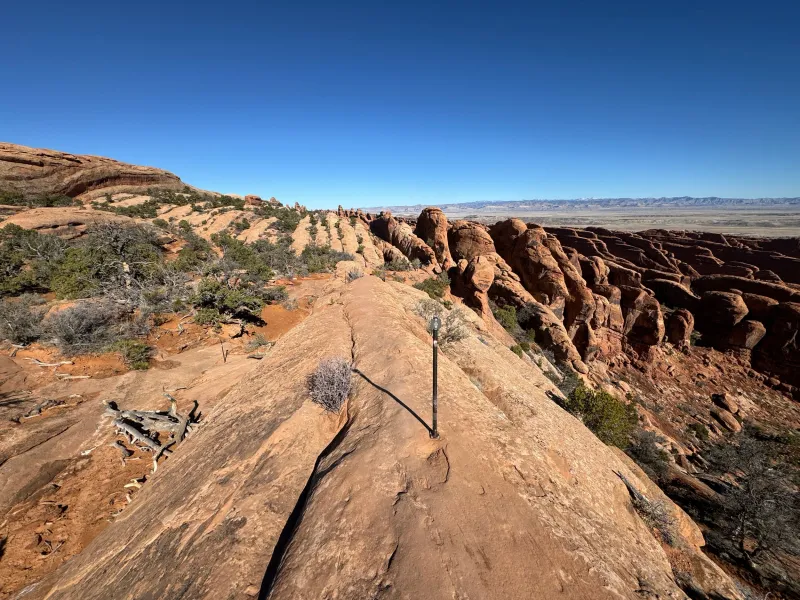
Beyond Landscape Arch, the trail changes character and asks more of your balance. Devils Garden offers narrow rock fins, sandy stretches, and routes leading toward formations such as Partition Arch and Double O Arch.
The full outing with primitive sections and side trails can approach eight miles. Carry a map, ample water, snacks, and enough daylight to finish.
Wet rock, ice, exposure, and confusing junctions make this a poor choice for unprepared hikers or nervous beginners.
11. Navigate the Fiery Furnace Maze
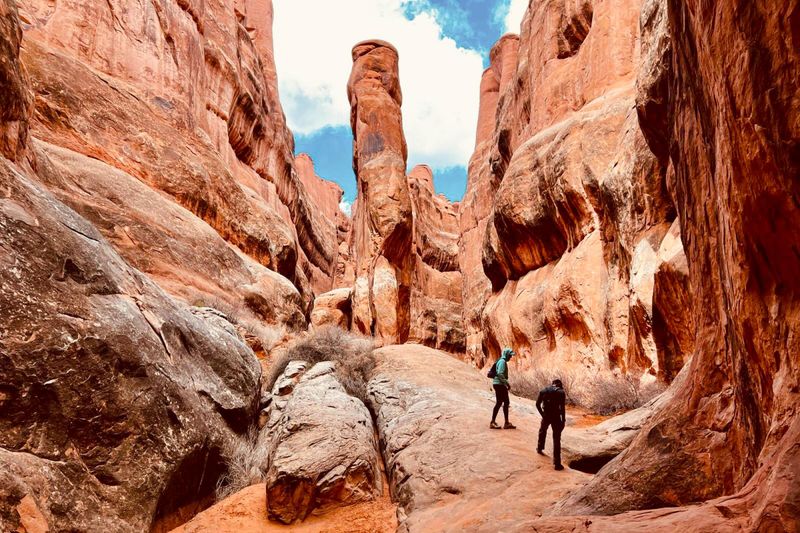
Getting pleasantly puzzled sounds fun until every sandstone passage starts looking familiar. Fiery Furnace is a real maze, with tight gaps, uneven ledges, and places where scrambling requires both hands and careful judgment.
Entry requires a permit or a reserved ranger tour when offered. Check the National Park Service website for current availability, rules, and age limits.
A guided outing helps explain the landscape while reducing navigation worries, but participants still need fitness and suitable footwear.
12. Cruise the Arches Scenic Drive
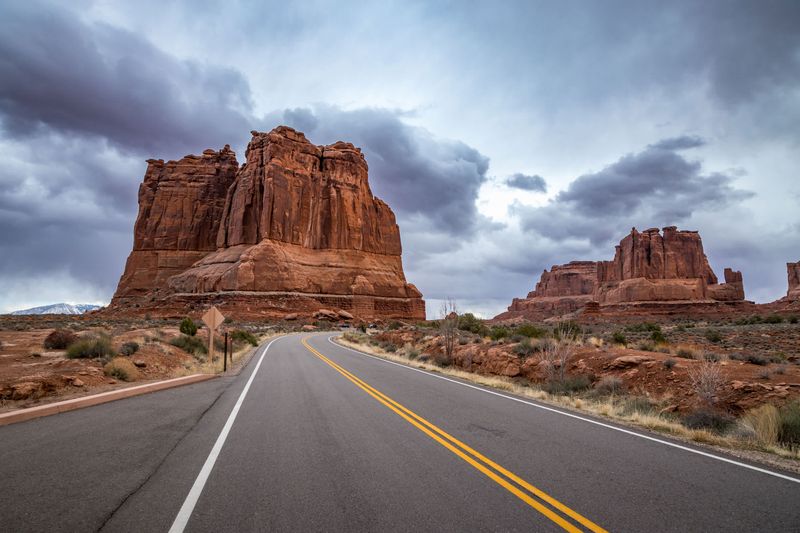
Your windshield becomes a moving picture frame as red towers rise beside the road. The main paved drive runs roughly 18 miles from the entrance toward Devils Garden, linking many famous stops without requiring long hikes.
Allow several hours if you want photographs and short walks along the way. Park only in designated spaces, watch for cyclists, and obey posted speeds.
Before traveling, check the official park website for entrance requirements, closures, and seasonal traffic updates.
13. Circle the Incredible Balanced Rock
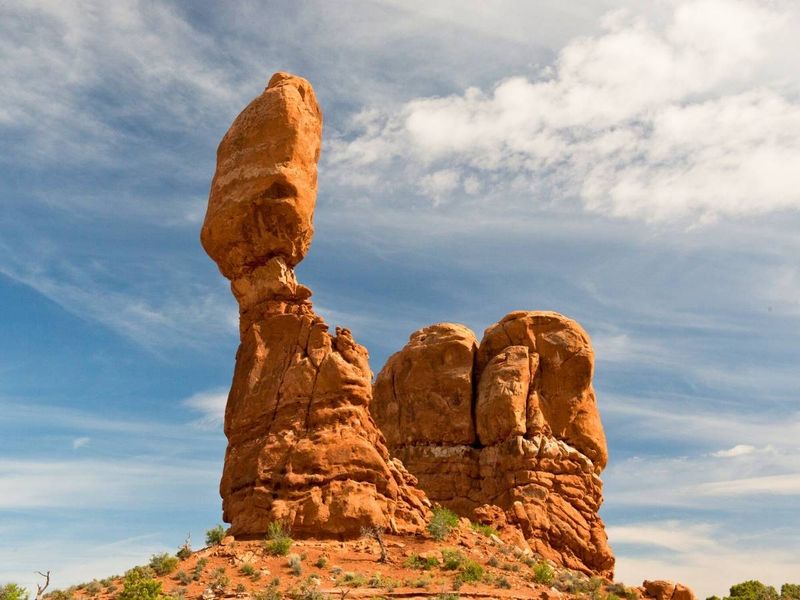
That enormous boulder looks as though a gentle push could send it rolling. Balanced Rock rises about 128 feet overall, creating one of the park’s easiest landmarks to recognize from the main road.
A loop of roughly 0.3 miles lets you watch its shape change with each angle. Part of the route is paved, while the full circuit includes uneven ground.
Stay clear of the formation itself, and try late afternoon for warm desert colors.
14. Walk Among the Walls of Park Avenue
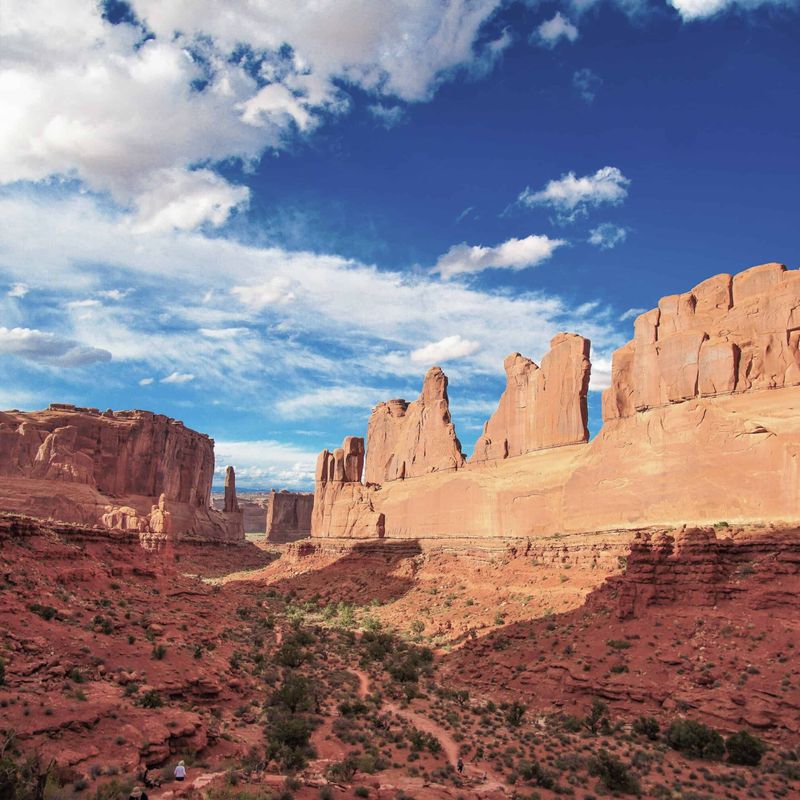
Imagine a city street built from giant sandstone walls instead of buildings. Park Avenue delivers that feeling almost immediately, with a viewpoint near the parking area and a trail descending into the canyon below.
The hike is about two miles round trip if you return the same way. Expect steps, uneven rock, and an uphill finish on your return.
Arrange transportation beforehand if walking only one way, and remember that canyon shade shifts throughout the day.
15. Frame the Peaks at La Sal Mountains Viewpoint
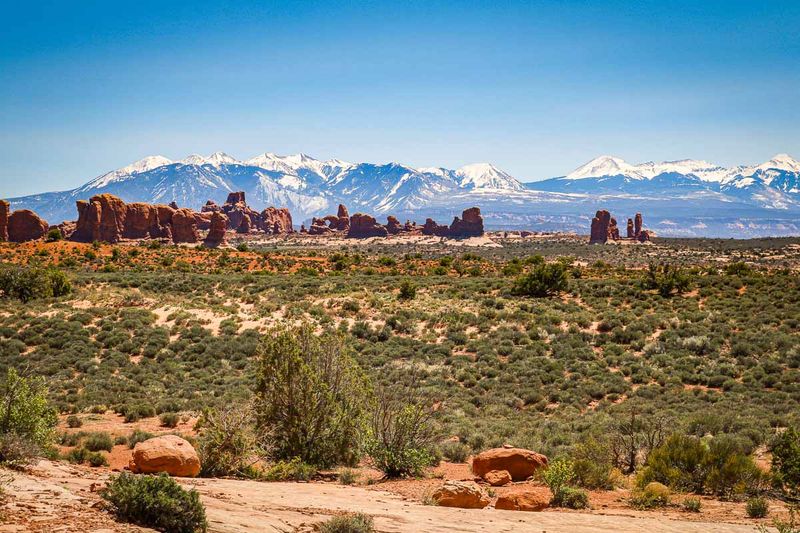
Snowy peaks and warm desert stone can share the same frame here. La Sal Mountains Viewpoint offers a broad introduction to the landscape, with distant mountains rising beyond the park’s red formations on clear days.
Bring binoculars if you enjoy picking out details across the horizon. This roadside stop works well when you want scenery without another demanding hike.
Haze can soften distant views, so adjust expectations and enjoy the closer shapes, colors, and desert plants.
16. Watch Stars Appear at Panorama Point
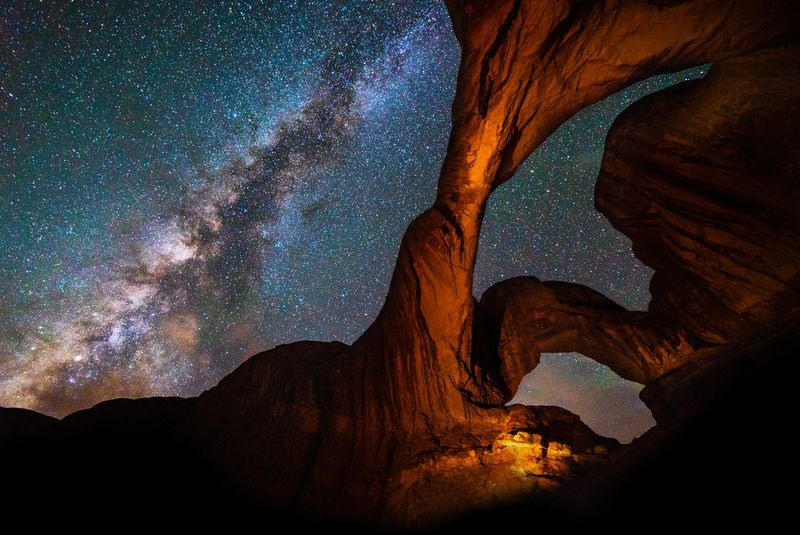
After sunset, the desert trades bright rock colors for a sky full of stars. Panorama Point offers wide views that suit an evening pause in this recognized International Dark Sky Park, especially around a new moon.
Check cloud cover and moonrise before planning your visit. Bring a warm layer, a red light, and a tripod for photographs.
Let your eyes adjust, avoid shining lights toward others, and stay on established surfaces even when darkness hides trails.
17. Spot Stone Giants at Courthouse Towers
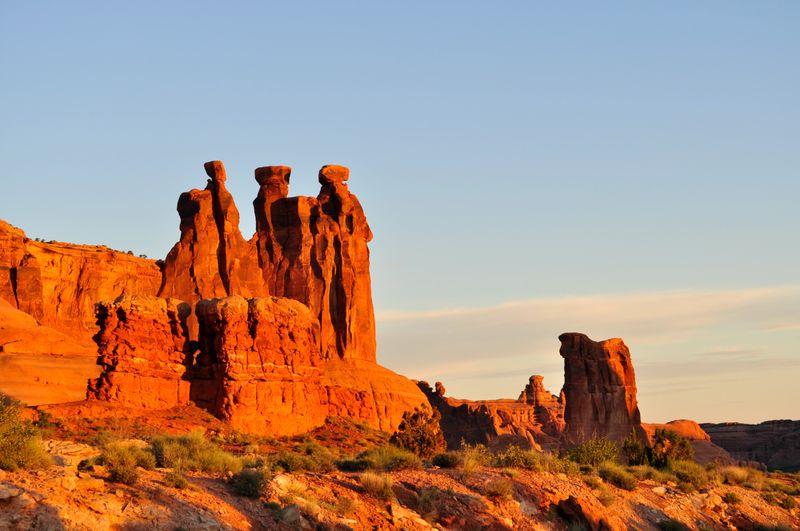
Stone figures seem to stand guard along this stretch of road. Courthouse Towers Viewpoint reveals massive formations, including nearby landmarks such as Three Gossips, Sheep Rock, and the Tower of Babel, each shaped by erosion.
Use the roadside viewing area for a relaxed stop and compare the outlines with their playful names. Early light often adds depth to the cliffs.
Keep an eye on traffic when parking, and use designated paths rather than wandering across desert soil.
18. Enjoy Delicate Arch from the Viewpoints
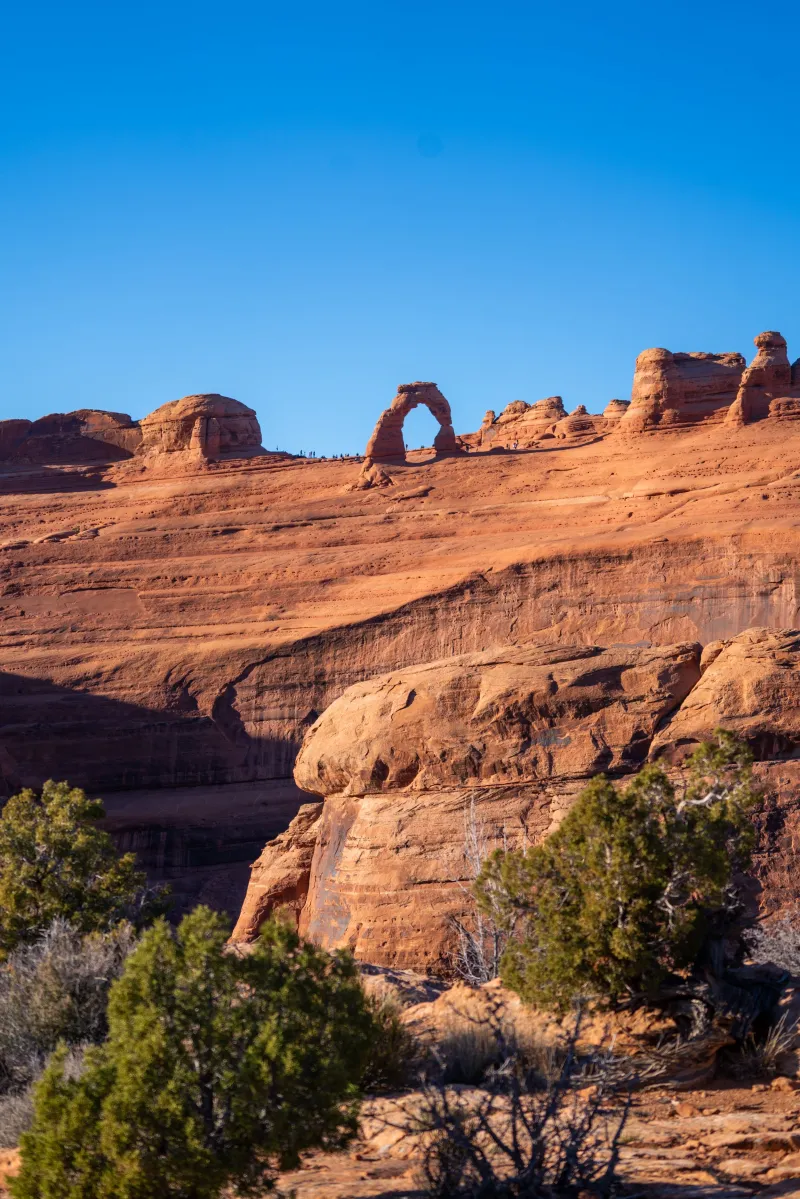
Not every memorable arch view requires a demanding climb. The Lower Delicate Arch Viewpoint offers a short, accessible route to a distant look at the landmark, making it useful when time or energy is limited.
For a different angle, follow the Upper Viewpoint trail uphill over rougher ground. Neither route reaches the arch, and a canyon separates these viewpoints from it.
Bring binoculars or a zoom lens, and expect a smaller silhouette rather than close details.