
Most people know about French croissants and Italian gelato, but Europe hides many more sweet treats. Small towns and old family kitchens across the continent make desserts that rarely show up outside their home countries.
Learning about them is a fun way to explore new cultures, one bite at a time. Get ready to find your next favorite treat and maybe even bake it at home.
1. Kremsnita from Croatia
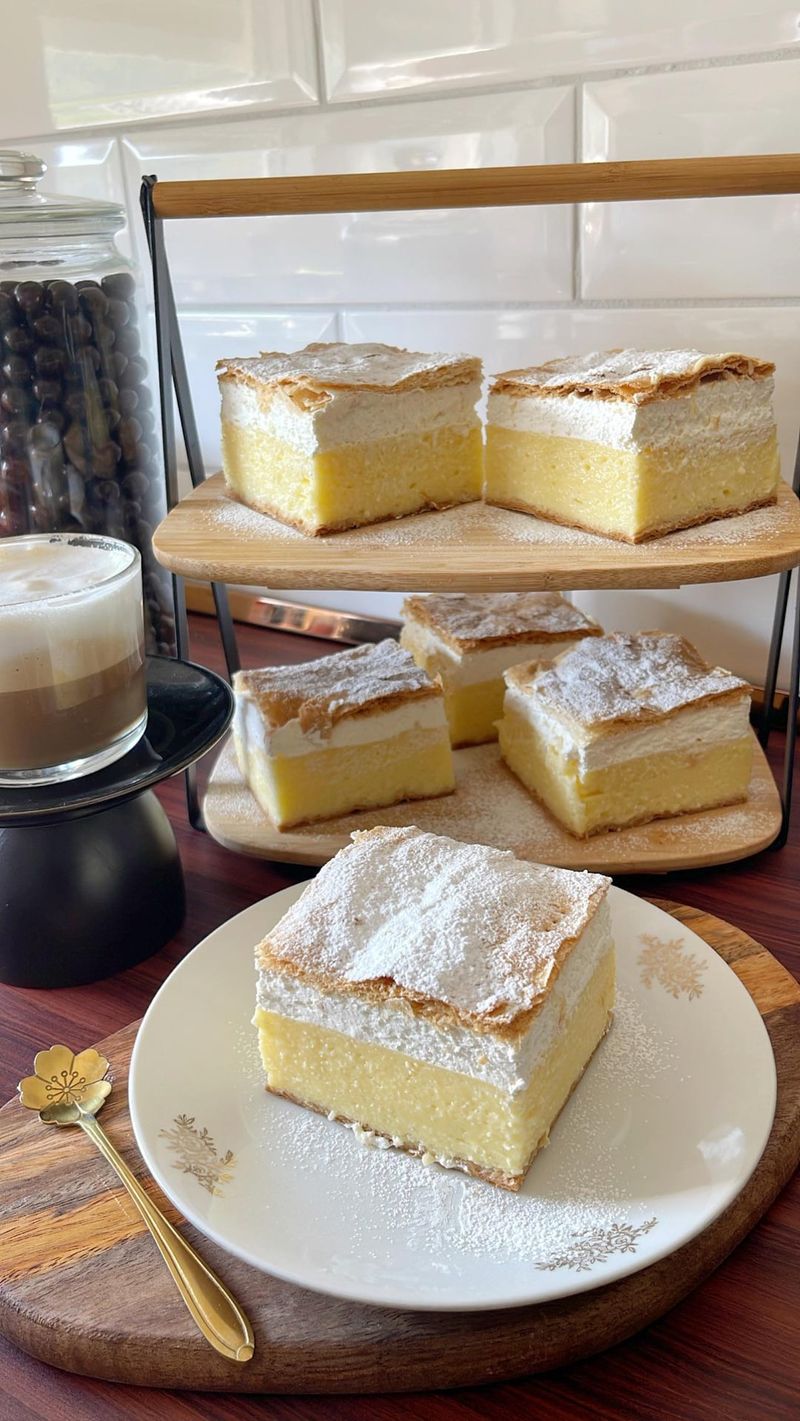
Picture a cream slice so tall you need to squish it before biting. In the Croatian town of Samobor, kremsnita is practically a local celebrity.
Two crispy layers of puff pastry hold a thick block of vanilla custard, often topped with a light whipped cream. Powdered sugar finishes the look.
If you visit, grab one from a bakery near the main square. Bring napkins, because the custard loves to escape out the sides.
2. Tarta de Santiago
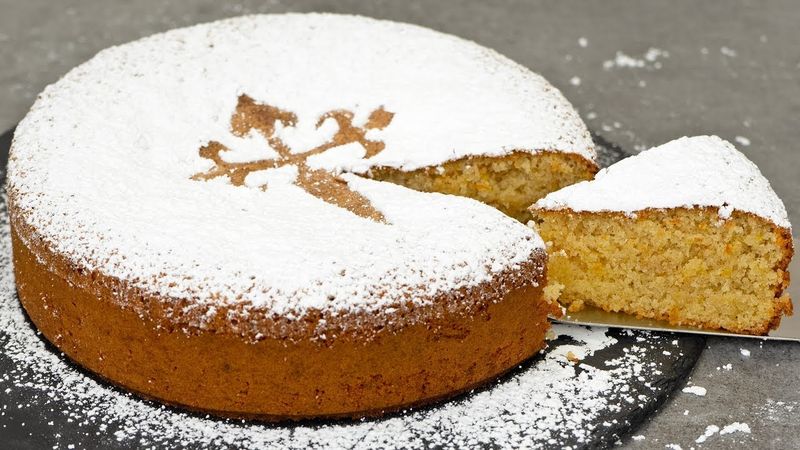
Pilgrims walking hundreds of miles to Santiago de Compostela often reward themselves with this simple almond cake. It has been baked in Galicia, Spain, for centuries.
The recipe uses ground almonds, eggs, sugar, and lemon zest. There is no flour at all, so many gluten-free eaters can enjoy it.
Look for the cross of Saint James dusted on top in powdered sugar. You can make that design at home with a paper stencil.
3. Kladdkaka, Sweden’s Sticky Chocolate Cake
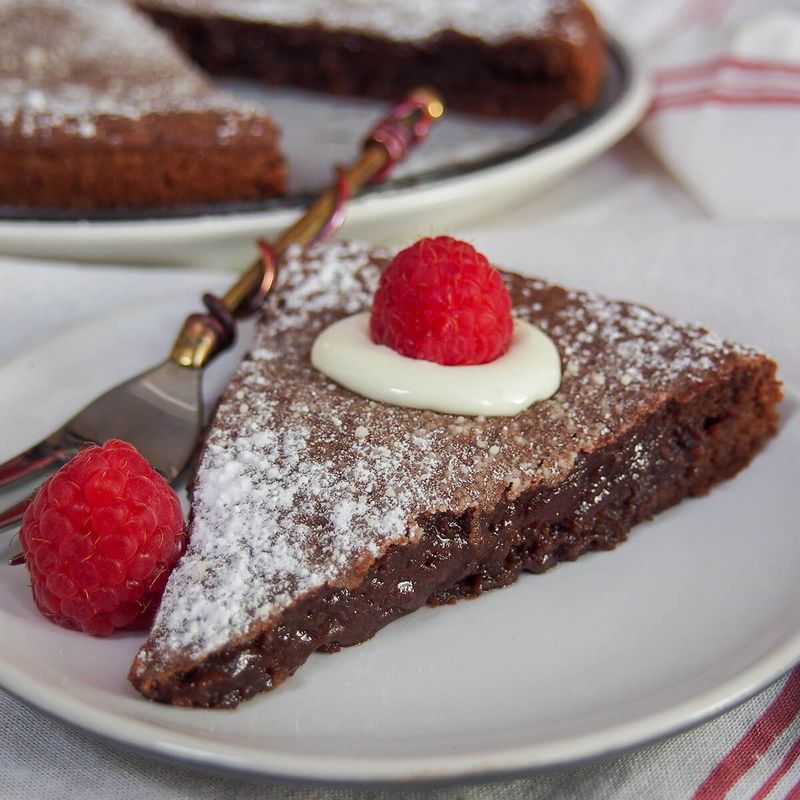
Underbaking a cake on purpose? Swedes do it proudly.
Kladdkaka means sticky cake, and the gooey middle is exactly the point.
It takes only a few pantry items: butter, sugar, eggs, flour, and cocoa powder. Most families can whip one up in about 30 minutes.
Serve it with whipped cream or vanilla ice cream and a few berries. It also fits perfectly into fika, the Swedish habit of pausing for coffee and treats.
4. Pastel de Tentugal
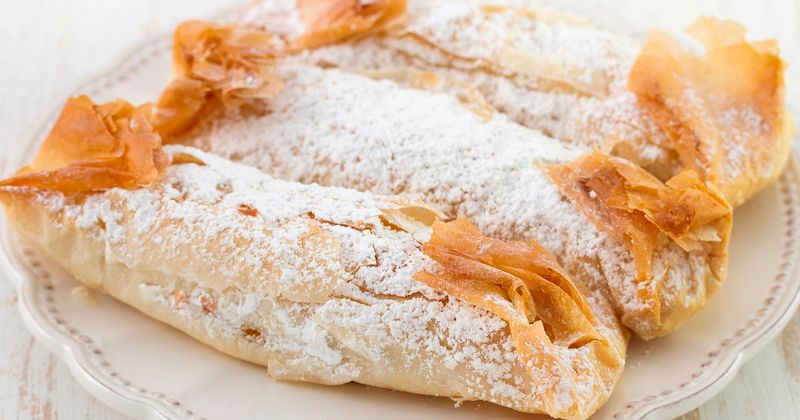
Nuns in a small Portuguese village created something magical long ago. Their dough was stretched so thin across a room that you could read through it.
That delicate sheet is rolled around sweet egg yolk cream called ovos moles, then baked until it shatters with every bite.
Tentugal still guards this tradition carefully. Eat it fresh and over a plate, since flaky crumbs will land everywhere, including your shirt.
5. Medovik Honey Cake
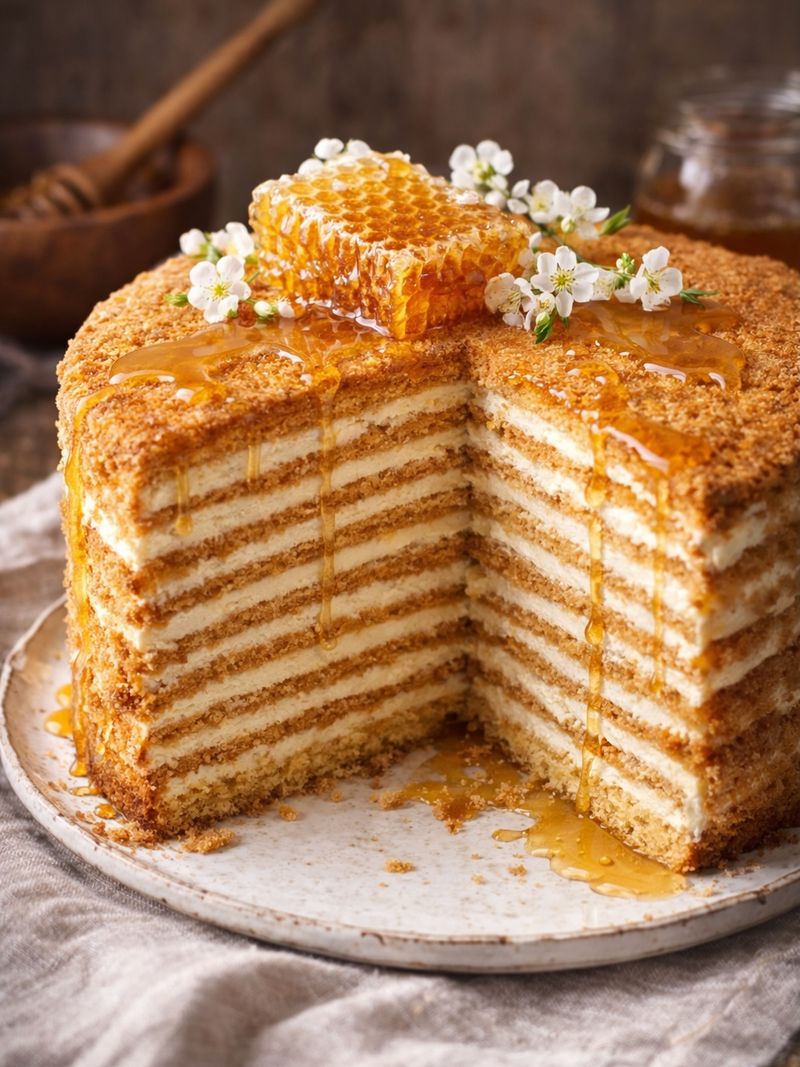
Legend says a clever chef invented medovik to please a Russian empress who hated honey, without telling her what was inside. She loved it anyway.
The cake stacks eight or more thin honey sponge layers with sour cream frosting between them. After a night in the fridge, everything turns soft and tender.
Patience is the secret ingredient here. Making it a day ahead gives the flavors time to blend beautifully.
6. Vinarterta from Iceland
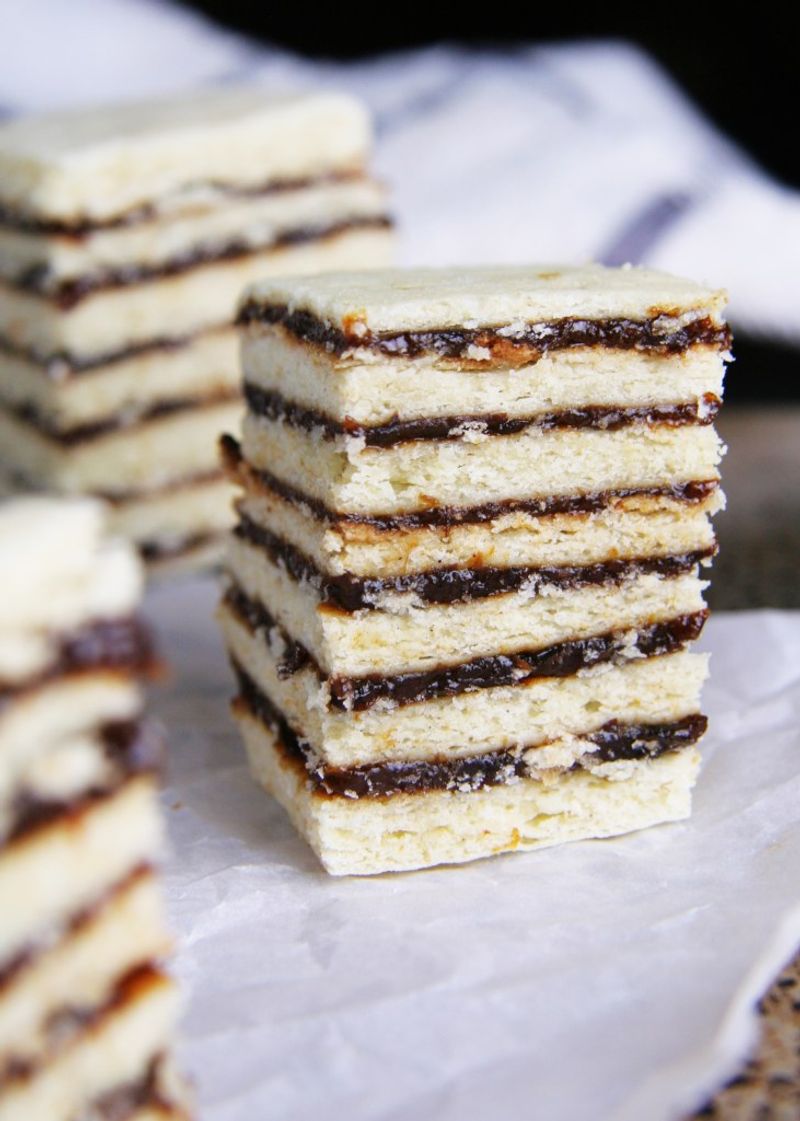
Got a sweet tooth and a love for history? Vinarterta checks both boxes.
This striped cake became a holiday favorite in Iceland during the late 1800s.
Thin cardamom cookie layers are stacked with spiced prune jam. Some families use five layers, while others insist on seven.
Fun fact: Icelandic immigrants in Canada kept the recipe alive more faithfully than many folks back home. It pairs wonderfully with a warm drink.
7. Trdelnik Over Open Coals
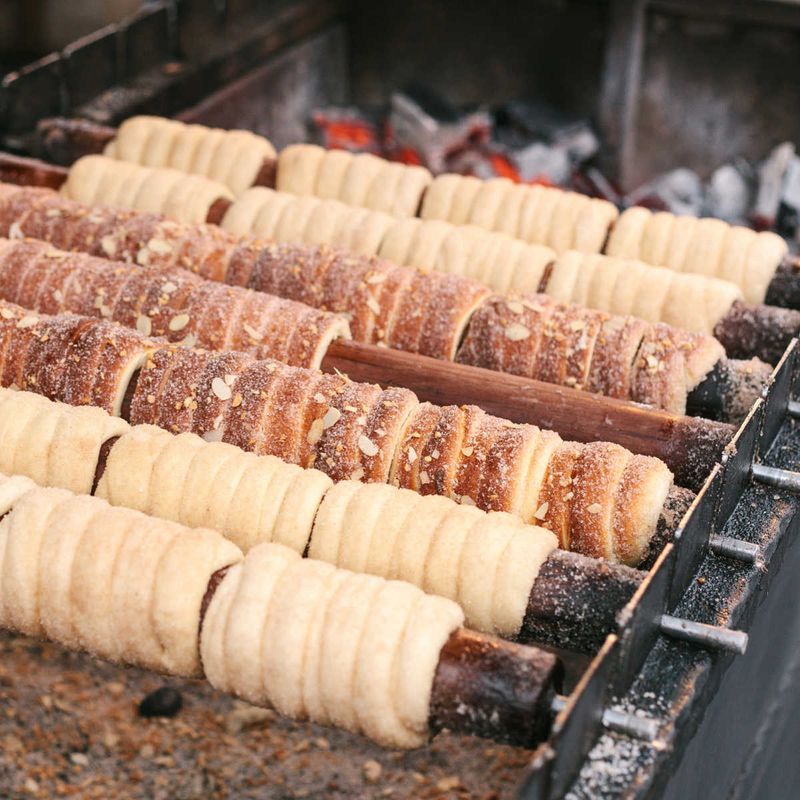
Walk through Prague and the smell of cinnamon will find you first. Vendors wrap dough around metal rods and roast it slowly over hot coals.
The result is a hollow, sugary tube with a crunchy outside. Many shops now fill it with ice cream or chocolate.
Its roots actually trace to Slovakia and Hungary, not just Czech lands. Still, nobody minds where it came from when it is warm in your hands.
8. Gâteau Basque
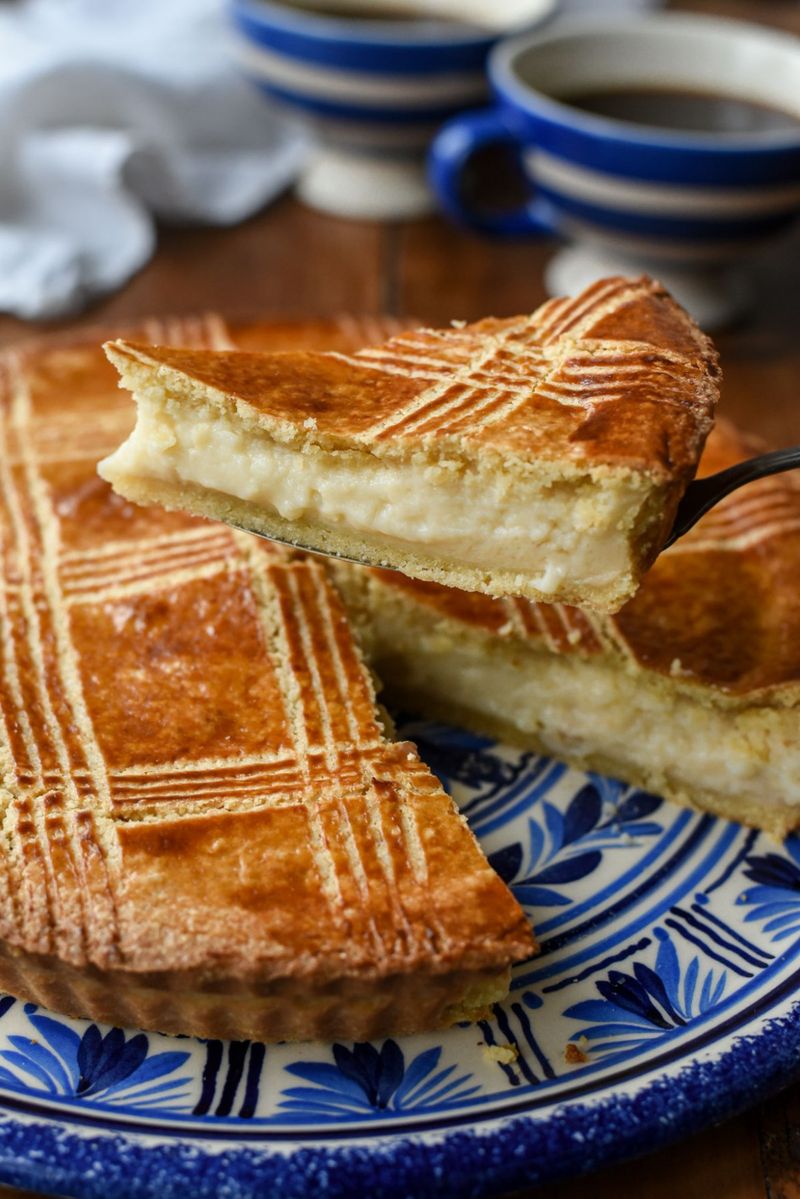
Down in the corner where France meets Spain, bakers fill a buttery cake with either pastry cream or black cherry jam. Locals argue happily about which is better.
The crust is somewhere between a cookie and a cake. A crisscross pattern scored on top makes it easy to spot.
Try both versions if you can. Bringing one to a family gathering is a sneaky way to start a fun debate.
9. Kürtőskalács, Hungary’s Spiral Treat
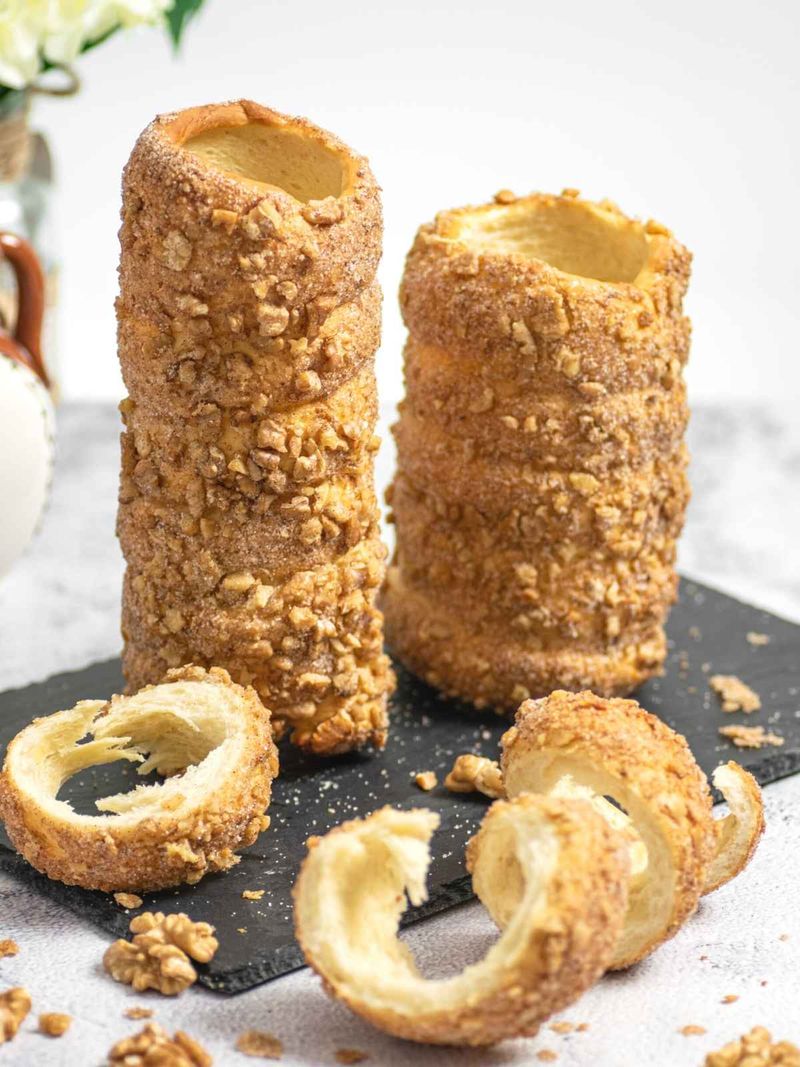
Rumor has it this dessert is one of the oldest pastries in Hungary, with recipes reaching back hundreds of years in Transylvania.
Dough strips spiral around a wooden cylinder and roast until caramelized. Bakers roll them in walnuts, coconut, or plain sugar.
Here is a tip: pull it apart like a ribbon instead of biting it. Watching the steam rise on a cold winter day makes the whole experience cozier.
10. Bara Brith
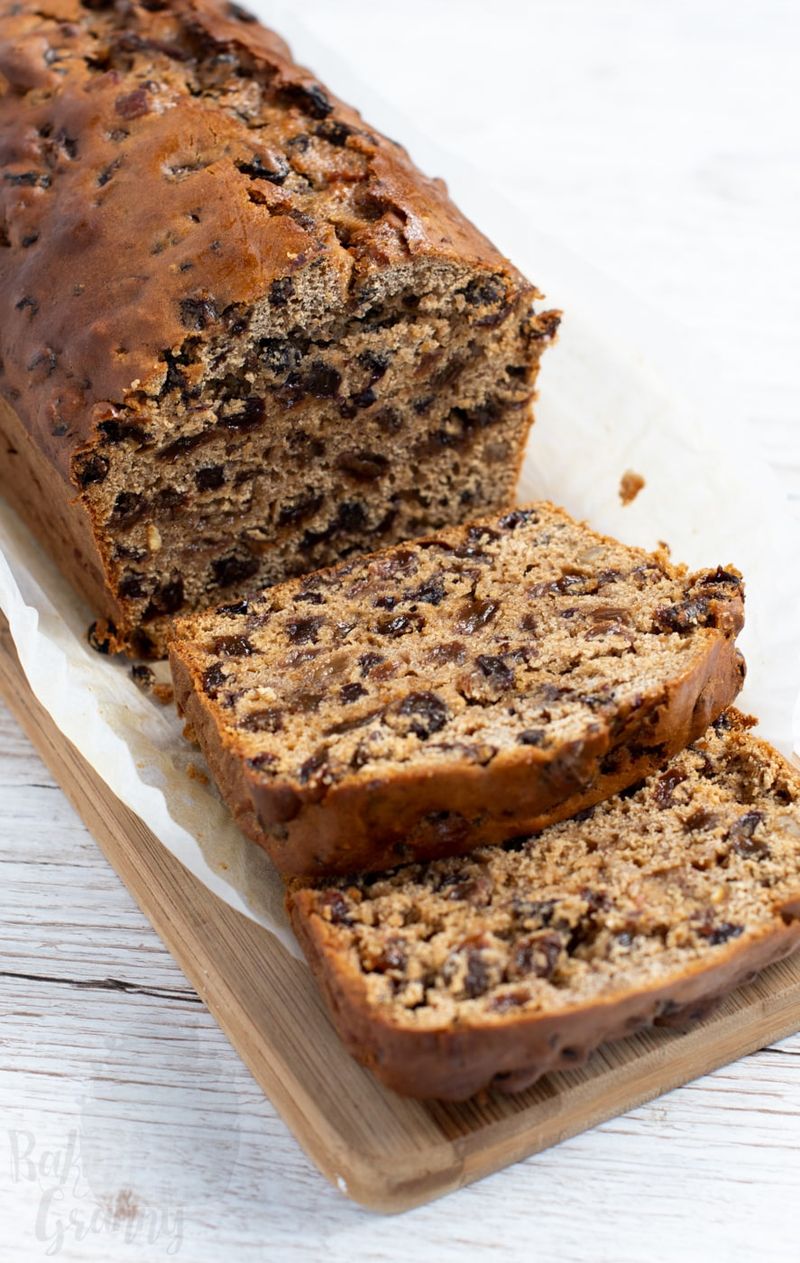
Grandmas in Wales have handed down this speckled bread for generations. Its name literally means spotted bread.
Dried fruit soaks overnight in strong black tea, then gets mixed with flour, sugar, egg, and spices. That tea bath keeps every slice moist.
Spread a little salted butter on top for the classic Welsh way. A loaf also keeps well for days, making it handy for packed lunches.
11. Bombas from Lisbon’s Cousin, Malasadas? No, Bolas de Berlim
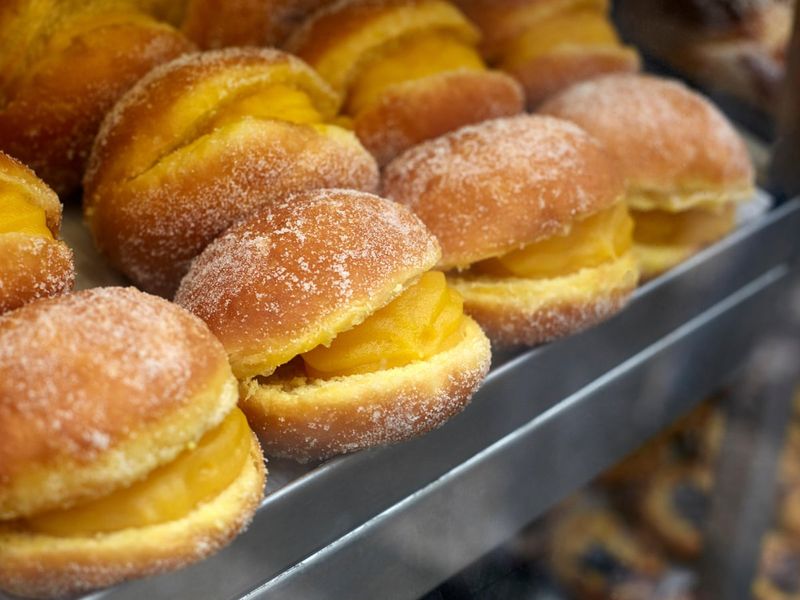
Summer beaches in Portugal come with a soundtrack: vendors shouting about doughnuts. Bolas de Berlim are their pride and joy.
Inspired by German doughnuts, these fluffy rounds are sliced open and stuffed with sweet egg custard, then rolled in sugar.
Beachgoers buy them straight from carts carried across the sand. Grab one after swimming, but maybe rinse the salt off your fingers first.
12. Kardinalschnitte from Austria
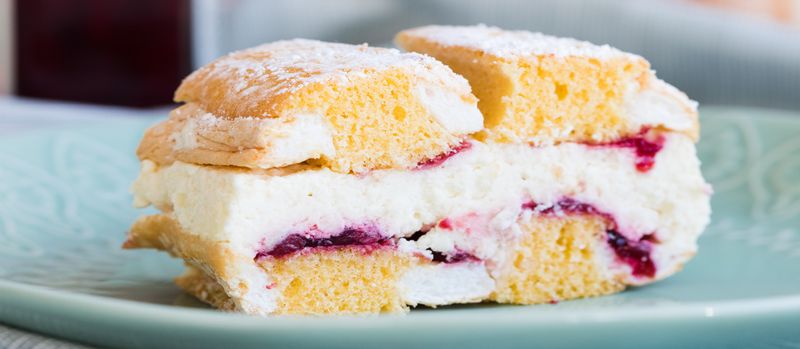
Named after the red and gold colors of church cardinals, this Viennese slice looks almost too pretty to eat.
Bakers pipe stripes of meringue and sponge batter side by side. After baking, they sandwich coffee or fruit cream in the middle.
Every bite feels light, like eating a sweet cloud. Austrian cafes love serving it with coffee, though a glass of milk works just as nicely for younger fans.
13. Rote Grütze
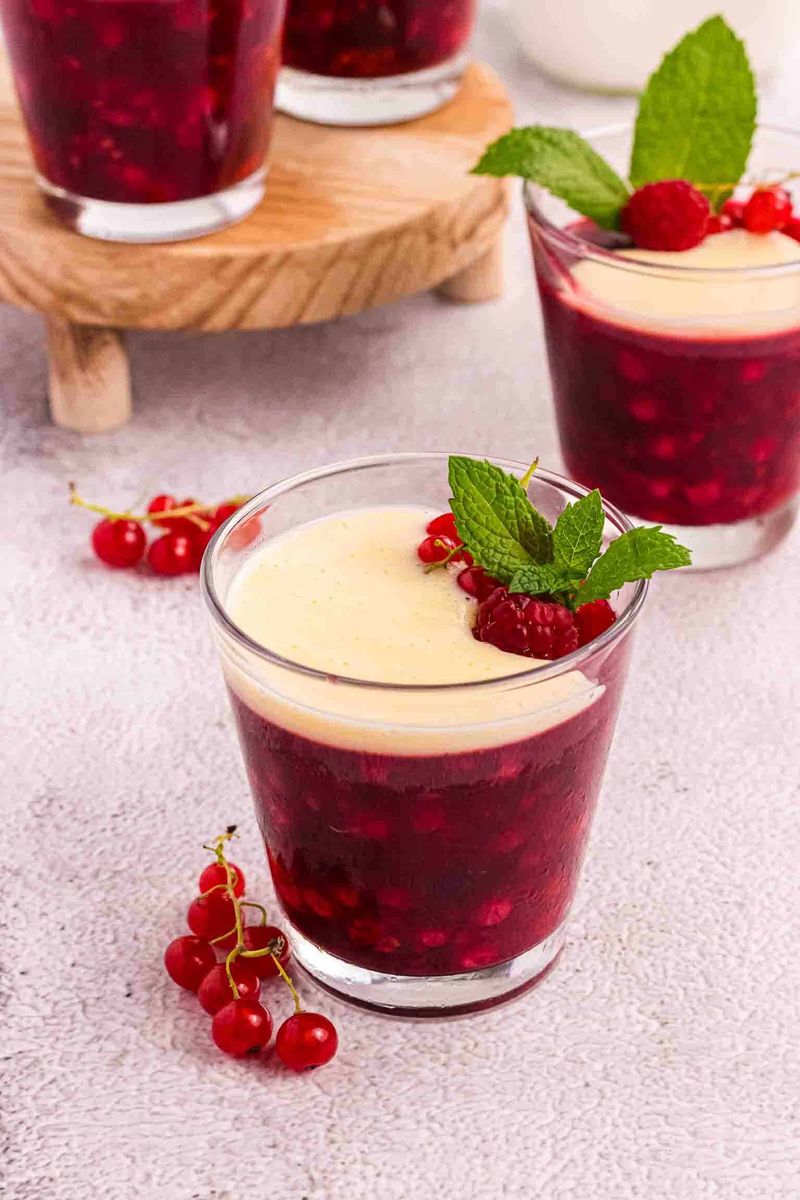
Red berries, a little cornstarch, and a pot. Northern Germans and Danes have turned this tiny list into a summertime staple.
Cherries, raspberries, and currants simmer until they thicken into a glossy, jewel-colored pudding. It is served cold.
Pour some vanilla sauce or cream on top for the full effect. Since it uses frozen fruit too, you can enjoy it any time of year without much fuss.
14. Pastiera Napoletana
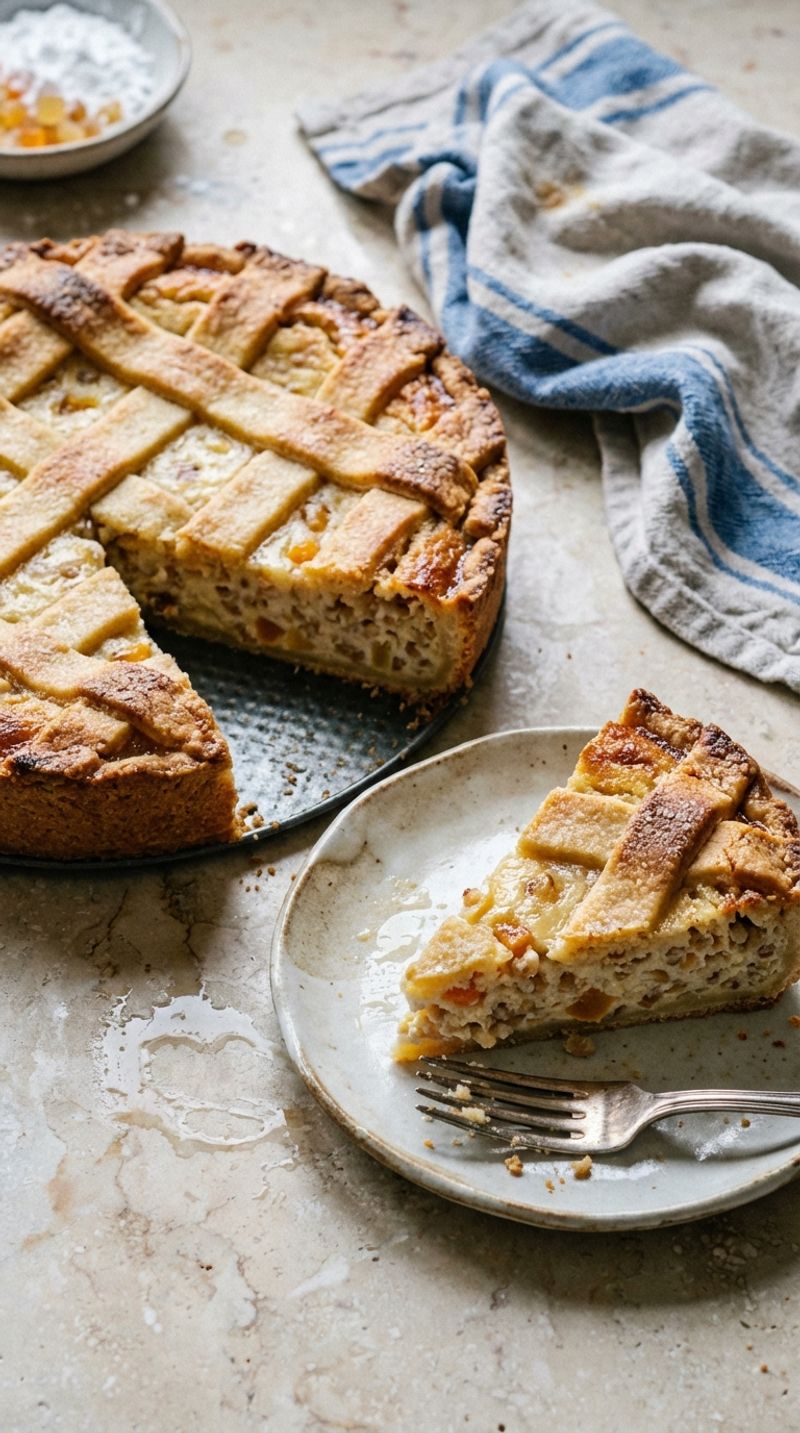
Easter in Naples smells like orange blossoms, thanks to pastiera. Families often bake it days early so the flavors can settle.
Inside the lattice crust sits a creamy mix of ricotta, cooked wheat berries, eggs, and candied citrus. The wheat gives it a surprising chewy texture.
Some stories link it to a sea siren named Parthenope. True or not, Neapolitans treat this tart as a sacred spring tradition.
15. Galaktoboureko
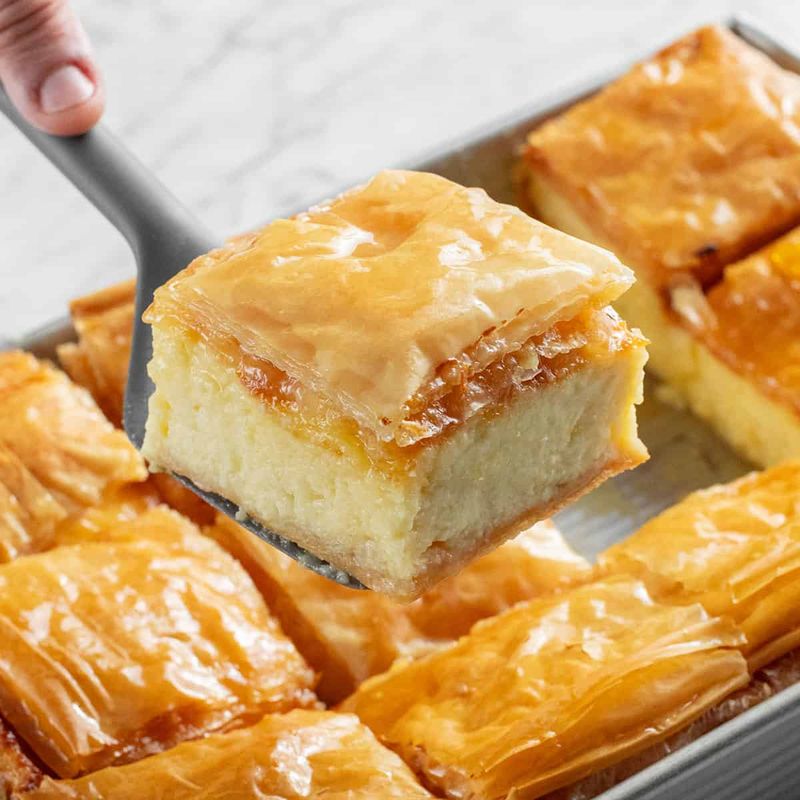
Crunch first, then creamy, then sticky sweet. Greek galaktoboureko delivers three sensations in one forkful.
Semolina custard bakes between buttery phyllo sheets. Hot pastry then gets drenched in lemony syrup that soaks right in.
Greek bakeries usually sell it in squares. A good trick at home is pouring cool syrup over the warm pastry, which keeps the top crispy instead of soggy.
16. Šakotis, the Lithuanian Tree Cake
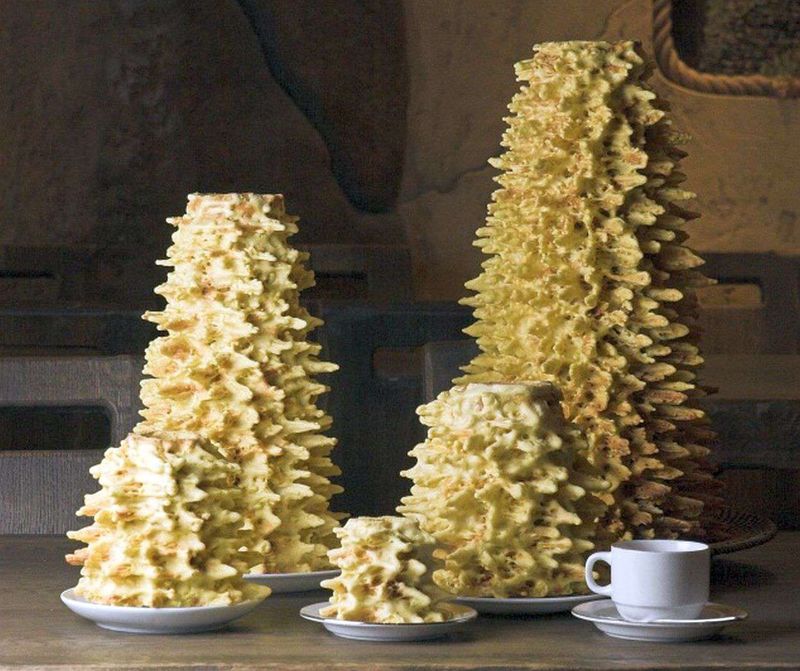
Spiky, tall, and a little strange looking, šakotis resembles a small tree. Lithuanians bring it out at weddings and big holidays.
Bakers drip batter onto a spinning spit over an open fire, layer after layer. The drips harden into those famous branches.
Making one can take hours and lots of eggs, sometimes dozens. Most people buy it rather than bake it, and honestly, that is a smart choice.
17. Krempita from Serbia
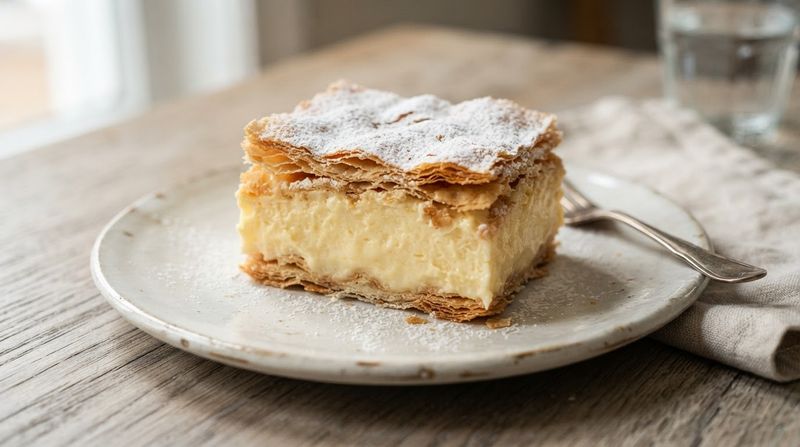
Serbian kids often beg for krempita after school, and it is easy to understand why. Tall, wobbly custard sits between flaky pastry sheets.
It shares roots with Croatian kremsnita, yet Serbian bakeries tend to make the cream fluffier using whipped egg whites.
Pick one up in Belgrade and compare it to its neighbor. Taste testing similar desserts side by side is a great way to learn local differences.
18. Cranachan
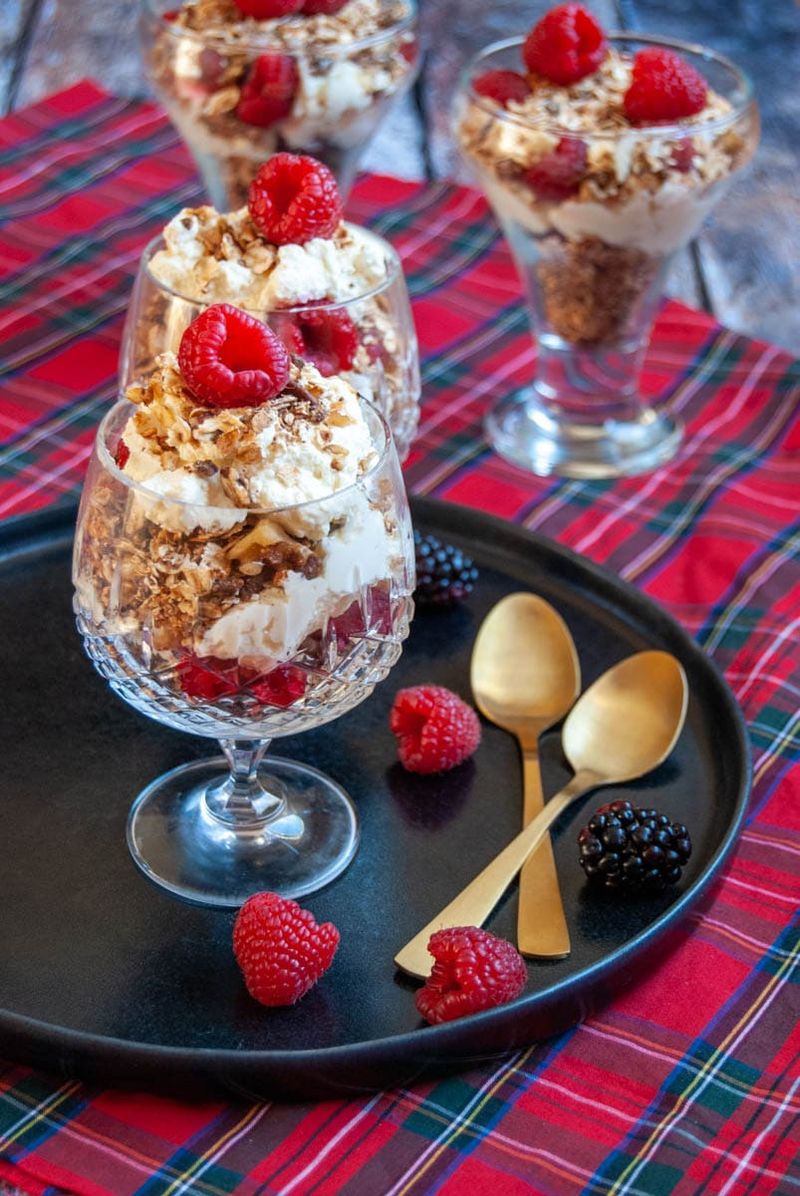
Scotland celebrates its raspberry harvest with a dessert that needs no oven at all. Cranachan was once a summer festival treat.
Layers of whipped cream, fresh raspberries, toasted oats, and honey are spooned into glasses. Traditionally, adults add a splash of whisky, but it tastes great without.
Set out the ingredients and let everyone build their own glass. It turns dessert into a fun, hands-on activity.
19. Flia from Kosovo and Albania
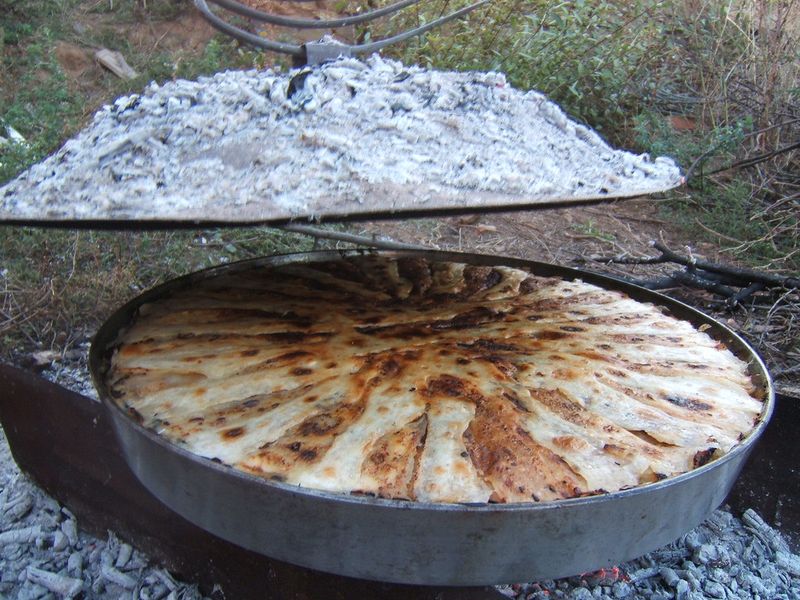
Slow food at its finest, flia can take an entire afternoon to cook. Families gather outside while it bakes under a heated metal lid.
Thin batter lines are added in rounds, creating many crepe-like layers. Each round bakes before the next one goes on.
While often savory, many people top it with honey or jam for dessert. Ask an Albanian friend about it, and expect a proud story.
20. Mákos Guba
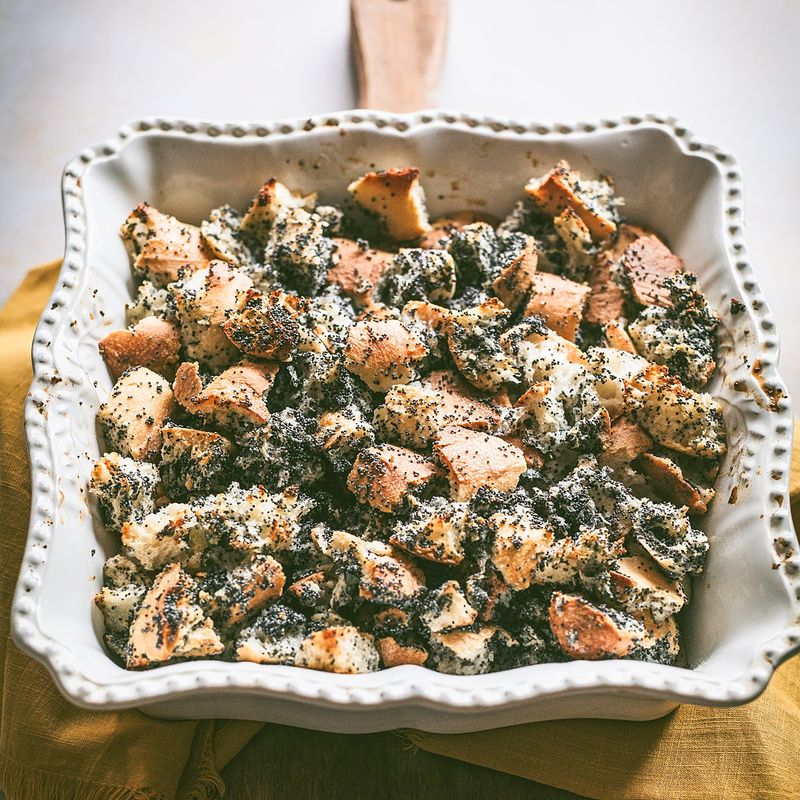
Leftover bread finds a delicious second life in this Hungarian Christmas Eve pudding. Nothing goes to waste.
Crescent rolls get soaked in sweet milk, then tossed with ground poppy seeds, sugar, and honey. Vanilla sauce often goes on top.
Poppy seeds were believed to bring good luck and wealth for the new year. Even if fortune does not arrive, a cozy bowl of this certainly feels lucky.
21. Sachertorte’s Quiet Rival, Esterházy Torte
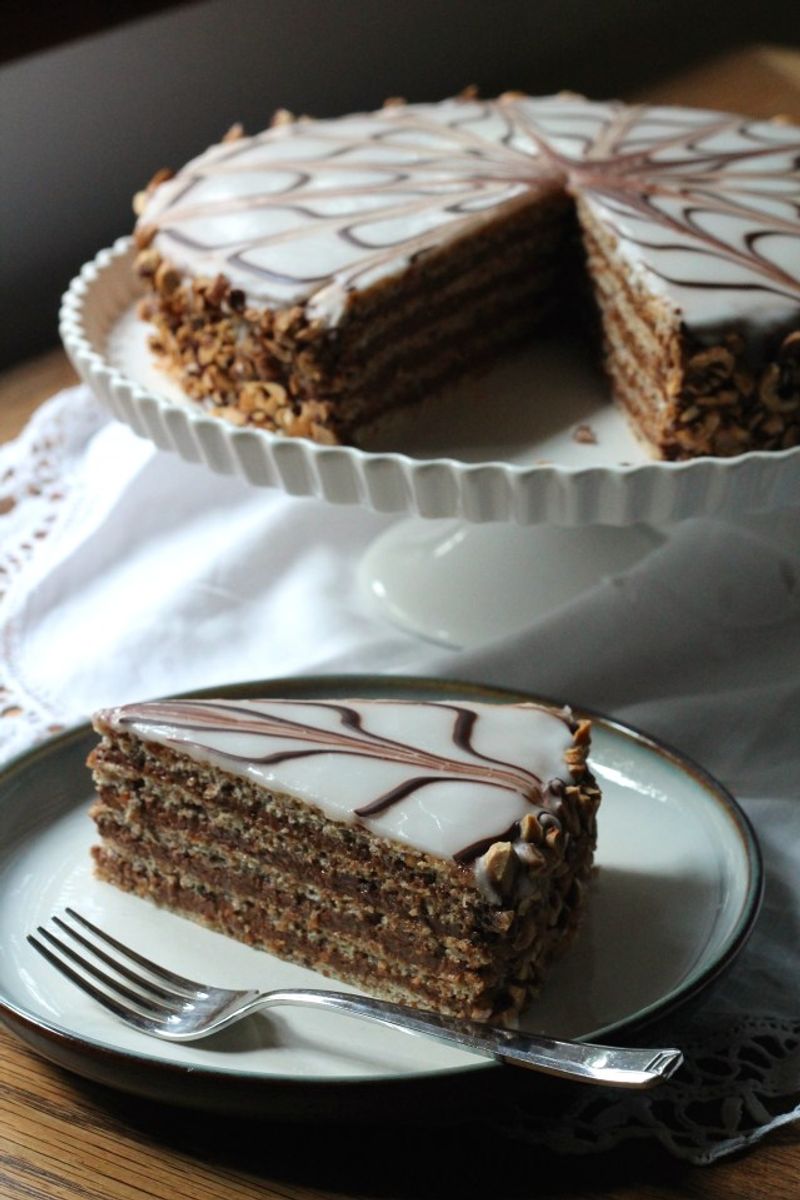
Everyone talks about Sachertorte, yet Hungary’s Esterházy torte deserves just as much praise. It was named after a famous noble family.
Walnut or almond meringue layers stack with buttercream. White icing on top gets a striking chocolate spiderweb pattern.
That design is easier than it looks. Pipe chocolate lines across the icing, then drag a toothpick through them, and suddenly you look like a pastry pro.
22. Kanelbullar? Try Laskiaispulla Instead
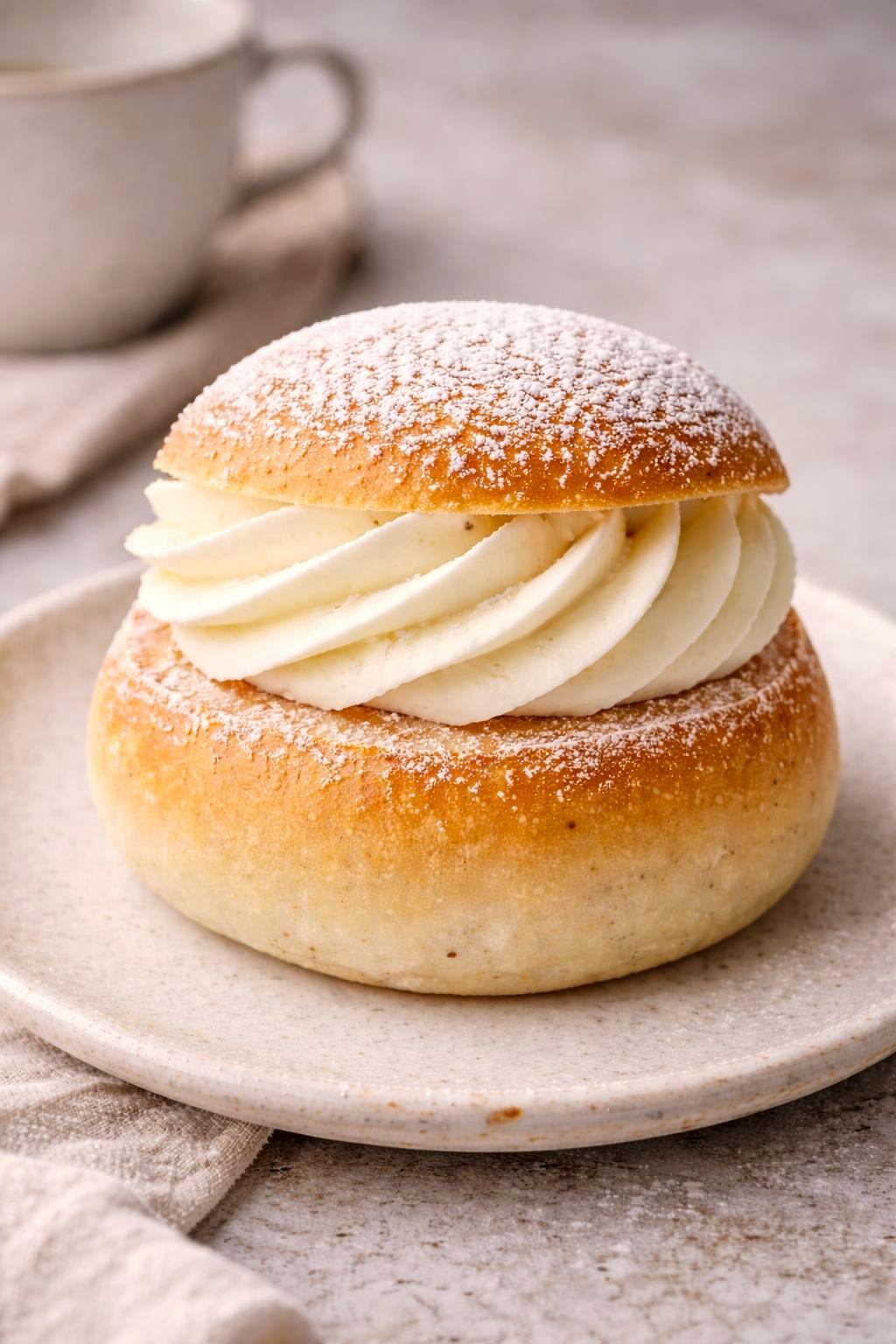
Finland has a special day for sledding and eating buns, and yes, it is real. Laskiaispulla shows up right before Lent each winter.
Soft cardamom buns are split and stuffed with whipped cream plus either almond paste or raspberry jam. Finns debate which filling wins.
Bakeries sell thousands every season. Try one with hot cocoa after playing in the snow for the true Finnish experience.
23. Seadas from Sardinia
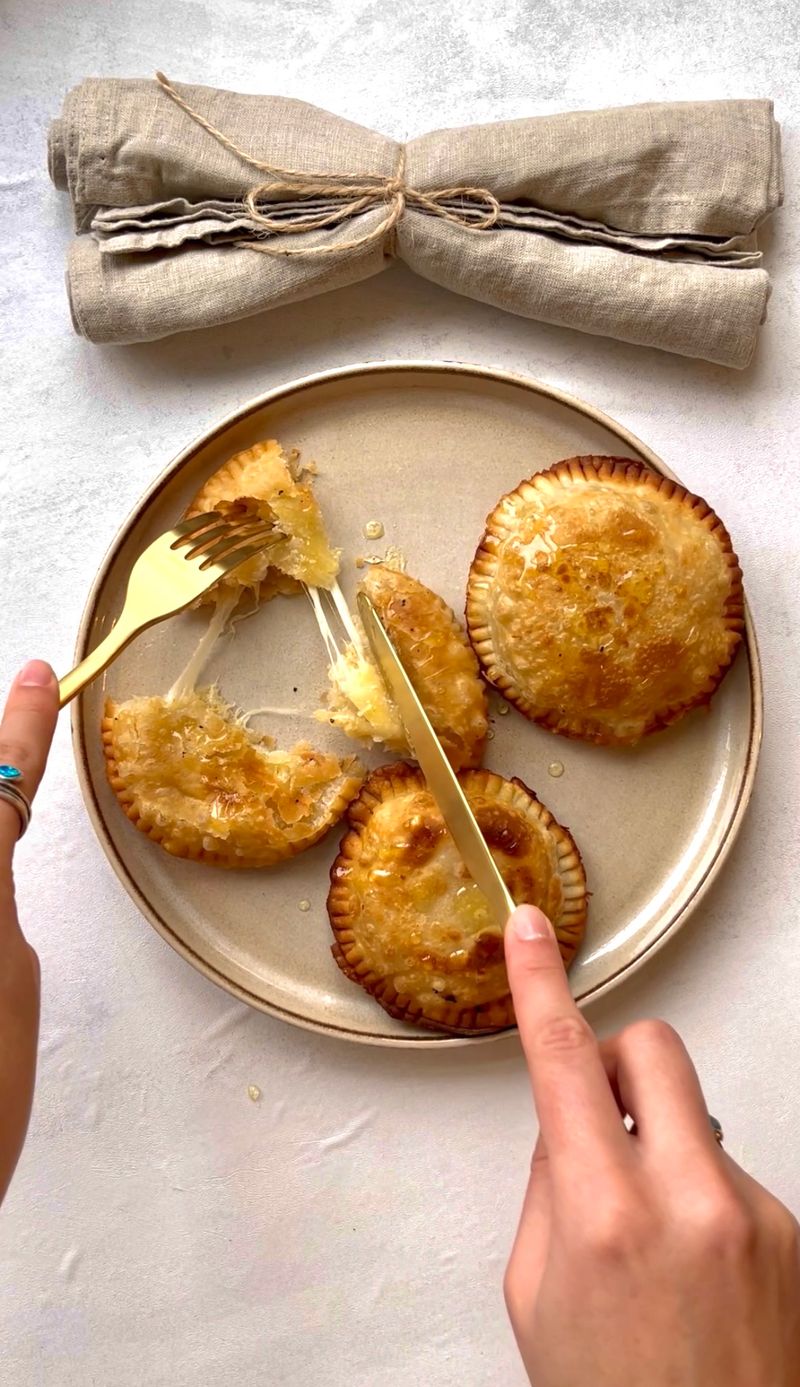
Cheese for dessert might sound odd, but Sardinian shepherds figured out something brilliant long ago.
Seadas are large fried pastries filled with fresh, slightly sour cheese and lemon zest. Bitter local honey gets drizzled over the hot pastry.
That salty and sweet combo is surprisingly addictive. If you ever visit this Italian island, order one at a family restaurant and eat it while the cheese still stretches.