
Your first guitar songs should make you want to keep playing, not put the guitar away. Familiar tunes with a few simple chords help you build rhythm, confidence, and smoother finger moves.
Start with easy versions of these favorites, then add the extra details as your skills grow. You do not need fancy gear or fast fingers to make music you enjoy.
1. Achy Breaky Heart by Billy Ray Cyrus: Start With Two Chords

Two chords can carry a whole song, and this country hit proves it. A beginner arrangement uses E and A, giving your fingers plenty of time to settle into each shape.
Begin with steady downstrokes instead of chasing the recording’s full energy.
Practice switching without looking at your fretting hand every time. Keep your wrist relaxed and count the beat aloud.
Once the changes feel comfortable, sing along for a fun coordination challenge at home.
2. A Horse With No Name by America: Find a Relaxed Groove
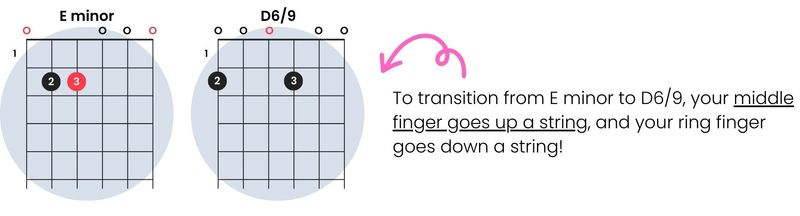
That wandering desert mood comes from a repeating pattern rather than tricky chord changes. The familiar guitar part uses Em and a D6/9 shape, not a standard D chord.
Both shapes are approachable once you check a clear diagram.
Work on the chord movement before adding the rhythm. Then try slow downstrokes with a relaxed arm.
Listen for even volume across the strings, and let the steady groove become your main goal during practice today.
3. Row, Row, Row Your Boat: Make Your First Song Familiar

You already know the tune, so your ears can help guide your hands. A simple arrangement in E can use E and A, making this traditional song useful for early chord practice.
Choose a chart that clearly marks each change.
Sing slowly while strumming once at each marked chord. The lilting rhythm should feel like a gentle rocking motion.
After several clean runs, ask someone to sing with you while you keep the accompaniment steady.
4. Three Little Birds by Bob Marley: Keep the Mood Light
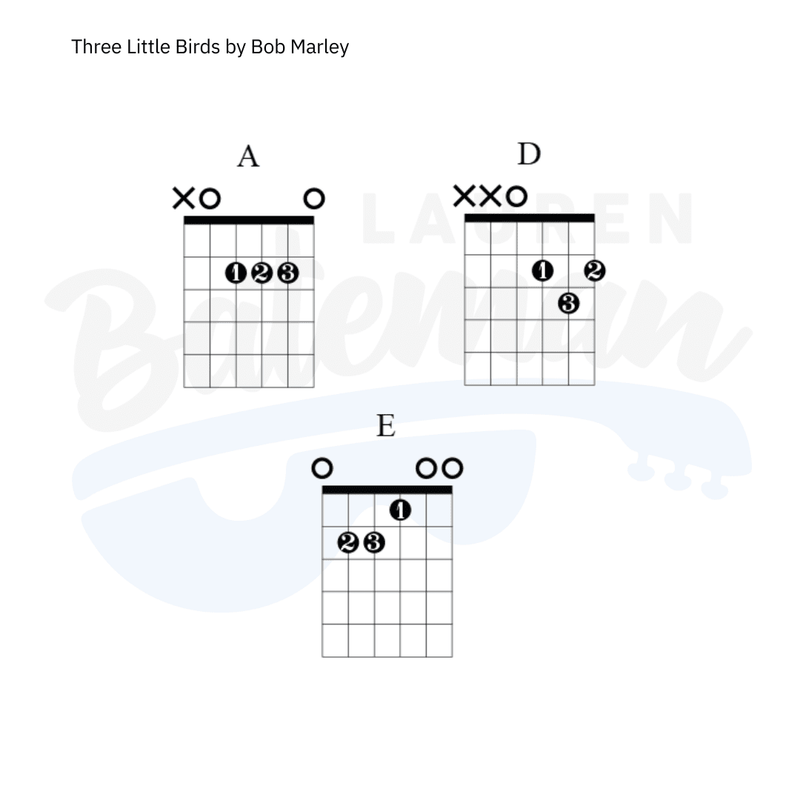
A cheerful melody makes small mistakes feel less serious. With A, D, and E, an easy version gives you three useful open chords without demanding fancy fingerwork.
Start with regular downstrokes before attempting the recording’s reggae feel.
Spend extra time moving between A and D, keeping your fingertips close to the strings. When the changes stop interrupting your beat, experiment with light strums between counts.
That small rhythm shift adds bounce without requiring faster playing.
5. Give Peace a Chance by John Lennon: Build a Group Singalong

A roomful of voices can turn a simple guitar part into something powerful. Beginner charts often reduce this singalong to C and G in a comfortable key.
Follow one arrangement consistently, since chord choices vary between versions.
Use a firm, even strum and leave space for the singing. If switching to C slows you down, practice that move separately for a minute.
Your main job is keeping everyone together, not filling every beat with sound.
6. Lean on Me by Bill Withers: Support the Melody
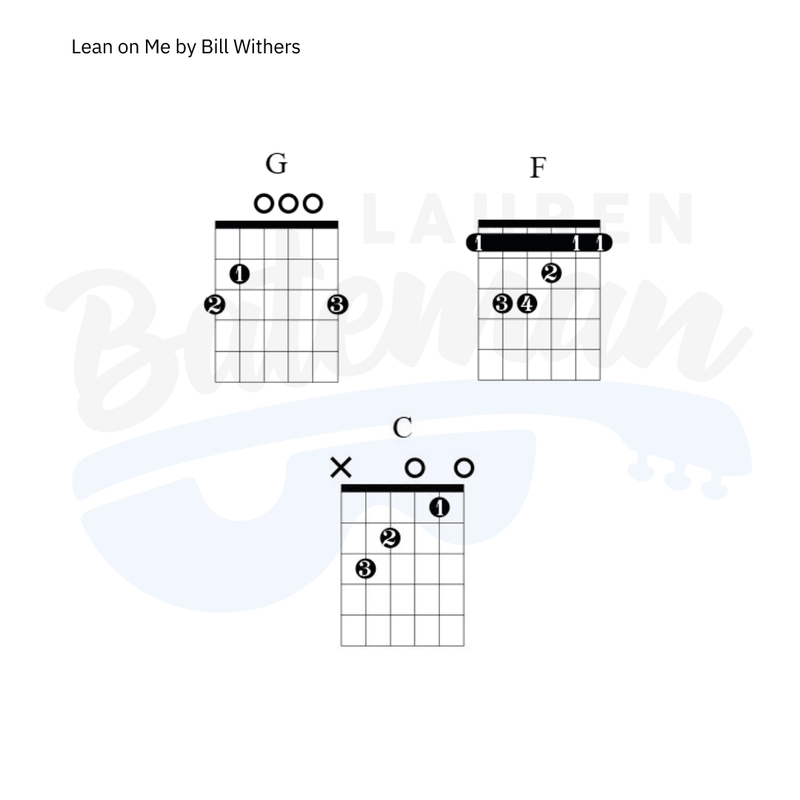
Few melodies feel as welcoming as this one. Although the original has a distinctive piano part, simplified guitar arrangements let you focus on supporting the tune.
An easy version in A can center on A, D, and E.
Check your chart for extra chords rather than assuming every section stays identical. Play slowly, with a soft touch, and follow the melody’s natural pauses.
Recording a short practice session helps reveal where your chord changes need attention.
7. I Walk the Line by Johnny Cash: Train Your Timing

Johnny Cash’s steady pulse gives your picking hand a clear job. For an easier start, choose an arrangement that stays in one key, using chords such as E, A, and D.
The original recording changes keys, adding another challenge.
Strum evenly before trying a bass note followed by a chord. Keep that movement small and controlled.
A metronome can help you resist speeding up when the song feels familiar or slowing down during awkward changes.
8. Brown Eyed Girl by Van Morrison: Give Your Strumming a Lift

Summer party energy does not require learning the opening guitar riff first. A basic accompaniment uses G, C, D, and Em, giving you a useful set of open chords.
Begin with the verse before tackling the whole song.
Keep your strumming hand moving steadily, even while your fretting fingers change shapes. Practice any difficult transition as a short loop.
Once the rhythm feels secure, add light upward strums to bring out the song’s cheerful swing.
9. Stand by Me by Ben E. King: Learn a Lasting Chord Pattern

One repeating chord pattern can unlock dozens of other songs. In a common beginner key, this favorite moves through C, Am, F, and G.
That familiar sequence helps you hear how chords work together, not just memorize finger positions.
F may need extra patience, so try a small version on the highest four strings instead of a full barre. Strum only the strings that shape uses.
Repeat the progression slowly until every change lands smoothly.
10. Ring of Fire by Johnny Cash: Add a Country Bounce

Those famous brass sounds are memorable, but your guitar can carry the song alone. Many easy arrangements use G, C, and D.
Learn the chord order from your chosen chart before adding a country rhythm.
Start by strumming each beat, then experiment with a low bass note followed by a lighter chord strum. Aim for a springy feel rather than heavy volume.
Pay attention when sections change, because familiar melodies can hide unexpected chord movements.
11. Sweet Home Alabama by Lynyrd Skynyrd: Rock With Three Shapes

A recognizable rock sound can begin with just D, C, and G. Strumming that repeating progression gives you an approachable starting point, even though the recording includes riffs and extra details.
Save those decorations for later.
Notice which strings belong in each chord, especially D, which usually starts on the fourth string. Keep the changes moving without rushing.
Once you can play several smooth repeats, try emphasizing selected beats to give the pattern more character.
12. Take Me Home, Country Roads by John Denver: Follow the Chorus
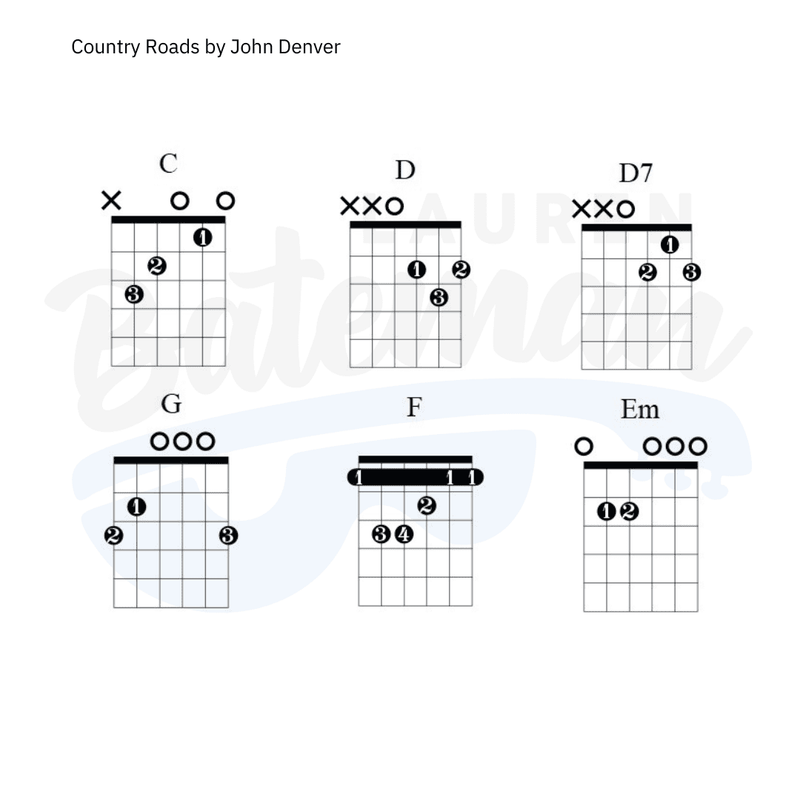
The chorus almost invites everyone nearby to join in. A simplified version in G uses G, D, Em, and C for much of the song.
Some fuller charts include another chord, so check your arrangement before starting.
Learn the chorus first, then connect it to the verses. Count steadily through longer chords instead of changing early because you know the next lyric.
If singing distracts your hands, hum the melody until the rhythm feels dependable.
13. Let It Be by The Beatles: Make Space for Each Chord

A calm tempo gives you room to hear every chord ring. C, G, Am, and F form the core of many easy arrangements of this Beatles classic.
Start with plain strums rather than copying the piano part.
For F, use a smaller shape if a barre feels uncomfortable. Listen for buzzing, then adjust one finger at a time.
Follow your chart carefully through each section, since the chord order does not remain identical throughout everything.
14. Ho Hey by The Lumineers: Turn Rhythm Into the Hook
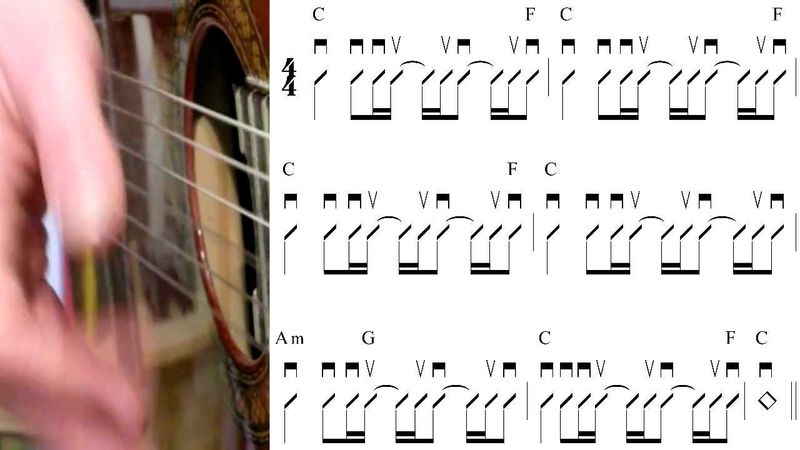
Handclaps and shouted accents make this folk hit feel like a friendly gathering. Beginner versions commonly use C, F, Am, and G, with stretches that stay on one chord.
Those moments let you concentrate on your strumming.
Begin without the vocal shouts so you can track the beat clearly. Use a manageable F shape and keep your shoulders loose.
Later, add the accents while maintaining the same pulse, treating your guitar like part of the percussion.
15. Good Riddance (Time of Your Life) by Green Day: Grow Into Picking

That famous acoustic opening sounds impressive, but you can begin with strummed chords. Common beginner arrangements use G, Cadd9, D, and Em, with some charts also showing C.
Learn your version’s changes before attempting individual picked notes.
G and Cadd9 often share finger positions, which can make their switch easier. Keep those fingers planted when your chosen shapes allow it.
Once strumming feels natural, pick a few strings slowly and build toward the fuller guitar pattern.