
Gaslighting is a form of emotional manipulation where someone makes you question your own thoughts, feelings, and memories. It can happen in friendships, romantic relationships, family dynamics, and even at work.
Over time, these sneaky phrases chip away at your self-trust until you stop believing in yourself. Knowing what these lines sound like is the first step toward protecting your confidence and mental health.
1. “That Never Happened”

Few phrases hit harder than being told an event you clearly remember simply did not occur. This line is designed to make you distrust your own memory.
When someone denies a real event, it plants a seed of doubt that grows over time.
Start keeping a journal of important conversations and events. Having a written record gives you something solid to refer back to when your memory is being challenged unfairly.
2. “You’re Imagining Things”

Hearing this phrase can make even the most grounded person feel unsteady. It dismisses your observations as fantasy rather than fact.
The goal is to make you feel like your mind cannot be trusted.
Pay attention to patterns. If someone repeatedly tells you that your perceptions are wrong, that itself is a red flag worth taking seriously.
Trust what you observe, especially when it happens more than once.
3. “You’re Remembering It Wrong”

Memory is imperfect, and a manipulator knows exactly how to use that against you. Saying you remembered something incorrectly puts the burden of proof on you while letting them off the hook completely.
It helps to talk to someone you trust about shared experiences. A friend or family member who was present can sometimes confirm what actually happened, giving you the confidence to stand by your recollection.
4. “I Never Said That”
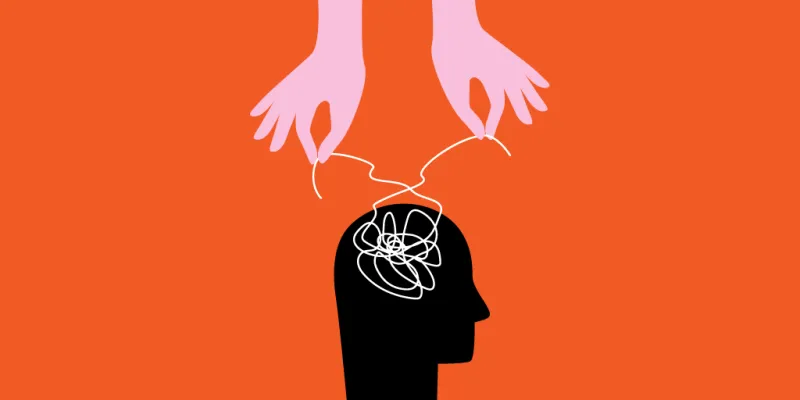
Flat-out denying words that were clearly spoken is one of the most disorienting gaslighting tactics out there. It forces you to choose between your own ears and someone else’s denial.
Over time, you might start filtering your reactions through their version of events instead of your own.
Whenever possible, follow important conversations with a quick text recap. Saying something like, “Just to confirm what we discussed…” creates a paper trail that protects you.
5. “You’re Making That Up”
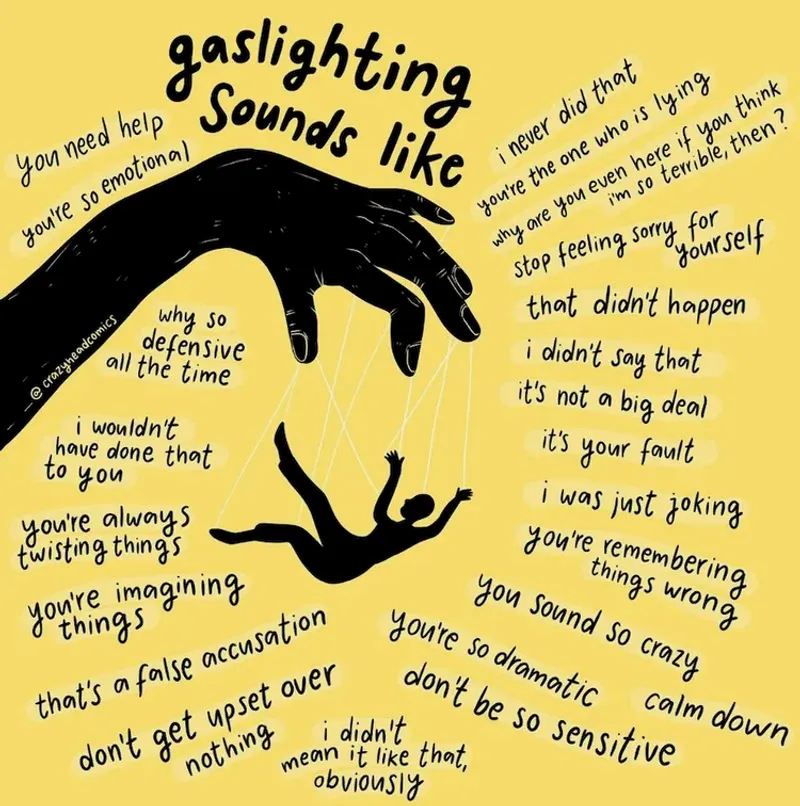
Being accused of fabricating your own experience is deeply hurtful. It turns your honesty into a character flaw and paints you as someone who lies for attention.
Repeated exposure to this phrase can make you stop speaking up altogether.
Remind yourself that your experiences are valid, even when someone refuses to acknowledge them. Reaching out to a counselor or therapist can help you rebuild trust in your own voice when it has been silenced.
6. “You’re Too Sensitive”

Sensitivity is not a weakness, but this phrase tries to convince you otherwise. It reframes your natural emotional response as a personal flaw, shifting focus away from the hurtful thing that was said or done.
Emotions exist for a reason. Feeling upset after being treated poorly is not an overreaction; it is a signal that something is wrong.
Hold onto that signal instead of letting someone else decide whether your feelings are appropriate.
7. “You’re Overreacting”

Labeling a genuine emotional response as an overreaction is a classic way to shut down a conversation without addressing the real issue. It makes you feel embarrassed for having feelings, which is exactly the point.
Ask yourself whether your reaction would seem reasonable to a neutral observer. More often than not, you will find that your response makes complete sense given the situation.
Your feelings deserve space, not shame.
8. “It Was Just a Joke”

Hiding cruelty behind humor is a well-worn trick. When you express hurt, the phrase “it was just a joke” flips the script and makes you seem like the problem for not laughing along.
Humor should bring people together, not leave one person feeling small.
A good rule of thumb: if a joke consistently targets your insecurities, it is not really a joke. You are allowed to say that something was not funny without needing to defend that position.
9. “Why Are You Making Such a Big Deal Out of This?”

This question is loaded with judgment before you even get a chance to explain yourself. It signals that your concern is being measured against someone else’s scale, and it is already failing.
The implication is that caring about something means you are dramatic or unreasonable.
What feels small to one person can be genuinely significant to another. You do not need permission to take your own concerns seriously.
Standing firm on what matters to you is not drama; it is self-respect.
10. “It’s Not a Big Deal, Why Are You So Upset?”

Back-to-back minimizing phrases like this one can pile up quickly, leaving you feeling like your emotional world is constantly being shrunk. When someone decides what is and is not a big deal for you, they are essentially erasing your inner experience.
Your upset feelings are data, not drama. Something bothered you enough to cause a reaction, and that matters.
Surrounding yourself with people who respond with curiosity instead of dismissal makes a huge difference in your emotional health.
11. “You’re Overthinking It”
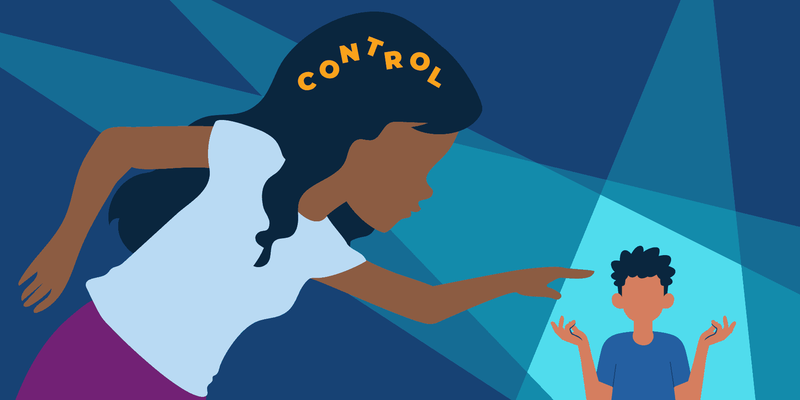
Careful thinking is a strength, not a problem. Telling someone they are overthinking is a fast way to get them to drop a concern that might be completely legitimate.
It discourages analysis and pushes you toward blind trust instead.
There is a difference between ruminating without cause and thinking critically about something that genuinely concerns you. If a situation keeps nagging at you, it might be worth exploring rather than dismissing.
Your instincts often know something your conscious mind is still catching up to.
12. “You’re Crazy”

Calling someone crazy is one of the most damaging gaslighting tools because it attacks your mental stability directly. Once you start believing this label, you begin filtering all your thoughts and feelings through it, which leads to deep self-doubt.
No healthy person uses this word to describe a partner or loved one during a disagreement. If this phrase comes up regularly in your relationship, it is a serious warning sign.
Speaking with a mental health professional can help you regain clarity and perspective.
13. “Everyone Else Thinks You’re Crazy”
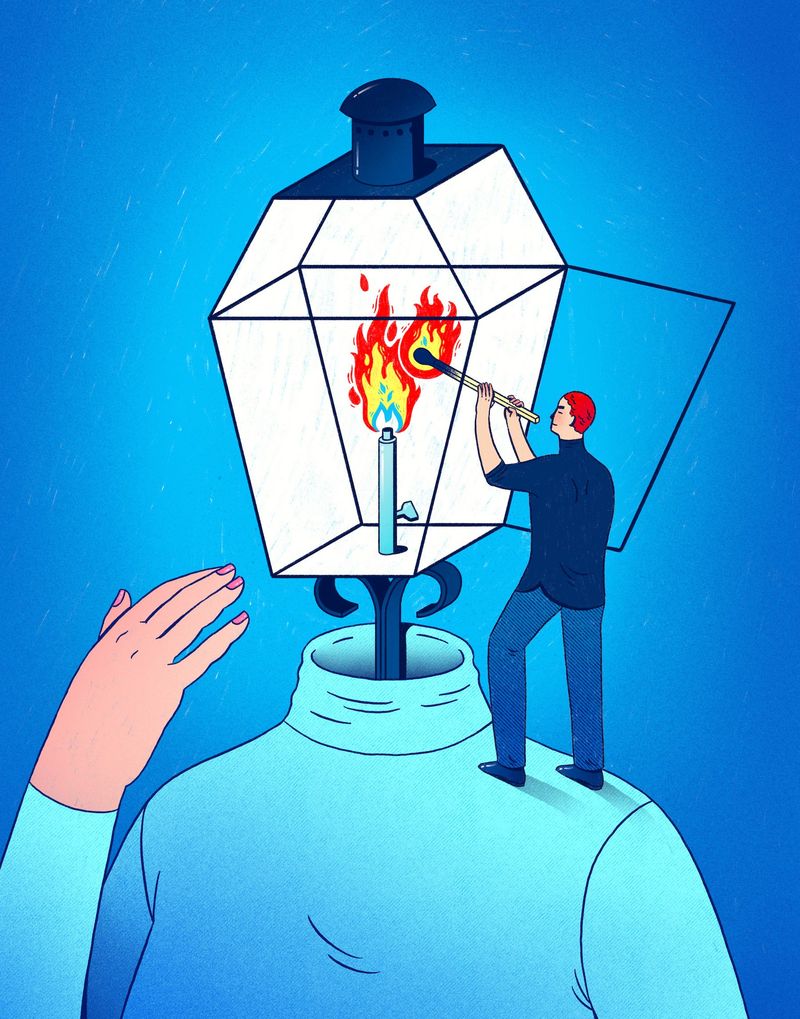
Bringing in imaginary or real third parties to validate the attack is a particularly isolating move. Suddenly it is not just one person against you; it is the whole world.
This tactic is designed to make you feel alone and without allies.
Real friends do not secretly agree that you are unstable. If someone is telling you this, ask to speak directly with those people.
Chances are, the story will fall apart quickly under that kind of scrutiny.
14. “You’re the Problem Here, Not Me”

Blame-shifting is a cornerstone of gaslighting. By placing all responsibility on you, the other person avoids any accountability for their own behavior.
You end up apologizing for things you did not do while the real issue stays buried.
Healthy conflict involves two people examining their roles honestly. When one person consistently claims zero responsibility, something is off.
Keeping a clear head about your actual actions, separate from what you are being accused of, helps you avoid absorbing blame that is not yours.
15. “If You Really Cared About Me, You Wouldn’t Even Think That”

Weaponizing love as a way to silence doubt is a sneaky form of emotional control. It suggests that questioning someone’s behavior is proof you do not love them enough, which is completely backwards.
Genuine love does not require you to turn off your brain.
Caring about someone and noticing red flags are not mutually exclusive. Healthy relationships encourage honest conversation, not thought policing.
If voicing a concern is treated as a betrayal, that itself tells you something important about the relationship dynamic.
16. “I Did That Because You Made Me”

Shifting the cause of harmful behavior onto the victim is both unfair and manipulative. Adults are responsible for their own actions, full stop.
Claiming that your behavior forced them into doing something hurtful removes their accountability entirely.
Nobody makes another person act a certain way. Each person chooses how to respond, even in difficult moments.
Recognizing this boundary between your actions and someone else’s choices is a powerful step toward reclaiming your sense of self-worth and stopping the cycle of misplaced guilt.
17. “You’re Being Paranoid”

Paranoia implies an irrational fear with no basis in reality. Labeling your concern as paranoia is a quick way to shut down legitimate questions before they gain any traction.
Over time, you may stop trusting your instincts altogether, even when they are spot-on.
Gut feelings are often rooted in real observations your brain has quietly collected. Before accepting the “paranoid” label, ask yourself what specific things triggered your concern.
Grounded, evidence-based thinking is the antidote to letting someone else rewrite your inner compass.