
Some warning signs in a relationship are loud and obvious, but others sneak up on you so slowly you barely notice them. The quiet red flags are often the most damaging because they chip away at your confidence and happiness without you realizing it.
Learning to spot these subtle patterns early can save you a lot of heartache. Here are 16 relationship red flags that took time to recognize but turned out to matter a whole lot.
1. Inconsistent Effort and Communication

One week they are texting you constantly, the next they barely respond. This unpredictable pattern of attention is exhausting, and it keeps you stuck in a cycle of anxiety, always wondering where you stand.
Healthy relationships have a natural rhythm of communication, not a rollercoaster. When effort feels like something your partner turns on and off like a switch, that inconsistency is quietly doing real damage to your emotional wellbeing.
2. Minimizing Your Feelings or Reality

Being told you are “too sensitive” every time you bring up something that hurt you is not feedback, it is a shutdown tactic. Over time, hearing this repeatedly makes you question your own instincts and feelings.
Subtle gaslighting does not always look dramatic. Sometimes it sounds like “that never happened” or “you always exaggerate.” Trusting your own memory and emotions is healthy, and a good partner will never make you feel crazy for having them.
3. Control Disguised as Care

Jealousy wrapped in the words “I just worry about you” can feel sweet at first. But when checking in becomes checking up, and concern starts shrinking your freedom, something unhealthy is happening beneath the surface.
Controlling partners rarely announce their intentions. Instead, they use guilt and worry to make you feel responsible for their anxiety.
Real care looks like trust, not surveillance. Noticing the difference early on protects your independence before it quietly slips away.
4. Chronic Defensiveness and Fake Apologies

Raising a concern should not feel like starting a fight, but with a chronically defensive partner, it often does. Instead of listening, they flip the conversation and suddenly you are the one apologizing.
A genuine apology takes ownership without adding “but you also…” at the end. When your partner turns every conflict into a defense of themselves rather than a conversation about your feelings, resolution becomes nearly impossible and resentment quietly builds up.
5. Needs Heard But Nothing Ever Changes

Saying something once is brave. Saying it five more times and still seeing no change is demoralizing.
There is a big difference between a partner who forgets occasionally and one who consistently chooses not to adjust.
Actions are what actually count in a relationship, not promises or good intentions. When your needs are acknowledged in the moment but ignored over time, it sends a clear message about your partner’s actual priorities.
Repeated inaction is its own form of answer.
6. Feeling Confused More Than Secure

Relationships should feel like a safe landing spot, not a puzzle you are constantly trying to solve. If you spend more time analyzing what your partner meant than actually enjoying time together, that is worth paying attention to.
Constant confusion is not just uncomfortable, it is draining. When nothing ever feels settled and you are always bracing for the next shift in mood or behavior, your nervous system pays the price.
Feeling secure with someone should not be this hard.
7. Emotional Withdrawal and the Silent Treatment

Stonewalling, or going completely silent after a conflict, is not the same as needing space to cool down. When a partner shuts down emotionally as a regular response to disagreement, it leaves you feeling invisible and unheard.
Healthy couples work through tension together, even when it is uncomfortable. The silent treatment is a form of emotional withdrawal that punishes you for bringing something up.
Over time, it teaches you to stay quiet just to keep the peace, which is not peace at all.
8. Constant Subtle Criticism and Backhanded Compliments

“You look nice today, for once” is not a compliment. Backhanded remarks, sarcastic jokes at your expense, and little digs about your hobbies or opinions add up faster than you might think.
At first, these comments can feel like teasing or humor. But when criticism is woven into everyday conversation, it gradually chips away at how you see yourself.
A partner who truly values you lifts you up consistently, not just when it is convenient or when the comment comes with a punchline attached.
9. Gradual Isolation from Friends and Family

At first it might seem like your partner just really wants your time, which feels flattering. But when spending time with friends or family starts coming with guilt trips or cold shoulders, the dynamic shifts into something more concerning.
Isolation rarely happens all at once. It creeps in slowly through complaints, sulking, or subtle disapproval every time you make plans without them.
Healthy partners encourage your outside connections because they understand that a full life makes for a stronger relationship, not a threat to it.
10. Shrinking Yourself to Keep the Peace

You used to share your opinions freely. Now you edit yourself before speaking, softening your words or staying quiet just to avoid a reaction.
That slow shrinking of your personality is one of the quietest red flags there is.
Changing yourself slightly for a relationship is normal, but erasing parts of who you are is not. When you cannot be fully yourself around your partner without bracing for tension, the relationship is not a safe space.
It has become a performance, and that is exhausting.
11. Love Bombing Followed by Inconsistency
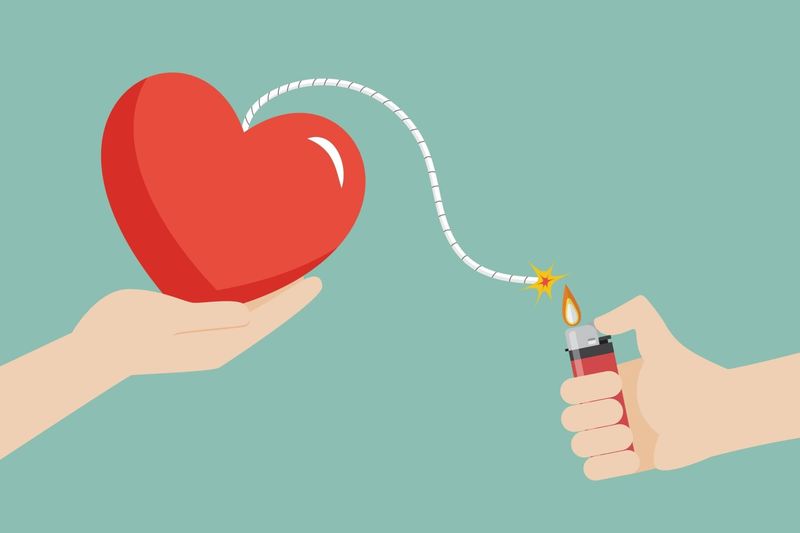
Being swept off your feet feels amazing, until the intensity suddenly fades and you are left wondering what you did wrong. Love bombing, or overwhelming someone with affection and attention early on, is often followed by a dramatic emotional pullback.
This cycle creates a push-pull dynamic that keeps you chasing the version of your partner who seemed so perfect at the start. The highs feel incredible, but the lows hit hard.
Relationships that start at full sprint often struggle to find a healthy, steady pace.
12. Always Blaming Exes or Playing the Victim

Every single ex was “crazy.” Every past relationship ended because of the other person. If your partner has zero personal accountability for how their past relationships went, that pattern is worth noticing carefully.
Playing the victim in every story is a way of avoiding growth and responsibility. People who cannot reflect on their own role in past conflicts tend to repeat the same patterns.
Eventually, in their version of events, you will become the next person who “did everything wrong” too.
13. Deflecting Blame and Dodging Responsibility

Something goes wrong and somehow it always circles back to being your fault. Partners who deflect blame have a talent for reframing every situation so that they are never the one who needs to change or apologize.
This pattern is particularly tricky because it can sound reasonable in the moment. But over time, you realize you are always the one adjusting, apologizing, and carrying the weight of the relationship’s problems.
Shared accountability is the foundation of a fair partnership, and without it, things get very one-sided.
14. Subtle Boundary Testing Early On

Small boundary violations at the beginning of a relationship are easy to brush off as quirks or misunderstandings. But sometimes they are deliberate tests to see how much you will tolerate before pushing further.
Pay attention to how a partner responds when you say no or set a limit. Do they respect it, or do they push back, pout, or try to talk you out of it?
Early boundary testing is a preview of how your limits will be treated down the road, and that preview matters.
15. Making Big Decisions Without You

Booking a vacation for two without asking. Agreeing to something that affects your schedule without a single conversation.
When a partner consistently makes major decisions solo, it sends a message that your input simply does not matter.
A relationship is a team effort, and good teams consult each other. Unilateral decision-making is not just inconsiderate, it reflects a deeper belief that one person’s preferences outweigh the other’s.
Catching this pattern early helps you address it before it becomes the standard way things are done between you two.
16. Feeling Like Their Emotional Manager

Walking on eggshells is not a relationship style, it is a warning sign. When your main goal each day becomes keeping your partner calm or preventing their bad mood, you have quietly taken on a job you never agreed to.
Managing someone else’s emotional state at the cost of your own is a heavy and unsustainable burden. Your needs, feelings, and moods deserve space too.
A partner who regularly requires emotional management rather than emotional partnership creates an imbalance that quietly wears you down over time.