
Cartoons have a magical way of making history feel alive and exciting. But sometimes, the stories they tell are more fiction than fact.
From horned Viking helmets to friendly Thanksgiving feasts, animated shows and comics have quietly planted some big historical myths in our minds. Many of these misconceptions are still believed today, so let’s take a closer look at where they came from and what really happened.
1. Vikings Wore Horned Helmets
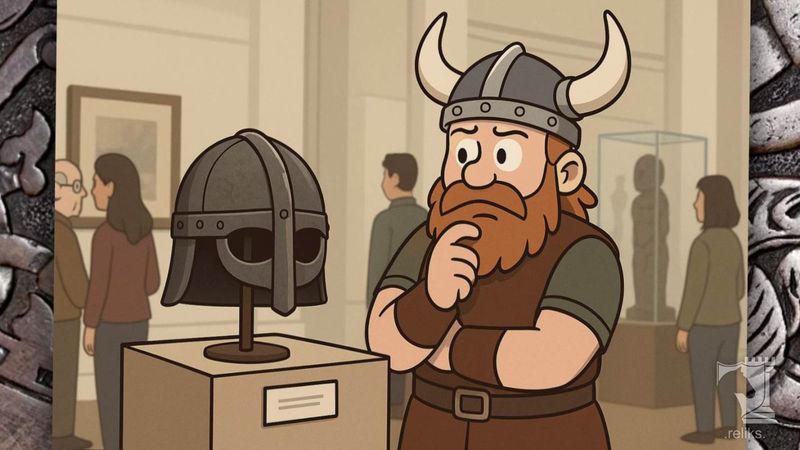
Picture a Viking and most people immediately imagine a fierce warrior with a massive horned helmet. Cartoons like Hagar the Horrible made this image iconic.
But here is the surprising truth: real Viking warriors never wore horned helmets into battle. The only complete Viking helmet ever found, the Gjermundbu helmet, has zero horns.
The horned helmet image actually came from 19th-century opera costumes and romantic artwork, not history. Horned helmets existed in the Nordic Bronze Age, but that was over a thousand years before the Viking era even began.
2. Marie Antoinette Said “Let Them Eat Cake”
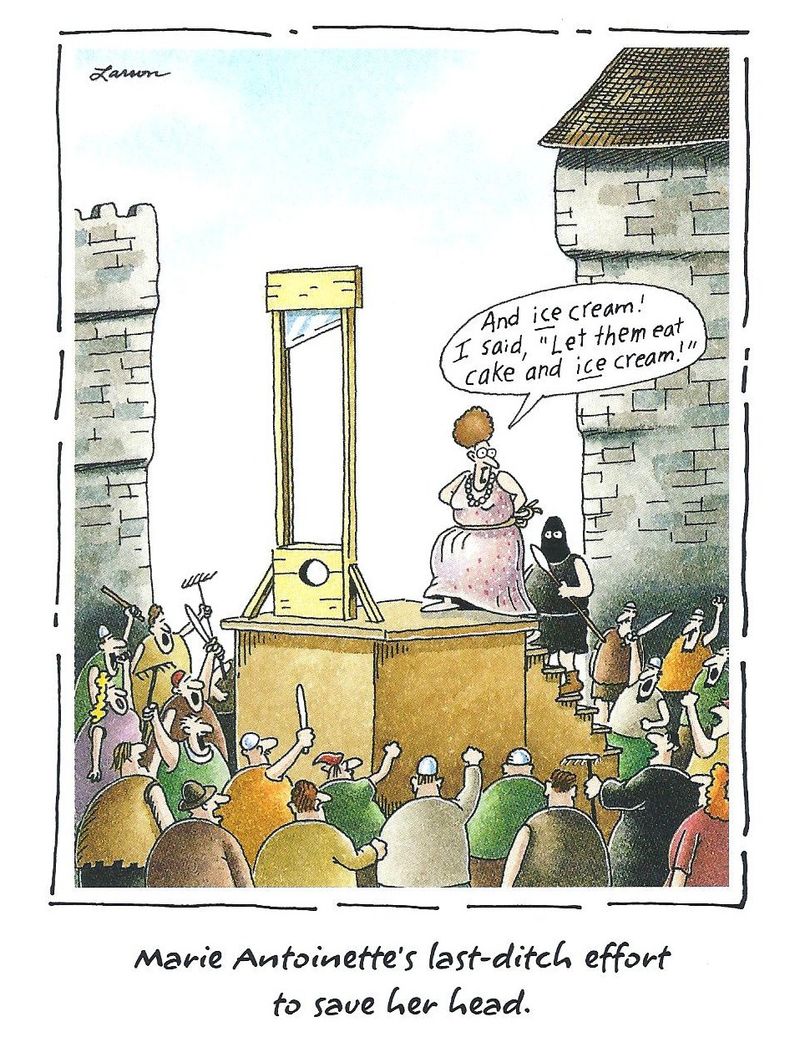
Few historical quotes are as famous or as misattributed as “Let them eat cake.” Revolutionary cartoons and caricatures loved showing Marie Antoinette feasting while the poor starved, making this phrase stick to her name for centuries.
Historians have found zero credible evidence she ever said it. The philosopher Jean-Jacques Rousseau wrote a similar line around 1767 in his “Confessions,” when Marie Antoinette was still a young child living in Austria.
The quote was simply a useful propaganda tool during the French Revolution.
3. George Washington and the Cherry Tree
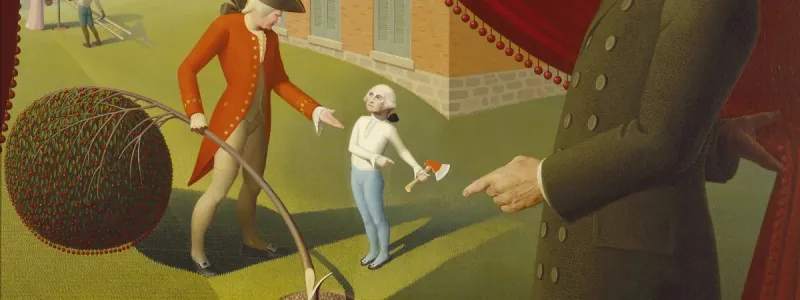
“I cannot tell a lie” is one of the most repeated lines in American folklore. The story of young George Washington chopping down his father’s cherry tree and bravely confessing is taught in schools and shown in countless cartoons and animated specials.
The whole thing was made up. A biographer named Mason Locke Weems invented the tale in 1806 to make Washington seem like a moral hero.
It later spread through McGuffey’s Readers, which millions of American children studied for nearly a century.
4. The Peaceful Pilgrim and Native American Thanksgiving
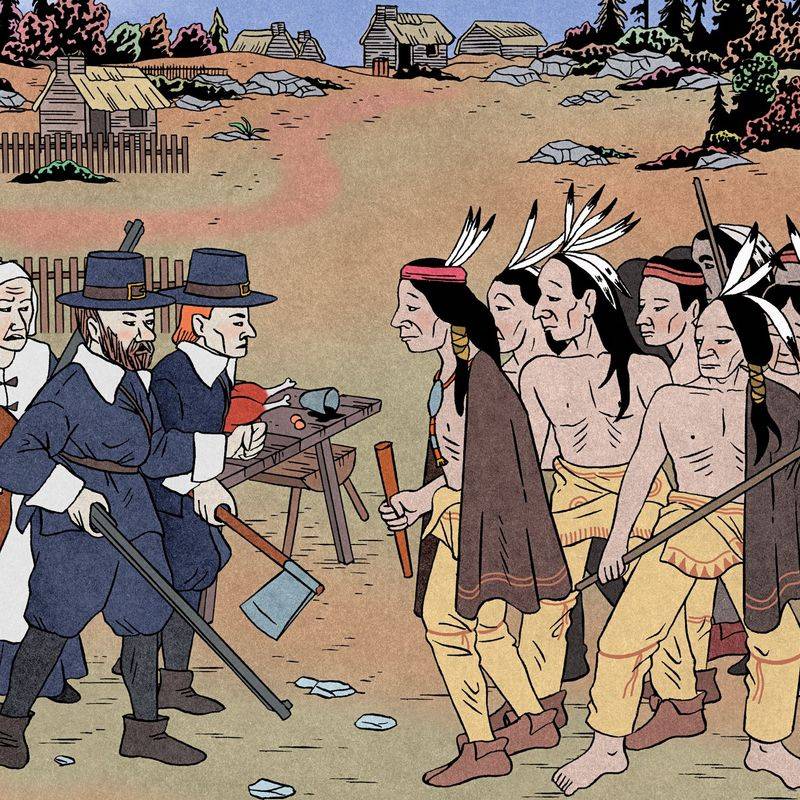
Every November, cartoons and school programs paint the first Thanksgiving as a joyful, harmonious feast between Pilgrims and Native Americans. The image is warm, friendly, and full of shared pumpkin pies.
But it skips over a much more complicated reality.
Yes, a three-day feast did happen in 1621 between the Pilgrims and the Pokanoket tribe. However, the broader relationship between European settlers and Indigenous peoples was marked by conflict, disease, and displacement.
Animated versions of this story often prioritize a simple, feel-good narrative over historical accuracy.
5. Napoleon Bonaparte Was Extremely Short
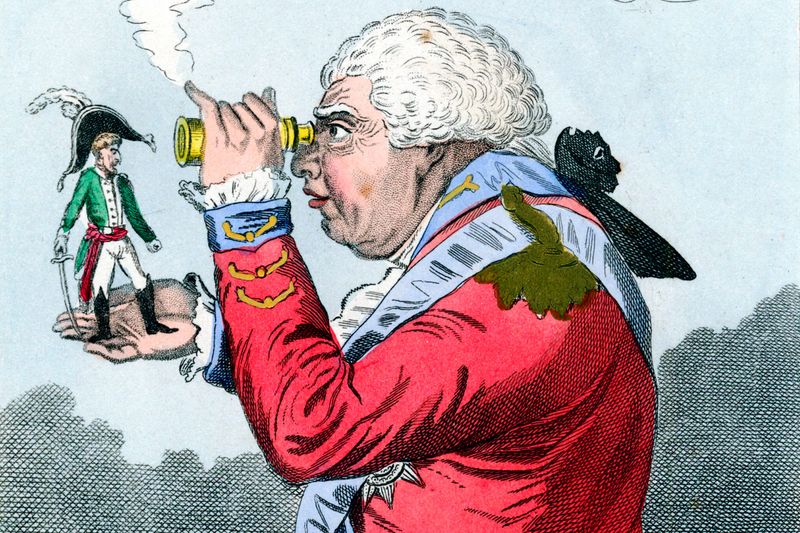
Napoleon being tiny is practically a comedy staple. Cartoons, political caricatures, and even modern animated shows love showing him as a small, pouty emperor throwing tantrums.
The image has become so embedded in popular culture that many people accept it as historical fact.
Napoleon was actually around 5 feet 6 or 7 inches tall, which was perfectly average for a French man in the early 1800s. The confusion partly came from a British propaganda cartoon by James Gillray and a mix-up between French and English measurement systems.
6. Albert Einstein Failed Math as a Child
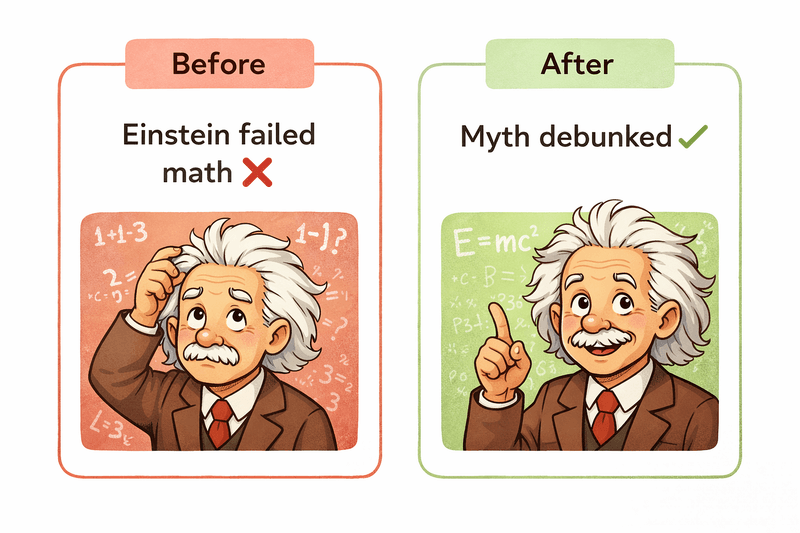
Here is one myth that probably made struggling math students feel a little better. The story that Albert Einstein was bad at math as a kid has been repeated in motivational cartoons, animated biographies, and inspirational classroom posters for decades.
Einstein himself found this claim laughable. He had actually mastered calculus by the time he was fifteen.
The myth likely got started because American grading systems were flipped compared to the Swiss system Einstein grew up in, causing confusion when his grades were misread years later.
7. Columbus Proved the Earth Was Round
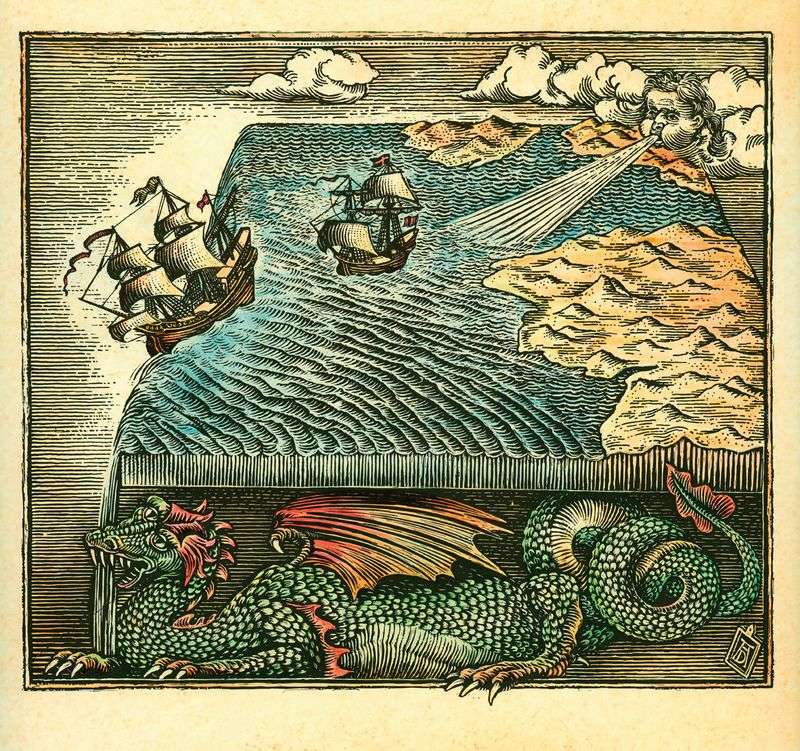
Many animated stories about Christopher Columbus frame his voyage as a brave battle against people who believed the Earth was flat. Cartoons and school films often show Columbus heroically proving to doubting sailors and scholars that the world was not a flat disk.
Educated Europeans in Columbus’s time already knew the Earth was round, thanks to ancient Greek scholars. The real debate was about the size of the Earth and the distance to Asia.
Columbus actually underestimated the Earth’s size, which is why he was so surprised when he encountered the Americas.
8. Cavemen and Dinosaurs Lived Together
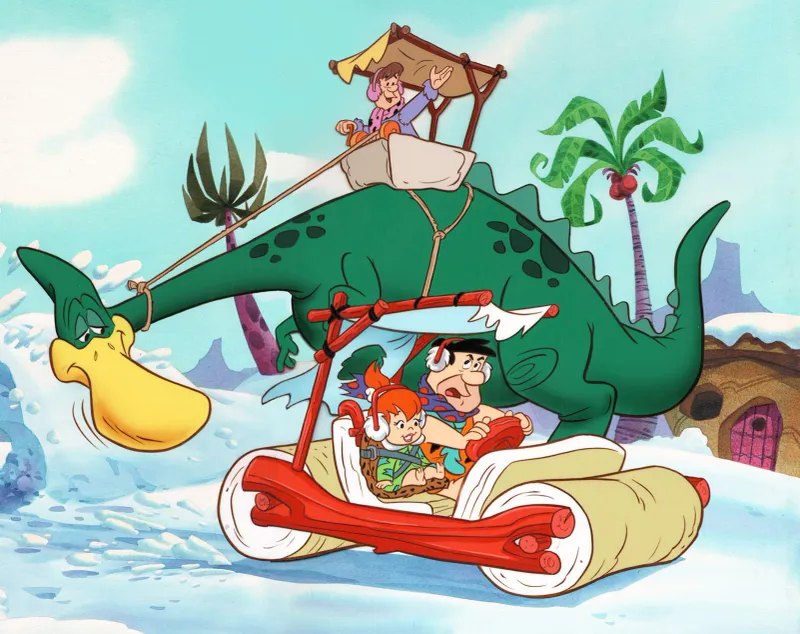
The Flintstones made this one unforgettable. Fred Flintstone and his family used dinosaurs as household appliances, cars, and pets.
Generations of kids grew up thinking early humans and dinosaurs shared the prehistoric world, and the image has never really gone away.
Non-avian dinosaurs went extinct roughly 66 million years ago. Early human ancestors appeared only about 2 to 3 million years ago.
That is a gap of more than 60 million years between the two groups. Cartoons like The Flintstones were pure fun, but they accidentally blurred a massive chunk of Earth’s timeline for millions of viewers.
9. Sir Isaac Newton Discovered Gravity When an Apple Hit His Head
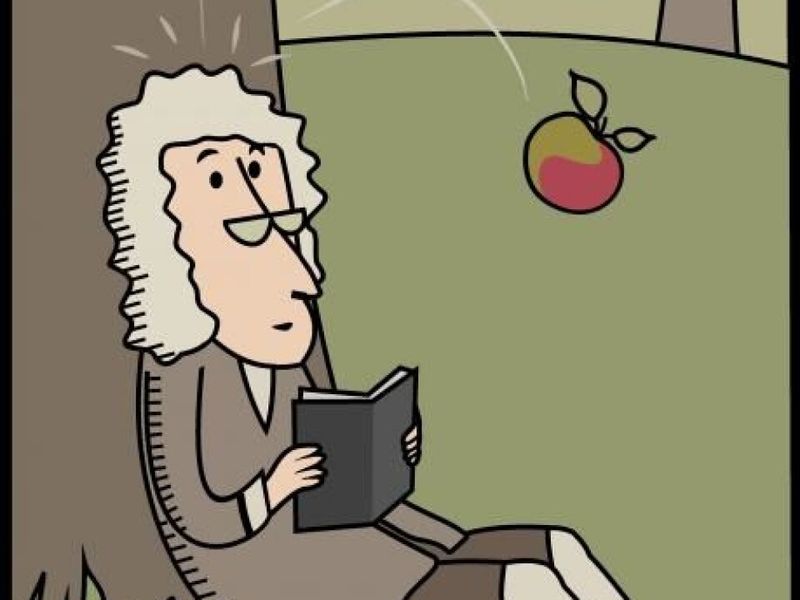
Practically every science cartoon or animated biography includes the same scene: Isaac Newton sitting peacefully under a tree when an apple bonks him on the head, and suddenly, gravity is discovered. The image is so charming that it has stuck around for centuries.
Newton himself described being inspired by watching an apple fall from a tree, but there is no record of it actually hitting him. The story was first told by Newton’s friend William Stukeley decades after the event.
The falling apple was more of a thoughtful observation than a slapstick moment.
10. Pirates Made Captives Walk the Plank
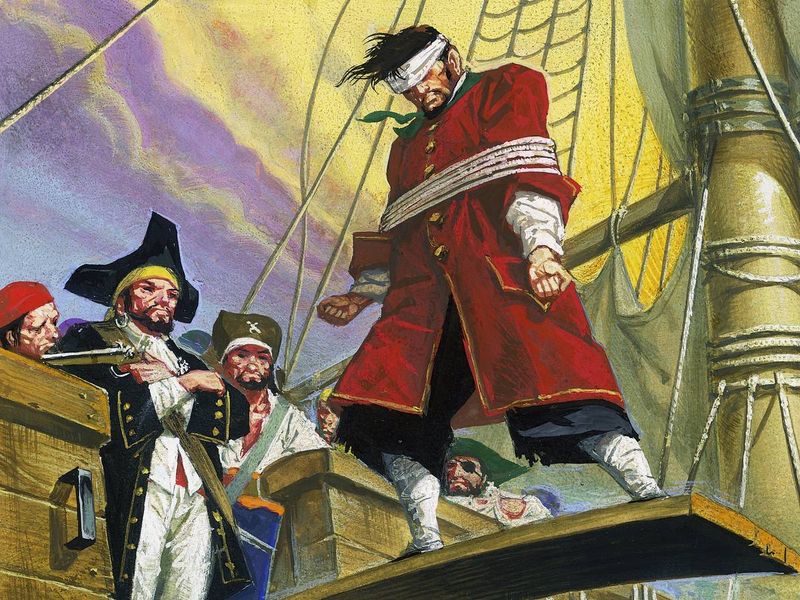
Walking the plank is one of the most beloved pirate tropes in cartoons, movies, and children’s books. From classic Looney Tunes gags to Disney’s Peter Pan, the plank has become a symbol of pirate cruelty and drama.
It looks great on screen, but historians say it rarely, if ever, happened in real life.
Actual pirates had far more practical and brutal ways of dealing with captives or enemies. The plank-walking myth seems to have been popularized largely through 19th-century literature and illustrations, long before cartoons picked it up and ran with it.
11. Nero Fiddled While Rome Burned
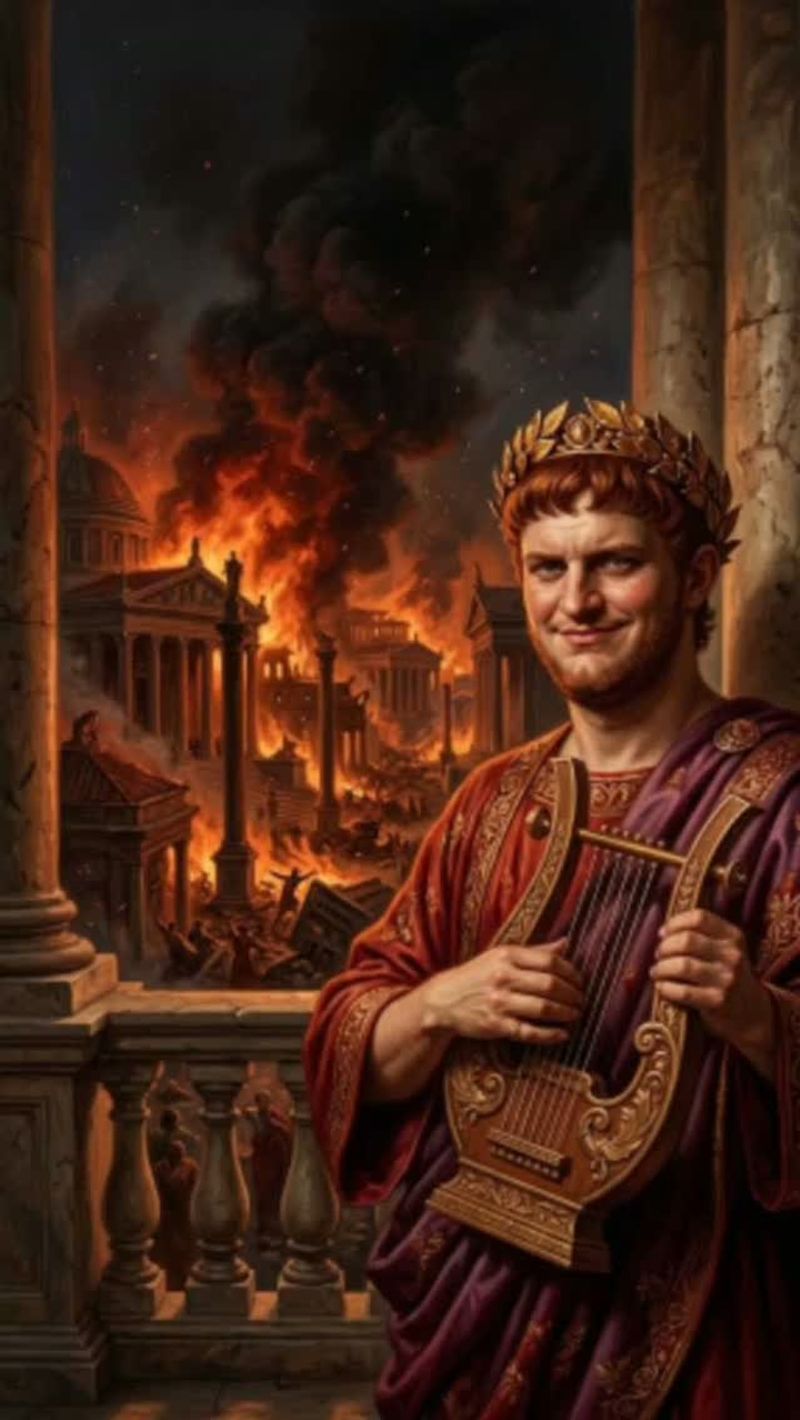
The image of Emperor Nero cheerfully playing music while Rome burned in 64 A.D. has inspired countless cartoons, comic strips, and animated history segments. It paints him as the ultimate careless ruler, more interested in entertainment than in his burning city.
The fiddle was not even invented until over a thousand years after Nero’s death, so that part is definitely wrong. Ancient sources suggest Nero may have actually helped organize firefighting efforts and later provided relief for displaced citizens.
The story was shaped largely by writers who were hostile to his reign.
12. Medieval People Thought the Earth Was Flat
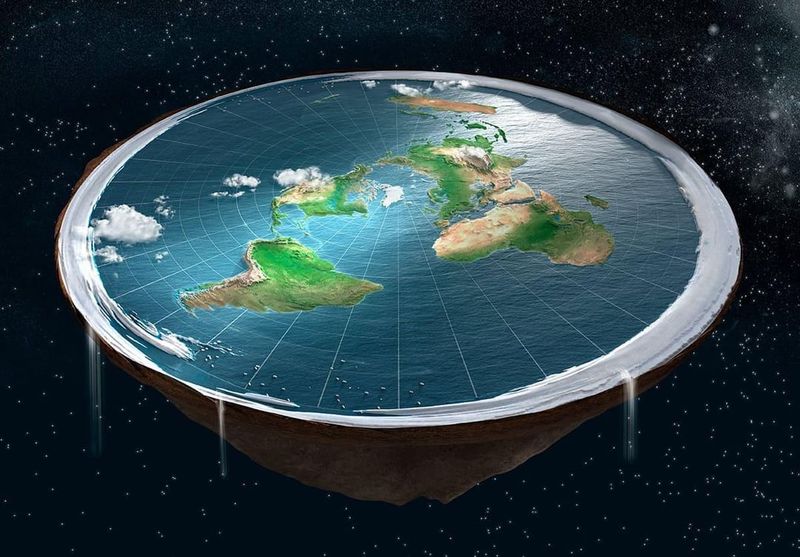
Thanks to cartoons and simplified history lessons, many people assume that everyone in the Middle Ages believed the Earth was flat. The myth paints medieval Europeans as dangerously ignorant, stumbling around in darkness before brave explorers set them straight.
Medieval scholars, monks, and philosophers widely accepted that the Earth was spherical. This knowledge had been passed down from ancient Greek thinkers like Aristotle and Eratosthenes.
Universities in medieval Europe taught students about a round Earth. The flat Earth myth about the Middle Ages was largely invented by 19th-century writers pushing a narrative about science versus religion.
13. Cleopatra Was Egyptian by Ethnicity
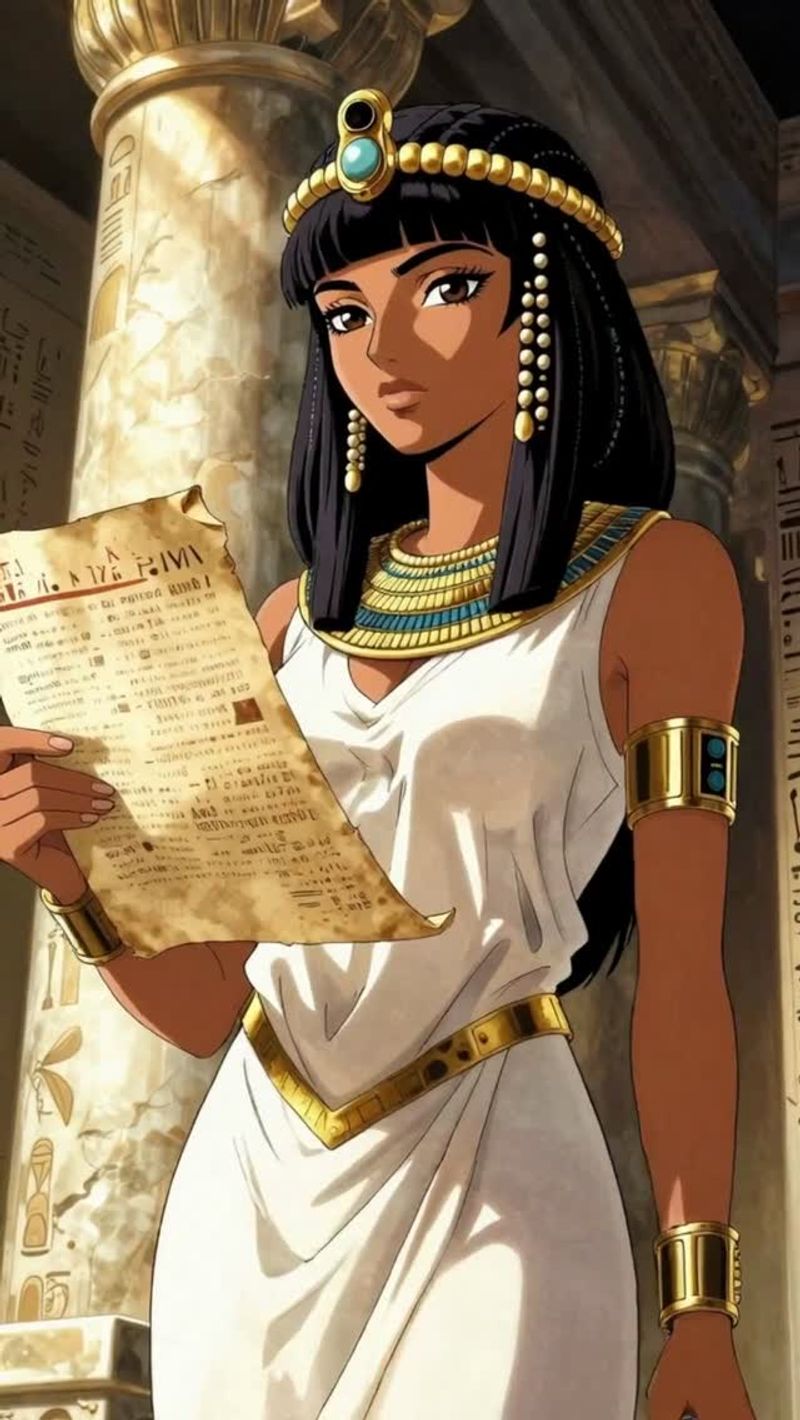
Cleopatra is one of the most iconic figures in ancient history, and cartoons have always shown her as a dark-skinned Egyptian queen draped in gold and surrounded by pyramids. The image feels completely natural given that she ruled Egypt.
But her actual background tells a different story.
Cleopatra VII descended from the Ptolemaic dynasty, a Greek-Macedonian royal family that took control of Egypt after Alexander the Great’s conquests. Her ancestors were from Greece, not Egypt.
She was actually famous for being one of the first rulers of her dynasty to bother learning the Egyptian language at all.
14. Samurai Were Always Honorable and Followed a Strict Code

Anime and Western cartoons alike have built the samurai into the ultimate symbol of noble, self-sacrificing honor. The idea that every samurai lived and died by a perfect code called Bushido is a cornerstone of how popular culture has always portrayed these warriors.
Historians note that Bushido as a formal, written code was largely developed and romanticized in the late 19th and early 20th centuries, long after the samurai class had faded. Real samurai throughout history were soldiers who sometimes acted brutally, politically, or selfishly, just like warriors in any other culture.
15. Gladiators Almost Always Fought to the Death
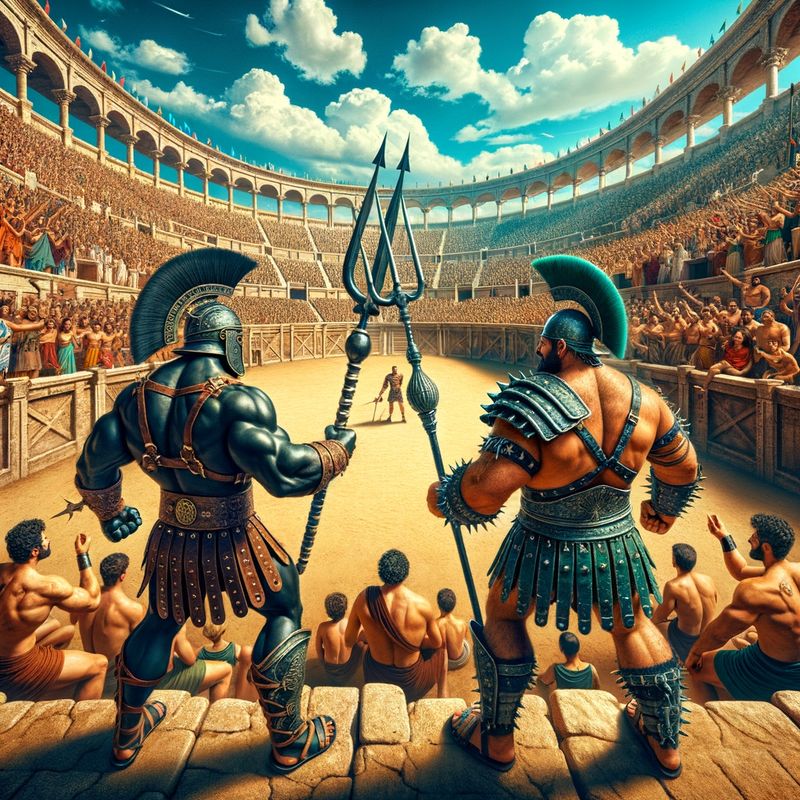
Roman gladiator fights in cartoons and animated movies are almost always bloody battles where someone has to die. The crowd screams, thumbs go down, and the defeated fighter meets a grim end.
It is dramatic, it is intense, and it is mostly inaccurate.
Gladiators were expensive to train and maintain, so arena owners had a strong financial reason to keep them alive. Fights to the death were relatively rare.
Most matches ended when one fighter was clearly beaten and surrendered. The loser’s fate depended on the crowd and the sponsor, but survival was actually more common than popular culture suggests.
16. Ben Franklin Discovered Electricity with a Kite and Key
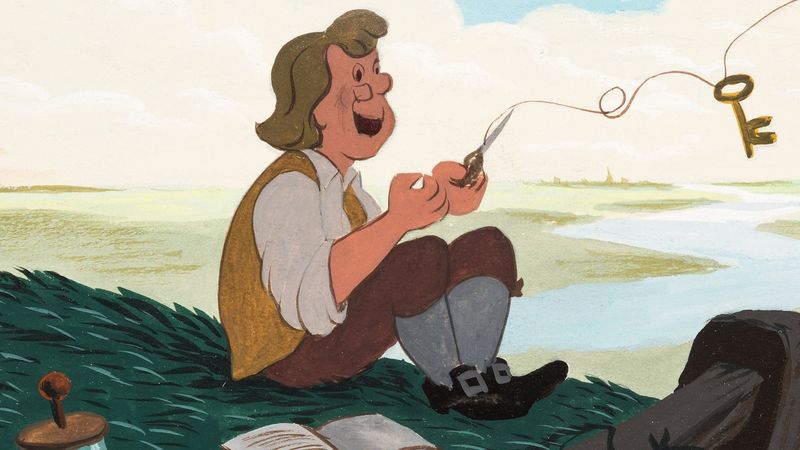
Benjamin Franklin flying a kite in a thunderstorm is one of the most repeated scenes in American history cartoons. The image of sparks flying from a key and Franklin suddenly understanding electricity is taught to kids everywhere and has been animated dozens of times.
Franklin did conduct electrical experiments, and the kite experiment likely happened around 1752. But he did not discover electricity itself, which was already known.
His experiment helped demonstrate the electrical nature of lightning. Also, if the experiment had gone exactly as cartoons show it, he probably would have been seriously injured or killed.
17. The Great Wall of China Is Visible from Space
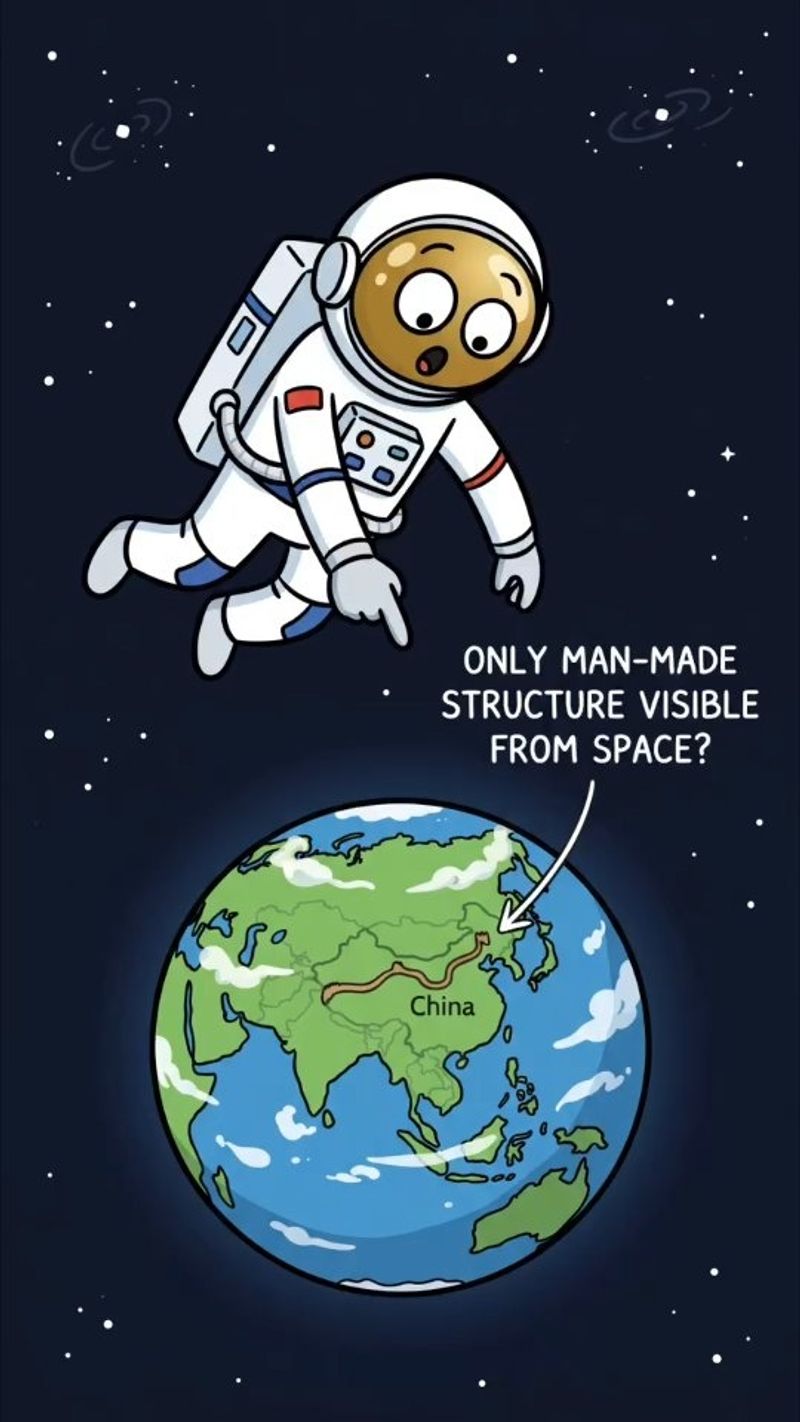
Somewhere along the way, a remarkable claim became accepted fact: the Great Wall of China is the only man-made structure visible from space. This idea has popped up in educational cartoons, trivia segments, and animated geography lessons for decades, making it feel absolutely true.
Astronauts have confirmed it is not visible from low Earth orbit without aid, and certainly not from the moon. The wall is long but too narrow to spot with the naked eye from space.
Even Chinese astronaut Yang Liwei, after orbiting Earth in 2003, confirmed he could not see it at all.
18. Robin Hood Stole from the Rich to Give to the Poor
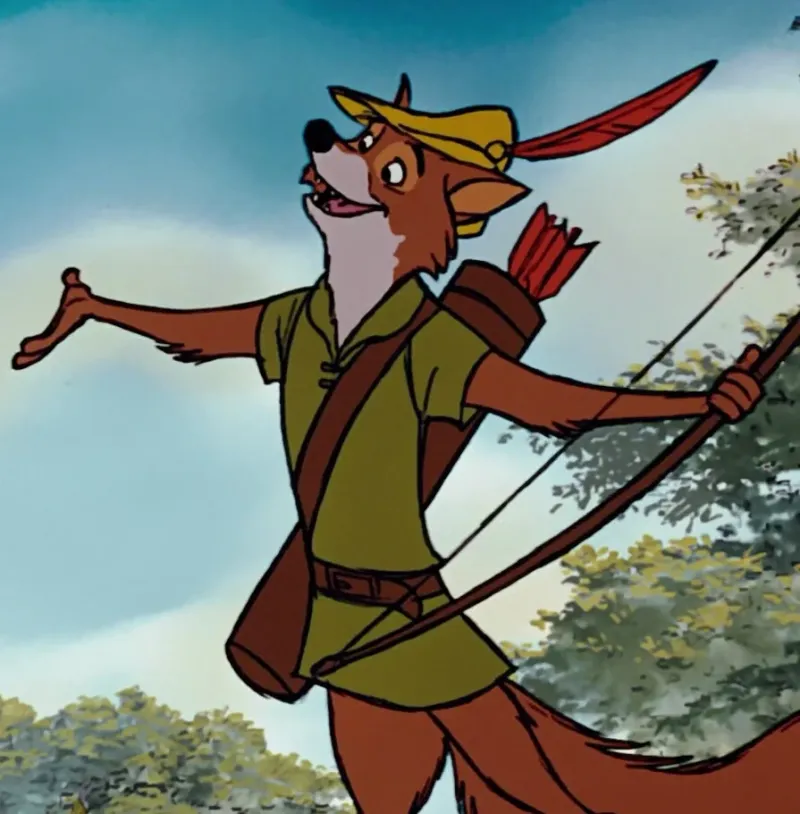
Robin Hood is one of the most beloved cartoon heroes of all time, and his defining trait is clear: steal from the rich, give to the poor. Disney’s animated Robin Hood made this idea unforgettable for generations of kids.
But the original legends tell a messier story.
Early Robin Hood ballads from the 14th and 15th centuries show him as a yeoman outlaw who fought corrupt officials, but the “giving to the poor” part was added much later by writers and storytellers. The charitable angle grew more prominent over centuries as the legend was reshaped to fit changing moral values.
19. Abraham Lincoln Wrote the Gettysburg Address on the Back of an Envelope
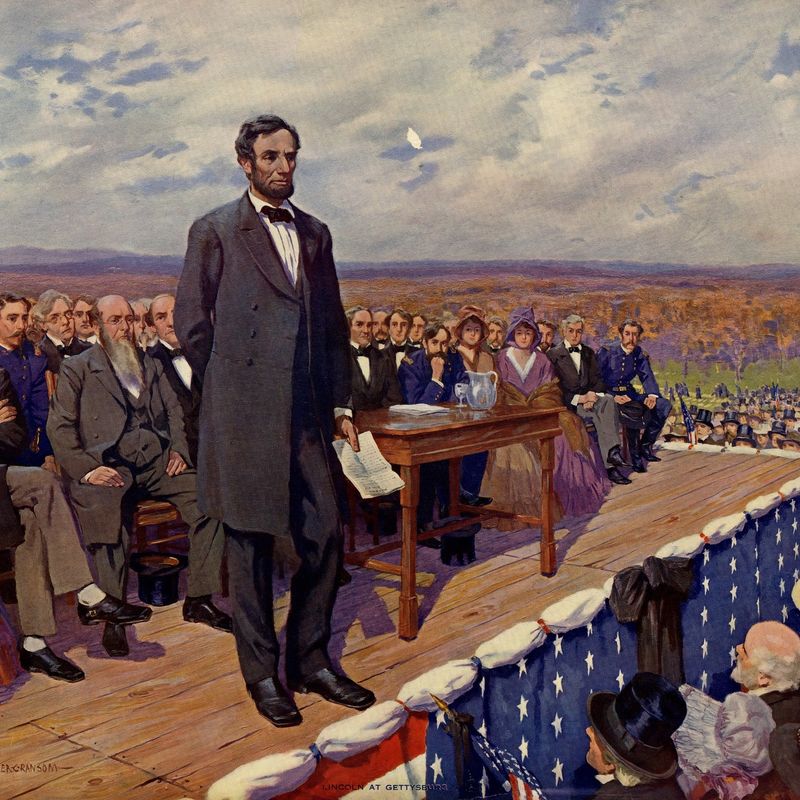
The story of Abraham Lincoln hastily scribbling the Gettysburg Address on the back of an envelope during a train ride is one of the most charming political legends in American history. Cartoons and illustrated history books have repeated this scene so often it feels completely believable.
Lincoln actually prepared the speech carefully over several days before the November 1863 ceremony. Multiple drafts exist, written on proper paper with deliberate revisions.
The envelope story was a romantic invention that made Lincoln seem like a natural genius, but the real speech took real effort and thoughtful preparation.
20. Witches Were Burned at the Stake During the Salem Witch Trials
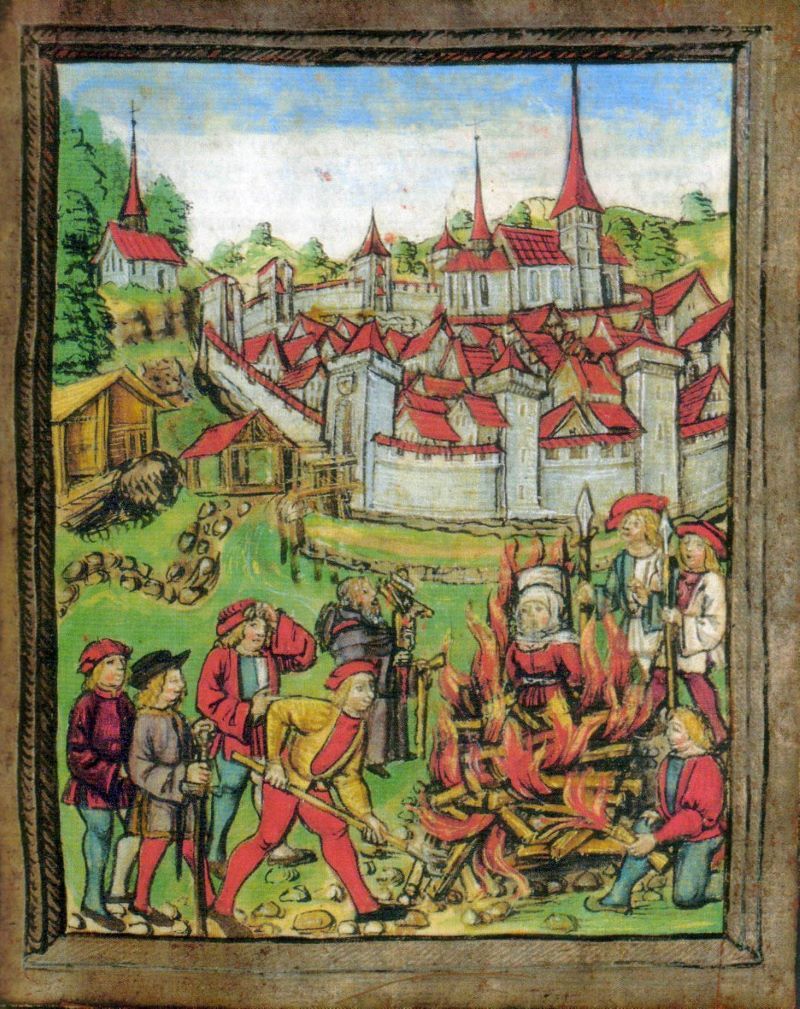
Halloween cartoons and spooky animated specials almost always show witches being burned at the stake, and many people connect that image directly to the Salem witch trials of 1692. The burning scene is dramatic, visually striking, and extremely common in popular media.
None of the people executed during the Salem witch trials were burned. Most were hanged, and one man, Giles Corey, was pressed to death with heavy stones.
Burning at the stake was more associated with witch trials in parts of continental Europe. Cartoons blended these two very different historical events into one powerful, inaccurate image.