
Some of the most iconic structures in the world share a surprising secret — they were never actually finished. Whether halted by war, tragedy, financial collapse, or sheer ambition, these incomplete landmarks tell stories just as powerful as any finished building.
From towering skyscrapers to ancient temples, their unfinished state makes them even more fascinating. Get ready to explore 15 remarkable places frozen in time.
1. La Sagrada Familia, Barcelona, Spain
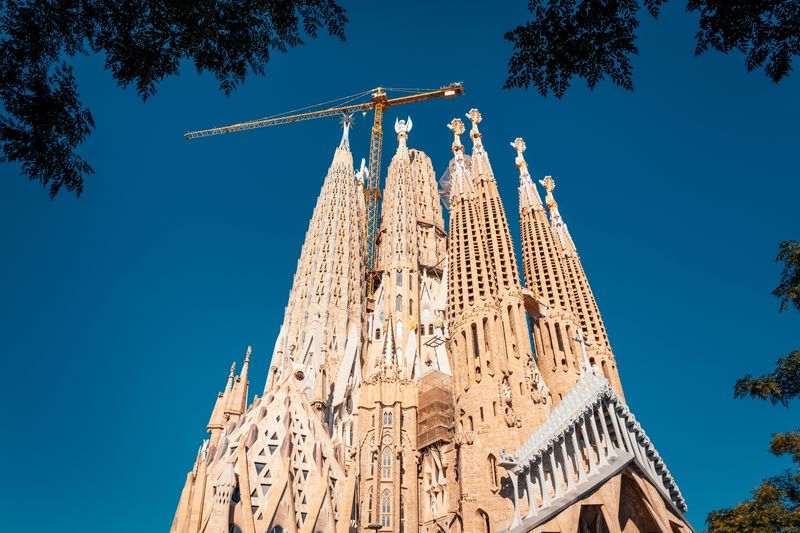
Over 140 years in the making, Antoni Gaudi’s masterpiece in Barcelona is finally nearing its end. Construction began in 1882, and the project is now planned for completion in 2026 — the centenary of Gaudi’s death.
The Spanish Civil War brought work to a grinding halt, and Gaudi’s original blueprints were partially destroyed.
Today, the basilica stands as one of the most visited sites in Europe, blending Gothic and Art Nouveau styles in breathtaking fashion.
2. National Monument of Scotland, Edinburgh
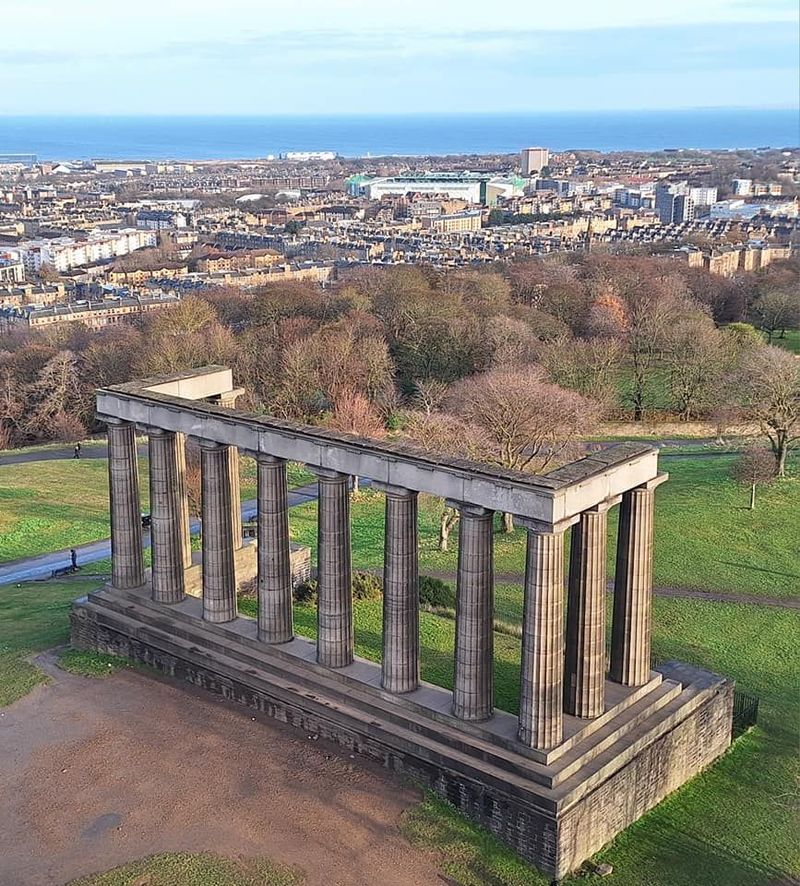
Nicknamed “Edinburgh’s Disgrace,” this monument was designed to replicate the Parthenon and honor soldiers who died in the Napoleonic Wars. Construction kicked off in 1826, but funding collapsed just three years later, leaving only 12 lonely columns standing on Calton Hill.
Ironically, the unfinished structure has become one of Edinburgh’s most recognizable landmarks. Many locals now embrace its quirky, incomplete charm rather than seeing it as something to be ashamed of.
3. Ryugyong Hotel, Pyongyang, North Korea
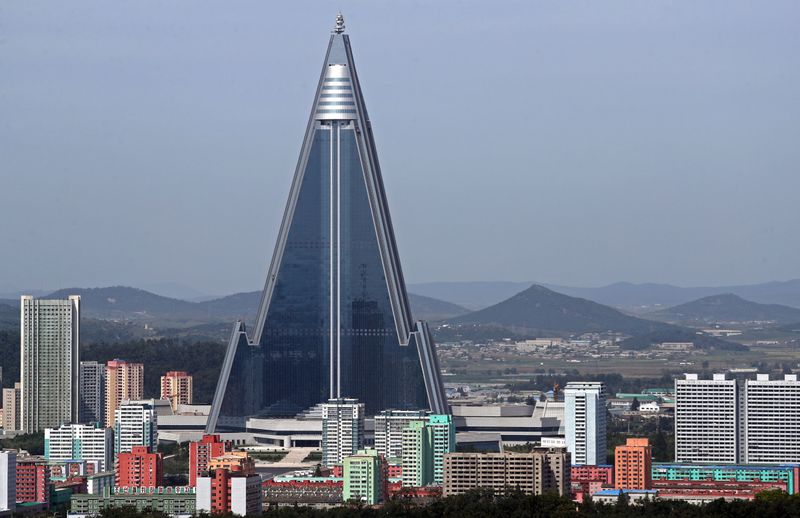
Standing 330 meters tall, the Ryugyong Hotel is one of the most mysterious unfinished buildings on Earth. Construction began in 1987 but was suspended for 16 years due to North Korea’s economic struggles.
The pyramid-shaped tower dominates the Pyongyang skyline like a silent giant.
Although some exterior glass panels were added after work resumed, the interior remains largely empty and unfinished. The North Korean government rarely acknowledges the building publicly, making it even more enigmatic.
4. Crazy Horse Memorial, Black Hills, USA
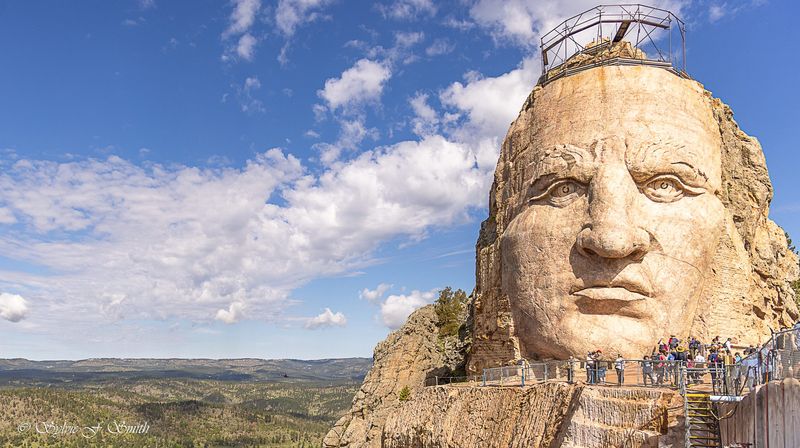
Blasting has been reshaping a South Dakota mountain since 1948, all in honor of the legendary Oglala Lakota warrior Crazy Horse. When complete, it will be the largest mountain carving in the world — bigger than Mount Rushmore.
By 1998, only the face had been fully carved after 50 years of work.
The project is privately funded and moves slowly by design. The Ziolkowski family, who manage the memorial, refuse federal funding to maintain full creative control.
5. Siena Cathedral Expansion (Duomo Nuovo), Italy
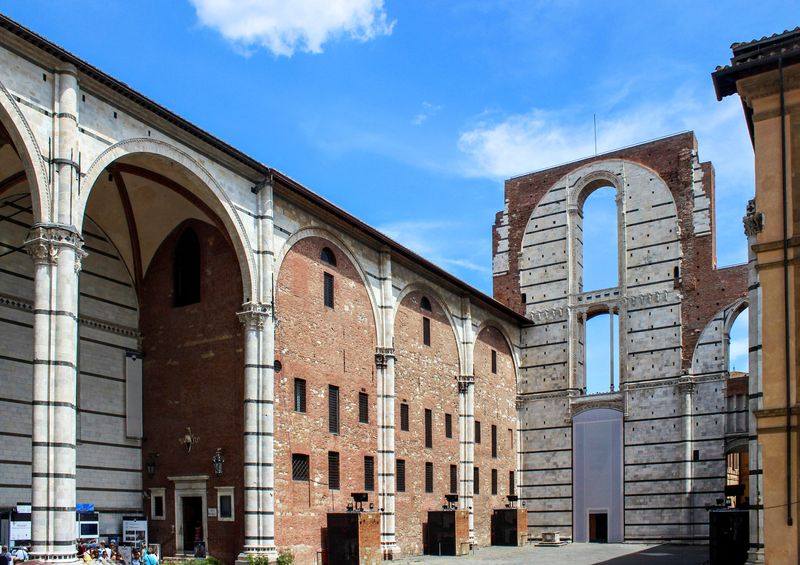
Back in the 14th century, Siena had enormous plans. City leaders wanted to expand their already stunning cathedral into the grandest church in all of Christendom.
Then the Black Death arrived in 1348, wiping out nearly half the city’s population and draining the treasury completely.
What remains today is a ghostly shell — a massive open nave wall that was never roofed. Visitors can actually walk through the abandoned structure, which now serves as a striking outdoor museum space.
6. Cathedral of Saint John the Divine, New York City
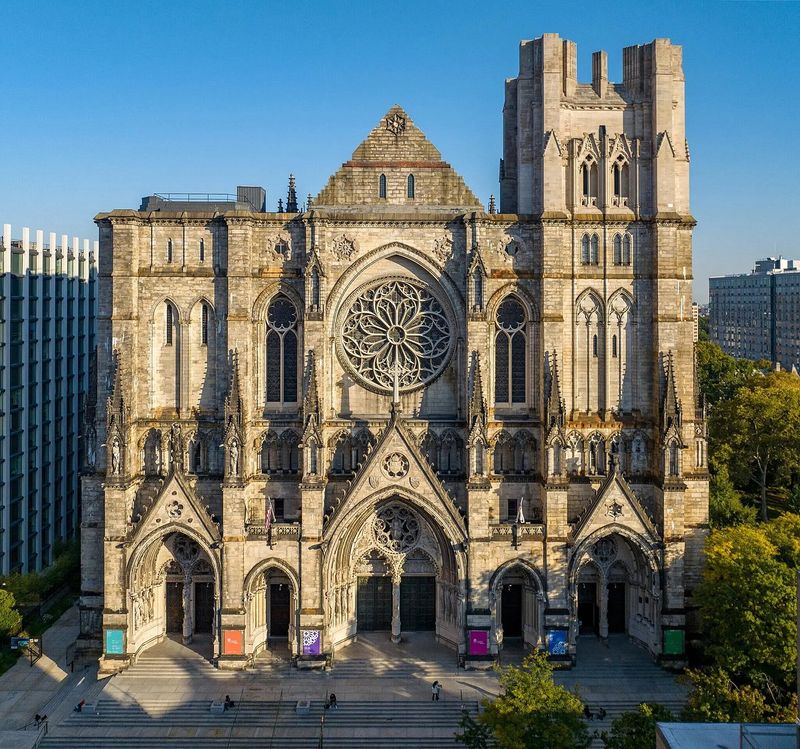
Started in 1892, the Cathedral of Saint John the Divine in Manhattan was meant to be the largest Gothic cathedral in the world. More than 130 years later, it still isn’t finished.
The western facade remains notably incomplete, and two planned towers have never been built.
Despite being unfinished, the cathedral is fully operational and hosts concerts, art installations, and community events year-round. Its grand interior already stretches over 600 feet long, making it awe-inspiring even in its current state.
7. Boldt Castle, Heart Island, New York
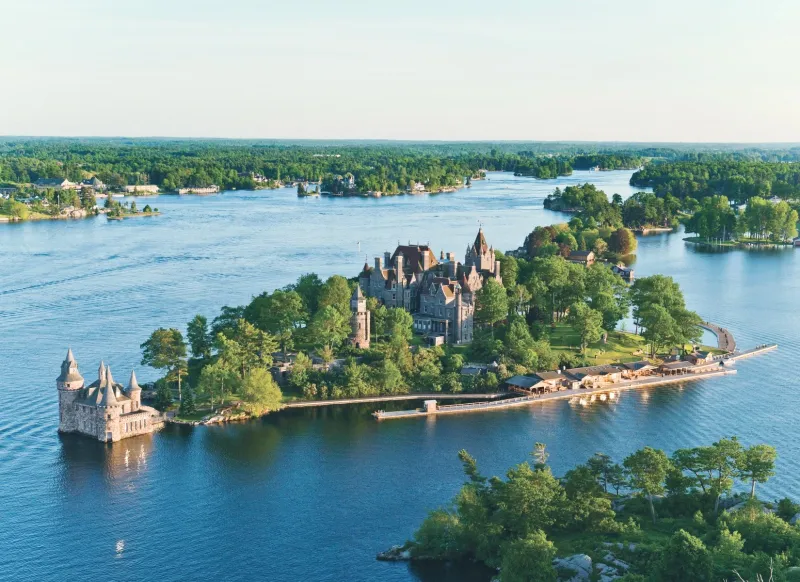
George Boldt poured his heart — literally — into building this castle for his beloved wife Louise on a tiny island in the St. Lawrence River. When she suddenly died in 1904, he stopped all construction immediately and never returned to the island.
The castle sat abandoned and vandalized for 73 years.
The Thousand Islands Bridge Authority eventually took over and began restoring it in 1977. Today, Boldt Castle is a popular tourist destination with a deeply romantic and heartbreaking backstory.
8. Palace of the Soviets, Moscow, Russia
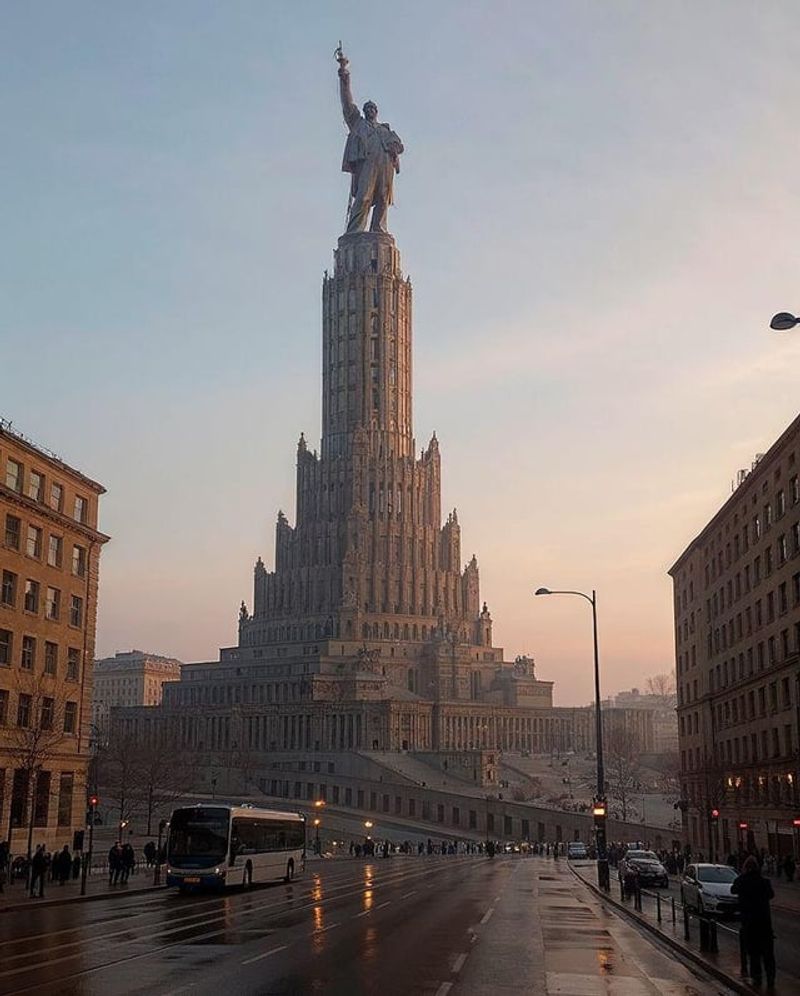
Conceived in the 1930s under Stalin’s ambitious vision, the Palace of the Soviets was meant to be the tallest building in the world — topped with a massive statue of Lenin. Workers demolished the Cathedral of Christ the Savior to clear the site and began laying foundations.
Then World War II hit, and all the steel was repurposed for the war effort. The giant hole in the ground eventually became an outdoor swimming pool, which was used by Muscovites for decades.
9. Ta Keo Temple, Angkor, Cambodia
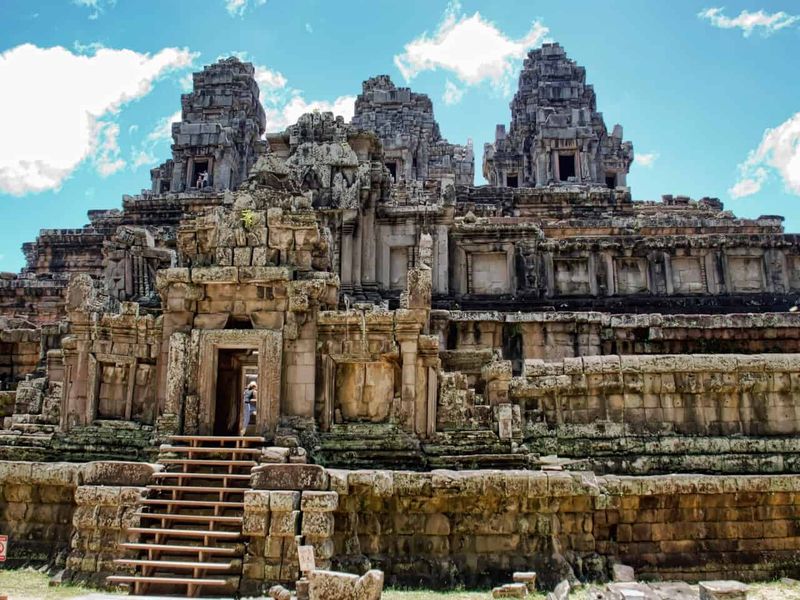
Ta Keo is unlike any other temple at Angkor — not because of its decorations, but because of the total lack of them. Commissioned by King Jayavarman V around the late 10th century, this sandstone pyramid was abandoned before any of its intricate carvings could be completed.
Historians debate why. Some believe a lightning strike was seen as a bad omen during construction.
Whatever the reason, the raw, uncarved stone gives Ta Keo an eerie, skeletal beauty that finished temples simply cannot match.
10. Torre de David, Caracas, Venezuela
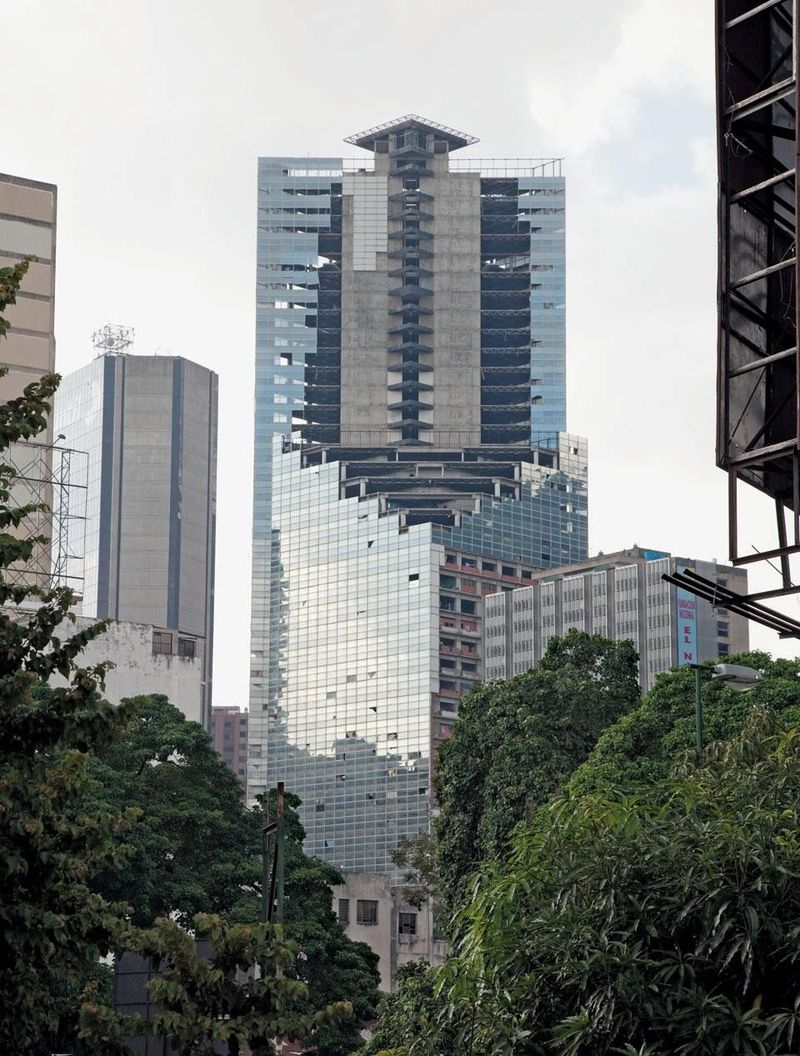
Known as the Tower of David, this 45-story skyscraper was supposed to become a gleaming financial center in Caracas. When Venezuela’s banking crisis hit in 1994, construction stopped cold, leaving a hollow concrete shell towering over the city.
What happened next was extraordinary. Thousands of squatters moved in, creating a vertical community with electricity, water, and even a makeshift church.
The tower was evacuated in 2014, but it remains a powerful symbol of economic collapse and human resilience.
11. Szkieletor (NOT Tower), Krakow, Poland
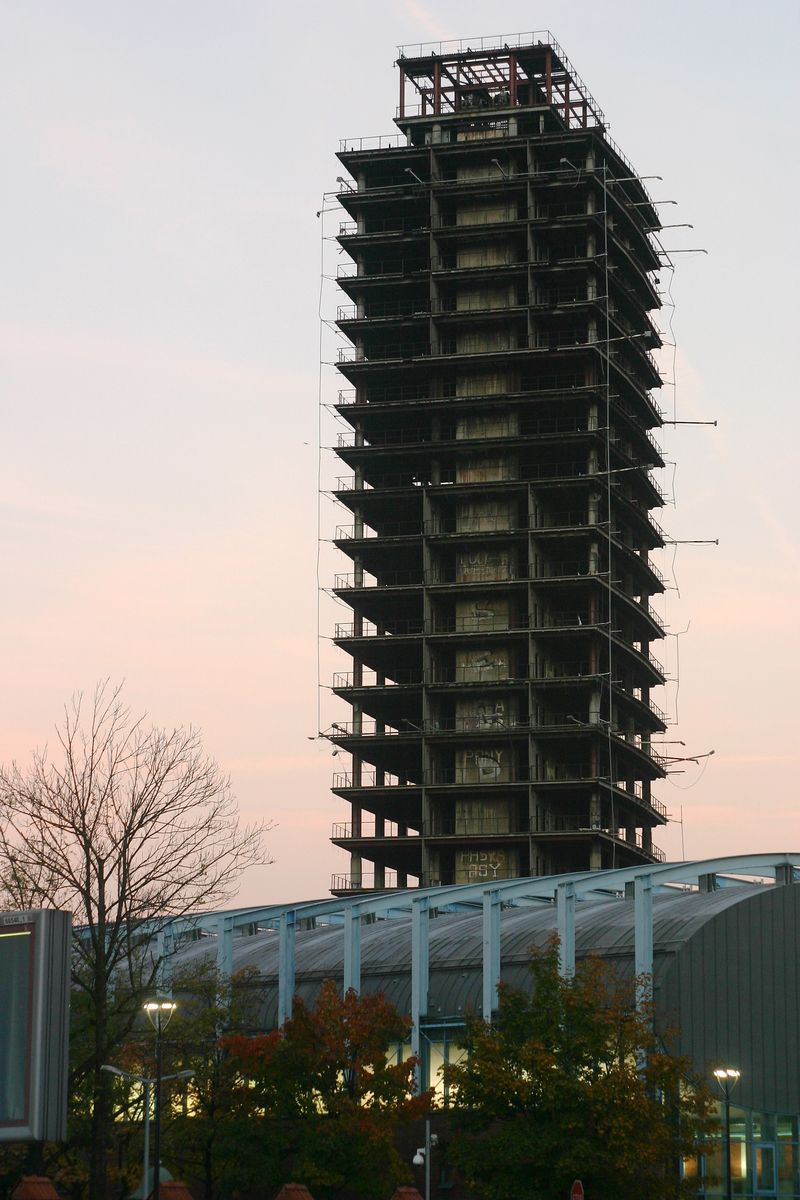
For decades, a bare concrete skeleton haunted the skyline of Krakow, Poland. The NOT Tower — nicknamed “Szkieletor” meaning “skeleton” in Polish — began construction in 1975 but was frozen in place when an economic crisis struck in 1981.
It stood as a ghostly frame for over 30 years.
Locals both loved and loathed the eyesore. Recent years have finally brought renewed construction efforts, with plans to transform the long-abandoned frame into a modern office building at last.
12. Mausoleum of Halicarnassus, Bodrum, Turkey
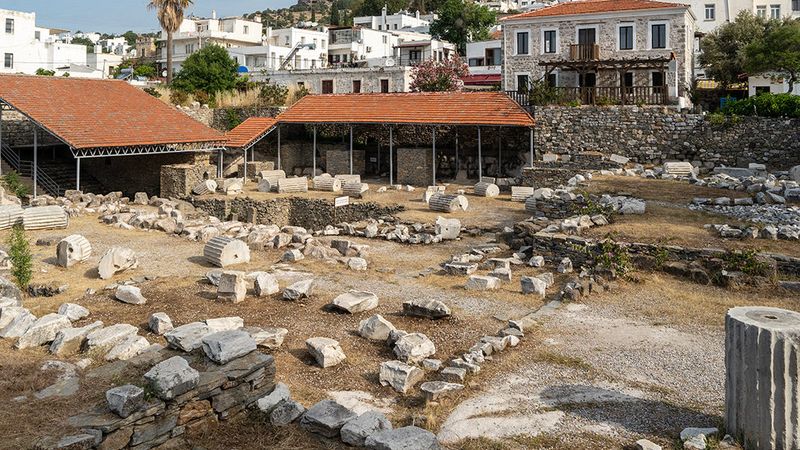
Built around 350 BCE as a tomb for Mausolus, a regional ruler in ancient Persia, this structure was so magnificent that it gave us the word “mausoleum.” It was counted among the Seven Wonders of the Ancient World — a rare honor. Sadly, a series of earthquakes damaged it before the building was ever truly finished.
Today only scattered ruins remain in Bodrum. Some of its finest sculptures and friezes were removed and are now preserved in the British Museum in London.
13. Hotel del Coronado, San Diego, California
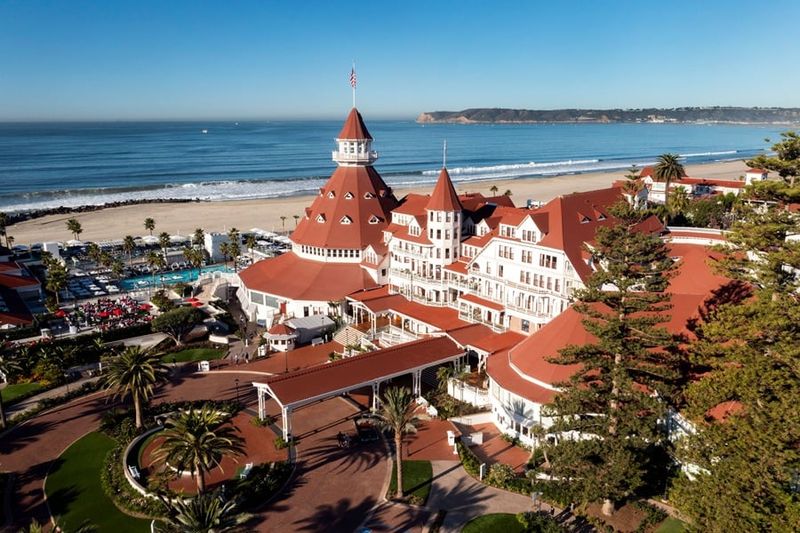
Few hotels in America are as iconic as the Hotel del Coronado, opened in 1888 on a sandy peninsula near San Diego. But the original vision was far grander than what stands today.
Planned additional wings and a significantly larger main building were never constructed, leaving the full design unrealized.
Still, what was built is genuinely stunning. The red-roofed Victorian resort has hosted presidents and movie stars, and it served as the filming location for the classic 1959 film Some Like It Hot.
14. City of Arts and Sciences, Valencia, Spain
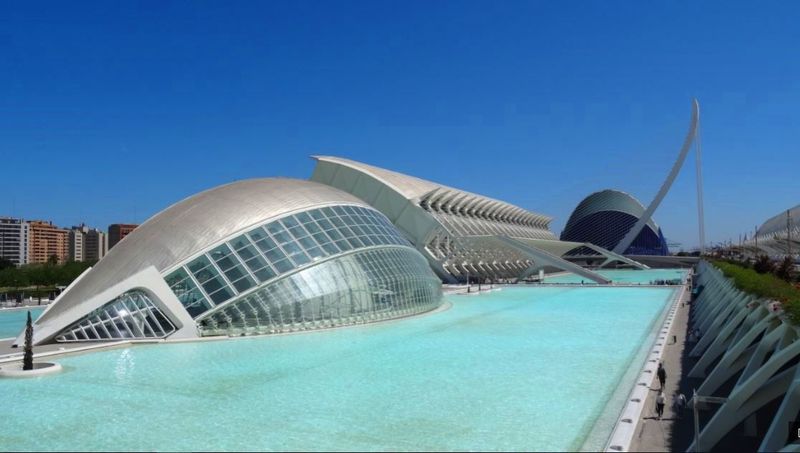
Designed by star architect Santiago Calatrava, Valencia’s City of Arts and Sciences looks like something out of a science fiction movie. The futuristic complex was supposed to be a bold, fully cohesive vision — but cost overruns, legal disputes, and design changes have kept parts of it perpetually evolving or incomplete.
The project ran billions of euros over budget, sparking major controversy in Spain. Despite the drama, the completed sections attract millions of visitors each year and remain genuinely jaw-dropping to experience in person.
15. Parliament House, Wellington, New Zealand
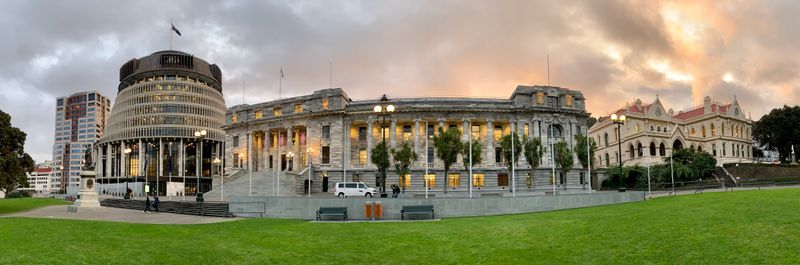
Wellington’s Parliament complex features one of the world’s most recognizable government buildings — the round, tiered “Beehive” executive wing. Designed by British architect Basil Spence, it was always meant to be part of a much larger parliamentary campus.
A bigger legislative chamber and formal ceremonial spaces were planned but never built.
The result is a complex that feels slightly mismatched — a bold modernist drum sitting beside a stately Edwardian building. New Zealand’s government has functioned perfectly well there anyway, incomplete master plan and all.