
Some musicians are not just satisfied playing the instruments already out there — they go ahead and build their own. From guitars made out of cigar boxes to noise machines built from scratch, these artists pushed creativity far beyond what anyone expected.
Their homemade gadgets and custom instruments changed music history in ways that still inspire people today. Get ready to meet 15 musicians who proved that sometimes the best tool for the job is the one you make yourself.
1. Brian May (Queen) and the Red Special
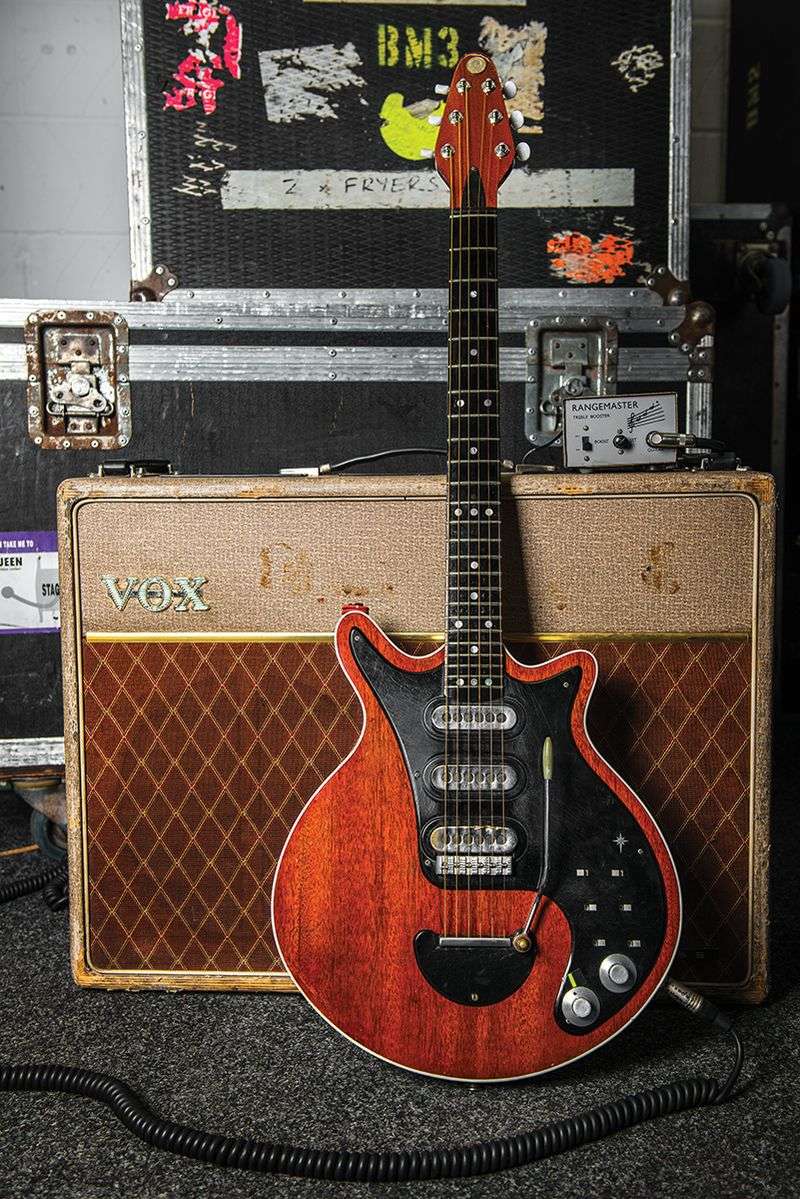
Built in a bedroom, not a factory — that is the story of Brian May’s legendary Red Special guitar. He and his father Harold crafted it using wood from a 100-year-old fireplace mantelpiece, along with knitting needles, a bicycle saddle bag, and other household odds and ends.
The guitar took about two years to complete and cost next to nothing. Yet it became one of rock’s most recognized instruments, producing Queen’s unforgettable sound for decades.
2. David Byrne and Playing the Building
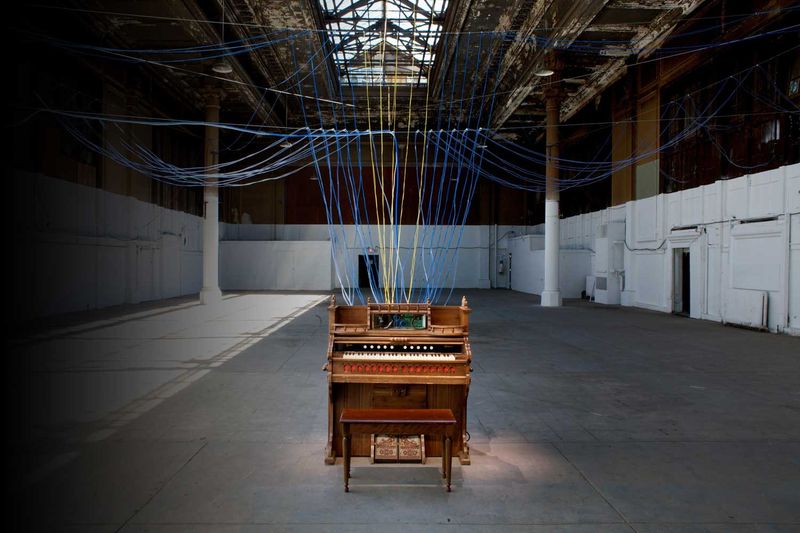
What if an entire building could be a musical instrument? David Byrne of Talking Heads made that idea real in 2008 with his installation called “Playing the Building.” He attached motors, vibrating devices, and air blowers to the metal beams, pipes, and pillars inside New York’s Battery Maritime Building.
Visitors could sit at a modified organ and literally play the structure around them. It was part art project, part concert hall, and completely unlike anything before it.
3. Jonny Greenwood (Radiohead) and the Custom Ondes Martenot
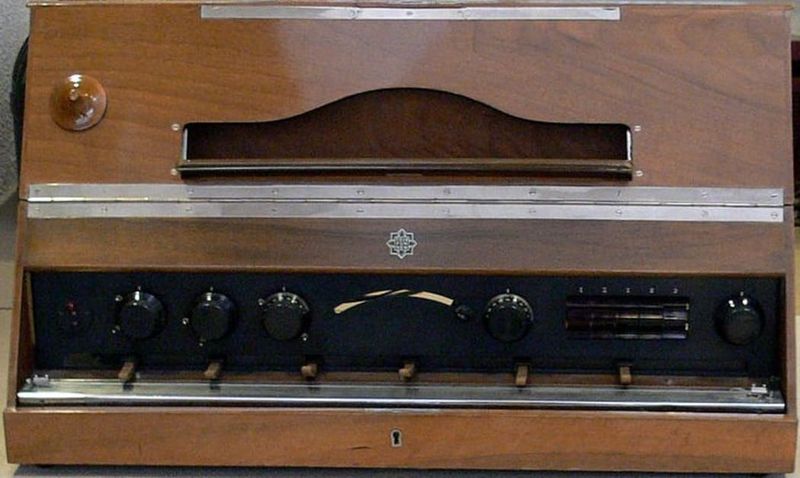
Most people have never heard of the ondes Martenot, but Jonny Greenwood of Radiohead has made it one of the eeriest sounds in modern rock. Originally invented in the 1920s, this early electronic instrument produces ghostly, wavering tones unlike any guitar or keyboard.
Greenwood had his version specially adapted and customized to fit his unique musical ideas. His use of it on albums like Kid A helped give Radiohead that signature feeling of sound from another dimension entirely.
4. Bjork and the Gameleste

Bjork has never been one to stick to ordinary instruments. For her 2011 album Biophilia, she worked closely with instrument makers to create something called the Gameleste — a hybrid combining a celeste keyboard with Balinese gamelan tonebars.
The result was a bright, magical sound that could not have come from anything already on the market. She also developed a visual synthesizer and a pendulum harp for the same project, turning the whole album into a living science experiment about music and nature.
5. John Paul Jones (Led Zeppelin) and His Custom Instruments
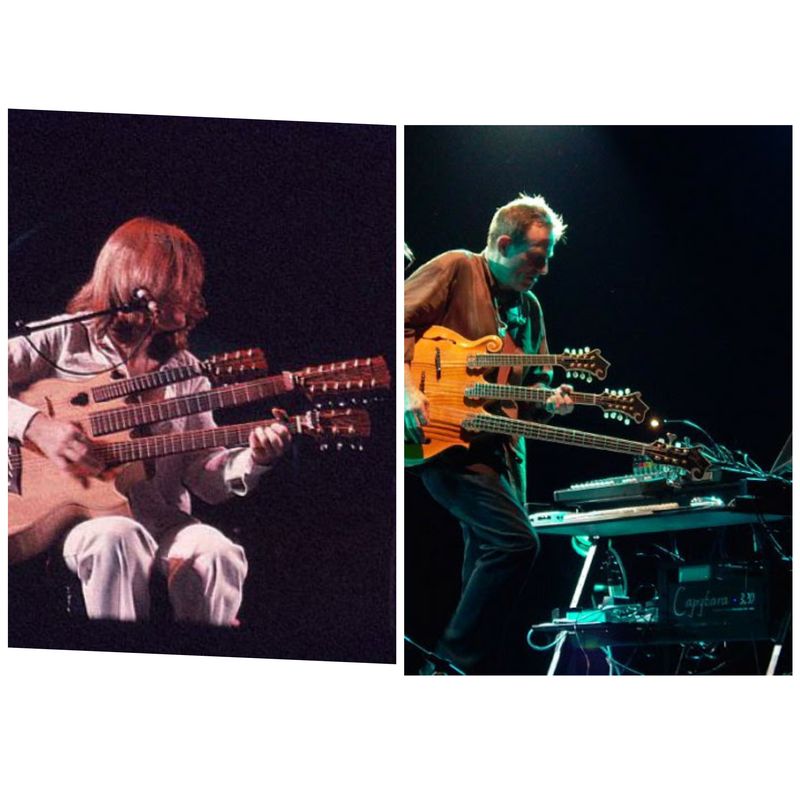
Being the bassist for Led Zeppelin was never enough for John Paul Jones — he wanted instruments that matched his enormous musical range. He designed and built a triple-necked guitar, a device that gave him three different instruments in one massive, jaw-dropping package.
He also created a Lap Steel keyboard that blended the smooth sound of a steel guitar with keyboard versatility. Jones never settled for off-the-shelf solutions when a custom-built invention could open up more creative doors.
6. 10cc and the Gizmotron
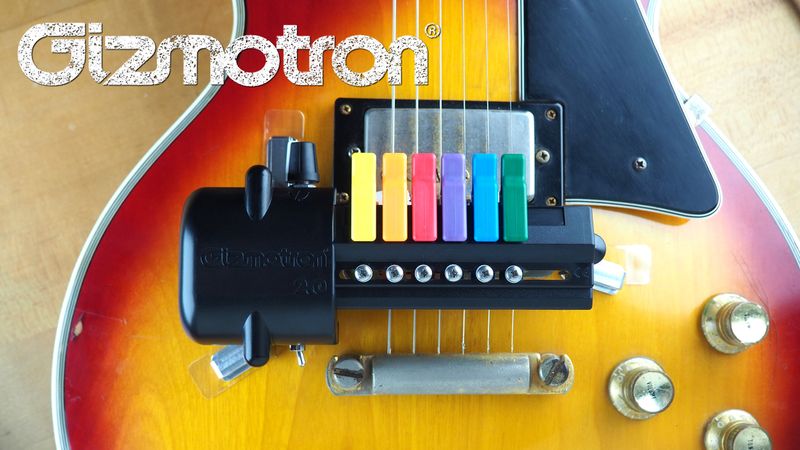
Long before digital sampling existed, the band 10cc figured out a mechanical way to make electric guitars sound like a full orchestra. They invented the Gizmotron, a device that clamped directly over guitar strings and used small rotating wheels to keep them vibrating continuously.
The effect mimicked the sustained, bowing sound of violins and cellos. Released commercially in the late 1970s, the Gizmotron was ahead of its time and is now a collector’s item treasured by musicians who love vintage gear.
7. Pat Metheny and the Pikasso Guitar

When jazz guitarist Pat Metheny described his dream instrument to Canadian luthier Linda Manzer, her first question was reportedly, “How many strings do you want?” His answer led to the Pikasso guitar — a four-necked, 42-stringed masterpiece that took two full years to build.
The guitar weighs about 10 pounds and looks more like a piece of abstract sculpture than a playable instrument. Yet Metheny plays it with ease, using it to explore harmonics and textures impossible on a standard guitar.
8. Harry Partch and His Orchestra of Invented Instruments
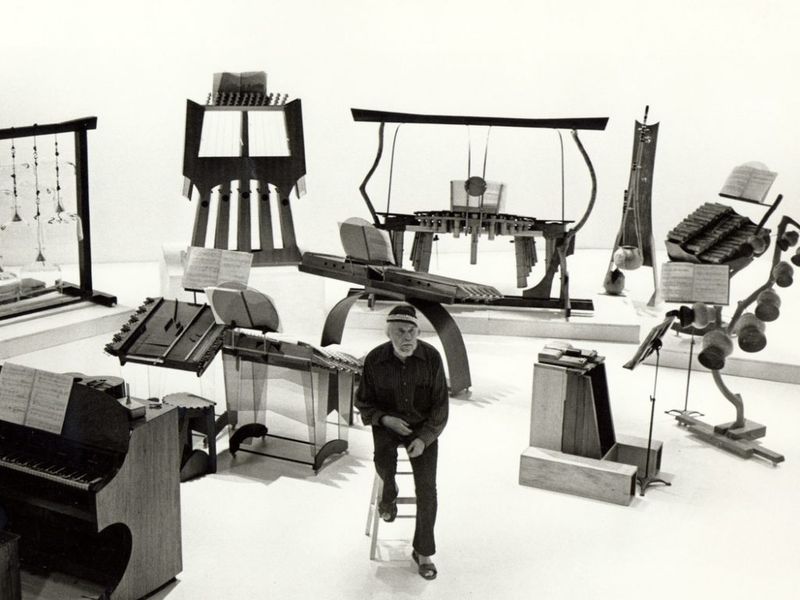
Harry Partch was not just a composer — he was practically a one-man instrument factory. Because his music used a 43-note scale that no existing instrument could play, he simply built an entire orchestra from scratch.
His creations included Cloud-Chamber Bowls made from Pyrex bottles, the Zymo-Xyl built from ketchup bottles and hubcaps, and the Spoils of War assembled from artillery shell casings. Each quirky instrument had its own personality, and together they formed a sound world completely unlike anything in classical music.
9. Washington Phillips and the Double Zither
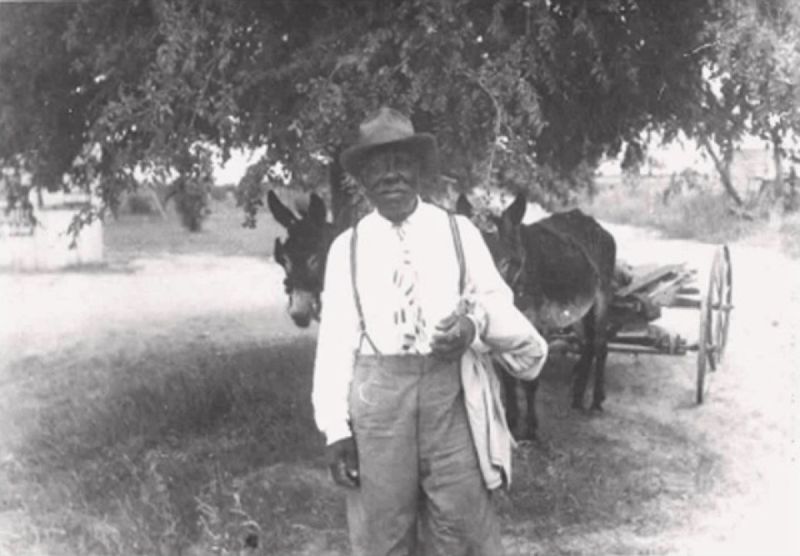
Washington Phillips recorded only a handful of songs in the 1920s, but his sound was so unusual that music historians spent decades trying to figure out what he was actually playing. He had taken two fretless zithers and reconfigured them into a single instrument he called the Manzarene, or Double Zither.
The result was a delicate, harp-like tone that floated above his gospel singing like something from another world. His homemade creation gave his music a one-of-a-kind texture no one has fully replicated since.
10. Bo Diddley and His Cigar Box Guitars
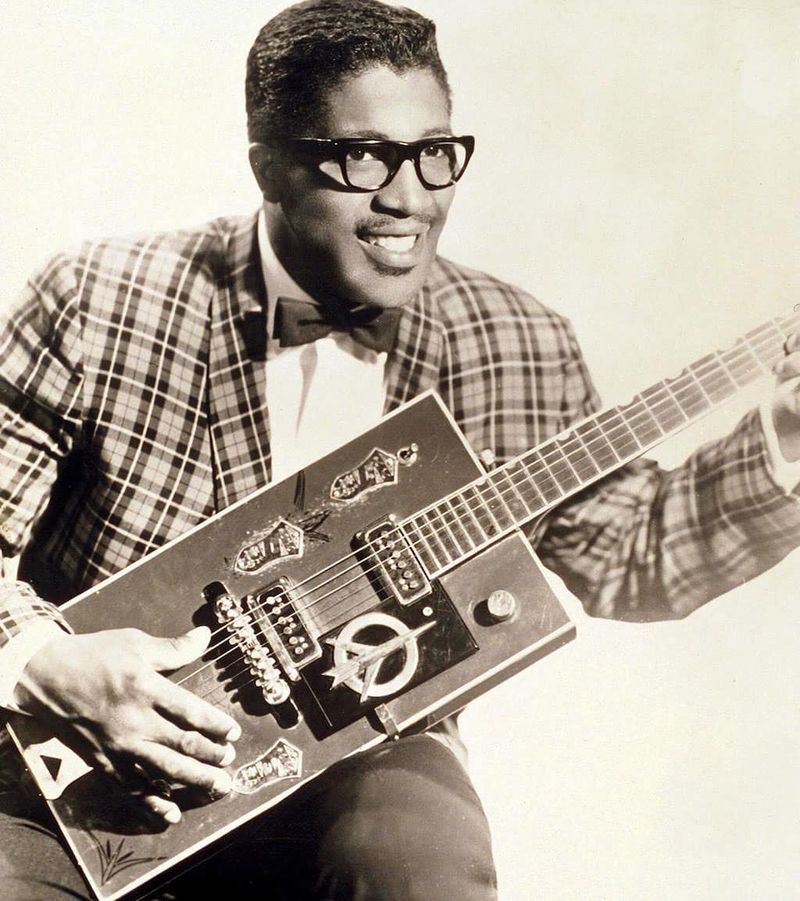
Bo Diddley grew up with very little money, so when he wanted a guitar, he built one himself using a cigar box. Starting with a simple one-string diddley bow, he eventually crafted six-string versions that became his trademark.
His handmade rectangular guitars were impossible to miss on stage and helped define his whole image. The raw, buzzing tone they produced matched his pounding rhythm perfectly.
Bo Diddley turned poverty into creativity, and that spirit influenced everyone from Buddy Holly to The Rolling Stones.
11. Les Paul and The Log
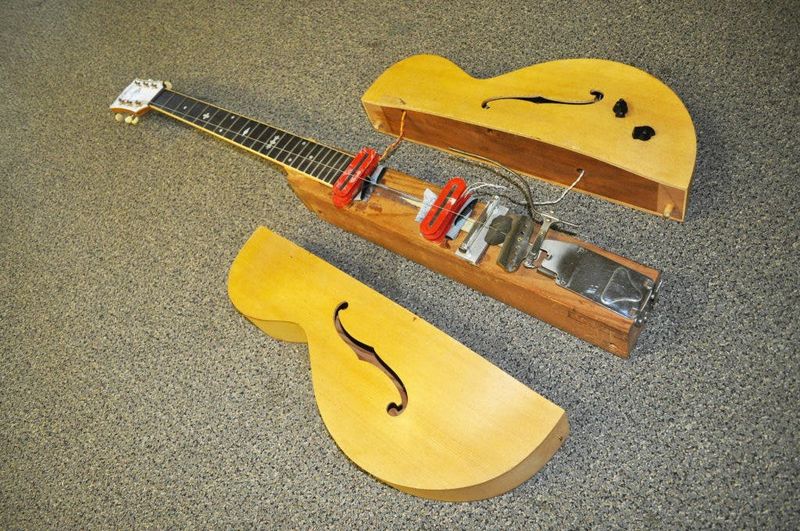
In the early 1940s, Les Paul was frustrated that hollow-body electric guitars picked up too much unwanted feedback and noise on stage. His solution was brilliantly simple: he nailed guitar parts onto a solid 4×4 block of lumber and called it “The Log.”
It looked ridiculous, but it worked perfectly. The solid body eliminated the feedback problem entirely.
Gibson initially laughed at the idea, but eventually partnered with him — and the Gibson Les Paul became one of the most iconic guitars ever made.
12. Jaco Pastorius and the Bass of Doom
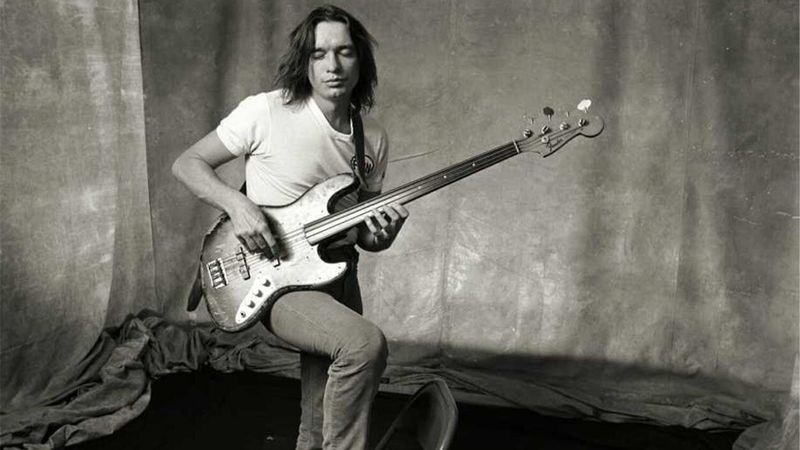
Jaco Pastorius completely changed what people thought a bass guitar could sound like, and it all started with a pocketknife and some wood filler. He removed every fret from a cheap Fender Jazz Bass, filled in the slots, and coated the neck with epoxy to create a smooth fretless surface.
The result — nicknamed the “Bass of Doom” — gave him a singing, cello-like tone that was fluid and expressive beyond anything heard from a bass before. His modification helped redefine jazz fusion in the 1970s.
13. Luigi Russolo and the Intonarumori
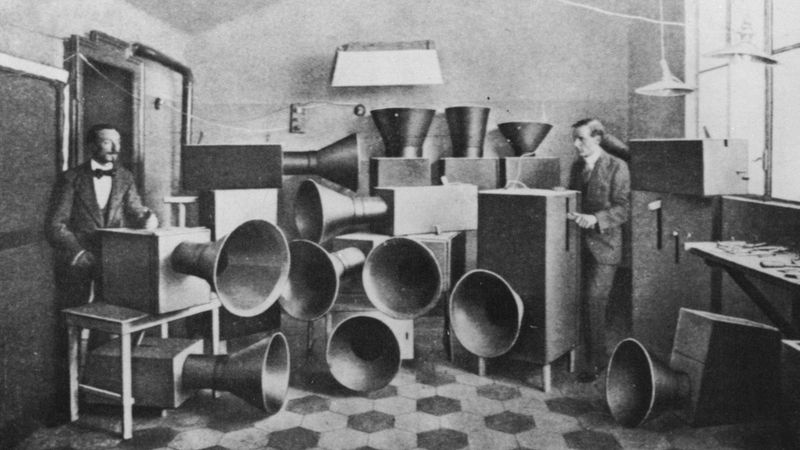
Back in 1913, while most composers were still writing for violins and pianos, Luigi Russolo was building boxes designed to make industrial noise. He called them intonarumori, which translates roughly to “noise intoners” or “noise machines.”
Each box produced a different kind of rumbling, crackling, or buzzing sound by turning a hand crank. Russolo believed the sounds of modern city life — machines, traffic, factories — deserved a place in music.
His radical ideas planted seeds that would eventually grow into electronic music and sound art.
14. John Cage and the Prepared Piano
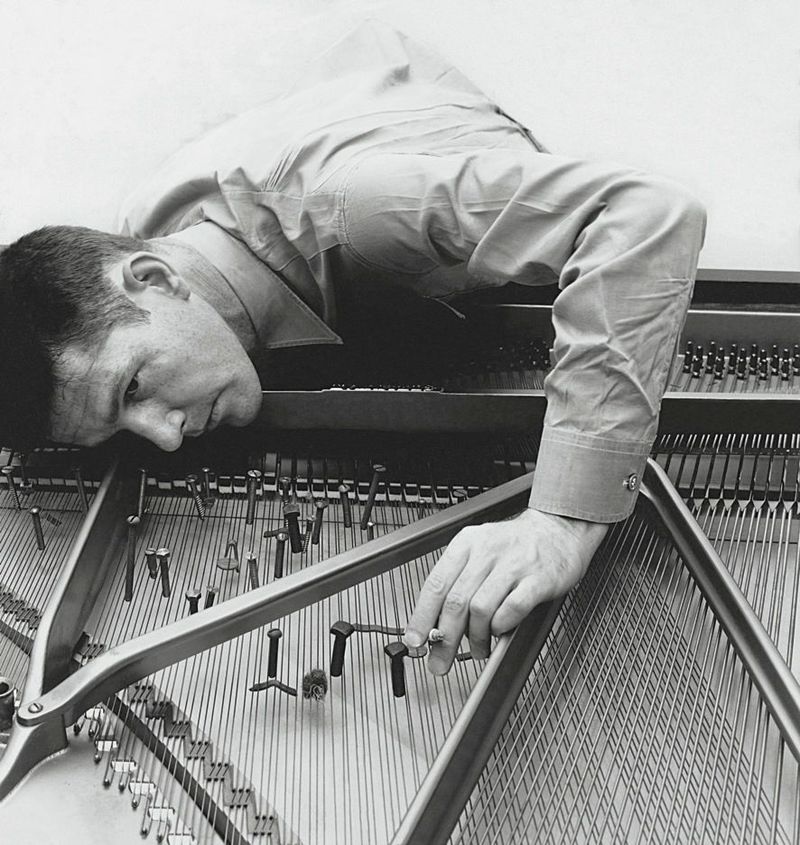
John Cage once turned an ordinary concert grand piano into a percussion orchestra using nothing but bolts, screws, rubber erasers, and strips of felt. By wedging these objects between the strings, he transformed the piano’s bright, clear tones into muffled thuds, metallic clangs, and hollow rattles.
He called it the “prepared piano,” and it let one performer create sounds that normally required a whole ensemble. Cage also experimented with phonograph records as musical instruments, always chasing sounds that challenged what music was supposed to be.
15. Neptune and Their Scrap Metal Instruments

Neptune is a noise music band that takes “do it yourself” to an extreme level most musicians would never consider. They build their own guitars and basses entirely from scrap metal, weld their own hardware, and even constructed a bass guitar using the plastic casing of a VCR.
They also make electric lamellophones — thumb-piano-style instruments adapted for loud, experimental performance. For Neptune, the act of building the instrument is part of the artistic statement, blurring the line between music, sculpture, and industrial craft.