
American grocery stores have come a long way from the days of dim, cluttered general stores where a clerk fetched everything for you. Over the past century, these everyday shopping spaces transformed into massive, technology-packed destinations carrying tens of thousands of products.
Each decade brought surprising changes that shaped the way families eat, shop, and live. Flipping through photos from different eras feels like time travel through American culture itself.
1. The Old General Store: Where Shopping Began
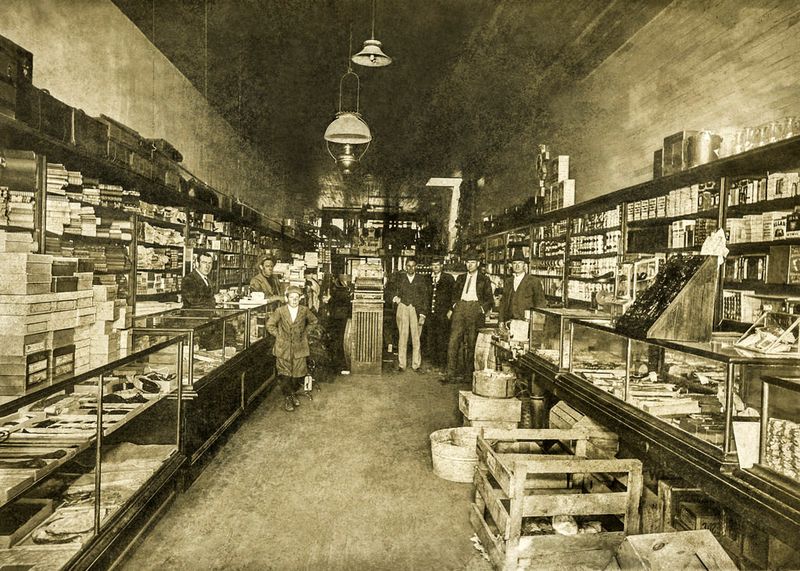
Before supermarkets existed, the general store was the heartbeat of every American town. Customers walked in, handed a clerk a handwritten list, and waited while the clerk gathered every item from crowded shelves or a back room.
Sanitation was barely a concern back then. Dirt tracked in from unpaved roads, and refrigeration meant a big block of ice at best.
Credit accounts and home delivery were standard perks, making the general store feel more like a personal service than a retail shop.
2. Piggly Wiggly Flips the Script in 1916
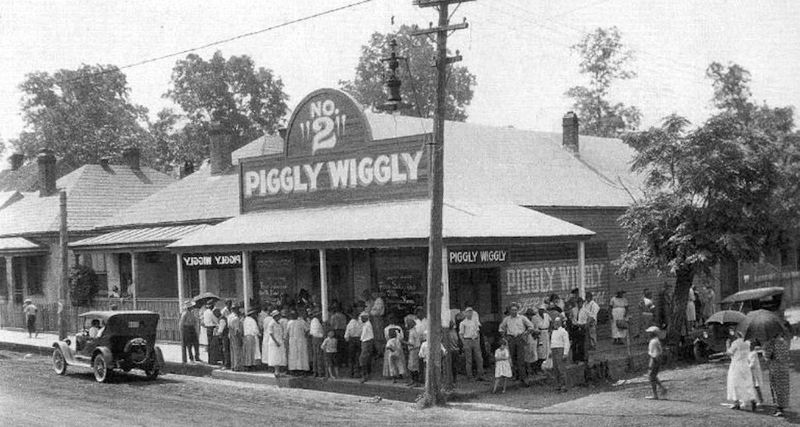
Imagine walking into a store for the first time and being allowed to pick your own groceries off the shelf. That was the jaw-dropping experience Piggly Wiggly delivered when it opened in Memphis, Tennessee, in 1916.
Founder Clarence Saunders introduced wire shopping baskets, employee uniforms, and cleverly placed candy near the checkout to tempt last-minute buyers. By 1923, over 1,200 Piggly Wiggly stores had spread across the country, proving that self-service shopping was here to stay.
3. A&P Economy Stores Cut Prices and Changed Habits
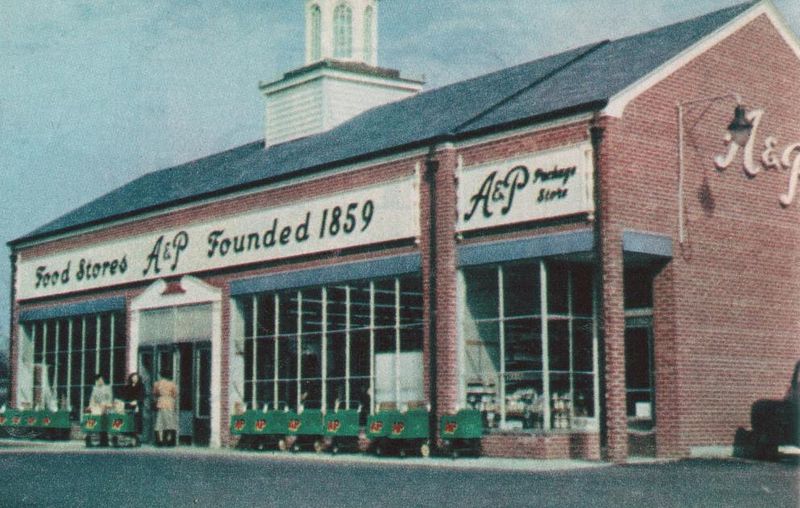
Back in 1912, The Great Atlantic and Pacific Tea Company, better known as A&P, made a bold move that rattled the grocery world. They launched economy stores built entirely on a cash-and-carry model, cutting out credit accounts and free home delivery to slash prices for everyday shoppers.
The strategy worked brilliantly. Families who once relied on neighborhood credit tabs now stretched their dollars further by paying upfront.
A&P grew into one of the most powerful grocery chains in American history.
4. King Kullen: The Store That Invented the Supermarket
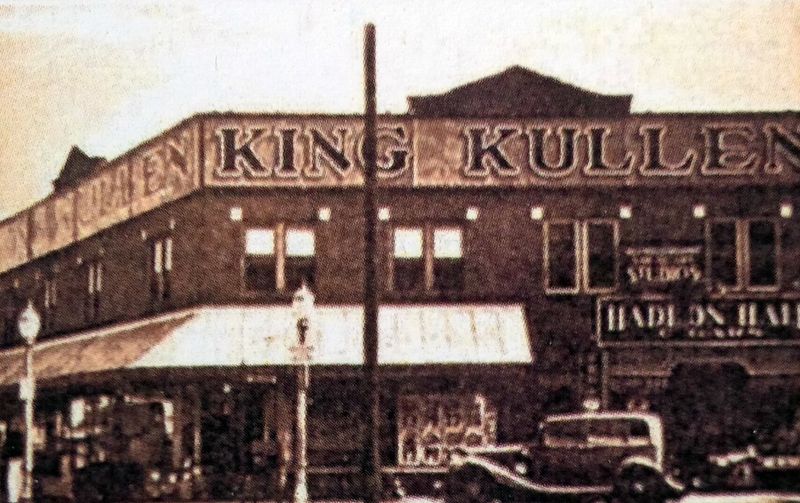
When King Kullen opened its doors in Queens, New York, in 1930, it changed grocery shopping forever. Housed in a large warehouse with free parking, it offered separate departments, self-service aisles, and discount prices all under one roof.
Historians widely credit King Kullen as the first true supermarket in America. The idea of combining volume selling with low prices was revolutionary.
Car-owning families flocked to it, kicking off a new era where bigger always seemed better when it came to grocery stores.
5. The Shopping Cart Arrives and Nobody Wanted It at First
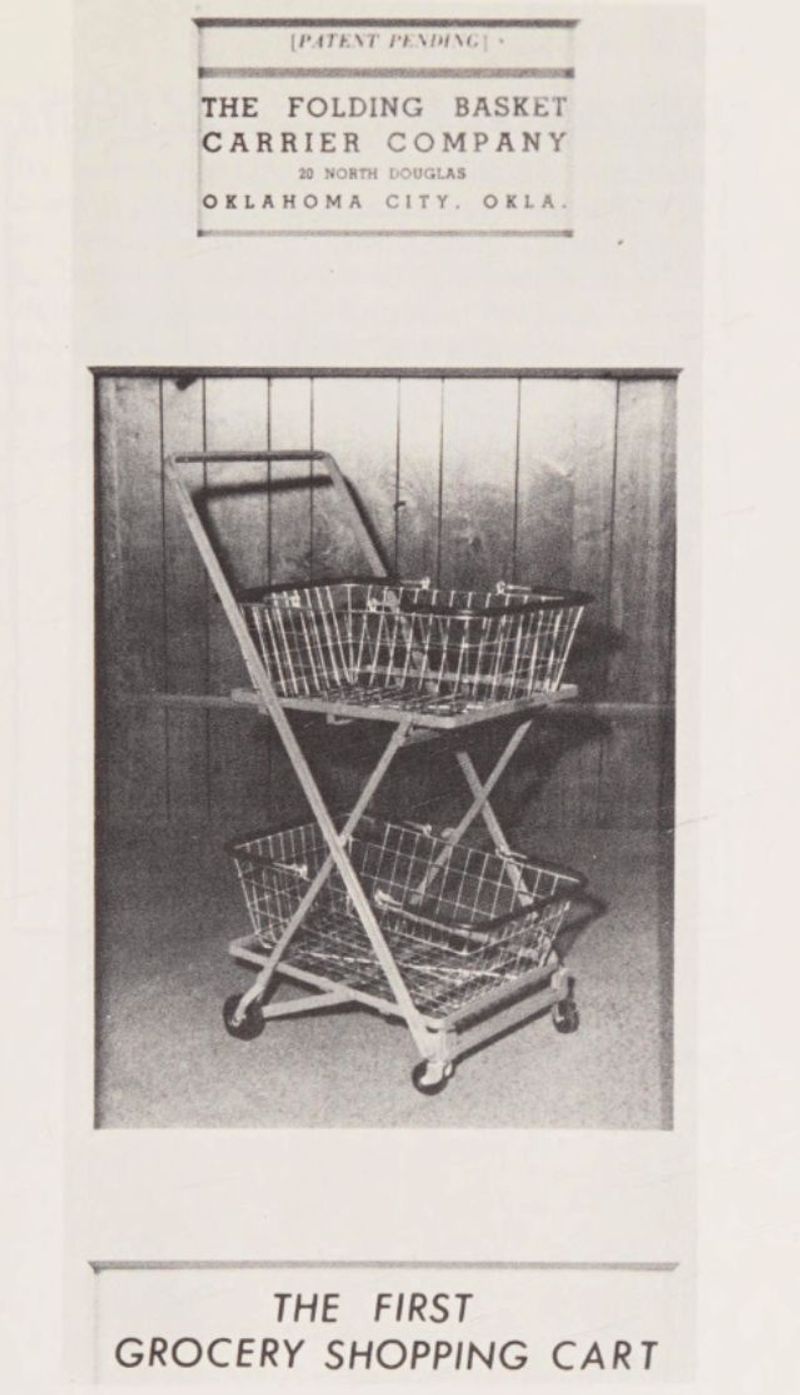
Sylvan Goldman had a simple observation in 1936: shoppers stopped buying once their hand-held baskets got too heavy. So the owner of the Humpty Dumpty supermarket chain invented the shopping cart, a folding metal frame on wheels that could hold much more.
Here is the funny part: customers refused to use them at first. Goldman had to hire actors to push carts around the store just to show people how it worked.
Today, shopping carts are so normal it is hard to imagine grocery shopping without them.
6. Mechanical Refrigeration Changes Everything in the Produce Aisle
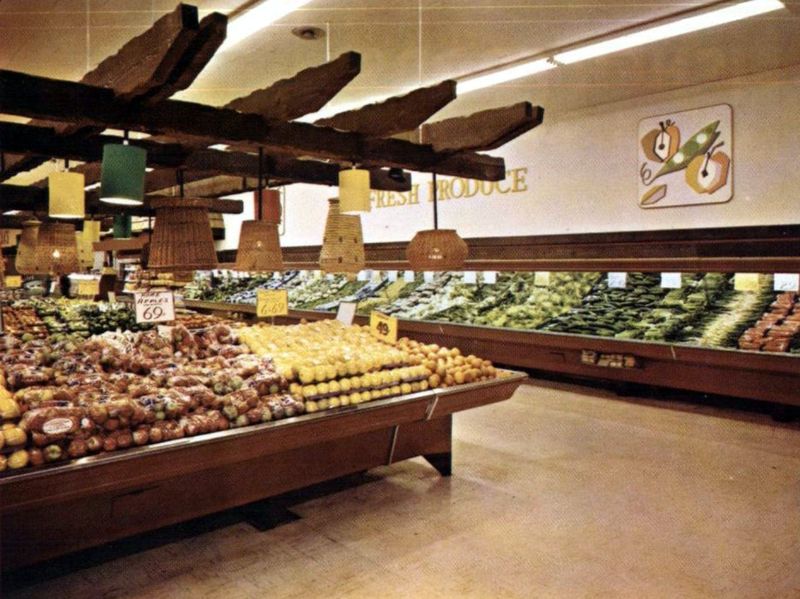
For most of grocery history, keeping food cold meant hauling in heavy blocks of ice. When mechanical refrigeration became common in stores during the late 1930s and 1940s, it was a genuine game-changer for American eating habits.
Fresh produce, dairy, and meat could now be kept safely for longer periods and sold year-round. Shoppers suddenly had access to strawberries in January and crisp lettuce in August.
Food safety improved dramatically, and the modern refrigerated produce aisle we take for granted today was born.
7. The Golden Age: Supermarkets Boom in the 1950s
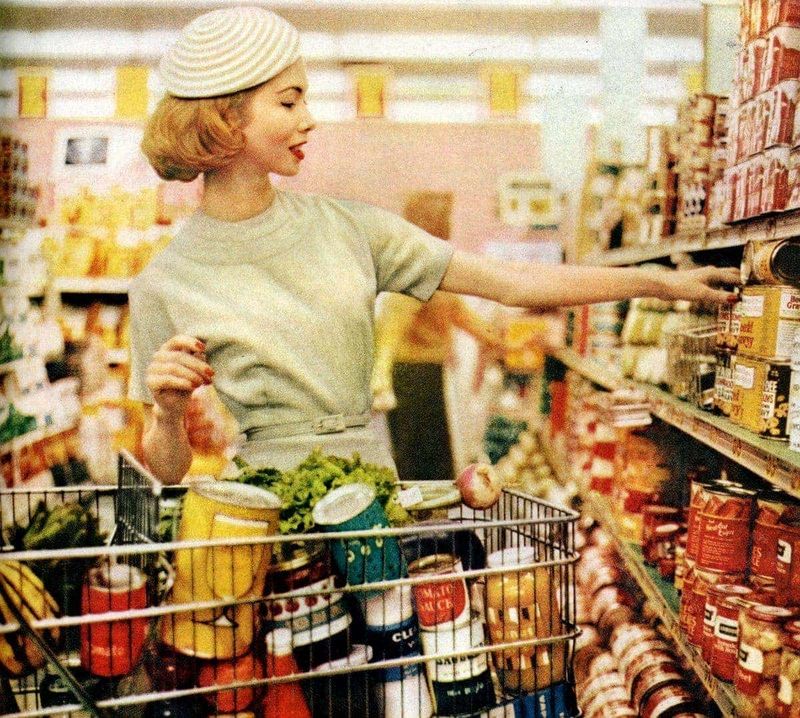
The 1950s were showtime for American supermarkets. New stores popped up constantly across suburbs, and by 1956 the average store covered around 18,000 square feet.
That was enormous compared to anything shoppers had seen before.
Product variety exploded too, jumping from about 1,000 items in the early 1930s to nearly 6,000 by 1960. Bright lighting, colorful packaging, and wide aisles made shopping feel exciting.
One-stop shopping became the American standard, with groceries, household goods, and even clothing all available in a single trip.
8. Trading Stamps: The Loyalty Rewards of the 1950s and 60s
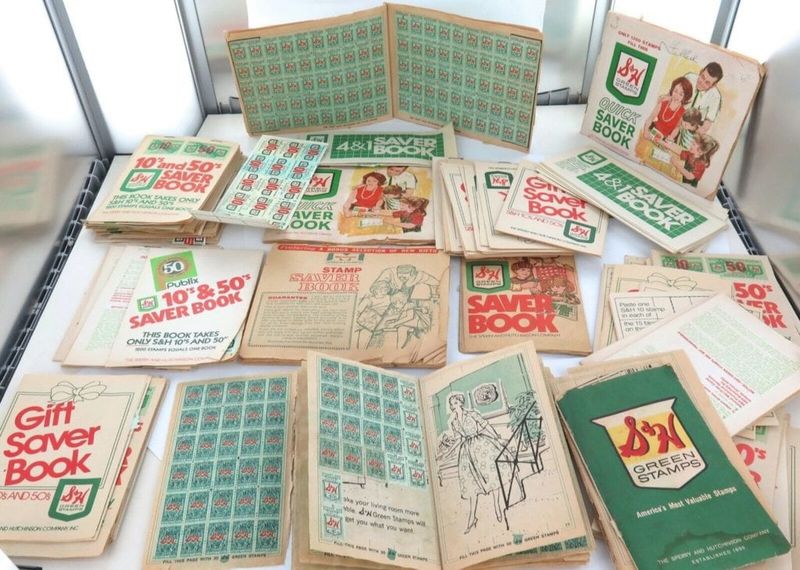
Long before loyalty apps and digital points, grocery stores handed out little paper stamps at checkout. S&H Green Stamps were the most famous, and collecting them became a genuine household hobby throughout the 1950s and 1960s.
Shoppers pasted stamps into booklets and redeemed them for household items like toasters, blankets, and toys from special catalogs. Stores used stamp programs to build customer loyalty and keep shoppers coming back every week.
By the 1970s the trend faded, but for two decades it was a beloved part of grocery culture.
9. Themed Store Designs Add Personality in the 1960s
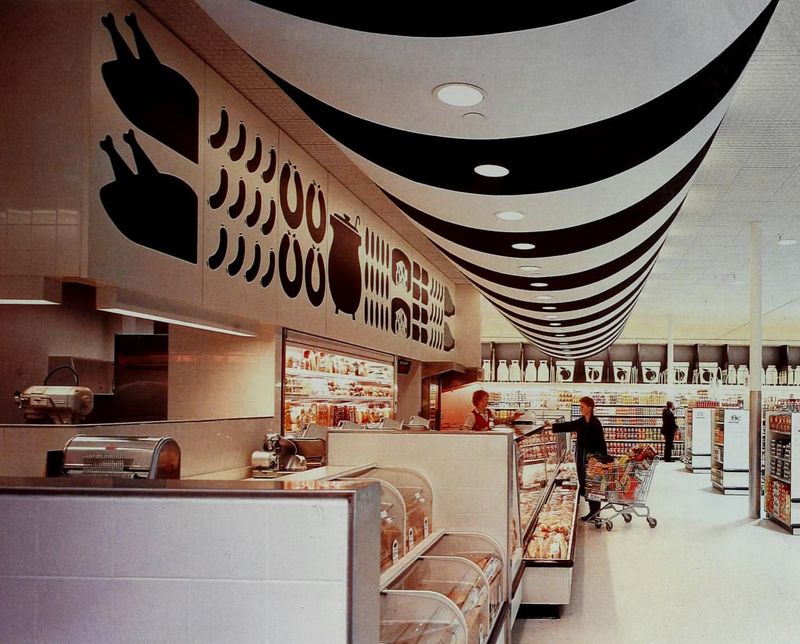
Grocery stores in the 1960s decided plain white walls were boring. Store designers started borrowing themes from places like New Orleans, old farmhouses, and even European markets to create shopping environments that felt warm and inviting.
Carpeting appeared in some upscale stores, and specialty departments like delis and bakeries were added to compete with the fast-food restaurants popping up everywhere. Shopping was no longer just a chore; it was an experience.
These creative interiors made customers linger longer, which naturally meant they bought more.
10. The Barcode Scanner Revolutionizes Checkout in 1974
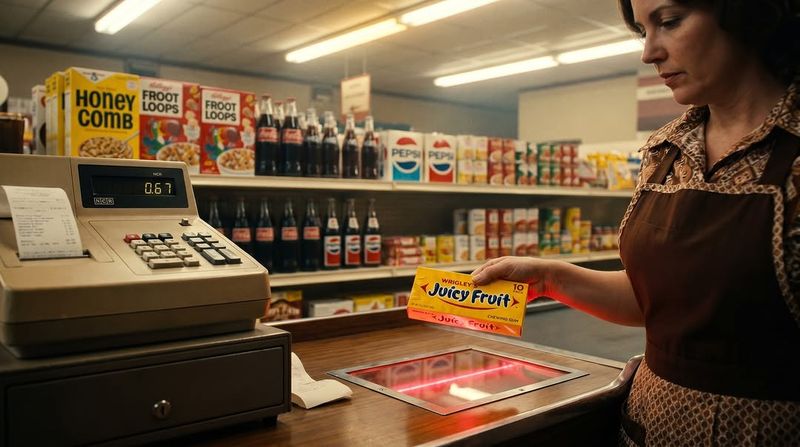
On June 26, 1974, a pack of Wrigley chewing gum became the first product ever scanned by a UPC barcode at a Marsh supermarket in Ohio. That small moment quietly launched one of the biggest technological shifts in retail history.
Barcode scanners replaced hand-applied price stickers and made inventory tracking far more accurate. Checkout lines moved faster, pricing errors dropped, and store managers gained better control over what was selling.
Within a decade, the beep of a scanner became the defining sound of grocery shopping in America.
11. Frozen Foods and Convenience Meals Take Over the 1970s
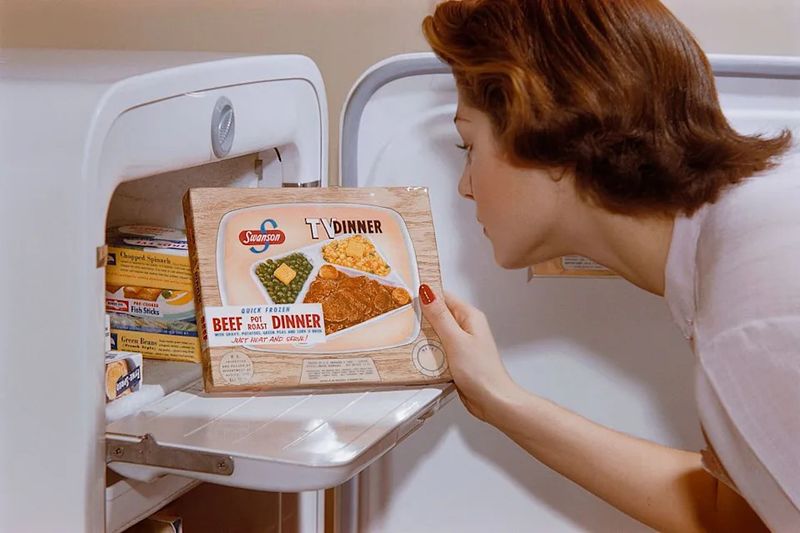
Busy families in the 1970s did not have time to cook elaborate meals every night, and the grocery industry knew it. Frozen food aisles expanded rapidly, stocked with TV dinners, frozen vegetables, and ready-to-heat meals designed for speed and convenience.
Food manufacturers raced to develop products with longer shelf lives and shorter prep times. The microwave oven, which became affordable for home use during this decade, made frozen meals even more practical.
Grocery stores responded by dedicating more floor space to frozen sections than ever before.
12. Plastic Bags Replace Paper in the 1980s
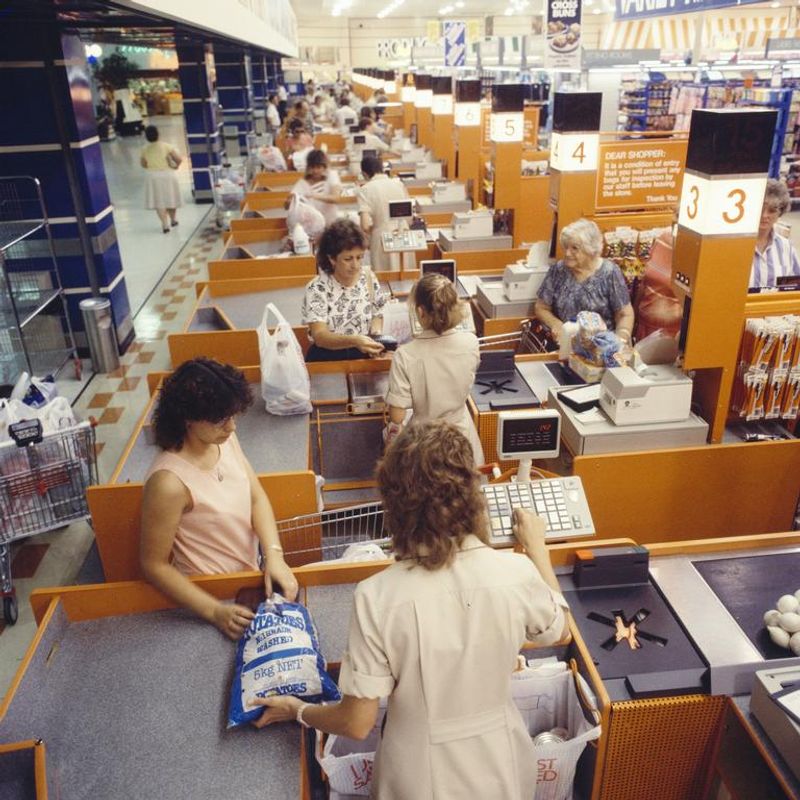
For most of grocery store history, paper bags were the only option at checkout. Then in the mid-1980s, plastic bags quietly took over major chains almost overnight.
Stores switched because plastic was cheaper to produce and easier to handle than bulky paper.
Shoppers mostly shrugged and accepted the change without much debate at the time. It took decades before the environmental impact of billions of single-use plastic bags became a serious public conversation.
Today, many states have banned or taxed them, and reusable bags are making a strong comeback.
13. Supercenters Arrive: Walmart and Costco Redefine the Store
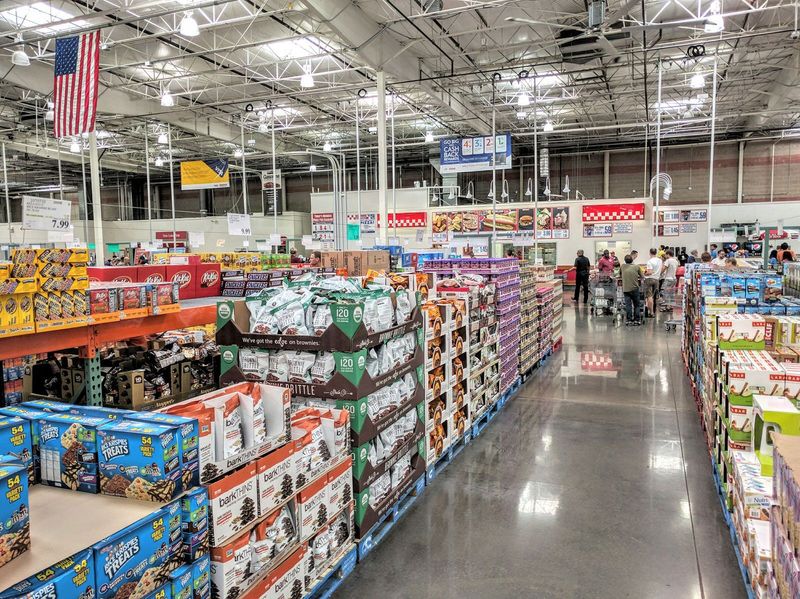
Shopping at a store that sells bananas, tires, and prescription medications in the same building was a strange idea until the 1980s and 1990s made it completely normal. Supercenters like Walmart and Costco combined full-scale grocery departments with general merchandise under one enormous roof.
Banking kiosks, photo labs, and optical centers were added, turning grocery trips into all-day errands. The sheer scale of these stores gave them massive pricing power, squeezing smaller neighborhood grocers.
Consolidation swept the industry as big national chains absorbed or outcompeted local favorites across the country.
14. Self-Checkout Kiosks Change the Cashier Lane Forever
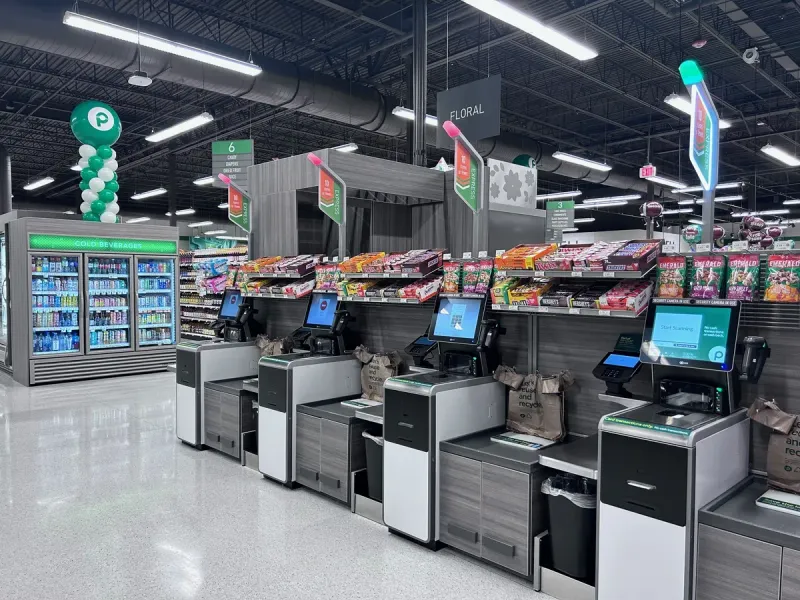
Scan your own groceries, bag them yourself, and pay without talking to anyone. Self-checkout kiosks felt futuristic when they first appeared in stores during the 1990s, but today nearly 40 percent of U.S. grocery store registers are self-checkout stations.
Stores love them because they reduce labor costs. Shoppers with small orders love them for the speed.
Critics point out that they shift work onto customers without lowering prices. Either way, the self-checkout lane is now a standard fixture of the modern American grocery experience, and it is not going anywhere soon.
15. Online Grocery Shopping and Delivery Enter the Main Stage
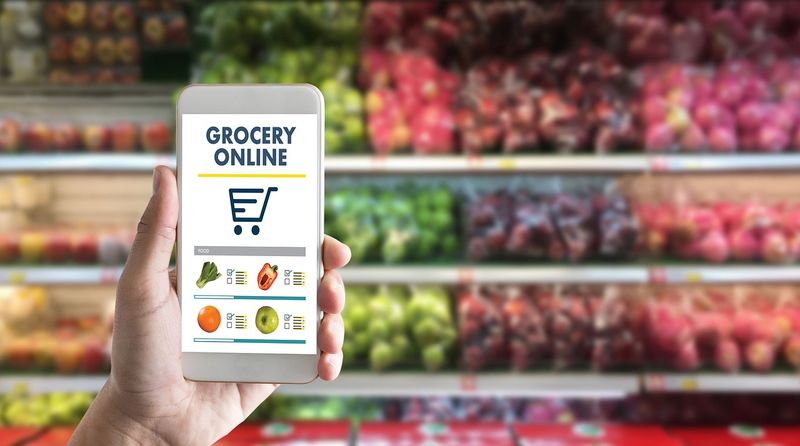
Curbside pickup actually existed as early as the 1960s, but online grocery ordering did not gain real momentum until the mid-2010s. Then the COVID-19 pandemic hit, and practically overnight, millions of Americans placed their first-ever online grocery orders.
Home delivery apps, curbside pickup slots, and even robot-staffed fulfillment warehouses became part of the grocery landscape. Today, the average store carries over 39,000 items, and many of those can land at your doorstep within hours.
The store that once required a handwritten list and a clerk now fits inside a smartphone app.